These summer clouds she sets for sail,
The sun is her masthead light,
She tows the moon like a pinnace frail
Where her phosphor wake churns bright.
Now hid, now looming clear,
On the face of the dangerous blue
The star fleets tack and wheel and veer,
But on, but on does the old earth steer
As if her port she knew.
— William Vaughn Moody, Gloucester Moors
We know when we are in the midst of something extraordinary. Anticipation creeps up on us as the minutes pass by, awaiting our participation. Awareness floods in as the magic unfolds. Joy and gratitude edge in, provoking other emotions. There comes a time when we must simply put away the camera, stop searching for just the right word or phrase, and simply be a part of all that is happening around us.
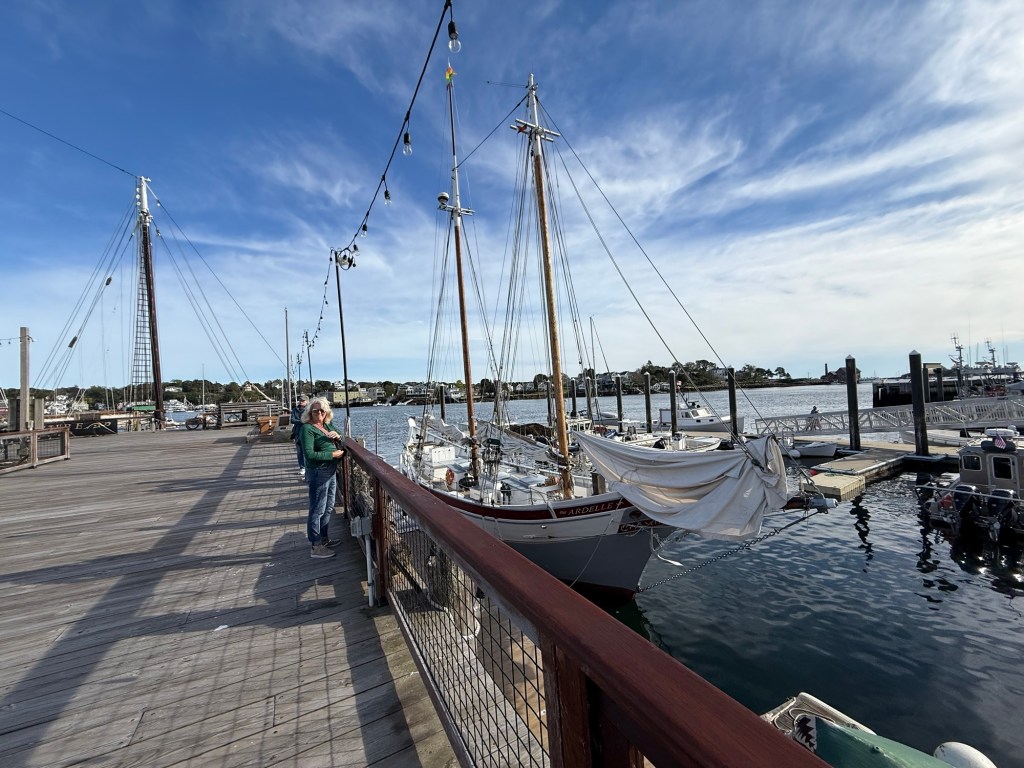
Gloucester, Massachusetts has a long history with the sea. Its famous harbor has long welcomed home fisherman and sailors from passages as far and wide as the ocean’s reach. One feels the history sailing in this harbor, and you play some small part in the play for having been here at all. The fleets of old are mostly all gone now, ghosts of what once was. But there are a few holdouts, and newcomers built in the traditional way, to offer some hint of what it was like long ago.
Harold Burnham has built several schooners in the traditional fashion. For a couple of centuries the Burnham’s have built ships in Essex, Massachusetts. Two of his schooners are harbored in nearby Gloucester, and Harold himself captains sunset cruises. You simply have to put yourself in the way of beauty and sign up to participate. And if you’re especially fortunate, you may join on a night of Celtic music to offer a proper soundtrack for a September night when the clouds are just so to harness a bit of heavenly magic.
Maritime Heritage Charters offers many opportunities to learn and experience a few hours on a schooner sailing in Gloucester Harbor. One not to miss is the Celtic Music Sunset Sail with Michael O’Leary & Friends cruise, when traditional music and song fill the heart and soul as you slip past history and witness the divine dance of fading light. The experience is one that will stay with you forever.