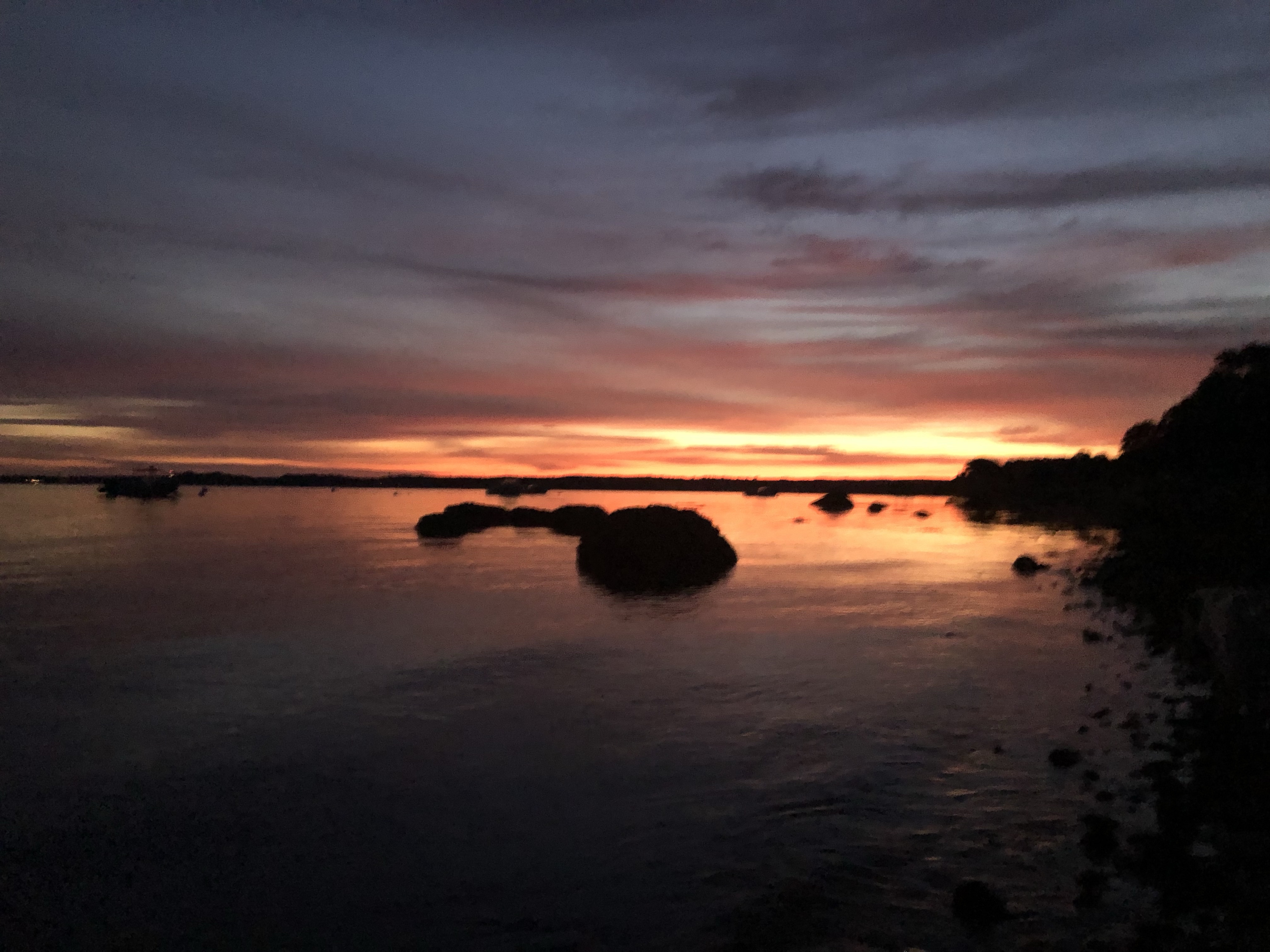
Tag: Fayaway

  • Yes and No

    “It’s worth making time to find the things that really stir your soul. That’s what makes you really feel alive. You have to say ‘no’ to other things you’re used to, and do it with all your heart.“ — Roy T. Bennett

    Checking out the float plan for friends Fayaway as they resume their journey to the Caribbean, it’s easy to see the navigation points clearly charted. The trick is to stick to plan as the unexpected forces of wind, weather, current and fatigue influence that course over time. We can’t predict everything, we can only choose the course and decide when to take a leap into the unknown. Every day brings subsequent decisions that carry us to the next. So it is with life.

    It’s easy to see the series of decisions that brought us to where we are in hindsight. It’s more challenging to plot our course through life uncertain of the forces that will influence that course. Life is what we make of it, a series of yeses and no’s from start to finish. Sometimes what we’re most comfortable with needs to be a no to make progress. Staying in the cozy harbors of our life may feel like a yes when it ought to be a no.

    What we say yes to today will matter in our tomorrow. But so too does what we say no to. The future will judge what the right choice was. We can’t be paralyzed in indecision in such moments, we must decide what to be and go be it. As a rule, it’s probably best to say no to recklessness, and yes to moving away from comfort towards progress. Bon voyage.

  • A Simple Salut Will Do

    Some words, like salut and aloha, mean both hello and goodbye. It reminds me of the nonsensical lyrics of the Beatles song, catchy tune that it is, but which blathers on endlessly about goodbyes and hellos. A simple word that means both is rather handy, don’t you think?

    My daughter flew home from across the country, making for a lovely hello, and will join me today in saying goodbye to friends and fellow bloggers Fayaway as they set sail for warmer waters. Goodbyes are rarely as fun as hellos. Isn’t it better all around to say; “until we meet again” Then again, a simple salut would do in all such circumstances.

    Hellos and goodbyes are simply placeholders that bookend moments together. We dance on the floor of life for this moment and go our separate ways for awhile. Perhaps we’ll see you out here on the dance floor again sometime. It’s lovely to believe it so, isn’t it? Life is what we make of it, and relationships are very much in line with that. There are people who have lived on the same street with me whom I haven’t seen for more than ten years. And there are people I’d fly across the globe to visit for a couple of days.

    Seeing Fayaway in faraway places seems likely and offers poetic possibilities. Yes, I like the elegance of the french “Salut” in such moments. And today I think it might do.

  • Sailing the Gulf of Maine

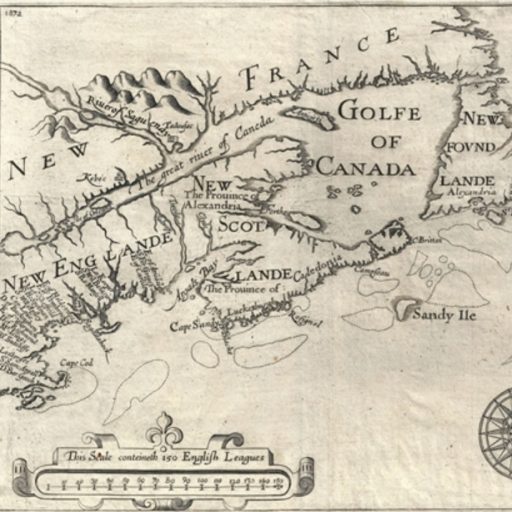
    The Gulf of Maine is a corner of the Atlantic Ocean embraced by Cape Cod to the South and Nova Scotia to the Northeast.  The longest stretch of land in between is part of Maine, which gives the gulf her name.  If you look at Alexander’s map, which this blog is named for, the body of water is just below the land described as “New Englande” and “New Scot Lande”.  A land mass that I’ve grown to love, that I declared I’d explore more, and that I need to return to in earnest once this pandemic is behind us.

    cropped-54b94-alexander2527s2bmap.jpg

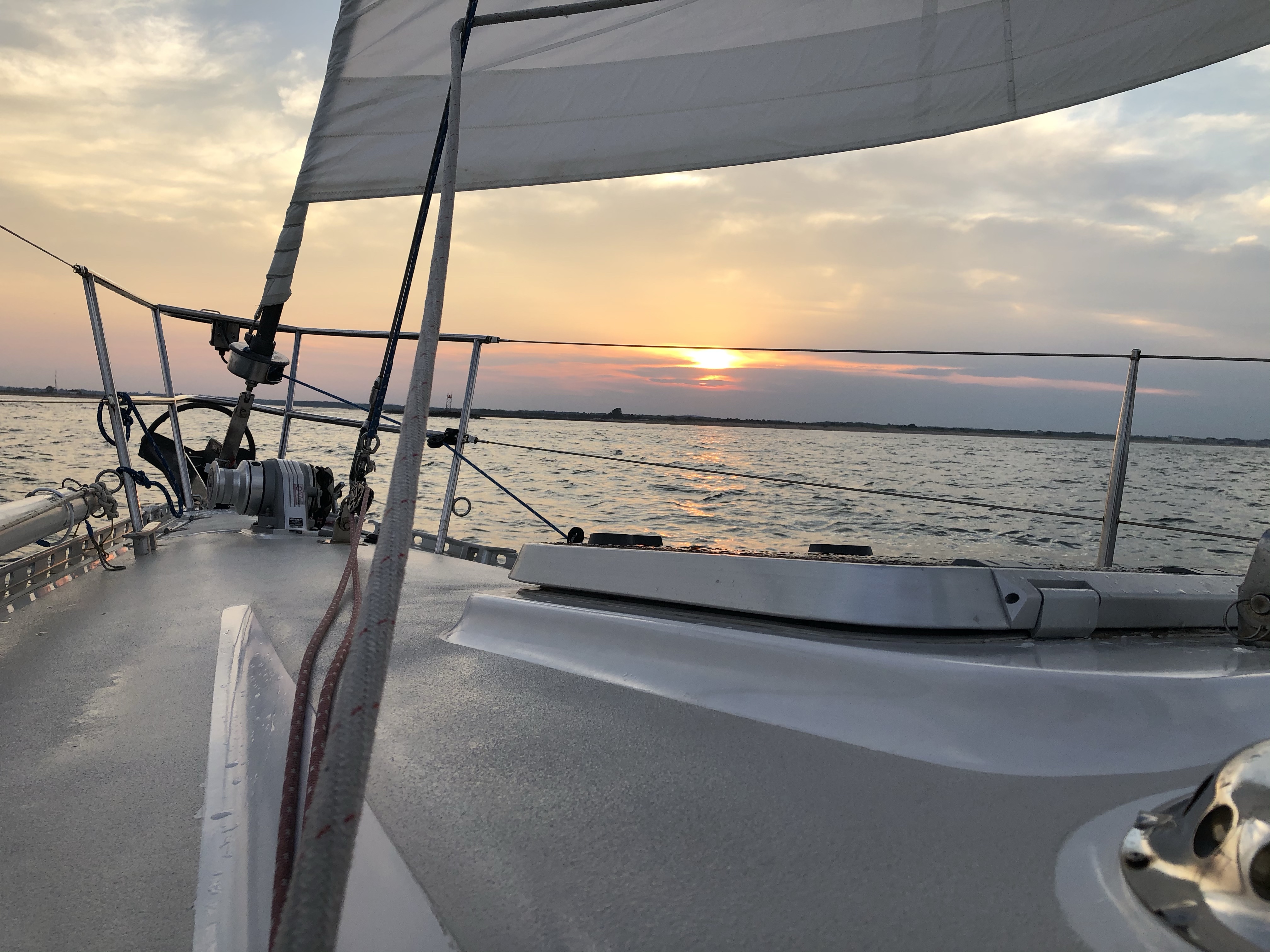
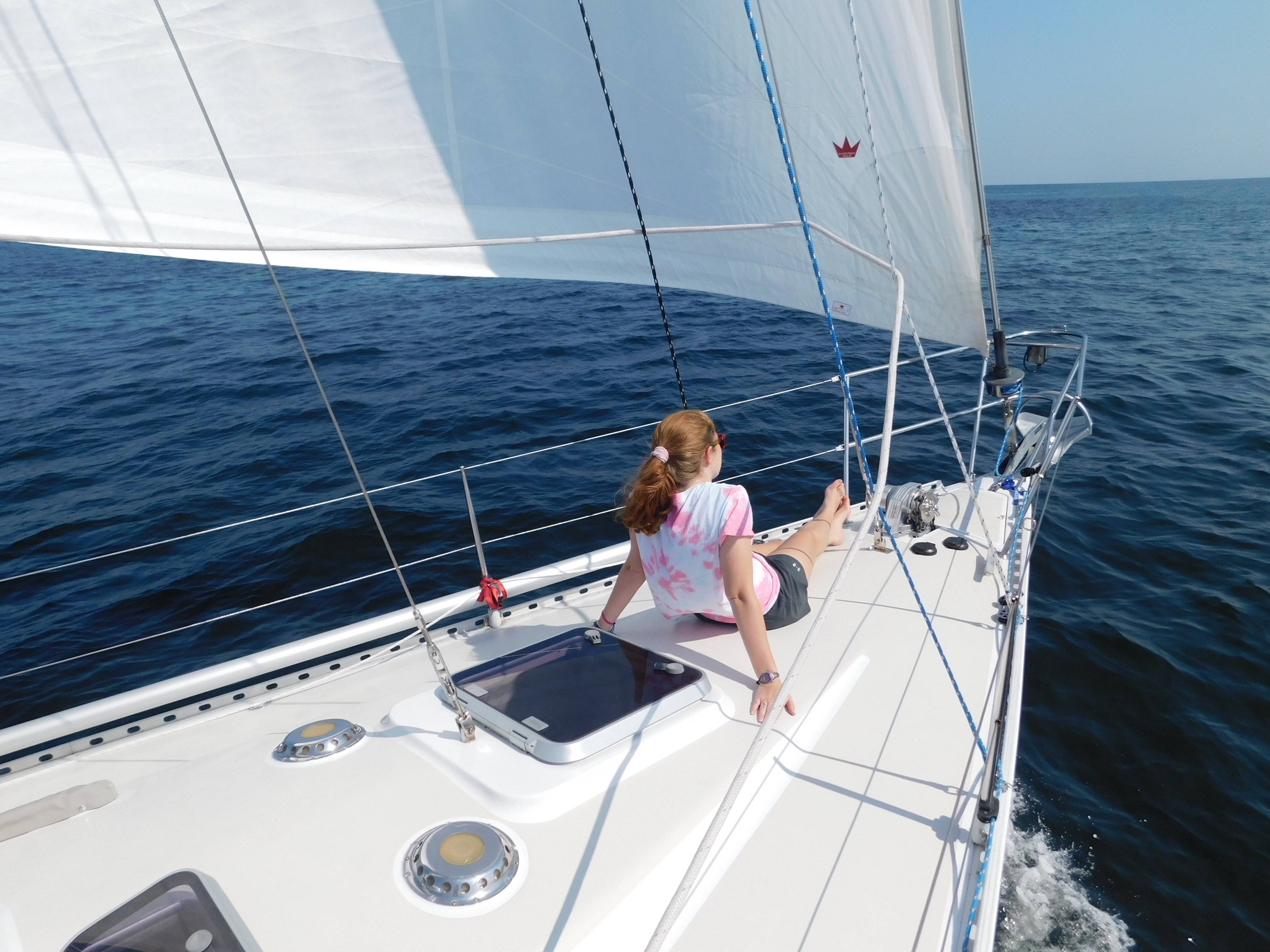
    Yesterday we had the opportunity to sail on Fayaway with friends.  It was an out-and-back sail with one tack.  We left the Merrimack River where they moor Fayaway when they aren’t exploring the world and sailed generally on a compass heading of 90 degrees, which took us roughly along the coast of Maine just out of sight of land.  Sail for 18 miles out one way, tack and return 18 miles the other way.  Not a lot of tactical sailing required, which was perfect for a day of conversation and contemplation on the water.  We had a secondary objective of seeing whales and maybe that evasive Comet Neowise, but each proved elusive on this trip.  A sunfish made an appearance, which was akin to an understudy playing the role when you came to see the star: Wasn’t what you came for, but turned out to be entertaining just the same.

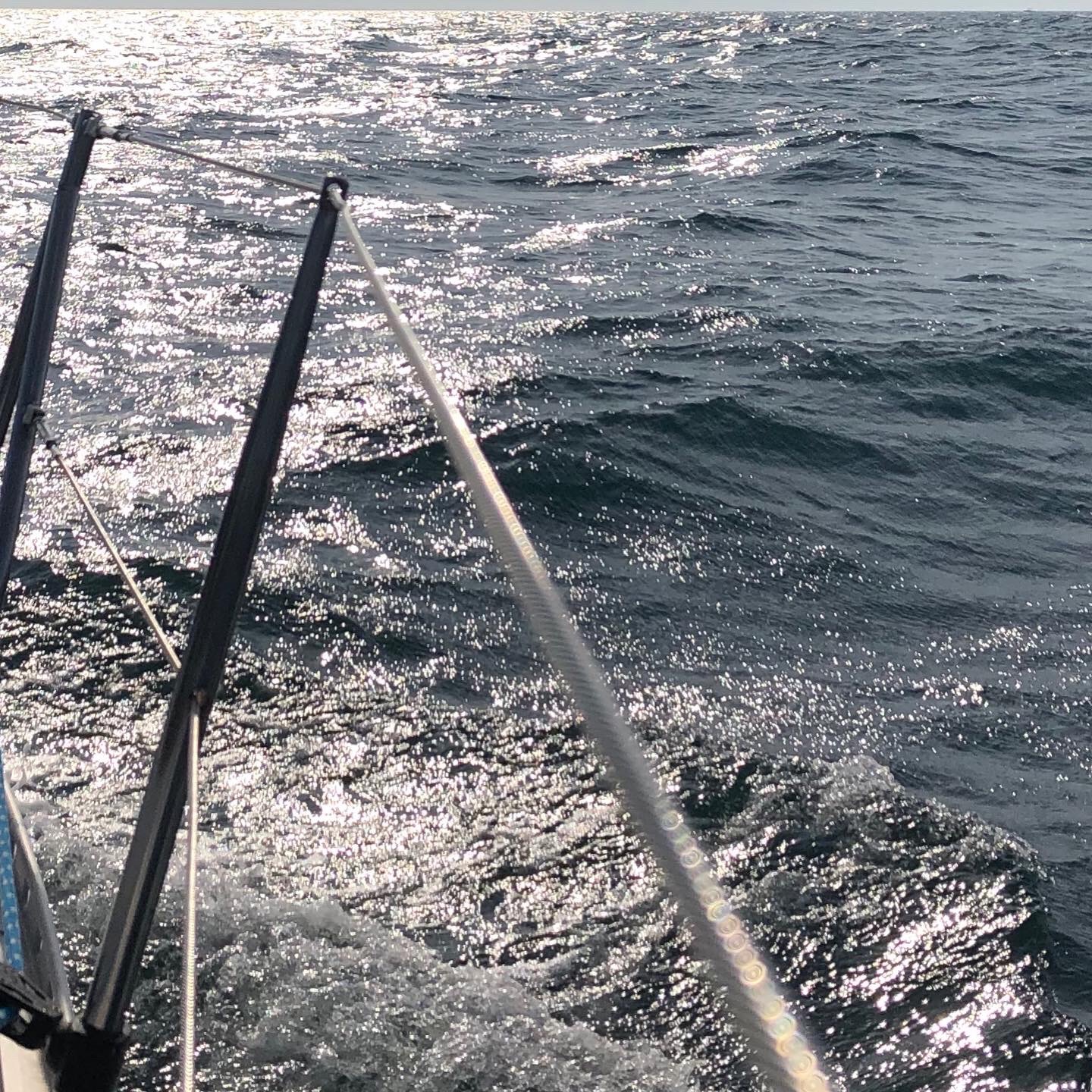
    When we got out of the lee shore of Cape Ann the wave action picked up, with 3 to 6 foot swells that lifted Fayaway and reminded us we were well out at sea.  But Fayaway handles wave action well, and with her sails reefed in the 28 – 30 knots of sustained wind were comfortable for the duration.  Which invited conversation about travel and plans for the future and the kind of catching up you do when it’s just you and others and the wind and splash of waves for hours.

    I’ve learned that I’m a bit rusty with ancillary sailing terminology that goes deeper than the basic rigging, and assisted where appropriate while staying out of the way the rest of the time.  When you see a couple who have sailed together for a year covering thousands of miles you’re witnessing a well-choreographed dance.  I’m not the sharpest knife in the drawer but I know enough not to be the clumsy fop who thumps onto stage mid-act.  Instead be the quiet stagehand who puts away the props when the performers are done.  I was grateful for a patient crew who recognized the rustiness in this sailor.

    There are a few highlights when you sail up the coast from the Merrimack.  You begin with the chaos of the Merrimack River with powerboats and jet-skis racing to win perceived races to get “there”.  It reminded me of aggressive drivers on the highway shifting two lanes and back to get one car ahead.  Its the antithesis of the sailing we were doing, and I greatly prefer being out of that race.  Once you clear the Mouth of the Merrimack, sails are up and you set course for nowhere in particular.  The lines of umbrella stands on Salisbury Beach and elbow-to-elbow fishermen and women on charter boats indicate that social distancing is a guideline many choose to ignore.  I’m sure plenty were doing their best to be socially responsible, while others proved more reckless.  I considered the similarities between drivers on the highway, power-boaters racing each other in a narrow channel to get to the fish first and close-talking beach umbrella bunnies in a pandemic for a moment, and released the thought onto the breeze.  We all live our lives in our own way in America, if not always responsibly.  I was observing from the vantage point of a sailboat in close proximity with another couple, but with the mutual assurance that each couple was taking appropriate measures to avoid COVID-19 exposure.  Maybe those beach throngs were doing the same thing.  I hope so.

    Soon Fayaway moves beyond umbrellas, beyond the sight of land, beyond the hum of motorboats, and we’re in our own world.  For much of the duration of our trip out and back we were completely alone other than a couple of commercial fishing vessels busily working the waters of the gulf.  Time on the water gives you time to ponder and think, and, if you let it, to look through the swirling waves deep into yourself.  And Sunday became another micro adventure for the books.  Leaving terra firma for the sea and exploring a relatively small segment of the Gulf of Maine.  It served as a reminder that I have far to go, but where I am isn’t all that bad either.

  • I Must Get Back To The Sea

    “The sea 
       isn’t a place
         but a fact, and
           a mystery”
    – Mary Oliver, The Waves

    It’s been less than two weeks since I’ve visited the ocean, and it feels like forever.  We’re deep into the holidays now, and the end of the quarter, the end of the year and the end of the decade.  There’s no time for the ocean right now, but on the other hand there’s no better time for the ocean.  I’m planning at least two trips to the ocean in the next week, for exercise and sanity and a bit of winter beach solitude.  I’m close enough to salt water that it’s not going to break either the time or financial banks.

    I noticed a lot of fresh water experiences in 2019, Lake Michigan, Lake Ontario and exploring a double-digit number of waterfalls in New York, New Hampshire, Connecticut and Scotland. I’m hoping 2020 brings even more opportunities to ponder the mysteries of the ocean.  I know I have a good head start teed up for New Year’s Day.  For today, I’m using this Mary Oliver quote as inspiration for a four of my favorite moments with salt water in 2019.  

    Camusdarach Beach: My bucket list beach, and I’m grateful I had the chance to check this box in 2019. Sure, it was a rainy November day, but it was still as beautiful as I’d hoped it would be. I’m already plotting a return.

    Plum Island: My go-to winter beach, close to home and blissfully isolated on a cold weekday. My lunchtime walk was my favorite long walk on a beach this year.

    Sailing on Fayaway: I shake my head thinking I only went sailing once this year, which was the fewest number of times on a sailboat I’ve had in years. I’m grateful for the crew of Fayaway for giving me the opportunity to sail with them. I’ll get out more in 2020, I promise myself.

    Buzzards Bay: Home away from home. The sunsets are stunning, but I’m partial to the sunrises. Swimming in Buzzards Bay doesn’t offer surf action, but it makes up for it with warm, salty water you can float in forever. At least I wish sometimes it were forever. The last swim of the year is always bittersweet, and, like sailing, I always hope for more next year.

    We only have so many days, where do you prioritize the time you have? If I’ve learned anything in reviewing the year, it’s that I need to double down on my time with salt water. On the beach, on an oceanside trail, on a boat, or swimming in it, I must get back to the sea.

  • Stumbling Upon Buried Treasure

    While waiting for a taxi to the airport I scanned the wonderful old books lining the shelves at the London hotel I’d been staying in. I do this often when I have moments like this, it’s where the buried treasure is after all. I saw two books on a shelf at eye level that drew my attention; Two Years Before the Mast, by Richard Henry Dana Jr. and an old collection of English poems. I’d read Two Years Before The Mast several years ago at the recommendation of a friend who’s doing exactly that at the moment. I flipped through it quickly, saw the old stamps indicating it was a library book and smiled. Libraries were where I found most of my buried treasure before the Google and Amazon changed everything.

    To this day my favorite discovery was an old copy of Typee by Hermin Melville pulled at random from a university library shelf in the fall of 1984. I was a freshman then, figuring out this college thing, and fascinated with the vast rows of books I could walk through. I picked up Typee and brought it to a reading nook and read the first couple of chapters, quickly falling in love with this other world. I’d return the book and come back again and again to it in the same fashion until I finished it, never checking it out (sadly not including my name on the stamp), but finishing it nonetheless. That friend who loaned me Two Years Before The Mast in turn took my recommendation to read Typee and now has a boat named Fayaway, a compelling character in the story.

    That other book, the one on poetry? I opened to a completely random page in a completely random book in an old library book stuck on a hotel shelf in London….. so you know; random. And I read this:

    Care-Charming Sleep, thou easer of all woes,

    Brother to Death, sweetly thyself dispose

    On this afflicted prince; fall, like a cloud,

    In gentle showers; give nothing that is loud

    Or painful to his slumbers; easy, light,

    And as a purling stream, thou son of Night,

    Pass by his troubled senses; sing his pain,

    Like hollow murmuring wind or silver rain;

    Into this prince gently, oh, gently slide,

    And kiss him into slumbers like a bride!John Fletcher

    Fletcher died in 1625. Analogies between sleep and dying are common, and Fletcher dabbling with the concept in this poem/song from 400 years ago illustrates that. We all want to gently fall asleep, and given the choice we’d likely all wish the same for our final sleep. Poetry either grabs you or it doesn’t. I haven’t made up my mind on this one, which means it’s the latter. Not everything you pick up in a book is going to be buried treasure. If it were what would be the value anyway? But there’s something to chew on here anyway.

    Two Years Before The Mast was written by a man named Richard Henry Dana Jr. after he left Harvard to regain his health after contracting measles. It’s a fascinating book that illustrates life onboard a merchant ship on a two year journey as they rounded Cape Horn to pick up cattle hides in California to haul back to Massachusetts. Seeing the book again prompted me to read a bit more about Dana, and I was struck by one part of his legacy. Dana Point, California is named after him. I’ve spent a fair amount of time in Dana Point, but never made the connection to the book until today. It seems I found some buried treasure after all.