Tag: Friedrich Nietzsche

  • The Less Lazy Way

    “Men are inclined to laziness. Some will feel that he might have said with greater justice: they are all timorous. They hide behind customs and opinions. At bottom, every human being knows very well that he is in this world just once, as something unique, and that no accident, however strange, will throw together a second time into a unity such a curious and diffuse plurality: he knows it, but hides it like a bad conscience.” — Friedrich Nietzsche, The Will to Power

    To borrow the Kenny Loggins phrase: This is it. Make no mistake where you are. You’re going no further. We know this intuitively, yet we still wrap ourselves in lazy routines and escapism. We’ve got nothing more than now to work with, yet we treat our days as frivolously as disposable napkins. ’tis now or never friend. Break the lazy—be bolder.

    Easier said than done. We all have our bank of bad habits. I know I ought to work out more and put in more time with the things I’m leaning into becoming. But life gets busy, people we care about need our attention, work demands are never quite satiated. The fact of the matter is, after a long day of filling other people’s buckets our own feels pretty empty. Good enough seems okay in such moments. This is where we must break free of ourselves.

    “How does one become stronger? By deciding slowly; and by holding firmly to the decision once it is made. Everything else follows of itself.” ― Friedrich Nietzsche, The Will to Power

    Decide what to be and go be it. And then establish habits that affirm the identity we wish to have in this brief lifetime. Simple, right? We know better. Creating the person we wish to become is never simple, but it is possible. This is the less lazy way, and everything else follows.

  • Accumulated Value

    “A life spent making mistakes is not only more honorable, but more useful than a life spent doing nothing.” — George Bernard Shaw

    “Those were steps for me, and I have climbed up over them: to that end I had to pass over them. Yet they thought that I wanted to retire on them.” — Friedrich Nietzsche, Twilight of the Idols

    There are times when doing nothing seems better than stumbling along making one mistake after another. There are times when standing still seems far more attractive than sliding sideways off the cliff. We are progressing one step at a time, even as some of those steps feel like a plateau. What are we reaching for but some better version of ourselves?

    As we grow and acquire skills and knowledge we become more useful. Our usefulness to others is a trade-off of sorts, a curriculum vitae of accumulated value used to trade our time and applied energy to the greater good, or at least a paycheck and a place in the room where it happens. But that accumulated value also applies to our usefulness to ourselves. We reach our potential through the climb.

    I spoke with an old college friend recently. Conversations with people you haven’t seen in a long time turn into a gap analysis: What have you done in the time between then and now? Relationships, children, jobs, affiliations, beliefs and habits all fill the gap, determining who we become. Some people grow apart, some grow together. Life is a game of place and time, yet we still have a say in who we might be. The thing is, a conversation like that allows us to see the gap in ourselves too. Those steps passed over summarized as growth and setbacks, lessons learned or missed, all bringing us here.

    Do we like the view? We must remember that we’re simply passing over another step. It’s helpful to ask what value we’re accumulating in this present state, and how that might ease our ascent to the next. For the journey continues this day.

  • The Mind of the Restless Spirit

    “Do not be deceived! The busiest people harbor the greatest weariness, their restlessness is weakness—they no longer have the capacity for waiting and idleness.” — Friedrich Nietzsche

    I think about being idle, but rarely find myself able to contain my restlessness. If busy is a weakness then I confess to being weak. For me, being active in my days is the only way to survive. Like a shark, I suppose, I need forward motion.

    Naturally, I don’t believe that forward motion is weakness; merely the bold act of being alive. Sitting still and thinking may feel like idleness, but to me it feels like a lost opportunity. Doesn’t that time belong to reading or writing, or maybe weeding the garden? Idleness feels like active avoidance to me. There’s so very much to do in this brief lifetime! So yes, call me weak.

    Writing this blog fills idle time. Time I might use for other things like sitting still and meditating. Maybe quietly sipping a cup of tea and contemplating existentialism. To be fair to Nietzsche, busy isn’t the intent, for busy for the sake of busy truly is folly. Productive is really the point. Give me an hour and I’ll do my best to dance with it. Productive makes the world go ’round, I believe.

    Someday we all find idle. But what will we do with now? Such is the mind of the restless spirit.

  • We Are Growing Volcanoes

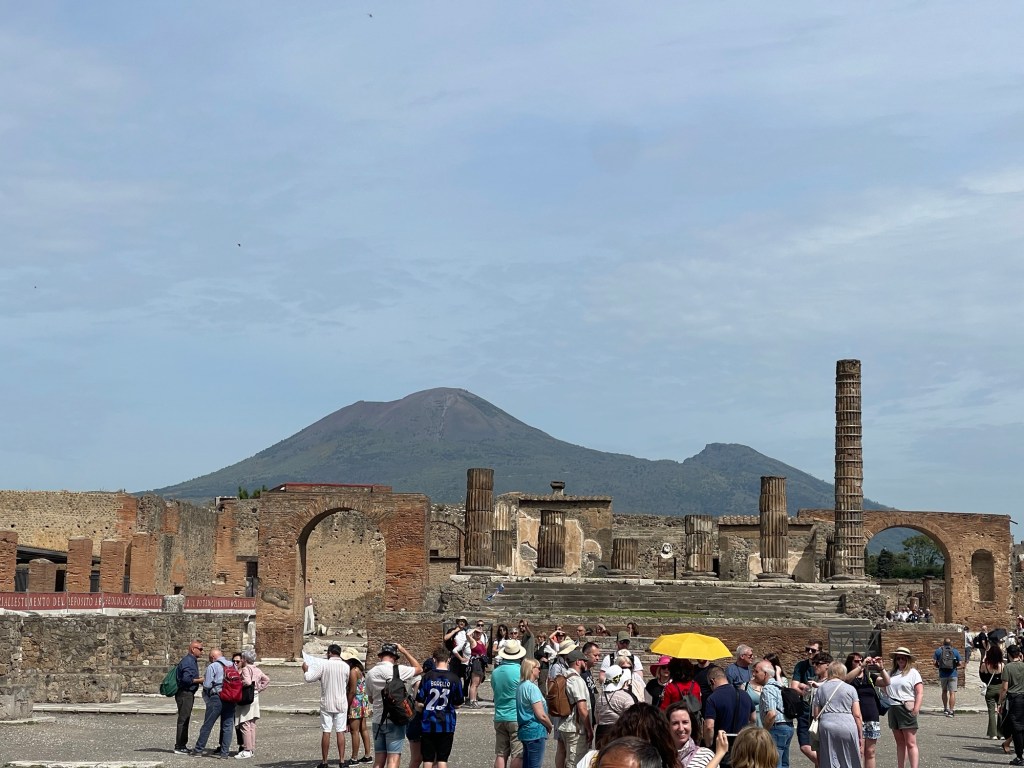
    “Countless things that humanity acquired in earlier stages, but so feebly and embryonically that nobody could perceive this acquisition, suddenly emerge into the light much later... All of us harbor concealed gardens and plantings; and, to use another metaphor, we are, all of us, growing volcanoes that approach the hour of their eruption; but how near or distant that is, nobody knows—not even God.” — Fredrich Nietzsche, The Gay Science

    “I prefer to understand the rare human beings of an age as suddenly emerging late ghosts of past cultures and their powers—as atavisms of a people and its mores: that way one really can understand a little about them. Now they seem strange, rare, extraordinary; and whoever feels these powers in himself must nurse, defend, honor, and cultivate them against another world that resists them, until he becomes either a great human being or a mad and eccentric one—or perishes early.” — Fredrich Nietzsche, The Gay Science

    Most of us feel the changes within ourselves, pushing us beyond our previous boundaries. Change is uncomfortable yet necessary, for aren’t we meant to grow? Nurtured or resisted by the host, we learn over time. We are, each of us, growing volcanoes.

    The thing is, the rest of the world doesn’t like volcanoes very much. Who wants volatility and fire? Volcanoes are disruptive. Volcanoes are change agents that turn the landscape upside down. The world wants tranquility and sameness. The world wants us to remain dormant.

    Forget the world. Volcanoes are builders. They create islands where there were once only waves. They create mountains where there was once only thin air. For all the fuss at the time, it isn’t until things cool down a bit that we see just what was created. For the world to grow we volcanoes need to tap into what’s deep inside.

    The very process of becoming is inherently dynamic and disruptive. Nobody feels this more than the volcano. But we must let our creative forces flow or we’re doomed to explode. History is filled with explosive characters who made a real mess of things in their time. We aren’t here to make a mess, we’re here to build something bigger than ourselves. When we let ourselves become what we want to be, that pressure is relieved. Flow is creative expression released. The trick is to flow, not blow.

  • The Big Reveal

    “He who is not courageous enough to take risks will accomplish nothing in life.” – Muhammad Ali

    “He who has a why to live for can bear almost any how.” ― Friedrich Nietzsche

    Is courage the leap into the unknown or the perseverance and grit to see it through? I think Muhammad Ali would add that courage requires more of us than simply stepping into the ring, it’s taking the punches and standing up again round-after-round. We all have our own ring to step into, filled with work, family, relationships, fitness goals, writing goals, getting-through-the-day goals.

    What are we prioritizing and what do we let slip away? Isn’t it just as courageous to say no as it is to say yes to something? Perhaps more so? Which does beg the question: What are we really trying to accomplish in our brief time here?

    A long and rewarding career? Wrestling a career from the ground up is a grind, filled with moments of sacrifice and tactics, honor and betrayal, tedium and tenure. How we play it determines just how long and rewarding it turns out to be. Maybe we also prioritize building a strong nest and raising a family. It takes courage simply to have children, especially for the mother, but also courage to stay in the game for the long haul—raising them to be strong advocates for decency and hope.

    Just what do we lean into for the long haul? Comfort? Adventure? Can you be comfortable when you seek adventure? Perhaps, but isn’t it a different kind of comfort than the comfort the person who seeks comfort seeks? Every climb requires discomfort. Every leaper must bear the impact of the landing before leaping again. Discomfort is what we pay now for comfort later. Conversely, comfort now tends to make later more discomfortable. We each must pay our dues in life to get to the place we want to be. Life takes time and courage to see it through.

    The neighbors through the woods had a large shed built last year during the summer months. My bride and I debated just what they were building as it seemingly took all summer to complete the work. She said that whatever it was, we’d have the big reveal when the leaves dropped in the fall and everything would become obvious. Sure enough, that’s exactly what happened.

    It’s worth asking ourselves every time we stand up in our own ring, why am I doing this? For there’s no long-term courage without a compelling purpose. Sometimes the answers are obvious, and sometimes we have to wait for our own big reveal, when the seasons change and the things that were most important all along become apparent. Often, courage is staying the course long enough to find out.

  • The Wanting-to-Know Type

    “There are two different types of people in the world, those who want to know, and those who want to believe.” ― Friedrich Nietzsche

    Belief is the easy route. We suspend our own development and believe the stories other people tell us. Beliefs about other people seemingly different from us. Beliefs in political “leaders” who make promises and amplify those differences, always pointing their finger in another direction so followers don’t look too closely at them. Beliefs about religion or sports or the best movie ever made (don’t even tell me it’s not Local Hero).

    Belief is arrogant, closed, and the end of the story. Stories we’ve arrived at, or stories we’ve never left. Wanting to know is self-effacing, open, and a path to new places. When you want to know you pursue answers. Belief is static, wanting to know is dynamic and fluid. Which of these characters do we want to be in a conversation with at a cocktail party? Who would they want to be having a conversation with?

    This business of becoming is a journey with wanting to know. There’s a place for belief in this world, but the thing is, when you arrive at belief you’ve ended a journey. And who really wants that when there’s so much living still to do?

  • Laying Tracks for the Journey

    “Every man is the sum total of his reactions to experience. As your experiences differ and multiply, you become a different man, and hence your perspective changes. This goes on and on. Every reaction is a learning process; every significant experience alters your perspective.
    So it would seem foolish, would it not, to adjust our lives to the demands of a goal we see from a different angle every day? How could we ever hope to accomplish anything other than galloping neurosis?
    …beware of looking for goals: look for a way of life. Decide how you want to live and then see what you can do to make a living WITHIN that way of life.”
    — Hunter S. Thompson, via Farnam Street

    “Freedom is the will to be responsible for ourselves.” ― Friedrich Nietzsche, Twilight of the Idols

    How do we want to live? Why don’t we ask ourselves this more often? We keep adding to our collection of more (experiences, relationships, stuff, distractions) in hopes that we’ll eventually find all the answers. If we look up from our own reflection long enough we might notice that everyone else is trying to figure it out too.

    There’s a gap that emerges between people as they each follow their own path. Sometimes the path intersects again, sometimes the path diverges and you grow further apart. And sometimes one or both parties decide to find a new path together, come what may. This itself is a decision. We can’t have it all, yet we have that nagging voice that whispers that we might. At some point, we’ve got to stake our claim on a way of life that feels right for us.

    We owe it to ourselves to seek as much experience as we can, that we might draw from each some nugget of how we might want to live. That collection of more isn’t so bad after all, so long as we’re collecting the things that determine our desired future state. More ought to be railroad ties to lay our tracks upon, not driftwood.

    It always comes back to how we want to live in this moment in our lives, but also (if we dare) in our next moment. With an optimistic eye towards the future, we might pivot towards something more, or pause in more of the same. Of course there is no stasis, the world will keep moving whatever we decide on. We can’t expect the train that just left the station to come back to get us. But maybe that wasn’t the track we were meant to go down anyway. While we don’t always know our destination, pointing ourselves in a direction that feels right is a way to break free of indecision towards discovery.

    It’s always been about the journey, hasn’t it?

  • Can’t See the Open Road

    Mellow is the man who knows what he’s been missing
    Many, many men can’t see the open road
    — Led Zeppelin, Over the Hills and Far Away

    Huddled in a group at an Irish pub, four men scheming for the future: one free of obligations and ready to roam, one surfing the peak of his career and working to cash in before it crashes, one just riding the swell and hoping this time—this time— he’d caught the right wave, and me, a would-be writer and wanderer observing the human condition. I’m surfing my own wave, of course, but don’t we all dream of coming about, hoisting the main and sailing away instead?

    We labour at our daily work more ardently and thoughtlessly than is necessary to sustain our life because it is even more necessary not to have leisure to stop and think. Haste is universal because everyone is in flight from himself.” ― Friedrich Nietzsche, Untimely Meditations

    Nowadays we can all see what we’ve been missing in YouTube videos, Instagram and Facebook posts, or wherever you choose to live vicariously through the lens of others. My own favorite footage often involves drones flying above stunning landscapes, as if I were flying myself. And don’t we all wish to fly?

    But the question is, do we wish to fly away from something or towards something? For life is short and we can’t waste our precious time running away from ourselves. Yet so many do, in distraction and debauchery and debate. It’s easy to run away, but impossible to really get away from that nagging discontent.

    Old friend Henry David Thoreau pointed out that “the mass of men lead lives of quiet desperation.” He would also say that, “So thoroughly and sincerely are we compelled to live, reverencing our life, and denying the possibility of change. This is the only way, we say; but there are as many ways as there can be drawn radii from one centre. All change is a miracle to contemplate; but it is a miracle which is taking place every instant.”

    In other words, life is change, everything is changing around us even as we debate what we ought to do with ourselves. Which brings me back to a constant refrain: We must decide what to be and go be it. And be content with that which we leave behind.

  • Hearing Our Music

    “Those who were seen dancing were thought to be insane by those who could not hear the music.”
    – Friedrich Nietzsche

    When is it easiest to hear your own music? When it’s quiet, of course. When you pull yourself away from the madness of the world, find the stillness and listen.

    When it is easiest to hear the music that others are dancing to? When you break bread together, gather around and listen. And after the last couple of years you’ll hear all sorts of things.

    Being out amongst the masses again, seeing many old familiar faces that have weathered differently in the storms of the last few years, prompts reflection on how I’m weathering the storm myself. You see quickly who has struggled, who has pivoted to find a different side of themselves, who has stuck to old beliefs or abruptly changed to new ones, and who has opted out entirely. And you see yourself in each of them.

    This is a particularly noisy week, at an industry event full of people with diverse opinions, stemming from equally diverse backgrounds, information sources and social reinforcement. In this environment you hear some of the music that others are dancing to, even if you don’t always find it dance-worthy yourself. I think the important thing is to hear their music anyway.

    And then reflect on what you’re currently dancing to. You might like it more. Or maybe less. But either way you’ll hear it differently.

  • Gratuitous Exercise

    “Keep the faculty of effort alive in you by a little gratuitous exercise every day.” – William James

    “All weakness is a weakness of will.” – Friedrich Nietzsche

    There’s no getting around it, I’ve been getting weaker – lacking the willpower to get on the erg or pick up the weights. This correlates exactly with work getting busier: more responsibility, more follow-up, and more sitting in front of a computer. That, friends, is no way to live a long and vibrant life. The science supports us: we must move to have a healthy mind and body.

    Don’t get me wrong, I’m hiking and snowshoeing and generally trying to be active on the edges of the day. But you know when you’re working hard and when you’re hardly working. A walk in the woods does the mind and body good, but you’ve got to supplement it with threshold-testing workouts. Through focused effort and honoring commitments to ourselves through exercise.

    I’ve been here before, of course. Burpees were kicking my ass until I started having serious shoulder pain. Rowing on an erg kicked my ass so much in college and CRASH-B’s that I have PTSD and have a hard time doing anything but steady-state on the thing. So what do you do when your worst enemy is yourself? You simplify and establish lifetime habits that brush aside the resistance with routine. It simply must be so.

    And so I’m returning to a workout program that doesn’t require spotters and doesn’t tolerate excuses. I’m returning to the kettle bell and dynamic stretching, and rowing on the erg to round out the challenge. You can take a kettle bell with you when you travel, you can break away from your computer for a simple workout that kicks your ass in minutes. And you can eliminate the excuse of time: Those optimistic long steady-state workouts written on the calendar that fall aside in the crush of work days. Habits build on themselves over time. Simply showing up starts the ball rolling.

    “No matter how strong you are, there will always be someone stronger than you. Using only a number as the litmus test of whether you are strong or not is self-defeating. You will get older. You will not be able to continue to set personal all-time bests forever. But you can continue to get stronger mentally. You can adjust to whatever the environment is and challenge yourself to push past wherever you are at the moment, in any way you can, and feel good knowing you just made yourself a better man or woman.” – Pavel Tsatsouline, Kettlebell Simple & Sinister

    Fitness is the ultimate objective, of course, but the why is to get stronger mentally. To build up your brain and push through excuses. To thrive on the faculty of effort and make yourself a better person. And this translates into everything else you do. If you’re making excuses on something as essential as your fitness, what else are you making excuses about? Mastery doesn’t happen overnight. But it begins with showing up and doing the work.

    “To master your mind is to master your life. There is no more worthwhile pursuit.” – Sir John Hargrave, Mind Hacking

    Gratuitous exercise implies frivolous or unnecessary. But there’s another definition for gratuitous, and that’s doing something free of charge. To exercise free from the burden of feeling like you have to do something and instead to exercise simply because it’s a part of who you are. Something you want to do. To simply do for the love of where it takes you.