Tag: Gloucester

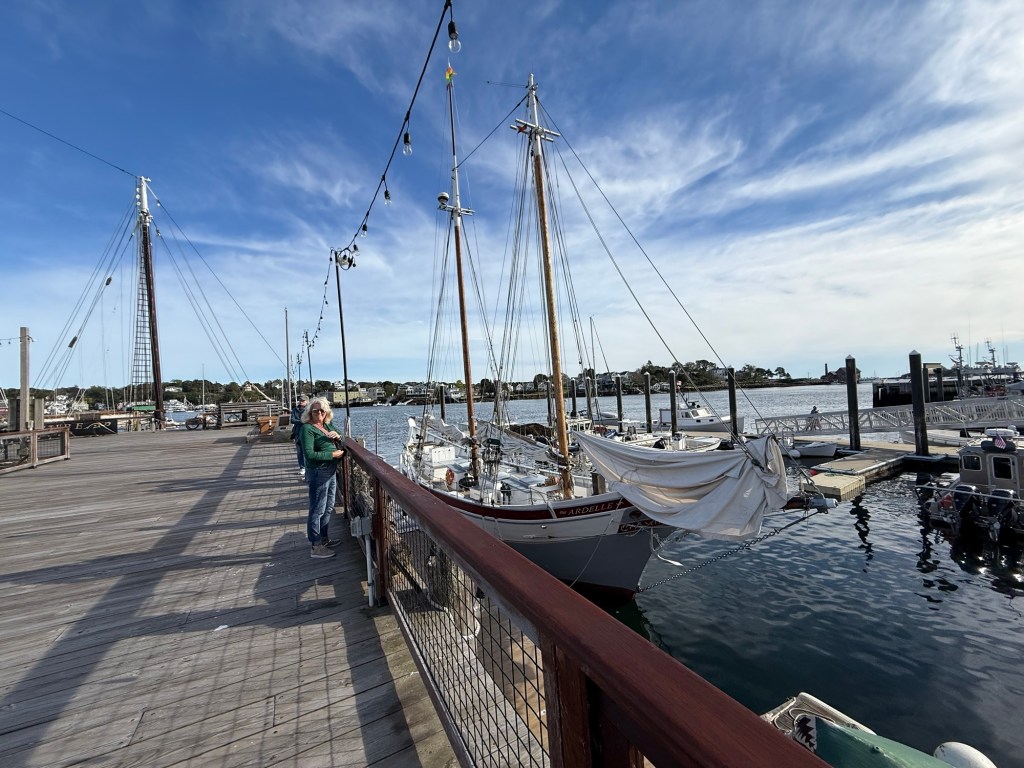
  • The Schooner Ardelle on a Celtic Sunset Cruise

    These summer clouds she sets for sail,
    The sun is her masthead light,
    She tows the moon like a pinnace frail
    Where her phosphor wake churns bright.
    Now hid, now looming clear,
    On the face of the dangerous blue
    The star fleets tack and wheel and veer,
    But on, but on does the old earth steer
    As if her port she knew.
    — William Vaughn Moody, Gloucester Moors

    We know when we are in the midst of something extraordinary. Anticipation creeps up on us as the minutes pass by, awaiting our participation. Awareness floods in as the magic unfolds. Joy and gratitude edge in, provoking other emotions. There comes a time when we must simply put away the camera, stop searching for just the right word or phrase, and simply be a part of all that is happening around us.

    Gloucester, Massachusetts has a long history with the sea. Its famous harbor has long welcomed home fisherman and sailors from passages as far and wide as the ocean’s reach. One feels the history sailing in this harbor, and you play some small part in the play for having been here at all. The fleets of old are mostly all gone now, ghosts of what once was. But there are a few holdouts, and newcomers built in the traditional way, to offer some hint of what it was like long ago.

    Harold Burnham has built several schooners in the traditional fashion. For a couple of centuries the Burnham’s have built ships in Essex, Massachusetts. Two of his schooners are harbored in nearby Gloucester, and Harold himself captains sunset cruises. You simply have to put yourself in the way of beauty and sign up to participate. And if you’re especially fortunate, you may join on a night of Celtic music to offer a proper soundtrack for a September night when the clouds are just so to harness a bit of heavenly magic.

    Maritime Heritage Charters offers many opportunities to learn and experience a few hours on a schooner sailing in Gloucester Harbor. One not to miss is the Celtic Music Sunset Sail with Michael O’Leary & Friends cruise, when traditional music and song fill the heart and soul as you slip past history and witness the divine dance of fading light. The experience is one that will stay with you forever.

    The Schooner Ardelle, Gloucester, Massachusetts
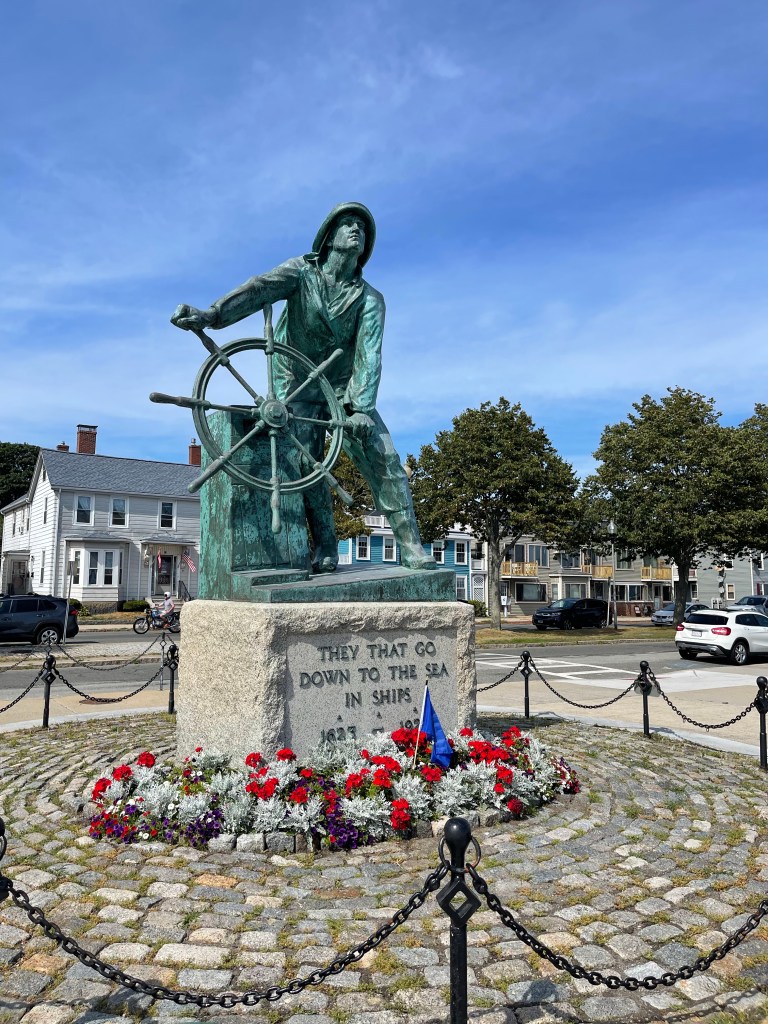
  • The Gloucester Fisherman’s Memorial

    “These courageous men have been known by names other than fishermen. They were father, husband, brother, son. They were known as the finest kind. Their lives and their loss have touched our community in profound ways. We remain strengthened by their character, inspired by their courage and proud to call them Gloucestermen.” — from the memorial plaque at the Gloucester Fisherman’s Memorial

    Gloucester is a small city that sits near the tip of Cape Ann, in Massachusetts. The city is growing increasingly gentrified, but there’s no doubt it maintains its roots in the fishing industry. And when you think of fishing, how can you not think of the Gloucester fisherman? Generations of men and recently women from the community have made their living from fishing. Many went to sea never to return. The Gloucester Fisherman’s Memorial was built in 1925 to forever memorialize them. A few years short of the 400th anniversary of the founding of Gloucester, and the 100th birthday of the memorial itself, I felt compelled to revisit.

    More than 5300 men who left Gloucester Harbor full of hope are known to have been lost at sea. Swept up in Nor’easters, collisions at sea and all sorts of tragedies, whole ships full of fishermen were lost in the unforgiving North Atlantic. Technology makes it safer to go to sea today than its ever been before, but there are still dangers lurking in the unknown. Names are still added to the memorial plaques, but instead of hundreds of names in a given year like 1879, there might be a couple. The most familiar names in recent years were those lost during the “perfect storm” of 1991.

    You don’t get into commercial fishing to be famous, you go to make a living, hoping to return to those you love when your work is done. The memorial itself is modeled after a man named Captain Clayton Morrissey, who died of an apparent heart attack while at sea, years after the memorial had been erected. There’s tragedy in this too, but doesn’t it feel appropriate, that he should pass away at sea? In a way, it makes his image on the statue ring more true.

  • Dogtown

    New England is deeply rooted in its colonial past.  Walking through the woods in most towns in the area, you’ll come across miles of stone walls, old cellar holes and forgotten road beds.  But there is no walk in the woods quite like Dogtown Common.  I had an opportunity to take a walk through this abandoned village yesterday, a bright February Tuesday.  While it was a beautiful day for a walk in the woods, I didn’t see another soul in the two hours I spent there.

    Dogtown is located in Gloucester, Massachusetts, right on the edge of the town of Rockport, on Cape Anne.   It was once a small community of settlers who cleared and farmed the land as so many other communities did in New England.  Unfortunately, they chose a tough spot for this.  As the name Rockport indicates, this area is basically arid piles of loose granite sitting on top of ledge, sprinkled with some dirt.  Once the trees were cleared and the livestock grazed the remaining vegetation to the ground, there wasn’t much left to work with.  Compounding things, Dogtown was sited in an exposed area near the sea, making it an easy target for the British in the Revolutionary War and the War of 1812.  So over time residents moved on, abandoning the area for easier living elsewhere.

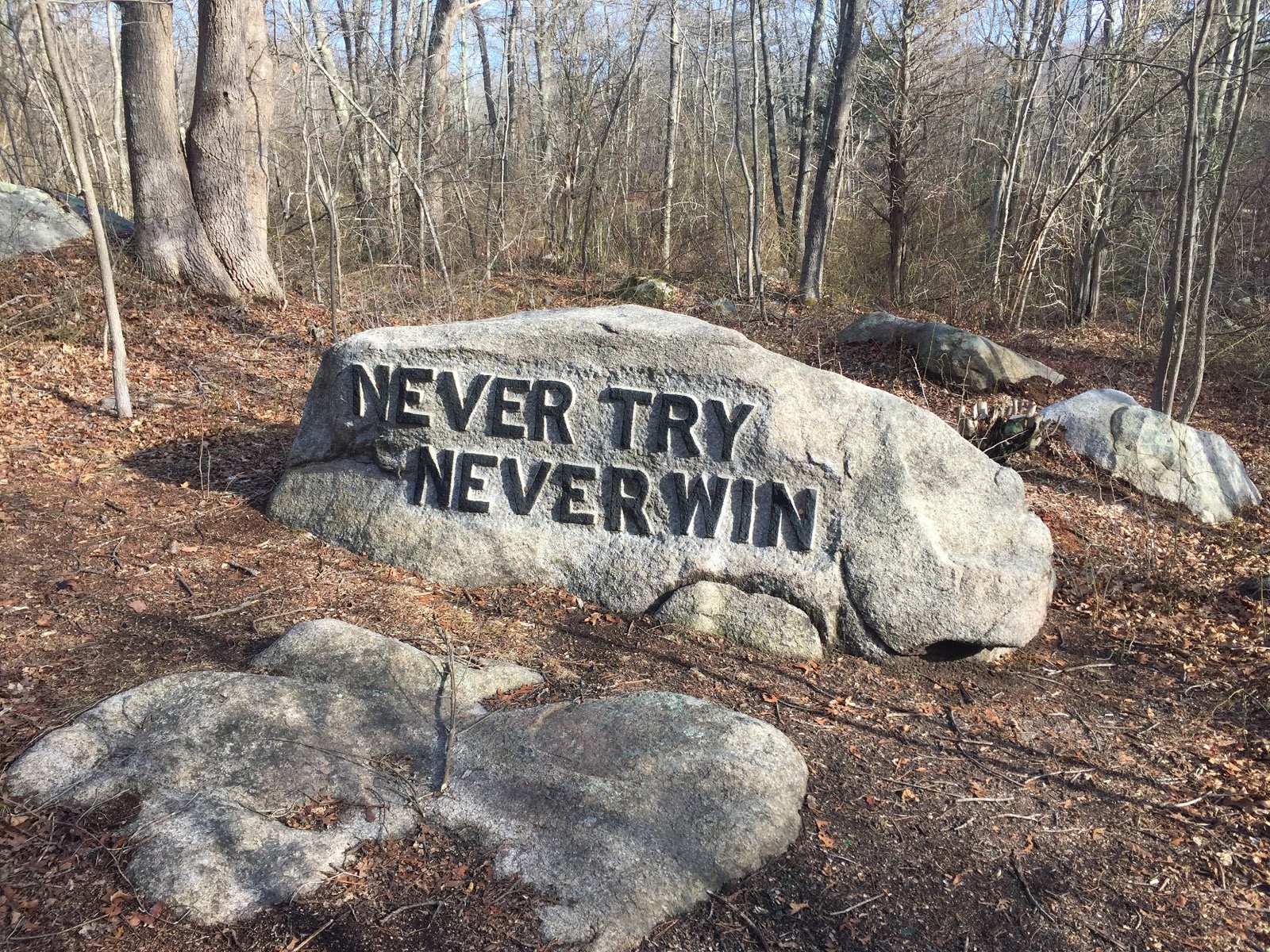
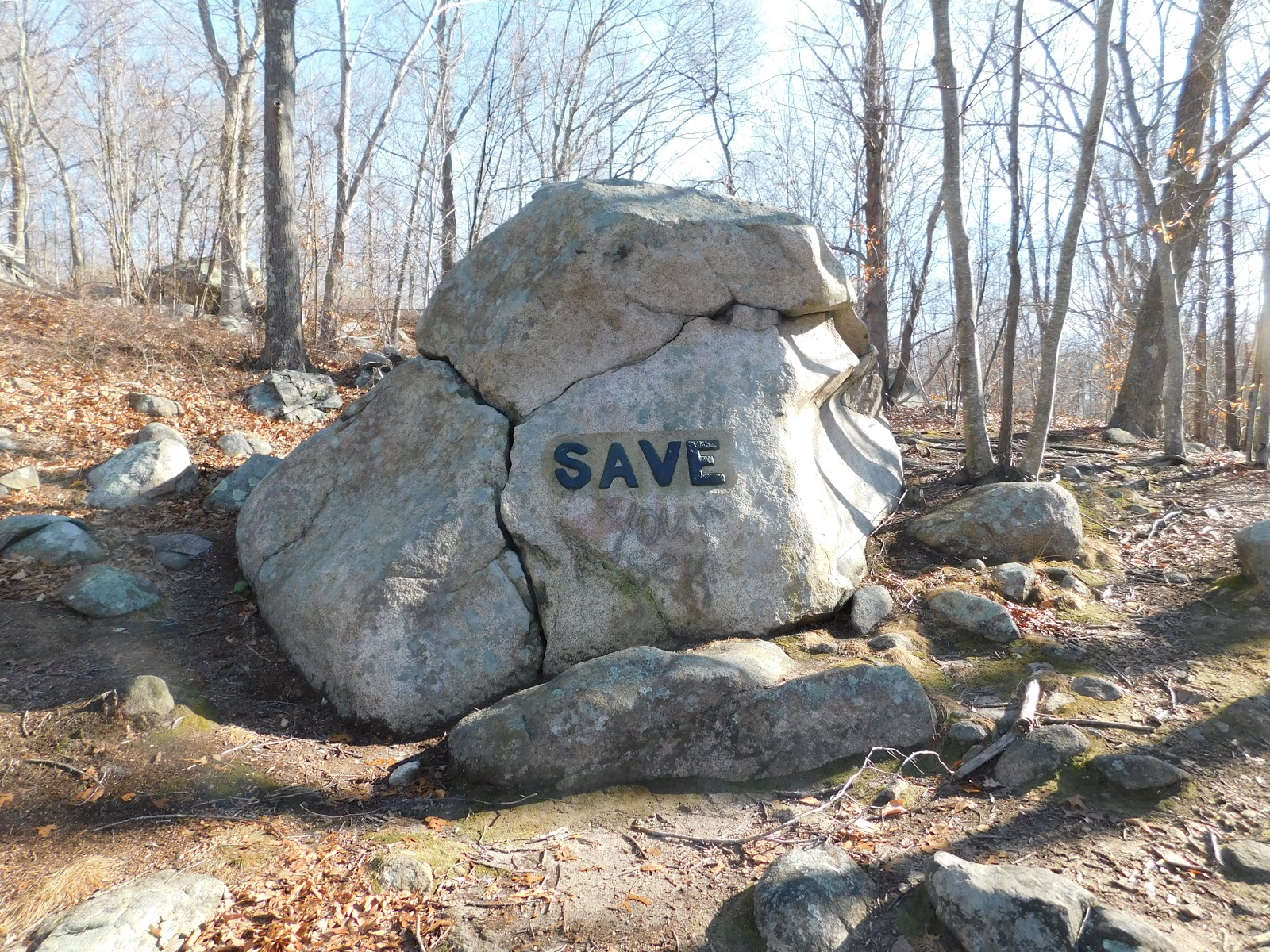
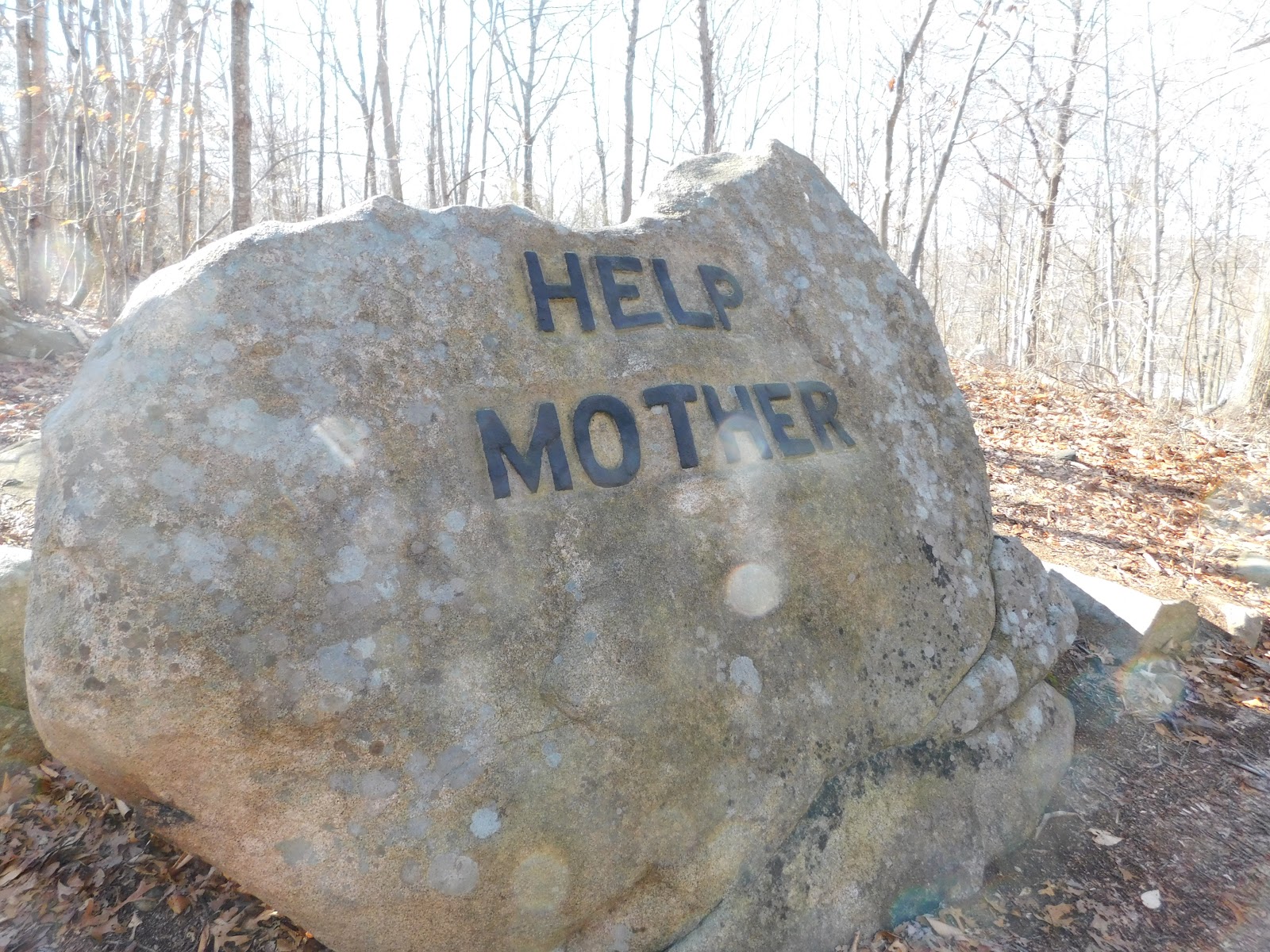
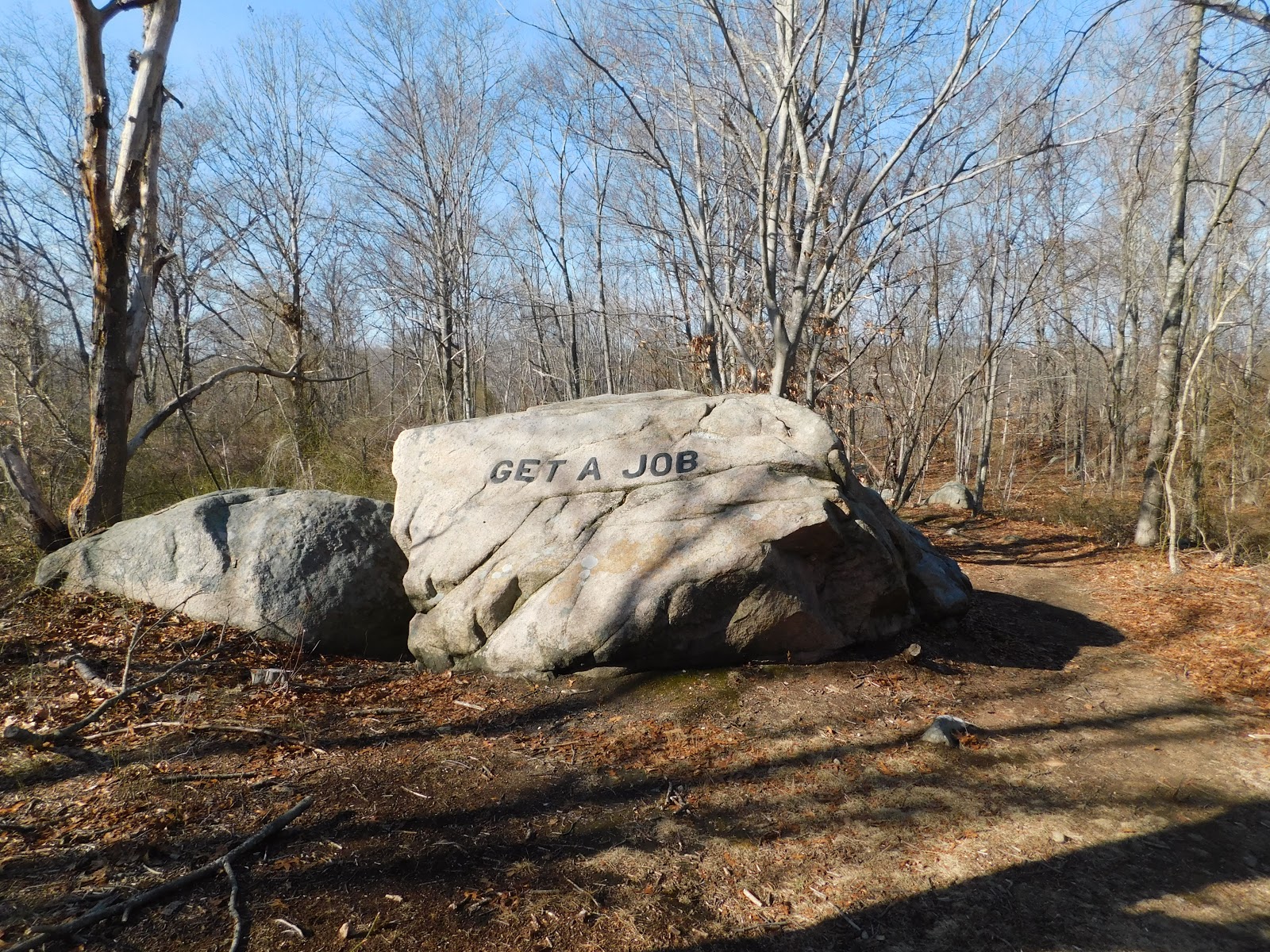
    Sheep continued to graze in this area into the early 20th century, but as with so much of New England    the farmers and herders passed on, leaving the land to return to the woods.  Dogtown 100 years ago was a rocky land sprinkled with grass and shrubs.  Today it’s a forest with a bed of boulders, ledge, old stone walls and cellar holes, similar to what you’d see in forests throughout the region.  What makes Dogtown unique is the work of Roger Babson, who commissioned unemployed stonecutters to carve words and numbers into the granite boulders that litter Dogtown.  Babson was an interesting guy; he was a Prohibition Party member, he predicted the market crash that led to the Great Depression, and he founded Babson College.  As a tenth generation Babson from Gloucester Dogwood Common was figuratively in his blood.


    Walking through the woods of Dogtown on a bright winter day, the work of Babson resonated with me.  I chose a Tuesday when most people are working to visit, and had the place to myself.  Aside from seeing mountain bike tire prints, the sounds of commuter trains on the tracks that cut through Dogtown and the sounds of construction encroaching on the woods at the nearby office park betraying the current century, my visit was timeless.  The stonemasons and the settlers to this area have come and gone from this place and it was my turn, alone amongst the boulders.
    Babson spoke to me from the past with his choice of words and phrases carved into the boulders.  “Get A Job” is highly relevant for me as I leave the struggles of one job for the hope of another.  “Truth” challenges me to be honest with myself about where my own strengths and weaknesses lie.  “Courage” shoves me in the chest and knocks me back a step, urging me to be bold today.  And “Prosperity Follows Service” reminds me that to earn anything worthwhile you’ve got to give much more of yourself.  While some view the messages as a strange curiosity, Babson’s boulders for me are a humbling reminder of what I can be.
    I came to the woods knowing of this place.  Perhaps because I was alone on this brilliant winter day, or maybe because of the place I’m at in my own life, but Dogtown resonated as I walked its quiet paths.  They say that when the student is ready the teacher will appear.  Maybe it was the woods, with voices of the past whispering in my ear as I walked.  Maybe it was me moving on from one job to the next and working that through in my mind.  Or maybe it was a message from a tenth generation Gloucester Babson who died a year after I was born.