Tag: Green Mountain Boys

  • The Yin and Yang of New Hampshire and Vermont

    “She’s one of the two best states in the Union.
    Vermont’s the other. And the two have been
    Yokefellows in the sap yoke from of old
    In many Marches. And they lie like wedges,
    Thick end to thin end and thin end to thick end,
    And are a figure of the way the strong
    Of mind and strong of arm should fit together,
    One thick where one is thin and vice versa.”

    – Robert Frost, New Hampshire

    New Hampshire and Vermont are Yin and Yang.  Almost flipped mirror images of one another, as Frost describes.  The people are similar in so many ways, and different in so many other ways.  Generally, Vermont is a “blue state” while New Hampshire is a “red state”, traditionally voting Republican (much to the chagrin of Vermont and Massachusetts).  New Hampshire has a certain active principle, Live Free or Die vibe going, while Vermont embraces a more receptive, Freedom and Unity vibe.

    The Connecticut River defines the border between the two, as determined by King George III in 1763. Vermont didn’t exist back then, the land was deemed New York’s. But that didn’t last very long; about the time it took for New York to try to collect taxes from the people there. Ethan Allen and the Green Mountain Boys chased the tax collectors right out and Vermont seceded as the American Revolution was ramping up. That’s a very New Hampshire thing to do! And ever since, these two states have been locked in an eternal embrace; interconnected yet independent. White Mountains and Green Mountains, conservative and liberal, two of the smallest states in size and population; wonder twins holding up the northern border and hugging each other for eternity.

  • Hubbardton

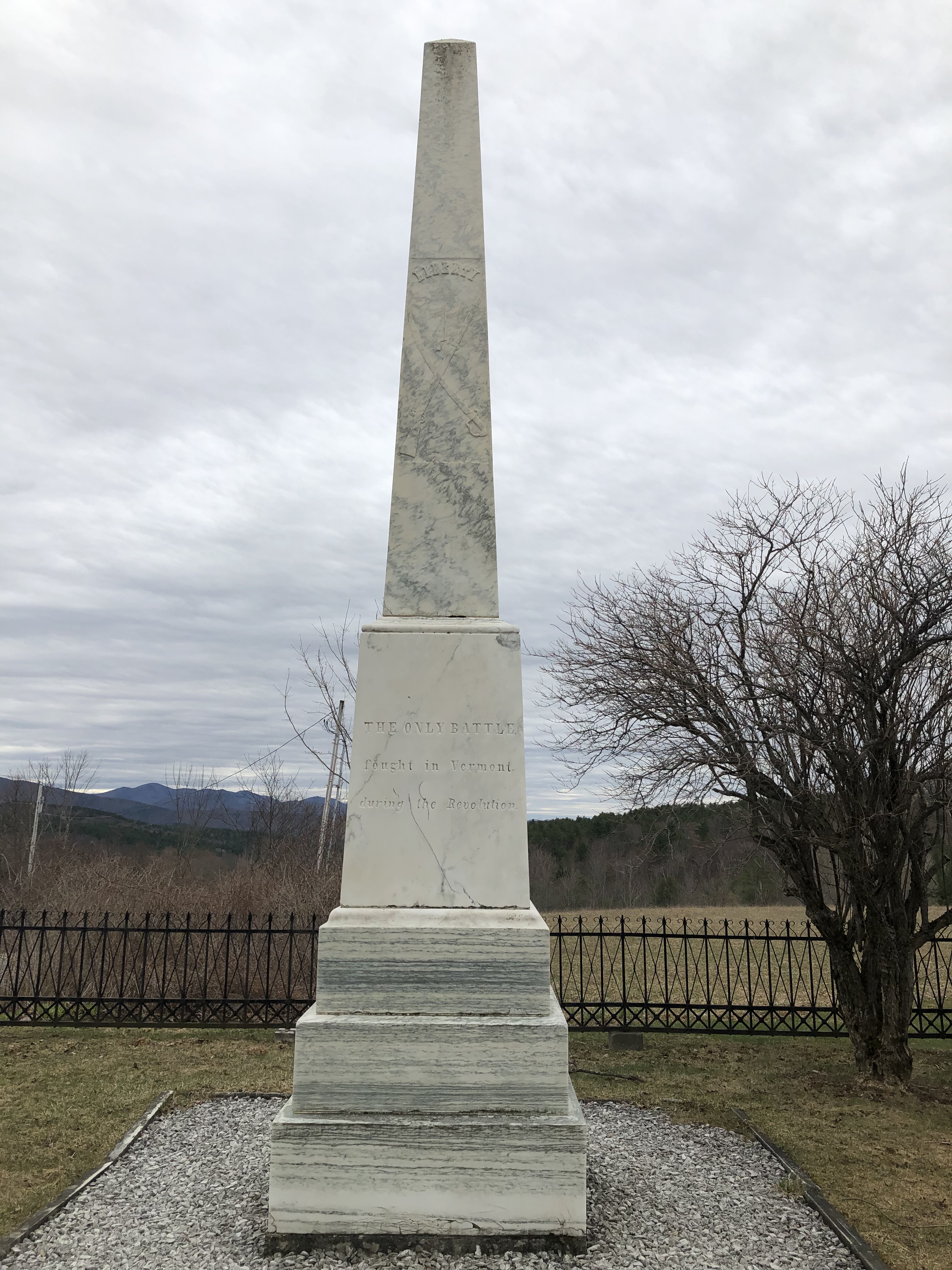
    There was only one battle inside the borders of Vermont during the Revolutionary War.  Many people would point to Bennington as the location, but that battle actually took place in New York.  The Battle of Hubbardton erupted on the morning of July 7, 1777 when the British forces (mostly Hessians) and their Native American allies pursuing Colonial Army forces retreating from Fort Ticonderoga caught up to them on this site.

    The 11th Massachusetts Regiment was the rear guard and were late to join the larger forces commanded by St. Clair, who were marching to Castleton.  Colonel Seth Warner commanded the Green Mountain Boys and Nathan Hale (not the spy) commanded the 2nd New Hampshire Regiment that waited for the 11th to catch up.  Warner decided to spend the night instead of marching on, and the British caught up with them at dawn.  The combined forces of the Massachusetts, New Hampshire Regiments and Green Mountain Boys stood their ground along the top of a ridge and laid fire on the pursuing British forces, retreated further and engaged again.

    Casualties were high on both sides. On the Colonial Army side a combined 370 men were killed, wounded or captured, and New Hampshire’s Nathan Hale was captured in the battle and eventually died in captivity.  On the British side, almost 200 were killed or wounded.  The battle was technically won by the British, but it was a costly battle that, along with battles in Fort Anne and Bennington, were critical delays that helped lead the way to the American victory at Saratoga.  General Burgoyne’s critical mistake was losing focus on the ultimate goal of controlling the British along the water routes from the St. Lawrence to the Hudson River, which would have cut off New England from the rest of the colonies.  Saratoga proved a critical win as it prompted the French to join the Americans against the British.

    I walked around the site of the Battle of Hubbardton on April 18th when I took a quick detour from my business meetings.  Driving out to the battle site is an exercise in faith, as the signage is limited, cellular service ended for both my AT & T and Verizon phones, and you’re driving for what feels like a long time from the highway to the site.  But I’m not easily intimidated by such things.

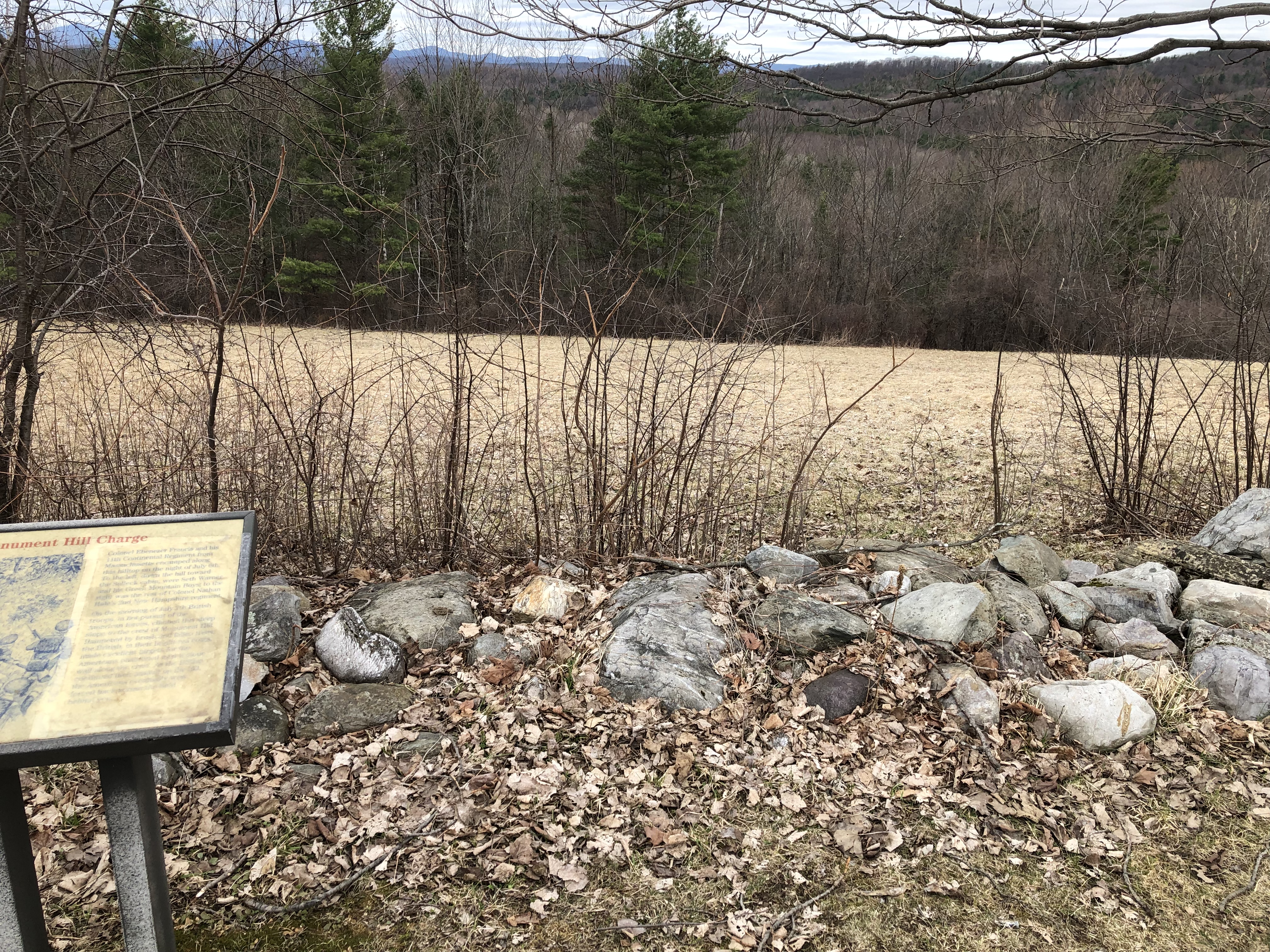
    The actual battle site looks a lot like it did that day.  If anything, it’s even less developed now than it was then, as the fields once planted with corn, beans or hay have been taken back by the forest.  The battle site remains fields, with mown paths that carry you to signs that tell you where you are and what happened at that location.  This was the moment when I recognized that my old dress shoes were no longer waterproof, as the soggy grass transported water to my dress socks with ease.  I normally keep boots in my car but this side trip wasn’t anticipated and, well, it’s only water.

    The Battle of Hubbardton site is an active museum, but it doesn’t open until May and there’s a sign that let me know it’s okay to walk around the grounds.  There’s a small building that likely offers much more information on the battle and the related action at Lake Champlain, Fort Ticonderoga, Fort Independence and Saratoga.  But that will have to wait for another day.  A white marble monument surrounded by an iron fence offers a stoic tribute to the events of that day, and I spent a few minutes walking around it reading the engravings on each side.  I was alone that day, and that solitude made the experience all the more moving as I reflected on the quiet ground that once roared with violent conflict.
  • New Hampshire Grant

    New Hampshire Grant

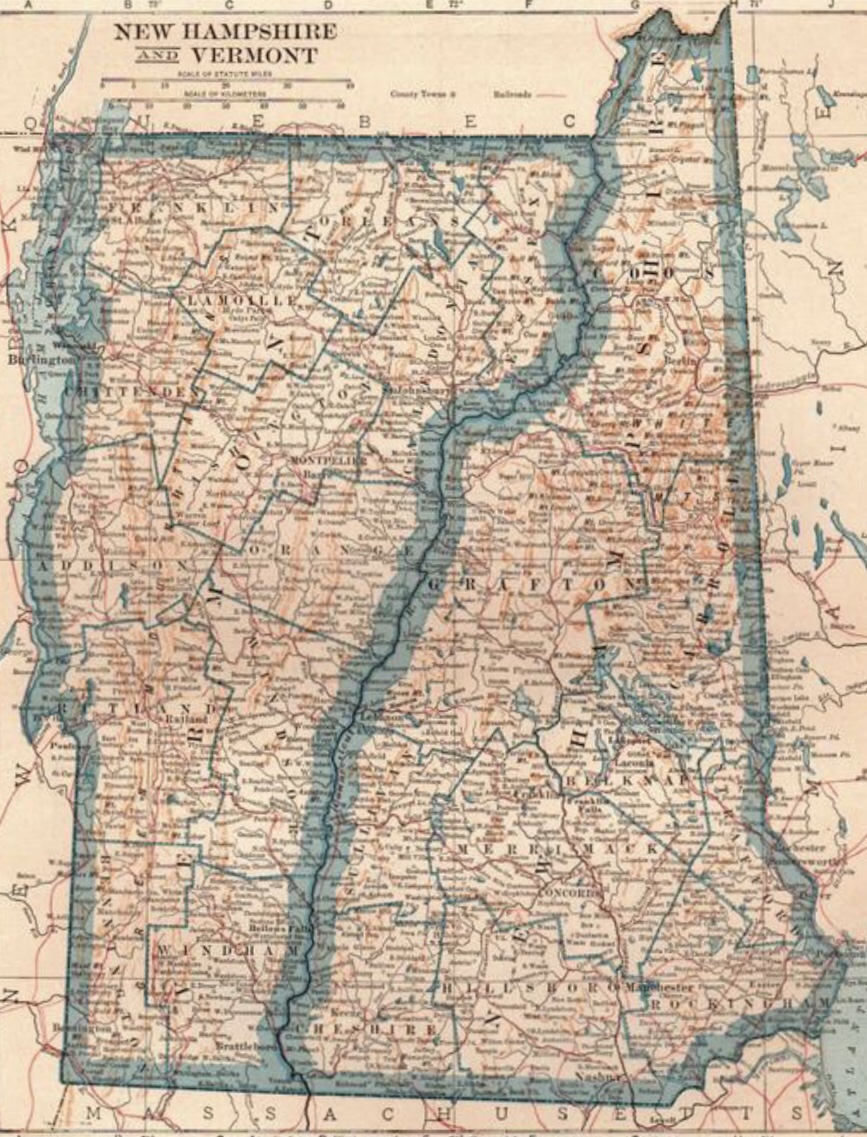
    The land that is today Vermont was once claimed by Massachusetts, New York and New Hampshire.  The Massachusetts claim originated from a fort established in the Connecticut River Valley in present-day Brattleboro.  New York based their claim on original Dutch territorial claims that all the lands west of the Connecticut River to Delaware River were theirs.  When the Dutch were ousted from North America New York followed the same general borders, which were validated by King George II.

    New Hampshire Governor Benning Wentworth chose to follow his own guidelines, choosing the western border of Massachusetts and going north to Canada and east to the Connecticut River as land he had jurisdiction over, which he then granted to middle class farmers who settled the land.  New York was granting the very same land to wealthy landowners and wasn’t particularly pleased by Wentworth’s interpretation of the borders.  These wealthy landowners then tried to tax the middle class farmers on “their” land, which led to even more tensions.

    The most famous of these middle class farmers was Ethan Allen, who was a natural self-promoter.  Allen and other farmers formed the Green Mountain Boys, who organized armed resistance to New York.  The escalating confrontations between the New Hampshire Grantees and the New York grantees continued until the beginning of the Revolutionary War forced all parties to focus on a larger problem.  Eventually New York gave up and Vermont would become a state.  There’s still an independent streak in Vermont and New Hampshire to this day.  Perhaps there’s still some lingering annoyance on the part of some wealthy New York family who’s ancestors gave up the fight for lands they were granted.