Tag: Gulf of Maine

  • The One and Only Cribstone Bridge

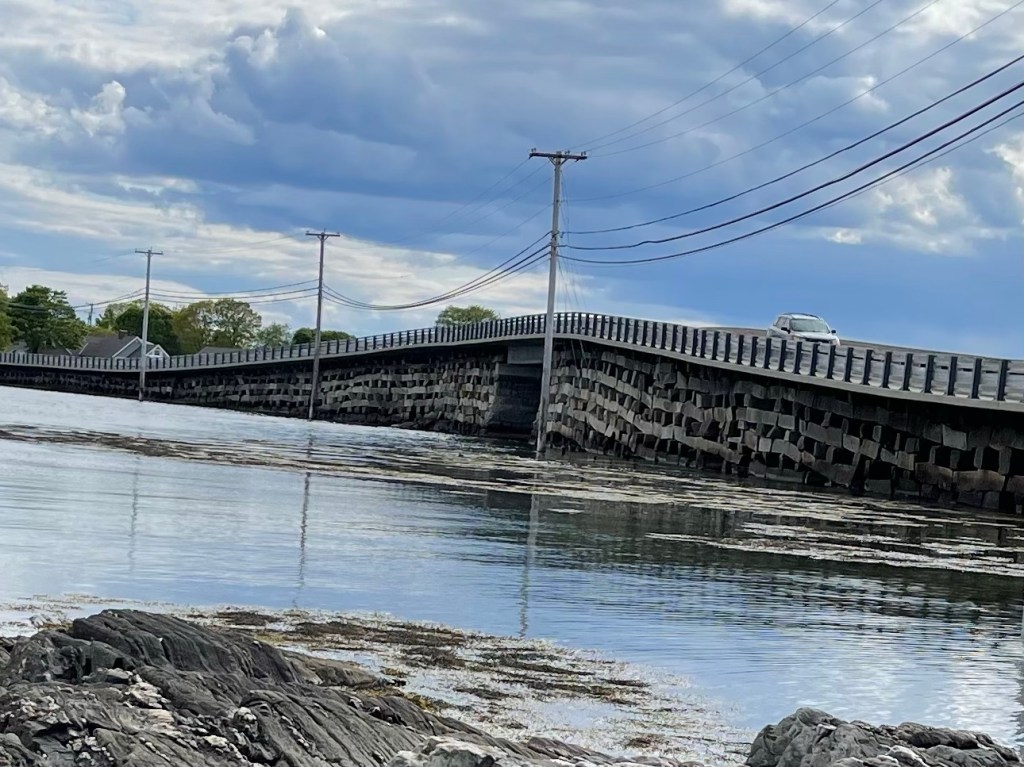
    On the rocky coast of Maine there’s a bridge like no other in the world. Its formal name is The Bailey Island Bridge, but its more descriptive name is the Cribstone Bridge. What makes it unique is its beautifully complex simplicity. It’s basically stacks of cut granite, piled just so one atop the other to form the foundation for a concrete bridge. The magic is in its strength and open design that permits water to flow freely through it. This stack of granite extends 350 meters across an active tidal waterway in Casco Bay, Maine, and has withstood surf, ice flows, boat wakes and a steady flow of vehicular traffic since it was completed in 1928, with only one major repair between 2009-2010.

    There’s truth in the expression “they don’t build them like that any more”. Time tells, and the bridge has proven itself built to last. Anyone who’s played Jenga can appreciate the complexity of a bridge like this. Stacks of granite slabs bear the load, while shrugging off the ocean tides, nor’easters and the harsh cold of a Maine winter. As a critic of mediocre civil engineering projects, I take a bow to this gem of a bridge, showing generations of Civil Engineers what’s possible with a bit of creative genius. It seems I’m not alone in my appreciation, as the bridge is recognized as a National Historic Civil Engineering Landmark, and also on the National Register of Historic Places.

    I wasn’t seeking out this bridge, but I encountered it on a drive out to Land’s End, quite literally a point of land at the end of the road on Bailey Island. I suppose that makes me an accidental tourist of sorts, but these are the kind of encounters that inspired me to start blogging in the first place. Will the Bailey Island Bridge inspire a return to more deliberate regional exploration in this blog? Time tells.

  • The Cold Water Initiation

    “Though it be the hottest day in July on land, and the voyage is to last but four hours, take your thickest clothes with you, for you are about to float over melted icebergs.” – Henry David Thoreau, Cape Cod

    The stretch of water between Cape Sable Island in Nova Scotia and Cape Cod in Massachusetts is known as the Gulf of Maine. A lot of history has floated between these two points, from Native Americans and later the Basque fishing and whaling these rich and vibrant waters to explorers like Giovanni da Verrazzano and Samuel de Champlain mapping the coast and looking for places for settlements. The Gulf of Maine remains the one constant that each would recognize, though they might wonder where all the fish went until they glance back at the developed shoreline.

    In 1604 Champlain ventured south from Port Royal to explore the coast of Maine. It was on this trip that he discovered Acadia, and further south, the “baye longue” between two capes and a long stretch of sand beaches on the present coast of New Hampshire.” (David Hackett Fischer, Champlain’s Dream. It’s on these beaches that generations of New Englanders and vacationing Canadians have discovered the truth in Thoreau’s words: this water is as cold as melted icebergs!

    Cold water gets in your blood, and you don’t celebrate it so much as accept it for what it is: a shocking reminder of how insignificant we really are. The Atlantic Ocean is divided into the Northern Atlantic and the Southern Atlantic, but really, there are divisions within divisions. A swim in Miami is not the same as a swim in Virginia, and a swim in the Hamptons on Long Island is definitely not the same as a swim at Hampton Beach in New Hampshire.

    You aren’t really a New Englander until you’ve taken the plunge into the Gulf of Maine on a hot day. It’s an initiation of sorts into the extremes. There isn’t a person who swam in early July at Hampton Beach who couldn’t relate to the bobbing passengers at the end of Titanic. The cold water hardens you, tests your mettle, and reminds you of your mortality. And that’s why I’ve grown to love a bracingly cold swim now and then. That stinging skin is a shocking reminder that you’re still very much alive… if a bit numb.

  • Sailing the Gulf of Maine

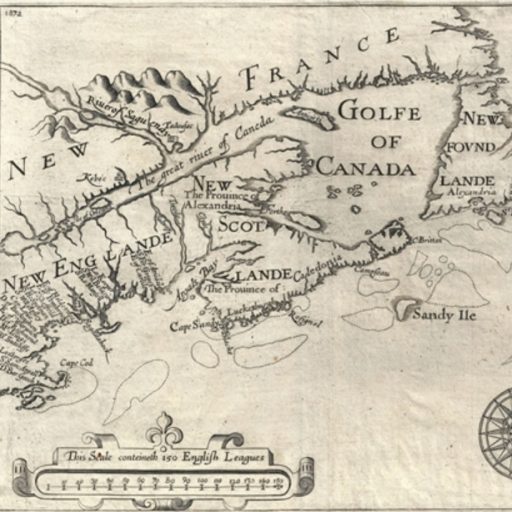
    The Gulf of Maine is a corner of the Atlantic Ocean embraced by Cape Cod to the South and Nova Scotia to the Northeast.  The longest stretch of land in between is part of Maine, which gives the gulf her name.  If you look at Alexander’s map, which this blog is named for, the body of water is just below the land described as “New Englande” and “New Scot Lande”.  A land mass that I’ve grown to love, that I declared I’d explore more, and that I need to return to in earnest once this pandemic is behind us.
    cropped-54b94-alexander2527s2bmap.jpg

    Yesterday we had the opportunity to sail on Fayaway with friends.  It was an out-and-back sail with one tack.  We left the Merrimack River where they moor Fayaway when they aren’t exploring the world and sailed generally on a compass heading of 90 degrees, which took us roughly along the coast of Maine just out of sight of land.  Sail for 18 miles out one way, tack and return 18 miles the other way.  Not a lot of tactical sailing required, which was perfect for a day of conversation and contemplation on the water.  We had a secondary objective of seeing whales and maybe that evasive Comet Neowise, but each proved elusive on this trip.  A sunfish made an appearance, which was akin to an understudy playing the role when you came to see the star: Wasn’t what you came for, but turned out to be entertaining just the same.

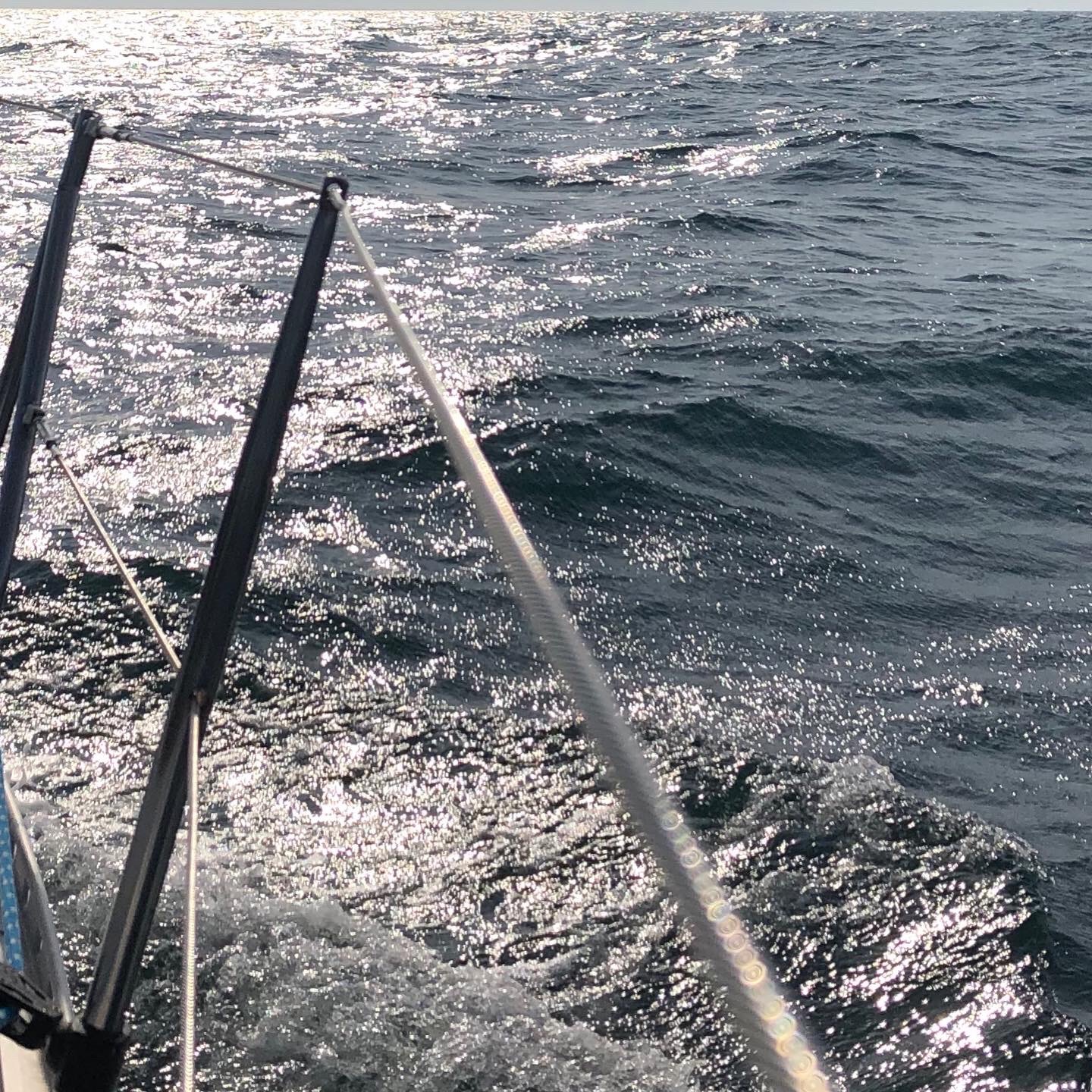
    When we got out of the lee shore of Cape Ann the wave action picked up, with 3 to 6 foot swells that lifted Fayaway and reminded us we were well out at sea.  But Fayaway handles wave action well, and with her sails reefed in the 28 – 30 knots of sustained wind were comfortable for the duration.  Which invited conversation about travel and plans for the future and the kind of catching up you do when it’s just you and others and the wind and splash of waves for hours.

    I’ve learned that I’m a bit rusty with ancillary sailing terminology that goes deeper than the basic rigging, and assisted where appropriate while staying out of the way the rest of the time.  When you see a couple who have sailed together for a year covering thousands of miles you’re witnessing a well-choreographed dance.  I’m not the sharpest knife in the drawer but I know enough not to be the clumsy fop who thumps onto stage mid-act.  Instead be the quiet stagehand who puts away the props when the performers are done.  I was grateful for a patient crew who recognized the rustiness in this sailor.

    There are a few highlights when you sail up the coast from the Merrimack.  You begin with the chaos of the Merrimack River with powerboats and jet-skis racing to win perceived races to get “there”.  It reminded me of aggressive drivers on the highway shifting two lanes and back to get one car ahead.  Its the antithesis of the sailing we were doing, and I greatly prefer being out of that race.  Once you clear the Mouth of the Merrimack, sails are up and you set course for nowhere in particular.  The lines of umbrella stands on Salisbury Beach and elbow-to-elbow fishermen and women on charter boats indicate that social distancing is a guideline many choose to ignore.  I’m sure plenty were doing their best to be socially responsible, while others proved more reckless.  I considered the similarities between drivers on the highway, power-boaters racing each other in a narrow channel to get to the fish first and close-talking beach umbrella bunnies in a pandemic for a moment, and released the thought onto the breeze.  We all live our lives in our own way in America, if not always responsibly.  I was observing from the vantage point of a sailboat in close proximity with another couple, but with the mutual assurance that each couple was taking appropriate measures to avoid COVID-19 exposure.  Maybe those beach throngs were doing the same thing.  I hope so.

    Soon Fayaway moves beyond umbrellas, beyond the sight of land, beyond the hum of motorboats, and we’re in our own world.  For much of the duration of our trip out and back we were completely alone other than a couple of commercial fishing vessels busily working the waters of the gulf.  Time on the water gives you time to ponder and think, and, if you let it, to look through the swirling waves deep into yourself.  And Sunday became another micro adventure for the books.  Leaving terra firma for the sea and exploring a relatively small segment of the Gulf of Maine.  It served as a reminder that I have far to go, but where I am isn’t all that bad either.
  • First Sail

    First Sail

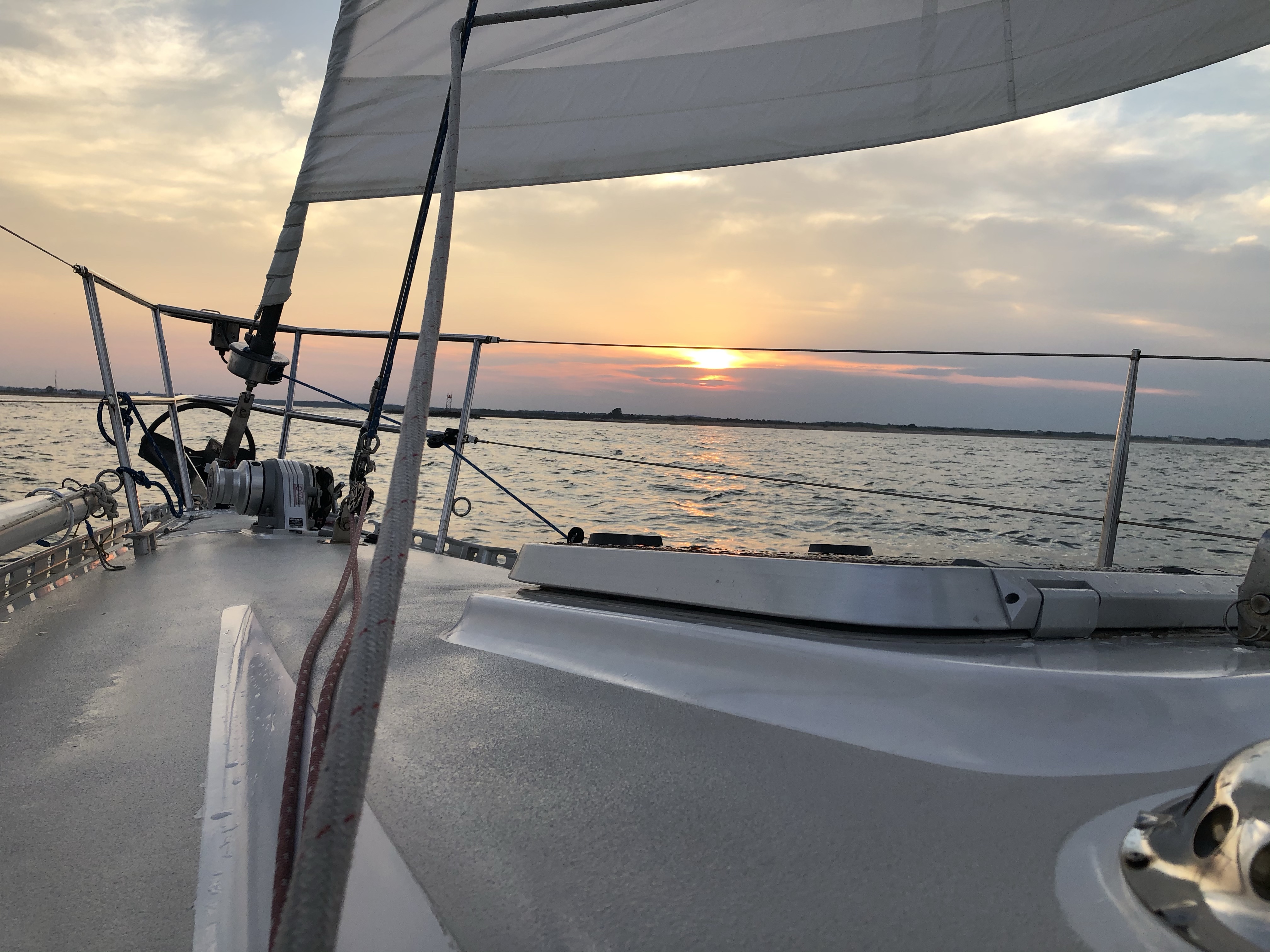
    Sailing season got off to a great start with a sunset cruise last night on Fayaway.  Any sail out of the Merrimack River begins with motoring out of the river.  There’s some setup involved in this process, and there’s a fair amount of checking out the stream of power boats zooming past you.  Sailing proceeds at a different speed than power boating.  There are benefits to both, but at that moment I wasn’t interested in getting someplace faster.

    Approaching the mouth of the Merrimack the channel zig zags sharply.  Best to pay attention to the navigation buoys in this stretch.  Fishermen line the shores of Plum Island and Salisbury Beach fishing for striper and whatever else is biting today.  Seals bob in the current looking us over curiously.  The ride out is long but always different.

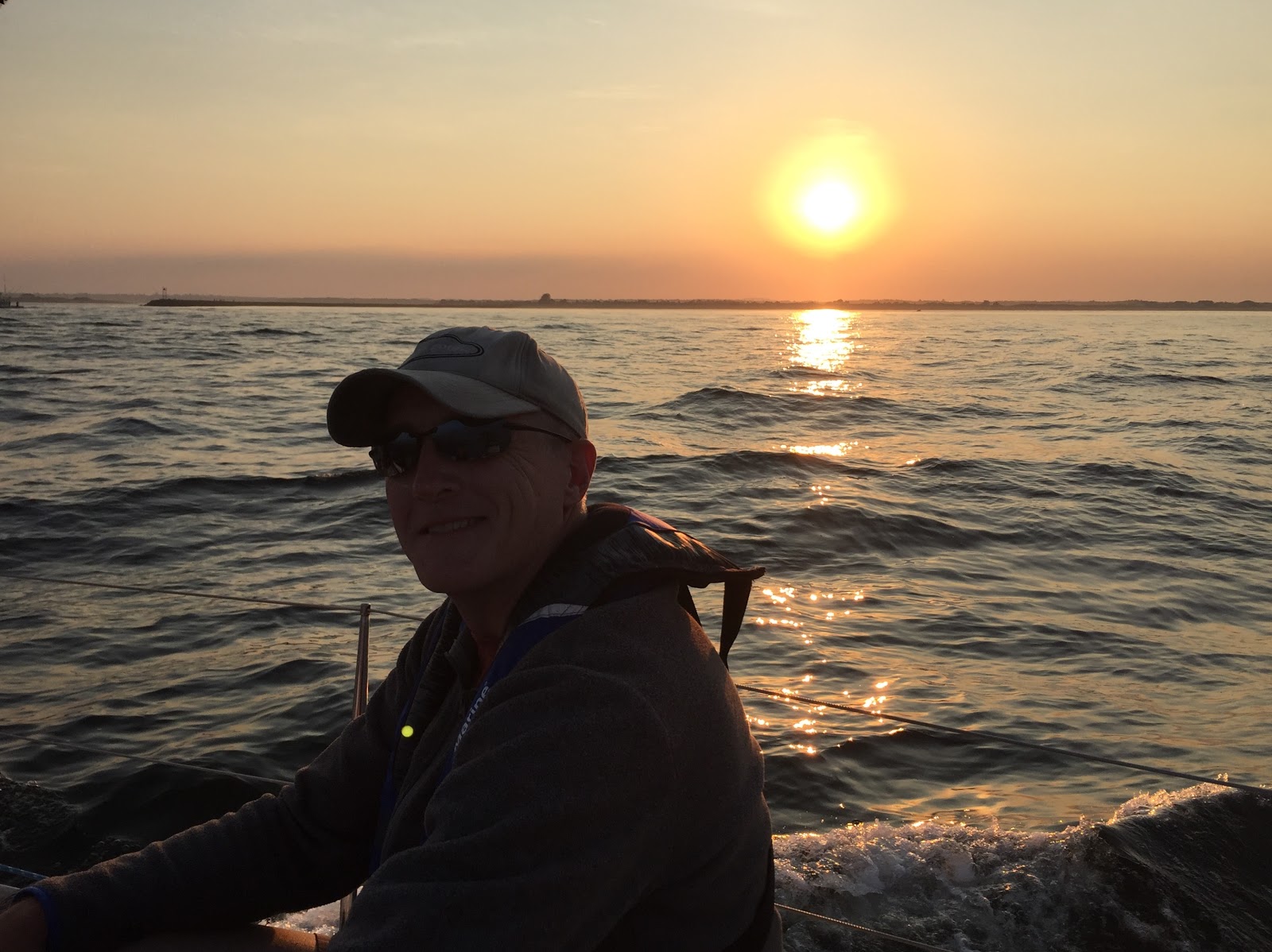
    Steady winds greeted us out of the mouth of the Merrimack, and we headed north for a run up the coast.  It’s always amazing how far away from your day-to-day you feel when you get out on any body of water.  The Gulf of Maine certainly gives you that feeling.  Today’s sail takes us three miles off the coast of Salisbury, Seabrook and Hampton before we tack and make our way back towards the river.  A simple sail all things considered.  Nothing overly technical about it, just pleasant conversation and dodging lobster pots.

    Just before we tacked for home we saw splashing off to Starboard.  At first we thought perhaps whales, but as we drew closer we saw fish jumping out of the water and splashing down to the surface.  We were looking at dolphins hunting for fish in the rip, and dozens of fish exploding out of the water to escape.  The fish shined silver and gold in the reflection of the setting sun, and indeed looked like the rays of the sun as they arced outward in their attempt to live to see another day.  Always in moments like this I regret not having my camera with me.  These aren’t moments when an iPhone can do the job.

    So we sailed back to the Merrimack River, and when the wind finally petered out motored the rest of the way.  The ebbing tide combined with the current from the river made it a slow go coming back in, and the midges were able to make their presence known in swarms.  Thankful for bug spray, sunsets, good friends, a sound boat and another great day on the coast of somewhere beautiful.