Tag: Hampstead

  • A Hole in the Ground

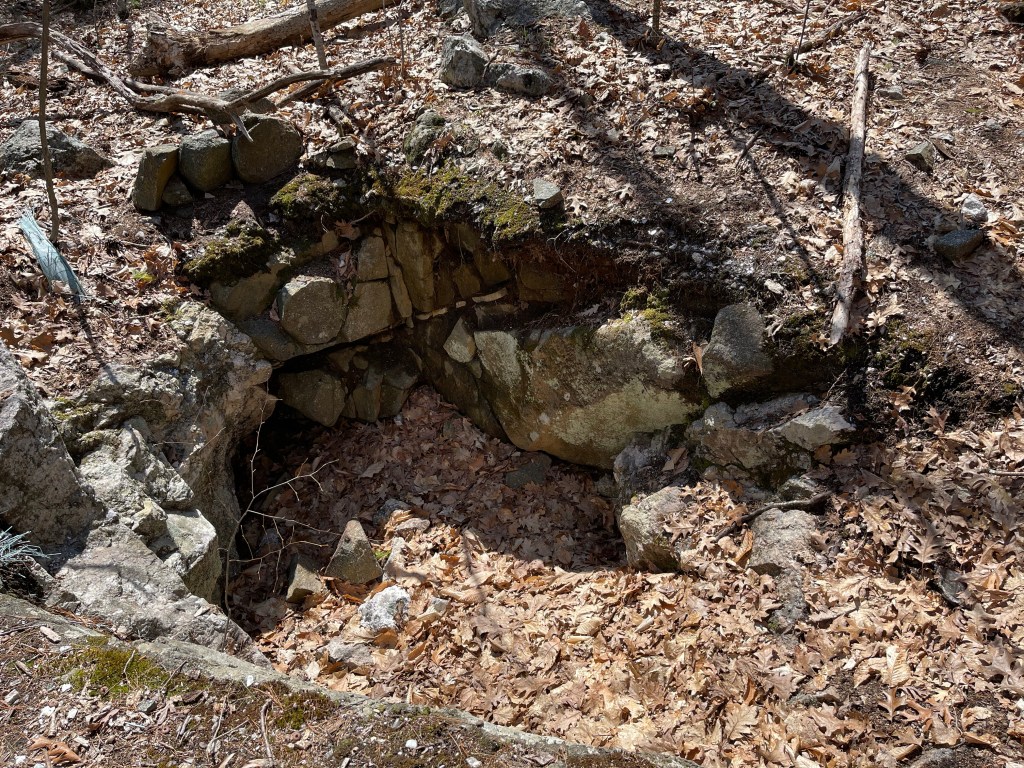
    Walking through the woods of Hampstead, New Hampshire we found an old mine quietly marking time. A modest hole in the ground, really, with scattered bits of Mica all around. To call it a mine seems a bit of a stretch when compared to the big mining operations elsewhere in the world. But it called to me, knowing I’d been looking for it, and seemed to sparkle in the sun for the attention.

    Mica is also known as Isinglass. From a resource perspective, Mica is sheet silicates used in everything from glass making to fashion to a key ingredient in gypsum. It has some heat-resistant qualities and is non-conductive, which makes it useful. But it’s very expensive to mine and labor intensive, so most of the mining now is done in India. For anyone complaining about their work, I’d point to Mica mining as one of many professions that might be a bit tougher.

    In New Hampshire you see flakes of Mica everywhere but the meaningful sheets (or “books”) were harder to find. When they did find it, they’d root it out by blasting and drilling carefully around the sheets. Keeping the sheets intact was the labor-intensive trick.

    There’s a semi-famous mine in Grafton called the Ruggle’s Mine, now closed, that used to be a tourist attraction. Visitors could carry out whatever rock that met their fancy. The mountain where it was mined was called Isinglass Mountain. You can find it on a topographical map but good luck finding that on the list of New Hampshire’s 1,786 mountains. Does a mountain lose prominence when people dig holes in it?

    Back in the woods, I wondered about this old hole in the ground, once a Mica mine, now a landing place for leaves and pine cones. There’s little history around it, probably because it really isn’t any bigger than a cellar hole. But it’s in my nature to wonder about such things. Not so much for the hole but the people who labored in it. I imagine they’re buried somewhere in town, filling their own holes in the ground. What was their story?

    Holes in the ground aren’t nearly as flashy as waterfalls and mountaintops. I can’t blame anyone who skimmed the first paragraph of this post and thought, “not for me”. But there’s a story there in the ground, marking time like the rest of us. And I wonder, what would it take to dig it out? For without a story it’s just another hole in the ground.

    Mica Mine hole in Hampstead, NH
  • A Rock in the Woods

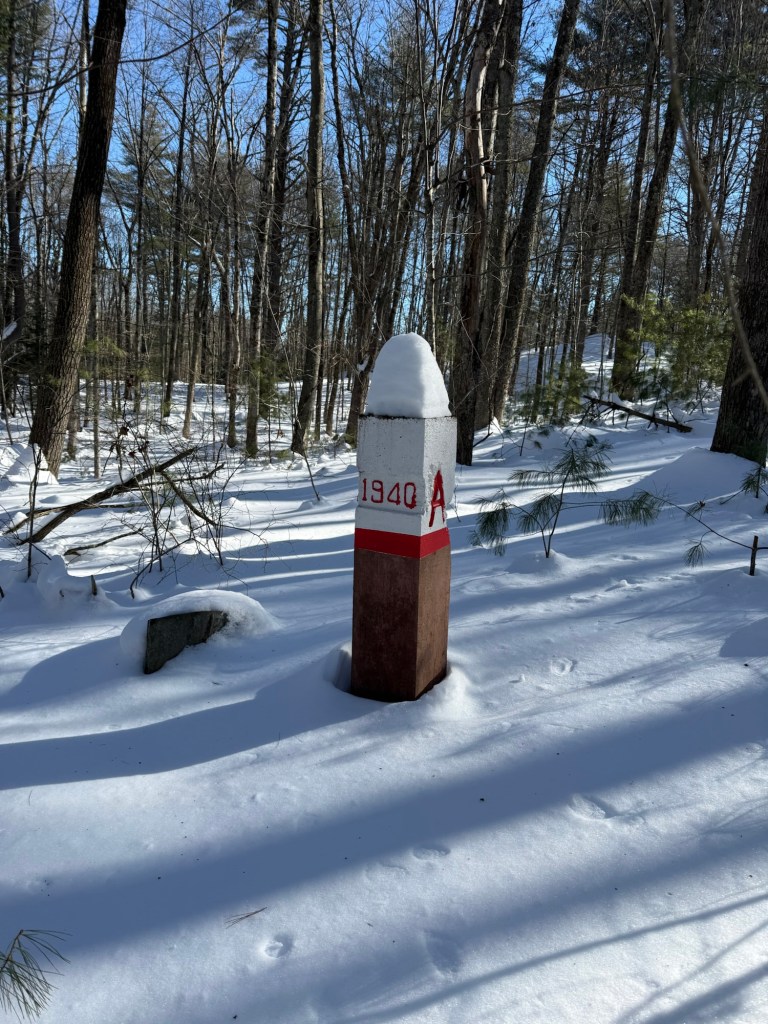
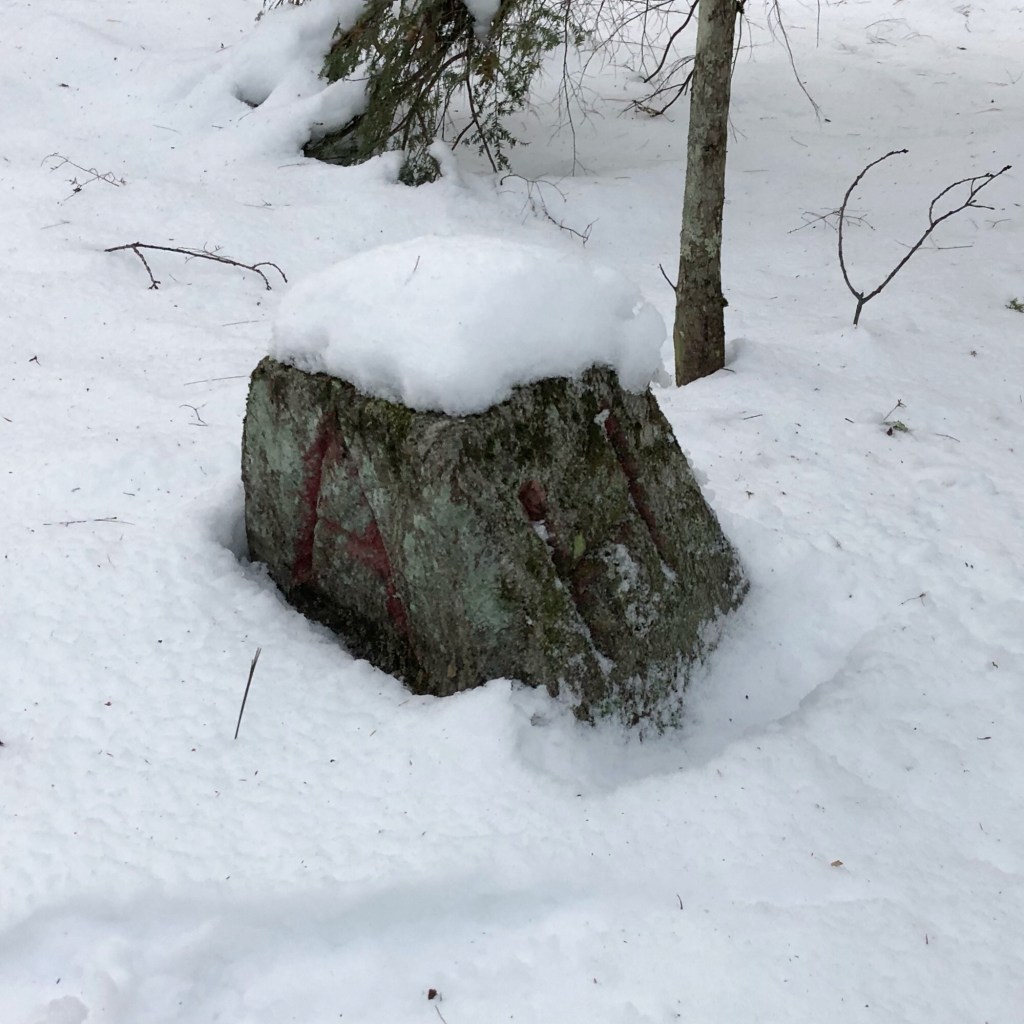
    History whispered from the woods, calling me to find it. A mere rock this time, set in place to forever mark the border between two agreed-upon places, as settlers tended to do. This one, they say, was set here in 1741, a year after being settled and eight years before Hampstead would be incorporated. The other town, Atkinson, would be incorporated twenty-six years later. That there is a carved A and H on the stone that is a handy indicator that you found it, but neither settlement was known by these names in 1741. Hampstead was known as Timberlane Parish then, and Atkinson at the time was a part of Plaistow, New Hampshire. No, the carving came sometime later. And so did the red paint used to highlight the letters.

    Living on a border town between New Hampshire and Massachusetts, I’m fascinated with these border markers. Some are easier to find than others, conveniently standing aside the road they’ve watched grow over their lifetime. But others are more evasive. And town border markers tend to be less fussy still. When the plowed fields return to the woods they always wanted to be the stones become hidden. And that’s where the fun begins for adventurous history geeks like me. This one wasn’t so hidden; it appears on trail maps for the conservation land it resides in. But ask the 15,000 residents of the two towns where it is and maybe 400 might not give you an odd stare back. The rock isn’t exactly a national landmark like the fictional Plymouth Rock.

    And yet, this tiny rock in the woods marking the border between two towns was set in the heart of the lands the Abenaki once used to stage raids on Haverhill, Massachusetts only four decades before. It would stand witness to the French and Indian War, the Revolutionary War, The Civil War and two World Wars, drawing the settlers from the land that surrounds it to fight for survival nearby and across the globe. And of course it would witness the birth of a nation.

    So sure, it’s just a rock in the woods, but it’s a rock that has seen a few things in its job marking a random border set in 1741 between two settlements in New Hampshire. And I wondered, brushing the snow off it for a better look, how many of those people have wondered at it in that time as I do now? And for how long will it guard this border before such things don’t matter again? I wonder.

    1741 A/H Marker
  • Arlington Mill Reservoir

    There are two ponds that flow into the Spicket River that helped supply the Arlington Mills in Lawrence with its water.  Each pond has a unique history worthy of a closer look.  Arlington Mill Reservoir, or today just Arlington Pond, and Big Island Pond, which borders Derry, Atkinson and Hampstead, New Hampshire.  Big Island Pond flows into Arlington Pond, which then flows into the Spicket River, which powers the Arlington Mills before eventually flowing into the Merrimack River and ultimately the Atlantic Ocean.

    Arlington Pond occupies 269 acres and is located in Salem, New Hampshire.  In 1919, 100 years ago this year, Arlington Mills purchased the land surrounding and underneath what is now the pond.  The next year they began construction of a 48 foot tall dam, which they called the Wheeler Dam, after the Wheeler Mill that once occupied the site.  In 1923 they completed the dam and filled the reservoir.  In doing so a stretch of Old North Salem Road and the foundations for the original mill buildings were submerged.  That would be an interesting dive site.

    People bought the land around the lake.  According to the Arlington Pond Protective Association, “The land surrounding the lake was owned by Thomas Kittredge, Sr. He owned a coffee shop in Haverhill, Massachusetts and sold parcels of the land to his customers; the lots were nicknamed “Coffee Pot Lots”.” – APPA

    I don’t see Arlington Pond often, but I hear it.  Boats, fireworks, snowmobiles and ATV’s are loud enough at night that the sound travels to where I live.  I’m roughly halfway between Arlington Pond and Big Island Pond.  And while Arlington Pond is much more accessible from a viewing standpoint, I’ve spent much more time on and in Big Island Pond.  Where Arlington has built up around the entire  shoreline, Big Island Pond has a more rural feel thanks to the protected land at Governor’s Island.  But Arlington has it’s charms too.  At some point I’d like to get on the pond and go for a swim there. Then again, you might say that I’ve already swum in the water before it gets there.

  • Cellar Holes

    New England is full of ghosts.  A walk in the woods will bring you across old stone walls by the mile.  In places that you feel like you’re the first person to ever walk in a place, you’ll come across hard evidence to the contrary.  Settlers and the farmers who came after them cleared this land, raised crops and the next season did it all over again.  New England’s gift to these farmers were the stones that would come up with the frost, which the farmer would toss drag to the edge of the field to build stone fences to mark the property line, or the line between crops and grazing fields for livestock.  It was a hard life, compounded by hard winters, disease, wars with the native population, and a whole host of other things.

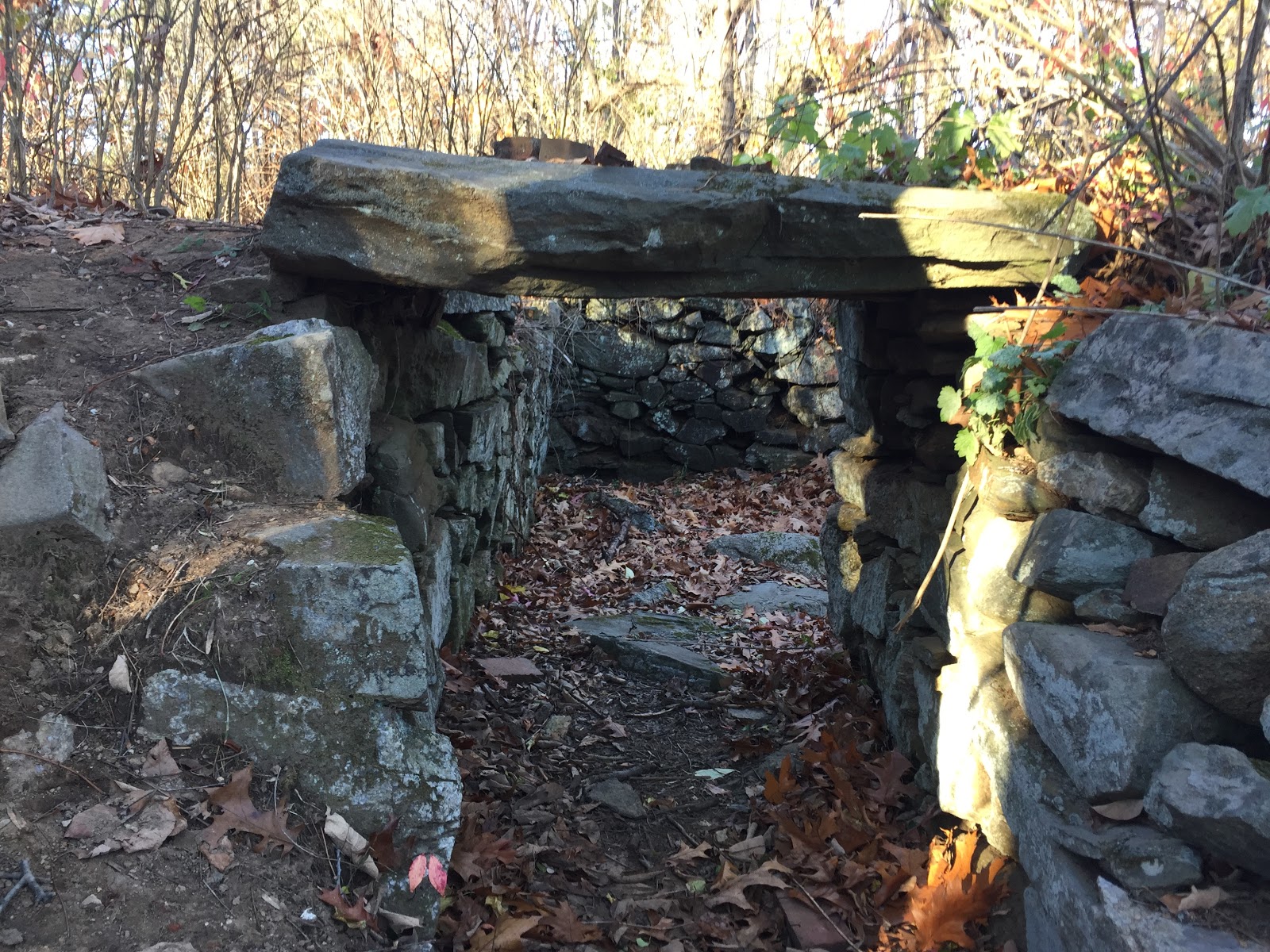
    These early residents lived in modest houses built over stone cellars.  The houses are mostly long gone now, and many of the cellar holes are too.  But many remain to tell their story.  Coming across an old cellar hole in the woods is like a telegram from the people who once lived in the house it sat on.  Cellar holes and the stone walls are often the only thing left to mark the existence of these people.

    This cellar hole in Hampstead, NH was once the foundation of the house that Job Kent lived in.  Job was born in 1743, bought land from his father to farm, and built a house on this site around 1770.  Job fought in the Revolutionary War as a Sergeant in the Northern Army, and he died in 1837.  He’s buried in the Town Cemetery in Hampstead, making his stay in town permanent.  Today his farmland is conservation land, hopefully making the land a permanent monument to what once was; forest and, for a time, farmland.  The stone walls criss-cross the land marking the fields that sustained Job and his family at a significant time in our nations history.  The walls and his cellar hole marks where he lived his life.  Quiet now, this cellar hole was once the foundation of a busy family enduring the struggle of living off the cold, unforgiving New Hampshire land.  Job Kent didn’t make a large dent in the universe, but he lived a life of significance, fought for our nation’s independence, and returned to his farm afterwards to work it season after season.

    I spent a little time inside this cellar hole and walking around the woods in November 2016.  I didn’t hear ghosts calling out to me at the time, but this hole and the man who built it still stay with me 17 months later.  Almost 52 and I’m still building my stone walls.  I’ve got a good foundation beneath me, and hope to make my own dent in the universe, however modest that dent might be.