Tag: Housatonic River

  • A Handshake with Norman Rockwell

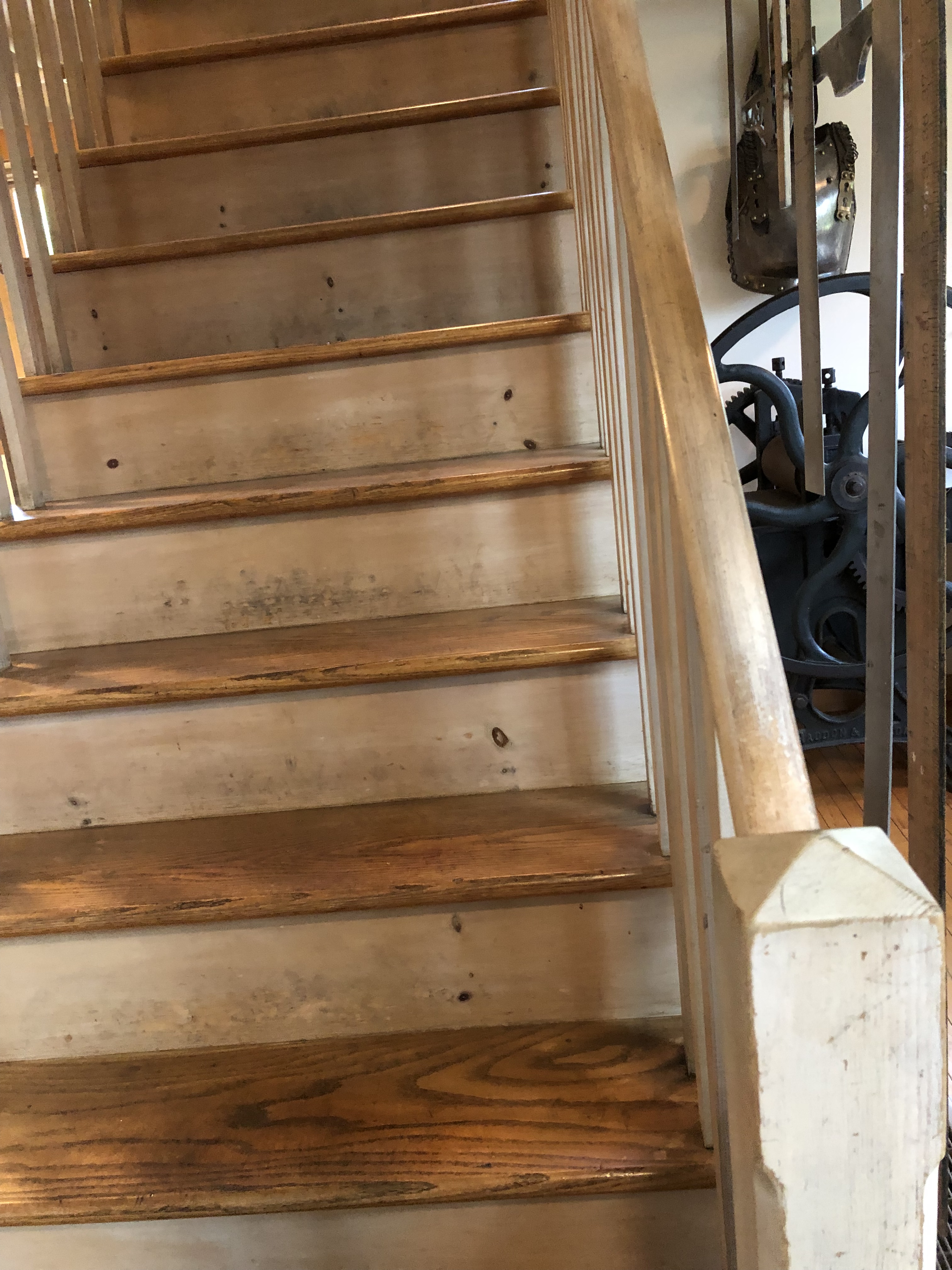
    I always make a point of grabbing the newel post and sliding up my hand on the stair railing when visiting the homes of artists, writers and historical figures.  I’ve written about doing this at Ernest Hemingway’s Key West house, at Mark Twain’s Hartford, Connecticut house, and at Robert Frost’s farmhouse in Derry, New Hampshire.  I had the opportunity to do it again when visiting the Norman Rockwell Studio in Sturbridge, Massachusetts recently.  This to me is a handshake with those who came before, and I feel it most profoundly when I visit the places like these where the giants of the past did their greatest work.

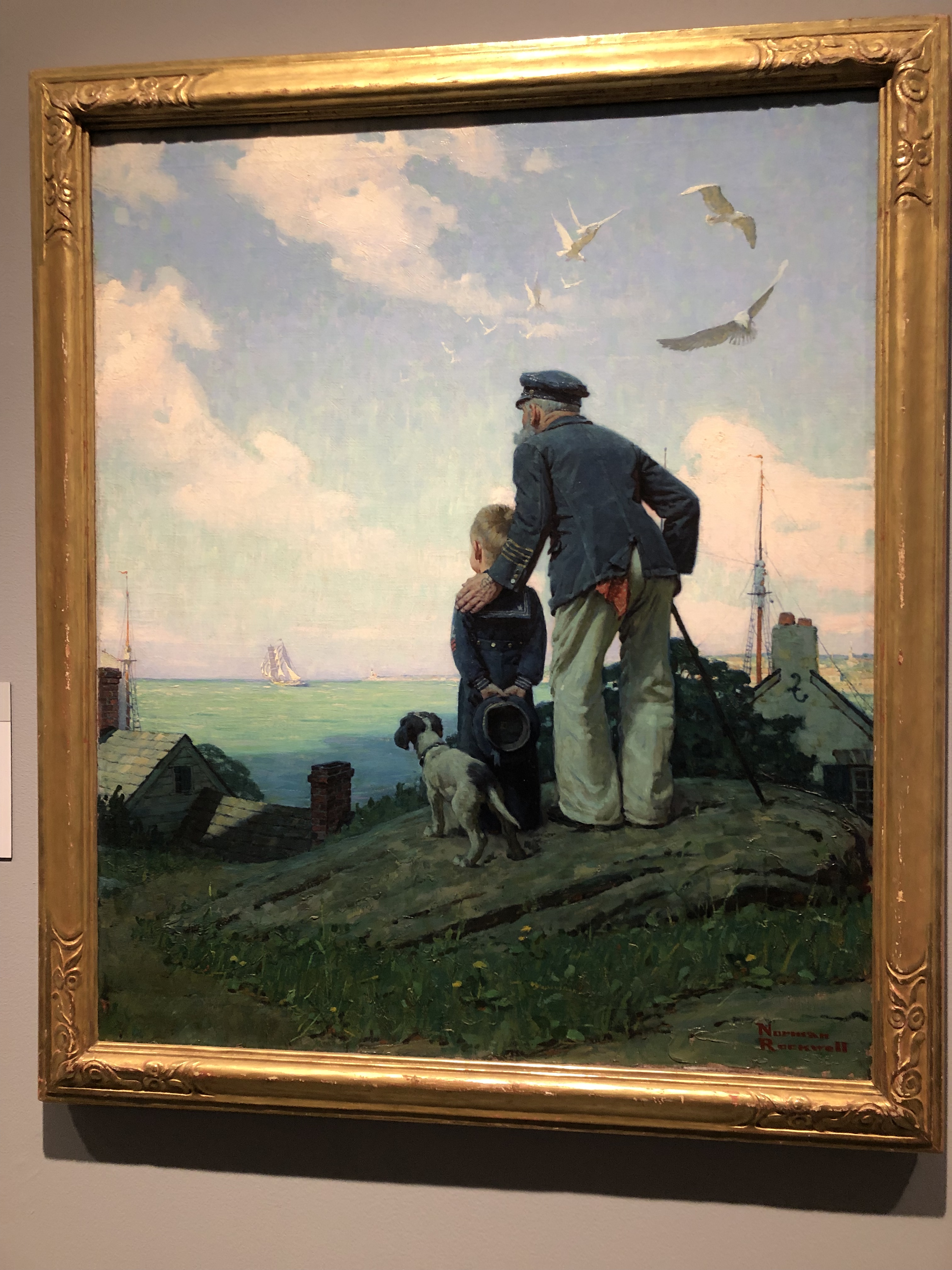
    If you live in America you know Norman Rockwell.  His paintings and sketches are more widely known than any other artist in the 20th century, thanks in large part to his work with The Saturday Evening Post during some of the most significant milestones of that century.  Rockwell was capturing the very human moments everyone felt during the Great Depression, World War’s I and II, the Kennedy Assassination, etc.  The museum carries you through his work and is worth a visit.  I’ve driven by it for decades before finally stopping by for an hour while driving home from New York.  Seeing his paintings doesn’t give me the same feeling as seeing Aivazovsky’s The Ninth Wave did, but that’s largely because there’s a humbleness to Rockwell’s work that doesn’t inspire awe as much as appreciation for the incredible detail he put into his work.

    There’s a story of the painting Country Doctor, which when published on the cover of the Saturday Evening Post inspired letters from people asking about the woman in the photograph on the doctor’s desk.  It seemed she looked like a nurse that had treated patients in England during World War II, and a soldier wrote to ask if she was in fact the same woman….  and was.  Such was the detail in Rockwell’s paintings that a random detail in a larger work, shrunk down for the cover of a magazine, sparked recognition. Rockwell apparently made his subjects, mostly his neighbor’s in the Berkshires, laugh while painting, and there’s joy in most of his work.

    I appreciate art, and linger in the museum longer than I should have on my trip home, but for me standing in the space where Rockwell created that art was more impactful. That space is his studio, moved four miles from downtown Stockbridge to a hill overlooking the Housatonic River and the Berkshires in 1976. Rockwell gifted the studio to the Norman Rockwell Museum, and the studio is set up as it would have been in 1961 when Rockwell was painting Golden Rule, which seems appropriate for an artist who’s work reflected that rule. The space is largely the same, if transported from its original foundation in the heart of Stockbridge. The staircase to the loft is roped off, but the newel post and railing are in reach, like a handshake with Norman. And that sums up his art; within reach of everyone. Simple but complex, and beloved, like the artist himself.

  • Clean Water or Jobs?

    In 1969 the Cuyahoga River in Ohio caught fire.  It wasn’t the only time – the river had caught on fire at least 13 times in 100 years.  This wasn’t a case of a temporary oil spill sparking a fire, it was a case of a river so polluted that it would just CATCH ON FIRE.  Time Magazine described it as the river that “oozes rather than flows”.  The 1969 fire had one benefit, it was a catalyst for the creation of the Environmental Protection Agency.  People had had enough of disregard for the environment and this gave enough political will for Congress to do something about it.

    Closer to my home, the Nashua River famously changed colors daily depending on what they were dumping into it that day.  There’s a great story in the Huffington Post that describes how the efforts of one woman inspired other to join in to save the Nashua River, once, like the Cuyahoga River, one of the ten most polluted rivers in the country.  When people questioned the reasoning of companies dumping waste into the rivers, which was legal until 1962, one industrialist smugly replied to an employee; “Which would you rather have—clean water or your jobs?”  

    The Nashua River flows into the Merrimack River, which flows into the Atlantic Ocean.  Cities like Lowell, Lawrence and Haverhill, Massachusetts tap into the river for drinking water.  I still remember when I went to college in Lowell in 1984 and first smelled the water.  It was a smell you got used to, but it wasn’t comforting.  And that was almost twenty years into the cleanup of the Nashua River and other upstream tributaries.

    The Housatonic River is a Superfund site because GE dumped PCB’s into the river for years…  after all, it was legal to do so, and what would you rather have – clean water or jobs?  Onondaga Lake in Syracuse was considered the most polluted lake in America because of a lovely combination of human sewage and Honeywell PCB’s and other chemicals being dumped into the lake.  Boston Harbor was considered the most polluted harbor in the country back in the 80’s until a massive cleanup effort and the Deer Island Wastewater Treatment Plant finally began operating in 2000.  So why the hell did we let our waterways be treated so badly for so long?

    There are different categories of disregard for the environment, running from casual disregard to malicious intent.  Most people fall into the ignorant category.  People who throw their trash out the window of their car are no different than the person dumping chemicals into the river.  Their problem goes away, but it becomes someone else’s problem.  Selfish, narcissistic behavior that requires societal intervention ranging from public shaming, to fines to prison time.  Tossing your McDonalds bag of trash out the window might make your car cleaner, but it’s an eyesore for the rest of us.

    Not in my backyard.  It doesn’t matter that the river is bright orange as long as I’m not tapping into it for drinking water.  It doesn’t matter how many PCB’s are flushed into the lake because I don’t live on that lake.  Its okay to have more coal burning power plants because I won’t be around when the planet is a vast wasteland.  It’s okay if we erode the power of the EPA because shareholder value increases when enforcement gets swept under the rug.

    I had a roommate in college who got all of the people in the apartment together at the beginning of the semester to agree to a dirty dish enforcement policy.  If your dirty dishes where left on the counter or in the sink instead of cleaned after you made a meal the dishes were put into your bed.  This proved to be surprisingly effective, because it was hard to ignore a pile of dirty dishes piled on your bed.  It’s easy to ignore things until it directly impacts your quality of life.  That applies equally to a pile of dishes as it does for a polluter or litterer.  There’s a great video of a person sweeping the road when someone throws their trash out the window right at the feet of the person sweeping.  Another guy sees this, walks up and borrowed the broom and dustpan, swept up the trash that was just dumped out and dumps it into the car of the litterer.  It’s viral because most of us would love to do that to the person dumping the trash.  It’s the equivalent of putting the dirty dishes in the bed of the offender.  I’m all for taking the CEO of GE or Honeywell and having them swim in the Housatonic River or Lake Onondaga, or taking those PCB’s and dumping them in that CEO’s pool.

    The world is a fragile place.  We only have the one planet, but there are too many people who think the world is flat, that climate change is a scam or political ploy, that jobs are more important than clean water.  When Marketing genius Seth Godin proposed changing the discussion point from “Climate Change” to “Atmosphere Cancer“, there were some indignant bloggers whining about the insensitivity towards people with cancer.  They completely missed the point as usual.  At one point when the Cuyahoga River caught fire and the Nashua River flowed a different color every day we reached a critical mass of people who said enough is enough – we don’t want orange rivers or rivers of flamable sludge.  We don’t want to be forced to wear a pollution mask when we take a walk.  We’d like to have things like coral reefs and glaciers and plastic-free oceans.  The race is on, will we reach the resolve needed to course correct, or will we slide into Exponential View’s Climate Calamity.  The choice is ours.