Tag: Hudson River

  • A Quick Hike Up the Nose

    Let’s get the elephant in the room addressed right off the bat: Anthony’s Nose has an odd name. Here’s one story I came across in Kiddle that describes how it got it:

    “Pierre Van Cortlandt, who owned this mountain, said it was named for a pre-Revolutionary War sea captain, Anthony Hogan. This captain was reputed to have a Cyrano de Bergerac type nose. One of his mates, looking at this mount, as they sailed by it, compared it to that of the captain’s nose. He said that they looked similar in size. This good-natured joke soon spread, and the name Anthony’s Nose stuck to this peak. Washington Irving’s History of New York, a satire, attributes the name to one Antony Van Corlear, who was the trumpeter on Henry Hudson’s ship.”

    Whatever the source, it requires that each hiker now forever able to say they went up Anthony’s Nose. How you feel about that is entirely up to you. For me, the motivation was to see a bridge I hadn’t seen in almost 30 years, get a quick hike in to break up a long drive and get a feel for a stretch of the Hudson River from a hill top.

    There are a few routes up Anthony’s Nose (sorry). The most direct route is a steep granite “staircase” that brings you to your destination relatively quickly. This requires street parking on a busy stretch of road. Alternatively, there are a couple of longer routes to the lookout spot, the one I favored followed the white blazes of the Appalachian Trail. The AT crosses the Bear Mountain Bridge over the Hudson River and meanders up through a final stretch of New York before reaching Connecticut. You might expect a stretch of the AT to be lovely hiking. You’d be correct for this stretch.

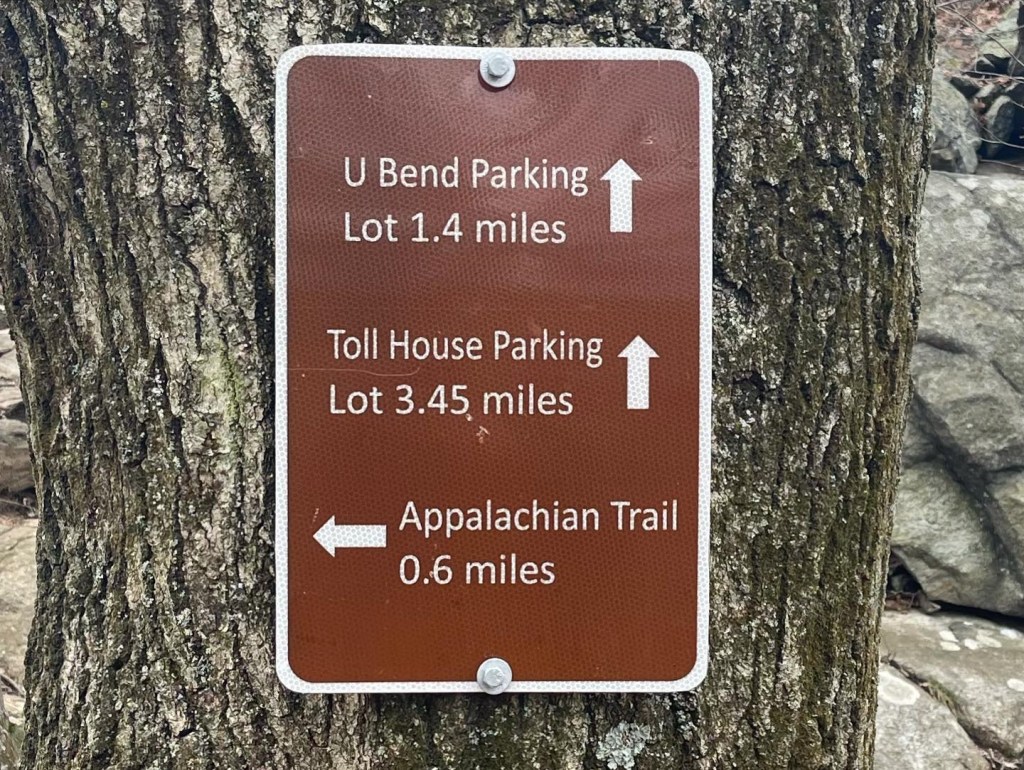
    There seems to be a lot of confusion about where the trailhead is for Anthony’s Nose. If you’re going to hike straight up the staircase, you begin at a small deck on the side of the road not far from the bridge. If you’re more interested in a 90 minute round trip hike, take the AT route. The trailhead begins on South Mountain Pass Road, which is a rutted stone dust road for a long stretch. If you’ve got a small sedan you might consider driving in from the Blue Mountain Beacon Highway side, which offers a bit more pavement to work with. Driving a truck, I enjoyed the off-road feel of reaching the trailhead after a few hours of highway driving to get there.

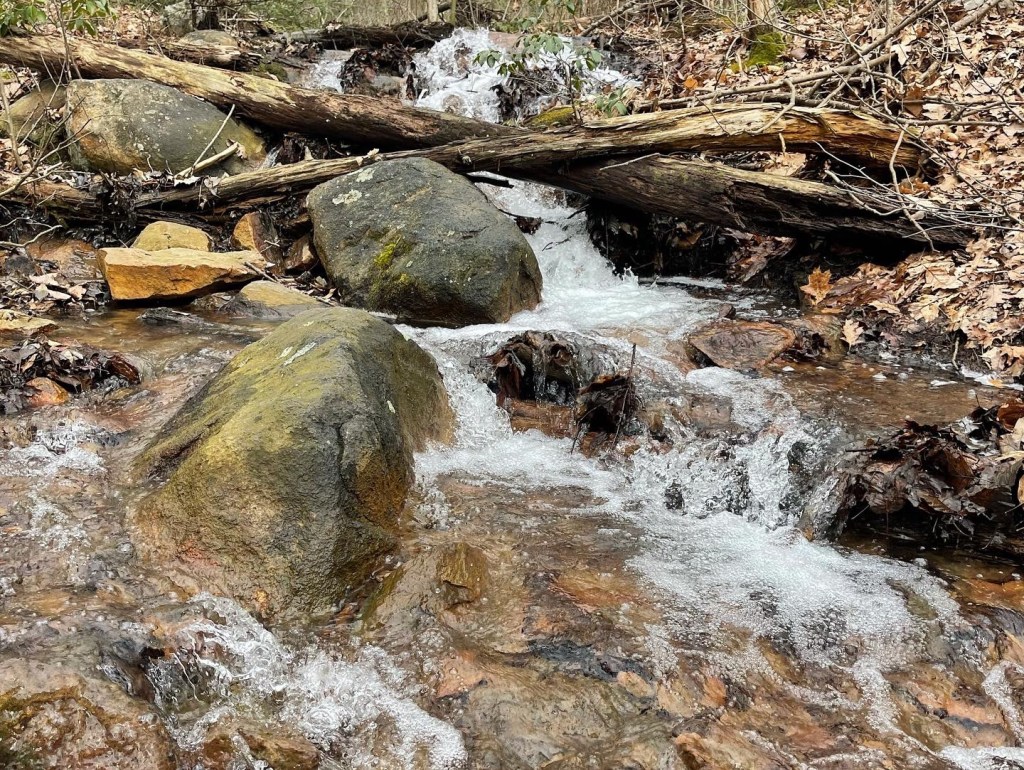
    The key for the trail is to follow the white blazes, which leave an old roadbed a few hundred yards up and begin descending towards a small stream before climbing back along the ridge line. The trail head would benefit from a bit of signage and a map, as one hiker after another asked each other if they were in the right spot. Perhaps a Boy Scout Troop could take it on as a project.

    The hike took 90 minutes round trip. Parts of the trail felt like you were in the middle of the White Mountains, but with glimpses of the Hudson River along the way. There was a bit of traffic buzz in the background, but overall it was a perfect hike to break up a drive from New Hampshire to New Jersey for me, or a short destination hike away from New York City. I’d recommend bringing lunch and soaking up the view.
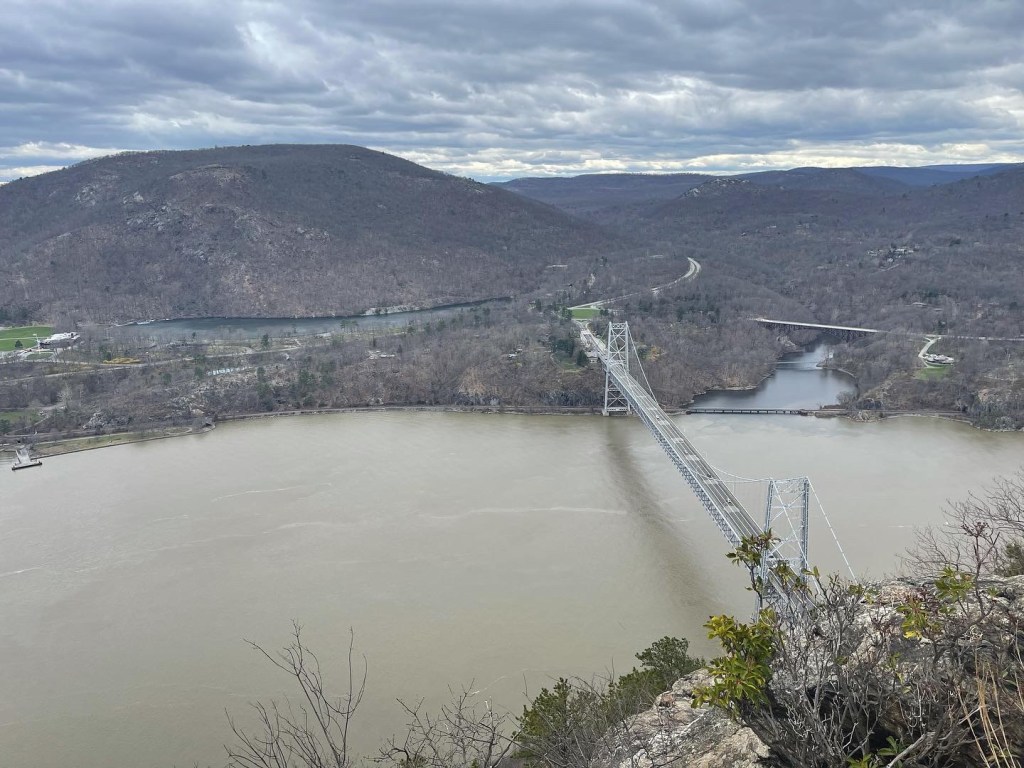
    Bear Mountain Bridge with it’s namesake rising up behind it
  • Time Capsules

    A couple of weeks ago I stopped at Rogers Island Visitor Center in Fort Edward, New York.  I knew the place wasn’t open but I wanted to at least stop for a moment, look around and give a nod to the legacy of Robert Rogers, who used this island as a launching place for much of the fighting his Rangers did during the French and Indian War to the north of this place.  Rogers Island is strategically situated on the Hudson River and well known to the Native American, French, British and Americans who travelled these waters to “The Great Carrying Place” where you’d need to portage your canoe or Bateau boat on your trek to Lake George and points north.

    Rogers Island is considered the birthplace of the US Army Special Forces and holds a special place in the hearts of US Army Rangers to this day.  I wasn’t in the Rangers myself, but recognize the significance of the tactics developed by Rogers.  They essentially mirrored the tactics used by Native American warriors and added a few wrinkles of their own.  That’s a post for another time.

    While walking around I spent a few minutes reading the historical signs placed around the property and considering the commemorative garden that was just starting to bud on the April day I visited.  My eye was naturally drawn to the monument dedicated to those who fought and died in wars engaged in by the United States and I walked up to better view it.  While there I noticed the tablet on the ground marking the time capsule commemorating the 250th anniversary of the French and Indian War.  This capsule is scheduled to be opened in the year 2055.

    Time capsules are a message to future generations.  Schools do these all the time, and add things that are meaningful to the people who are participating in the event.  But the funny thing about time capsules is that in all likelihood you won’t be around when they open it.  Sure, 50 years gives you a fighting chance, but life is full of twists and turns and there’s no guarantee of anything except death.  So burying the artifacts of life is akin to a message in a bottle thrown in the ocean.  You’ll likely never see it again, but you hope that someone will and whatever message you give to them will be meaningful in some way.

    Time capsules are all around us, and you don’t have to bury some safe in the ground to make one.  My time capsules to future generations are the lilacs I planted along the property line, or the trees I planted out front.  They’re the bathroom I renovated in Pocasset and the words I’m writing now.  By this measure I look for similar offerings from those who came before me. Mostly my time capsule is the way I conduct myself and how that influences others for the better or worse as others continue to influence me.  I won’t be here forever but I hope my legacy will be positive beyond the generations who actually know me.  Time will tell, but it won’t tell me.

  • Where it all Happened

    When I was a child I thought of Boston, Lexington and Concord as the place where the bulk of the Revolutionary War was fought. Of course, that’s not accurate at all; it’s the place where it started. Or rather, where the underlying tensions felt across the thirteen colonies erupted into open rebellion and eventually violent conflict. Names like Yorktown, Valley Forge, Princeton, Trenton and Saratoga are just place names unless you’ve been there and felt the lay of the land. Having grown up there I’d done that in Boston but it wasn’t until I was an adult that I started visiting these other places.

    Monday I drove from an appointment in Castleton, Vermont to Clifton Park, where I would have meetings the next morning. Before the drive I did my usual survey to see what was on or near the route. I was already very close to Hubbardton, which I’d visited on my last trip up this way. But there was another significant side trip not far from my route…. Saratoga.

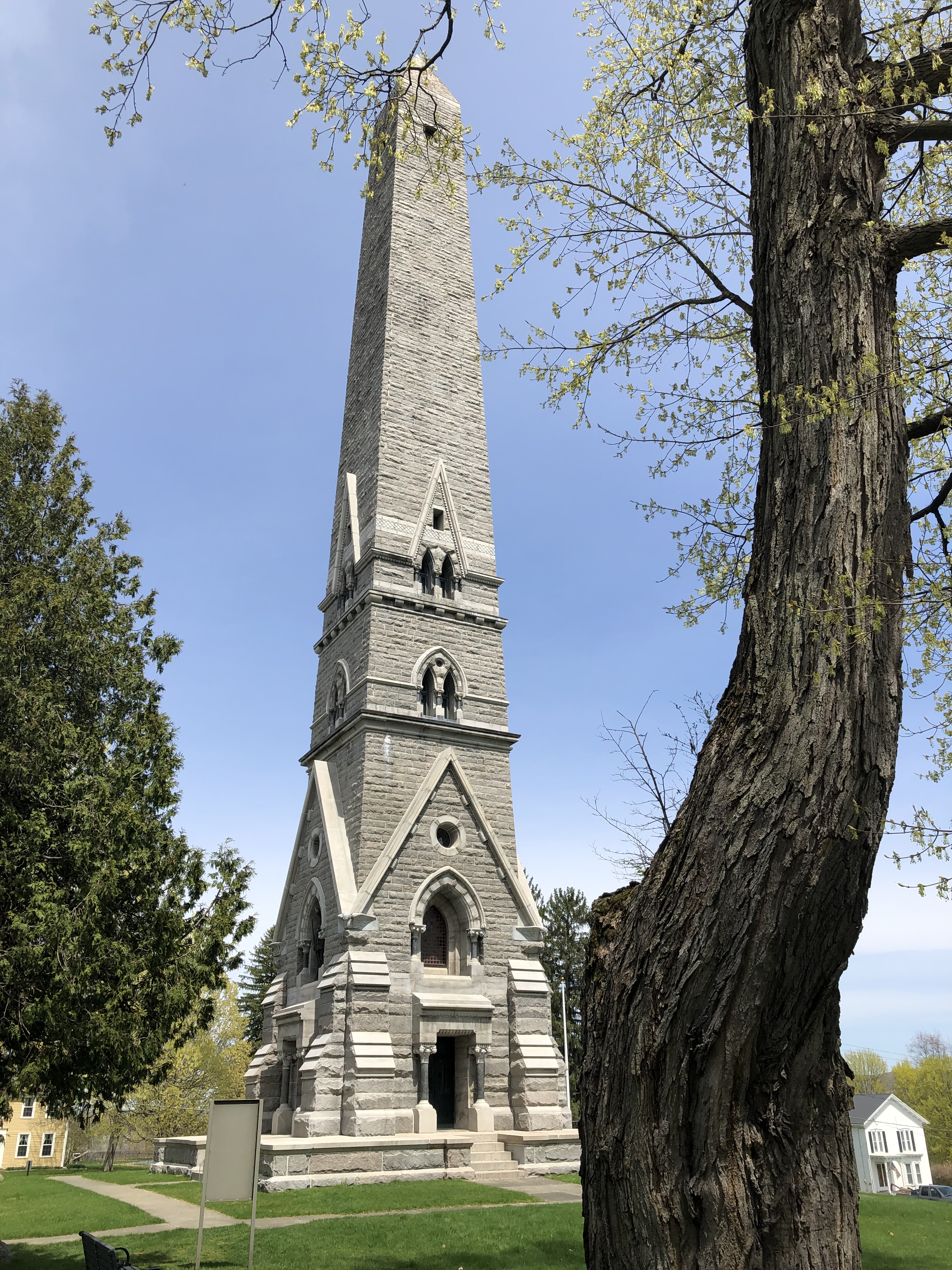
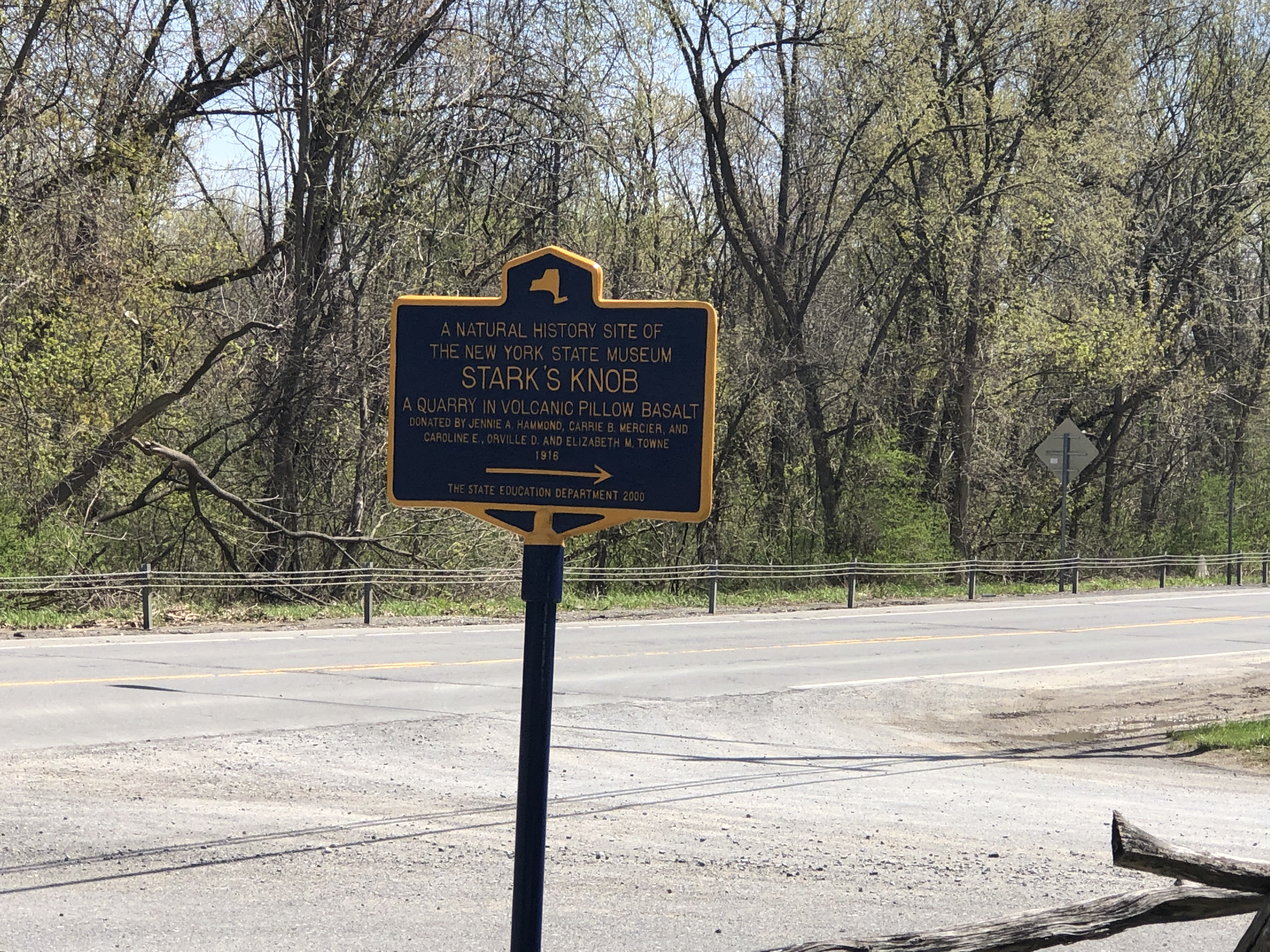
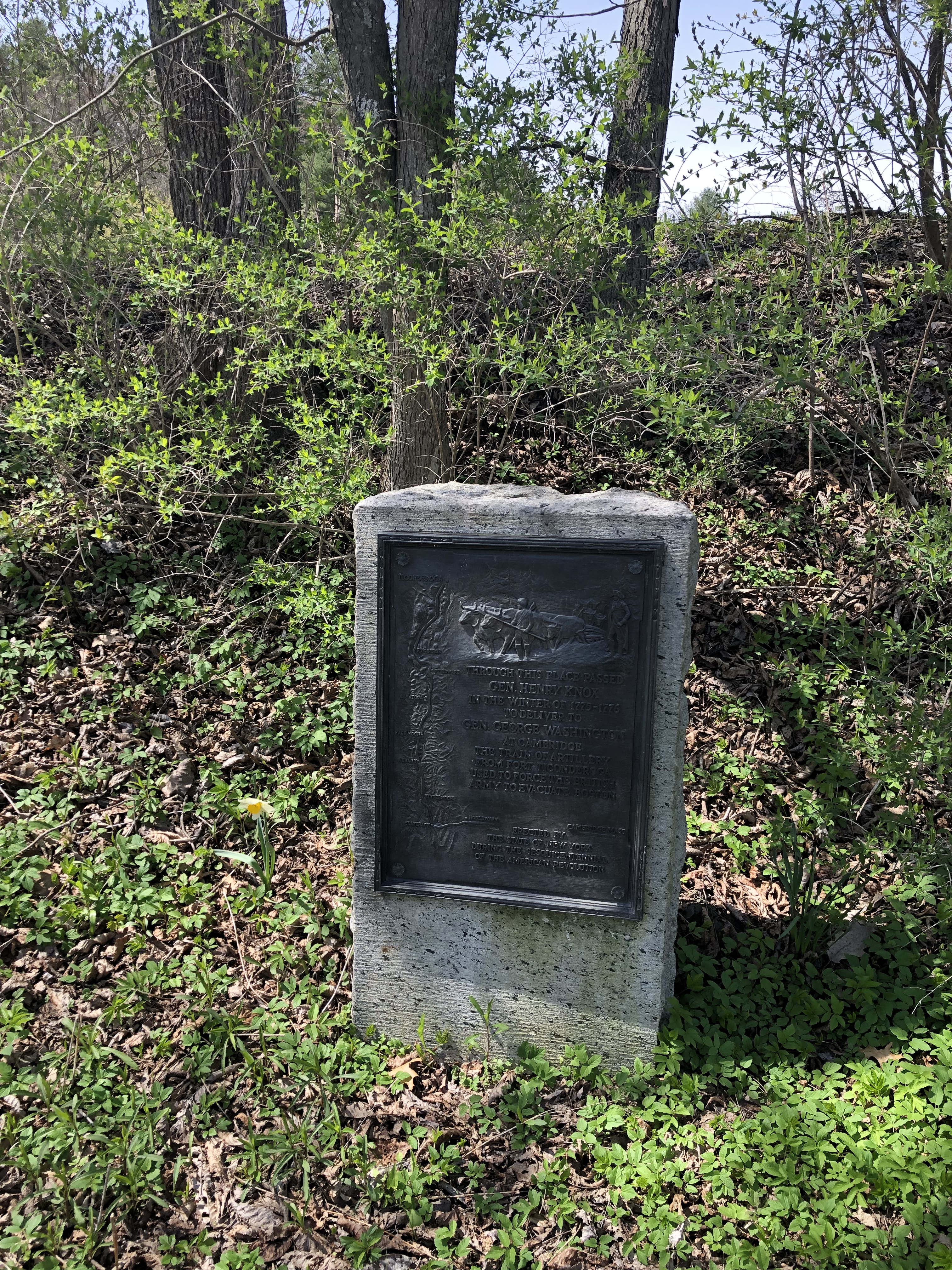
    As with any battlefield the action took place across a wide area over a period of time. The Saratoga Campaign took about a month, with other related skirmishes contributing to the overall result. I didn’t have time and wasn’t dressed for an extended tourist campaign myself, so I chose the visually stunning Saratoga Battle Monument as a priority, and let serendipity take over from there. It didn’t take long as I passed two historical markers of consequence next to each other. First was a sign marking the location of Starks Knob, named after John Stark, who held the high ground on this “basaltic pillow lava formation” which blocked the retreat to the north of General Burgoyne’s British and Hessian troops. Second was a monument to the Knox Trail, marking this ground as significant on a few occasions during the war.

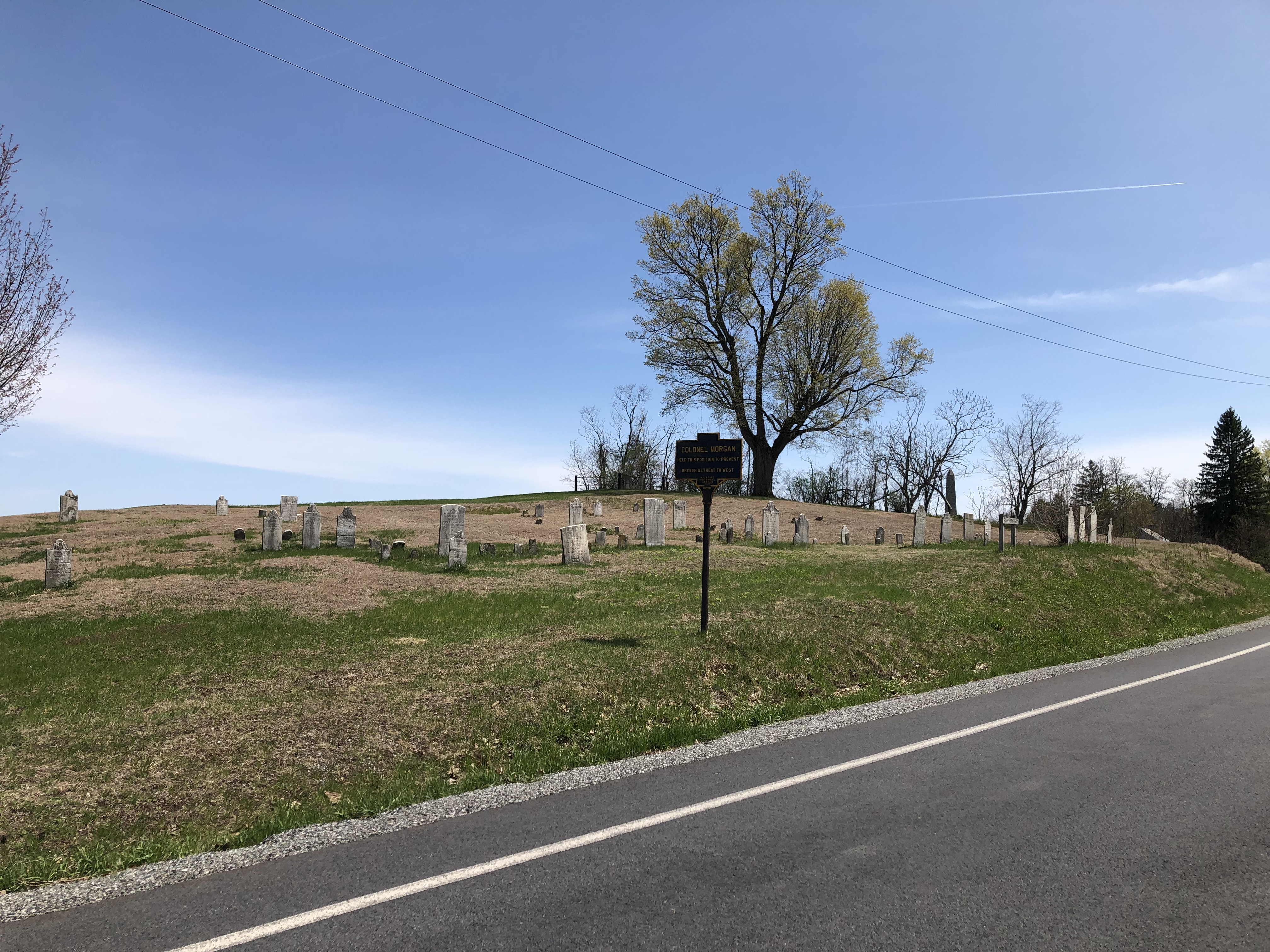
    With Stark blocking retreat to the north, and Colonel Daniel Morgan‘s troops blocking retreat to the west, and the Hudson River blocked retreat to the east, options were running out for Burgoyne. He was cut off with nowhere to go. So on the morning of October 17, 1777 General Burgoyne and his 6000 soldiers surrendered. The Saratoga Battlefield Monument commemorates this event.

    Time or the necessary footwear to visit the battlefield itself weren’t available Monday… Another time perhaps. But seeing this magnificent monument, and seeing Starks Knob to know the lay of the land were worth the detour. History books only tell part of the story. Saratoga was a massively important global event that changed that history. Walking and driving around these places helps me understand what these names on the page were facing.

    I didn’t hear the whispers of ghosts when I visited the monument, but I did have my breath taken away as I drove around the bend from the site Morgan held and saw the monument rise up before me. And I had a shot of adrenaline when I saw the sign for Starks Knob. These places, where these things happened, matter to me, and I continue to seek them out in my travels.

  • Gravesend Bay

    In the Southeastern corner of Brooklyn, New York is an oddly-named village named Gravesend.  The definitive origin of the name is lost to history, but it’s generally agreed that it comes from the Dutch phrase “Count’s Beach”.  This was part of New Amsterdam in the 17th century, and it remains one of the only place names in Metro New York that still holds a Dutch-origin name.  Go up the Hudson River and you’ll find plenty more.

    Gravesend is [sort of] famous for two things.  First, it’s the location of Coney Island Amusement Park, home of the gag-reflex hot dog eating contest every 4th of July.  Given the date this event happens there’s some irony in the second reason for Gravesend’s fame.  It was the site of the British landing in the summer of 1776 when the British and Hessian forces swept across Long Island and Manhattan and gained control of the critical New York Harbor and the lower Hudson River.

    On the morning of August 23rd, 1776 the British invaded America at Gravesend Bay.  By noon of that morning more than 15,000 British troops made an amphibious landing on the beaches there, and brought with them 40 artillery pieces.  They quickly moved into the interior of Brooklyn and taught General George Washington and the colonial army a lesson in strategic military moves.  Washington looked around days later and realized that there was no hope and evacuated his troops from Long Island.  That evacuation is a story for another day, but needless to say, the defense of the American colonies hadn’t gone as planned.  So on the 4th of July, when strange people consume massive quantities of hot dogs dipped in milk, think about American hopes for a brighter future being dashed in Gravesend in the summer of 1776.  It’s okay to look away when they show it.

  • What’s Up is Down

    What’s Up is Down

    While it makes sense that to go up a river or a lake that is fed by a stream or river, intuitively when you live in the Northeast you think of going up the river as going north or west.  That’s because the majority of rivers that flow to the sea do so in a southbound or eastbound way.  To go “up the river” to SingSing was to go up the Hudson River from New York City to Ossining, New York.  But there are several examples in the region where the opposite happens.  

    Watershed maps indicate several rivers that flow north to the St Lawrence River.  These include the Chaudière River (Rivière Chaudière) and the Richelieu River, which is fed from Lake Champlain and Lake George through a series of smaller rivers.  Because these two lakes flow north to the St Lawrence, going “up the lake” means going south, and going “down the lake” north.  This upside down world of navigation makes perfect sense when you think about water flowing down, but is topsy-turvy when you think about north-south.
    It’s a good reminder that your way of thinking, based on your experiences, isn’t necessarily correct.  Next time I think I’ve got something all figured out I’ll reflect on nature’s reminder that what’s up can indeed be down.  That’s a good reminder for all of us.
  • Tappan Zee

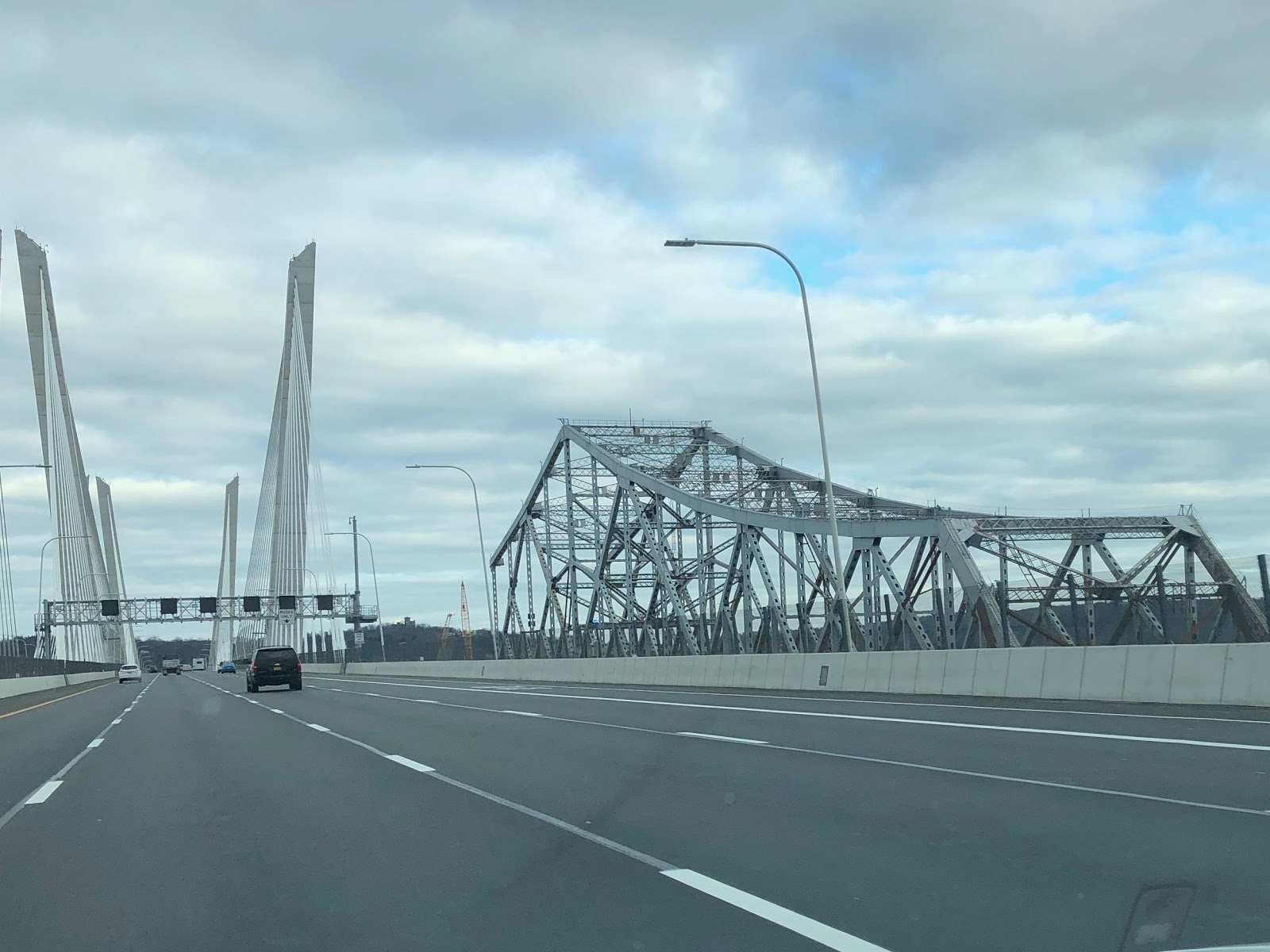
    The longest bridge in New York State from 1955 until it was replaced in 2017 was the Governor Malcolm Wilson Tappan Zee Bridge, or the abbreviated Tappan Zee.  I’ve crossed this bridge countless times, but don’t remember the occasion of the last time I crossed it.  I do know that it was sometime in 2017, when I was working for a company out of Pearl River, New York.  Yesterday they blew up a section of this bridge and let it splash down into the Hudson River.  I happened to be about ten miles away from there when it came down, as I’m working for another company based in nearby Mahwah, New Jersey.  The demolition didn’t take down the entire structure.  There’s still a span that will be dismantled instead of blown up.

    For me the Tappan Zee was the alternative to the George Washington Bridge further downstream for most of my travel from New England to points south.  Mostly that meant New Jersey or Philadelphia, but sometimes it meant trips to Washington, DC or Florida.  Crossing the Hudson is a key part of any travel West or South from New England, and the Tappan Zee was usually the less congested alternative to the GW.  None of this means much really, but for me the trips across the Tappan Zee on my way to the Dad Vail Regatta were particularly meaningful.  I was awestruck the first time I crossed this huge span of the Hudson River, seeing the red cliffs lining the opposite side.  The GW gives you Manhattan views.  The Tappan Zee gives you the mighty Hudson in all its glory.

    The new bridge crosses right next to the location of the older bridge.  It’s a fine thing, and I’m sure it was worth the $4 Billion they spent on it.  Candidly it doesn’t have the same hold on me that the old bridge did.  But I hope it lasts every bit as long as it’s predecessor. 

  • Up the River

    Up the River

    Reading the history of Henry Hudson, James Cook and other explorers who were looking for the Northwest Passage across North America, I marvel at the logistics of sailing square-rigged ships up rivers like the Hudson River or the St. Lawrence Seaway.  Sailing in narrow corridors with strong currents, questionable winds with the trees and cliffs lining the shores, and no charts to help navigate with, it’s an incredible display of sailing acumen.  I’m in awe that they could do it.

    I’ve sailed up a couple of rivers, most notably the Merrimack River and the Essex River.  In each case I was in a sloop-rigged boat of about 36 feet.  We knew where the channel was, and we had a diesel engine to fall back on should we need it.  That’s a far cry from the Halve Maen (Half Moon in English), Henry Hudson’s ship, which was a square-rigged and 85 feet long.  Hudson sailed up the river that bears his name in September of 1609 with a crew of about 20 men.  They sailed as far as present day Albany before turning around.  Albany would become a hub of trade with the interior over the next 100 years and the river would become well known, but Hudson was essentially sailing with one hand tied behind his back.

    The Basque were exploring North America before Hudson made his voyage into the interior.  I’ve documented previously the adventures of one soul who made it all the way to Rochester, New York before he perished.  The French were also actively exploring the interior, and of course the Spanish were focused on areas farther south on the continent.  All of them exhibited exceptional courage and skill in navigating these waters.  As a casual and occasional weekend sailor I’m deeply impressed with what they were able to accomplish.  Lost to history of course are the many who failed to make it home from these voyages.

  • Blackbirds

    They’re back.  The rebel bike gang of the skies have come back to New Hampshire.  Where I once filled my bird feeders once or twice a week, I have to fill them daily when these swarms of Red Winged Blackbirds and Common Grackles come to town.  They swarm the feeders and you can almost watch them empty in moments.  There’s no taking your fair share and moving on with these thugs – it’s all or nothing.

    I’ve read up on changing up the feed, putting chicken wire around the feeders, or buying new feeders that they don’t like to go to.  But I’m not spending money or time on that.  With a snow storm coming in tonight, I’m not taking down the feeders either.  I’m going to fill them up and let them run out – quickly mind you, but unnaturally natural.  Maybe the desirable birds will get their fill too, maybe not.  But sometimes you need to let nature decide.  The feeders come down in a month.  I’ll continue to feed the bluebirds, which has been a pleasant success in the yard.  Maybe even the finches, depending on how quickly they blow through the thistle.  But the cardinals, jays and other birds are going to have to live off the land once the snow melts.  For now it’s ever bird for itself.