Tag: Iroquois

  • Keep Your Head Down and Sap That Fort

    The northeast United States is dotted with old forts that once played a critical role in our history.  Four of the most famous during the French and Indian War and the Revolutionary War were Fort Duquesne, Fort William Henry, Fort Niagara and Fort Stanwix.   They were famous because they each occupied a critical point in the waterway transportation of the day, and because of their strategic important each was attacked (sometimes on multiple occasions).  Because they were protecting waterways, each was located on relatively flat land.  Without the high ground and hard ledge that prevented digging, each of these forts was attacked using the same tactic; siege trenching called sapping.

    The act of laying siege on a fort requires significant manpower, patience and a willingness to continue pressing forward towards the enemy, thus pressuring them to surrender.  A well-entrenched enemy isn’t going to wave the white flag and come out if they’ve got strong enough fortifications, enough food, enough manpower of their own, and enough ammunition to continue the fight… in short, if they have enough hope that they’ll prevail in the fight.  To diminish this hope, an army laying siege would deploy multiple strategies – negotiation, bombardment, psychological warfare, and sapping.  Sapping was the act of digging trenches closer and closer to the fortification, where bombs could be set to open up the walls.  Trenches were dug in a zig-zag towards the fort to avoid enfilading, which is devastating fire directed directly down the trench killing many people at once.

    “By persistently hanging on the enemy’s flank, we shall succeed in the long run in killing the commander-in-chief.” – Sun Tzu, The Art of War

    There are two ways to fire on the enemy; defilade was firing straight into the face of the force attacking you, and enfilade, which is flanking fire.  Enfilading is a favorite tactic for any army or navy as its lethally efficient.  One cannonball can take out a hundred soldiers as it flies down the column destroying everything in hits.  In the Battle of Trafalgar raking fire shot into the stern of the French ship Bucentaure resulted in 195 killed and another 85 wounded – simply stunning casualties in any battle, but particularly on a ship.  Enfilading creates carnage quickly.

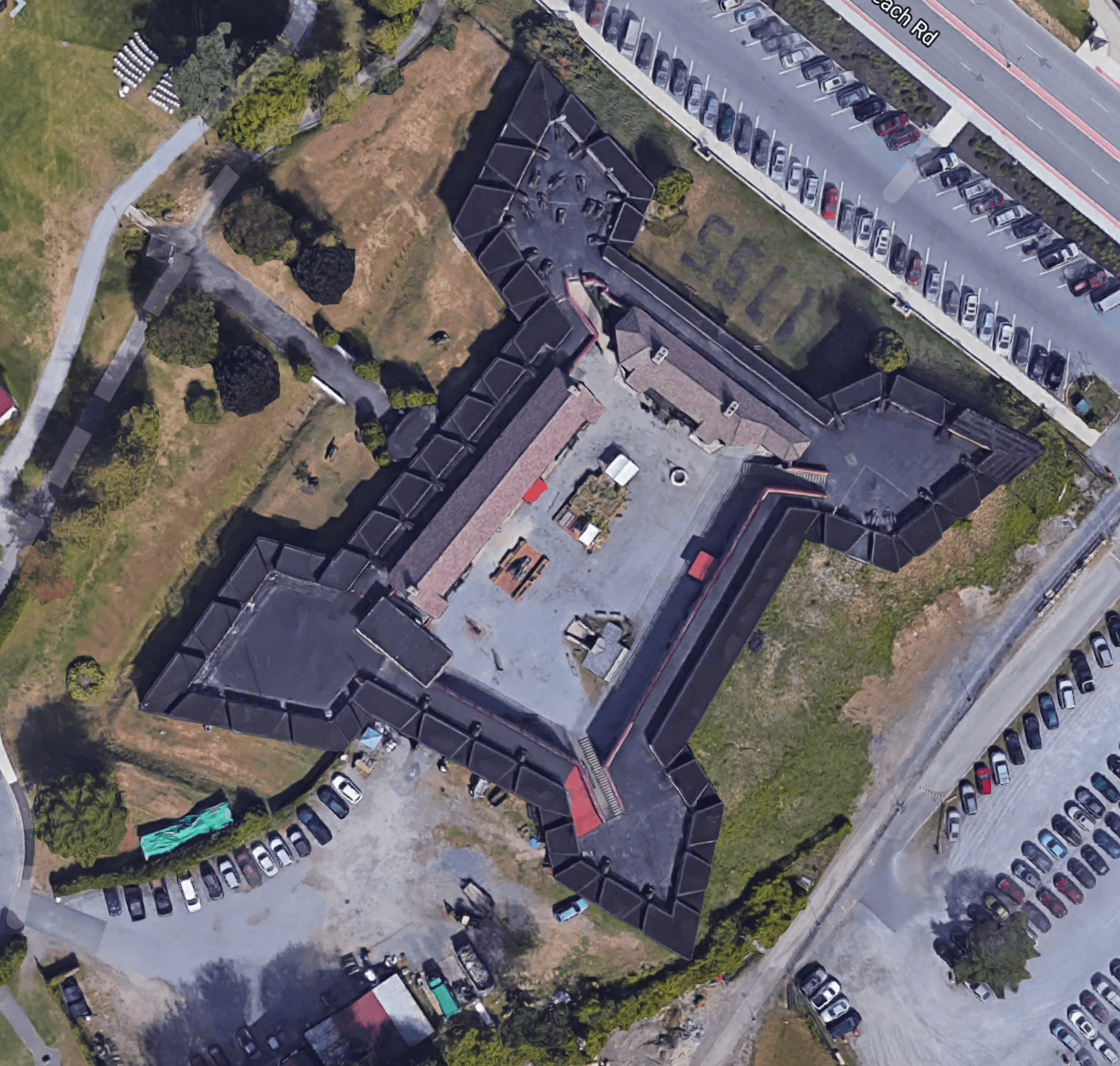
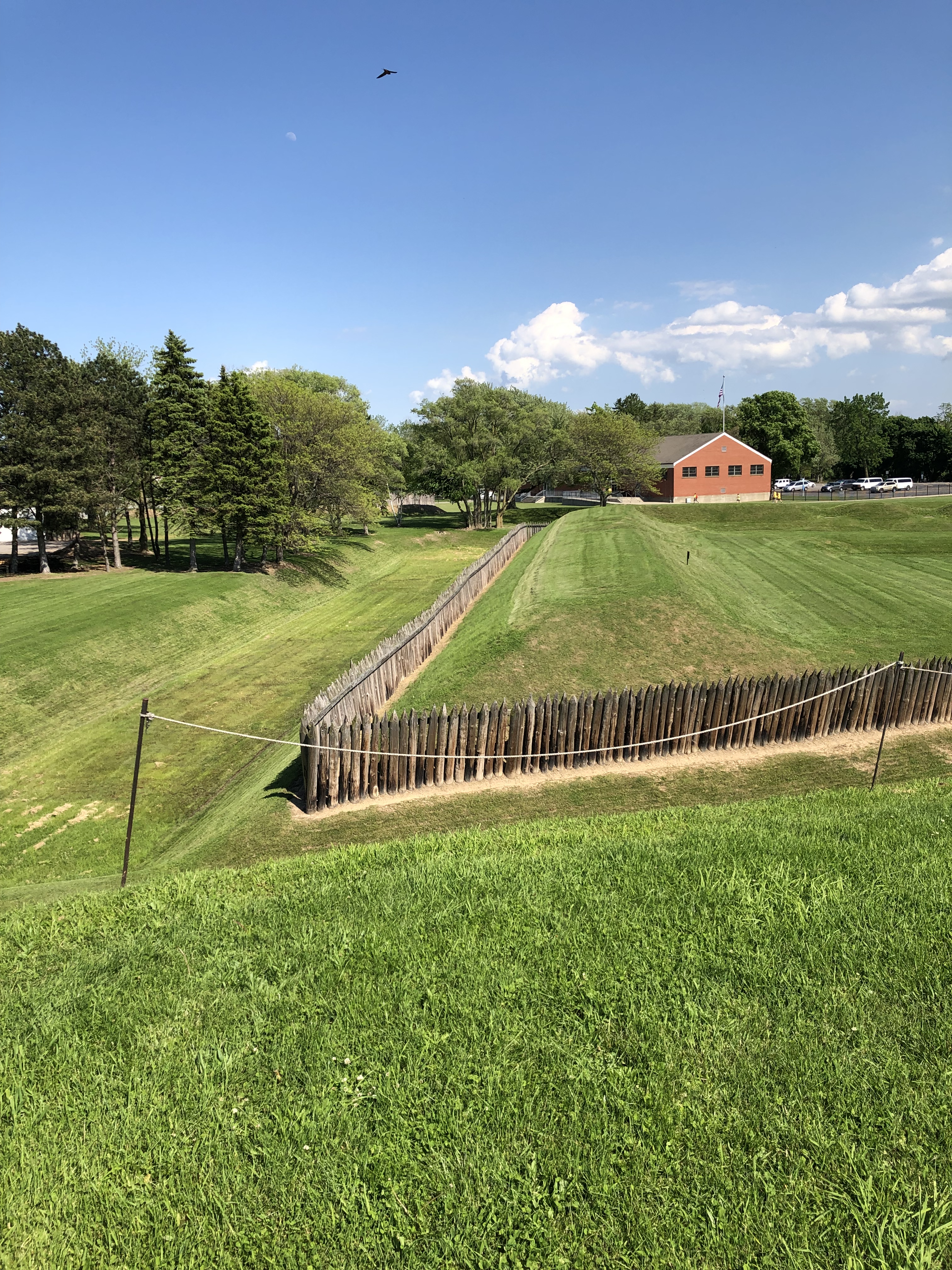
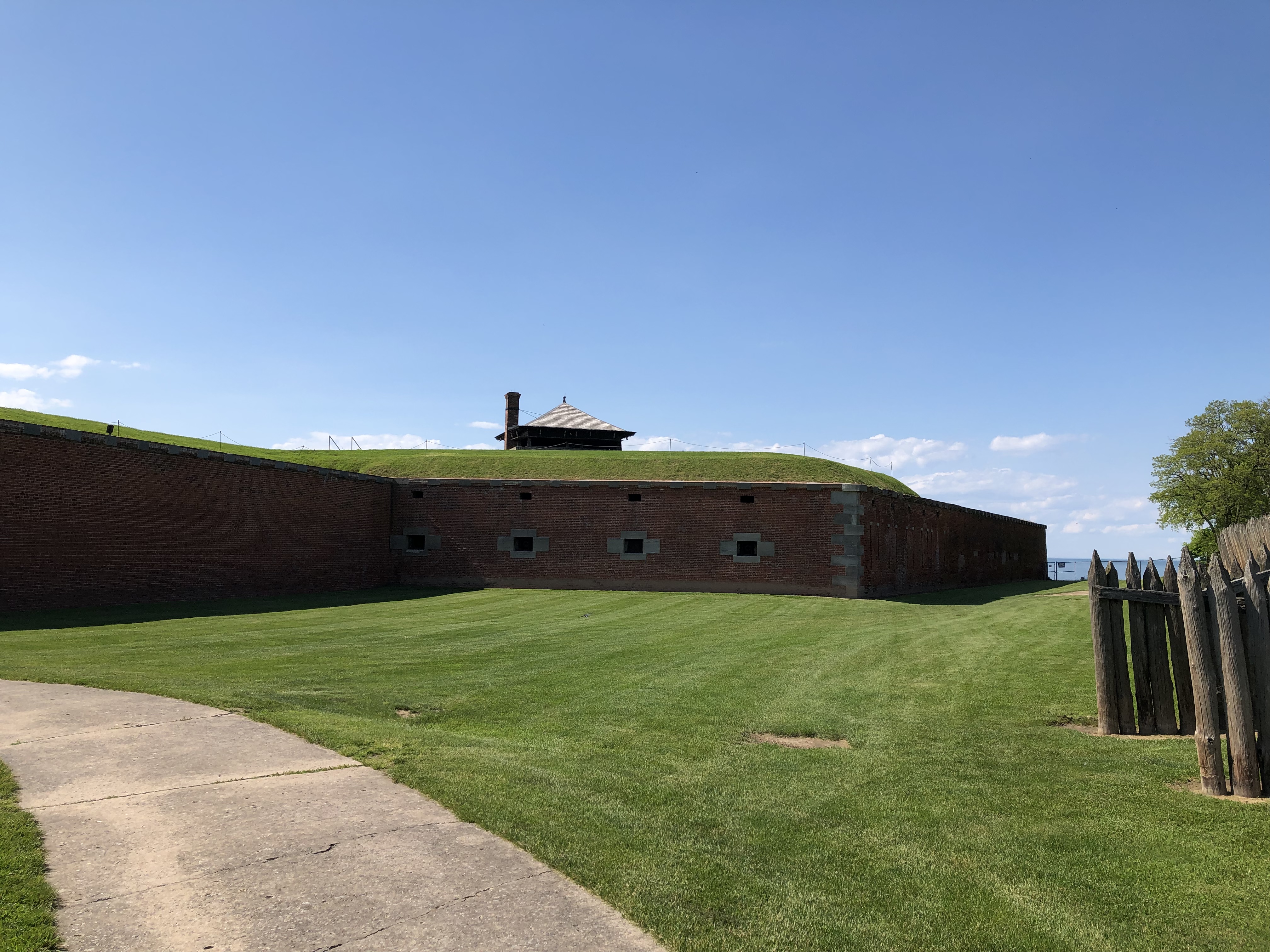
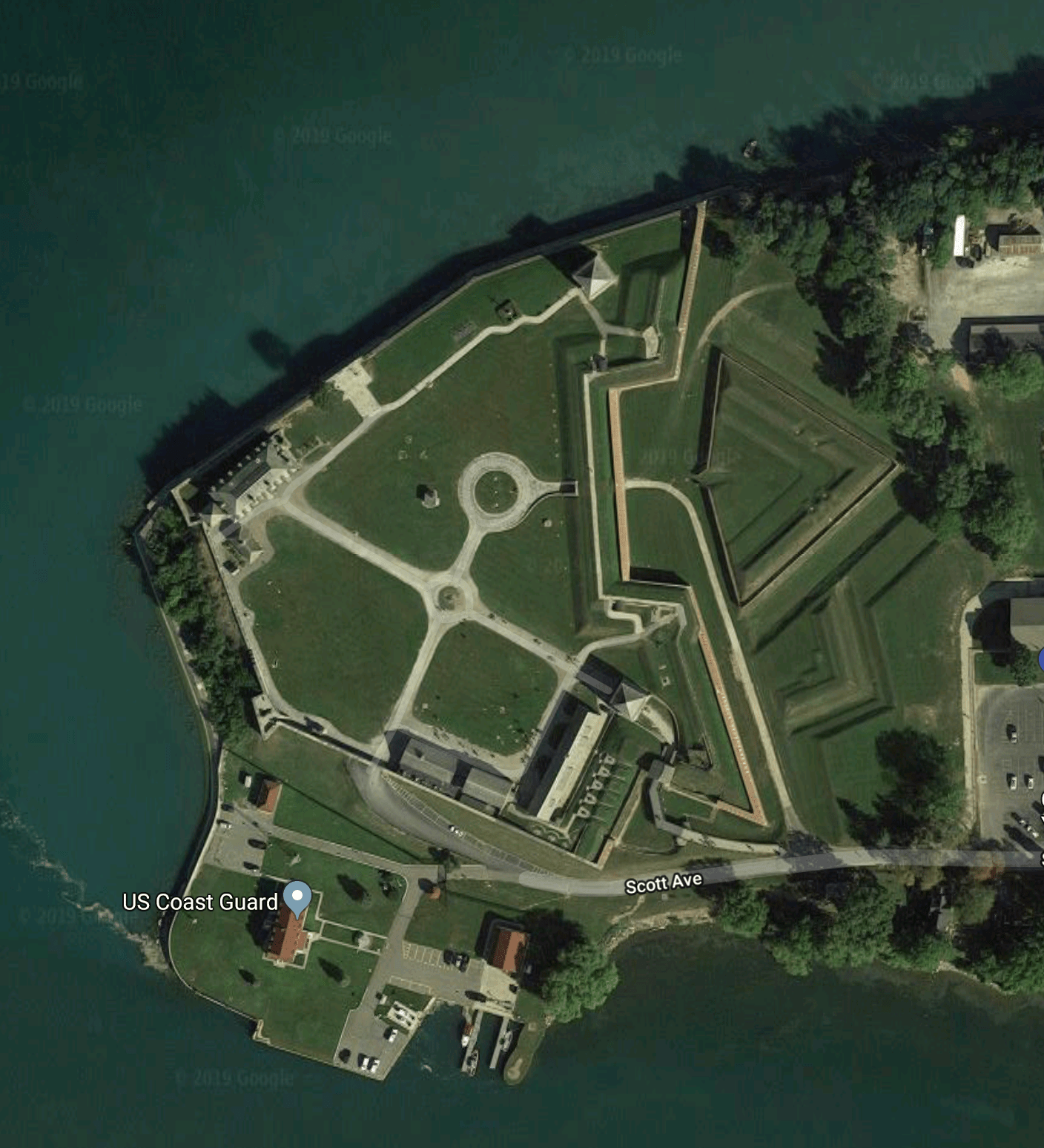
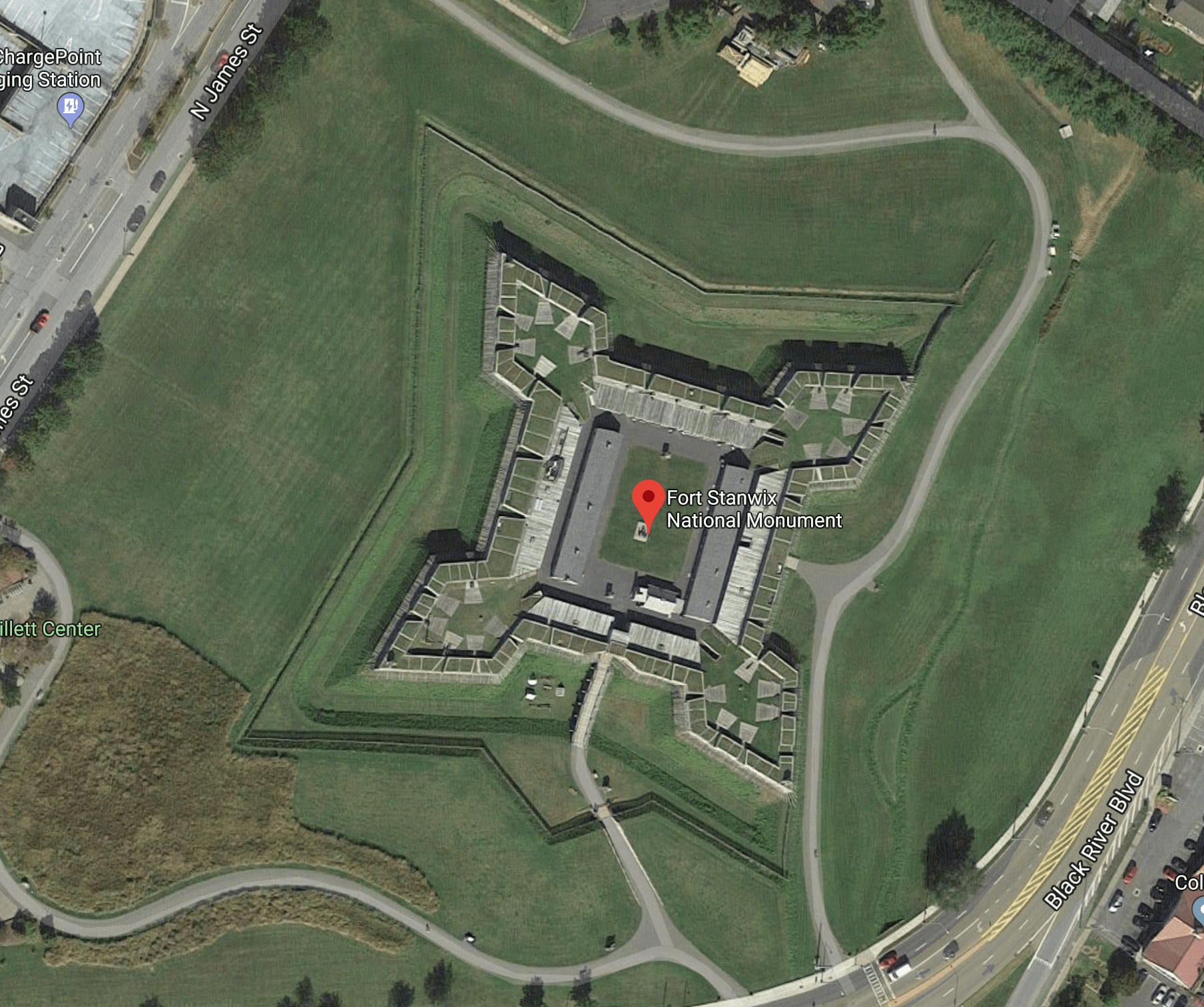
    Forts were built with enfilading in mind.  Bastions protruding at the corners opened up fields of fire by eliminating blind spots, making them very challenging to approach.  Bastions provided defenders with an opportunity to apply cross fire into attackers, creating an enfilade.  A quick look at the Google Earth images for Fort Niagara, Fort Stanwix and Fort William Henry (rebuilt on original footprint) show the shape of the forts.  Fort Niagara, pressed up against a point on Lake Ontario, didn’t have the complete star shape because it didn’t have the threat of armies rolling up on their flank, but you can see how the walls offered fields of fire consistent with enfilading attackers.
    So sappers – trench diggers – had to contend with steady musket and cannon fire raining down on them from many angles.  This had to be one of the worst jobs in the army, especially in soil with heavy rocks and roots, to be digging a trench while someone is trying to kill you from an elevated position.  But sapping worked, and throwing bodies at a problem has historically been appropriate behavior with European armies.  To give sappers a fighting chance of finishing the trench, they used mantlets and other protective structures to shield them from enemy fire.  Eventually the fort they were digging towards would run out of ammunition, or the besieged would grow exhausted from constant bombardment, and momentum would shift from the inside to the outside of the fort.  There’s another definition for sapping, and that’s gradually draining the strength and energy from someone, and that’s exactly what a siege would do to the inhabitants of the fort.  Watching the enemy get closer and closer must have been incredibly stressful, especially when you knew some of those enemy chose not to take prisoners.

    Fort Duquesne, in what is now Pittsburgh, wasn’t the most robust fort to begin with, and quickly fell to the French siege to begin hostilities in the French and Indian War in North America.  At Fort William on Lake George, the British and American forces held until their cannon began to overheat and fail.  A failing cannon was a dangerous thing indeed, often exploding and killing the crew that was manning it.  During the Revolutionary War, Fort Stanwix famously held the siege off, but largely because the British, loyalists and Iroquois laying siege on them were scared off prematurely by Benedict Arnold’s deception (fed a rumor that he was much closer and with a much larger force than he actually had).  If it weren’t for Arnold’s ploy the fort may have fallen within a day or two.

    Sappers got the enemy to your walls, but cannon was the great equalizer.  Without cannon to pulverize walls and the people behind them, armies had to play a waiting game.  Basically starving the besieged out.  With enough stores the army might run out of time before they were able to get through.  The Shawnee tried this tactic on Boonesborough in Kentucky; burning crops and killing cattle to starve the settlers out.  When it didn’t work quickly enough they dug a tunnel towards the settlers walls to plant British gunpowder.  Heavy rains collapsed that tunnel killing many of the Shawnee and saving the settlers.  Tunneling, or mining, was different from sapping in that you’re completely underground and vulnerable to these types of collapses.  The most famous mining attack took place at the Battle of Messines in Belgium during World War One when upwards of 10,000 German soldiers were killed when a million pounds of explosives mined below the German lines were exploded.  Clearly, digging towards the enemy didn’t end with the Revolutionary War, and no war proved that like World War One.

    Having walked through a few forts in my time, I’m struck by the amount of work that went into their construction.  It must have been formidable and more than a little terrifying to be on the outside trying to fight your way in.  But being trapped on the inside surely wasn’t much better.  When you hear about the defenders of Fort Stanwix or Fort William Henry fighting to exhaustion, knowing the fate of many who surrendered to the Native American warriors in other battles, its clear there wasn’t much pleasure rendered on that side of the wall either.  Troops sent to relieve the besieged were often vulnerable to ambush, which is exactly what happened at La Belle-Famille during the siege on Fort Niagara and at Oriskany during the siege on Fort Stanwix.

    Sapping offered refuge from the designed killing fields that star shaped forts created.  It was a harsh, horrific, exhausting slog digging under fire from the perimeter to the fort walls.  The alternative was an exposed, high-casualty ground level attack.  Given the choice, I’d probably have grabbed a shovel myself.  Thankfully, I can just stroll the grounds and contemplate the violence that took place around these forts early on in our history.
  • Oriskany

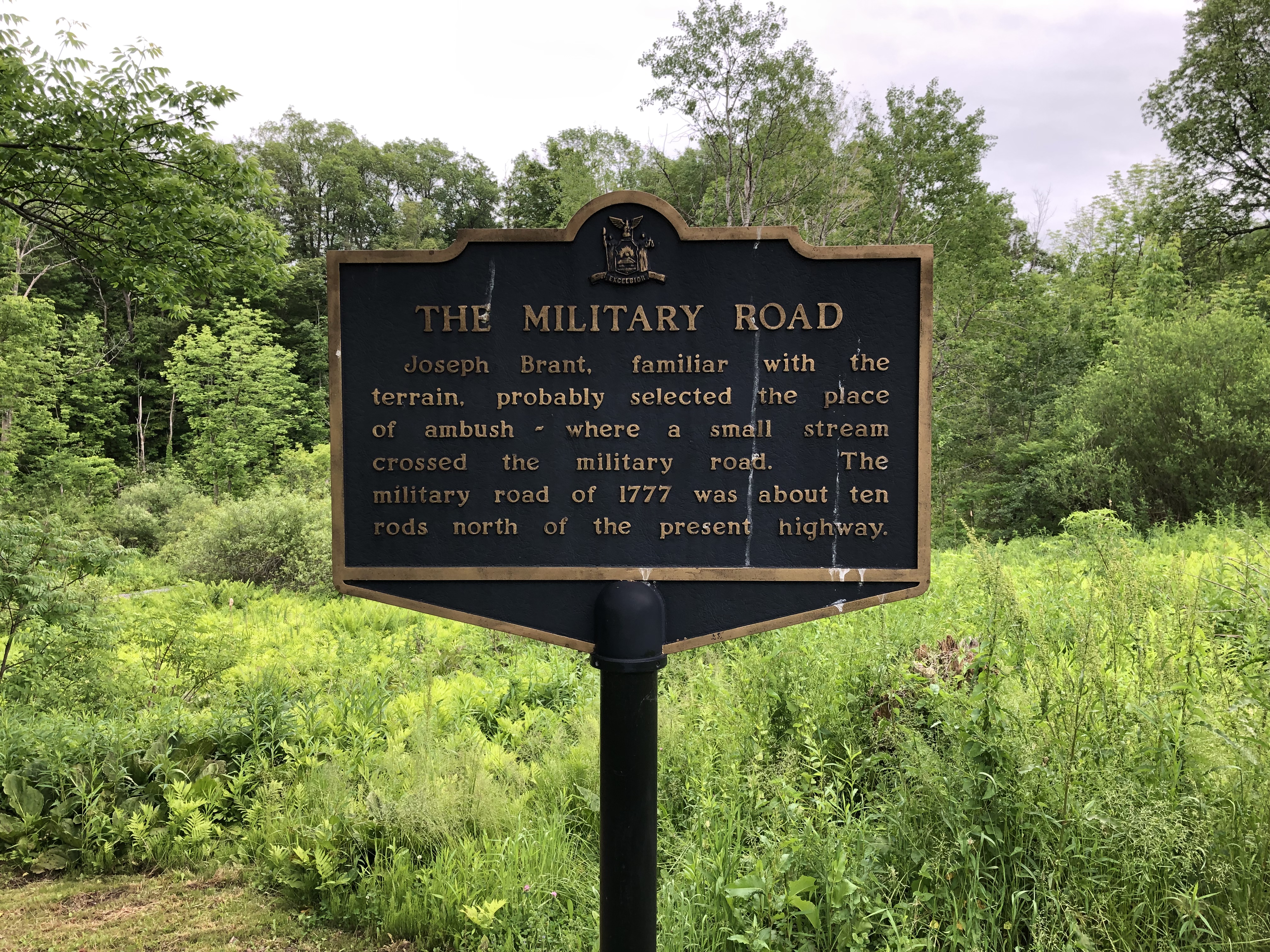
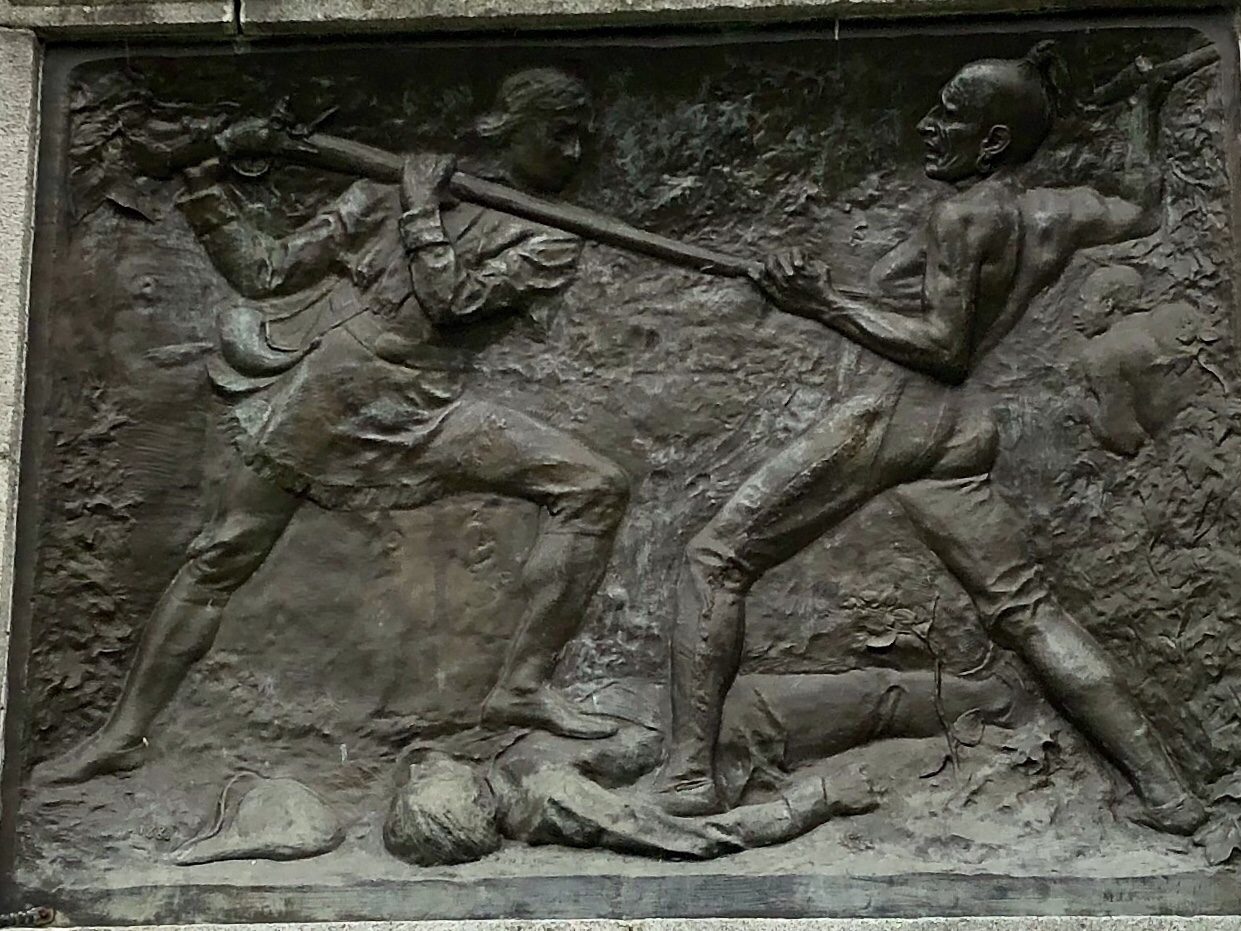
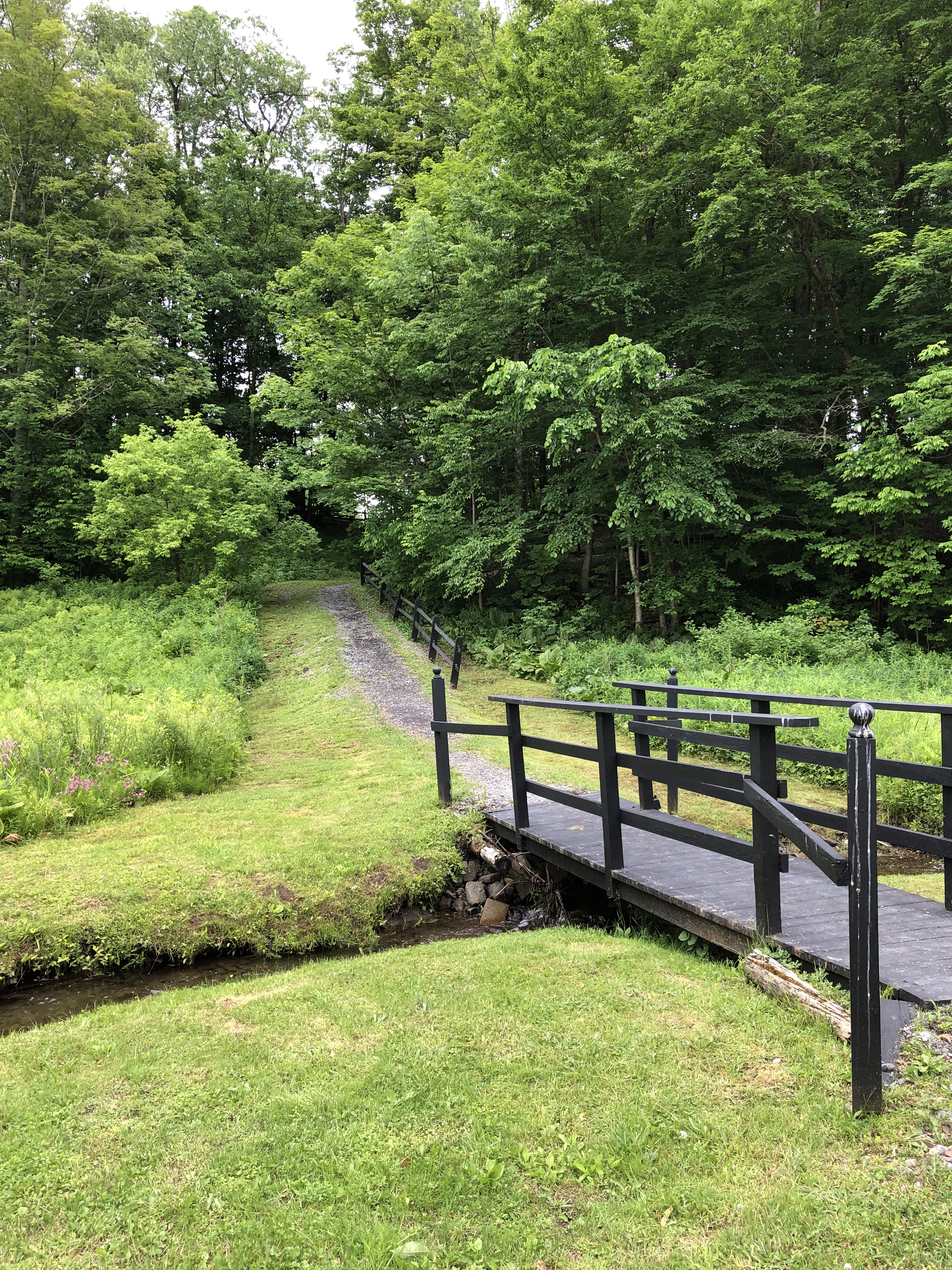
    I wasn’t planning on another detour on this trip, but saw the sign, calculated the total time the detour would take and made the decision to stop by the battlefield.  I was deeply impressed with the quiet dignity of the site, and reflected on the violence that took place in the ravine I walked down into.  The battlefield is nothing but tranquil today, save for the landscaper mowing the fields.  But at 10 AM on August 6, 1777 this valley erupted in thunderous clouds of gunfire and screams the hidden Loyalists and Iroquois aligned with the British ambushed a column of American patriots and Oneida Indians allied with them.  That this battle pitted neighbor against neighbor, Iroquois tribe against Iroquois tribe makes the results all the more devastating.

    We met the enemy at the place near a small creek. They had 3 cannons and we none. We had tomahawks and a few guns, but agreed to fight with tomahawks and scalping knives. During the fight, we waited for them to fire their guns and then we attacked them. It felt like no more than killing a Beast. We killed most of the men in the American’s army. Only a few escaped from us. We fought so close against one another that we could kill or another with a musket bayonet…. It was here that I saw the most dead bodies than I have ever seen. The blood shed made a stream running down on the sloping ground.” – Blacksnake, Seneca War Chief

    When I decided to divert from I-90 to check out the battlefield, I had no idea what to expect.  I’d seen pictures of the monument, but there’s an emotional weight in walking in the footsteps of those who perished here down into that ravine, across the creek and up the other side.  The land looks remarkably similar to what it looked like then.  Perhaps more fields have replaced the deep forest of the day, but this area remains largely undeveloped, and will remain so as the Oriskany Battlefield State Historic Site.

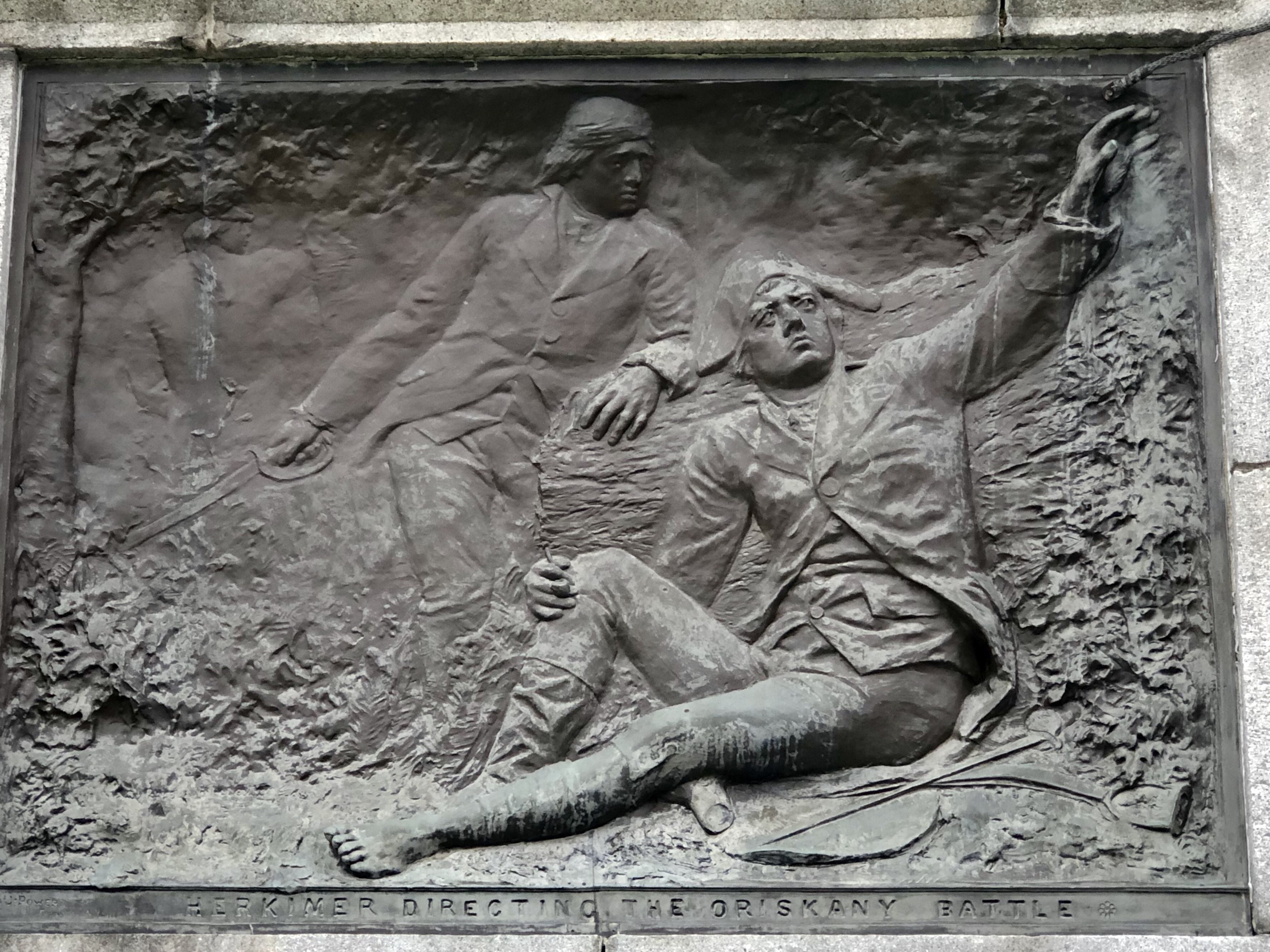
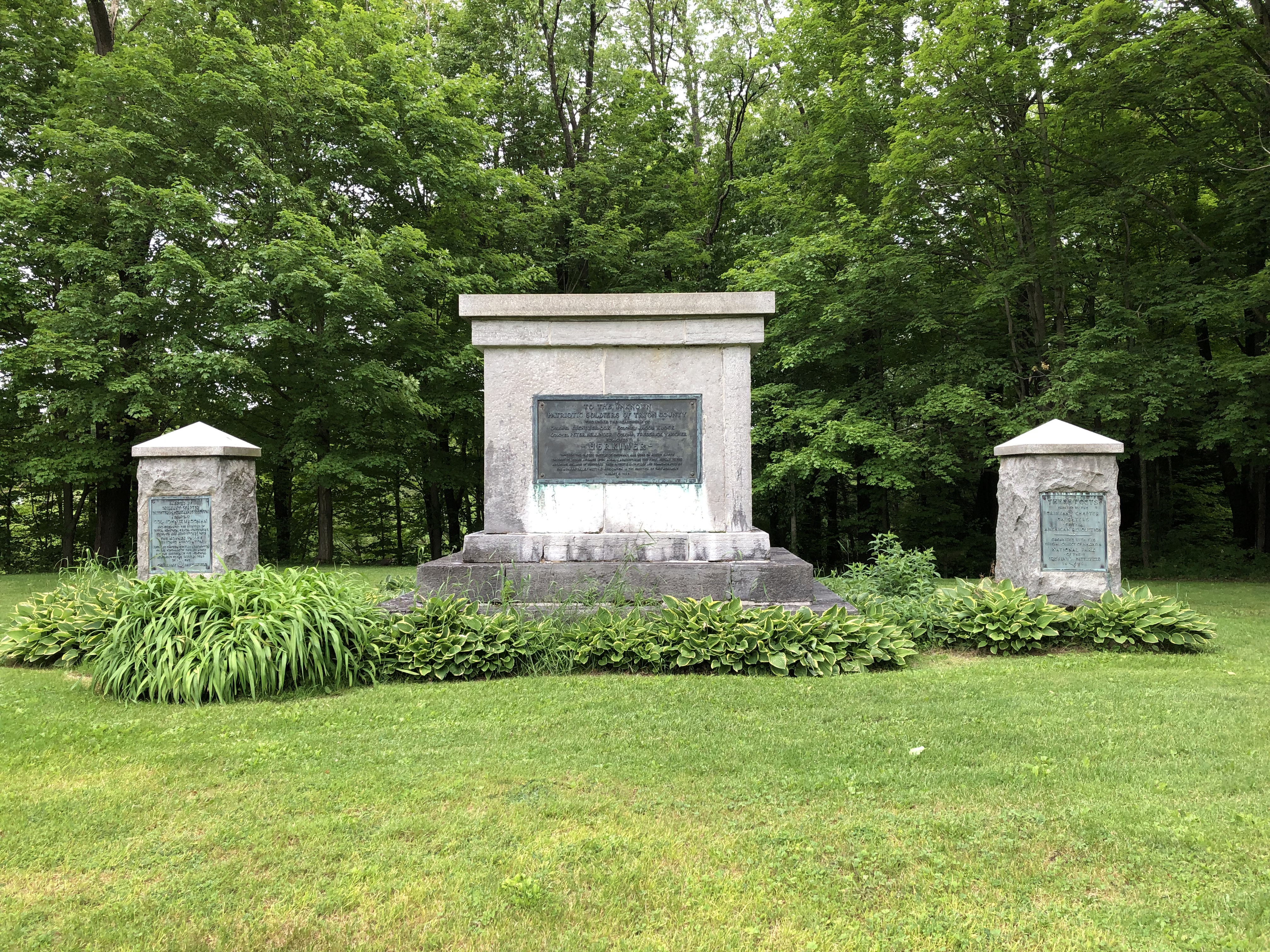
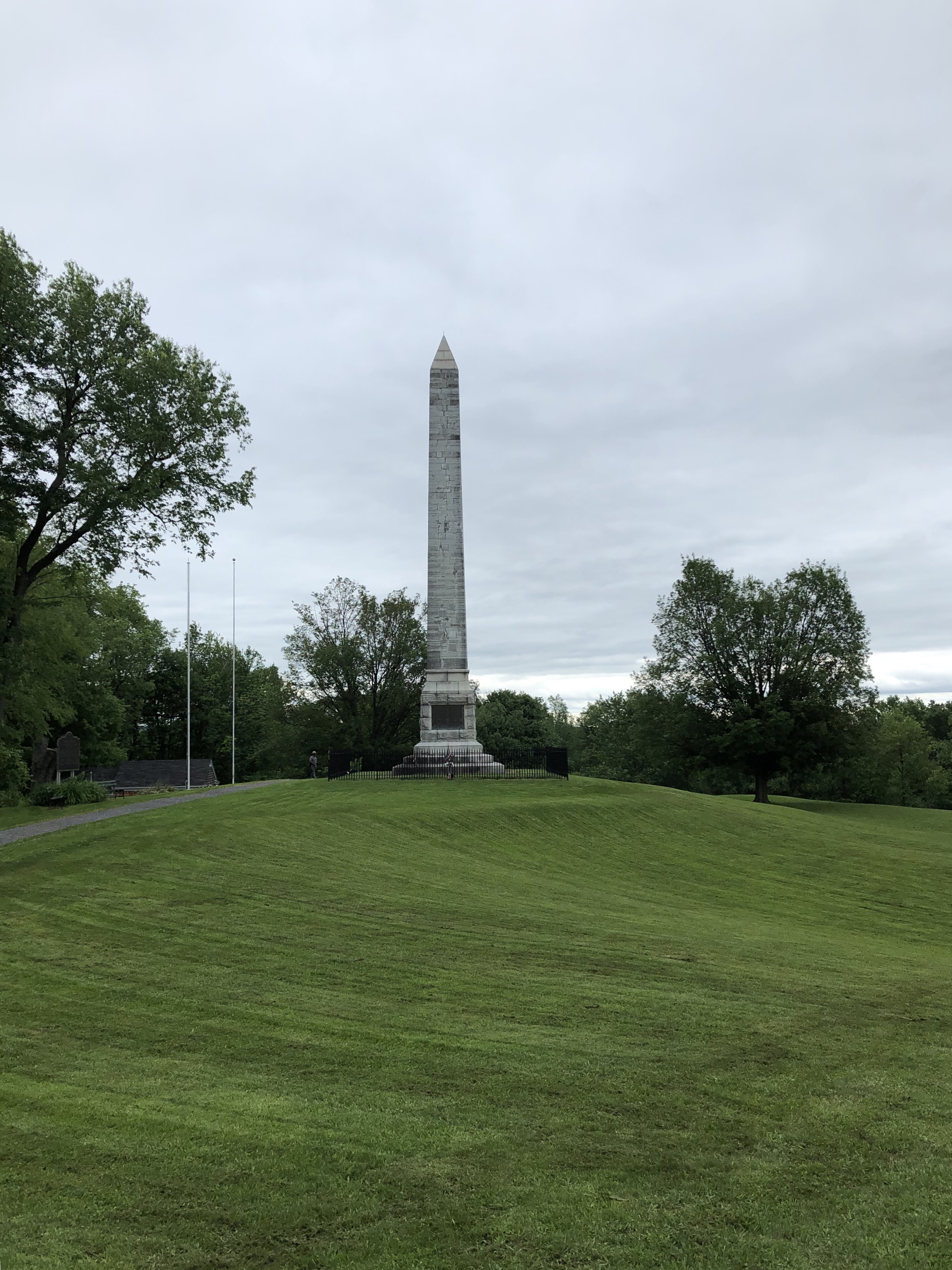
    So I pulled into the driveway leading to the monument and drove down to the parking area.  The 85 foot tall oblisk built in 1883 dominates the landscape in front of you.  But I’d noticed another monument and some signs marking historically relevant locations on the battlefield off to the right as I drove in, and decided to walk over to check those out first.  This is the best approximation of where the ambush took place, and looking around it seemed as appropriate a spot as any.  I walked up to the monument honoring General Nicholas Herkimer, wounded in the initial ambush, who famously directed patriot forces into defensive positions from behind an ash tree at or near this location. The Iroquois warriors would wait for a soldier to fire their one shot then rush at them with tomahawks and knives. This was up close, brutal fighting that decimated the American forces. Herkimer directed his men to pair up, with one firing while the other reloaded, to counter this rush.  Herkimer was shot in the leg, and died when the amputation to save him didn’t go as planned.  I wonder sometimes if Benedict Arnold, shot in the leg later in the same year, refused to have his leg amputated after seeing what happened to Herkimer?

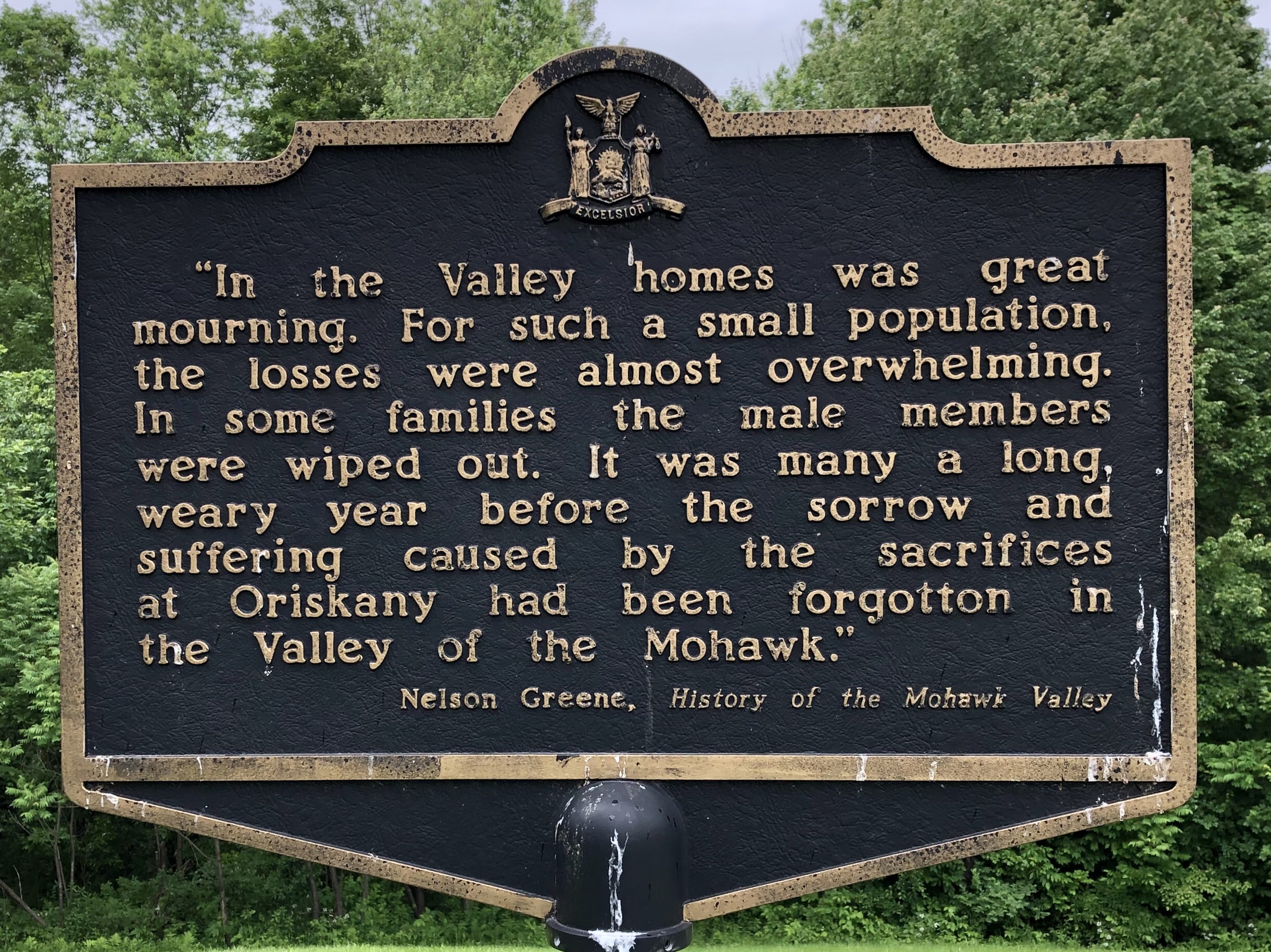
    Of the almost 800 American and Oneida ambushes, almost half were killed, and overall casualties were over 500. For the patriotic farmers who rallied to save their brothers-in-arms under siege at Fort Stanwix, the ambush quickly ended their dreams and destroyed the lives of their families back home.  By all accounts these were tough losses for any army, but for Tryon County, it was a devastating loss of fathers, brothers and sons that brought the county to its knees.

    Ultimately the relief column suffered far more casualties than the defenders at Fort Stanwix, who were saved when Benedict Arnold orchestrated a con to make the British and Iroquois think he was much closer to engaging with them, and with many more troops than he actually had.  But that’s a story for another day.  The Loyalists who survived would eventually flee to Canada or other British territories as reprisals reached their homes as momentum swung away from the British.  While the battle at Oriskany was a huge setback in momentum, it was another domino in the string of events that led to the defeat of General Burgoyne’s army at Saratoga.

    On this rainy June afternoon, I had the place largely to myself.  There were about a dozen New York State Troopers visiting, a couple huddled under an umbrella, a man walking two Labrador retrievers, and… me.  The experience reminded me of my trip to Hubbardton a couple of months ago, the quiet solitude and signs describing the lay of the land on the day of the battle were similar.  But Oriskany felt different, because what happened here was different. Hubbardton was a retreating rear guard being caught by a faster moving British force. Oriskany was neighbors ambushing neighbors. Iroquois tribe against Iroquois tribe. A mass casualty event that shook a region. The Revolutionary War was far more complicated than Americans overthrowing a tyrannical oppressor. It was a messy divorce that forced each individual to decide which parent they were going to remain with, and which one they would betray in the most violent ways.

    Visiting the Oriskany battle site is easy. Roughly ten minutes off I-90, it offers a quick respite from travel, and perspective on the sacrifices others made to give us the freedom to do so. On the day I visited, as with other battlefields related to the Saratoga campaign, a quiet stillness prevailed. There’s a small building set down behind the monument where you can learn more about the site and events that day, and (please) leave a donation to help support the maintenance of this sacred ground.  The obelisk is showing signs of wear and needs renovation, but remains a striking tribute to those who fell here.

  • The French Castle on Lake Ontario

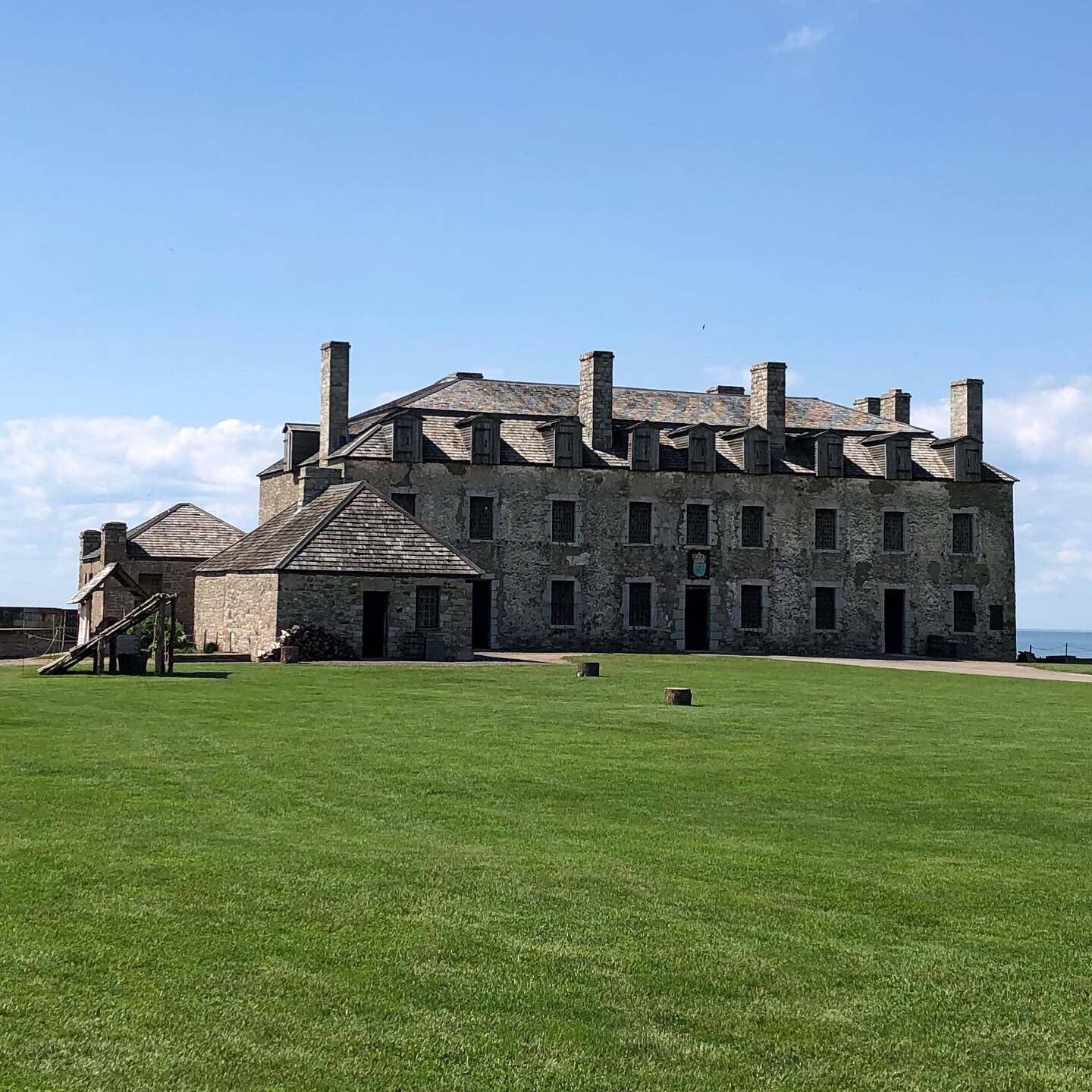
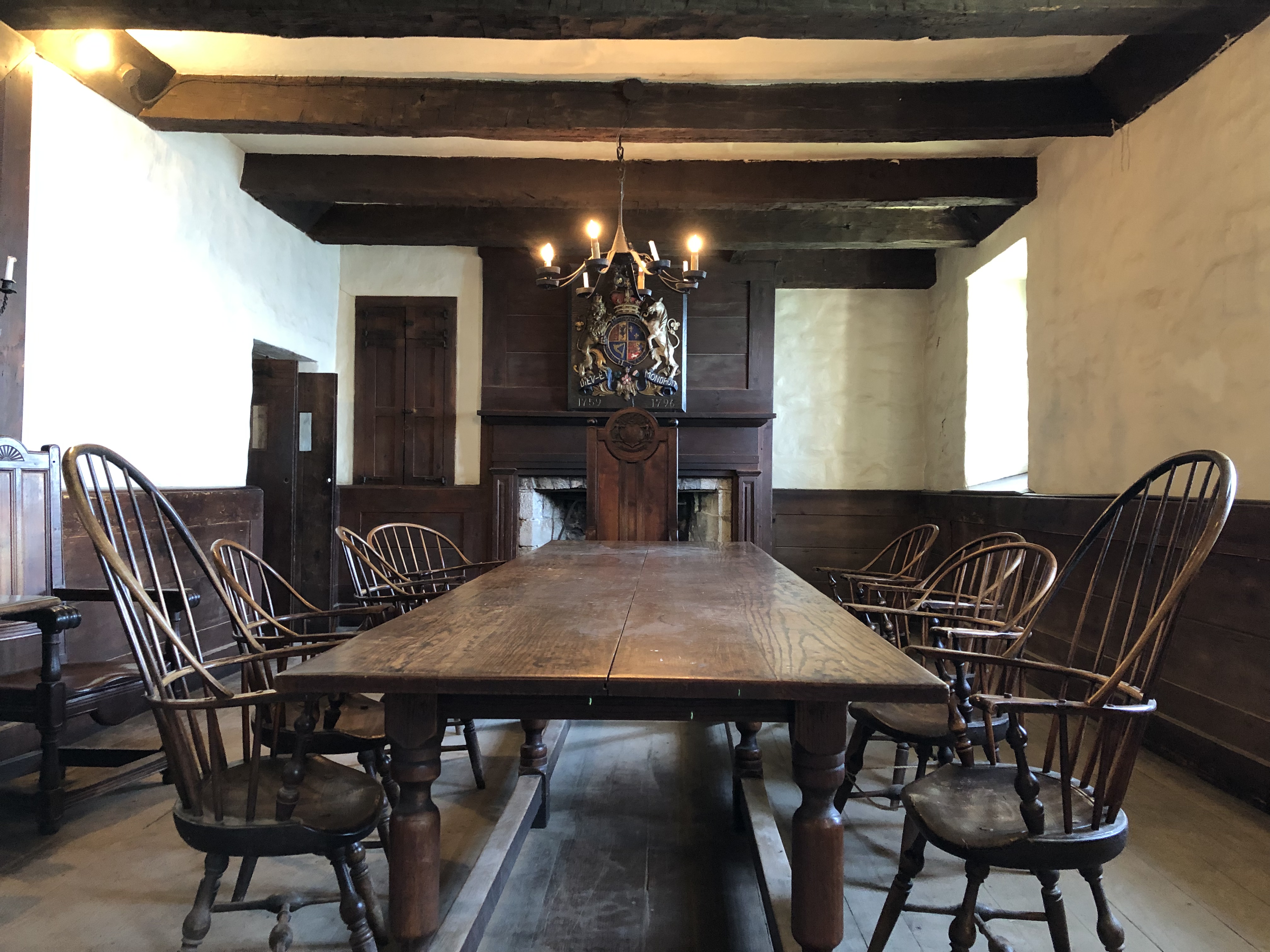
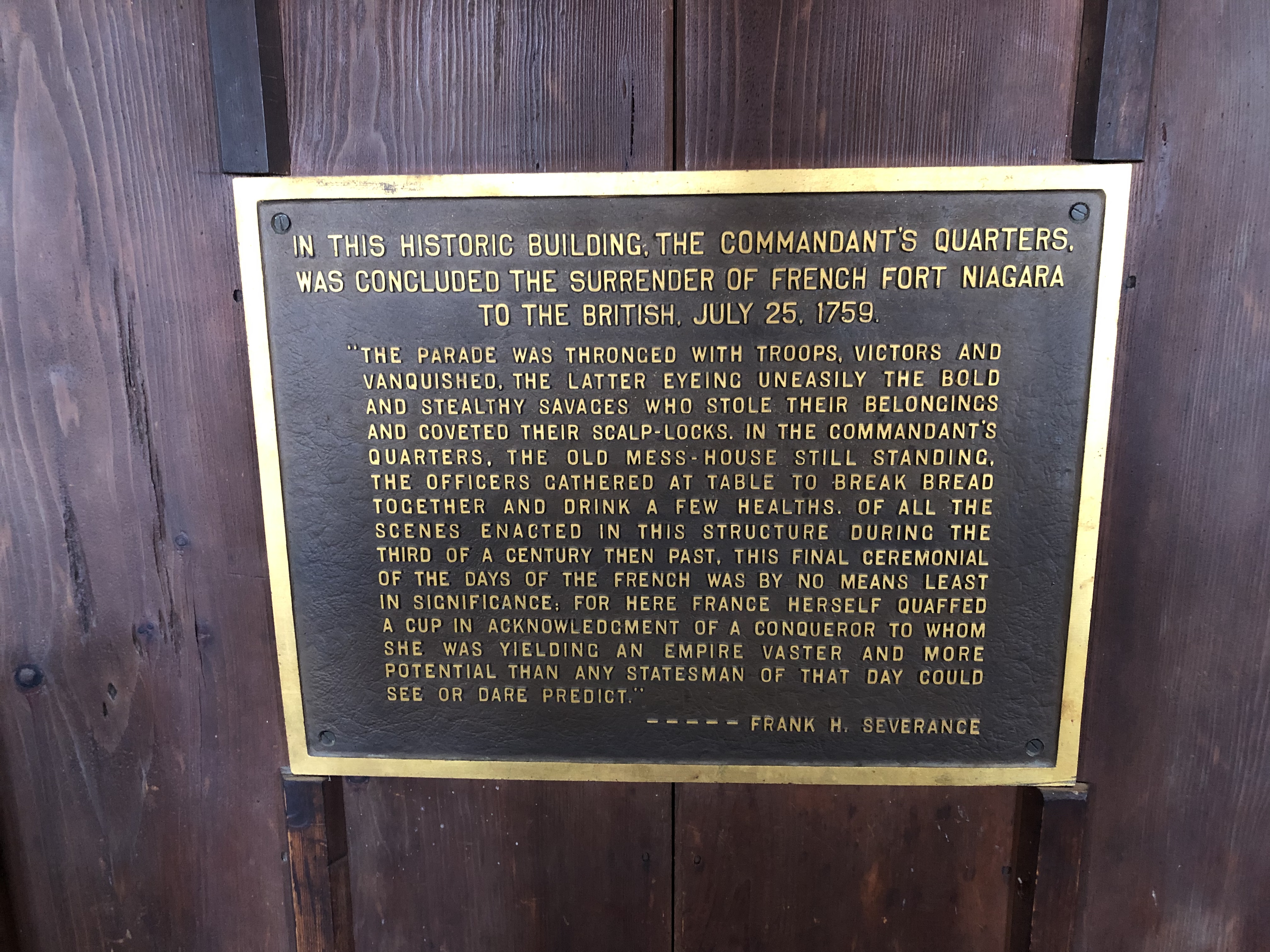
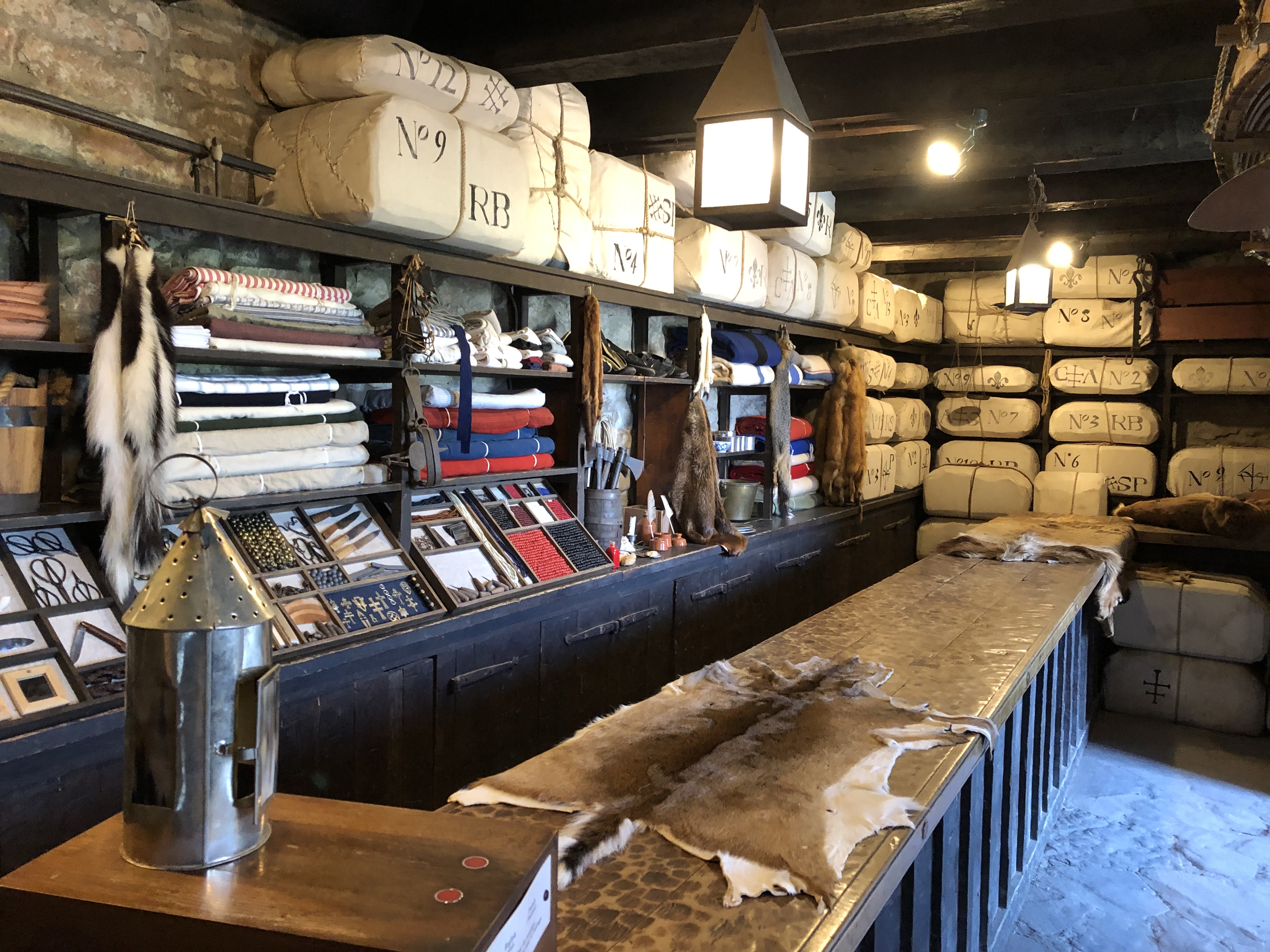
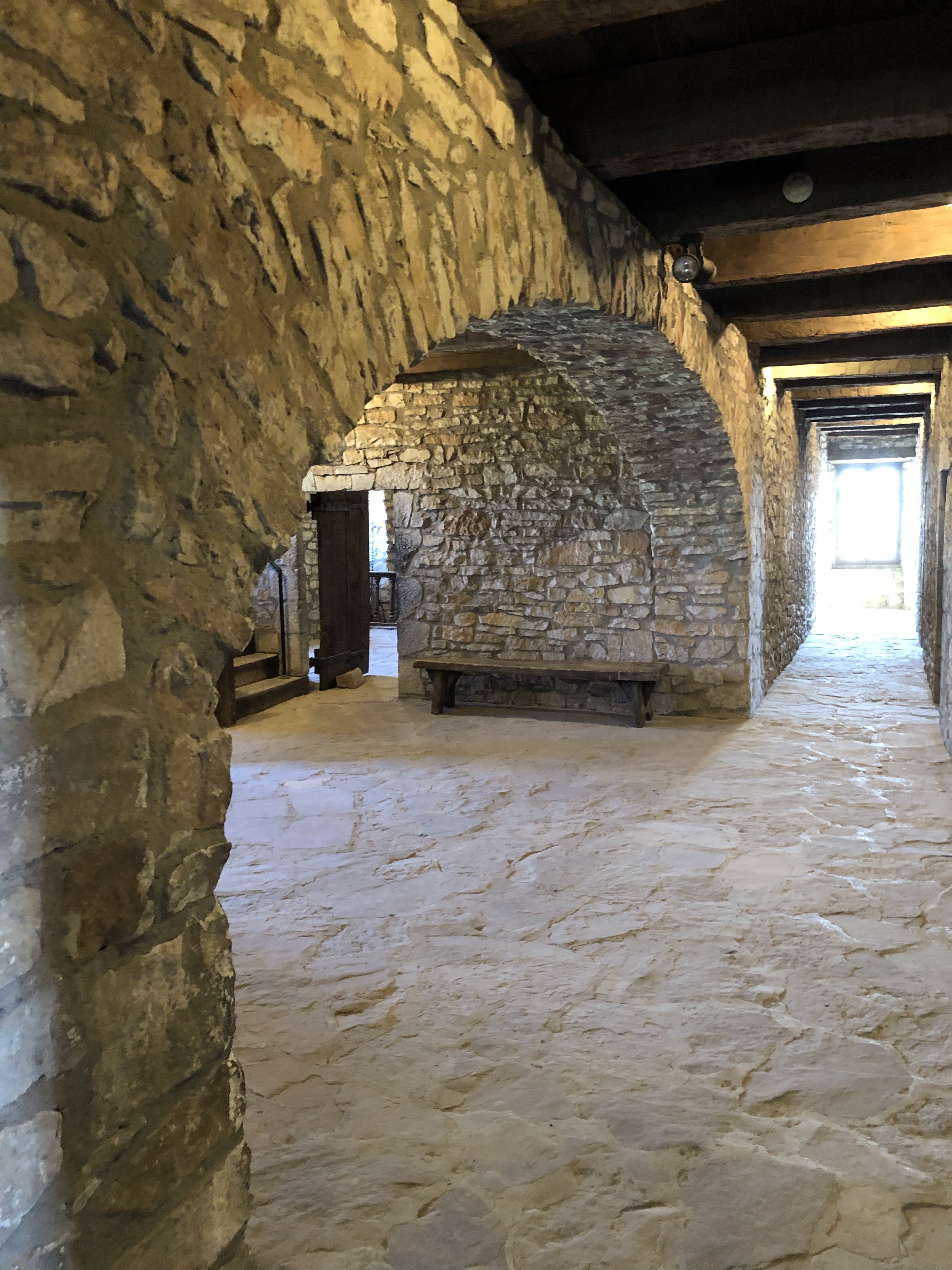
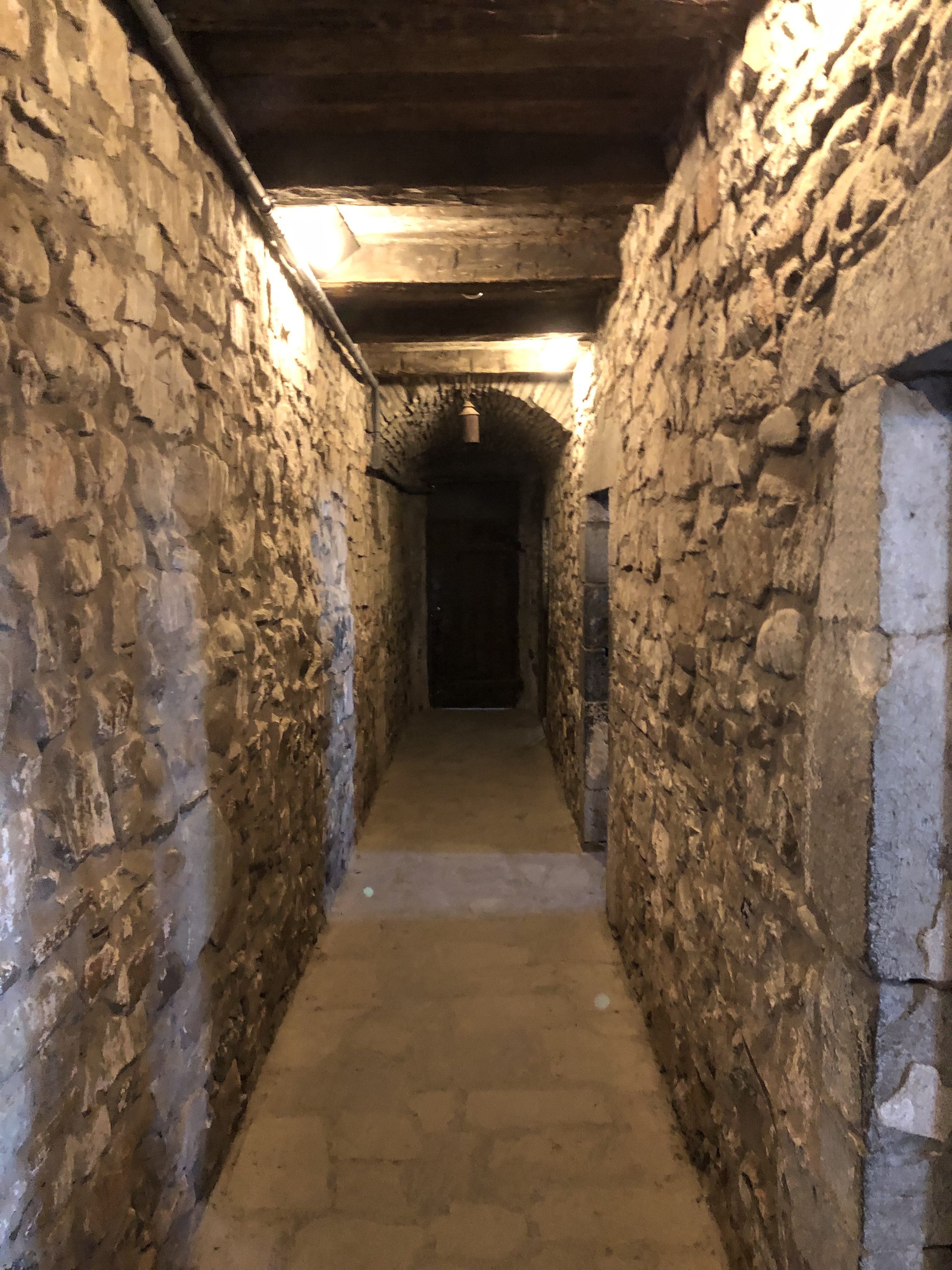
    I paid a quick visit to Fort Niagara when I arrived in Buffalo earlier than anticipated.  The site is an active museum, but it closes at 5 PM.  I arrived at 4:15 and set about to quickly absorb as much information as I could in the museum before walking through the incredibly well-preserved/restored fort.  I could make a dozen posts just on Fort Niagara’s history, and I think I may just do that over time, but today I’ll focus on the crown jewel of the site; Gaspard-Joseph Chaussegros de Lery’s “machicolated house”, known forever since as the French Castle.

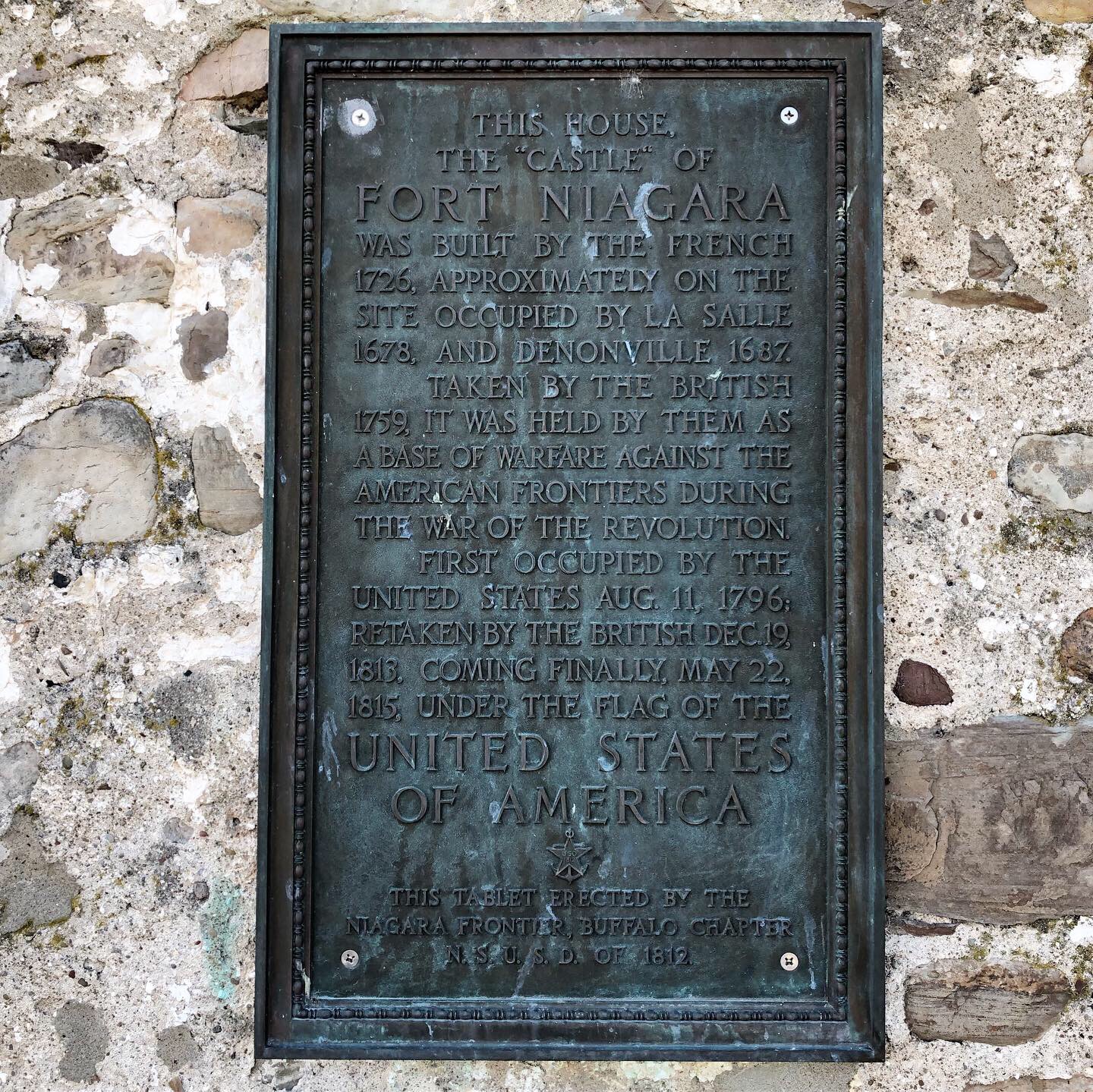
    Wikipedia describes a machicolation as “a floor opening between the supporting corbels of a battlement, through which stones or other material, such as boiling water or boiling cooking oil, could be dropped on attackers at the base of a defensive wall.”  The French Castle doesn’t have the traditional boxlike structures you might see in a castle in Europe, but the third floor dormers clearly serve this purpose.  For the French, the primary concern in 1725 was defending against attacking Iroquois, who resented their permanent presence at the strategic point on at the mouth of the Niagara River as it flowed into Lake Ontario.  The French had built two forts here previously, Fort Conti in the winter of 1678-1679, and Fort Denonville, the ill-fated staging ground the French used for aggressive campaigns against the Iroquois in 1687.  The French met with a delagation of the Iroquois Nation and requested a “house of peace” be built on the site.  They were granted permission and construction began in earnest, and completed in 1726.

    As a history buff, and particularly as someone fascinated with the period when this fort was active, walking into the French Castle is extraordinary.  It’s a time warp into the past, and looking out onto Lake Ontario on a beautiful June afternoon, it looked very much like it would have for the French soldiers stationed there…  save for Toronto rising up on the horizon.  On this day, the buses of tourists were leaving for the day, the roving pack of Boy Scouts were busy taking pictures elsewhere, and I was almost alone wandering around in the French Castle.  I made a point of walking through each of the rooms open to the public – and almost every room was open – and soaking up the history of the place.

    p

    Contrast Fort Niagara with a fort the English built at roughly the same time (1726 vs. 1754), Fort Western in what is now Augusta, Maine.  Fort Western was for the British pushing the limits of exploration at that time, and the fort was built with a wooden stockade and wooden buildings designed to defend against Abenaki raids.  Fort Niagara is huge by comparison, built of stone, and with a much larger military presence.  Wooden stockade fencing, as with Fort Western, was initially utilized, and eventually when the threat moved from attacks from Native Americans to British military campaigns with cannon, earthworks and walls were built to reinforce the perimeter.

    The French Fort would eventually be occupied by, in succession, the French, the British, the United States, the British (War of 1812) and finally back to the United States.  It’s witnessed some incredible history in the last 293 years.  I was delighted to see it so well-preserved, and can’t wait to get back to this little corner of the northeast.

  • Onondaga

    Long before present-day Syracuse dominated the lake that bears their name, the Onondaga lived in this area.  Onondaga means “hill people”, and there are certainly plenty of those in the region.  If you look at a map of the area, you see that there’s another dominant feature in this region: water.  Lake Ontario is just to the north and west of Lake Onondaga.  The finger lakes are southwest.  And the Mohawk River cuts an East-West corridor from Albany to roughly Lake Oneida, which connects to Lake Onondaga via the Oneida and Seneca Rivers.  This network of waterways was a superhighway for native populations, and later for Basque and French traders, and eventually British colonists and the waves of settlers who followed them.  Salt production was a major industry for early settlers to the Syracuse area as they tapped into the massive natural deposits around the southern part of Lake Onondaga.

    In my fourth year of crew, I rowed on Lake Onondaga in the summer of 1988 in the Intercollegiate Rowing Association Regatta.  This regatta was memorable for me for a few reasons.  That year Northeastern University had an accident on the way to the regatta and their rigger was killed.  The Heavyweight Men went on to win the IRA’s that year, and I witnessed the race.  To say Northeastern was a sentimental favorite after that event is an understatement.

    When you drive down I-90 you cross the lake outlet between the Seneca River and Lake Onondaga where Syracuse has their boathouse.  This is where we launched during the IRA’s and I still have vivid memories of my time there that bubble to the surface whenever I cross this outlet in the daylight.

    The Onondaga were one of the five original tribes in the Iroquois Nation.  The Oneida and Mohawk were to their East, and the Seneca and Cayuga were to their West.  So the Onondaga as the middle tribe were the logical “keepers of the fire” for the five nations.

    During the Revolutionary War, the Onondaga fought on the British side and paid for this in 1779 Sullivan Campaign led by Major General John Sullivan.  George Washington brought the fight to them in a series of coordinated raids in when the United States won.  Thousands of Iroquois fled to Canada and many starved in the winter of 1779-1780.  Their homeland was settled by New York veterans of the Revolutionary War as part of the Military Tract of Central New York.  Today there are roughly 500 people living in the Onondaga Nation Reservation just south of Syracuse.

    Lake Onondaga has suffered its own affront, as a company called Allied-Signal, which later became Honeywell, and other companies used the lake as a dumping ground for Mercury and other toxic chemicals.  Years of dredging and capping the bottom of the lake were completed in 2017.  The Onondaga consider the lake sacred.  Corporations considered it a convenient dumping ground.  It seems to me that the way the Onondaga lived on the land and the waterways that cut across it is preferable to the way that those who came after them have treated each.  I know that in 1988 I wasn’t thinking about how much mercury I was rowing over as we competed in the IRA’s.

  • She-Qua-Ga Falls

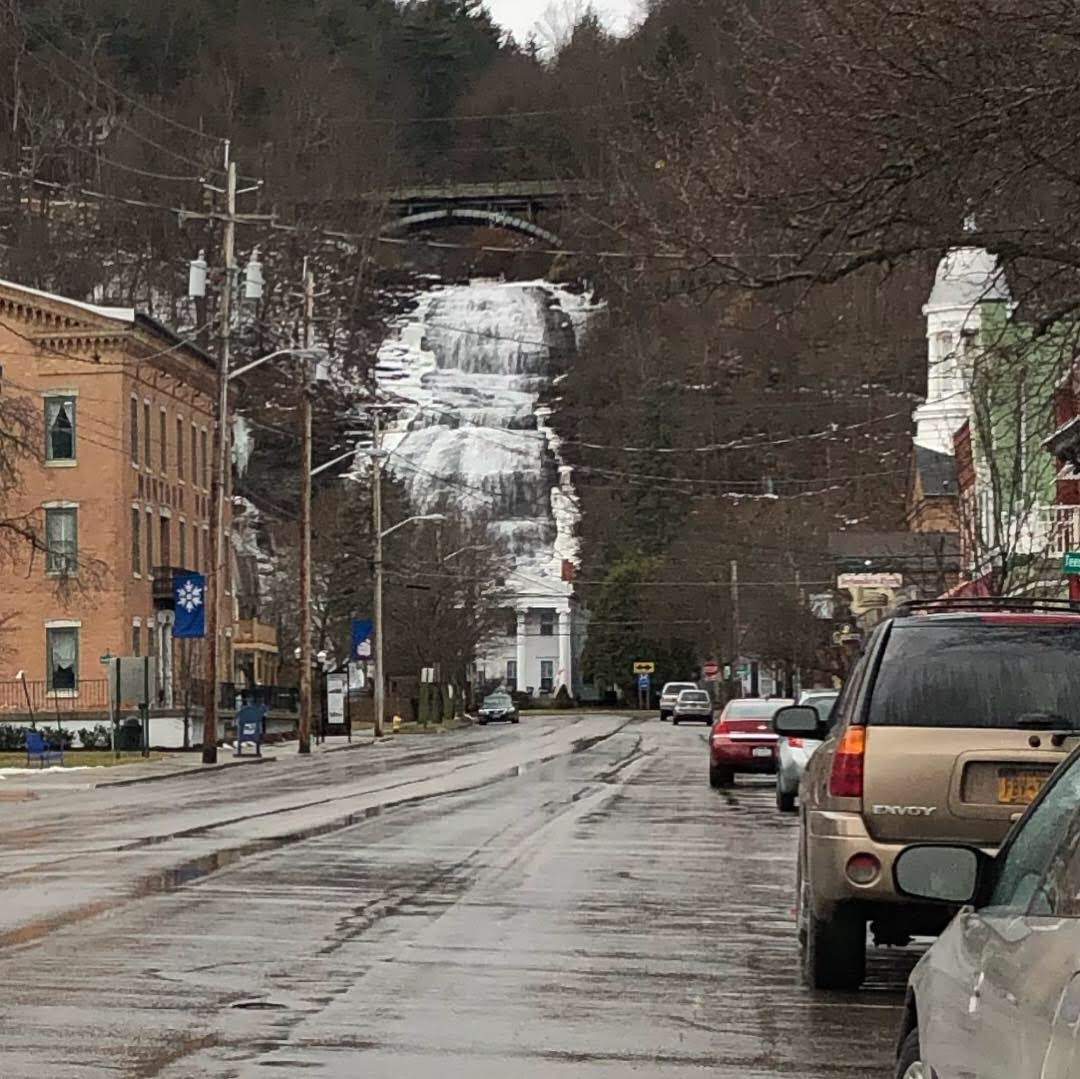
    In the town of Montour Falls, New York there is a stunning waterfall that looks like it’s flowing right into the homes that sit at the base.  When you drive down West Main Street, as I did, its a shock to look up and see this magnificent waterfall cascading down onto the town.  It was a wow moment on par with coming through the Webster Tunnel on I-376 in Pittsburgh to have the entire city open up in front of you.

    Seeing the falls with high water in the creek is a must.  I saw it on a warm February day with rain and melt-off fueling the tumbling waters.  Apparently that’s what She-Qua-Ga means; tumbling waters.  It’s not the only waterfall in Montour Falls – I’d also visited Eagles Nest Falls a couple of minutes away from She-Qua-Ga Falls, but it’s the most accessible.  You don’t have to get out of your car to be blown away by it, but of course you must.  Seeing a waterfall from afar is not the same as feeling the mist dance on your face and hearing the roar of the cascading water.  You should have a relationship with a waterfall, otherwise what’s the point?

    Anyone who knows me knows I like to dance with ghosts, and there’s a real tango with history at the base of She-Qua-Ga Falls.  This was the place where Queen of the Seneca/Iroquois Catherine Montour lived.  Several of the place names nearby honor her, including Catherine, Montour and Montour Falls.  It was the place where Red Jacket, who signed the Treaty of Canandaigua after the Revolutionary War, practiced his speeches.  If Fort Stanwix tore lands away from the Iroquois, Canandaigua promised to give some of this land back.  For the once mighty Iroquois to cede these lands to the new United States must have been a devastating and bitter pill to swallow.

    Around 1820 Louis Philippe, later the “Citizen King” of France from 1830 to 1848, sketched the falls from roughly the spot where I was standing taking them in when he was in exile.  At some point I’ll try to take a picture of that sketch and update this post with it.  For now, I’ve had the opportunity to see the real thing.