Tag: Italy

  • A Sequence of Everything Wanted

    “Rivers know this: there is no hurry. We shall get there some day.” ― A.A. Milne, Winnie-the-Pooh

    Slow down you’re doing fine
    You can’t be everything you want to be before your time
    — Billy Joel, Vienna

    In a dizzying turn of events, last night capped a sequence of things wanted for some time delightfully happening one after the other, from Rome to Athens to Sicily to Florence to… New Hampshire. Life is sometimes simply great timing, realized. To visit the Colosseum and the Sistine Chapel and the Acropolis and Mount Etna, to see Michelangelo’s La Pietà and David to bookend an epic trip and then return home to find the elusive Aurora Borealis dancing in my own backyard hours later is a sequence I’ll be processing for some time, thank you. This isn’t meant to be a brag about how lucky the last couple of weeks have been, rather a realization that patiently working towards something combined with a bit of good luck goes a long way in a lifetime. Amor fati.

    The thing is, I wear my impatience on my sleeve (and blog about it more often than I ought to). Some of us simply want to get right to everything as quickly as possible, knowing that time flies and we aren’t getting any younger. Sure, tempus fugit, but slow down—you’re doing fine… Vienna waits for you. Simply plot the steps, do the work, follow through and hope fortune smiles on you.

    Hope is a tricky word, and that’s where impatience comes in. Perhaps the better word is trust. We must trust the process when we build our systems. Work, marriage, fitness level, artistic contribution, social interactions, and yes, bucket list items are all lifestyle choices built on faith that doing this will lead to that. When it doesn’t arrive promptly we restless types get a bit impatient, so a reminder of all that’s come to pass helps now and then. Gratitude goes a long way.

    Life lessons are all around us, if we simply stop rushing about so much and focus on the journey. The biggest lesson is that the journey continues, and each milestone is simply a marker for where we’ve been and what we’ve seen and who we were at the time. What’s next matters too, doesn’t it? Our past is our foundation for the growth to come. We shall get there some day. For haven’t we thus far?

    Aurora Borealis, New Hampshire 10 May 2024
    Aurora Borealis, New Hampshire 10 May 2024
    Aurora Borealis, New Hampshire 10 May 2024
    Michelangelo’s La Madonna della Pietà
    Michelangelo’s David
  • Perfectly Imperfect (That Tower in Pisa)

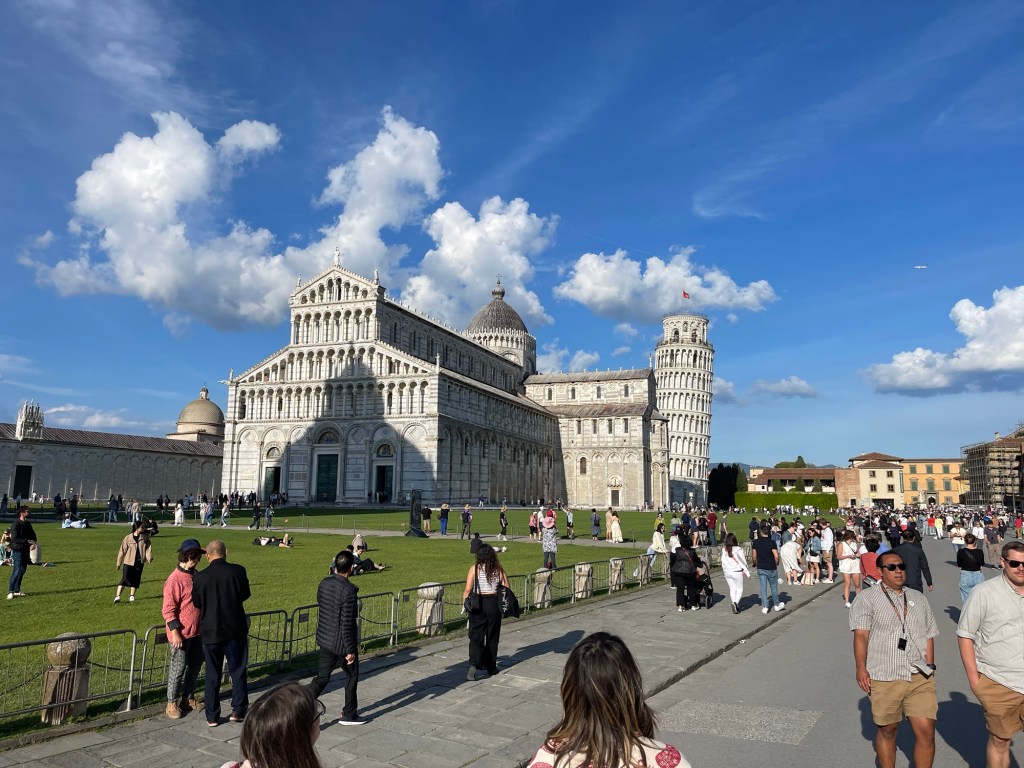
    The thing about the leaning tower of Pisa that we know intuitively is that the whole thing was a big mistake. Weak foundations mean buildings fail over time. But this one has been a massive success for the very fact that it’s still standing, if off-kilter, despite the fatal design flaw. It’s perfectly imperfect and thus appealing—for who among us is perfect?

    Pisa is a one hit wonder on the tourist circuit. Most people swarm in, head straight to the tower and leave shortly afterward. Plenty of kitschy trinkets for sale on the gauntlet between parking and the tower. This is the modern hazard of international travel to popular destinations: aggressive tchotchke vendors.

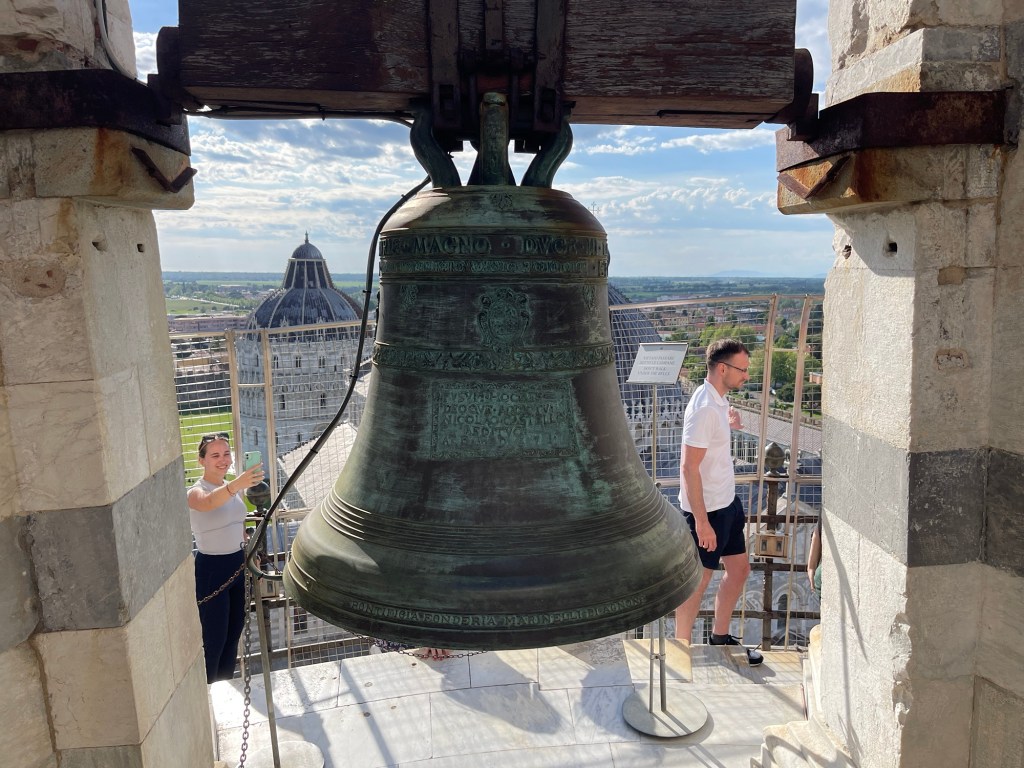
    The tower itself is the destination, and it shocks the senses when you actually see it up close and personal. To climb it, feeling that distinct lean in every step to the top, is quite unusual and a bit thrilling. We’ve climbed stairs before, but never an off-kilter spiral like this one. You know immediately why people come here to see and climb it. Perfection is in the eye of the beholder.

  • The Slopes of Vesuvious

    “For believe me! — the secret for harvesting from existence the greatest fruitfulness and the greatest enjoyment is: to live dangerously! Build your cities on the slopes of Vesuvius! Send your ships into uncharted seas! Live at war with your peers and yourselves! Be robbers and conquerors as long as you cannot be rulers and possessors, you seekers of knowledge! Soon the age will be past when you could be content to live hidden in forests like shy deer! At long last the search for knowledge will reach out for its due: — it will want to rule and possess, and you with it!” — Friedrich Nietzsche, The Gay Science: With a Prelude in Rhymes and an Appendix of Songs

    Living dangerously isn’t so much about reckless acts of defiance against Darwinism. To live dangerously is to risk who we once were for who we might become. Once you’ve experienced the world you can’t put the genie back in the bottle, we expand into something more. Travel opens the mind to new possibilities, just as reading Nietzsche does.

    Visiting places for the first time that you’ve heard about all of your life is an education. The problem with those places is everyone else is joining you there to complete something in themselves too. I’d like to think that we all visit a place with the same objectives, but you know some just want to check a box while the enlightened few try to bring context and meaning to the visit. But let’s face it, we’re all a combination of both, it’s simply the ratio that separates the Instagram model from the student of history.

    The thing is, one person’s fruitfulness is another’s waste of time. We’re all on our own path through this lifetime. The trick is to get more comfortable with risk, for the fruit is often out on a limb awaiting the courageous.

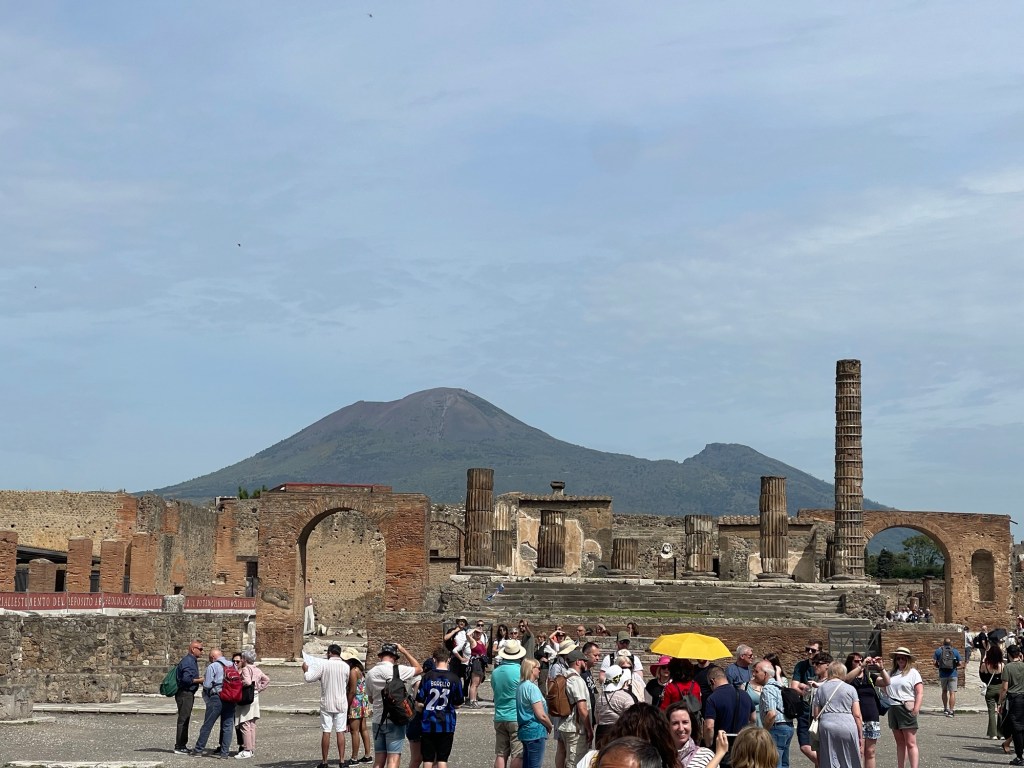
    Pompeii with Mount Vesuvius looming large
  • Mount Etna

    “Mount Etna is renowned for its exceptional level of volcanic activity, and the documentation of its activity over at least 2,700 years. Its notoriety, scientific importance, and cultural and educational value are of global significance.” — UNESCO

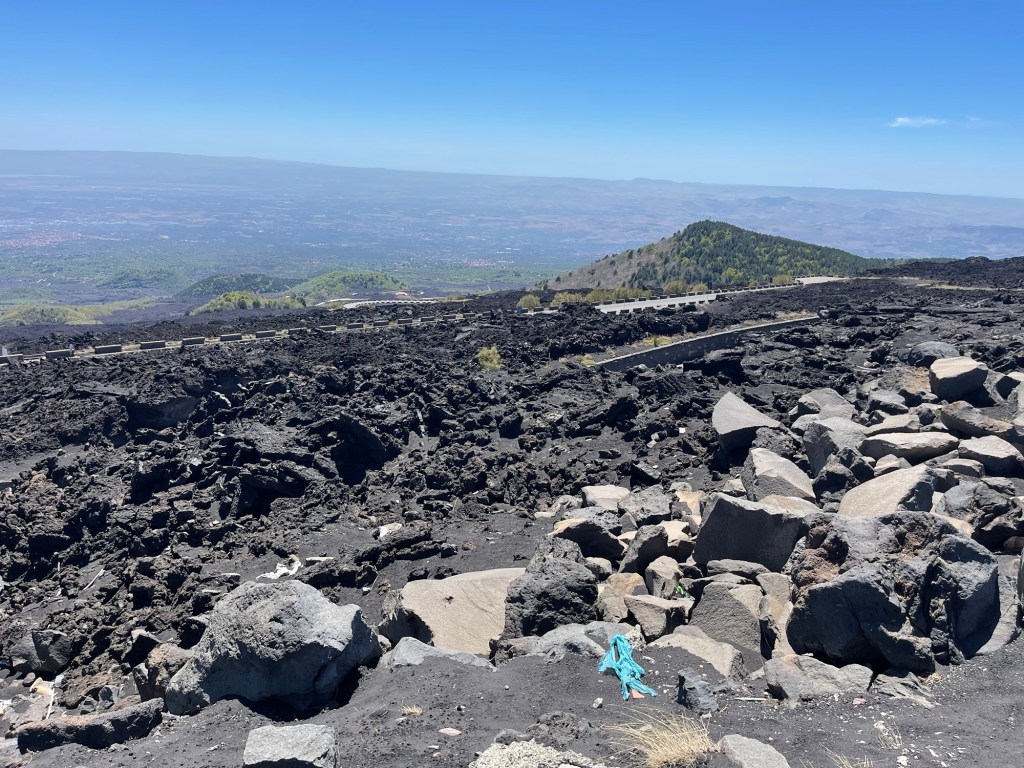
    Visiting Mount Etna is relatively easy. It simply involves driving serpentine narrow roads filled with cars, motorcycles and large tour buses nudging the limits of the suggested speed. Once you arrive at the lower crater, you’re greeted by hundreds of people, souvenir shops and restaurants. Some hike or gondola further up to the higher craters and summit, others linger where the views are good enough, thank you. Personally, I’d have hiked ip given the opportunity. But there’s only so much time.

    The thing about a volcano is it doesn’t particularly care about your feelings, or about time. Volcanoes, like the ocean and stars and timeless principles, are of the eternal universe. so visiting an active volcano informs, not just about the planet, but about our fragile hold on this moment we’re here to witness it. When you’re dancing with eternity, you can’t help but feel awed and agape. Which is exactly why we made the pilgrimage there ourselves. Tourist shops aside.

  • To Go to Rome

    You hear a lot about Rome from those who have been there. Nearly all agree it’s a crowded place, too full of tourists and the aggressive hawkers and pickpockets who prey on them. Rome is complicated: like all cities it’s got its share of beautiful and ugliness all right there waiting for you. The layers of history are undeniably present all around, impressing on you that you are simply just one more soul passing through this place.

    And yet we pass through. Rome would be nothing but ruins were it not for the masses of people who live here and visit in such startlingly large numbers. To visit is to feel a part of the hive of humanity. Personal space is ridiculously impossible to find when you seek out the places everyone must go to. Yet we still go, feeling the call, or perhaps simply a fear of missing out.

    If Vienna waits for you, so too does Paris and Istanbul and Amsterdam and Barcelona and yes, Rome. The great cities of Europe aren’t simply waiting for us to grace them with our presence. They’re doing just fine without us, and yet they welcome us when we finally do arrive. I know that every picture or observation I make about Rome has likely already been taken or made, to be repeated again by the soul to follow me. Yet I feel compelled to share them anyway, for having been there.

    To go to Rome is to see what all the fuss is about, and to perpetuate that fuss for those who will follow one day themselves. Rome may not be the center of the universe as it once aspired to be, but it remains an integral part of our imagination. Having been, I want to believe I’ll return again one day. That, I think, is when you know a place has you in its grip. And surely, it has me.

    The Pantheon and lots of company
    Build it and they will come
  • A Trevi Snapshot

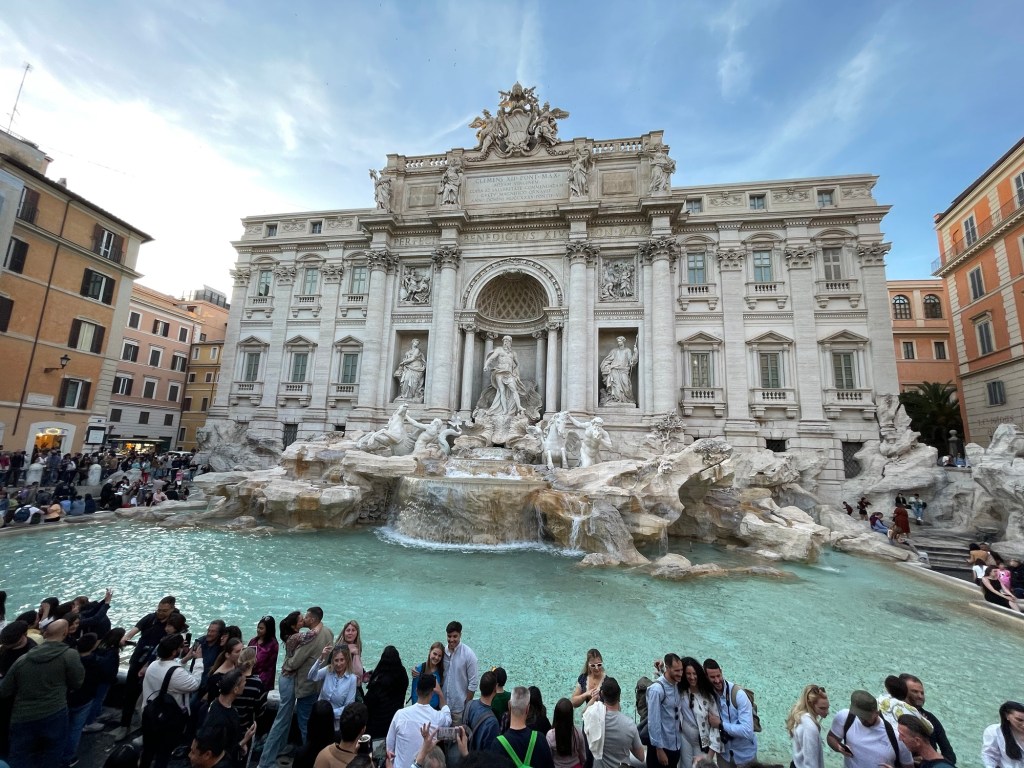
    The Trevi Fountain (Fontana di Trevi) is named after the three roads that converge where the fountain sits. It ought to translate into something more, but it’s come to mean quite a bit to those who make the pilgrimage to it. And it is a pilgrimage for tourists. It’s one of the must-see attractions in Rome, and so we did our part as confirmed tourists to visit it first.

    According to Wikipedia, the fountain was “designed by Italian architect Nicola Salvi and completed by Giuseppe Pannini in 1762”. It’s “26.3 metres (86 ft) high and 49.15 metres (161.3 ft) wide”. And it needs to be that big to accommodate the massive crowds that converge on it every day. The Trevi is worth a visit, but be prepared to have a lot of company. Just remember to take a snapshot and throw a coin in to ensure your return one day.

    The Trevi Fountain, with its statues of Oceanus, Abundance and Health.
  • Designing the Sweet Life (La Dolce Vita)

    “A man must find his occasions in himself, it is true. The natural day is very calm, and will hardly reprove his indolence.” ― Henry David Thoreau, Walden

    In a full confession that will surprise no one in my circle of friends and family, I struggle with the act of idleness. I rarely sit still, even on vacation, choosing to explore whatever place I find myself in, and too often stack too many activities into those “idle” days. There’s no lying on the beach for hours for me. The default is activity over idleness. I marvel at the pets for their ability to simply nap away hours of a day. If I nap at all I set the alarm for 15 minutes and get right back to moving about as soon as possible. And the idea of sleeping in? There is no snooze alarm in my world.

    But that doesn’t translate to being productive all of the time. We can putter about without really getting anything done. The world is full of people quietly quitting the work they have in front of them. There are plenty of people opting out of frenetic lifestyles. There are whole cultures built around the sweetness of doing nothing (dolce far niante: I’m looking at you Italy). So how do we restless souls learn to chill out a bit and live the sweet life (la dolce vita) ourselves?

    “Doing less meaningless work, so that you can focus on things of greater personal importance, is NOT laziness. This is hard for most to accept, because our culture tends to reward personal sacrifice instead of personal productivity.” ― Timothy Ferriss, The 4-Hour Workweek

    The thing is, Thoreau and Ferriss, both known for promoting more strategic idleness in our days, have also produced some significant work that resonates beyond the moment they created it. For all their perceived idleness, there’s an underlying productivity hidden in plain sight. That’s what people miss in the idea of la dolce vita—it’s living the sweet life while still keeping the lights on with productive work. It seems we can have it all, if we create a lifestyle that is both pleasurable and productive.

    The trick is being far more strategic in our productivity, thus giving breathing room for idleness. We ought to know what we’re really setting out to do in this lifetime, and break that down into milestones. Milestones in turn are achieved through work strategically designed into our days. If that sounds like the antithesis of dolce far niante, well, I understand. But it really is the essence of living Thoreau’s “natural day”: filled with enough idle time to feel we’re not cogs in a machine while still producing something memorable.

    Productivity (and idleness) requires focus. Doing the work that matters most in the moment and then get on with living that sweet life. We’re all students of maximizing the potential of our lifetime. We ought to know what makes life sweet, and also meaningful. Designing a pace of life that balances the two is the essence of a sweet life.

    Ultimately, designing a lifestyle that maximizes our potential should be our focus. But potential for what? Wealth? Fame? Isn’t it really time spent doing the things that makes a life sweet? Time with people who matter a great deal to us. Time doing the things that make life a pleasure. Time structured in a way that it doesn’t feel like we’re biding our time but living it.

    So the question when designing a lifestyle is, “what will maximize the number of beautiful moments we may stack together in this finite lifespan?” Nothing brings focus to our days like remembering we only have so many of them. Memento mori. Stop wasting time thinking about it and go live it, today and every day we’re blessed with. The Italians are on to something, don’t you think?

  • Finding Soulfulness in Inefficient Places

    “Everything that feels soulful in life is inefficient. All the vacations that we find very soulful are inefficient places. The food that we really, really like and find soulful are inefficient to cook… maybe soulfulness is a function of chaos and inefficiency... It is impossible to imagine scaling in life without standardizing. And standardizing is the enemy of soulfulness.” — Kunal Shah, Interviewed on The Knowledge Project

    Don’t you feel the weight of truth in Shah’s words? Don’t we feel the lack of soulfulness in a “corporate” vacation destination versus the times we march to our own beat? Who seeks out a national restaurant chain for soulfulness and individual expression by the chef? No, we go to places like Disney World and Applebees for the predictability—good product delivered as expected. No need for translation or a Google search, it’s. just. as. expected. <yawn>.

    We all seek predictable when we can. Heck, I stayed at a Hilton in Vienna instead of a boutique hotel because I could use points and I knew there would be an iron and ironing board in the closet—because there is always an iron and ironing board in the closet of every Hilton property I’ve ever stayed in anywhere in the world. Sometimes you don’t need soulfulness, you just need to iron a damned shirt yourself.

    Contrast this my hotel in Castelrotto, Italy, where our room didn’t have a window but a skylight, no air conditioning or fan, uneven floors and a reception desk in another building down the street. The bell in the tower right above our heads through that open skylight would begin ringing at 06:00 sharp. And you know what? I loved it. The building was older than the United States, that bell was ringing long before I entered this world and the breakfast was a lovely spread of soulful local expression I’d never have found in a hotel chain. There’s something to be said for inefficiency too.

    So how do we create soulfulness in our own work? We don’t do it by parroting whatever business book we just read in our next meeting with coworkers or customers. And we don’t do it by following the corporate handbook to the letter (but don’t you dare stray a step too far). No, we create soulfulness when we find our unique voice in the process of turning chaos into order and eliminating inefficiencies. Ironic, isn’t it? But meaningful work isn’t chaotic, it’s expressive yet contributive. We don’t add to the Great Conversation by shouting over the crowd, nor do we help a company meet its quarterly objectives without following an informed policy or two.

    Here’s the twist: we find soulfulness in our work through routine. This isn’t standardization, this is disciplined dues-paying to reach a place where we might transcend the average. We write a million average phrases to turn one clever, soulful phrase that resonates. We refine widgets over and over again until something perfect emerges. Soulfulness is developed through routine but released through individual, and thus inefficient, expression.

  • Encountering Seceda

    “Take the time to put the camera away and gaze in wonder at what’s there in front of you.” — Erick Widman

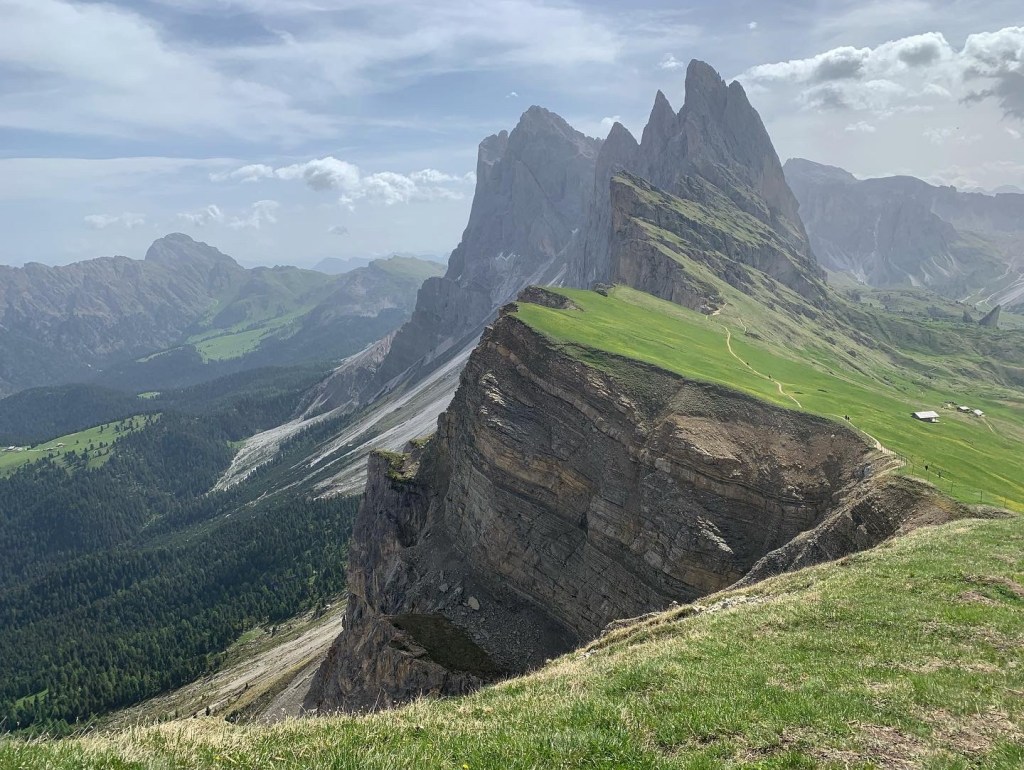
    Somehow, when visiting the one place I’d circled as a must-see on this weekend diversion south from Austria and Bavaria, I’d left both cameras behind. Realizing it halfway up the first cable car I cursed out loud, startling my wife buried in terror in my chest. She has a distinct fear of heights and the journey up to Seceda was a big ask. But at least she’d remembered her iPhone. Damage mitigated.

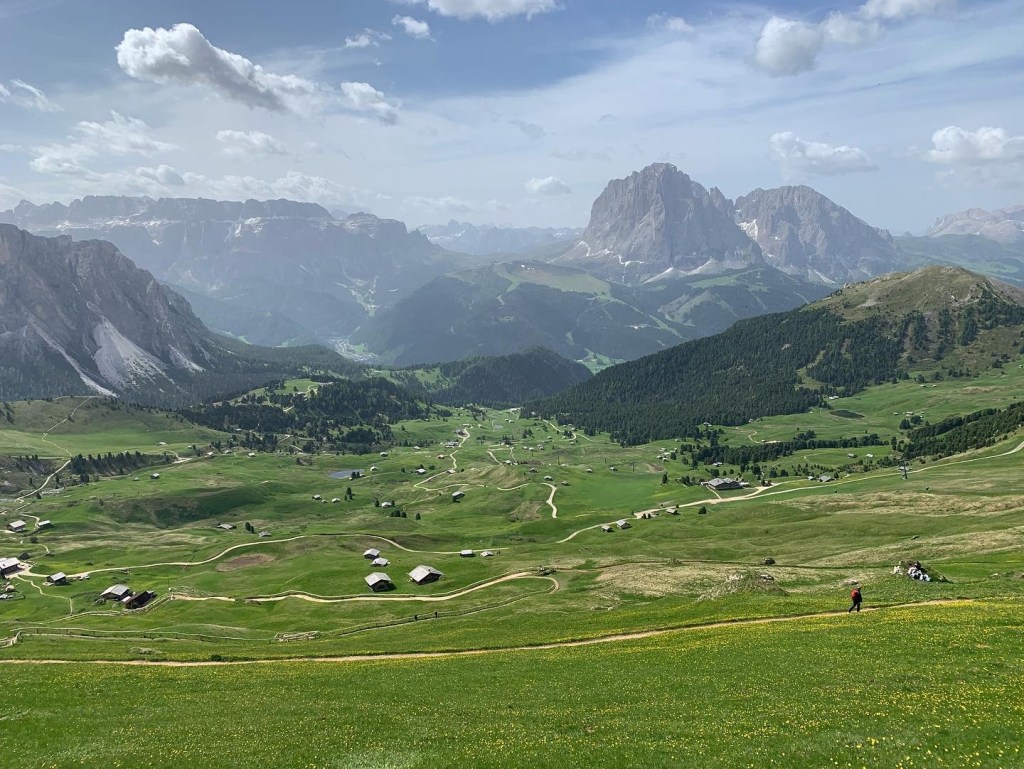
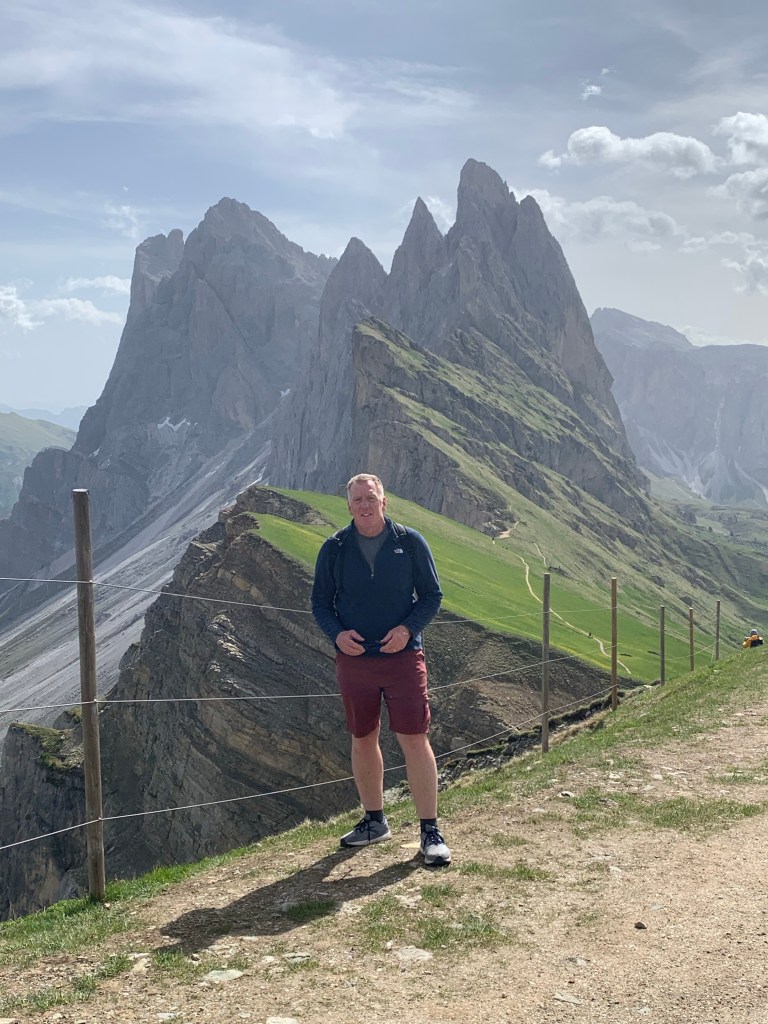
    When you walk out from that second cable car and the world opens up around you, it feels otherworldly. The spiky peaks, the snow-capped vista far off in the distance, and the green alpine meadows beginning at your feet each draw the eye and boggle the mind. I envy the people who see this for the first time stepping out to greet it. For me, YouTube videos had teased the view for months. Yet it exceeds expectations anyway.

    Without a camera, I forced myself to soak it all in. iPhone 10 image quality? Good enough. I’ll leave it for the hordes of Instagramers and YouTubers with their drones and expensive cameras and models to better capture the essence of the place. For me, this will do.

    We spent a few hours with the view, borrowing my wife’s phone for some pictures but mostly leaving well enough alone. This was a sign telling me to relax a bit with the Instagram feed. Gaze with a healthy dose of wonder at the world around you.

  • Early Morning Walk in Castelrotto

    As an American from the northeast, I know all about traffic, but it was a surprise to encounter so much of it on the stretch from Hohenschwangau, Germany to Castelrotto, Italy. Then again, it was a beautiful Saturday morning and the world seemed to be going on holiday. Chalk it up to poor planning on my part. If there was a silver lining, the drive was stunningly beautiful and all that sitting at a standstill allowed me to look around.

    When we finally got to Castelrotto, we weren’t inclined to jump right back into the car and leave this lovely little town. A brief walk after dinner revealed the character of the place, which prompted an early morning walk before the bell tower started its daily ritual of marking time beginning at 6 AM. The magic in any place is revealed on the edges of the day, for me that time before the world wakes up is most special. And so it was that I fell in love with this little town that seemed impossible to get to the day before.

    There are three languages spoken here, and the locals seem to know a few more than that. Italian, German and Ladin are the core languages, which reveals both geography and a history of land grabbing. World War I settled the border, but the locals seem to roll with it and pivot quickly to whatever language you’re speaking. After my brief stumbling with German, that generously included English. No matter, the beauty of the place transcends my words anyway.