Tag: John Muir

  • Collecting Experiences

    “The world is big, and I want to have a good look at it before it gets dark.” — John Muir

    The Olympics are charging right along to the finish, and I know I’ll feel the void when they’re over. It’s always been this way, it will be again. With every Olympics I promise myself I’ll go to the next one, and end up deferring like I did with the last. To say that one day I’ll keep that promise is yet another.

    The thing is, the Olympics come around every two years. We may go to the summer games or the winter. The only thing keeping us from going is what we prioritize in our life. Sure, money is a formidable hurdle to clear for much of the population, and I’ve been there before in my life too. But mostly it’s choosing to do something else instead. When we see our reasoning for what it is, it liberates us to be more bold with our future choices.

    Olympics aside, we all have dreams of places to go in this world. We all have things we wish to do while we’re healthy and vibrant enough to do them. If not now, when? Book the trip, chase the dream, be a collector of experiences and fulfilled dreams.

  • My Earth Day Reckoning

    And we died of the future,
    of calling and mission only we could keep,
    leaping into every favorite season;
    sinking into roots, dreams, and books.
    — Li-Young Lee, First World

    “I am losing precious days. I am degenerating into a machine for making money. I am learning nothing in this trivial world of men. I must break away and get out into the mountains to learn the news” — John Muir

    Looking back, it seems quite natural to be locked into this routine of daily obligations—of work and chores and driving from here to there. Things fall apart and must be fixed. We must be fixed too. We are what we repeatedly do, as I repeatedly remind myself. So when is there time for nature and hiking? When is there time for long walks in the woods?

    There is no other time than now. We must go, and see, and take something of it with us for eternity. Not a rock or a leaf or even a flower, but a memory of who we were when we found the truth. Earth is far bigger and more beautiful than we’ll ever fully realize, no matter the frequent flyer miles accumulated. Earth is fragile yet resilient, and will wait an eternity to shrug herself of humanity. It may take a million years, but Earth will fix itself in time. We’re the ones who suffer for our neglect.

    Yet we are a small ripple in this big pond. Whether I recycle or not makes little difference, not when we see the crisis of leadership in the bigger things happening in the world. Nonetheless, we all make a small difference. We might pile on or opt in to the mission of making the planet a better place for our children’s children. Our small daily actions aren’t meant for others to see, they affirm who we tell ourselves we want to be in this world. We’re part of a larger chorus, and our accumulation of voices make a difference even when we can’t see it. A forest is made up of thousands of trees and millions of leaves. There is power in numbers.

    “I would say that there exist a thousand unbreakable links between each of us and everything else, and that our dignity and our chances are one. The farthest star and the mud at our feet are a family; and there is no decency or sense in honoring one thing, or a few things, and then closing the list. The pine tree, the leopard, the Platte River, and ourselves—we are at risk together, or we are on our way to a sustainable world together. We are each other’s destiny.”
    — Mary Oliver, Winter Hours

    Earth Day is a reckoning, a day when we take stock of what we’re doing to the Earth, but also a day when we take stock of what we’re doing with our own brief time on this planet. There are things we say yes to in this world, which means we say no to many other things. In the end, we must choose, what dreams will die with us? What will we stand for? What will we stand up against?

    We all see the changes in the world, but forget we have some agency in the matter. Is this a year of incremental improvement or reckless abandonment of what we believe we ought to be. These are questions for society, surely, but also for each of us in our daily lives. The question is always the same: who are we becoming?

  • Now I Saunter

    “I don’t like either the word [hike] or the thing. People ought to saunter in the mountains – not ‘hike!’ Do you know the origin of that word saunter? It’s a beautiful word. Away back in the middle ages people used to go on pilgrimages to the Holy Land, and when people in the villages through which they passed asked where they were going they would reply, ‘A la sainte terre’, ‘To the Holy Land.’ And so they became known as sainte-terre-ers or saunterers. Now these mountains are our Holy Land, and we ought to saunter through them reverently, not ‘hike’ through them.” — John Muir

    I’ve been absent from the mountains for a long stretch now. A heel injury nags and before that an ankle injury right above it and really, what’s it all but excuses and reluctance to push onward through a bit of pain? I’d been saving this quote for my next saunter up the mountains—to the Holy Land—but I’m done waiting for the moment. For all my enduring love for the mountains, my pilgrimage is with life itself.

    John Muir turned the act of hiking to where it belonged; towards reverence. For who doesn’t encounter reverence deep in the mountains? And what of life? Life can be an unfair grind, filled with misery and pain and setbacks, and maybe we feel a bit of reluctance to be reverent about the slog we feel we’re on. There’s immense suffering in this world, serious challenges to our collective future, and I don’t turn a blind eye to it writing about sauntering merrily through life. But shouldn’t we meet each moment for the ripe potential it offers? Shouldn’t we seek a path that brings us to a better place?

    Once I plodded through life, grinding it out in jobs I didn’t love, invested in relationships that didn’t matter all that much in the end, wasting time on the inconsequential. Humans are very good at frivolously consuming away our time like so many empty calories, until our fingers reach the bottom of the bag and we realize we’re left with emptiness and greasy fingers. I’m not so much like that now. Now I celebrate moments. Now I saunter.

    The world continues to assault our senses. Sauntering is an embrace of the world as it is, taking it on the chin but greeting life as it comes. A move away from consumption in the present towards the mission of the future potential in all of us. Staying on the path with a spirit of aliveness despite the worst hardships life throws at us. Living with reverence for the gift of the pilgrimage.

  • Finding Relative Quiet at Muir Woods

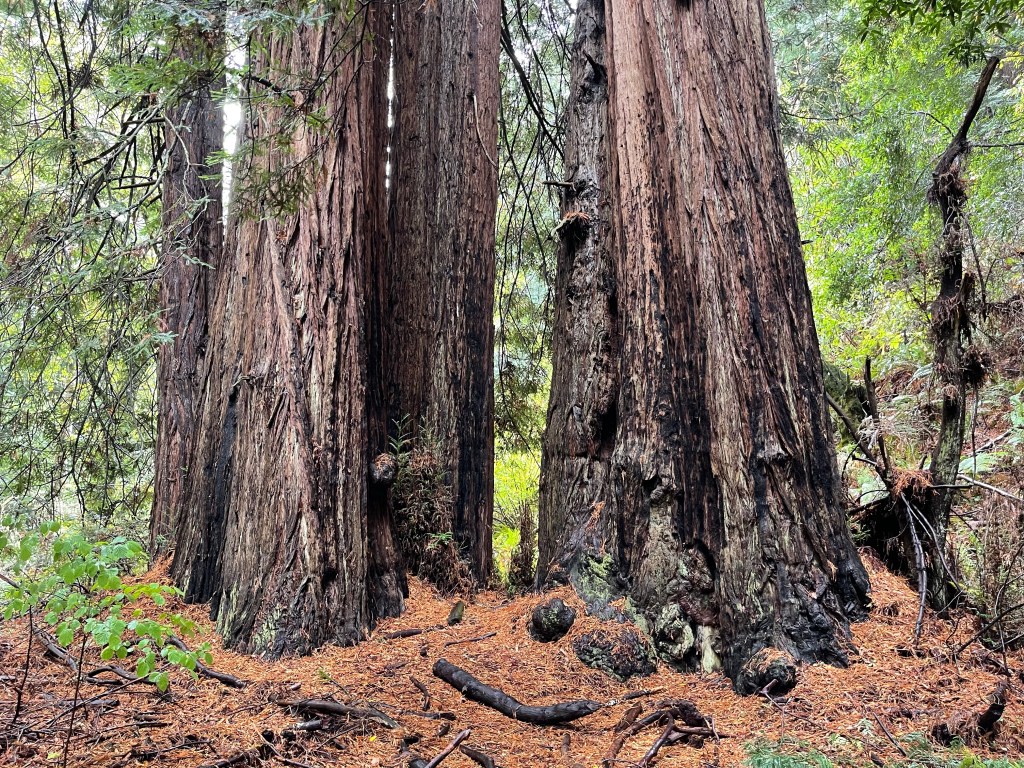
    Taking a long, slow walk amongst the Redwoods in Muir Woods, I deliberately slowed down, lingered, and sometimes stood still to feel the forest. Looking straight up I watched water drops formed in the tree tops from the light mist fall a few hundred feet. There are trees here that have stood here for more than a thousand years, my visit was just one blip in their lifespan. And here I found what I’d been looking for, what I’d hoped I’d find on this twisting drive through the hills. Here were the ancient forests of my imagination.

    Seeking quiet, reverent space amongst the giants is tricky business if you only stay on the main path. No matter how much signage they put up, tourists chat like they’re at the mall, oblivious to the glorious silence. You must go there expecting this careless chatter, but you don’t have to participate in it. The best option for silence is to take the paths less taken, and Muir Woods offers these opportunities. Take any trail that scares the masses – be it mud or the promise of exertion or even a dead end sign and you quickly find yourself in relative quiet.

    There are other old growth redwood forests, not enough of them we might agree, but they’re out there as state and national parks throughout the region. These offer more opportunities for isolation. Muir Woods is both the most famous and the most crowded. The trees won’t ever disappoint you, but your fellow man might.

    If we lost all the money we have and saved these trees, it would be worthwhile, wouldn’t it?” – William Kent

    William Kent purchased this land and fended off those who planned to log the redwoods to rebuild San Francisco after the 1906 earthquake and then flood the valley as a reservoir. He might have named it after himself but chose to honor John Muir. Modest? No doubt, but there’s an element of brand recognition at work here too. Since 1908, the Muir Woods National Monument has stood as protected land, surely thrilling Kent and those who worked so hard to save the trees, and capturing the imagination of reverent pilgrims ever since.

    If you visit, make a parking reservation well in advance. Go as early as possible to avoid the worst of the crowds. Wear appropriate footwear for hiking the side trails. And save the casual conversation for later. For you’ll have plenty to talk about.

  • The Lure of Falling Water

    “As long as I live, I’ll hear waterfalls and birds and winds sing. I’ll interpret the rocks, learn the language of flood, storm, and the avalanche. I’ll acquaint myself with the glaciers and wild gardens, and get as near the heart of the world as I can.” – John Muir

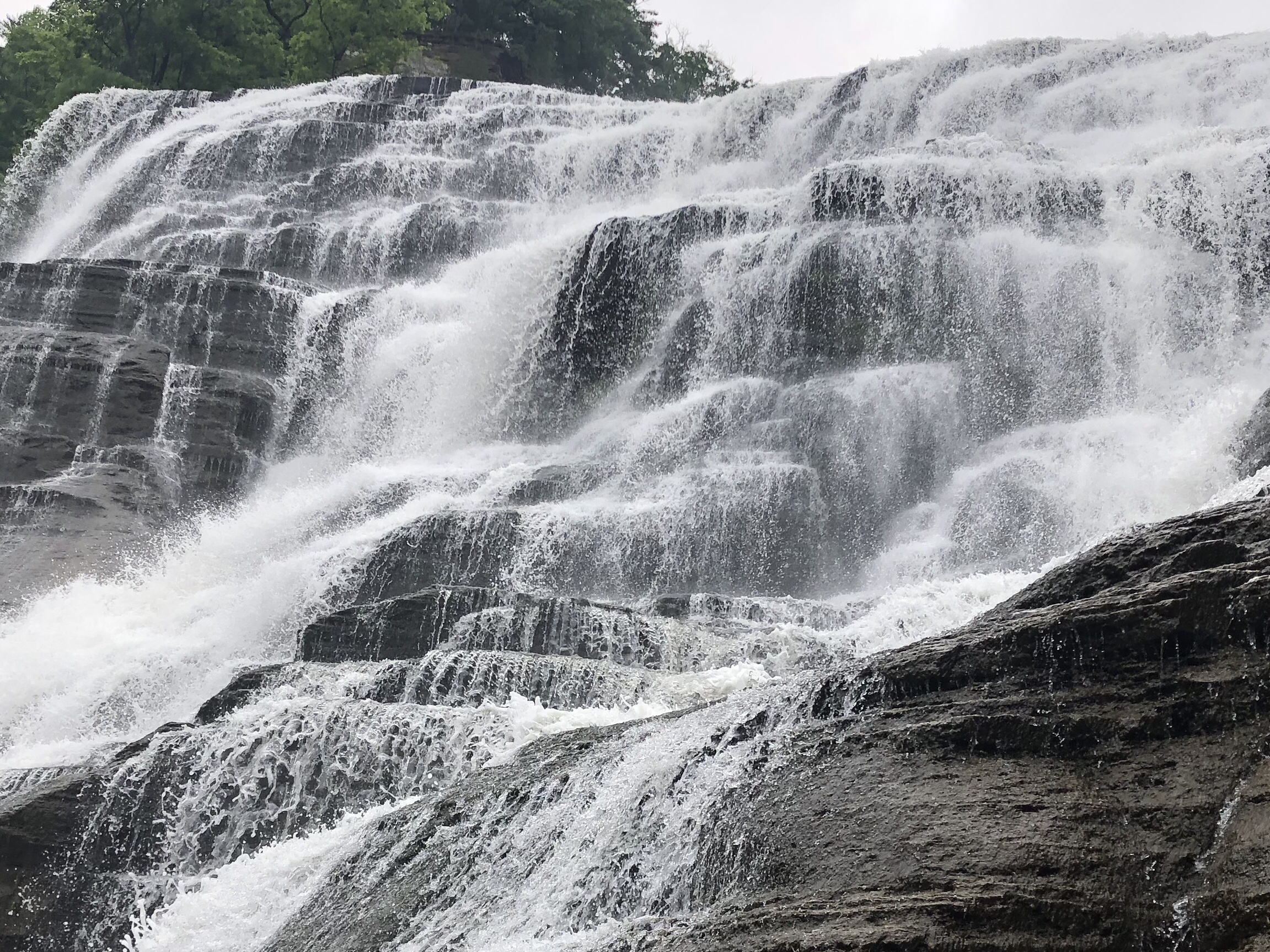
    What is it about waterfalls?  Is it the sound of falling water hitting hard surfaces and drowning out the rest of the world?  The stunning visual dance of water and light that often creates rainbows in the mist?  Or is it the lure of something bigger than ourselves?  Something timeless and enchanting all at once?  I’m not really sure I can answer my own question.  But I’m drawn to waterfalls just the same.

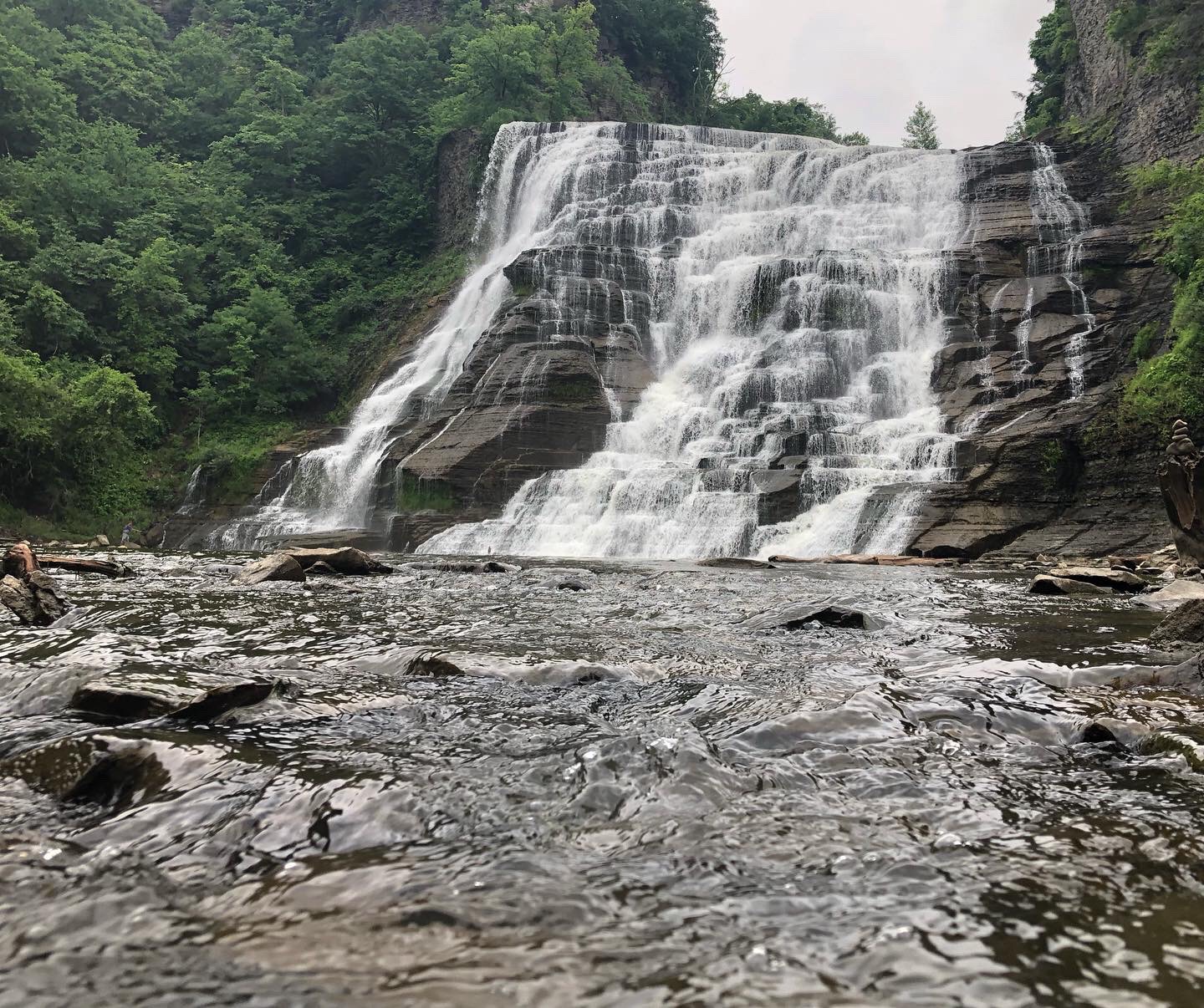
    We made a point of visiting two waterfalls during a brief visit to Ithaca, New York.  We’ve been to both before, and wanted to see how they looked in a different season.  It turns out that the first attempt was thwarted by the closure of the Cascadilla Gorge Trail because of some damage sustained to the trail that prompted officials to deem it dangerous for the public.  I suspect we would have done just fine on it, but we honored the signs and temporary fencing the City of Ithaca had barring access to the trail.

    Thankfully, the second option was open and available, and we were able to spend a bit of time contemplating Ithaca Falls.  Strangely, there were very few people about.  I always wonder about that when visiting places like Ithaca Falls.  Why aren’t there more people there?  But we were grateful for the relative solitude afforded to us, and the opportunity to see a place like this one more time.  I’m not sure how many times I’ll get back to the many waterfalls of Ithaca; I hope many more.   Why would you visit a place and knowing what lingers nearby, not take a moment for awe and reflection?  It really doesn’t matter why we love it, only that we’re able to spend moments of wonder with falling waters.

  • Beginning With Waumbek

    Climb the mountains and get their good tidings.” – John Muir

    The workout today was pretty straightforward: hike a total of 7 miles round trip up one of New Hampshire’s forty-eight 4000 footers. I’ve hiked at least a dozen of them before , some multiple times, but I didn’t track it officially. So I’m simply starting over again. I’m not imposing a deadline on myself and I’m not in a race. I don’t go to the mountains to set distance records. I go to the mountains because I love the mountains. And I love who I become when I spend more time in the mountains. And so today was, officially, one. And some good tidings.

    I chose Mount Waumbek in Jefferson, considered a good beginner 4000 footer. I’m not a beginner, but I’m beginning again. Waumbek was as good a place to start as any. At 4006 feet, its one of the shorter 48, but it counts just the same as Mount Washington on the list. And so I announced to the family that I was going and got one taker; my daughter committed to getting up at 4:30 and joining me. You know someone is serious when they commit to 4:30 AM, and sure enough she was ready to go by 5 AM.

    Mount Waumbek is an interesting name. The White Mountains themselves were once called Waumbekket Methna, which either means “mountains with snowy foreheads” or “white rocks” in the dialect of the Abenaki. Or maybe some settler came up with that story after enough time passed. What I’m fairly certain of is that Mount Waumbek was once slated to be yet another ski area, but thankfully it fell through and was preserved. I imagine it would’ve still counted as a 4000 footer, as Cannon Mountain does, but it wouldn’t feel much like hiking then. I’ll take the New Hampshire rock and root tour, thank you.

    I like to start hikes early, especially in hot weather. It’s generally less crowded, making simple things like parking a car less of a process. And early makes a big difference on hot, muggy days. Get it done before the crowds, before the heat, and before the inevitable thunderstorms that roll through the mountains on such days. We began our first steps at 7:45, a bit later than desired, and with a bit more company, but thankfully no raindrops. Instead we ran into swarms of ravenous gnats, flies and a few odd mosquitos. None of them cared much for social distancing. None of them got the memo that we wore generous applications of bug juice, or that according to the small printed label, they’re supposed to hate this stuff. No, they actually seemed to view it the way I view olive oil.

    The only solution was to keep moving. Summit Starr King Mountain (now THAT is a name for a mountain), glance at the view, snap a picture, move. Summit Waumbek, sip some water and nibble on a snack (carefully brushing off the carnivores who made a reservation to dine on you), re-apply bug juice and get moving again. There was no getting around it, I chose the height of bug season to begin again. But a day of hiking, even with the swarm, is better than most workouts I can think of. 19,000 steps today, and I’ll surely feel it tomorrow.

    And so it was, we checked off the first of the 4000 footers, I’ll carefully note it on the tracking sheet, and I’ll move on to the next on the list. Maybe it’ll be a we? After all, I’m not the only one who checked a box today.

  • Rising Above the Sprawl

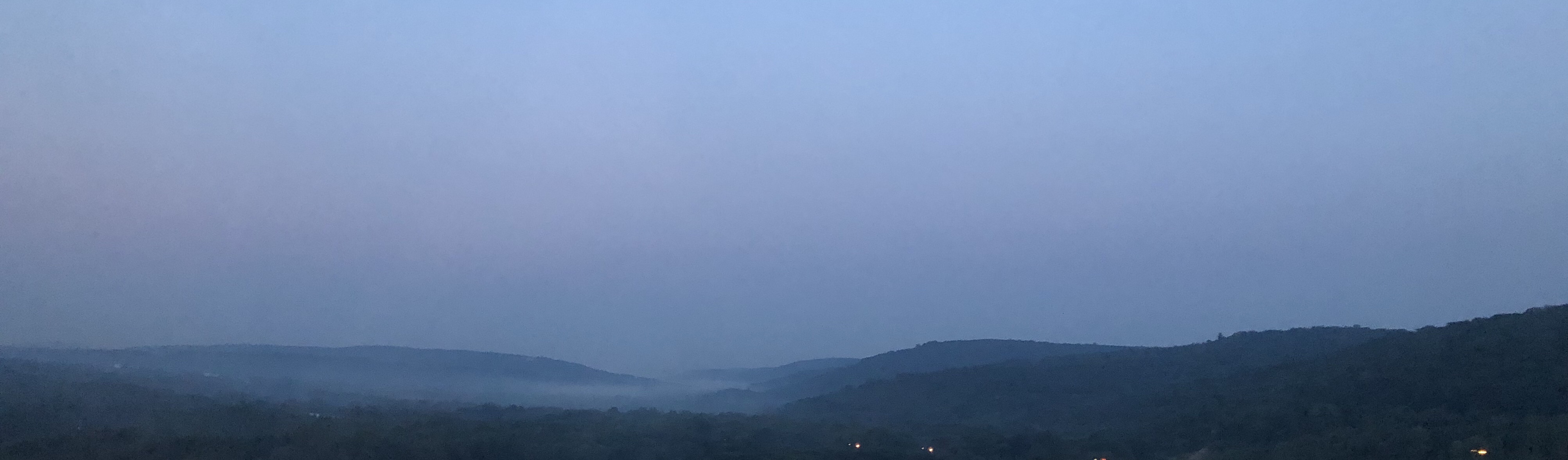
    I was contemplating the Ramapo Mountains early this morning. I get up early for the magic it brings. This morning didn’t disappoint as the slowly brightening sky highlighted the fog dancing through the hills of Ridgewood State Park. That there’s a highway, gas stations, bus terminal and assorted strip mall horror below this didn’t change my focus on what was beautiful, though I remained aware of the encroachment. There’s really no other way to move through this life – focus on the good, pragmatically manage the not-so-good.

    “God never made an ugly landscape. All that the sun shines on is beautiful, so long as it is wild.” – John Muir

    My drive down here Sunday involved miles of choking, soul-crushing traffic. Playlists and podcasts only go so far in the face of this. Most every car was filled with people coming from or going to something more beautiful, be it family or vacation or a day at the beach. And yet our collective journeys brought us all to the ugliness of gridlocked highways. Surely there’s a better way.

    Society pivots over time. At one point someone pushed for the protection of the forested hills of the Ramapo Mountains, saving them from a carpet of condos or some other indignity. Ridgewood State Park was born the same year I was. Now 53 years later I’m drawn to the very hills that inspired their protection. Good things can happen if we work at it. There’s talk of electric cars and Musk’s transportation tunnel and other such miracles of technological advancement. Perhaps it will transform our highways and cities from gridlocked misery. Society is slowly… slowly, pivoting.

    These hills around me are a good reminder of what preservation can do to protect us from ourselves. Sometimes we don’t see the forest for the trees. We know we shouldn’t eat the French fries but we eat the French fries. We know we should build clean and sustainable infrastructure and we build wider highways. The contrast between the transportation infrastructure below and the cooling green of the Ramapo Mountains above is a striking reminder of what’s possible if we’d only work at it.