Tag: London

  • The World As We Know It

    “… and anyhow travel is over, like one’s books and the rest of civilization” – Rose Macaulay

    This Macaulay quote, plucked from the extraordinary Erik Larson book The Splendid and the Vile, was from a letter that she wrote to a friend after her London flat was destroyed in 1941 during one of the many attacks the city suffered, wiping out all of her books and personal belongings accumulated over her lifetime to that point. I found this particular quote profound because in many ways I feel that way about 2020, when the idea of travel and any semblance of civilized discourse seems illusive at best. It shines as a reminder that others have been in far worse places than we’re in now, and this too shall pass. The war eventually ended and some level of civilization returned. Macaulay went on to travel extensively, writing some best sellers along the way.

    Of course, I can’t just read a quote like that and not look into the source, and Macaulay doesn’t disappoint. I’ve added her to the list of authors I need to invest more time with once the stack of books has reached a respectable level of completion. For now, here are a couple of quotes from Dame Rose Macaulay that particularly resonated for me:

    “It wasn’t really touching to be young; it was touching not to be young, because you had less of life left. Touching to be thirty; more touching to be forty; tragic to be fifty; and heartbreaking to be sixty. As to seventy, as to eighty, one would feel as one did during the last dance of a ball, tired but fey in the paling dawn, desperately making the most of each bar of music before one went home to bed.” – Rose Macaulay, Dangerous Ages

    Life, for all its agonies…is exciting and beautiful, amusing and artful and endearing…and whatever is to come after it — we shall not have this life again.” – Rose Macaulay

    I suppose the takeaway from each of the three quotes is familiar ground for readers of this blog. The world as we know it will continue to change, and so must we. Savor the dance to the last note. Savor youth while you have it and the moments always. And in the darkest days, remind yourself that the world will be there for you when you’re ready or able to venture out into it once again.
  • London Eye

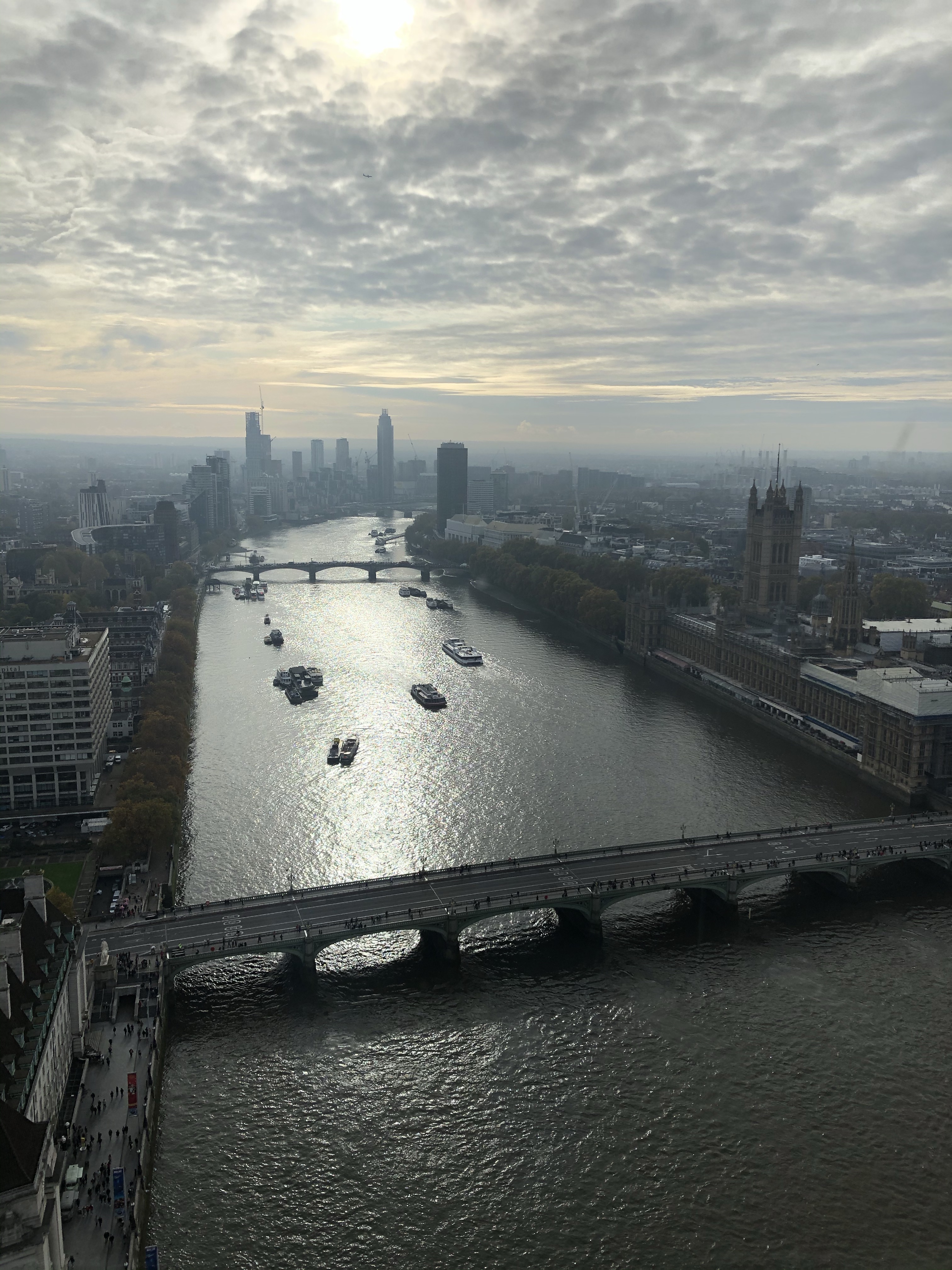
    I’m reflecting on the places I’ve been to instead of the ones I can’t get to at the moment. One place that every tourist seems to go to is the London Eye. And so too I made my way into one of the pods last November for my own check on the tourist checklist. Opened to the public in 2000 to coincide with the new millennium, it also goes by the name Millennium Eye. According to Wikipedia, it’s “the most popular paid tourist attraction in the United Kingdom with over 3.75 million visitors annually”. It was once the tallest Ferris Wheel in the world but has fallen to fourth place on the list. That might be true, but I don’t have a burning desire to go on the other three ahead of it. The London Eye has a certain charm the others haven’t earned. Location helps, of course, but there’s also a level of cultural history the London Eye has spun through that makes it feel more timeless than its twenty years.

    It takes 30 minutes to make the trip around, and that feels about right to me. It’s slow enough that you can take your time getting a picture but fast enough that you aren’t getting restless. I took the ride with some random strangers and some close family. It’s interesting to experience the trip through other’s eyes, one very uncomfortable with heights who chose to stay right on the bench in the middle, the rest of us walking about to the edges of the glass pod looking around at seemingly all of London. Circling slowly to the highest point, you’re struck by the magnificence of the city around you, and the beauty of the Thames River as it flows below. It’s worth the money to experience this, and I’m grateful that I went.

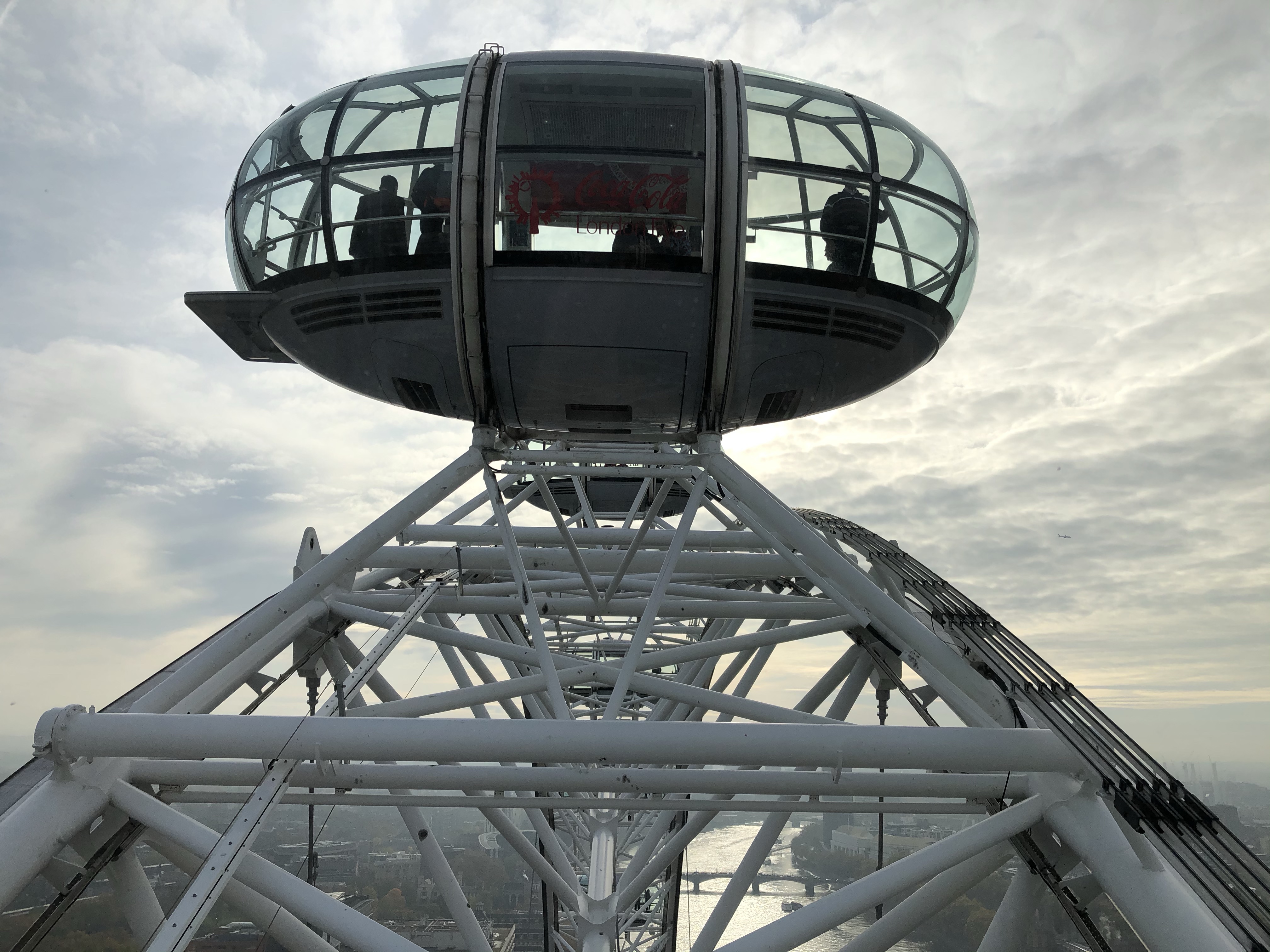
    March was the 20th birthday for the London Eye. It sits empty for the first time since it opened. Tough way to celebrate your birthday, I’d say. By my math, there have been roughly 75 million passengers in that time. That’s a lot of souls spinning around in that bit of sky. Mine amongst them. It’s a staggering statistic, and one the architects and engineers who built this magnificent machine can point to with pride. The experience was just as amazing for me in year 19 1/2 as it was for the first passengers in 2000. A chance to fly above the city, marveling at it all. But I took some of that time in our glass pod in the sky to examine this extraordinary structure supporting us on our slow turn. This amazing time machine of glass and steel and wondering, wandering souls collectively awestruck for two decades and counting. Surely a generous share of awe must be given to the London Eye?

  • Jam and Honey and Joie de Vivre

    When I was in London last fall I got back into tea, and with it back in the habit of adding a spoonful of honey. London also rebooted my brain on the delight of spreading some of that honey or a great jam on a bit of bread or a scone. Small, commonplace joys sprinkled into the day. Europeans are much better at these things than Americans. Here we drive through a coffee shop and eat something out of a bag while commuting to work. Sometimes you don’t even see what you just ate. Cheap fuel with no joy at all. Hopefully you tipped the drive-through person?

    The French long ago figured out the simple pleasure of being fully alive. Joie de vivre, the joy of living, is an expression but also a lifestyle pursued with zeal.  We’re all finding our stride with the joy of living right now, but I’ve seen plenty of evidence that joie de vivre is alive and well in the world. Zoom family calls, group text strings with old friends, Italians singing from balconies and drive-by celebrations of birthdays or just thanks for being in our lives.

    When this collective sacrifice for the greater good of humanity ends, the stories of these moments won’t end, and neither will the memories. I miss connection with the everyday world, but find joie de vivre in smaller bites – or sips – now. Gently fold the very best small pleasures into the daily habits of your life and these little joys punctuate the moment. The joy of living is now, this moment right here, spread out over your life like honey on a bit of bread.

    “Whisper, “I love you! I love you!” To the whole mad world.” – Hafiz

    Isn’t that the whole idea of joie de vivre? Loving life and all the nooks and crannies in our days. Embrace the suck and get through it as best you can, celebrate the small joys and dance with life. Our time on the floor is limited. Maybe stop to celebrate the small bite of food you’re unconsciously nibbling on. Add a bit of sweetness and savor the gift of that morsel of food just a wee bit more. And find ways to make the bigger moments bigger.

    Last weekend I visited my parents from six feet away. We had a bit of rum to celebrate the moment; them with their glasses, us with disposable paper cups on our side. Eye contact is important in such moments, and we fed energy across the fence and sipped spirits. We all miss the hugs and handshakes and kisses on the cheek, but we make the best of what’s still available. In this time of so much death and financial devastation, celebrate being alive in the smallest of ways. Whisper “I love you” to the whole mad world. For it really is a wonderful life.

  • What’s Up? The View From The Top Of Two Monuments

    One of the fun things about travel is seeing new things. Or more specifically seeing old things that are new to you. Climbing tight spiral staircases to see the view from the top isn’t high on many people’s lists, but an adventurous few make the climb to see what’s up there.  I had this experience twice while I was in the United Kingdom this year, once in London and the other time in Scotland.  Both offer similar experiences and yet are completely different.  I recommend doing each climb if you’re fit and aren’t afraid of heights.

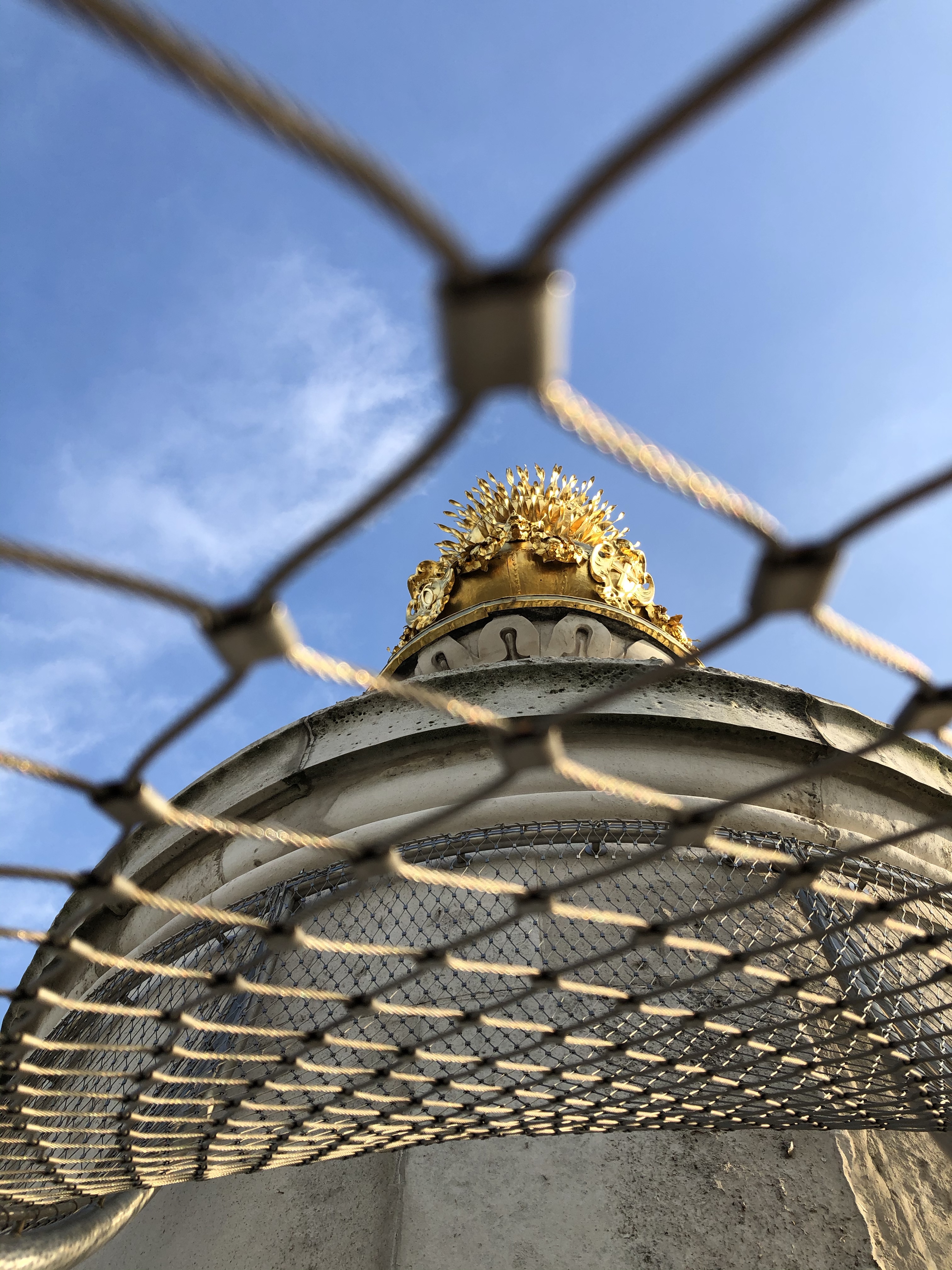
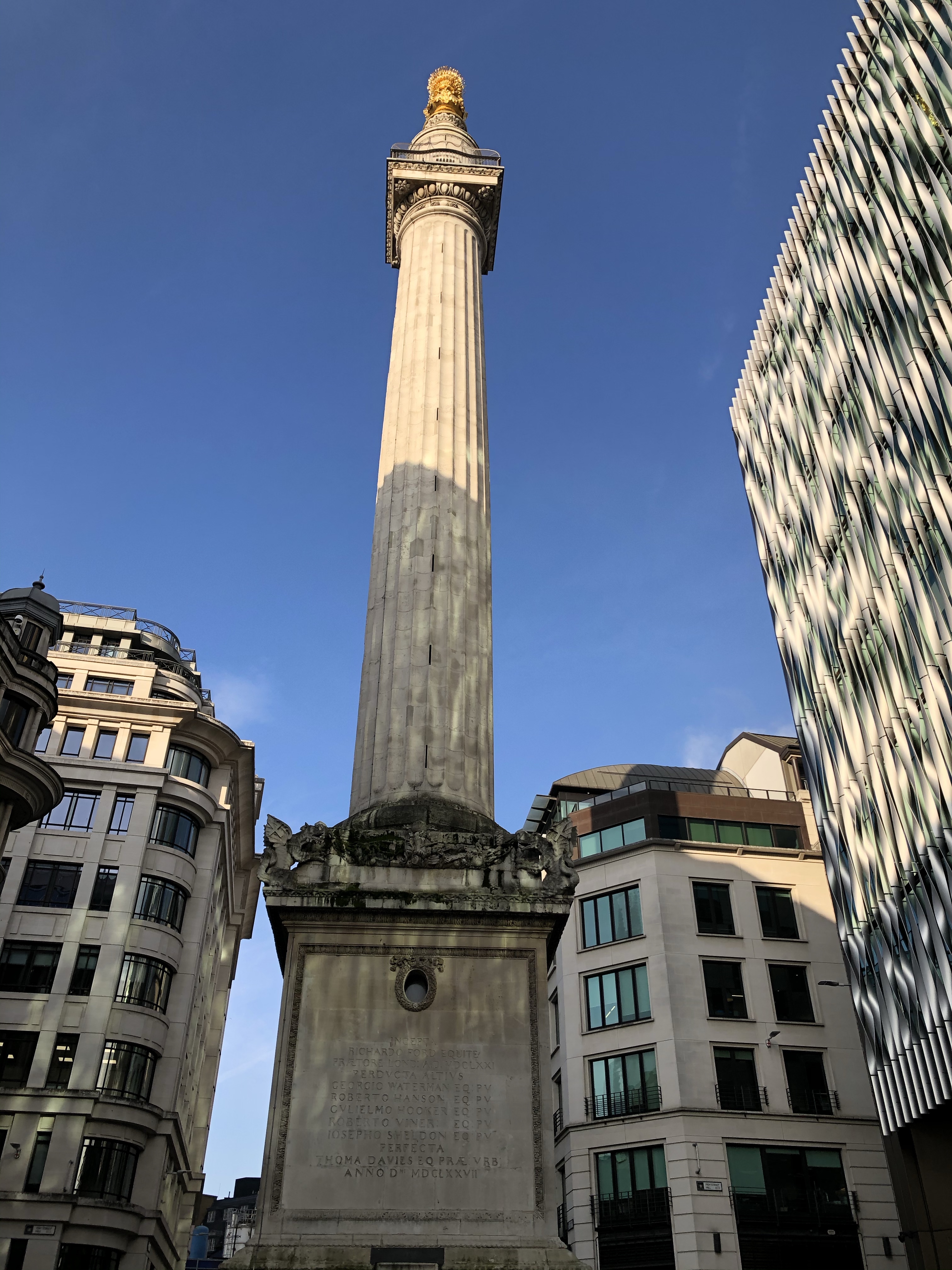
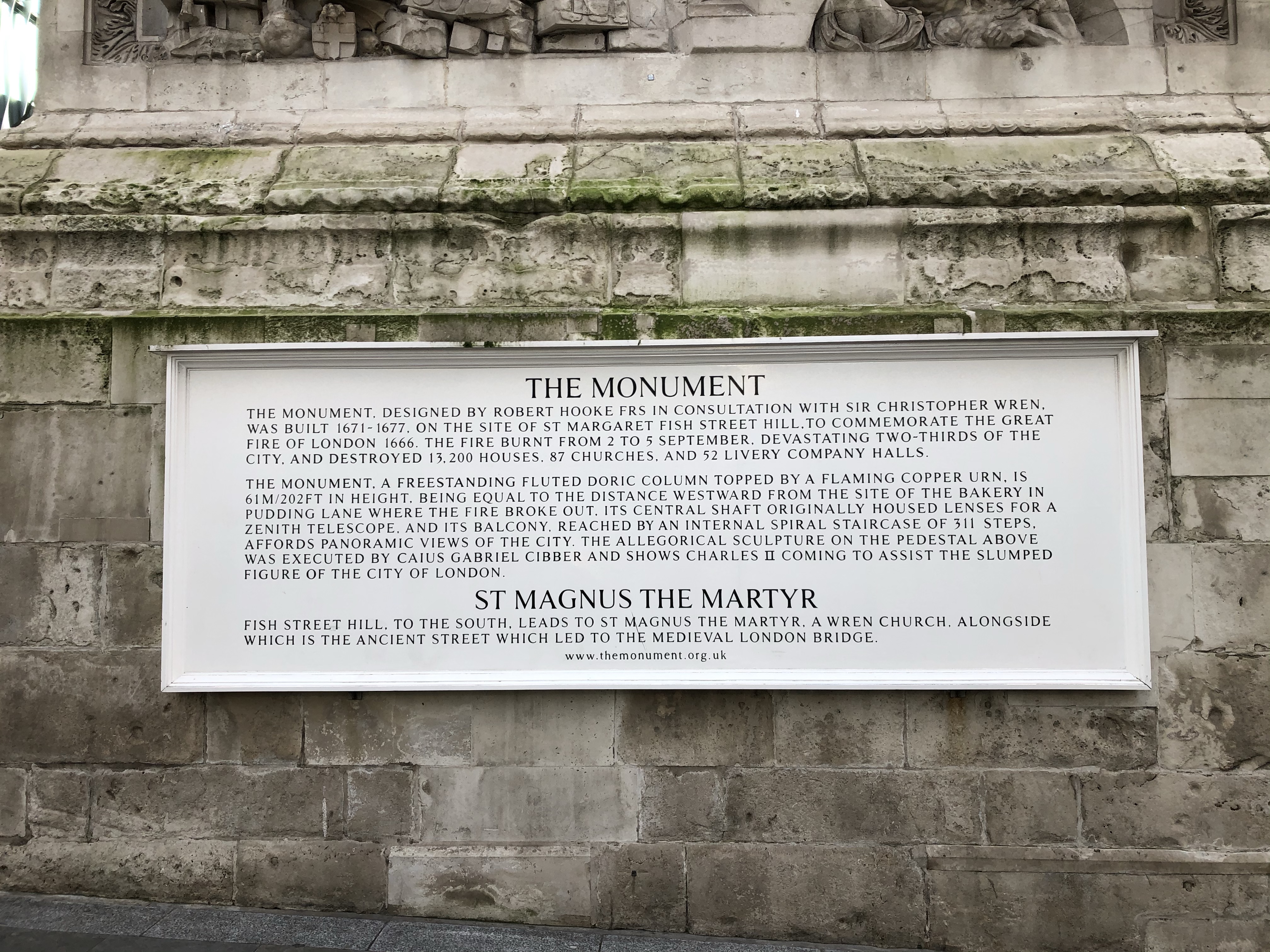
    The Great Fire destroyed over 13,000 homes and 87 churches in London in 1666, leaving upwards of 130,000 people homeless.  The re-build of the city was based on the design of Robert Hooke and Sir Christopher Wren.  These two men designed a monument commemorating the Great Fire, which was built of Portland Stone in the shape of a doric column with a spiral staircase inside running to an observation deck on top, and crowned with a gilded urn of fire.  I climbed up the 311 first thing in the morning on one of my last days in London, appreciating the stunning views of the city from up there.  The spiral staircase is easy to navigate, but you’ll feel it as you climb up.  I managed to get to the top without taking a break, but my heart rate was elevated when I finally reached the viewing platform.

    Perhaps the most impressive thing about The Monument is that it was completed in 1677, a century before America declared independence from Great Britain.  Think about the generations of people who have made the climb up those same stairs!  If you take a low number, maybe ten per day, multiplied by the number of days The Monument has been open for the public, you arrive at 1.2 million people who have made the climb to the top.  More realistic is a number topping 3-5 million.  All climbing a staircase ’round and ’round to the top; an adventure shared across generations.  Imagine the stories in that collection of people.  And now my daughter and I are on that list, with our own stories.

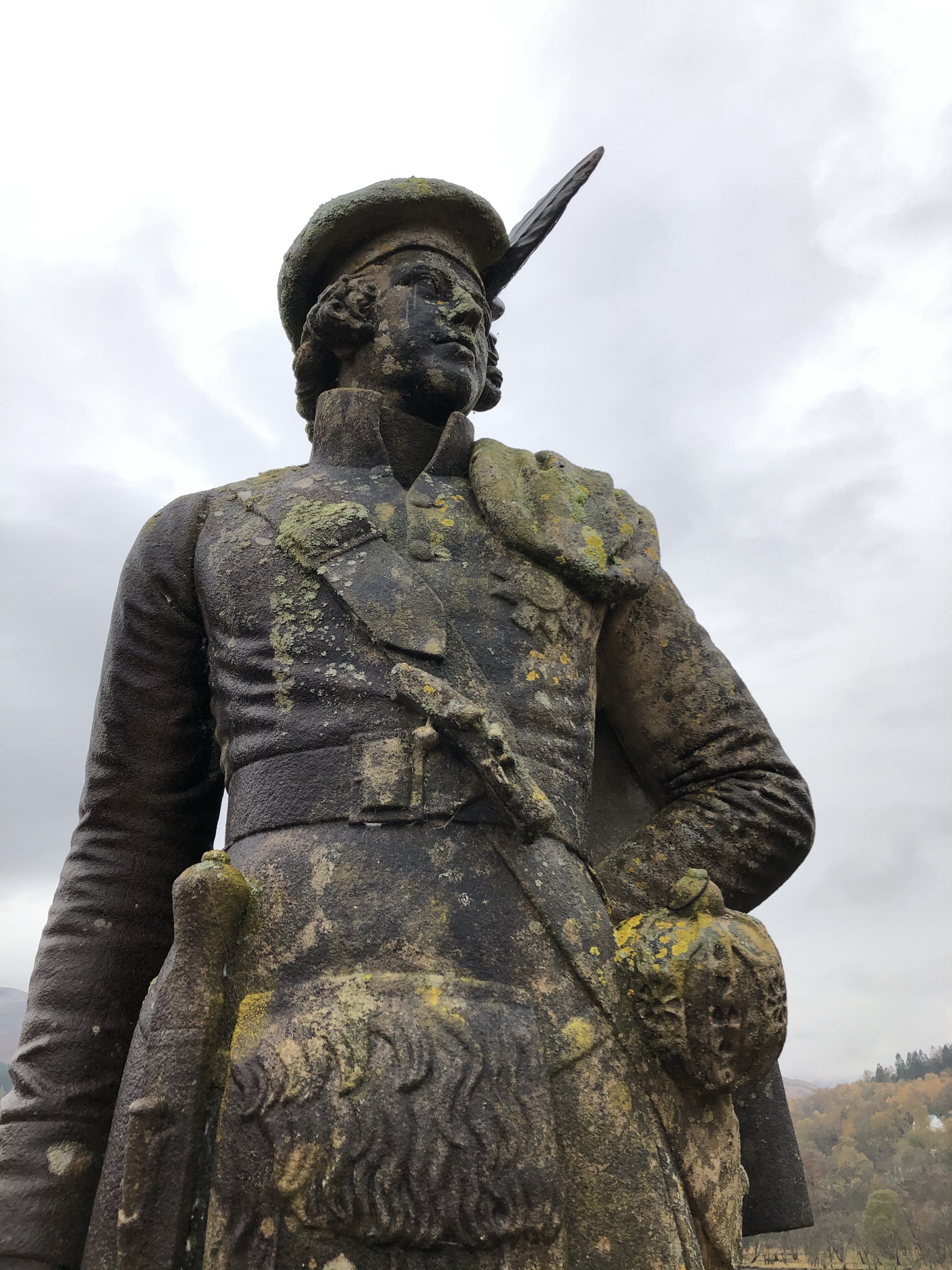
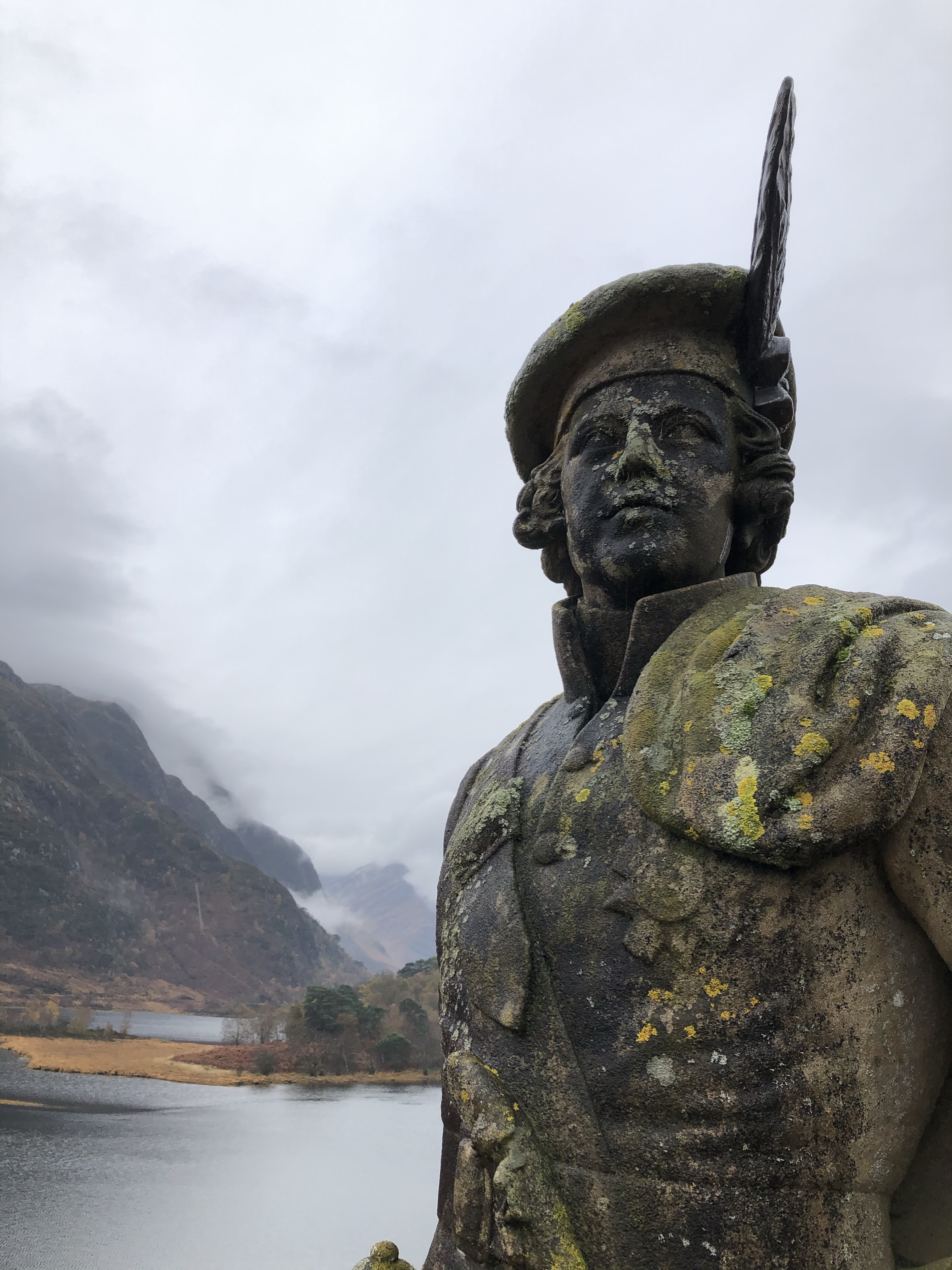
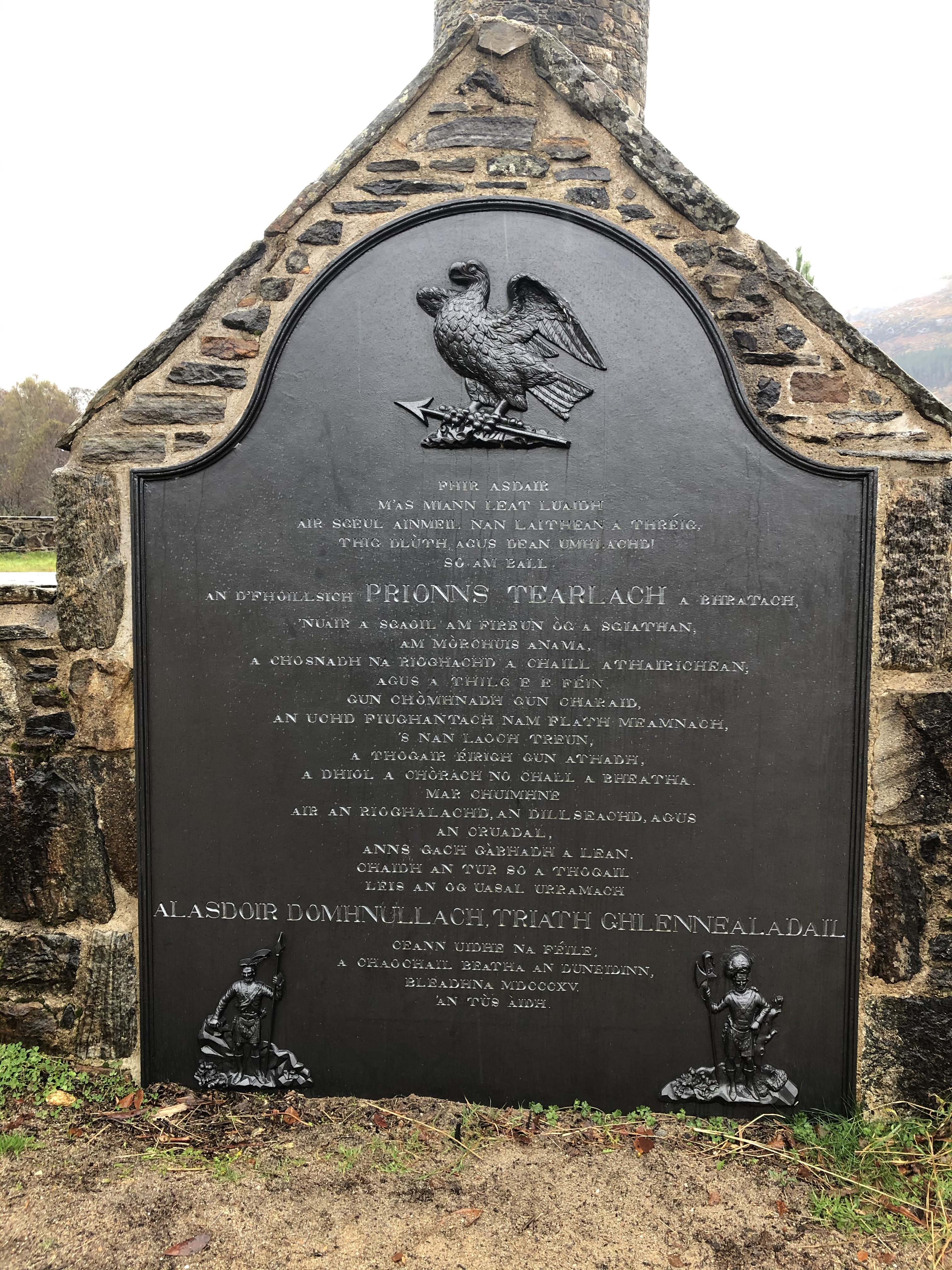
    Meanwhile, in Scotland at the head of Loch Shiel, there’s another monument that’s been standing stoically for generations.  The Glenfinnan Monument, built in 1815, commemorates the 1745 Jacobite Rising.  It’s topped with a statue of a lone Jacobite soldier looking north towards the Highlands.  This climb wasn’t as high as The Monument – it’s 18 meters, or about 60 feet tall, but it has it’s own challenges.  The spiral staircase is more like a tight and twisting ladder spinning you to the top step-by-step.  I’m 6′-4″ tall and felt like I was in a gun barrel spinning about to the top, where I emerged to see this moss and lichen covered Jacobite ignoring me as he’s ignored countless climbers before me.

    Where London has grown up above The Monument, squeezing it on all sides and shrinking the panoramic view, the Glenfinnan Monument offers the same view today as it did in 1815.  Stunning views of Loch Shiel, Sgùrr Ghiubhsachain and other surrounding mountains.  Turning your gaze towards where our friend the Jacobite is focused on, you see the Glenfinnan Viaduct, made famous by the Harry Potter movies, making its elegant sweeping curve.  This was a lovely view indeed, even with a bit of rain and fog playing games.  Aside from the paved road, the Glenfinnan Visitor Center, a few new buildings scattered about and the Viaduct, this view hasn’t changed since this monument was erected.  It offers its own whispers to the past, and was worth the climb.

  • The Joyful Pursuit of Fish and Chips

    How did I get on this track? Surely I’d have been better off looking for the best kale salad? But I’m in search of the best fried food. I know where it started. I blame Halifax. I’ve had exceptional fish & chips, and I keep chasing it in restaurants around the northern Atlantic Ocean trying to find the best in an evasive, sometimes frustrating mission.

    The very best I’ve ever had was a lunch special at The Five Fishermen Restaurant in Halifax. It was super fresh with a crisp, light batter and chips seasoned just right, all presented beautifully on a modest plating. It was an epiphany, and I haven’t had a better one yet in Canada, New England, New York, London or Scotland. Are there equal or better fish & chips in those places? Probably, but I haven’t found it yet.

    Now to be fair, The Five Fisherman is a fine dining experience with a menu to be savored, and I was the right audience for that dish. Pubs and most restaurants that serve fish & chips aren’t focused on the delivery of a world class dish, they’re simply feeding the masses. So I don’t bash the places that don’t do it well, I just don’t mention them at all. I’ve had truly awful fish and chips only once, in the shadow of the London Eye, at a tourist trap. Soggy, greasy and full of bones. I had one bit and threw away the rest. Shameful waste of food, and a fish that died in vain. I had no business ordering anything in that place so the fault lies squarely with me.

    But as you might expect, that was the exception in London. The city has some excellent fish & chips places in every corner. Pub food bliss with large servings of fish overflowing the dish, mounted on a healthy pile of chips (“next to” is the preferred serving, thank you). The only thing stopping me from ordering it everywhere was a natural desire to eat a bit of everything, but I give a respectful nod to the UK for the consistently great fish & chips. Shame my last experience having it there before leaving was that tourist trap place. Circumstances being what they were it was what it was…

    As I’ve hinted, the best fish & chips offers fresh, flaky white fish (Cod, please) in a light, crispy batter, served with a reasonable pile of crisp fried potatoes sliced just right. A side of fresh coleslaw is welcome. Tartar sauce, lemon and ketchup should be strictly optional, not required to get through your meal. When I see a piece of fish presented with a slice of lemon already sitting on the fish I think “not fresh fish”, and when the fish is thrown on top of the chips I think, “soggy chips”. Yes, it’s a basic, working-class dish, but presentation still matters.

    I’ve written close to 500 words on the modest topic of fish & chips. Candidly, I could go on much longer on the topic. Ultimately, my search continues for a better fish & chips dish. Like any experience, once you’ve had something truly exceptional most things afterwards won’t measure up. But there’s joy in the pursuit.

  • Stumbling Upon Buried Treasure

    While waiting for a taxi to the airport I scanned the wonderful old books lining the shelves at the London hotel I’d been staying in. I do this often when I have moments like this, it’s where the buried treasure is after all. I saw two books on a shelf at eye level that drew my attention; Two Years Before the Mast, by Richard Henry Dana Jr. and an old collection of English poems. I’d read Two Years Before The Mast several years ago at the recommendation of a friend who’s doing exactly that at the moment. I flipped through it quickly, saw the old stamps indicating it was a library book and smiled. Libraries were where I found most of my buried treasure before the Google and Amazon changed everything.

    To this day my favorite discovery was an old copy of Typee by Hermin Melville pulled at random from a university library shelf in the fall of 1984. I was a freshman then, figuring out this college thing, and fascinated with the vast rows of books I could walk through. I picked up Typee and brought it to a reading nook and read the first couple of chapters, quickly falling in love with this other world. I’d return the book and come back again and again to it in the same fashion until I finished it, never checking it out (sadly not including my name on the stamp), but finishing it nonetheless. That friend who loaned me Two Years Before The Mast in turn took my recommendation to read Typee and now has a boat named Fayaway, a compelling character in the story.

    That other book, the one on poetry? I opened to a completely random page in a completely random book in an old library book stuck on a hotel shelf in London….. so you know; random. And I read this:

    Care-Charming Sleep, thou easer of all woes,

    Brother to Death, sweetly thyself dispose

    On this afflicted prince; fall, like a cloud,

    In gentle showers; give nothing that is loud

    Or painful to his slumbers; easy, light,

    And as a purling stream, thou son of Night,

    Pass by his troubled senses; sing his pain,

    Like hollow murmuring wind or silver rain;

    Into this prince gently, oh, gently slide,

    And kiss him into slumbers like a bride!John Fletcher

    Fletcher died in 1625. Analogies between sleep and dying are common, and Fletcher dabbling with the concept in this poem/song from 400 years ago illustrates that. We all want to gently fall asleep, and given the choice we’d likely all wish the same for our final sleep. Poetry either grabs you or it doesn’t. I haven’t made up my mind on this one, which means it’s the latter. Not everything you pick up in a book is going to be buried treasure. If it were what would be the value anyway? But there’s something to chew on here anyway.

    Two Years Before The Mast was written by a man named Richard Henry Dana Jr. after he left Harvard to regain his health after contracting measles. It’s a fascinating book that illustrates life onboard a merchant ship on a two year journey as they rounded Cape Horn to pick up cattle hides in California to haul back to Massachusetts. Seeing the book again prompted me to read a bit more about Dana, and I was struck by one part of his legacy. Dana Point, California is named after him. I’ve spent a fair amount of time in Dana Point, but never made the connection to the book until today. It seems I found some buried treasure after all.

  • Mind the Gap

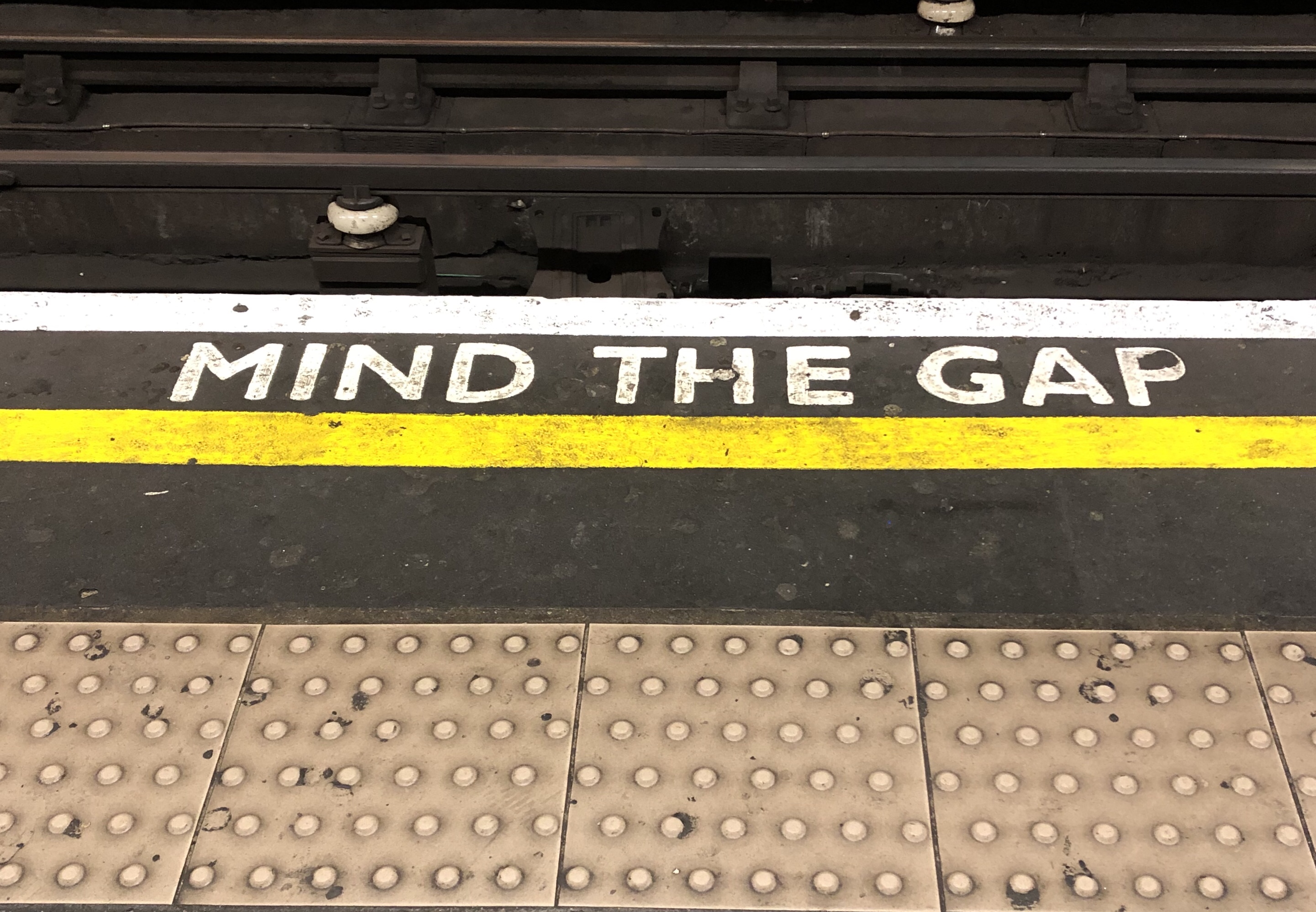
    Hustling people weave between each other like strands in a tapestry. Constant movement and sound; the music of London Underground. Laughter mingles with sounds of conversations in many languages and the grinding metal and roar of trains. Wind gusting through open end windows stir well-kept hair.

    Those in the know march down escalators on the left, dart between lines without a glance at the signs. The rest of us check signs, confirm District vs. Circle, look down and deal with personal boundaries being pushed and clutch handholds with the lurches and leans of the train. Even when you learn it it’s different when you don’t live it. Up this escalator, down that one, keep to the left and on and on.

    The polite offer up seats to the aged and women, I just stand and leave open seats to whatever fanny finds it. This business of bouncing around in a tube underground isn’t my style. I’d favor walking whenever possible, as I do in New York or Boston. But you can’t argue it’s efficiency. Countless thousands of souls pulse below the streets of London every day, re-emerging above ground in places far and wide in an endless dance. A tourist, I do the dance with two left feet compared to the tango veterans on display. But I don’t mind, I just dance on the edges and mind the gap.

  • Thy Selfe May Pas: A Stoic Reminder at Westminster Abbey

    There are many famous names at Westminster Abbey. The ornate carvings on ornate carvings give a collective sensory explosion in the brain. We may have skilled artisans today, but there aren’t many stone carvers doing this kind of work anymore. Stunning detail everywhere you looked. Add in the throngs of people touring and it can all feel a bit much. The only blessing is they don’t allow photography inside, so the long lines weren’t subjected to selfie-taking vanity shots.

    Deep into the tour at Westminster Abbey in the chapel of St Edmund, well-removed from the famous names, is a young man lost to history. Francis Holles died at the age of 18 in 1622 on his return from fighting in the Netherlands. His grieving family had an elaborate monument carved by Nicholas Stone to honor him and placed it here, amongst other members of the Holles family. Whether there’s any resemblance to Francis the world will never know, but no matter, the power was in the 1620’s English epitaph engraved below.

    What so thou hast of Nature, or of Arts, youth, beautie, strength, or what excelling parts, of mynd and boddie, letters, arms and worth, his eighteen yeares, beyond his yeares, brought forth then stand and read thyself within this glas how soon theise perish, and thy selfe may pas.

    Mans life is measured by the worke, not dayes, no aged sloth, but active youth hath prayse”

    What parent doesn’t hear the story of Francis and not feel a pang of grief for both him and his parents? For all the famous kings and queens, writers and politicians who spend eternity at Westminster Abbey, this is the one person who stood out above all the rest for me.

  • Stumbling Across Amherst

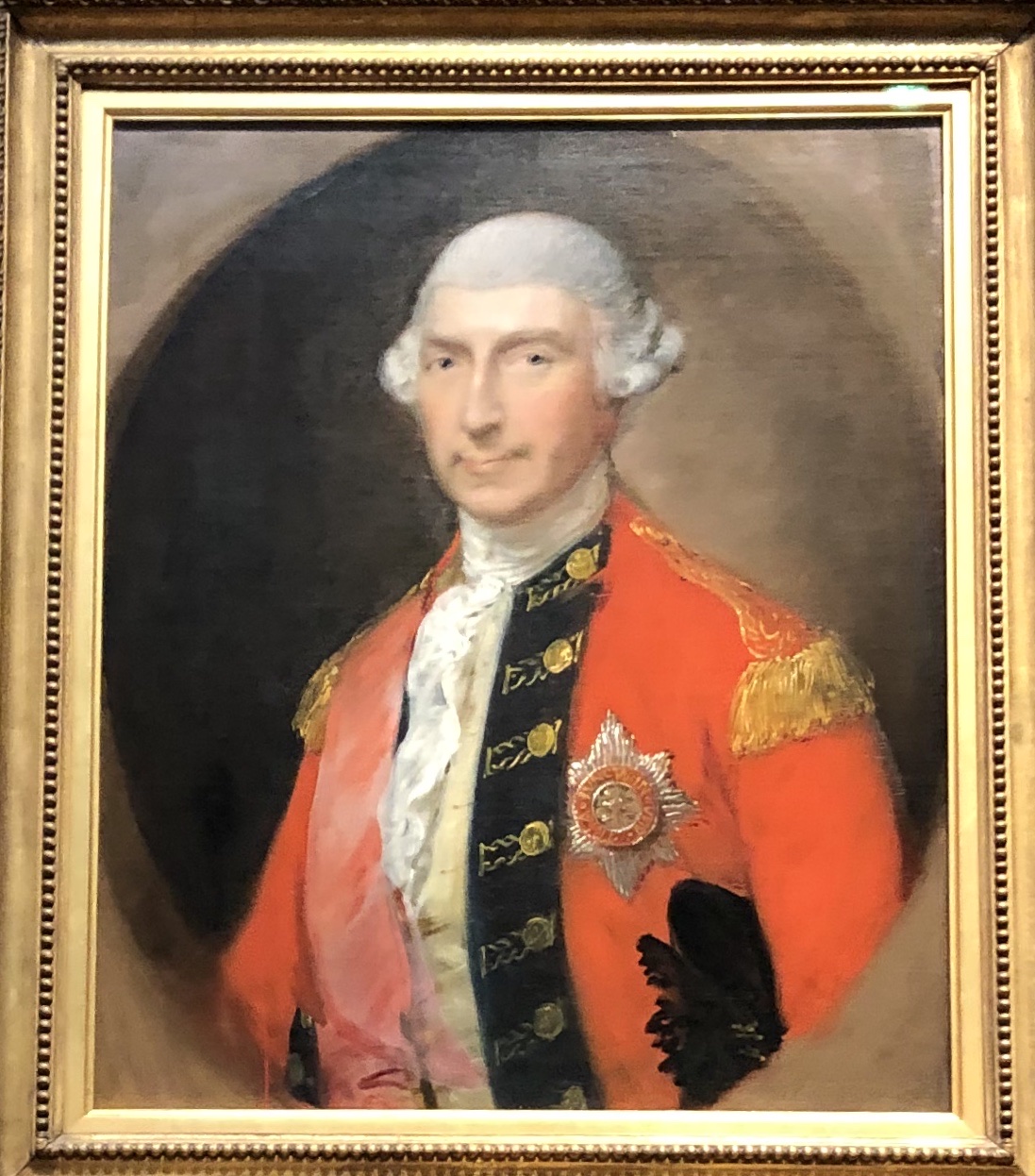
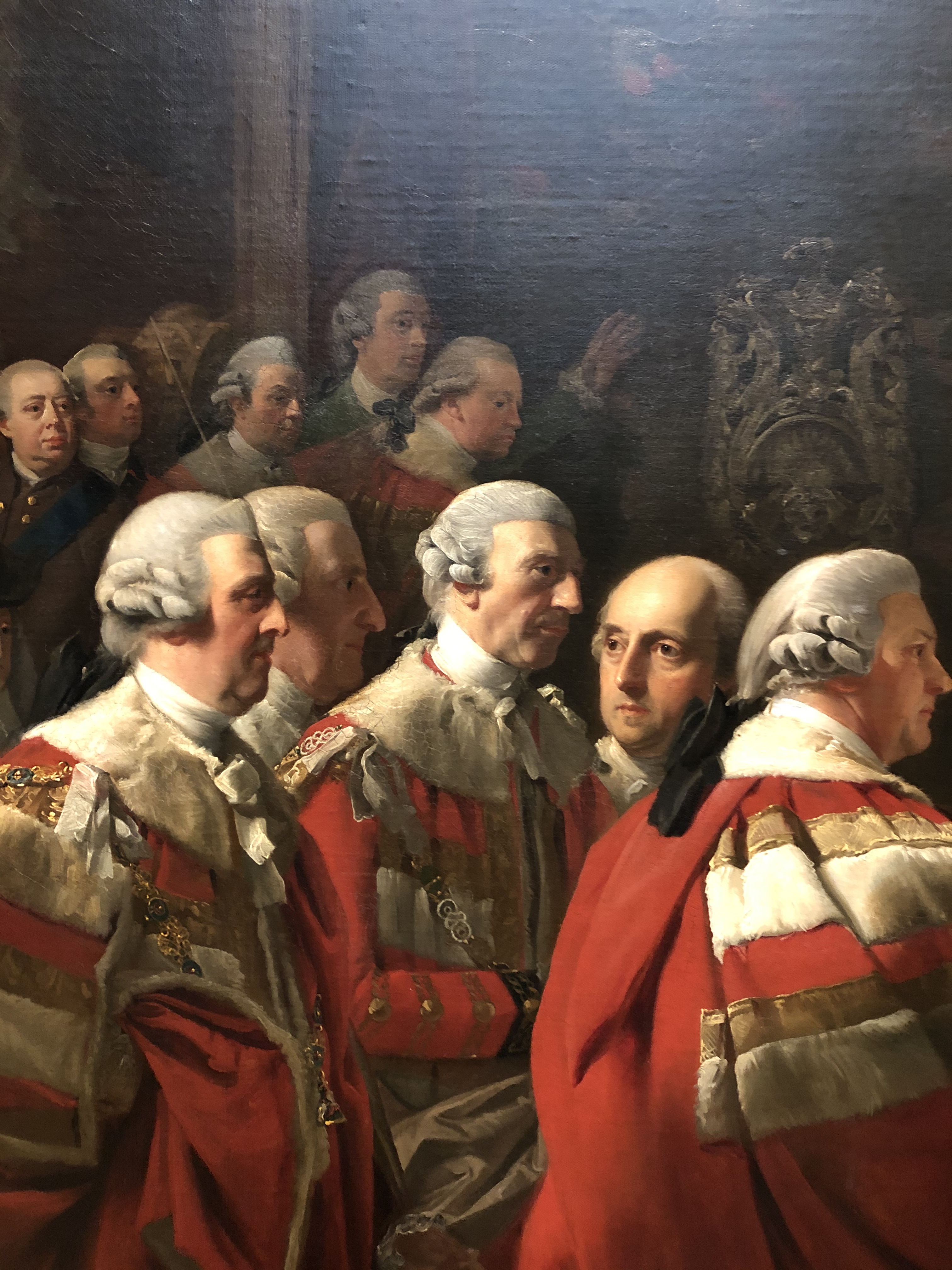
    I was thinking about Jeffrey Amherst yesterday. Or rather, Amherst was thrust upon me as I walked through the National Portrait Gallery in London and his face jumped out at me in three paintings. Two were “face in the crowd” works that ensured you knew that yes, HE was there, so was that other HE… and so on. It’s like a snapshot taken at an event, painted over a long period of time. Ego strokes and, to me, tedious. But portraits offer something different, a glimpse into the person. And few people got your attention during the French and Indian War like Jeffrey Amherst.

    No matter what you think of Amherst, and there’s plenty of reason to question his tactics, he helped shift momentum of the war with decisive, ruthless action (giving smallpox infected blankets to Native Americans is certainly ruthless and ethically highly questionable). That victorious campaign positioned him for accolades at home, place names in the New World, and one elite liberal arts college bearing his name. And a portrait in the National Portrait Gallery. I don’t celebrate the life of Amherst, but I acknowledge that he got the job done when the English needed someone to step up.

  • The Guard

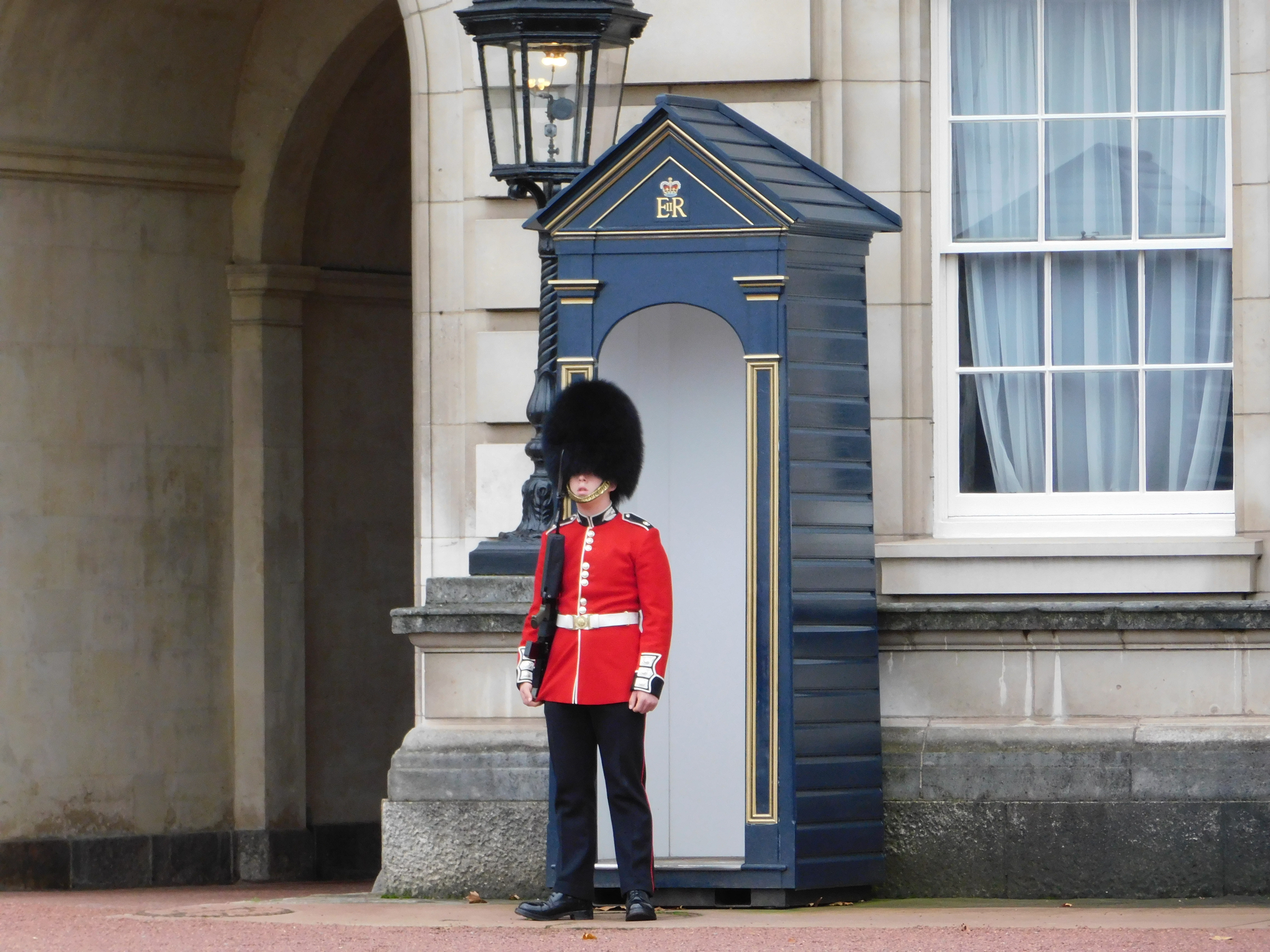
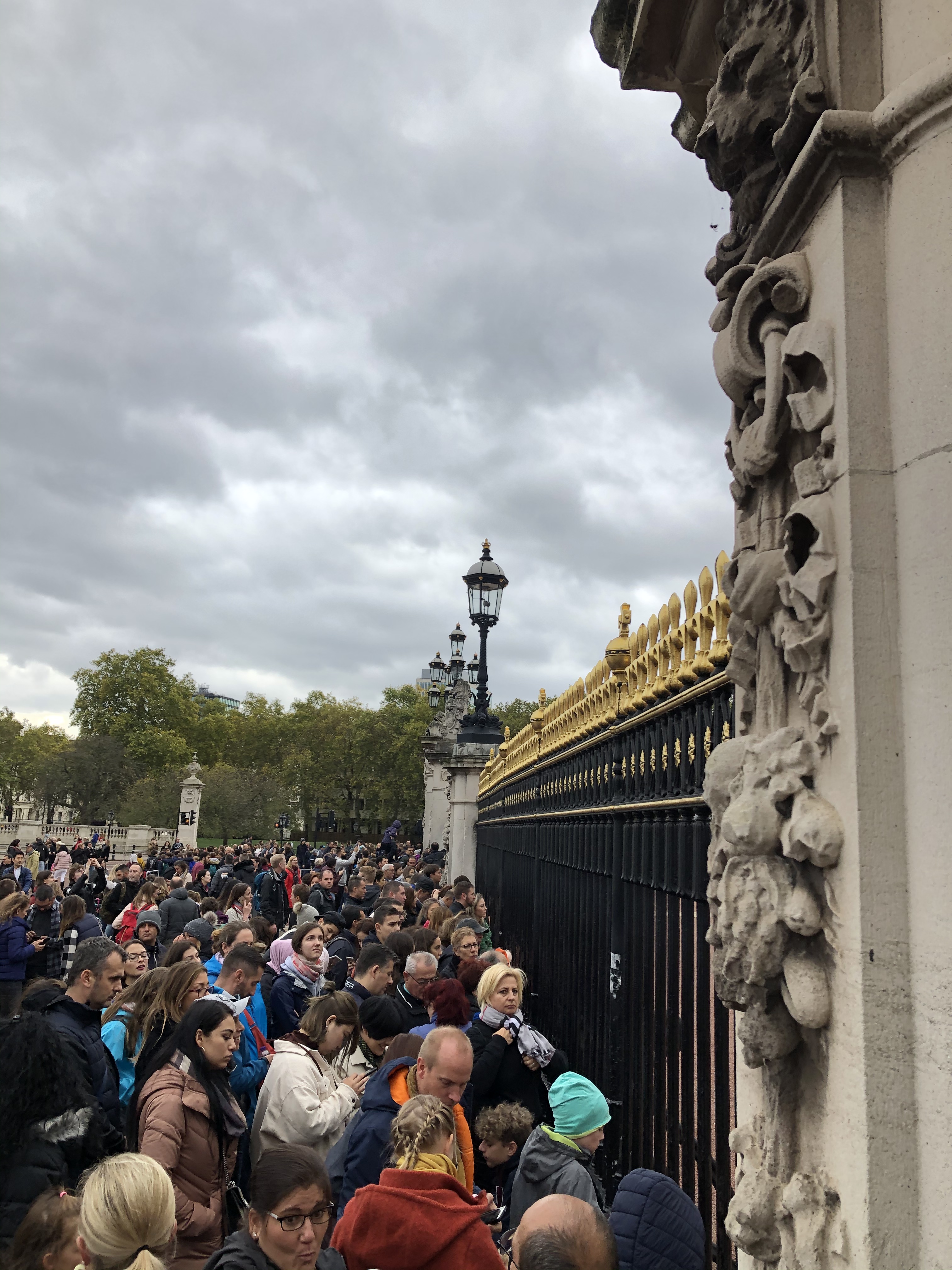
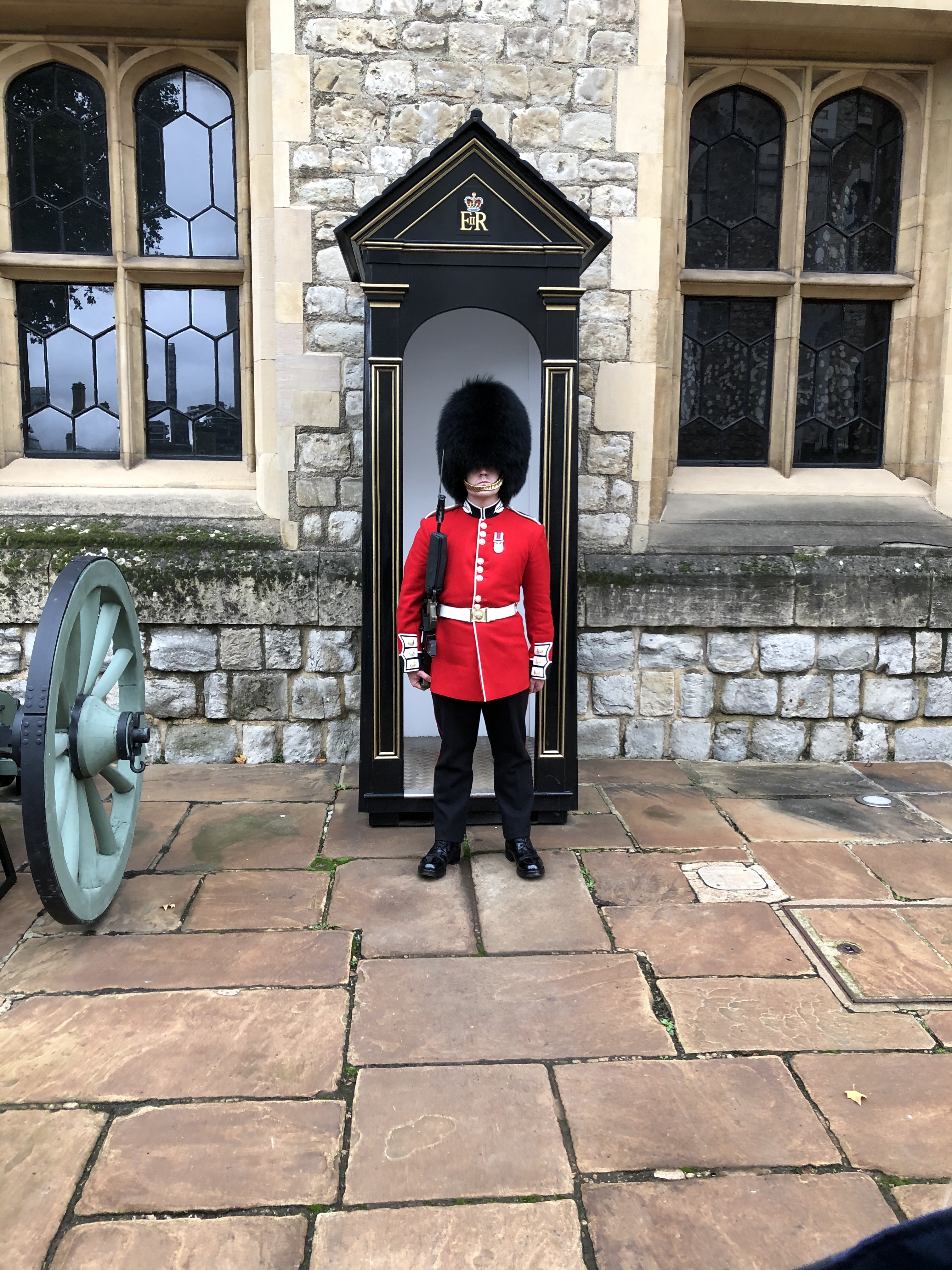
    Consider the Queen’s Guard, standing stoic. The guard scans the crowd with his eyes, moves in ever so slight ways, but otherwise still. As the guard stiffens, they’ll stomp their feet vigorously, ceremoniously shift their gun from the right arm to left, swirl to the side and march to a designated spot where they once again stomp and swirl and repeat as many times as they feel necessary to get the blood moving. From there they return to their original spot, stomp and shift the gun back to the right side, stand back at attention with a stomp and cap it off with a dramatically wonderful swirl of the head. A practical way to shake off London rain, or a crowd-pleasing play to the swarm of Changing of the Guard gawkers? No matter, it’s a big hit.

    I saw a similar act yesterday at Tower of London, however this ceremony of the changing of the guard is a Buckingham Palace show. But no changing of the guard on Saturdays. Still, a good chance to see Buckingham Palace, mingle with global tourists and take the required pictures. And oh, the pictures. Indulgent consuming of megabytes of data, all in hopes of the perfect photo. And an indulgent post to mark the occasion.