Tag: Long Island Sound

  • A Sunrise Walk on Historic Calf Pasture Beach

    There’s a lot of history lurking in plain sight. Take Calf Pasture Beach in Norwalk, Connecticut. on the surface it’s a pretty municipal beach on Long Island Sound. I suppose that might be enough. But there’s a significant link to the Revolutionary War on this beach. As an eager participant in maximizing the potential of any trip, I’d read about the beach while looking for a good place to watch a sunrise. As a history geek I leapt out of my chair when I learned more about the beach. A sunrise visit became a no-brainer.

    So why the strange name? Calf Pasture Beach was exactly what the name infers. When the first European settlers arrived in 1651, their cattle grazed on the grass just off the beach. Names have a way of sticking, don’t they? But there’s even more history whispering on this beach. On July 10, 1779, British Lieutenant General William Tryon led 2,600 troops on the Revolutionary War raid of Norwalk. They camped right on the peninsula where the beach is located, and the next morning burned most of the town to the ground.

    There’s no sign of British encampments or cows now, just a municipal beach with a fishing pier and bathhouse, a few baseball fields and a large parking lot. The property might have developed into any number of things, from industrial facilities to a housing development. Thankfully it was donated to the city exactly 100 years ago by the Marvin-Taylor family, who had owned the land for generations. That’s a gift that keeps on giving, and I hope Norwalk has something planned for 2022 to commemorate the family.

    All this history lured me to that particular beach for a wonderful sunrise over Long Island Sound. Arriving during magic hour, the sky was lit up in pink, and Sprite Island offered a beautiful contrast with its bare trees. A short walk down the beach brings you to a fishing pier, which offers a different perspective on the sunrise, and a different perspective on the beach itself. This small peninsula feels like it would be a million miles away from the congested I-95 corridor, yet here it is just a few minutes away. It’s funny what you find when you pause to look around a bit. Not every early morning micro-adventure pays off, but this one surely did.

    Sprite Island during the magic hour before sunrise
    Calf Pasture Beach, Norwalk, CT
    Sunrise over Long Island Sound from the Captain William Clark Fishing Pier
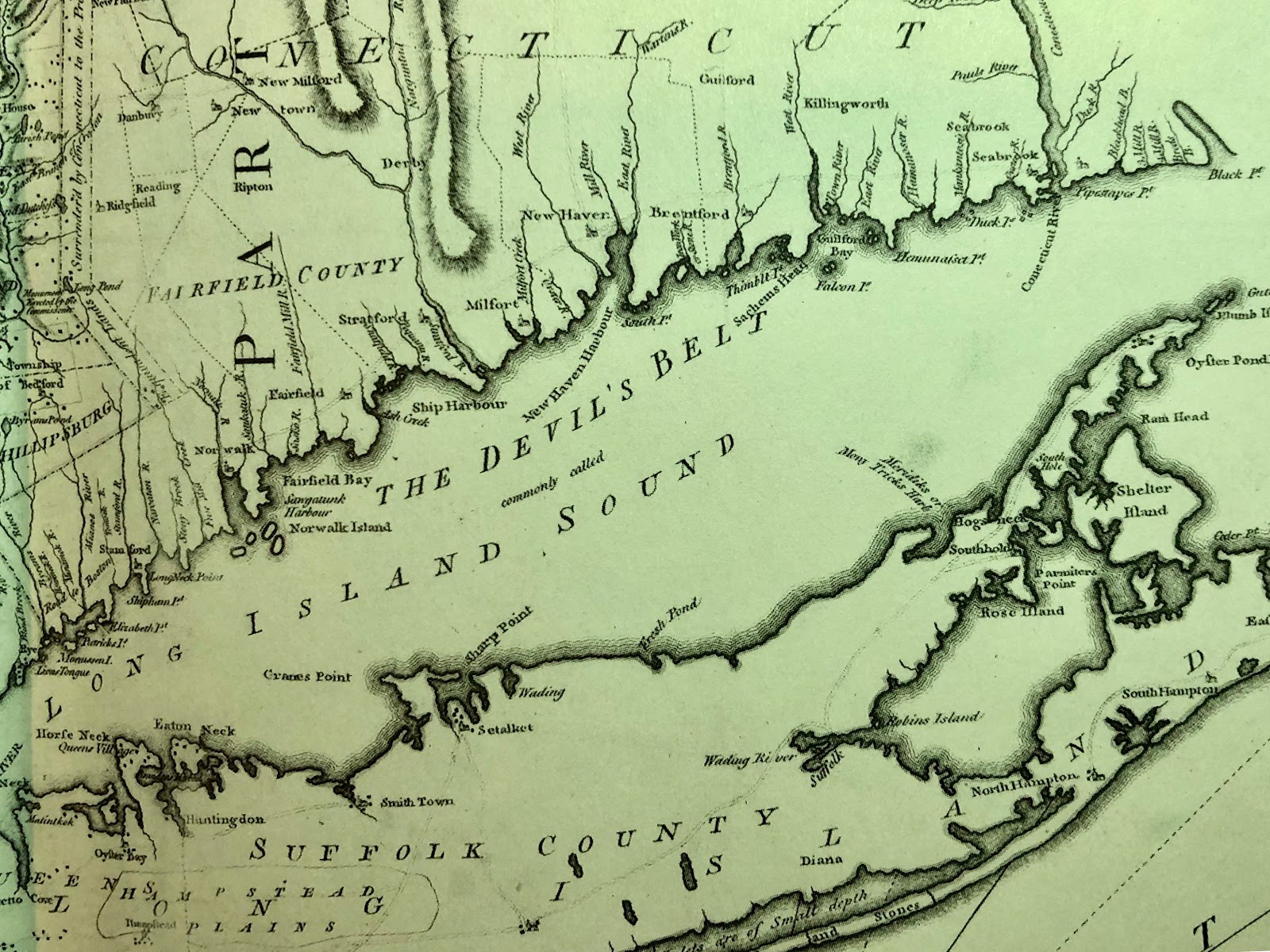
  • The Devil’s Belt

    Long Island Sound is an estuary between Connecticut and mainland New York on one side and Long Island on the other.  This body of water is renowned for its fast currents and shoals, which earned it the nickname The Devil’s Belt.  The most famously difficult portion to navigate was the narrow inlet between the East River and Long Island Sound, known appropriately as Hell Gate.

    Three early explorers mapped out this region between 1527 and the early 1600’s.  Giovanni da Verrazzano was searching for the Northwest Passage after Magellan’s circumnavigation of the globe a few years before.  He made one of the earliest maps of the North American coast from Florida to Newfoundland.  Verrazzano noted the mouth of the Hudson River and the coast of Long Island.  He may have sailed into Long Island Sound.  More than 80 years later in 1609 Henry Hudson famously sailed up the Hudson River but also explored north to Cape Cod.  And a couple of years after that Adriaen Block sailed from the East River into Long Island Sound and up the Connecticut River.  Like Verrazzano, he also explored what is now Rhode Island.  Block Island is named after him.  Block is thought to have named Hell Gate upon sailing through the narrows.  He called it “Hellegat”, which in Dutch means “hole from hell”.

    Long Island is 118 miles long.  Long Island Sound is not quite that long, but pretty close.  It’s 21 miles wide at it’s widest point.  The mouth of Long Island Sound wasn’t much easier on mariners than Hell Gate was, with The Race, the 3 1/2 miles between Fishers Island and Little Gull Island, being the site of rapid currents as the tides changed and water entered or exited Long Island Sound.  The sound is popular with fisherman and sailors alike.

    In the summer of 1951 an adventurous young man named George Post sailed out of Shinnecock Yacht Club in a 16 1/2 foot SS 114 to do something audacious.  George decided to sail around Long Island, but in typical George Post style, he planned stops along the way at Long Island parties.  George was something of a Great Gatsby with his adventurous and fun-loving spirit.  He had friends meet him with a tuxedo to change into for the party, and then the next morning it was back to sailing.

    George sailed northeast out of Shinnecock Bay, rounded Montauk, past Orient Point and down Long Island Sound towards New York City.  He had friends drop beer and food in floating packs from a plane.  George sailed past Rikers Island, and into the East River and Hell Gate, dodging floating debris and barge traffic in the East River until he finally got past Manhattan.  I can imagine what he thought when he sailed past the Statue of Liberty, rounded Brooklyn and sailed out into the Atlantic Ocean.  And I can imagine what everyone else was thinking when this 20 year old kid sailing a small boat floated past them.

    George made it back to Shinnecock, called his mother to pick him up, and got back to being a young adult on Long Island.  He was the older brother of my step-father John, and I’d had the opportunity to meet him on a few occasions over the years.  I wish I’d been more familiar with this story then, and I wish I’d asked him a few questions about it before he passed away.  He was every bit the adventurous spirit that Verrazzano, Hudson and Block were, and his younger brother is, and it would have been fun to learn more about that side of him.