Tag: Manhattan

  • Stillness and the Swirl

    When despair for the world grows in me
    and I wake in the night at the least sound
    in fear of what my life and my children’s lives may be,
    I go and lie down where the wood drake
    rests in his beauty on the water, and the great heron feeds.
    I come into the peace of wild things
    who do not tax their lives with forethought
    of grief. I come into the presence of still water.
    And I feel above me the day-blind stars
    waiting with their light. For a time
    I rest in the grace of the world, and am free

    — Wendell Berry, The Peace of Wild Things

    Manhattan enthralls. Manhattan is a jumble of ideas all shouting to be heard. Like the world jammed into an island could be expected to behave, there is a jostling for the top. Skyscrapers reaching higher, with more and more flair, like the people who occupy them. Manhattan demands the best we can muster of ourselves. Many fall far short of this, to be sure, but the demand is there for those who will listen.

    I’m usually good for two days of this, three tops, before I crave stillness again. The delight of sitting on the deck stairs with the pup curled up for an ear scratch and stubborn oak leaves drifting to earth. The call of simple stillness drowns out the noise of the streets, drowns out the madness in the world, drowns out the voice inside me that wants more of the bustle and hum of a city anticipating parades and Christmas lights in the weeks to come. This magic is borrowed, not mine to keep.

    The line between chaos and order is thin and tricky to find balance on as we make our way through a lifetime. A bit of poetry on one side, a dance with titans and hustlers on the other. We stumble and right ourselves, lean this way and that, breath deeply and step forward again. Hoping angry winds don’t blow us into chaos. Hoping whispers of doubt don’t betray us. Hoping we can carry on in the darkness beyond our control. We only control the next step.

    New York demands attention. Sirens and horns and the rumble of constant change a soundtrack penetrating my soul. The news of the world is dire. Seemingly darker by the day. How do we find peace despite it all? We ought to remind ourselves that the universe is bigger than the schemes of humanity. We ought to reverently walk in the woods. We ought to be grateful for the quiet familiarity of home even as we race through a city that never sleeps. Even the swirling leaves from a stubborn oak ground themselves eventually.

  • A High Line Walk

    “Open your eyes and see what you can with them before they close forever.” — Anthony Doerr, All the Light We Cannot See

    Early morning walks are nothing new for me, but I rarely take them when I’m in Manhattan. Simply put, I don’t love walking in the city the way I love walking in other places. Blame it on the endless concrete, traffic noise and dog owners who don’t pick up their dogs crap. I can love the energy of the city while not enjoying the walking environment—I’m complicated in that way.

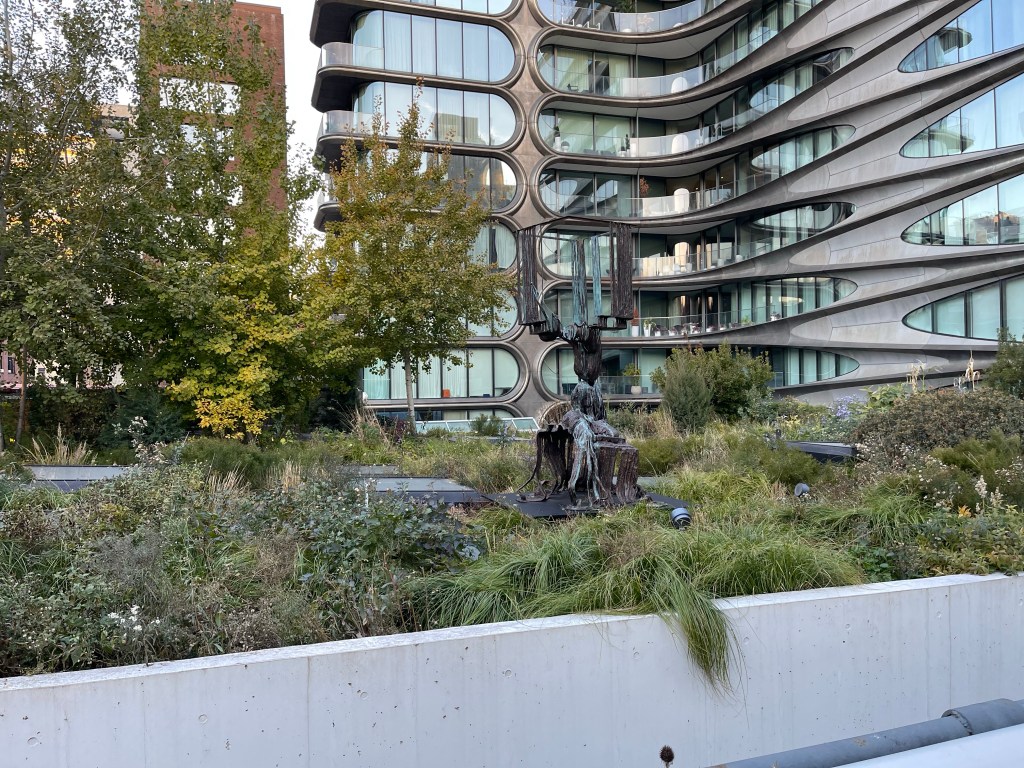
    There are exceptions to this rule. Central Park is one. The riverfront is another. And then there’s the High Line, that old elevated railway turned into a pedestrian walk. This delightful walkway doesn’t allow bicycles or skateboards or even dogs (for the record: I love dogs, it’s irresponsible owners I don’t love). This is to protect the fragile plants along the walkway, but it has the side benefit of protecting your footwear too.

    The High Line has proven to be a big hit with the public precisely because of the removal of all that I dislike about walking in the city. You feel like you’re in another world up on the High Line. A world of art and natural plantings and no cars. It’s the kind of environment that could make you love walking in Manhattan.

    Alas, my walk was abbreviated by construction. walking down the stairs back to street level reminded me that I’m a country mouse at heart. Still, a short walk on the High Line is better than nothing.

  • Stepping Out on the Edge

    The Edge is the highest observation deck in the Western Hemisphere, and the fifth highest in the world. It juts out of a modern and elegant 30 Hudson Yards building that glitters day and night. If you are afraid of heights, it’s unlikely you’ll ever travel up the speedy elevators that bring you 100 stories above Manhattan, but if you do, you’ll be treated to video stories displayed on the walls of the elevator cab that bring you into the clouds on the way up and on virtual flight back to earth on the return trip. As fun as the elevators are, nothing beats the actual view that greets you when you arrive.

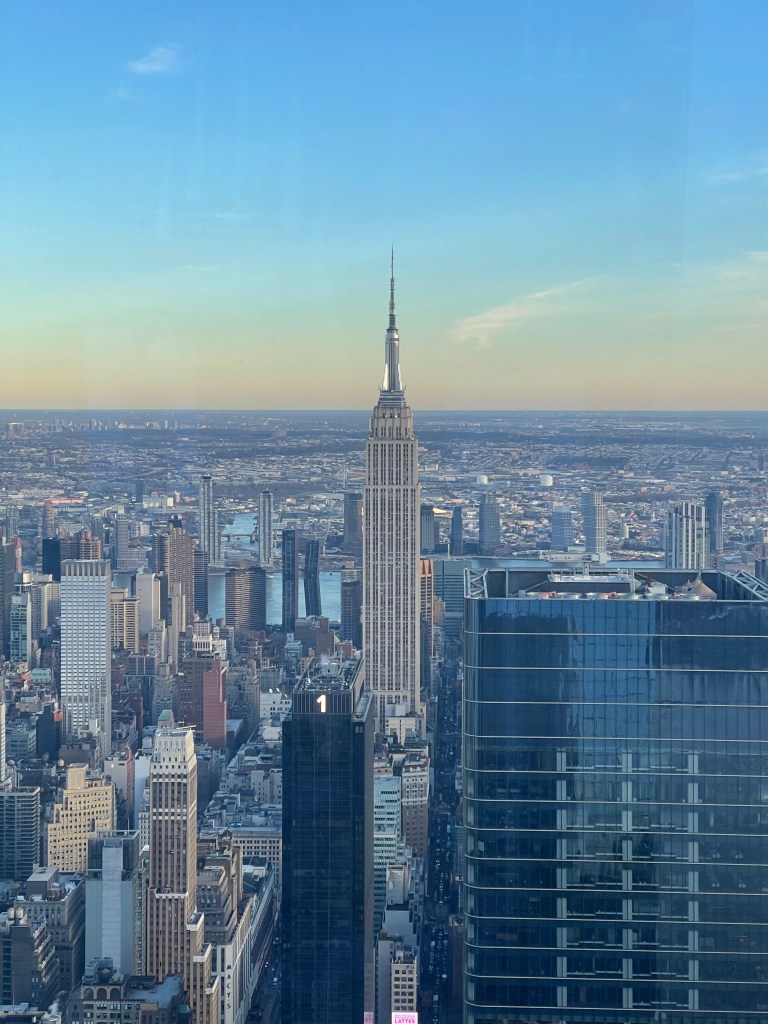
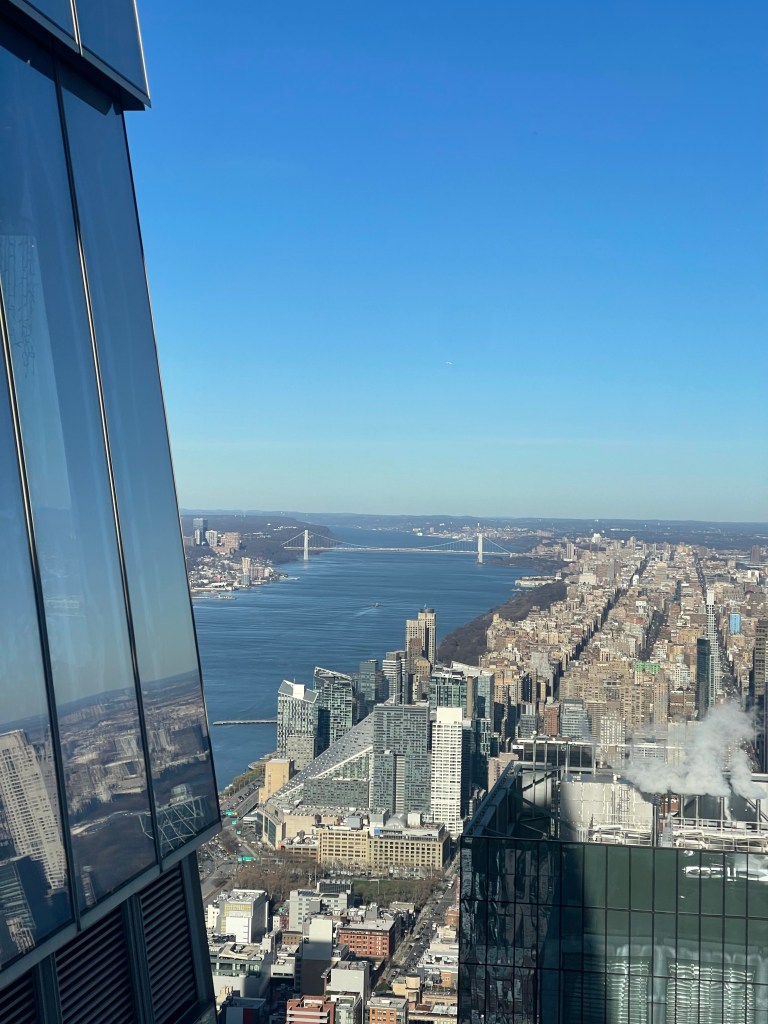
    The observation deck features epic views of the Manhattan skyline, the Hudson River and New Jersey beyond, Long Island Sound and most of the famous sites you’d think of when you think of New York: The Statue of Liberty, The Brooklyn Bridge, the Empire State Building, The George Washington Bridge, the Verrazzano-Narrows Bridge, the Freedom Tower and Chrysler Building are all visible on a clear day. If you time your visit right, you have a great view for sunset. It’s a breathtaking spot, and it’s clearly become very popular as a destination all its own.

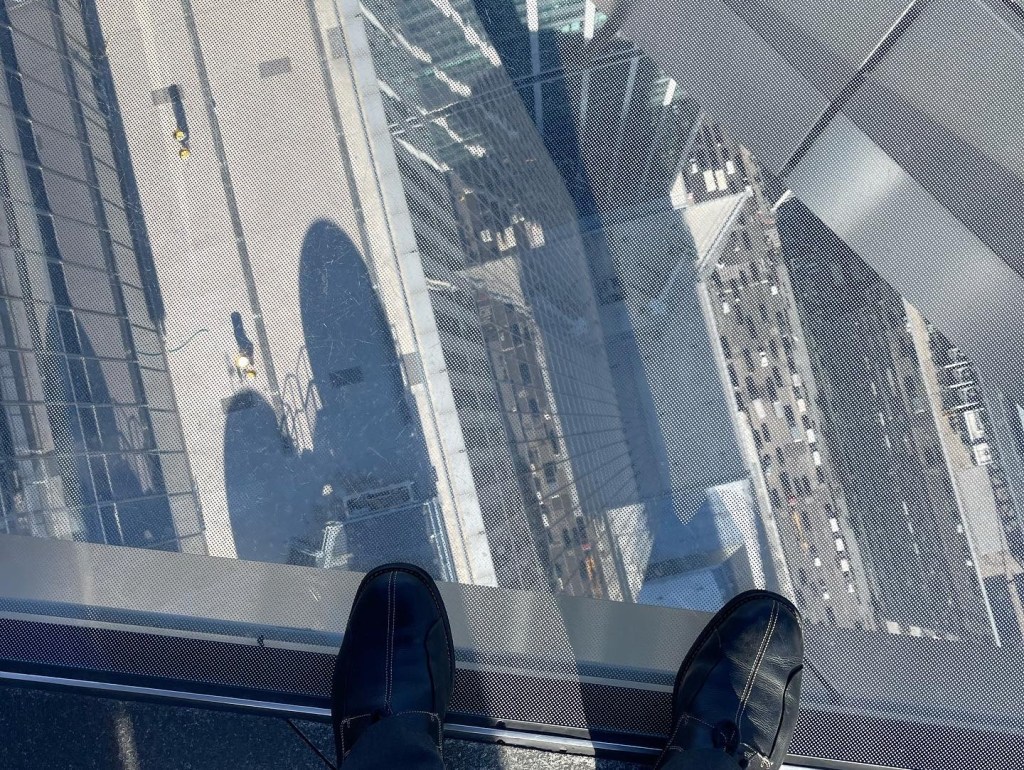
    Frankly, if you’re not afraid of heights there is still a moment that gives you pause when you visit. That would be the moment you step out onto the glass floor and look down at the traffic 1131 feet below you. I passed this particular test, but balked when someone told me to jump up and down on the floor. There are a list of things that one shouldn’t do in life, and near the top is tempting fate.

    Also available to fate tempters are the 2+ inch thick glass panels that lean outward from the deck, giving you the opportunity to literally lean out over the edge if you’re inclined to do so. For all the people visiting at the time I was there, there weren’t a lot of people leaning on the glass. Self-preservation is indeed a powerful instinct.

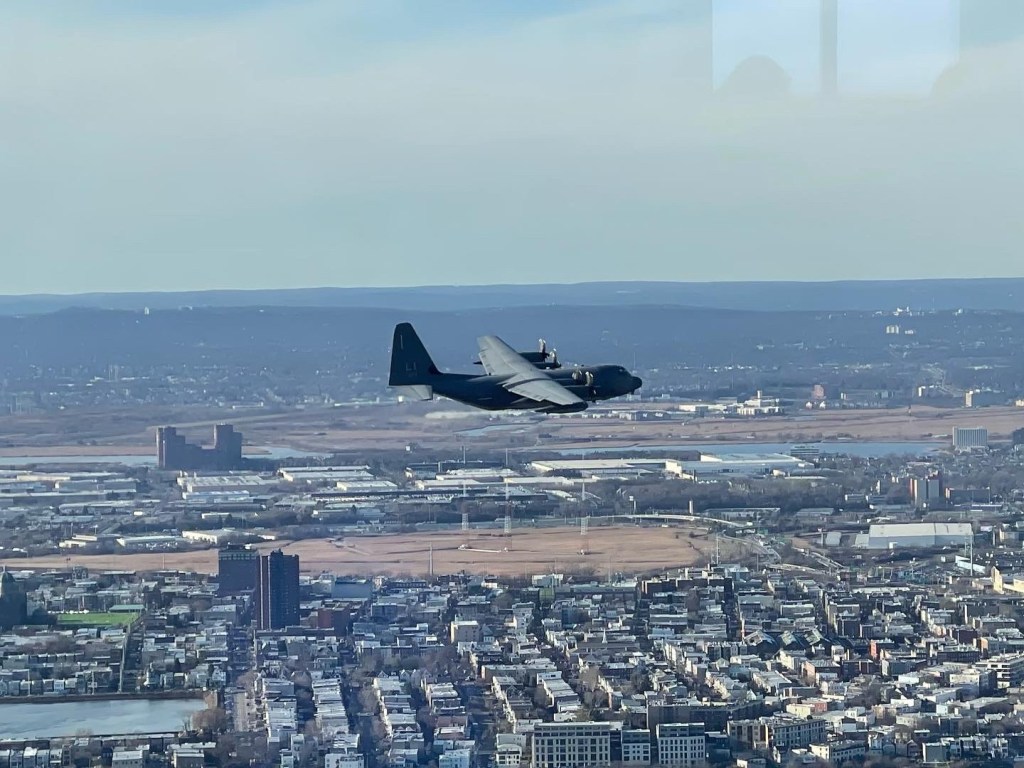
    There is a stepped seating area that climbs up even higher, if you want to sit for awhile and linger with the extraordinary views. When you’ve been to New York City many times, and have spent hours of your lifetime navigating the roads of the Metro New York area, it’s fascinating to see everything from so high up. A glance and turn of the head to look from Sandy Hook, New Jersey to the George Washington Bridge might take you a second or two, or two or three hours to drive it. You feel like you’re flying in this way, and this feeling is amplified as you realize that many of the planes flying up the Hudson River are actually lower than you.

    If you go, try to time it to be there for sunset on a calm day. Have lunch at one of the many restaurants at Hudson Yards and give yourself enough time to savor the views. It’s a trip you’ll remember. The Edge literally puts you out on the edge of a skyscraper, which isn’t as terrifying as that might sound. You almost forget where you are as you soak up the views around you. This is what you’ll remember when you return to earth.

  • Kalmar Nyckel

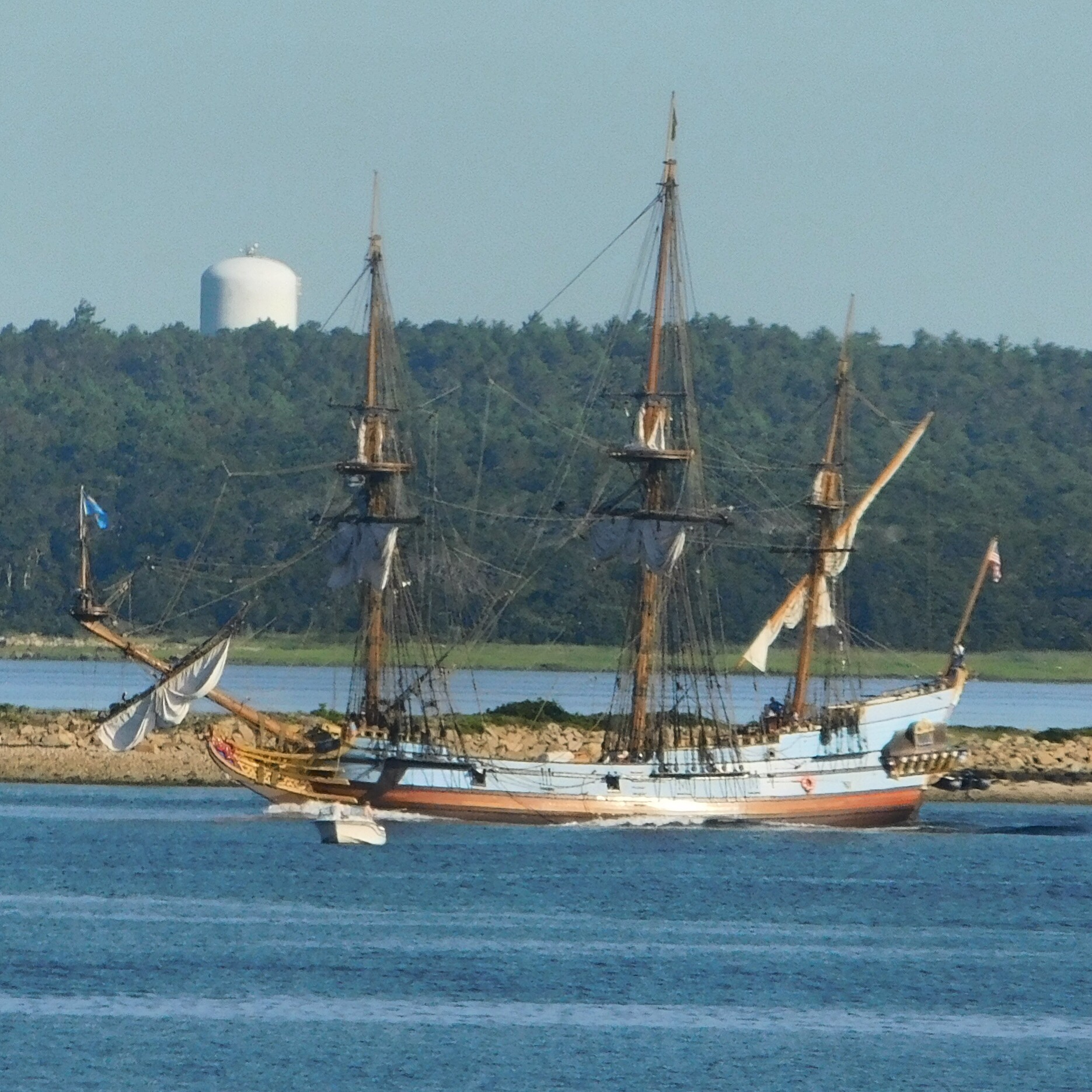
    The Mayflower is famous as the ship that brought the English Pilgrims to settle in Massachusetts Bay in 1620.  Less famous (in the northeast anyway) is the ship that brought Swedish settlers to the lower Delaware River (roughly where present-day Wilmington is) in 1638.  This began the wave of Dutch settlement in the region, largely focused from Philadelphia to Manhattan (New Amsterdam).  This morning I watched a replica of the Kalmar Nyckel motor down Buzzards Bay on her way to visit the Hudson River Maritime Museum in Kingston, New York.  That prompted me to look into the history of this ship I should have known a lot more about.  Sometimes you need the world to remind you of what you don’t know.

    The Kalmar Nyckel was built in Sweden in 1625 and named after the Swedish city Kalmar.  She had two moments in her history that should make the name more familiar than it is.  The Kalmar Nyckel’s most famous moment occurred in 1637, when Governor Peter Minuit negotiated the purchase of land from the sachems of the Delawares and Susquehannocks in the cabin of the Kalmar Nyckel on the shore of what is now Manhattan.  This transaction transferred ownership of the most expensive piece of land in North America from the Native American population to the Dutch, and lives in infamy as the most one-sided transaction ever.  The next year the Kalmar Nyckel sailed to Fort Christina (Wilmington, DE) with that first group of settlers, marking her as the first ship to bring Swedish settlers to America.

    The Kalmar Nyckel was sunk by the British Navy off the coast of Scotland in 1652, in the early stages of the First Anglo-Dutch War.  Her most famous passenger, Governor Peter Minuit, died off the coast of St. Christopher the same year that Kalmar Nickel was delivering settlers to Fort Christina in 1638, either the unlucky victim of a hurricane or a murder plot, depending on who’s account you believe.  Either way, the Kalmar Nyckel would outlive the governor by 14 years.