Tag: Mary Oliver

  • Reaching New Harbors

    “He is the best sailor who can steer within the fewest points of the wind, and extract a motive power out of the greatest obstacles.  Most begin to veer and tack as soon as the wind changes from aft, and as within the tropics it does not blow from all points of the compass, there are some harbors which they can never reach…
    The poet is no tender slip of fairy stock, who requires peculiar institutions and edicts for his defence, but the toughest son of earth and Heaven, and by his greater strength and endurance his fainting companions will recognize God in him.  It is the worshippers of beauty, after all, who have done the real pioneer work of the world…
    To say that God has given a man many and great talents, frequently means that he has brought his heavens down within reach of his hands.”
    – Henry David Thoreau, A Week on the Concord and Merrimack Rivers

    I wonder at the sheer volume of words that Thoreau crams into works like A Week on the Concord and Merrimack Rivers.  This is not poetry, works like this, but Thoreau’s work is a journey of a different kind, full of observations that make your head spin in wonder if you take the time to digest his prose.  Thoreau is best read in stillness, like great poetry, when you have the time to dance with his words in your mind.  Take this analogy of poetry as sailing with the fewest points of the wind.  A great poet can work with the smallest little puff of prose and go to harbors the rest of us can’t reach:

    “I
    held my breath
    as we do
    sometimes
    to stop time
    when something wonderful
    has touched us”
    – Mary Oliver, Snow Geese

    As with watching a great sailor and learning from the way they set the sails as the read the tell tales and scan the horizon, reading great poetry instructs and inspires.  It’s pulling the heavens down within reach of our hands.  Thoreau finds his way to brilliance often in his work, he just takes a long time to get there.  Reading Thoreau requires sifting.  Reading Oliver you see that she’s already done the sifting for the reader; Whittled down to the essence, what’s left is something wonderful.

    When I write I tend towards Thoreau-level volume.  I’m working on setting the sail a bit closer to the wind.  To dance a little closer to the essential truth.  There are harbors I’d like to visit still.

  • Writing: Wrestling With The Angel

    “The most regretful people on earth are those who felt the call to creative work, who felt their own creative power restive and uprising, and gave to it neither power nor time.” – Mary Oliver

    You know those moments when you lie there knowing you’re going to be creaky and sore even before you get out of bed? That was me after a day of bathroom renovation work. Being tall, laying tile seems especially tough on the body. But hopefully worth it in the end. But this morning was the sore all over shuffle, and I quietly got myself hydrated and caffeinated as a nod to yesterday before focusing on today’s work. Monday. Lot to do this week. Lot to do today. But first the morning routine, more important than ever when you feel like a panini in a press.

    Writing every day has its rewards, but also it’s price. Time mostly, but also focus. There are mornings when I have a lot to do in the rest of my life and the last thing I want to do is write. But I write anyway to keep the streak alive and find once I’ve settled my mind to it the writing flows easily. So I sit here writing with the cat perched over my shoulder, tail whipping my head prodding me to pay attention, coffee cooling within reach, clock ticking in my head and so much to say. The writing flows despite the cat, despite the clock, despite the soreness. I’m giving power to the muse; I’ve committed to the ride.

    Blogging is a different form of writing than other writing, and I know I’m stalling on the project I have in my mind. I’ve developed the consistent effort of publishing every day, but there’s more to do. The muse laughs at me and says you’re not fully committed, just look at the schedule you’ve built for yourself around work and family and bathroom renovations! Come back to me when you’re serious about that writing project and then we’ll dance. And I nod my head, knowing the truth is out. The blogging continues, the project doesn’t, the other things in life tap on my shoulder saying time for us. And I write faster, knowing this dance is almost over for the day.

    Mary Oliver spotlighted the commitment needed to the craft:

    “He who does not crave that roofless place eternity should stay at home. Such a person is perfectly worthy, and useful, and even beautiful, but is not an artist…

    The working, concentrating artist is an adult who refuses interruption from himself, who remains absorbed and energized in and by the work—who is thus responsible to the work.

    The poem gets written. I have wrestled with the angel and I am stained with light and I have no shame. Neither do I have guilt.” – Mary Oliver, Upstream, Selected Essays

    There it is; guilt. You either wrestle with the angel or you open the door to the rest of life to come in. It might seem like you’re all dancing together, but the muse likes to dance with you alone on the floor or not at all. I nod my regrets, say goodbye for now and welcome the Monday crowd. May we dance a bit longer next time?

  • French Lessons

    I’m currently learning French using Duolingo. I’ve dabbled in the language before, but dabbled is the key word: never fully committing to learning French… until now. Novice level? Oui. I’m 49 days into a streak of Duolingo French lessons, trying to spend a minimum of 20 minutes on it every day. Sure, I won’t be on the French lecture circuit anytime soon, but those 20 minutes add up over time (100 minutes or 16+ hours) and I can see progress. Repetition penetrates the dullest of minds, and slowly I see it making a difference. As with reading I catch the bug and wanted to jump into Spanish, Portuguese and German too, but I’m holding them all at bay and focusing on incremental improvement in French. You master nothing when you’re distracted by everything.

    Learning as an adult requires an open mind, patience with yourself, discipline and a good sense of humor. It’s become another part of my daily habit routine, admittedly not at the level of immersion but good enough to move forward in a busy stack of days. Duolingo is a better version of a game on your phone; some days I’m clicking right along getting everything right, some days it’s a struggle, but every day I learn something new. Perhaps I’ll book a trip to Quebec City or Paris as both incentive and reward for sticking with it if I start to slow my pace, but for now 20 minutes a day seems to be moving me along the path to fluency à la vitesse d’un escargot.

    I read the book Atomic Habits just over a year ago, and it’s remained hugely influential for me. Habit formation is either conscious or unconscious, but we all have them. I’ve removed some bad habits, unfortunately kept a few I need to separate myself from, and added some great habits that offer tremendous upside to my life. I’d count my Duolingo sessions as a great habit addition, just as reading more and writing every day have been. Novice level for sure, but I’m keeping the streak alive and we’ll see how it goes. French, un pas après l’autre….

    “L’attention est le début de la dévotion (Attention is the beginning of devotion.)” – Mary Oliver

  • Something More

    “…I don’t believe

    only to the edge
    of what my eyes actually see
    in the kindness of the morning,
    do you?

    And my life,
    which is my body surely,
    is also something more—
    isn’t yours?”
    – Mary Oliver, from The Pinewoods

    Reading this, I thought of the familiar analogy of a stone dropped in a still pond and the ripples it creates. We aren’t our bodies but a sum of the actions and interactions we have with it over our time in it. The more we learn, the more we offer to the world, the bigger our ripple.  I think of people in my own life who offer a pretty large ripple, and I hope I’m doing the same. Mary Oliver offered an example of a tsunami with her work, and this excerpt from The Pinewoods demonstrates her keen awareness of her own something more.

    I think of living a larger life as well.  Something more involves more, and more meaningful, contribution over time. Acquired skills and knowledge enable a greater contribution.  Something more also means showing up and doing work that matters.  It’s the unseen, uncredited things you do for your family, friends or complete strangers that make a small or sometimes significant difference.  And it’s sacrificing the immediate gratification for the long term vision in daily actions.  What is your contribution?  What are you offering the world in this moment?  And how can you improve today?  I ask myself these questions every day, and sometimes I have the answer readily at hand.  Other days it’s more evasive.  But I do believe being present is a large part of the answer.

    My life, which is my body surely, is also something more – isn’t yours?  I’m watching people I care about age in different ways.  The body aging is a natural, if not always welcome, condition of being alive longer.  Something more when your older seems to be either left in your legacy of previous contributions or in your ongoing contribution.  As long as the mind is sharp, there’s no reason for contribution to stop.  If Stephen Hawking can leave such an incredible wave across the pond for centuries after learning he had a slow moving form of Lou Gehrig’s disease, then why shouldn’t someone who has full speech and much better, if slower than it once was, mobility not contribute as well?  I’m not elderly yet, but I’ll be damned if I just sit in the corner watching Wheel of Fortune when I get there.  I’ll be moving at a modified version of full speed as long as the mind and body allow, and if the body doesn’t allow, then my writing might accelerate even more.

    Don’t believe only to the edge of what your eyes actually see.

  • Fresh Snow

    Let us hope

    it will always be like this,
    each of us going on
    in our inexplicable ways
    building the universe.”

    – Mary Oliver, Song of the Builders

    After warm temperatures melted most of the snow left over from 2019 and the beginning of this month, we’re being dusted with fresh snow this morning. It’s a reset on winter after unseasonably warm weather, which seems appropriate for me as I do my own pivot in strategy after meetings in New Jersey. We’ve finally, blessedly, put 2019 behind us, and look ahead to what needs to happen now.

    People focus on New Year’s Day as a natural pivot point, but really it’s just a change to a new calendar. Pivoting is a mental game – you know when you’re ready to make changes. For me the pivot happens when I’ve digested all available information, processed strategy and set a course for myself. All of the peaks and valleys of last year fade into institutional memory, or maybe muscle memory, and the new climb begins in earnest.  The question recently has been what am I building?, and the last few days have clarified that for me.  I can look back on 2019 proud of what I accomplished, but frustrated with what I didn’t.  Or I can shove it aside and focus on what I’m doing today and what needs to happen next.  The choice seems obvious.

    This morning, now, it’s time to put aside the appreciation for the symbolic change the snow brings. It serves another purpose in reminding me of the urgency of the task at hand.  It’s time to stop reflecting and thinking and planning.  Time to pull on the boots and gloves and go clear the driveway.  My version of the cricket moving grains of sand and admittedly a small first step in the long journey ahead.  But you’ve got to start somewhere, and this is as good a place as any.  The snow isn’t going to move itself.

  • Attention to Detail

    The funny thing about the first few days of a New Year is that I catch myself looking forward quite often.  There’s nothing wrong with looking forward, just as there’s nothing wrong with looking back towards where you’ve been, as long as you’re grounded in the present.  One of the things I love about Mary Oliver poems is her focus on the things in daily life that you might miss if you’re not paying attention.  Shell fragments on the beach become a story in a poem that makes me think of a walk on the beach in a different way.  The poet, teaching us how to see:

    “I go down to the edge of the sea.
    How everything shines in the morning light!
    The cusp of the whelk,
    the broken cupboard of the clam,
    the opened, blue mussels,
    moon snails, pale pink and barnacle scarred—
    and nothing at all whole or shut, but tattered, split,
    dropped by the gulls onto the gray rocks and all the
     moisture gone.
    It’s like a schoolhouse
    of little words,
    thousands of words.
    First you figure out what each one means by itself,
    the jingle, the periwinkle, the scallop
    full of moonlight.

    Then you begin, slowly, to read the whole story.”
    – Mary Oliver, Breakage

    The other day while leaving Cape Cod I was so caught up in getting things packed up to get to work that I missed an opportunity to go to the dump.  Now don’t get me wrong, going to the dump in and of itself is not my favorite activity.  But going to the dump with my favorite Navy pilot, well, that’s a different story.  But I was so focused on checking boxes and getting tasks done that I let him go off to bring the trash to the transfer station on his own, missing the chance to spend 30 minutes talking about nothing and everything.  Moments like that are available if you pay attention, and slip away when you don’t.  I’ll regret the lost opportunity, and have already forgotten what was so important for me to get done that I passed it up.

    We’re all a work in progress, sometimes things just fall into place and we’re focused on the things that matter most, and sometimes we’re looking the wrong way when the magic moment happens.  All we can do is keep chipping away at it, one small bit at a time.  I know I’m a much better human than I was ten years ago, and better still than I was twenty years ago.  Incremental progress isn’t as stunning as immediate transformation, but the Ebenezer Scrooge kind of overnight transformation isn’t the way most change happens.

    “Every action you take is a vote for the type of person you wish to become.” – James Clear

    So I keep taking action, one step forward and sometimes two steps back.  But in general I see incremental improvement.  Learn from the mistakes, change our action next time if lucky enough to be offered a similar opportunity in the future.  Do those things now that matter most.  That starts with getting out of your own head and paying attention.  Begin, slowly, to read the whole story.

  • Get To It

    Standing out on the jetty thirty feet out in Buzzards Bay earlier this morning looking for that familiar glimmer of sunrise, I realized that the show was going to be too far into the trees over land. It seems Earth’s obliquity, or axial tilt, is so far along that the sunrise is 30 degrees past where I’m used to seeing it. According to timeanddate.com, we’re at 23.43668° or 23°26’12.0″ today. Numbers really, until you see how far over the sunrise is or how short the days are. And let’s face it, the days are short in the Northern Hemisphere on January 1.

    All of this axial tilt stuff aside, it’s a new day, a new year, and a new decade. What will we make of it? Improvement seems to be the objective. Better choices in how we spend our time. What we eat, how much we move, where we go and what we produce. In short, who we become. That makes this morning like every other morning in the question that comes to mind, the question Mary Oliver asked so eloquently:

    “Tell me, what is it you plan to do

    With your one wild and precious life?”

    We think of New Year’s Day as a beginning, but it’s really a continuation of our journey. A bit like that crest on the trail where you pause for a rest and some water, to take a look around and a glance at the map to see where you are and where you’re going next. So where are you? Where are you going next? There’s no telling the future, really, but we can get back up and start climbing again. And that’s my plan. To get back at it working on the person I want to become, one step at a time on this journey; this one wild and precious life. So let’s get to it.

  • Favorites From a Year of Reading

    This might go down as my favorite year of reading.  I made it a goal to read more the last two years, and the momentum from 2018 definitely carried over into 2019.  Reading inspired my travel to new places and offered side trips of meaning in places I’ve been many times before.  It kicked me in the backside with work, writing, exercise and diet, and it inspired me to be a better version of myself than I previously had been.  I’m still a work in progress, but aren’t we all?  In all I read 23 books cover-to-cover in 2019, and dabbled in chapters of a few more.  Here are my ten favorite books this year:

    Atomic Habits by James Clear was by far the most impactful book on self-improvement that I’ve read in many years.  Strongly recommend this if you’re looking to make meaningful changes in your life.  I’m going to re-read it again in January to get a jump-start on 2020.  Habits that are now part of my identity include reading, writing, walking and drinking water.  Habits that went by the wayside include daily burpees and drinking less.  2020 (every day really) offers a chance to reset on habits, with new possibilities with learning language(s) and a few notable work goals.

    The Gift by Hafiz is a stunningly beautiful collection of poems.  Why it took me until 2019 to find Hafiz I don’t know…  but I’m glad I got here.

    Dream Work by Mary Oliver is another collection of brilliant poetry that it took me way too long in life to discover.  Maybe Oliver’s passing this year put a spotlight on her work, or maybe the student was finally ready.  Either way I’m glad I’ve immersed myself in the world of Mary Oliver.

    To Shake the Sleeping Self: A Journey from Oregon to Patagonia by Jedidiah Jenkins is a travel book on the one hand, and a journey of self-discovery one the other as Jenkins wrestles with his religious upbringing and his sexual identity during an epic biking trip across North and South America.  The book reinforces my belief that most people are good while acknowledging some good fortune along the way.  As a bonus, Jenkins pointed me towards one Hafiz poem, Tim Ferriss pointed me towards another, and soon I was reading The Gift (above).

    Awareness by Anthony De Mello is not the kind of book I ever would have picked up, as it feels self-helpy and overly religious at first glance.  And it does have a healthy dose of both things, but this books is an incredible call to action for the self, and backed up with tremendous insight into human nature.  Another book I wish I’d read years ago that I’m glad I got to in 2019.

    How the Scots Invented the Modern World by Arthur Herman is a book I’ve had on the shelf for years that I finally got to in 2019.  Perhaps inspired by my then upcoming trip to Scotland, I burned through the book quickly, learning a lot about the Scottish people who made a massive impact on the world we live in today.  It also prompted me to add a few places to my trip that I might not otherwise have gone to.

    The Map Thief by Michael Blanding poured gasoline on my burning fascination with old maps, and fired me up in another way; as someone who is passionate about historical artifacts like maps and old books, and also in a career based on securing people and assets from criminals like Forbes Smiley, this book was highly relevant for me.

    The French and Indian War: Deciding the Fate of North America by Walter R. Borneman offered me more insight into the place I live than any history book in a long time.  The Northeast corner of North America is where most of this fighting took place, and I took the opportunity to visit many historically important sites in my travels that were inspired by this book.

    Benedict Arnold’s Navy: The Ragtag Fleet That Lost the Battle of Lake Champlain But Won the American Revolution by James L. Nelson is a look at the complex individual that is Benedict Arnold.  And it goes well beyond the Battle of Lake Champlain, with a detailed account of Arnold’s epic raid of Quebec through the wilderness of Maine.  The retreat from Quebec opened up the St Lawrence River to the British, which put Lake Champlain and Lake George in their sites as the critical water route to the Hudson River. Arnold’s fleet delayed the British just long enough to set up the victory at Saratoga (where Arnold played a critical role as well).  I followed this book by reading Valiant Ambition by Nathanial Philbrick, another excellent book with even more detail on complicated life of Benedict Arnold.  Benedict Arnold’s Navy inspired that read, so it gets the nod here in the top ten.

    The Daily Stoic: 366 Meditations on Wisdom, Perseverance, and the Art of Living by Ryan Holiday is, as the title indicates, meant to be read daily, one quick dose of stoic medicine at a time.  After immersing myself in Marcus Aurelius’ Meditations in 2018, I felt that The Daily Stoic would be a great way to add a little daily stoicism to my life.  And it became part of my morning routine, where I’d read this before other books.  I’ll continue this habit by re-reading The Daily Stoic one day at a time in 2020 and on into the future.

    So there you go, my top ten favorite reads in 2019.  I’m a better person for having read them all, and look forward to revisiting several of them again and again in the years to come.  I’m a better writer for having read them all (still a work in progress).  And there’s a big stack of exciting books to tackle waiting patiently beside them.  So here’s to some great reading in the year ahead!
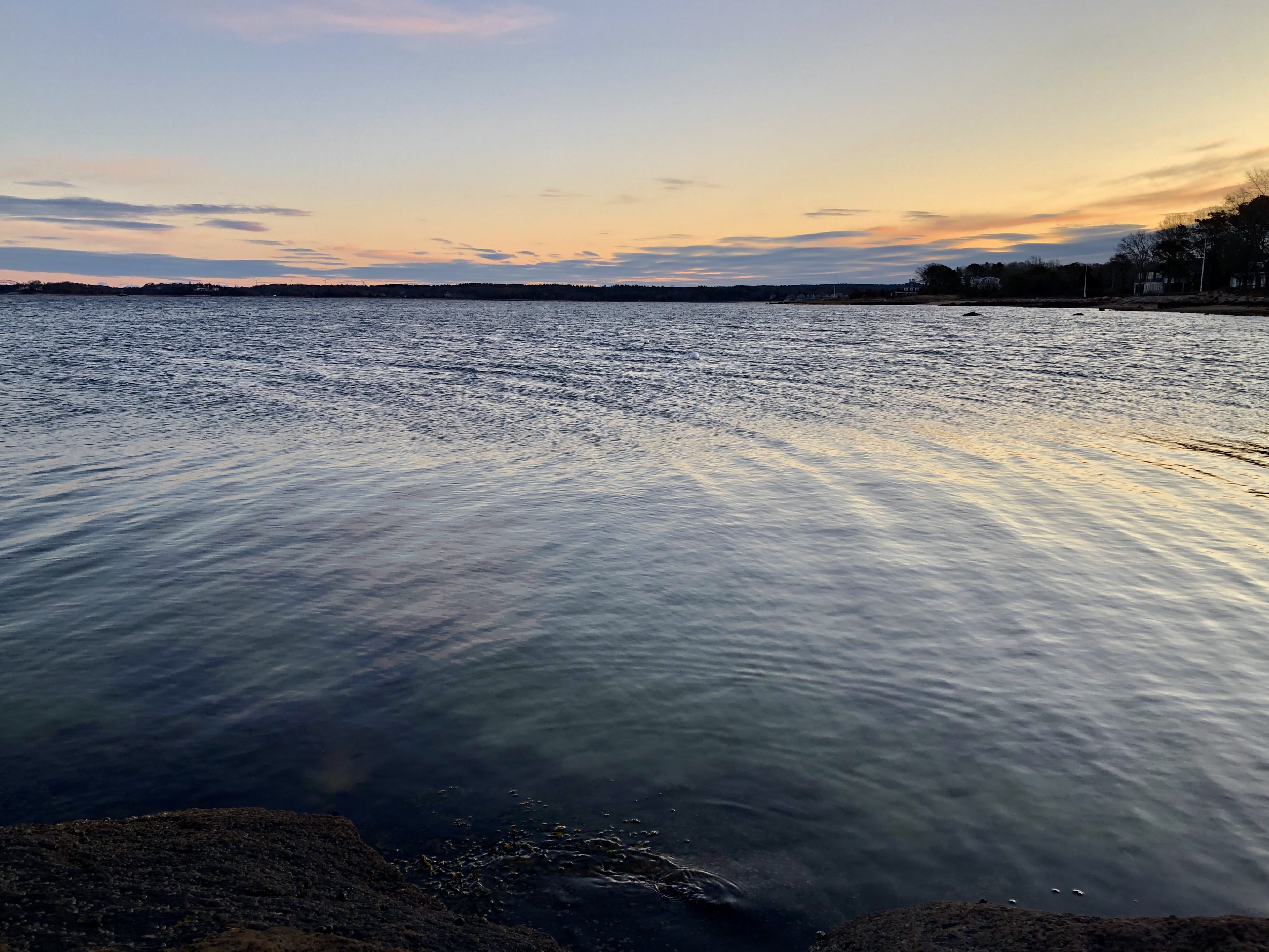
  • Every Morning, So Far, I’m Alive

    “Every morning I walk like this around
    the pond, thinking: if the doors of my heart
    ever close, I am as good as dead

    Every morning, so far, I’m alive.  And now
    the crows break off from the rest of the darkness
    and burst up into the sky – as though

    all night they had thought of what they would like
    their lives to be, and imagined
    their strong, thick wings.”
     – Mary Oliver, Landscape

    I’m doing Mary Oliver an injustice not putting the entire poem here, for the full meaning of a poem comes from reading the entirety, but then again I’m pointing emphatically towards all of her work, imploring you to read more.  When I first read this poem, Landscape, it was a gut punch for me.  I’ve returned to it a few times and these lines still grab me, for they perfectly capture the frame of mind I’m in in my own life.  It’s not lost on me that Mary Oliver passed away in 2019, and somewhere along the way that may have been how I found and keep returning to her work.

    2019 has been a profound year of growth and change for me, from stoicism to spirituality to poetry, immersive trips to some places close to home and some bucket list travel to places further away.  There’s friction in me that the writing has revealed, whether that’s mid-life nonsense or creeping unfinished business that gnaws at me, disrupting my day-to-day thoughts.  I’ve become a better person this year, but know there’s a long way to go still.  For as much as there is to be grateful for, Memento mori whispers in the wind, and I can hear it more than ever.  Remember, we all must die…  but every morning, so far, I’m alive.  What shall you do with this gift?  More, I say to myself, and this De Mello challenge comes to mind:

    “People don’t live, most of you, you don’t live, you’re just keeping the body alive.  That’s not life.” – Anthony De Mello

    This isn’t a call to leave all that you’ve built, but instead to be fully alive and aware of the world around you.  Break off from the rest of the darkness and be fully alive.  Thoreau didn’t leave Concord, he immersed himself in the world at Walden Pond but still maintained contact with the people in his life.  But his awareness grew in the stillness.

    “Be it life or death, we crave only reality.  If we are really dying, let us hear the rattle in our throats and feel cold in the extremities; if we are alive, let us go about our business…  Time is but the stream I go a-fishing in.  I drink at it; but while I drink I see the sandy bottom and detect how shallow it is.  Its thin current slides away, but eternity remains.” – Henry David Thoreau, Walden

    So I’m doing better at this awareness thing, and this making the most of the time you have thing, and I keep flapping the wings and fly when I can.  Life isn’t just stacking one adventure upon another one, real living is immersion and awareness.  Mary Oliver joined De Mello and Thoreau on the other side of life this year, this very year that I’ve made a few leaps forward in being more alive.  Maybe adding her voice to the chorus of whispers from those who have left us was the tipping point, or maybe I was already there.  But I’m grateful for her contribution nonetheless.

  • The Vivacious Many

    There’s more to do, surely, before we go. But enough is enough. Lists are checked and then confirmed again. Having set one bird to fly it’s time to fly again myself. And I’m ready.

    “Who can guess the impatience of stone longing to be ground down, to be part again of something livelier?” – Mary Oliver, The Moth, The Mountains, The Rivers

    I understand…  As much as I embrace the daily ritual of routine; the obligations of family and work and making sure the recycling is put neatly into a rolling bin on the edge of the road, I’m ready.  I’m ready for the speed dating bucket list items knocked off in succession, of conceding to wait in line for the obligatory went-there but then rewarding myself by lingering a bit longer in a few remote corners I’d never heard of before stumbling upon them. Shifting a car with my left hand.  Reflecting on alchemy in a distillery or two along the way.  Feeling the pulse of London and the weight of Edinburgh. The remote chance of an Aurora Borealis sighting in Skye or Speyside.  A pilgrimage to Abbey Road and Quiraing and Pennan. These precious few have been unchecked for way too long.

    And I suggest them to you also, that your spirit grow in curiosity, that your life be richer than it is, that you bow to the earth as you feel how it actually is, that we—so clever, and ambitious, and selfish, and unrestrained—are only one design of the moving, the vivacious many.” – Mary Oliver, The Moth, The Mountains, The Rivers

    The world calls.  Let other voices try to shout it down.  Tonight we fly.