Tag: Massachusetts

  • A Cape Cod Time Warp

    We slipped back into old Cape Cod for a quiet walk on the trails of Little Bay and Monks Park in Bourne, Massachusetts yesterday.  From a perspective of scale this park is of modest size, and the loop is quick, but from the perspective of getting you out of modern Cape Cod and back into a time before the place was built up it served us well.  A time capsule of sorts, onto shady paths of sand and scrub pine needles with surprising variations in elevation from sea level to 70 feet.  Not exactly the White Mountains, but a pleasant departure from the usual flat walks.

    The variation in flora matched the elevation changes, with sassafras, scrub pine, oak, highbush blueberries and a fair amount of poison ivy dominated the landscape, with salt marsh and views of the bay sprinkled in.  In some ways this feels like its always been this way.  But there are hints to other uses in the flora as well.  A pair of large beech trees guard the entrance to the park on Valley Bars Road, planted at some point maybe a hundred years ago.  A holly on the Loop Trail looks to be out of place in the landscape as well, perhaps planted by someone before this became conservation land in 1980, perhaps by someone taking a walk in the woods who wanted a home for a shrub.  The holly keeps her secret from me.

    All of this land is preserved because of the work of the Bourne Conservation Trust, which saw the explosion of development on the Cape in 1980 and decided to do something about it.  This land was once part of the estate of George Augustus Gardner, brother of Isabella Stuart Gardner, giving it a hint of Boston Brahmin.  This area was pretty exclusive back in the day, with President Grover Cleveland summering just up the road.  He bequeathed it to his daughter Olga Eliza, who married a man named George Howard Monks, which is where the name Monks Park comes from.  The family sold the land when Olga passed away, and thankfully it was purchased by the Bourne Conservation Trust.

    The Loop Trail is roughly 1.5 miles, with a few trails that cut straight across the land providing a shortcut of sorts.  If you were to walk this trail in late fall or winter the water views would be spectacular.  In summer the oak leaves obscure much of the view, making you earn it with a walk down steep grade to the beach from the trail, or simply walk under the railroad bridge from the parking lots.  Not the longest trail, but you could walk the loop a few times and try the side trails for variation if you wanted a longer walk.  This place is a gem hidden in plain site on busy Shore Road, and worth a visit.  A quiet connection to old Cape Cod, to the wealthy who acquired the land, and to those progressive people who saved it from ever being developed. Consider a donation to their future efforts, as Little Bay and Monks Park demonstrates just how much good a few people can do.

  • The Compass and the Torch

    “Not like the brazen giant of Greek fame,
    With conquering limbs astride from land to land;
    Here at our sea-washed, sunset gates shall stand
    A mighty woman with a torch, whose flame
    Is the imprisoned lightning, and her name
    Mother of Exiles. From her beacon-hand
    Glows world-wide welcome; her mild eyes command
    The air-bridged harbor that twin cities frame.

    “Keep, ancient lands, your storied pomp!” cries she
    With silent lips. “Give me your tired, your poor,
    Your huddled masses yearning to breathe free,
    The wretched refuse of your teeming shore.
    Send these, the homeless, tempest-tost to me,
    I lift my lamp beside the golden door!”
    – Emma Lazarus, The New Colossus 

    There’s an interesting connection between Emma Lazarus and Henry David Thoreau.  It seems that Emma visited Ralph Waldo Emerson at his home in Concord, Massachusetts in 1876, and met the poet William Ellery Channing while visiting.  Channing was a close friend of Thoreau, and apparently never really got over the death of Thoreau 14 years prior to Lazarus’ visit to Concord.  He proved to be a tough nut to crack, but succumbed to Lazarus as he learned she was an admirer of Thoreau’s.  Channing gave her a personal tour of Thoreau’s Concord, from Walden Pond to the place he was born, and when she was leaving Concord he gave her an incredible gift; Thoreau’s compass.  I admit, that’s a breathtaking gift to me, the compass of Henry David Thoreau, the surveyor of lands and spiritual guide to generations.

    Lazarus, like Thoreau, would live a short life, succumbing to what is believed to be lymphoma at the age of 38.  But like Thoreau she lives on in words of significance created during her short tenure on earth.  Her most famous poem is The New Colossus, which was written to raise funds for the base of the Statue of Liberty, and is forever associated with Lady Liberty.  I’ve read it many times, but find new meaning in it with each reading.

    A mighty woman with a torch, whose flame
    Is the imprisoned lightning, and her name
    Mother of Exiles.

    When you absorb The New Colossus, you recognize the folly of Trump, the Tea Party and the undercurrent of white privilege that’s always been there but is recoiling under an uncomfortable spotlight.  The Founding Fathers might have been complicated in how they lived their own lives, but the ideas behind the Declaration of Independence and the Constitution were bigger than their lives.  The century after would see a nation boiling inside, putting the words to the ultimate test again and again culminating in the Civil War and Reconstruction, the settlement of the continent and the sweeping aside of Native Americans, much of the wildlife and the very land itself.  Set against this was the rise of Transcendentalism, conservation and preservation.  And all the while the immigrants kept flooding in, fleeing desperation and seeking a new hope in America.  Lazarus represents the open arms of Lady Liberty and America, with no restriction in who might be welcomed when they arrive:

    Give me your tired, your poor,
    Your huddled masses yearning to breathe free

    I know people who despair at Trump and the rise of hatred in America.  I take no pleasure in the vile and ugly amongst us.  But I also take the long view, and recognize that American is shifting once again, and the undercurrent of hatred, racism and greed is unwelcome by the vast majority in this country.  I have faith in the process and believe we’ll come out of this year like no other better for having endured.  America is a land of hope, transcendentalism is founded on the belief in the inherent goodness of people.  Emma Lazarus corresponding with Ralph Waldo Emerson and eventually visiting him shows her own interest in his thoughts and opinions.  When I read The New Colossus I think of Thoreau’s compass that was handed to Lazarus by Channing and the direct link that created between them.  I wonder if she glanced at the compass while writing The New Colossus and found the right words to say.  Words that still show us the way forward, towards our true north as a country.

  • The Sound of Familiar

    “I hope you’re haunted by the music of my soul
    When I’m gone”
    – Greg Allman, My Only True Friend

    There is what feels like a thousand Black-capped Chickadees living in the holly bush next to my deck. They’re the state bird of both neighboring Massachusetts and Maine. New Hampshire, sitting between these two states, opted for the Purple Finch. Don’t tell that to this cast of characters – they don’t much care for state borders and such human concerns. The party never stops in that holly bush. But now and then a solo singer will fly up on a branch somewhere and sing that familiar “fee-bee” song and it transports me back to earlier days. That song’s been playing my entire life.

    One of the first things I notice when traveling is the ambiance is different. That’s obvious to everyone when you’re seeing the Eiffel Tower or the Grand Canyon, but close your eyes and listen past the sounds of humanity.. There’s a vibration to any place, a soundtrack playing in the background. Wind, water and trees offer their voice, and of course the local bird population sings their own greatest hits like a house band in a local pub. I’m a bit of a migratory bird myself, stuck in a cage at the moment. But I’ve learned to listen in new places and long for the exhilaration of immersion in faraway places.

    With fewer long drives I’m listening to fewer podcasts. I’m reading more, and I’ve grown tired of most of the interviewers I regularly listen to. Instead I favor silence more, or listen to WMVY streaming from Martha’s Vineyard. We all have our greatest hits playing on repeat, but I’ve always sought out new music. WMVY offers music you don’t hear on some corporate iHeart radio station. Respectfully, I prefer to find my own soundtrack. Someday, maybe, I’ll get back to that island. In the meantime I listen to the familiar voices and think about the ferry ride to Vineyard Haven and fried fish and beer at The Newes From America. Island sounds are different from mainland sounds, but for the life of me I’ve lost the sounds beyond the bustle of crowds and the crash of waves. I do need to get re-acquainted, picking up just where we left off like old friends seem to do years between seeing each other.

    The music of a place goes beyond the songs played on the local radio station or in the local pub, it includes the buzz of outboard engines or lawn mowers or street sweepers or chain saws off in the distance, of laughter and chatter coming out of open windows, and the birds occupying the local shrubs catching up on local gossip. The place doesn’t hope you’ll remember it, it just keeps on going as it always has, so long as humanity doesn’t bulldoze it all away anyway. I suppose Greg Allman was thinking about his legacy in the lyrics of this song. We all hope we’ll be remembered in our own way. I write and let it all fall out the way it may. Mostly it’s a familiar record I might return to someday. Like fond memories, revisited.

    I believe I’ve held onto this post long enough. I think it’s time to release this bird from its cage.

  • Dry Towns, Blue Laws and Border Crossings

    There was a time, within my time, when towns were well known for being wet towns or dry towns. I’m not talking about the amount of rainfall, but rather whether a town allowed alcohol sales or not. I went to a dry wedding once and marveled at the resentment in the room as people found out about it. Imagine moving to a dry town and realizing it afterwards? Like that wedding people would simply carry in what they’d like to drink. Rules are meant to be broken, aren’t they?

    New Hampshire only has one “dry” town out of a combined 259 total towns, cities and “unincorporated places”.  That town is Ellsworth, a small town just west of I-93 between the Lakes Region and the White Mountains.  There are only 83 residents in Ellsworth, and every one of them of drinking age have to go to another town to purchase alcohol.  I’m guessing there aren’t a lot of restaurants or stores selling alcohol in Ellsworth anyway, but if they have anything going for them it’s that quirky statistic that makes them unique in the state. Live Free or Die indeed.

    Neighboring Massachusetts by comparison has 8 dry towns. It used to be many more in my lifetime, but the trend is downward. Look, even the Puritans drank alcohol, and for generations it was safer than water in those early colonial years when life was hard and cholera was common. The Pilgrims brought beer across the pond and negotiated with Massasoit with aqua vitae. People went straight from the cold church to the warm tavern. Alcohol consumption was common right up to a century ago, when Prohibition crashed the party for the entire country. From 1920 until 1933 the United States was “dry”. But rules are made to be broken, and organized crime and small time bootleggers, rum-runners and illegal moonshine stills came into prominence immediately afterwards.

    Dry towns are bureaucracy in action, or simply inertia. Most dry towns today are in rural, sparsely populated places that don’t have restaurant and store owners campaigning for change. Dry towns are a curiosity now, 100 years after Prohibition, but also a legacy to the cultural and political winds that blew across the country then. Being a wet town kid, I remember going with my grandfather to the bar where he would proceed to drink many beers in tiny glasses. That bar was on the edge of town, and that edge was wet meeting dry. How many people crossed the border over the years to have a couple of drinks and zig-zagged home? Now that former dry town sells much more alcohol than that old wet town. Money talks, and there’s money in alcohol sales.

    Sunday’s were once a sacred day in Massachusetts, with Blue Laws that prohibited the sale of alcohol. So naturally residents drove across the border to states that didn’t have blue laws. New Hampshire’s southern border is dotted with old convenience stores that sold beer to eager Massachusetts residents on Sundays. New Hampshire built liquor stores on the highways for the quick and convenient sale of alcohol to out-of-staters. The Blue Laws are long gone, but “sin taxes” aren’t. People still stop to fill up their trunks.

    So Ellsworth, New Hampshire remains the lone holdout on the dry side of the law. I hope they always will be, as a reminder of where the country was 100 years ago. If we’ve learned anything over the last few years, it’s that the political winds can blow in strange ways, and a few people can impose their views upon the masses given the opportunity. But if Prohibition teaches us anything, it’s that Americans chafe at arbitrary rules and find ways around them. Our forefathers would recognize the debate either way, and marvel at the choices in the liquor stores.

  • Truck Day

    It hasn’t been a normal winter. Temperatures are milder, early winter snow has largely melted, ponds are at best unsafe to walk on. If Australia is burning, New England is experiencing one of the warmest winters on record. The world is unsettled… but small signs of familiar are out there if you look for them. Even if these too have an odd twist to them.

    Yesterday was Truck Day in Boston. That probably means nothing to most people in the world – and why would it? Truck Day is the first sign of spring on a normally cold and relentless winter, when snow storm after snow storm batters our very souls. And while the winter hasn’t spun into soul-crushing yet (there’s still time), Truck Day still highlights the rite of passage from thinking of winter to Hey! It’s almost Spring!

    Truck Day is when the Boston Red Sox roll their trucks full of baseballs and uniforms and God knows what from Fenway Park to Fort Myers, Florida to be unloaded and ready for Spring Training. It’s a light at the end of the tunnel, hope for better days ahead. Dreams of green in a brown, monochrome world. But even Truck Day feels different this year. The Red Sox fired their Manager in the midst of a cheating scandal, there’s talk of trading star players instead of excitement about the pitching rotation and the outfielders. No, it’s an unsettled winter on Causeway Street, which makes Truck Day just like everything else this winter; a bit off. Like waking up the first day you have symptoms of the flu off. And this winter, of all winters, comparing an event you normally look forward to to the flu isn’t the kind of light at the end of the tunnel that you want to see. It might just be that speeding train barreling towards you.

    But that’s pessimistic talk, and Truck Day, even with the chaos in the world and on the Red Sox, is a good sign. Maybe this will once again be their year. If they can find a Manager anyway. And then it hit me, this is how we used to think before the Red Sox started winning World Series. Jaded optimism disguised as pessimism after getting beaten down year-after-year by the Yankees or (going way back) the Orioles. Yeah, that’s the feeling I was trying to place, the feeling of dread hiding behind hope, as another season begins for The Olde Town Team. Buckle up everyone.

  • The Pilgrims and Pokanoket

    As you walk into the Mayflower Pub in London there’s a poster mounted high on the wall that shows the silhouettes of all the pilgrims and servants who sailed on the Mayflower to settle in America. The poster is divided in two, with the upper half showing the Pilgrims as they sailed from Europe. The lower half has the same image, but depicts those who perished before that first winter was over in gray. There’s a lot of gray… but by all rights it should have been all of them.

    The Pilgrims sailed for America too late in the season, without enough food, and sailed for the wrong place. Their charter had them settling at the mouth of the Hudson River, and instead they found themselves at the fist of Cape Cod. Turning south they almost wrecked on the treacherous shoals that have claimed thousands of ships since then. Turning back northward, the Captain of the Mayflower considered present-day Provincetown but eventually worked their way to the area that would become Plymouth., Massachusetts. Pilgrims were starting to die as freezing temperatures, tough living conditions aboard and malnutrition conspired against them. The Native American tribes were well aware of their presence and had already skirmished with them on Cape Cod at First Encounter Beach. A more sustained attack could easily have wiped them out.

    But the Pilgrims also had some lucky breaks that kept enough of them alive to establish a foothold in the region. They arrived at a place where just a few years earlier thousands of Native Americans lived. Contact with Europeans, most likely fishermen fishing the Gulf of Maine, triggered a plaque that killed thousands of people in the few years right before the Pilgrims arrived. So the native population was decimated and in no position to shove the Pilgrims back into the ocean they’d arrived on. They settled in an area with cleared fields and few adversaries. Truly fortunate to be there instead of landing in a place with a thriving and hostile Native American population.

    The other lucky break the Pilgrims caught was landing at a place where the local Sachem, Massasoit, saw strategic advantage in an alliance with the Pilgrims. The Pokanoket tribe Massasoit was Sachem of had been hit hard by the plaque that hit the tribes along the Gulf of Maine, and he was feeling pressure from the Narraganset tribe. An alliance with the Pilgrims gave him some strength in numbers that proved mutually beneficial for the short term. Ultimately this alliance would give the Pilgrims the momentum to survive and grow, but would destroy the Pokanoket in the next generation. An accident of geography brought the Pilgrims and Pokanoket together, time would drive them apart. But in the winter of 1620-1621, it would prove the difference in keeping more Pilgrims from turning into gray silhouettes on a poster 400 years later.

  • Walking the Line

    Walking this morning on Cape Cod I saw turkey tracks in the snow. The funny thing about turkey tracks is they look like arrows, pointing this way and that, as if to tell you to Go here! No, go there! Turkey walk in circles looking for food, and their tracks point you, if you tried to follow the “arrows”, towards the same madness. It’s a wonder of confusion and I smiled at the sight of it.

    I’m glad I walked early, because overnight snow didn’t stand a chance on the edge of Buzzards Bay, where the ocean moderates temperatures as easily as it moderates moods. Looking at the temperatures in New Hampshire, there was a 21 degree difference between the hills up north and Cape Cod. 100 miles and 200 feet of elevation make a big difference between order and chaos when you’re talking snow.

    If turkey tracks are scattered madness, the surf line offers a measure of predictability, for even on its own erratic path it still runs roughly parallel. The surf line finds its own path, curving and cutting this way and that based on the push of the swell, the contour of the sand and the strength of the breeze. The funny thing about the surf line is that it looks similar whether you’re up close on a quiet pre-dawn beach on Buzzards Bay or flying 1000 feet above the New Hampshire coast in a Piper Cub. Up close very different. Add the right distance and the mind tricks you.

    We’re incredibly lucky now, with these great leaps across time and space. Anything is possible, really, in our timelines in this time. Yesterday I woke up in Ithaca, New York, watched a college basketball game in Rhode Island, and went to sleep on Cape Cod. This morning I walked on the beach and this afternoon I was shoveling snow back in the hills of New Hampshire. I could easily be in London or California or some other place for breakfast tomorrow morning if time, money and responsibilities allowed. Quick leaps between here and there are possible, which makes the world a magical place.

    I run into a lot of people who march along a pretty straight line in their lives, not straying far from home, going to the same job every day, taking the same vacation to the same place for a week or two every year. I’ve tried that line, and it’s not me. Granted, you don’t want to be a turkey moving about in circles with no rhyme or reason to where you’re going. But what’s the fun in traveling a straight path from here to there? Don’t be a turkey, play along the surf line! Follow your own path as it meanders along, but with an eye towards the destination. You’ll still get from here to there, but the path will be a lot more interesting.

  • Coffeehouse Self

    The commute started early this morning, with an early meeting conspiring with noise in my head about getting on the other side of the rush hour traffic that would surely build with every minute. Nothing stresses my commuter self more than being late for an appointment with miles of traffic ahead of me. I don’t like commuter self all that much, and avoid his company when I can.

    Traffic going into Boston is a wonder, but not wonderful; starting much earlier than you’d think possible, lingers past when you’d expect it to end, then reverses direction almost immediately to wreak havoc on your soul when you head home. You either skate your lane, distract yourself with music and podcasts or you let it get to you. I’ve gotten better at letting it go, but it’s a weakness in my character and I feel commuter self creep back into the car more than I’d like. So I play the active avoidance game when I can, and podcast the heck out of the worst of it. I once turned down a great job with a big promotion and raise because I didn’t want to crush my soul with the two hour 40 mile commute. I don’t regret the decision.

    This morning I time-travelled to Boston, found a café and sit writing this blog while others are stop-and-going on the highways I just left. Coffeehouse music is playing, counteracting the effect of the caffeine and the adrenaline of hundreds of cars and trucks I spent the last hour with. My coffee sits steaming on a distressed wood table and The Lumineers and Jason Mraz are playing just loud enough that I can barely hear the diesel engines and honking horns out there. The regulars talk amongst themselves but the place is still full of empty. There was no logical reason to leave as early as I did, with 90 minutes of time to spare. But I like the company of coffeehouse self more than commuter self, and that was enough for me.

  • I Must Get Back To The Sea

    “The sea 
       isn’t a place
         but a fact, and
           a mystery”
    – Mary Oliver, The Waves

    It’s been less than two weeks since I’ve visited the ocean, and it feels like forever.  We’re deep into the holidays now, and the end of the quarter, the end of the year and the end of the decade.  There’s no time for the ocean right now, but on the other hand there’s no better time for the ocean.  I’m planning at least two trips to the ocean in the next week, for exercise and sanity and a bit of winter beach solitude.  I’m close enough to salt water that it’s not going to break either the time or financial banks.

    I noticed a lot of fresh water experiences in 2019, Lake Michigan, Lake Ontario and exploring a double-digit number of waterfalls in New York, New Hampshire, Connecticut and Scotland. I’m hoping 2020 brings even more opportunities to ponder the mysteries of the ocean.  I know I have a good head start teed up for New Year’s Day.  For today, I’m using this Mary Oliver quote as inspiration for a four of my favorite moments with salt water in 2019.  

    Camusdarach Beach: My bucket list beach, and I’m grateful I had the chance to check this box in 2019. Sure, it was a rainy November day, but it was still as beautiful as I’d hoped it would be. I’m already plotting a return.

    Plum Island: My go-to winter beach, close to home and blissfully isolated on a cold weekday. My lunchtime walk was my favorite long walk on a beach this year.

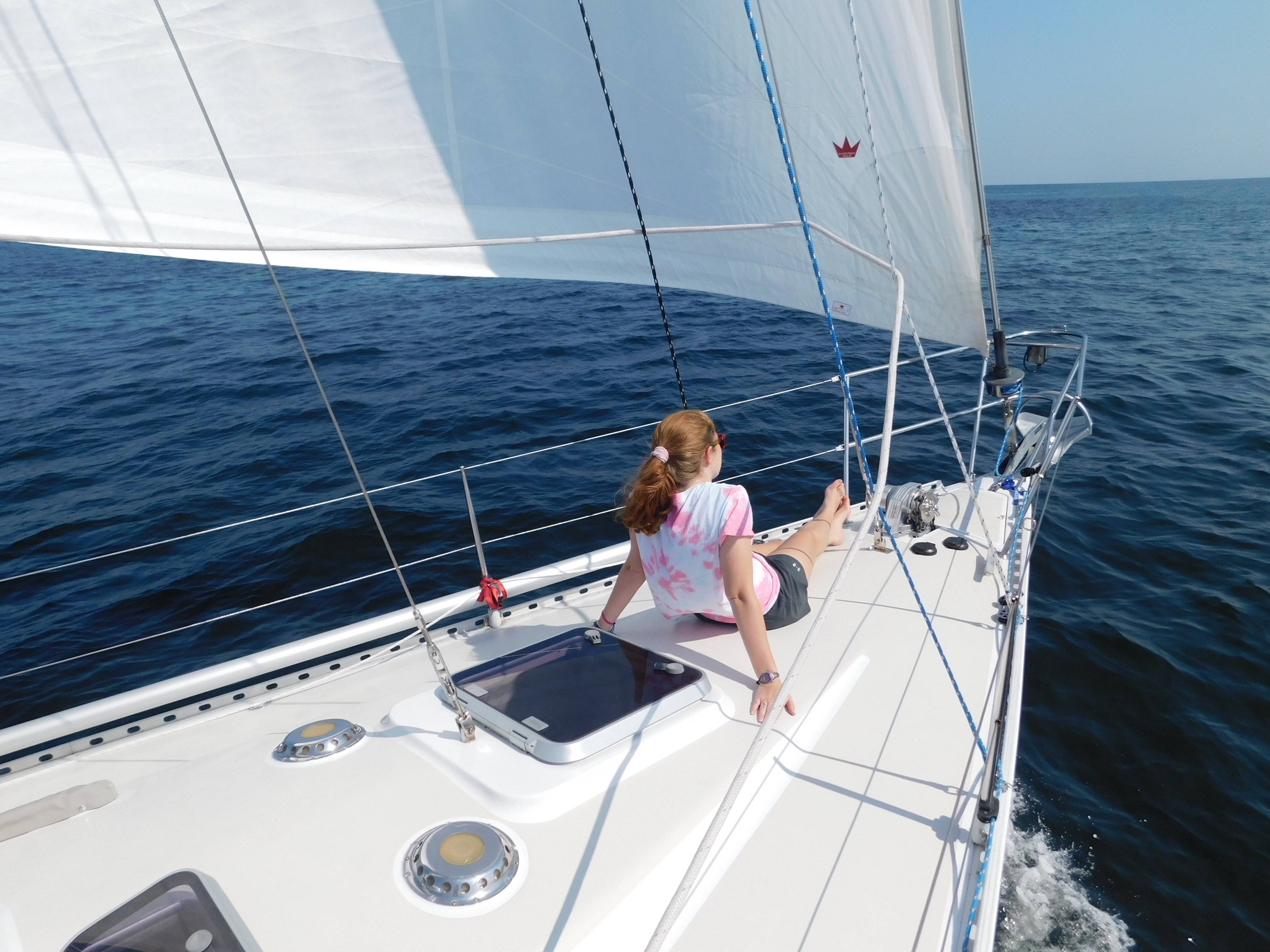
    Sailing on Fayaway: I shake my head thinking I only went sailing once this year, which was the fewest number of times on a sailboat I’ve had in years. I’m grateful for the crew of Fayaway for giving me the opportunity to sail with them. I’ll get out more in 2020, I promise myself.

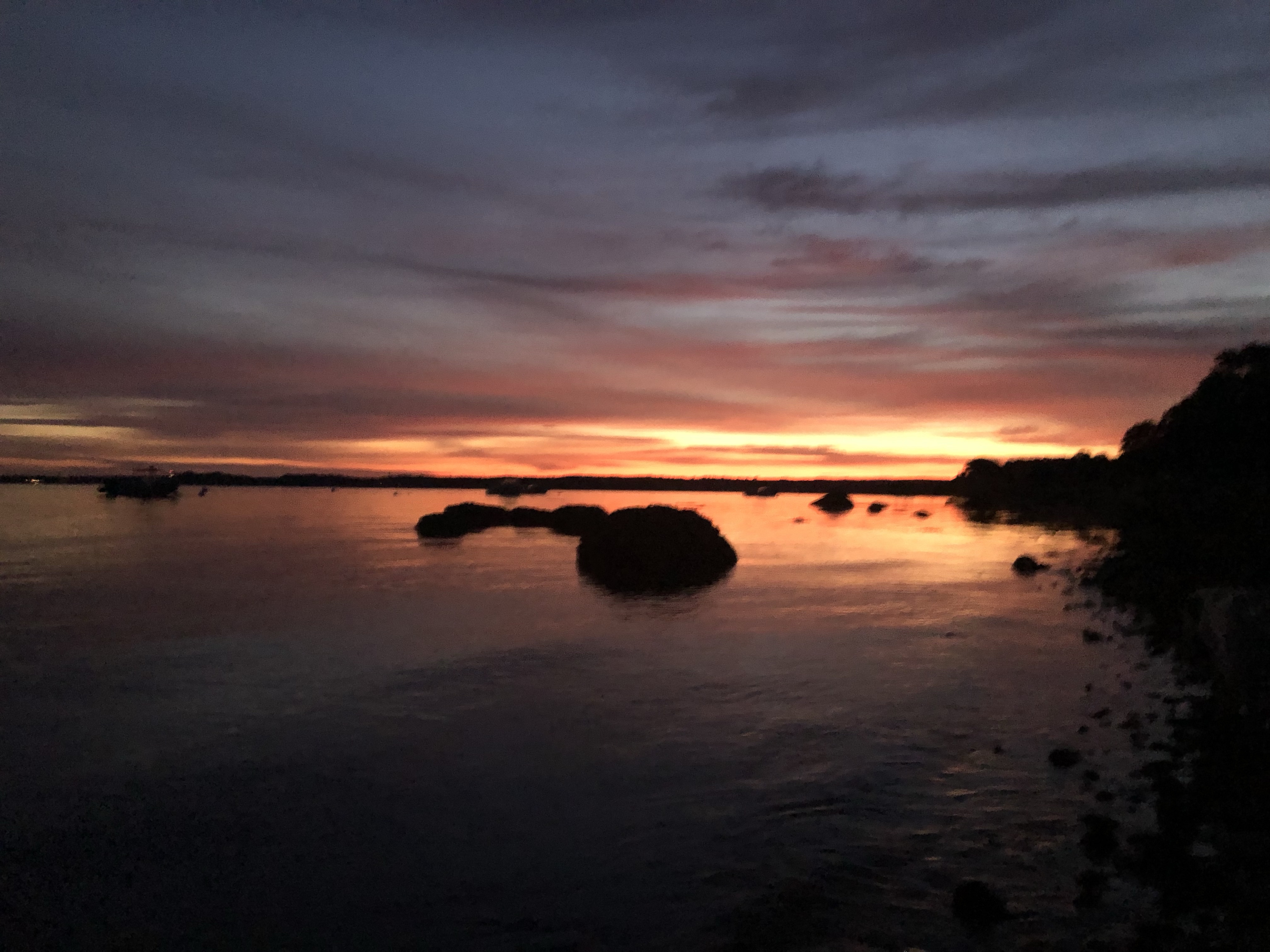
    Buzzards Bay: Home away from home. The sunsets are stunning, but I’m partial to the sunrises. Swimming in Buzzards Bay doesn’t offer surf action, but it makes up for it with warm, salty water you can float in forever. At least I wish sometimes it were forever. The last swim of the year is always bittersweet, and, like sailing, I always hope for more next year.

    We only have so many days, where do you prioritize the time you have? If I’ve learned anything in reviewing the year, it’s that I need to double down on my time with salt water. On the beach, on an oceanside trail, on a boat, or swimming in it, I must get back to the sea.

  • White As Snow

    (Reposting this from December 7 after it reverted to a draft for some reason)

    A few days ago I said let it snow, and 1200 miles of driving in it constantly across the middle and Southern Tier of New York and through Massachusetts and New Hampshire I regret not being more specific in my statement. Lake Effect snow made Upstate New York a snow globe, and bands of snow stayed with me all the way back. Slushy roads and slippery when wet caution cones mocked my dress shoes the entire week, and I deserved the mockery for leaving my boots and waterproof hiking shoes sitting in the car instead of on my feet. I know better but slipped and slid my way along anyway. Common sense did not prevail in footwear this week.

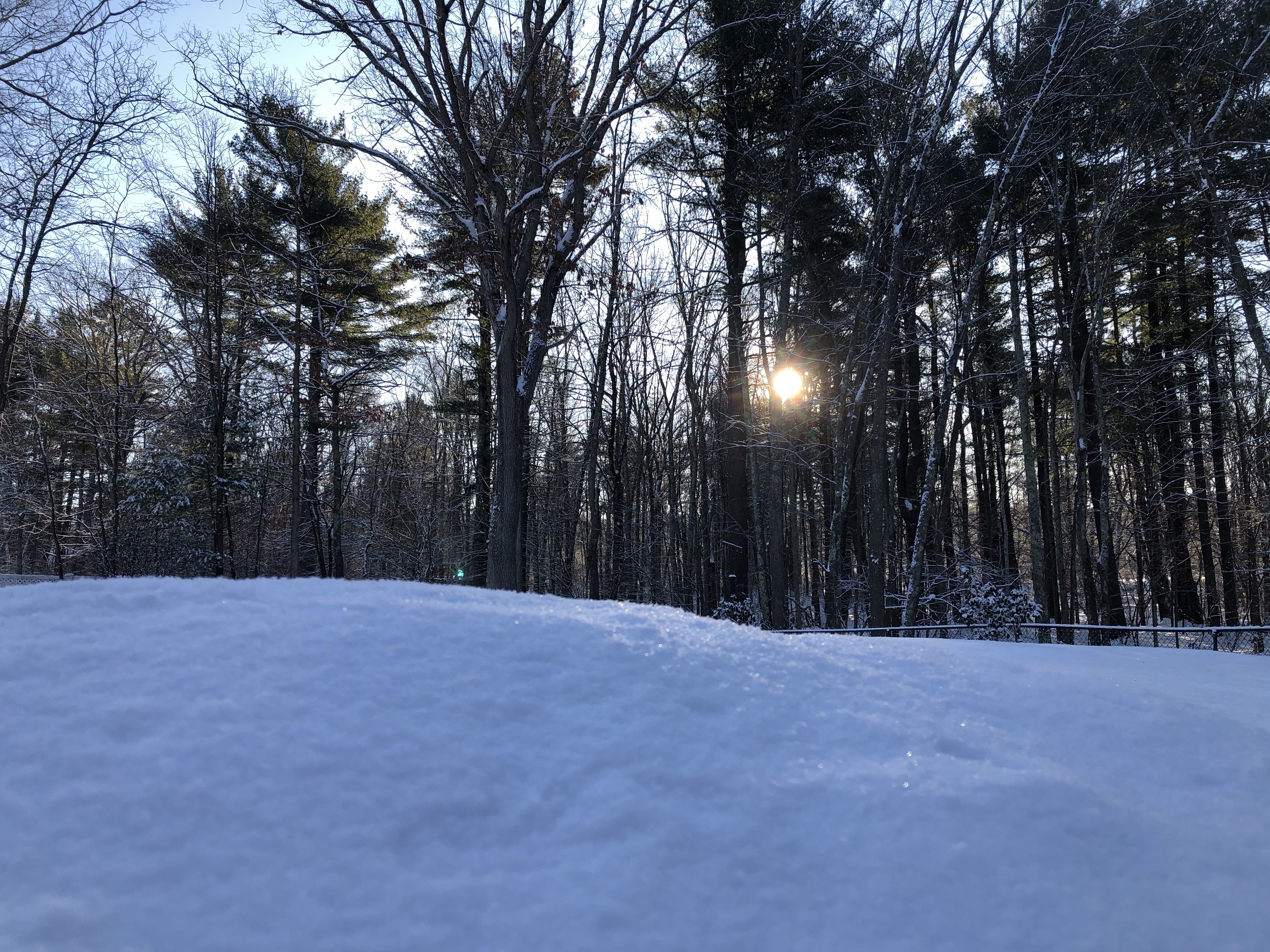
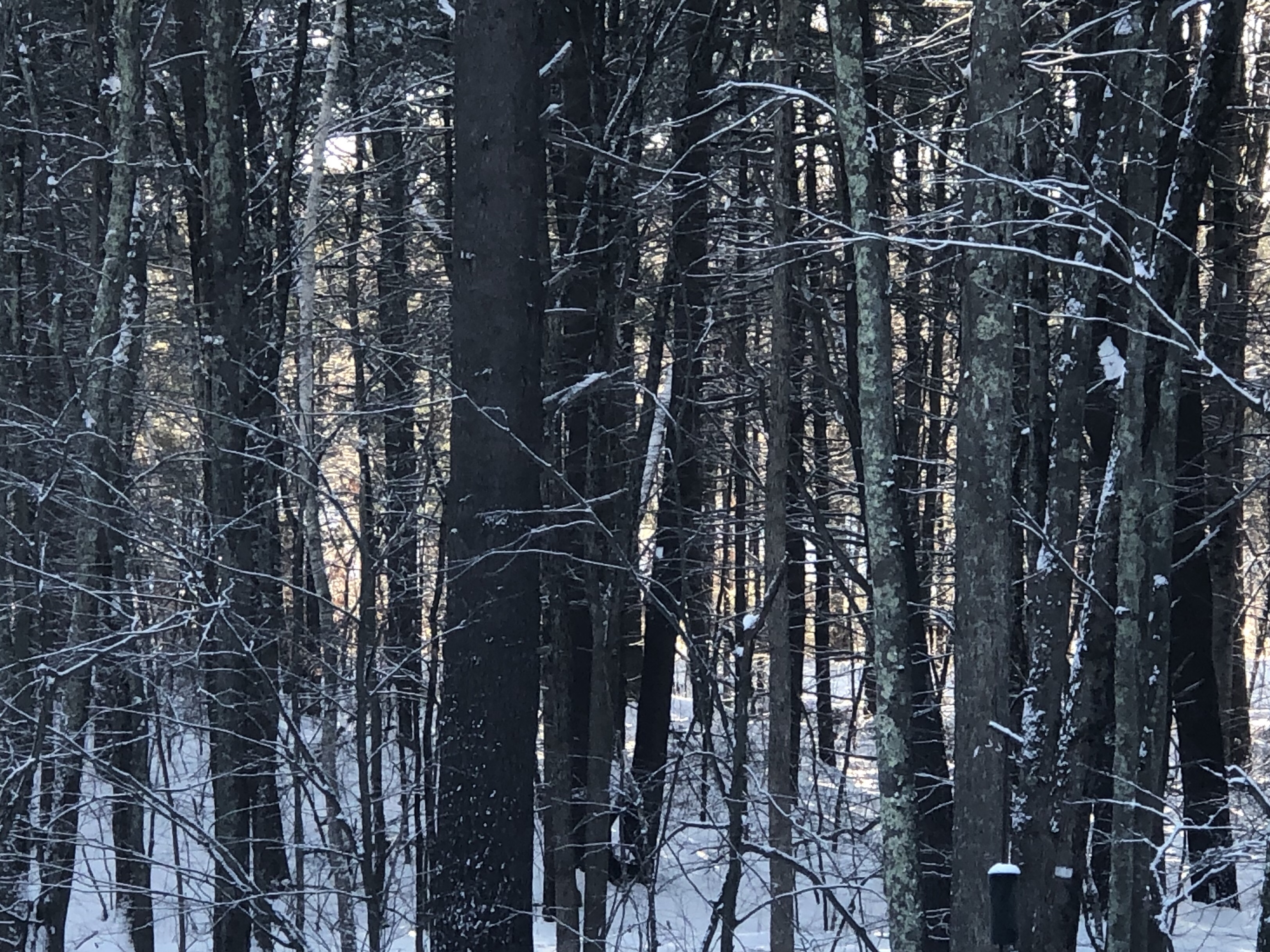
    Still, there’s nothing like fresh snow on a sunny morning, and I can finally pause long enough to appreciate it. It’s a stark background that pushes things that normally recede into the background forward. Hillsides of gray and black tree trunks rolled in waves alongside me for much of the week. Back home with the sun unmasked for the first time in a week, I watch the dance of illumination and shadow as sunbeams find their way through the woods with no leaves to block them as they explore. Puffs of snow drift of branches, stirred by the wind, mixing with rays of light and remind me the woods are never still, even after snowfall. Looking deeper into the woods squirrels scurry about, puffy gray tails bouncing all the while, in search of food hidden under the snow. Birds zip to the feeder and back to cover, always watchful for hawks and neighborhood cats. I wonder at the performance as my indoor cat snacks me with her tail, yearning to be free of the glass keeping her from the hunt.

    Those birds demand attention, and I count dozens moving in turns to the feeder. Food brings life to the stark backyard of winter, and it enlivens this cat’s tail as I write. Empty mug and stomach are looking for attention to, and this writing session comes to an end. The empty page soon filled with words, like tree trunks on a snowy hill, and I’m grateful for the inspiration.