Tag: New Hampshire

  • Savor the Salad

    “I was so busy making music that before I knew it the summer was gone.” — Aesop, The Ants & the Grasshopper

    I went into the garden to pick the first ripe tomato and found the bottom half was gone, a sign that a groundhog has tagged my garden as its buffet. I resented the pilferage (who doesn’t love the first tomato of summer?) and picked the next tomato that wasn’t quite ripe yet, that I may at least have that one. I’ve learned to tolerate and even coexist with the critters, but that doesn’t mean I’m giving up the entire crop to them.

    The thing to do in such moments is head to the local farm stand. I grow three tomato plants, they tell me they grow five thousand. And they’re having a good year for tomatoes this year, with plenty of heat and without the relentless rain we had last year. When the local farmers are happy with the weather, we celebrate with Caprese salad. The basil is my own, the tomatoes from the farm stand, the rest of the ingredients from a global supply chain. It takes a village to make a great salad.

    Early August in New Hampshire and it feels like summer will never end even as the days grow shorter and the Halloween candy is on the store shelves. Why? Because retail is always looking 3-6 months ahead of the rest of us. In summer I avoid box stores at all costs, that I may live in the moment. Our summers, like life itself, are so very short. Why be forever looking ahead when we may enjoy the harvest this day brings?

    We all must prepare for the future, as the ants in Aesop’s fable do, but we must also balance this forever preparing with the awareness and insight of carpe diem. We must seize the day for all it offers for us before it’s gone forever. Life is a balance of living in the present with all the lessons of the past to guide us and a hopeful eye towards a bountiful future.

    I don’t begrudge the groundhog for pilfering the first tomato of summer, but I made a point of getting the second before it too was gone. Summer harvests are fragile, fleeting things indeed. So savor the salad.

  • Savor the Circle

    “Do silly things. Foolishness is a great deal more vital and healthy than our straining and striving after a meaningful life.” ― Anton Chekhov, The Portable Chekhov

    I hit the 20 mile mark yesterday in combined mileage between cycling and walking. This may not seem all that impressive, but it was a busy and hot day and that milestone was very much in doubt for much of the day. I finished just after 10 PM, when I’m usually in bed reading. To celebrate I took a late night solo swim—just me and the stars and satellites in a dark pool of water on the edge of the woods. And I felt completely alive and present floating there.

    The older I get the less I seek meaning in everything I do. I’m simply enjoying it all. Washing dishes never felt so fulfilling. Dead-heading the flowers is meditative. Cleaning up after the pets? Not so delightful, but not something I avoid or resent as I’m doing it. It’s just part of the deal. Life is a series of chores and commitments we make to each other before we carve out a bit of time for ourselves to savor the circle we’ve surrounded ourselves with.

    The scale is telling me that I’m roughly the same character I was a month ago, but what does a scale know? I’m more fit, more active, seeing more and feeling the momentum of consistency. We know when we’re fully alive and when we’re fooling ourselves. Activity pays dividends beyond numbers on a scale.

    These are days we’ll remember. At least they will be if we place ourselves squarely in the moment and fill each with things that make us feel vital and healthy. As we move into the height of summer, what will we take from this time? The satisfying snip of a spent bloom? The smell of tomato vines and twine? Light shining in north-facing windows that rarely catch such beams but for the longest days of the year? Or bubbles running up your back as you rise to meet the July sky? The answer is to delight in it all.

  • A Sequence of Everything Wanted

    “Rivers know this: there is no hurry. We shall get there some day.” ― A.A. Milne, Winnie-the-Pooh

    Slow down you’re doing fine
    You can’t be everything you want to be before your time
    — Billy Joel, Vienna

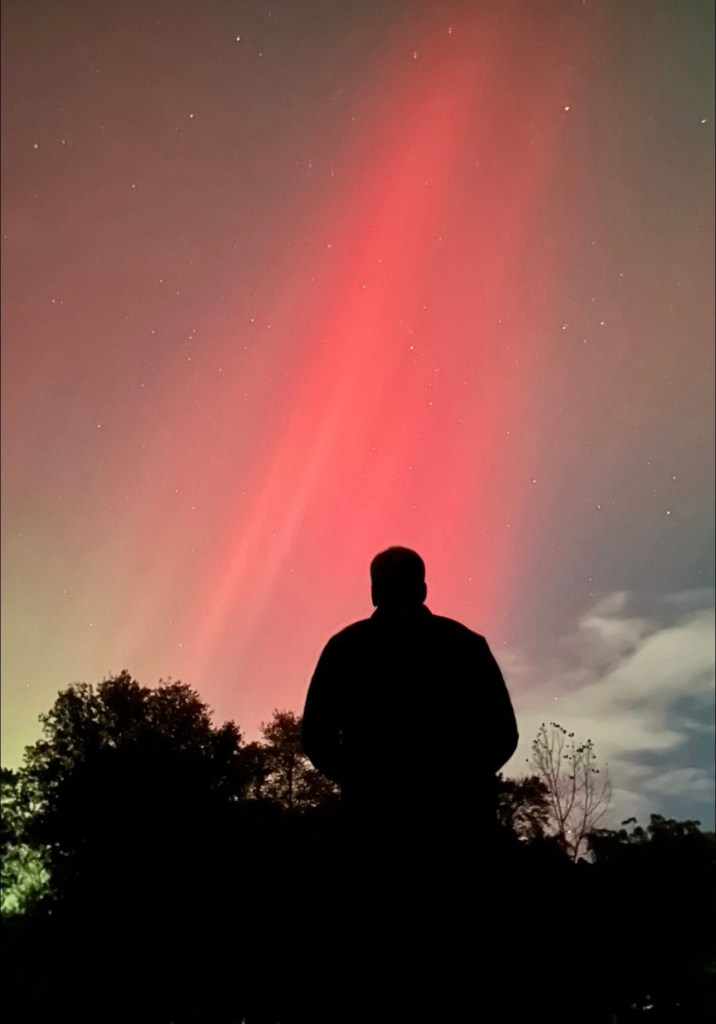
    In a dizzying turn of events, last night capped a sequence of things wanted for some time delightfully happening one after the other, from Rome to Athens to Sicily to Florence to… New Hampshire. Life is sometimes simply great timing, realized. To visit the Colosseum and the Sistine Chapel and the Acropolis and Mount Etna, to see Michelangelo’s La Pietà and David to bookend an epic trip and then return home to find the elusive Aurora Borealis dancing in my own backyard hours later is a sequence I’ll be processing for some time, thank you. This isn’t meant to be a brag about how lucky the last couple of weeks have been, rather a realization that patiently working towards something combined with a bit of good luck goes a long way in a lifetime. Amor fati.

    The thing is, I wear my impatience on my sleeve (and blog about it more often than I ought to). Some of us simply want to get right to everything as quickly as possible, knowing that time flies and we aren’t getting any younger. Sure, tempus fugit, but slow down—you’re doing fine… Vienna waits for you. Simply plot the steps, do the work, follow through and hope fortune smiles on you.

    Hope is a tricky word, and that’s where impatience comes in. Perhaps the better word is trust. We must trust the process when we build our systems. Work, marriage, fitness level, artistic contribution, social interactions, and yes, bucket list items are all lifestyle choices built on faith that doing this will lead to that. When it doesn’t arrive promptly we restless types get a bit impatient, so a reminder of all that’s come to pass helps now and then. Gratitude goes a long way.

    Life lessons are all around us, if we simply stop rushing about so much and focus on the journey. The biggest lesson is that the journey continues, and each milestone is simply a marker for where we’ve been and what we’ve seen and who we were at the time. What’s next matters too, doesn’t it? Our past is our foundation for the growth to come. We shall get there some day. For haven’t we thus far?

    Aurora Borealis, New Hampshire 10 May 2024
    Aurora Borealis, New Hampshire 10 May 2024
    Aurora Borealis, New Hampshire 10 May 2024
    Michelangelo’s La Madonna della Pietà
    Michelangelo’s David
  • A Moment with Eugene’s Birds

    Nay, I will; that’s flat:
    He said he would not ransom Mortimer;
    Forbad my tongue to speak of Mortimer; 555
    But I will find him when he lies asleep,
    And in his ear I’ll holla ‘Mortimer!’
    Nay,
    I’ll have a starling shall be taught to speak
    Nothing but ‘Mortimer,’ and give it him 560
    To keep his anger still in motion.
    — William Shakespeare, Henry IV, Part 1

    In 1890, a man named Eugene Schieffelin brought European starlings to the United States. According to The New York Times, his motive apparently was to have all the bird species mentioned by William Shakespeare in America. So I have Eugene and a single name drop by Shakespeare in Henry IV to thank for the mess that starlings leave in their wake when they come to the bird feeders in my backyard. We ought to be more careful introducing invasive species to places where they never existed, but when has common sense ever directed anything that humans do?

    You learn a lot about the local bird population when you put the right variety of food out for them. I lived in my home for almost twenty years before I saw bluebirds visit the feeders, largely inspired by putting food they’d actually eat in the feeders. From that point on I’ve had an abundance of bluebirds. The starlings were never invited to the party, but they’re masters at crashing it anyway. Perhaps that’s why they call them invasive.

    This winter I brought the feeders back close the house, that we may enjoy the view of wild birds just outside the window. I forget sometimes the mess that comes with feeders in the form of bird droppings and seed shells, but it’s the uninvited guests like starlings, squirrels and rodents that make me question my sanity. But the birds are worth it. Even the squirrels are entertaining, and I give them just enough of a head start before I let the dog out that they stand a chance of escaping (there are some messes I don’t want to deal with).

    Winter isn’t what it once was, but we do have snow again. The bird feeders become very popular when the ground is coated in snow. The buffet is open for business, and as the movie line goes, build it and they will come. And really, that’s the point. When I go into the kitchen for a cup of coffee or tea, I look out in the yard and see life. Life in turns inspires me to be more lively myself, and the work benefits from my time with the birds. I suppose that’s worth a bit of mess from a couple of uninvited guests.

  • Let Us Play

    “Health lies in action, and so it graces youth. To be busy is the secret of grace, and half the secret of content. Let us ask the gods not for possessions, but for things to do; happiness is in making things rather than in consuming them. In Utopia, said Thoreau, each would build his own home; and then song would come back to the heart of man, as it comes to the bird when it builds its nest. If we cannot build our homes, we can at least walk and throw and run; and we should never be so old as merely to watch games instead of playing them. Let us play is as good as Let us pray, and the results are more assured.” — Will Durant, Fallen Leaves

    Health lies in action. We know the drill: sitting is the new smoking. We must get up and move, and not just move, but delight in moving. To play is to live. Life is full enough of tedious moments, don’t you think? Our exercise ought to be fun.

    For me walking is a more fun form of exercise than just about anything save paddling or rowing. Walking in places that inspire and awe is wondrous, and ought to be a regular part of our routine, but sometimes a simple walk around the block is enough to reset the soul and stir the blood. Sometimes we focus so much on the spectacular or the glory of the summit that we forget the benefits of the activity itself. We must move, and glory in the act itself.

    This past weekend I’d contemplated a hike. Knock off a couple of summits that were particularly evasive for me on the list for one reason or another. When you hear the call of the wild you ought to listen, but sometimes that call is a siren. It was treacherously cold in the mountains, the kind of cold that will ruin a perfectly good day for the prepared, or kill the unprepared. Not exactly the play I was craving: lists be damned. So instead of a 4000 footer I opted for sea level and a January beach walk. Also bitingly cold, but distinctly more accessible. It also offered an easy opportunity to simply bail out and get back into a warm car (or bar) if needed.

    My bride and our pup are both beach bunnies at heart. Off-season walks on the beach are their kind of play, and mine too. I can spend all day at the beach so long as I’m not lying still like something that washed up. Surf speaks to me almost as much as summits do, and I view a great walk on a long beach as delightful as any walk can be.

    We chose Hampton Beach, New Hampshire for our off-season walk. We wanted to take stock of the damage from the winter storms last week, and to have a long stretch of beach sand. That biting cold ensured few people would brave the exposure of the beach, so our only company were other dog walkers and a few determined metal detector miners looking for lost riches. We each chase the American dream in our own way, and everyone needs a hobby.

    We should never be so old as merely to watch games instead of playing them. The trick is to stay in the game. To play in the sand is just as fun as playing king of the mountain. Just move, and delight in the company of others. That’s a simple recipe for a great life.

    January at Hampton Beach. Lot’s of footprints in snow, few people.
    Winter means walking in brisk solitude
  • A Matter of Who

    Times and places
    Are all in who you share ’em with
    And it’s life, and the point is
    Enjoyin’ who you share it with
    Joy is who you share it with
    — Layup, Who You Share It With

    A friend texted a few loosely-aligned friends to ask if any of us would be interested in going to a Donald Trump appearance at a country club nearby. It’s known within this circle of friends that I’m the least likely to participate in something like this of the lot of us, but as a history buff there was still a small part of me that would consider it, just to see this character who has done so much to turn the world upside down. In the end I opted out for many more reasons than why I’d ever opt in. My vote cancelling out my friend’s a given, the friendship will survive the difference of opinion on who should be thought of as a leader, simply because we choose for it to survive.

    Whether we find happiness and purpose in any given place and time is often a matter of who we spend our time with. The people on the bus as we ride through life—our circle of friends, the people we work or go to school with, teammates—all determine just how much we enjoy the ride. We ought to get off the bus if it’s not particularly joyful to be on it, and find another one that brings us to the place we’d like to be.

    Thinking back on my friend, I remembered that some of the most joyful times I’ve had in the last twenty years were with him and some of the other characters on that text message. Doesn’t that count for something more than who we might vote for in an election? There are always matters of scarcity and abundance, ebb and flow, in our lives. The tragedy is when scarcity is a mindset, and we forget the abundance of reasons why we were drawn together in the first place.

    There’s a gap that develops with some friendships as we grow and experience different things in life. Without proximity and purpose, we drift away from most people at some level. Sometimes we drift back again, and sometimes we don’t. Things like politics and pandemics challenge friendships and we find that sometimes the relationship doesn’t pass the test. But sometimes we decide that the common ground offers far more joy than the gaps subtract.

  • First Snow

    I’ve had many snowstorms in my lifetime. Blizzards and lake effect dumpings, heavy wet snows and light and fluffy snow globe snows, white-outs that scare the heck out of you and ever-lasting slow drifts that barely seem to pile up. You tend to grow used to it after awhile, but that first snow of the year is always magical. Having a few mild winters in a row, and snow this year taking forever to reach the part of New Hampshire I reside in, it just began to feel like we’d never get another good storm. So there’s delight when if finally arrives, tinged with calculations about cleanup, road conditions, viability of the power lines and how much bread and milk one might consume before it all spoils.

    This first snow brings with it the perspective of a puppy, just nine months old, experiencing a heavy accumulation for the very first time. Now this in itself is appointment watching, as she steps timidly outside at this new world awaiting her, sniffs and licks at the white blanket and slowly steps ever deeper. My own obligations took a back seat as I watch her figure it all out. Eventually she grew bolder and began walking more quickly, and then in a spark of instinct or insight, began to prance like a deer through the drifts, ever faster. Soon she was running about the yard like it was her best day ever, and who was I to argue?

    The thing about heavy snow days is you learn to time the cleanup, that you aren’t out in it all day long, but you aren’t letting it accumulate so much that it’s difficult to work with. There’s an efficiency to snow cleanup that is learned through experience. Whatever the perfect moment is, it feels like the entire neighborhood decides to go out at the same time. The nods and waves and getting back to the business at hand inevitably follow, like some scripted scene from a pharmaceutical company’s drug du jour commercial. We’re all keeping an eye on each other in a way, even as we mind our own business.

    With all the responsibility of adulthood, sometimes we get caught up in the cleanup and calculations, and forget to just play in the snow. A new puppy, like children, teach us to delight in the wonder of a fresh snowfall. To roll about in it and clop through it and fly across it laughing at the sheer magic of the changed landscape. The cleanup is never the fun part, but we ought to remember the do fun part in our rush to clean up. Life deserves more magic and delight, don’t you think?

  • The Failover Game

    “Wind extinguishes a candle and energizes fire. Likewise with randomness, uncertainty, chaos: you want to use them, not hide from them. You want to be the fire and wish for the wind.”
    ― Nassim Nicholas Taleb, Antifragile: Things that Gain from Disorder

    When the world is runnin’ down
    You make the best of what’s still around
    — The Police, When The World Is Running Down

    I’m not a stockbroker or day trader betting against the market, but I imagine a few of them have that Taleb quote taped to their computer monitors. No, I’m simply a fan of being more antifragile in a world that is a bit chaotic at times. As this is published, I’ve been forced off the grid. December storms rolled up the East Coast of the United States and eventually arrived in New Hampshire, knocking out power in some communities, including the one I call home. Lucky me.

    A bit of resiliency goes a long way when you own a home, and having a generator or battery backup is essential to maintaining some measure of normalcy when things go dark. Solar panels can charge battery banks that in turn offer clean backup power when the power grid fails you. Whole house and portable generators offer a reliable, if louder, alternative. Judging by the neighborhood when the power goes out, the clear winner is the portable generator. Most purchased in desperation during some previous storm outage. So it goes with such things—we don’t think about resiliency and failover options until we’re faced with an urgent need for it.

    Some people don’t have that luxury. Boaters need a backup should the engine fail. Even sailors need power for communication and to keep the perishables from perishing (food and people alike). Failover engines, generators and batteries offer quiet insurance for the moment things go awry. My friends over on Fayaway have several blog posts describing their redundant systems. On a sailboat the engine itself is redundant, as they’d clearly prefer to be sailing. Steering systems, communication systems, propulsion systems and in the absolute worst case, staying afloat systems are just some of their redundant systems.

    A strong failover game can save the day on a boat, in a remote cabin, on a hike to potentially lethal places, in the automobile we commute to work in, and yes, on a quiet cul du sac in New Hampshire. We ought to apply this to our finances, our support network and anything else that would be really unpleasant or catastrophic should it fail. Every life should have a primary plan with at least one contingency plan, for we are playing chess in this lifetime, not checkers.

    Asking ourselves, “What is the worst that would happen if X happened?” leads to answers on how to mitigate the impact of that worst case scenario. We all learned a bit about resiliency during the pandemic, didn’t we? The world is a bit off-kilter nowadays, don’t you think? Weather, wars, political upheaval, active shooters and the occasional shark attack. When the world is runnin’ down, you make the best of what’s still around.

    We must continuously build more resiliency into our life. A life jacket is not worn as a fashion statement, and a backup plan is never a waste of our time, even if never used. So be prepared, as any Boy Scout would insist. Be the fire that wishes for the wind.

  • Stepping Out of the Fog

    It’s a cool, damp and foggy morning in New Hampshire. The biting cold of the last few days now but a memory. Surely, the seasons are upside down nowadays, for all the reasons we already know. The lichen seem to appreciate the continuation of our soggy 2023 into December. It’s been a nonstop party for them. And what are we to do but dress appropriately and get out into it ourselves?

    Appropriate dress this time of year includes bright orange clothing. December 3rd is the last day of hunting season for those using firearms, and December 15th for those with crossbows. I don’t know these dates because I’m a hunter myself, but because I like to exit the forests as intact as I was when I entered them. One must be aware of the risk of wandering in the woods and dress appropriately to mitigate that risk. Or simply wait until hunting season is over—but what’s the fun in that? That’s like waiting for the rain to stop, which is exactly why my summit hiking has stalled indefinitely.

    The thing is, I was going to write about determinism and indeterminism today, but the woods seemed a better place to carry my mind. The world is either set in motion already or we have a chance to change the game by the choices we make. Most people believe the latter but how many actually take the leap? We aren’t just souls lost in the fog, rooted where we landed once upon a time. We have a real chance at changing the game. Is there luck in that landing? Of course there is, and perhaps that’s determinism set in motion, but it ignores the motion itself. We aren’t trees rooted in a foggy forest, we’re each walking through the wilderness in search of something more. Eventually the fog lifts and we might just find our way out.

  • Loss and Gain

    Your absence has gone through me
    Like thread through a needle.
    Everything I do is stitched with its color.”
    ― W.S. Merwin, Separation

    Stick season brings a different kind of light with it. Trees stand like soldiers, marching across landscapes, over hills and deep into valleys. Without the cover of leaves, we see things otherwise obscured. The early morning sun reaches deeply across this bare landscape, shining into corners it could never reach in warmer months. Like the trees, we come to see more of the world when something otherwise essential is no longer with us. We sense the loss, yet we survive and carry on for another season.

    We approach the holidays aware of who we’re missing. We make lists of who will be with us for Thanksgiving, and with the list we are reminded of who won’t be there. The puppy, who’s grown so very big in so little time, would have melted under the influence of a certain Navy pilot who could whisper mischievous things to any dog and win them over (come to think of it, he was adept at this with humans too). My own interactions with the pup are heavily influenced by observing his dog whispers once upon a time.

    How do we react to a world that is filled with the starkness of loss? How do we live in a world that at times feels darker by the day? A world that feels colder than it once did when things seemed more hopeful and joyous?

    We ought to remember the trees of stick season, bare and sullen in November, but one day budding into fullness once again. Reminding us that this too shall pass. All those bare trees announce something else in their nakedness. They remain linked to each other—roots entwined through the darkness and cold, supporting the whole until warmer days return again. Returning to that Thanksgiving list, I see the names of all of those who will be with us this year and I’m grateful for the abundance of character (and characters) in my life. It’s a reminder that this remains a favorite season of the year, for the warmth and light and color each of us brings to the tapestry.