Tag: New Hampshire

  • Fat Squirrel Haiku and Much Work to Do

    I watched a squirrel, fat for winter, dig in the garden for who knows what. The squirrel wasn’t welcome, but invited itself to this place I’ve called my own. Its ancestors might say the same of me, for one day generations ago there was a stand of trees, the next day someone laid a foundation and a house rose where the maples and oaks once stood and squirrels foraged in the wood. Who encroached on who?

    December cold and the bird feeders are filled once again. We’re told to hold off on filling them until the bears hibernate, lest they’re drawn to the neighborhood seeking food. The bears are always here, friend, but why invite trouble? I let the feeders run out and kept them empty until the 5th of December. But trouble arrived anyway–not as bears, mind you, but squirrels. They quickly got the memo that the buffet was open once again.

    The air is cold, reminding me of things left undone in the yard while I was busy doing other things. The list is longer than I’d like it to be, but I dream of escaping to faraway places anyway. Best to turn my attention back towards the nest. The squirrels are boldly circling back, ever closer, thinking, “If he’s not going to use it, we’ll grab it back for ourselves.”

    Fat squirrel digs for food
    Is the garden his or mine?
    Today, the rodent

  • Promises to Keep, Promises Kept

    Whose woods these are I think I know.
    His house is in the village though;
    He will not see me stopping here
    To watch his woods fill up with snow.

    My little horse must think it queer
    To stop without a farmhouse near
    Between the woods and frozen lake
    The darkest evening of the year.

    He gives his harness bells a shake
    To ask if there is some mistake.
    The only other sound’s the sweep
    Of easy wind and downy flake.

    The woods are lovely, dark and deep,
    But I have promises to keep,
    And miles to go before I sleep,
    And miles to go before I sleep.”
    — Robert Frost, Stopping by Woods on a Snowy Evening

    You can’t really live in New Hampshire without hearing the echo of Robert Frost in every stand of trees or old stone fence. I could drive to his old farm in fifteen minutes give or take, should I be inclined to. Some days I’m inclined to. But like so many things, not nearly enough.

    I woke up in the middle of the night with this poem running through my head. It’s been awhile since it’s lingered there, or if it had it didn’t bother to wake me from my slumber. Maybe it’s the cold days and the pleasant thought of woods silently filling with snow that seized my attention. But no, I should think it was the many promises to keep that are waking me in the middle of the night.

    That’s it: promises to keep. Big projects due this week that occupy my mind, and things left undone in my life that nag at me, so much more than the things done in my life that I don’t give myself enough credit for. It’s funny how the promises to keep are so much louder in our heads than the promises kept. We are our own worst critics, aren’t we? But after running through the promises I broke to myself that kept me awake I began listing the ones I kept, and eventually drifted back to sleep.

    To borrow from another Frost poem written in nearby woods, that made all the difference.

  • Whispers in the Woods

    Have you ever wandered lonely through the woods?
    And everything there feels just as it should
    You’re part of the life there
    You’re part of something good
    If you’ve ever wandered lonely through the woods
    – Brandi Carlile, Phillip and John Hanseroth, Have You Ever

    It’s hunting season in New England, and bright orange is the color of choice for those who dare wander into the woods. Admittedly I haven’t been wandering in the local woods all that much lately, for reasons both valid and delusional, but mostly because I got out of the habit of placing myself there. You know when you’ve been gone too long, you feel it in your bones. I’d been gone too long and finally did something about it.

    Walking through the bare trees of New England in late Autumn, smelling the fallen leaves in the cool, damp air, delivers a unique sense of place not achieved in a world of concrete and steel. Inevitably you think of those who wandered these woods before you, whether yesterday or a thousand years ago, the woods hold their hopes and dreams and secrets just as firmly as they’ll hold your own.

    There are whispers in the forest, easily heard in solitude. They’re reflections of our greatest hopes and fears. Yes, some fear the woods, hearing ghosts, fairies or dark spirits. I think we mostly hear our own inner voice, caught in the wind and reflected back to us as naked truth, as cold and bare as the tree trunks and branches.

    In his enduring gift Walden, Thoreau described the “indescribable innocence and beneficence of Nature”. Nature surely gives back far more than it receives from humanity. Shouldn’t we offer something good in return for the gift of nature?

    Readers of this blog know that I chafe at loud talkers, people who play music while hiking, motorized vehicles, and other such encroachments in the woods. It feels blasphemous, disrespectful, and the antithesis of all I go there for. But the trees themselves don’t care, they’ve seen it all before and will again. The intrusion is mine to bear, the trees will still be here, hopefully, long after the rest of us clear out.

    This too shall pass, the wind whispers through the bared forest. The leaves returning to earth underfoot voice their agreement. Here, you’re part of something good. One day we’ll all be ghosts, mere whispers in the wind. But not today. Today we were alive, and the woods felt just as they should.

  • Returning to November Stillness

    Walking along the edge of the woods through a thick blanket of fallen leaves, I noted the changes in the landscape since I was last home. New Hampshire is well past peak now, and recent wind and heavy rain coaxed some holdouts down in my absence. The hardscape is glaringly obvious now. November in New Hampshire offers a cold stillness that can be jarring for the uninitiated. But I love it for all that it offers.

    No doubt the pandemic made everything different for all of us. Collectively we might never be the same, but this is the natural state of the world, isn’t it? The one thing the pandemic did, aside from all the horrific stuff, was alter our perception of the world. For if there’s one benefit to what we’ve collectively gone through, it’s acquiring a heightened sense of change. We were forced to slow down and look around at the circle we placed ourselves in. And reflect on whether that was where we wanted to be.

    Bouncing across the country these last two months, I’ve savored some incredible regional food that’s as much a part of the uniqueness of a place as the language and landmarks. I’ve had sourdough bread in San Francisco, popovers in Vermont and biscuits in the Carolinas. Breaking bread offers lessons. The food tastes amazing whether you lean to the right or the left. We’re all human, we just forget that sometimes in our race to categorize others. There’s nothing like a face-to-face conversation to define the common ground between us. And this is one of the primary benefits of travel — getting out of your circle of influence into something wholly new. And seeing that we’re not all that much different from each other after all.

    When my son was two months old I went away for ten days on a white water rafting trip through the Grand Canyon I’d had booked for well over a year. As funny as it seems, I felt in that time away that I’d missed a lot of him growing up. But in going away, I learned to pay more attention to the moment-to-moment changes when I was back home. Sometimes you don’t know what you’ve got until you’re gone. Returning to the stark woods of New Hampshire this November, I’m aware of the changes I’ve missed here. And the changes that have taken place within me while I’ve been away. In the stillness of November, I celebrate both.

  • A Hike to Waterville Cascades

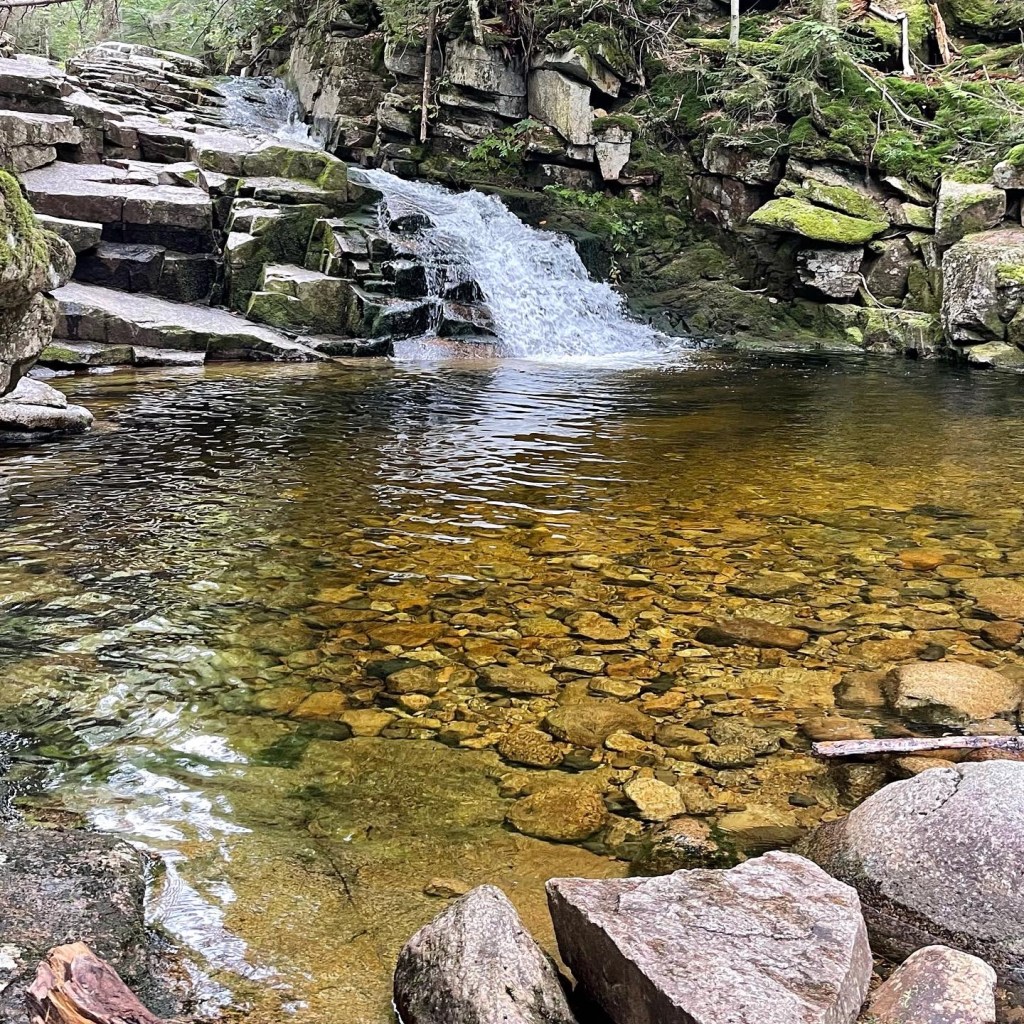
    This hike was meant to be a compromise to myself. No salt water weekend, no longer hikes to knock off another 4000 footer or three. But still spectacular, still a light workout on a beautiful trail, and the real payoff; seven waterfalls in a relatively short span.

    I had my doubts. You walk to the trailhead at Waterville Valley Resort and see right away that this hike is going to start between the road and some of the village condos. But you cross a road and leave most of that behind you. From then on you are hiking a pleasant trail to the first waterfall and not really seeing many people (for me, a Saturday afternoon).

    The Cascade Trail is a 3 mile round trip to the Waterville Cascades. The silence of the forest is notable and welcome. You quickly forget that you’re in close proximity to a ski resort, and instead immerse yourself in hiking relatively pristine second growth forest that wraps itself around you and shuts out the outside world. Before you know it the hike brings you to the first cascade on Cascade Brook, a series of seven plunges that feel bigger and more remote than they really are.

    But there are reminders of the alternative paths to the falls. We met a group we’d seen in the parking lot that opted to ride the chairlift up instead of hiking. We spoke to another couple of guys on mountain bikes who had ridden up to the falls to soak in the swimming holes. Both conversations reminded us that there were other faster ways to reach the cascades than hiking. We saw sad proof of this when we passed a pyramid of empty Bud Lite cans that some fools had stacked alongside the brook. Without a backpack for this short hike I had to leave this mess for someone else to deal with. Not everyone who ventures into the woods leaves them as they found them. This is the price of proximity.

    But the falls themselves were each wonders, and we celebrated the unique beauty of each as we climbed higher and higher up the trail. When you reach the last big cascade there’s a bridge for a mountain bike trail that you can cross to descend the other side and return you to the Cascade Trail and your hike back down.

    I’m interested in how people meet the falls. Some are reverent and respectful, some more nonchalant about the experience. I think it’s relative to how much work you put in towards reaching them, and the path you chose for yourself. But that may seem dismissive and smug when a hiker says it. More specifically, it’s not the work you put into reaching it, it’s how your attitude when you reach it that matters most.

    The work-to-reward ratio of the Waterville Cascades makes it an easy choice. The proximity of that resort comes in handy for lunch or dinner and a restroom afterwards. The entire experience reminds you that finding beautiful in this world isn’t all that hard if you just put yourself out there to meet it.

  • Hiking Passaconaway & Whiteface

    Hot, muggy August days create hazy, sweaty conditions for hiking, with a dash of risk for thunderstorms. But it’s been six long months since I’d last hiked a 4000 footer, and I was way overdue to notch one or two more. The question then is, who do you hike with? For me, the answer for this day was to hike solo. I needed to work out the rust of hiking on granite again without feeling the obligation of keeping pace. And more importantly, I needed the mental space that hiking offers after another half a year of working during a pandemic.

    My thoughts on hiking alone aside, I didn’t want to drive an extra hour to find the less crowded peaks of the northern White Mountains. So my focus turned to Mounts Passaconaway and Whiteface, each part of the Sandwich range and relatively close with relatively good elbow room. And planned my hike the way most people seem to do it, to hike Mount Whiteface first and then loop around to Mount Passaconaway afterwards. Plans are lovely things, aren’t they?

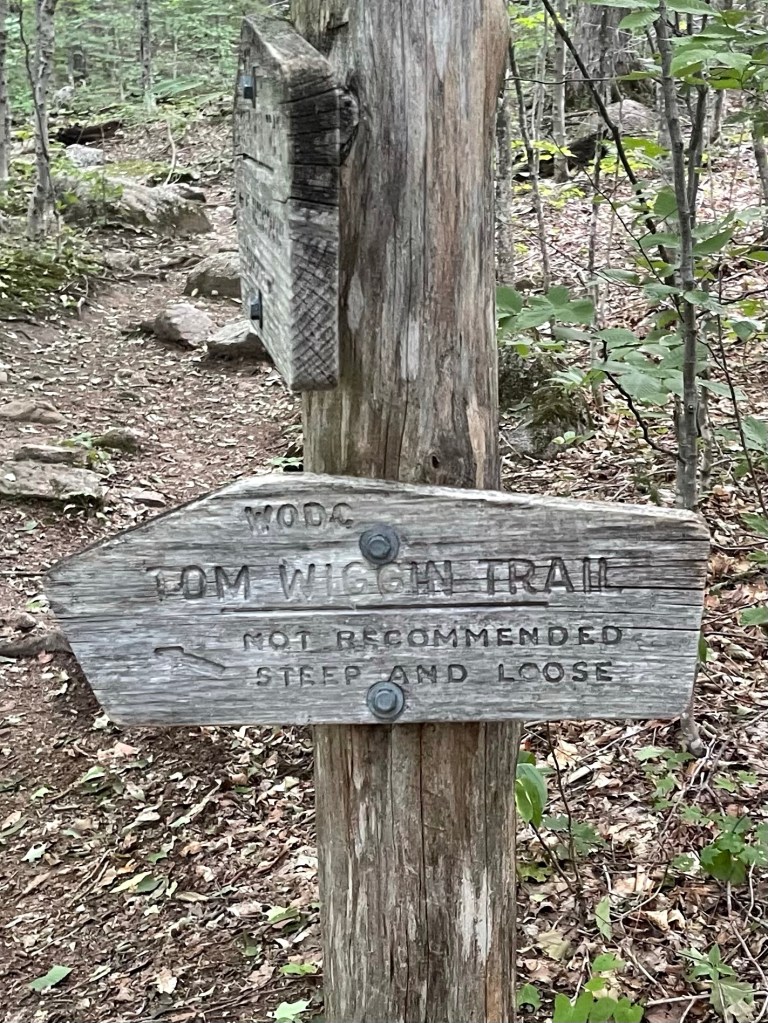
    When you’re hiking on a trail and come across a spot where you can either haul yourself over a boulder or bypass it entirely by taking the worn path around it, which do you choose? The answer is subjective, isn’t it? It depends on the size of the boulder. It depends on the condition of the worn path around it. And it depends on your mood at the time. My mood at the time I reached the Tom Wiggins trail was such that when I read the sign warning that the trail was not recommended because it was “steep and loose” I paused for a couple of minutes to consult my trail map, contemplate the implications to the overall mileage I’d do that day, and opt for the out and back option instead of the loop. This decision added almost five miles to my hike, and I’d second-guess it the rest of the day, but sometimes you have to trust your gut.

    Decision Time

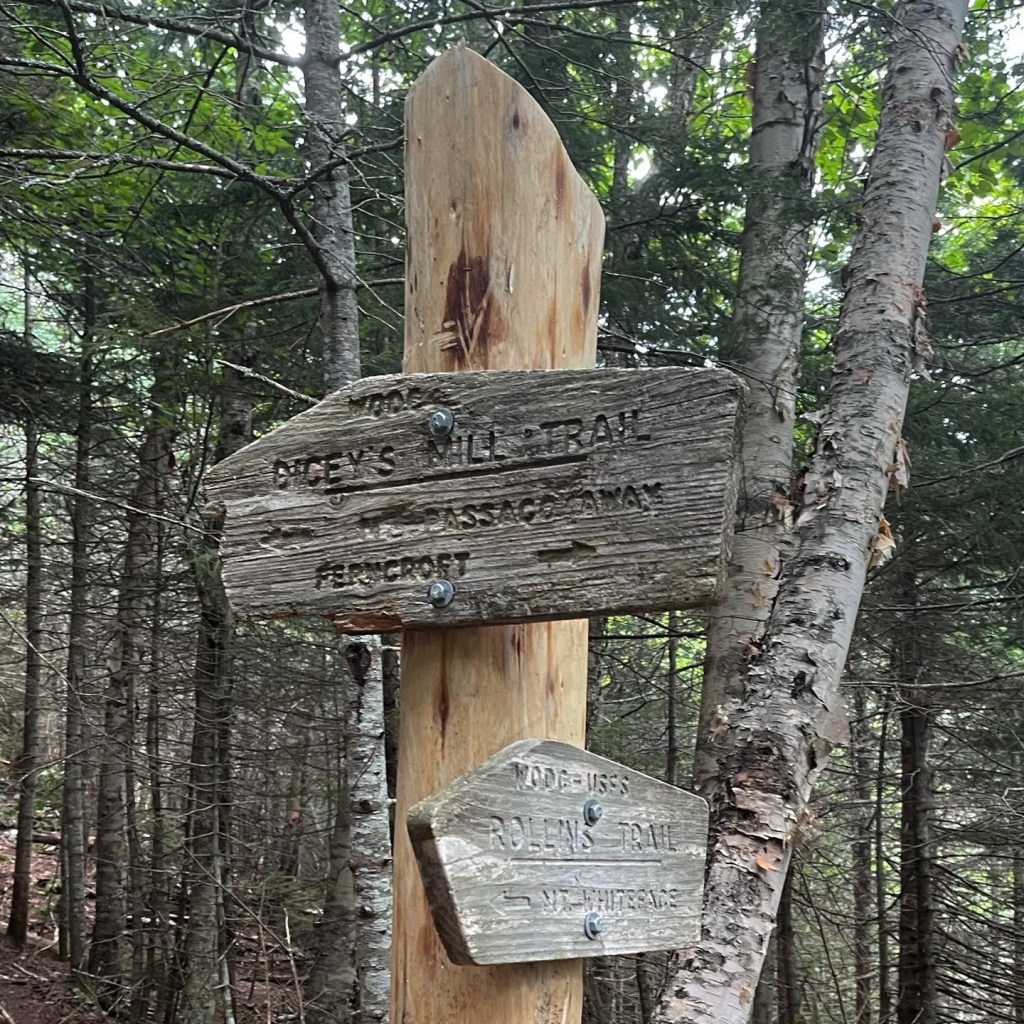
    Decision made, I hiked the Dicey Mill Trail to the junction of the Rollins Trail, where I had another choice to make: knock off summitting Mount Passaconaway first, or hike over to Mount Whiteface via the Rollins Trail and save Passaconaway for last? And here I made another choice that I’d second guess the rest of the day. I chose Whiteface, and hiked the 2.3 miles over to the cairn that marked the summit, went past it to the next trail junction and then turned around and hiked all the way back to where I’d begun. Far simpler to have just knocked off Passaconaway while the legs were fresh. It would have given me the option of descending the Tom Wiggins Trail (which was admittedly advertised as steep and loose). I may still have doubled back, but at least I’d have the option. Anyway, these are the hindsight options you think about as you’re sweating through your hiking shirt and feeling your knees and ankles remind you of your choices in life.

    This out and back hike wasn’t all that challenging, it was just long. And that’s exactly what I’d signed up for back at that sign. Sometimes you have to make peace with your decisions in life, and I’m okay with this one. Seeing comparable hikers who started right in front of me finishing the loop I’d contemplated after me, I recognized that either option was fine. I’ll hike the steep and loose section another day, probably in winter when the only part that matters is steep.

    This was my non-traditional hike of two more 4000 footers. I know if I’d hiked with friends I’d have just done the loop I’d planned all along, but sometimes you’ve got to just go it alone. And live with your choices along the way.

    Second Decision
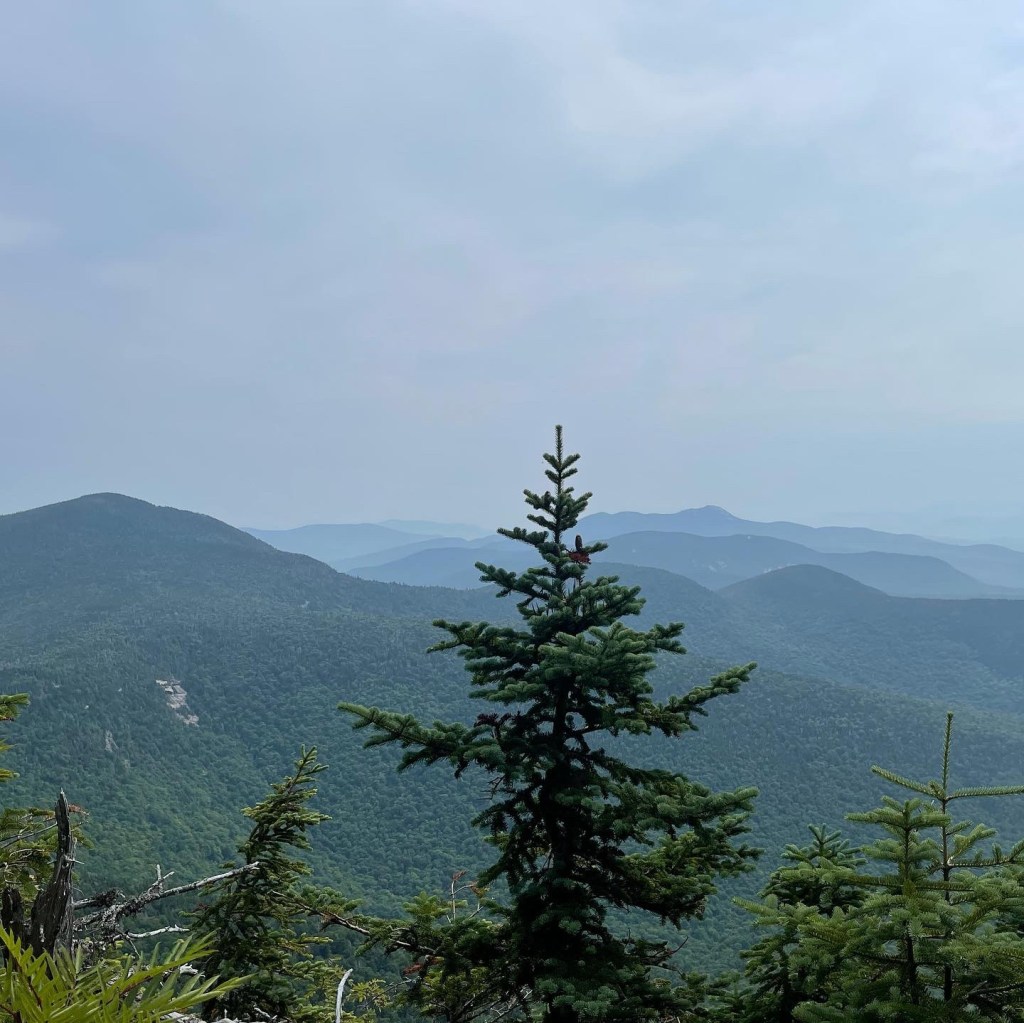
    Summit of Whiteface
  • Rafting Up on Lake Winnipesaukee

    This hasn’t been a great month in New England for some of the traditional activities of summer. Not a lot of beach days, not a lot of dry hiking days, and not a lot of days when you’d want to raft up with other boats and soak up the sun, casually float in the lake and catch up with people you don’t spend a lot of time with. July 24th was one of the exceptions to an otherwise wet month, and it was an opportunity to take advantage of an invitation to raft up for an afternoon.

    There are 258 islands on Lake Winnipesaukee, each unique and full of stories. I found myself rafted up near Little Bear Island in about 18 feet of water, one of six boats and twenty people each with plenty of stories themselves. I don’t usually slow down enough to enjoy this type of activity very often, but when you’re rafted up on other people’s boats for the entire afternoon, it forces you to chill out a bit and enjoy the moment.

    In a raft up, boats tie on to each other, and at least a couple drop anchors to hold the entire floating island together in one place. With all the rain the water in the lake was higher than normal for the third week in July. It had finally warmed up nicely, making it easy to float for hours in the water, warm up in the sun on one of the boats and then take another plunge when the mood struck you.

    If you like big crowds, people watching and a wilder vibe you might choose to raft up in another location on the lake. There’s an abundance of wilder scenes for the party crowd.. For us, anchoring just outside the channel near Little Bear Island was the best of both worlds. Plenty of opportunities to watch boats motor by in a no wake zone, and of course plenty of chances to ignore the rest of the world and look at the beautiful mountain and lake scenery all around us.

    There are plenty of people who are experts on navigating the lake and it’s many islands, coves, eateries and pubs and history. As a visitor, I had a chance to play tourist on someone else’s boat, experience the lake as a relative newbie and marinate in its waters long enough that it soaked deep into me. A weekend on the lake is just enough to help you see what all the fuss is about. And fill you with memories and anticipation to return again someday soon.

  • Spending Time With Profile Falls

    If time is the ultimate currency, why do we spend it frivolously? I wondered that as I drove north, breaking away from work on a rainy Monday to chase a waterfall. I knew the drive, and thought that maybe I should have combined it with a hike, or another waterfall, or a meeting with an industry acquaintance. Instead I made the falls their own destination and turned off thoughts of efficiencies.

    Profile Falls is an easy walk from the parking lot in Bristol, New Hampshire. You can’t call it a hike, really. You follow the path on the northern bank right to the edge of the water, and then decide how much you want to risk as you assess high, fast moving water, slippery rocks and poison ivy. My vote? Just enough to get a decent picture. Not enough to lose my phone and dignity to the mocking river gods.

    Profile Falls

    After following the path of least resistance, I returned to the parking lot and decided to try the view from the southern bank. The river turns just after the falls, making a view from this side trickier. I made my way past a picnic area to a wet path along the steep and rocky embankment. This quickly proved to be a dead end of sorts. The closer you got to the falls, the worse the vantage point became. I should think walking right up the river in low water might be the very best option. For me, this was enough.

    The Smith River flows a few miles from just above Tewksbury Pond, gaining tributaries and power, before it gives itself to the Pemigewasset River, which flows into the Merrimack River at Franklin, New Hampshire and then 117 miles to the Atlantic Ocean at Newburyport, Massachusetts. It’s an epic journey, and one of the highlights is surely the 30 foot plunge over Profile Falls.

    For those keeping track, there are a lot of place names there that I have a deep connection to, which should have drawn me out here sooner in my life than this, but it seems I was spending time more frivolously then. I’m making up for lost time in some ways. Chasing waterfalls in the rain and using my currency in ways that work for me.

  • Remembering New Hampshire’s Soldiers Lost at Bunker Hill

    The boulder quietly marks time amidst the everyday buzz of Medford Square, with cars circling the Burying Ground like planes preparing for a landing at nearby Logan Airport. It’s a nice touch, really, a nod to tough New Hampshire granite, honoring the men who left New Hampshire to fight in the Battle of Bunker Hill who never returned. They’re buried in Medford, and the engraved boulder placed here in 1849 honors their sacrifice.

    The Salem Street Burying Ground is a time capsule back to the earliest days of American history, surrounded on all sides by a perimeter of brick walls, roads and buildings. Medford is not what it was in 1775, but then, everything changed after Bunker Hill. Everything but the quietly stoic gravestones standing in rows around the boulder, like the soldiers themselves once lined up to battle men not much different from themselves. Enemies by fate and events bigger than themselves.

    New Hampshire sent its share of men to fight at Bunker Hill, most famously John Stark. If you look at the roster of soldiers from New Hampshire you see an extensive list from all parts of the state. By my count, 32 were killed on June 17, 1775 and two died from their wounds within a few days. No New Hampshire town paid a bigger price than Hollis, with 25% of the killed in action originating from this small community.

    Many of the British soldiers killed that day are entombed in the crypt at Old North Church in Boston. For the Americans killed that day, many are buried in small burial grounds throughout the area. This one in the heart of Medford, a little more than 4 miles from Breed’s and Bunker Hill, offers a small tribute to New Hampshire’s lost soldiers.

    I wonder about that final journey for these men. Did all of them make it to marked graves like the ones here, or were some buried in places now covered over by the relentless march of progress? For many, their final resting place, like many of their names, is lost to history.

    Honoring New Hampshire’s soldiers killed at the Battle of Bunker Hill
  • The Magical Hours

    Water patterns reflect on the tree trunks, illuminating the bark and lichen in a dance of morning light. The wave patterns slowly fade as my bathing suit air dries in the early warmth. Birds and chipmunks fill the air with a soundtrack of their greatest hits. It’s going to be a scorcher today, they seemed to agree.

    The house wren that moved into the bluebird house dominates the conversation, but the chipmunks have a lot to say too. Until I stand up and abruptly reset the agenda from banter to assessing the new guy. In the sudden hush I catch the sound of a woodpecker, unseen, seeking a meal in a tree somewhere in the woods. The bass tone indicates deep work.

    It’s such a short time, these magical hours spent in outdoor spaces when everything in the world just seems perfect. No bugs, no pollen, no shoes, no problems. That these days exist at all is a blessing. I imagine this is why people live in Southern California, where every day is this kind of perfect. Here we take what we can get while it’s here, and boy do we love it when it’s here.

    Early mornings are reserved for the knowing few. I catch a glimpse of a neighbor out watering potted plants as I do the same with my own. We nod a greeting to each other and return to the work at hand.

    The garden isn’t the same as Mother Nature. Magic doesn’t just happen in a garden, you’ve got to put the work in. These are the days when you’re rewarded (or punished) for the work invested in a yard and garden. Harvest is still weeks or months away for the vegetables, but we’re entering peak season for the flowers.

    How do you know when you’ve reached a peak? When the world aligns in moments of wonder? When everything just seems to click for you? Or do you have to wait until you’ve declined from your peak, when things aren’t going as well and you see, maybe for the first time, just how good that moment was?

    I’m past peak when it comes to athletic performance, but haven’t yet peaked in my learning. If fitness is the flowers in your garden, learning and mental development is the fruits and vegetables, often taking until the very end of the season to fully develop. Like flowers your fitness level doesn’t have to stop midway through your season, and like vegetables you can find enlightenment well before the end of your season.

    There are no hard and fast rules in life or gardening, but there are seasons to honor and work to do in each. In each day there are moments available to appreciate the blessings that have come your way. Those magical hours that seem to fly by so quickly when life seems just about perfect in every way.