Tag: New York

  • The Waterfalls of Letchworth State Park

    If you love waterfalls (and who doesn’t love waterfalls?), Upstate New York is the place for you. Get beyond Niagara Falls and you find hundreds of waterfalls worth exploring (officially over 2000). I’ve written about many of the waterfalls of New York over the years as I’ve explored them, but circumstances had never gotten me to Letchworth State Park to see their beloved three on the Genesee. During a drive from Cleveland to Boston, we finally stopped to see what all the fuss was about.

    Once you get off I-90, the rule is single lane roads rolling up and over hills through the never-ending farmland and woodland of New York. This rule demands two things: a full fuel tank and an empty bladder. Obeying these rules will get you to your destination eventually. Letchworth State Park is a destination worthy of that drive.

    Rolling in on a hot summer day, we pulled up to pay the $10 day entry fee. The park official looked up at the bug-spattered roof bag and asked if we planned on camping. “Nope, just here for the afternoon”, we assured her, and followed her instructions that led us to the restrooms. We all must prioritize our time based on the urgency call of the moment.

    After getting our affairs in order, we drove back towards the southern entrance to the park to the impressive railroad bridge spanning the Genesee River (Portage Bridge). There was ample parking for a Sunday hike, and we quickly made our way to the trailhead at Portage Bridge. Being a New York State Park, you come to expect elaborate public works like staircases, walls and railings, and there they were to greet us as we made our descent.

    The three waterfalls in the southern section of the park are the Upper Falls, Middle Falls and Lower Falls. The Upper Falls, with the railroad bridge spanning the river above them, offer a beautiful view. The Middle Falls are the most impressive and are the falls you can get closest to. The Lower Falls are further away as you’re hiking, but on easy terrain for the average hiker. Once you’ve arrived at the Lower Falls you can either continue hiking through the canyon or turn to head back to where you started. We opted for the out and back, making a solid 5 mile round trip.

    Letchworth is a park full of campers and day-trippers. There are plenty of amenities situated along the route, from restrooms to a restaurant with gift store for those wanting perfume-fragranced candles and such. Closer to Upper Falls there’s even an ice cream stand. That proved a fortuitous opportunity for us to purchase some cold drinks to reinvigorate for the final climb back up to the trailhead.

    As we were rehydrating four girls with their grandmother were walking away from the ice cream stand with soft serve cones quickly melting in the sun. As they licked to keep up, one of the girls said, “Best day ever.” as they made their way to a picnic table. I thought to myself, you just might be right.

    Upper Falls
    Middle Falls
    Lower Falls
    Genesee River below Lower Falls
    Classic New York State Park stairs and railings
  • Stillness and the Swirl

    When despair for the world grows in me
    and I wake in the night at the least sound
    in fear of what my life and my children’s lives may be,
    I go and lie down where the wood drake
    rests in his beauty on the water, and the great heron feeds.
    I come into the peace of wild things
    who do not tax their lives with forethought
    of grief. I come into the presence of still water.
    And I feel above me the day-blind stars
    waiting with their light. For a time
    I rest in the grace of the world, and am free

    — Wendell Berry, The Peace of Wild Things

    Manhattan enthralls. Manhattan is a jumble of ideas all shouting to be heard. Like the world jammed into an island could be expected to behave, there is a jostling for the top. Skyscrapers reaching higher, with more and more flair, like the people who occupy them. Manhattan demands the best we can muster of ourselves. Many fall far short of this, to be sure, but the demand is there for those who will listen.

    I’m usually good for two days of this, three tops, before I crave stillness again. The delight of sitting on the deck stairs with the pup curled up for an ear scratch and stubborn oak leaves drifting to earth. The call of simple stillness drowns out the noise of the streets, drowns out the madness in the world, drowns out the voice inside me that wants more of the bustle and hum of a city anticipating parades and Christmas lights in the weeks to come. This magic is borrowed, not mine to keep.

    The line between chaos and order is thin and tricky to find balance on as we make our way through a lifetime. A bit of poetry on one side, a dance with titans and hustlers on the other. We stumble and right ourselves, lean this way and that, breath deeply and step forward again. Hoping angry winds don’t blow us into chaos. Hoping whispers of doubt don’t betray us. Hoping we can carry on in the darkness beyond our control. We only control the next step.

    New York demands attention. Sirens and horns and the rumble of constant change a soundtrack penetrating my soul. The news of the world is dire. Seemingly darker by the day. How do we find peace despite it all? We ought to remind ourselves that the universe is bigger than the schemes of humanity. We ought to reverently walk in the woods. We ought to be grateful for the quiet familiarity of home even as we race through a city that never sleeps. Even the swirling leaves from a stubborn oak ground themselves eventually.

  • Stepping Out on the Edge

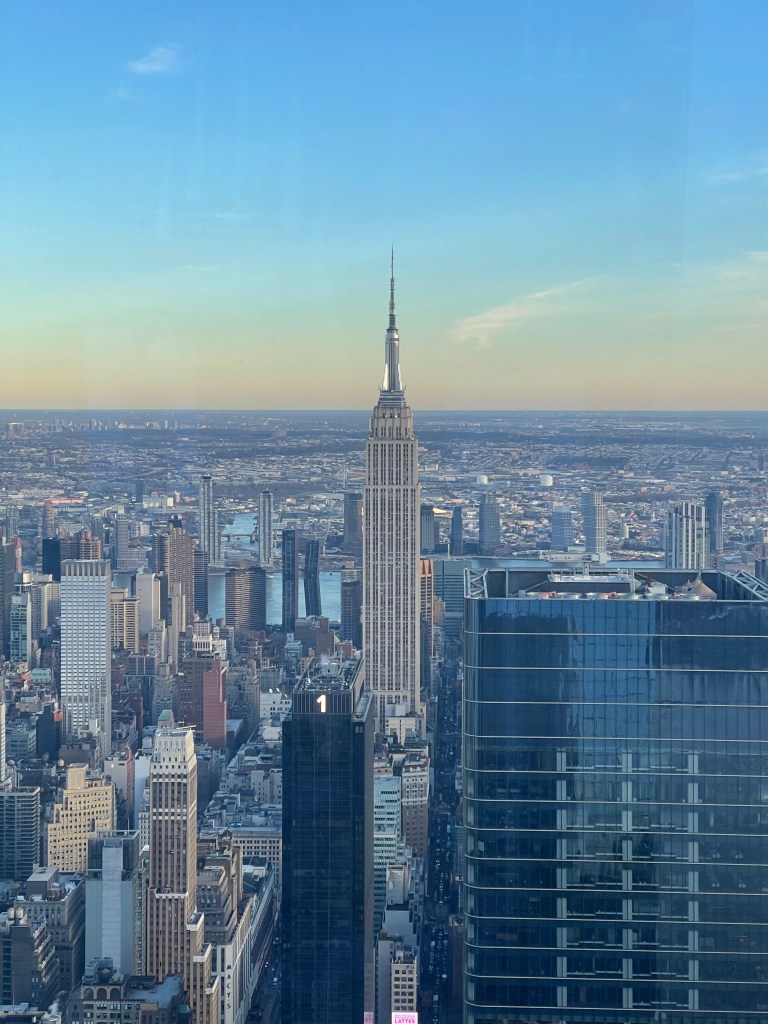
    The Edge is the highest observation deck in the Western Hemisphere, and the fifth highest in the world. It juts out of a modern and elegant 30 Hudson Yards building that glitters day and night. If you are afraid of heights, it’s unlikely you’ll ever travel up the speedy elevators that bring you 100 stories above Manhattan, but if you do, you’ll be treated to video stories displayed on the walls of the elevator cab that bring you into the clouds on the way up and on virtual flight back to earth on the return trip. As fun as the elevators are, nothing beats the actual view that greets you when you arrive.

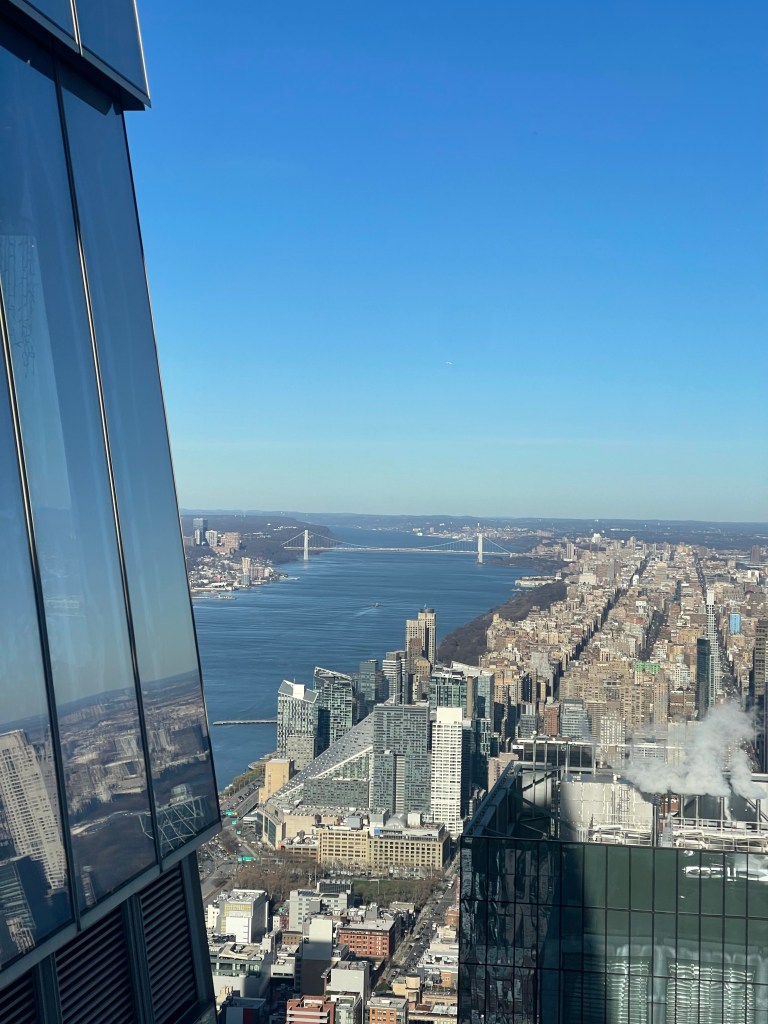
    The observation deck features epic views of the Manhattan skyline, the Hudson River and New Jersey beyond, Long Island Sound and most of the famous sites you’d think of when you think of New York: The Statue of Liberty, The Brooklyn Bridge, the Empire State Building, The George Washington Bridge, the Verrazzano-Narrows Bridge, the Freedom Tower and Chrysler Building are all visible on a clear day. If you time your visit right, you have a great view for sunset. It’s a breathtaking spot, and it’s clearly become very popular as a destination all its own.

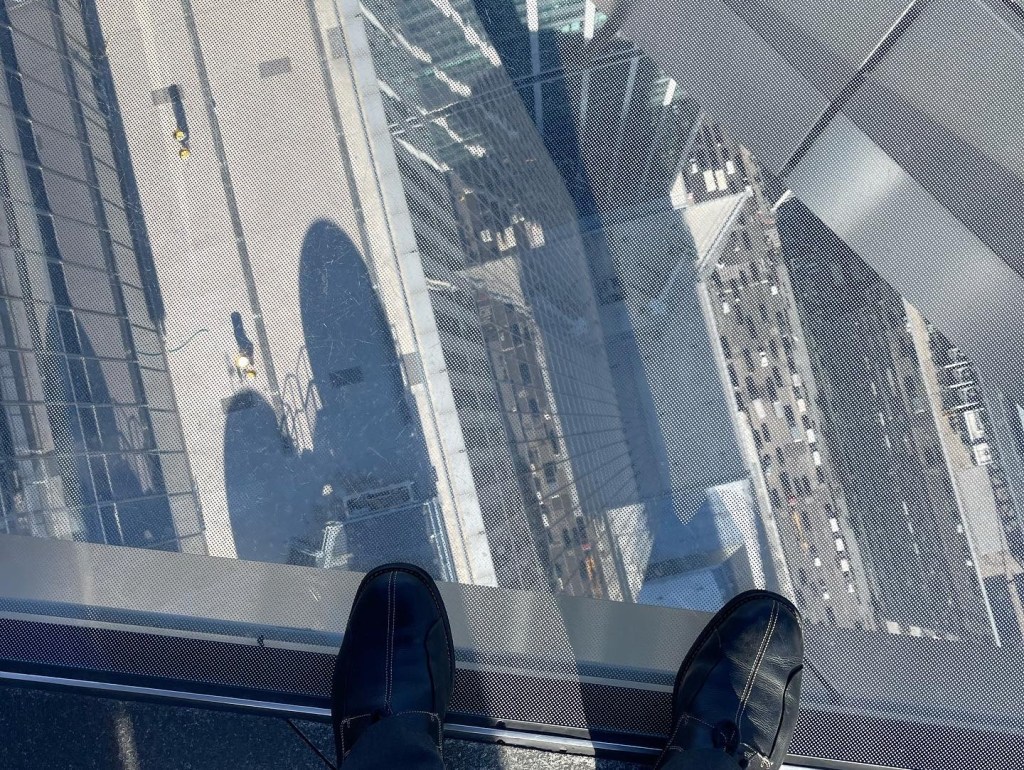
    Frankly, if you’re not afraid of heights there is still a moment that gives you pause when you visit. That would be the moment you step out onto the glass floor and look down at the traffic 1131 feet below you. I passed this particular test, but balked when someone told me to jump up and down on the floor. There are a list of things that one shouldn’t do in life, and near the top is tempting fate.

    Also available to fate tempters are the 2+ inch thick glass panels that lean outward from the deck, giving you the opportunity to literally lean out over the edge if you’re inclined to do so. For all the people visiting at the time I was there, there weren’t a lot of people leaning on the glass. Self-preservation is indeed a powerful instinct.

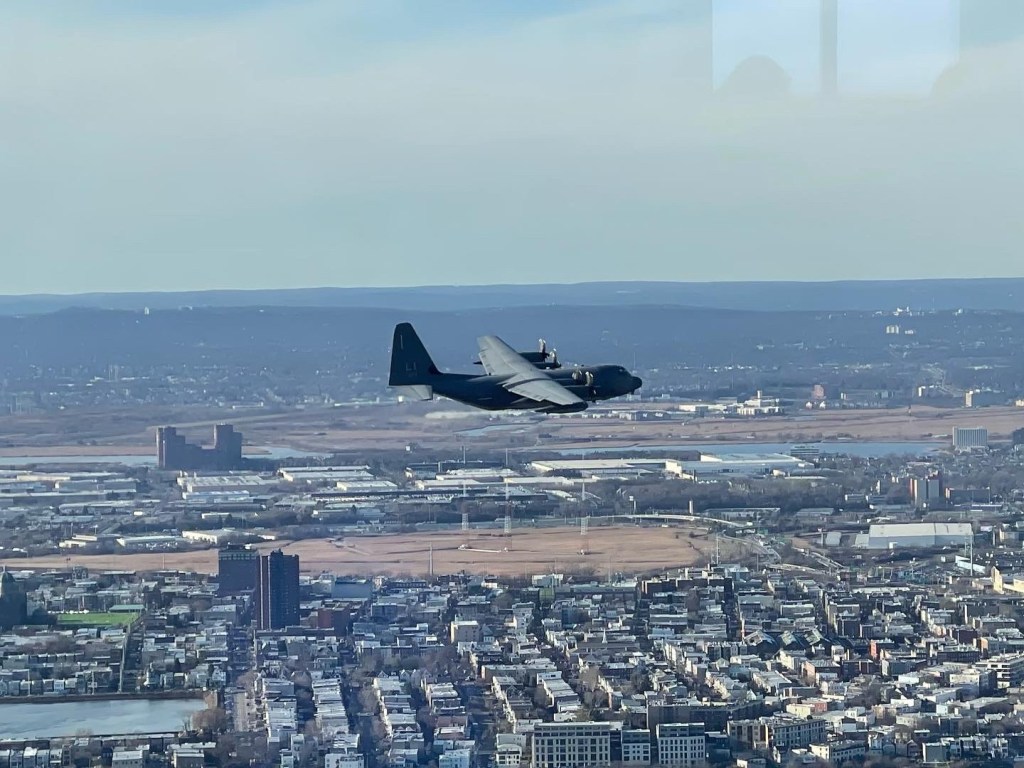
    There is a stepped seating area that climbs up even higher, if you want to sit for awhile and linger with the extraordinary views. When you’ve been to New York City many times, and have spent hours of your lifetime navigating the roads of the Metro New York area, it’s fascinating to see everything from so high up. A glance and turn of the head to look from Sandy Hook, New Jersey to the George Washington Bridge might take you a second or two, or two or three hours to drive it. You feel like you’re flying in this way, and this feeling is amplified as you realize that many of the planes flying up the Hudson River are actually lower than you.

    If you go, try to time it to be there for sunset on a calm day. Have lunch at one of the many restaurants at Hudson Yards and give yourself enough time to savor the views. It’s a trip you’ll remember. The Edge literally puts you out on the edge of a skyscraper, which isn’t as terrifying as that might sound. You almost forget where you are as you soak up the views around you. This is what you’ll remember when you return to earth.

  • A Visit to the Major John André Monument

    “I had taken my station close on the left of Major Andre’s left hand officer; and continued in that station the whole march. The guard marched a short distance when it wheeled to the left, turning a corner of the road, and marched a short distance, when they again wheeled to the left, in order to pass through a fence. Having entered a field, they marched forward a short distance, wheeled to the right, and halted. The ground here was level; a little distance in front was a moderate ascending hill, on the top of which the gallows was erected. In the position where they halted, Major Andre was, for the first time, in view of the gallows. Major Andre here said, ‘Gentlemen, I am disappointed. I expected my request’ (which was to be shot) ‘would have been granted.’ No answer was given, and he continued with his arms locked with those of the two officers.Dawson, Papers Concerning André

    Early one morning, as commuters made their way to work and parents waited for the school bus on street corners throughout town, I made a quick stop to visit the Major John André Monument. André was swept up in the treason of Benedict Arnold and paid the ultimate price when Arnold wouldn’t turn himself in, hung and buried at this spot on 2 October 1780. George Washington himself would lament the death of André, stating that “he was more unfortunate than criminal”.

    The Hudson River Valley was once the headquarters for George Washington. The river was a critical transportation hub, and if the British were to control it they would have cut off New England from the rest of the colonies. Benedict Arnold was once a highly-respected leader in the Continental army and the fight to protect the Hudson River and Lake Champlain from British control. But he was increasingly frustrated with his status, feeling like he wasn’t properly honored and rewarded for his leadership. His wife was also a Tory and desired a better position in society. This made him a prime candidate for recruitment by the British turn against the American Colonies.

    Major John André, a rising star in the British Army, was chosen to meet with Benedict Arnold to formalize the details of engagement and Arnold’s rewards, both financial and status, for turning against the Americans. Arnold and André met on a warship in the Hudson River and again on shore not very far north from where André’s American journey would end. Unfortunately for André, his warship was chased off by cannon and during his overland journey back to British-controlled territory he was captured in enemy territory while disguised as an American. This made him a spy and subject to execution. That execution would happen on a small hill in what is now Tappan, New York.

    “Every attention and respect was paid to Major Andre that it was possible to pay to a man in his situation … every officer and soldier in the army would have lifted both hands for the exchange of Andre for General Arnold. This exchange was offered by General Washington, but refused by General Clinton, the British Commander-in-chief. So the life of a traitor was saved; and Major Andre fell a sacrifice” Dawson, Papers Concerning André

    Major John André was later exhumed from the site and is now buried as a hero at Westminster Abbey. The site of his execution remained unmarked and, like so many historical places, eventually doomed to obscurity. In 1879, a wealthy American named Cyrus W. Field, who laid the first telegraph cable across the Atlantic Ocean, decided to put a monument up honoring Major John André. It makes sense that a man who made his fortune connecting the Old World with the New would seek to honor a dignified officer seen as more unfortunate than criminal. But it would take time for the community to see it the same way. As you might imagine, erecting a monument honoring an enemy soldier associated with the most notorious traitor in American history was unpopular at the time, and there were three attempts to destroy the monument before someone decided to add a plaque honoring George Washington and his army.

    You’d never know the monument was there, in the middle of a small traffic circle on a quiet residential street, if you didn’t seek it out. Such is the nature of the Hudson River Valley today, rooted in history but built for the future. The former encampment and small hill where Major John André met his fate are today simply suburbia in Metro New York. Yet history still whispers here, and reminds us that nation-defining heroism and treachery once played out right here.

  • Two Centuries, One Mile

    “I’ve got a mule and her name is Sal
    Fifteen miles on the Erie Canal
    She’s a good old worker and a good old pal
    Fifteen miles on the Erie Canal” — Erie Canal

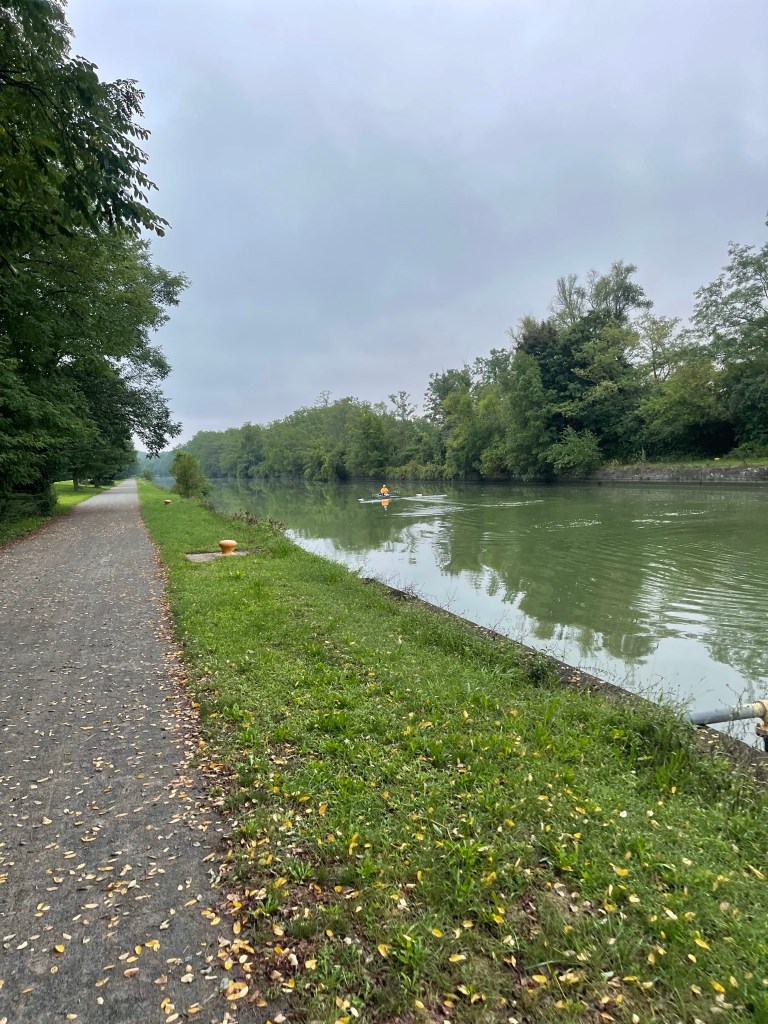
    For the last three days I’ve stacked up miles walking along the Erie Canal (Nearly 15 miles, reminding me of the old Erie Canal song). Roughly a mile of that walk traverses the Great Embankment, completed 200 years ago this year. Back in 1822 building an earthen embankment a mile long and 70 feet high was kind of a big deal, and so was the completion of the big ditch known as the Erie Canal. It made the young United States less dependent on the St. Lawrence Seaway and the whims of Canada and the Great Britain to give them access. The success of the canal made fortunes in places from Buffalo to New York City.

    Nowadays, it’s more of a tourist attraction than an active commercial highway, but you still see a barge or powerboat making its way from there to here. Seeing them is interesting, and reinforces the belief that the Erie Canal isn’t just a big ditch, but a once powerful statement that we’ll make our own way, thank you. When I walk on the path next to the canal I hear the whispers of history and my very brief moment with place. Think of what that mile of canal has seen in two centuries. And this week it hosted me once again.

    On my recent walk the path was filled with bicycles, walkers and runners. I make eye contact with most, give a brief nod of hello and march onward. I’m but a momentary close encounter in their lives, as they are in mine. Someday we’ll all be history ourselves, just a flash of movement in the long life of the long ditch. I wonder if they’ll write about us?

  • A Walk to the Edge of Ambient Light

    Autumn, delightful as it is in so many ways, is the source of one bit of frustration: the quickly receding number of daylight hours. Traveling west, the morning becomes more and more difficult to work with if you’re trying to be active outdoors. Sure, you can strap on all manner of lighting to make you more visible and to offer a tunnel of light to walk through. But you lose something in all that battery-powered brightness–a feeling of connectedness with the land around you. And isn’t that the point of going outside to walk in the first place?

    Just yesterday I was walking on a warm and humid day on Cape Cod. This morning, I found myself next to an old favorite, the Erie Canal at Bushnell’s Basin. The canal trail here is mostly stone dust, with a few paved places along the way. Familiarity is helpful when you’re walking in the dark, and so is choosing to walk in the early morning. Morning offers hope for improving conditions, something an evening walk would be short of. In a safe area like Pittsford there aren’t a lot of concerns about getting mugged, but in a sketchier area most of the thugs eventually go to sleep, leaving the morning generally safer for wannabee fitness models.

    Still, there’s something about seeing that offers comfort. Even on a walk I’ve done a dozen times or so, when you run out of ambient light you’ve got to make choices in life. Press ahead into the dark or return to the ambient light? What are the risks? Walking into a branch? A skunk? The Erie Canal? Getting run over by a random cyclist not using a headlamp? None of those sound particularly appealing to start a work day. So I turned back to the light.

    Here’s the trick, you don’t walk all the way back to the brightest parts of your walk. You walk just far enough that your eyes can still see in the dim early morning light, then turn around and see how far you can go the next time. Does walking back and forth on a 1000 meter section of cinder path sound fun? You know what? It actually was. Just me and the ducks and some vehicle traffic on the other side of the canal. Back and forth, a bit further each time, until the scales tipped at 6 AM and suddenly you could see everything clear as… well, almost clear as day.

    It might seem ridiculous, this walking in the dark business, but I managed four miles before coffee, and sort of saw the Erie Canal from a different perspective than I’m used to. There’s a lot to be said for checking a few boxes before breakfast–exercise, reading, and writing this blog. The only thing that might have made it better would have been an epic sunrise. Perhaps tomorrow, when I plan to be out there again.

  • Ambient Noise

    After a few nights in New York and New Jersey, I returned to New Hampshire to reflect on the differences. I’d hiked in pristine woodland next to gorgeous streams, the kind of stuff you see regularly in the White Mountains of New Hampshire. I’d stayed in a beautiful resort surrounded by hills. I’d eaten at a vineyard next to a lovely river. I’d visited New York City itself, deep in the heart of it. And capped my visit to the city with a trip to Liberty Park in New Jersey with its striking Upper Bay view of Manhattan and the Statue of Liberty.

    It was all beautiful. The days and nights were lovely. The people were generous and friendly. You learn to love the spirit and energy and vibrancy of the place and miss it when you’re away from it. And yet I’ve never gotten used to the ambient noise.

    The Metropolitan New York region has a relentless buzz that stays around you all the time. If you live there you likely don’t even know it exists, but when you’re a country mouse coming to the big city regularly you pick right up on it. The automobile traffic, the air brakes on trucks, the train whistles, the sharp roar of planes and helicopters flying overhead, the steady rumble of ships on the Hudson River and the constant beeps and thumps and shouts of close proximity that collectively create a soundtrack of urban living. This soundtrack bleeds for miles up the Hudson River, far out into the Atlantic on Long Island and deep into the hills of New Jersey and Connecticut. It begins with the roar of the city and fades to the sound of sprawl.

    Hiking the amazing Harriman State Park next to a pristine river, you’d think the white noise would drown it all away. But reach a bit of elevation and you hear the traffic informing you that you must go even deeper into the green splashes that surround the map of New York City. Even Harriman, as big a green space as it is, has roads full of commuters cutting through it, like Central Park in the hills of the Hudson River Valley. Those roads surely serve, but they also detract if you let them. Don’t let them.

    For it’s all so very beautiful. Even the ambient noise, that guarantees no escape from the world, fades just enough when you focus on what they’ve protected from the sprawl. This is a place that offers the advantages and disadvantages of one of the greatest cities in the world, the constant beat of progress and growth and rising to the occasion that New York is famous for. But within an hour are these places like Harriman where you might immerse yourself in nature, so long as you accept the soundtrack playing way in the background and focus on the wind in the trees and the water finding its way through ancient boulder fields.

    The farther away you get from the ambient noise of New York the more faint it is. Somewhere along that spectrum of noise we reach a place where we feel the ambiance most vividly. Life isn’t about escaping from the world, but finding our place in it.

  • A Pre-Dawn Waterfall Chase

    Harriman State Park in New York is the second largest state park in the state, and honestly it feels pretty big when you’re in it. Still, it doesn’t feel like there should be this kind of elbow room so close to the gridlock of Metro NY. And yet here it is.

    This story began two days ago, when I participated in a group hike with several co-workers. As these things go, our available time for hiking got compressed and we had a couple of people who were a bit slower than the average hiker speed. Combined this created a situation where we had a little more than an hour to hike one of Harriman’s most popular trails, the Reeves Brook Trail Loop. Instead of reaching a waterfall and pond we’d been hoping for, we had to cut the trip short and head back. Still, that waterfall stayed with me.

    There was only one thing to do: get up early and take a solo hike to find it. If there’s a problem with April hikes, it’s that it doesn’t really get light out until close to 6 AM. I didn’t have that kind of time and headed out at 5:30 in search of the waterfall. I had a headlamp with a weak battery and two iPhones as backup for light, but found I didn’t really need any of that once my eyes adjusted. It helped that I’d done a good part of the trail two days earlier and knew the landmarks that might otherwise have been a mystery in the dark.

    I eventually found that waterfall, just ten minutes away from where we’d turned around on the previous hike. So close and yet so far. But the waterfall looked smaller than I’d anticipated, so to be sure I hiked another ten minutes up to a bridge where the trail split. Looking at my watch, I recognized that there was no way I’d have the time to hike the entire loop around the Reeves Brook Trail Loop…. damn. The pond and rock scrambles would have to wait for another day. I headed back down with a solid hike completed and a hot shower waiting for me. And like the waterfall before, the pond now calls my name. Knowing there’s so much more to see, I’ll carve out half a day for going much deeper into the network of trails next time. Definitely something to look forward to.

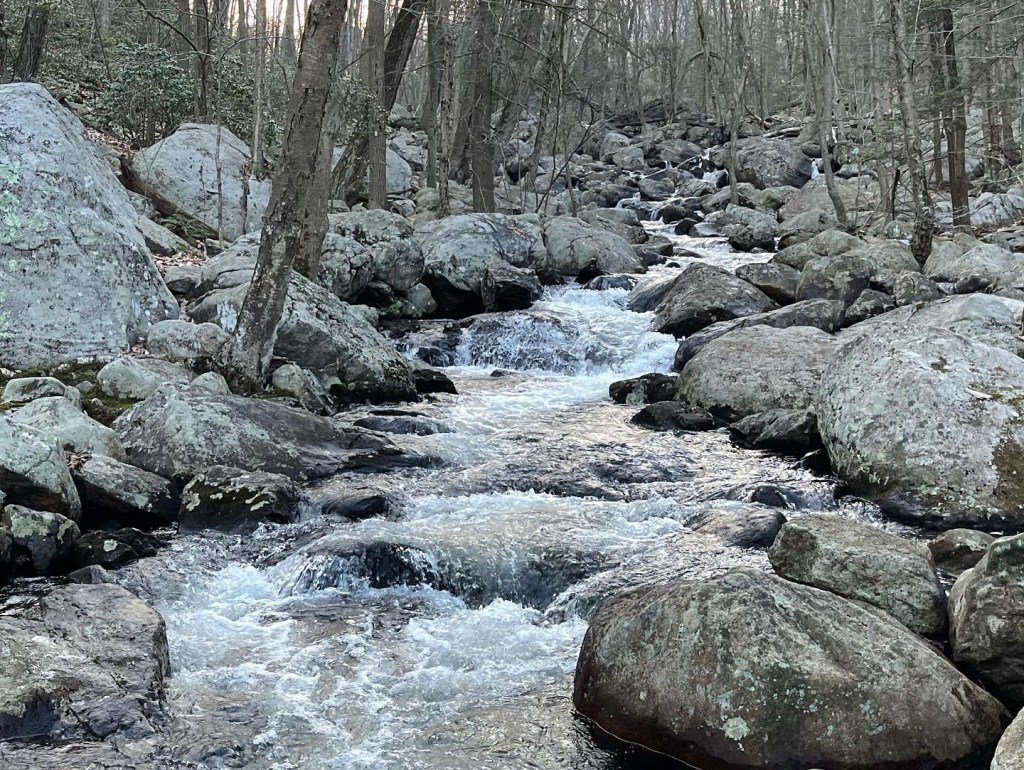
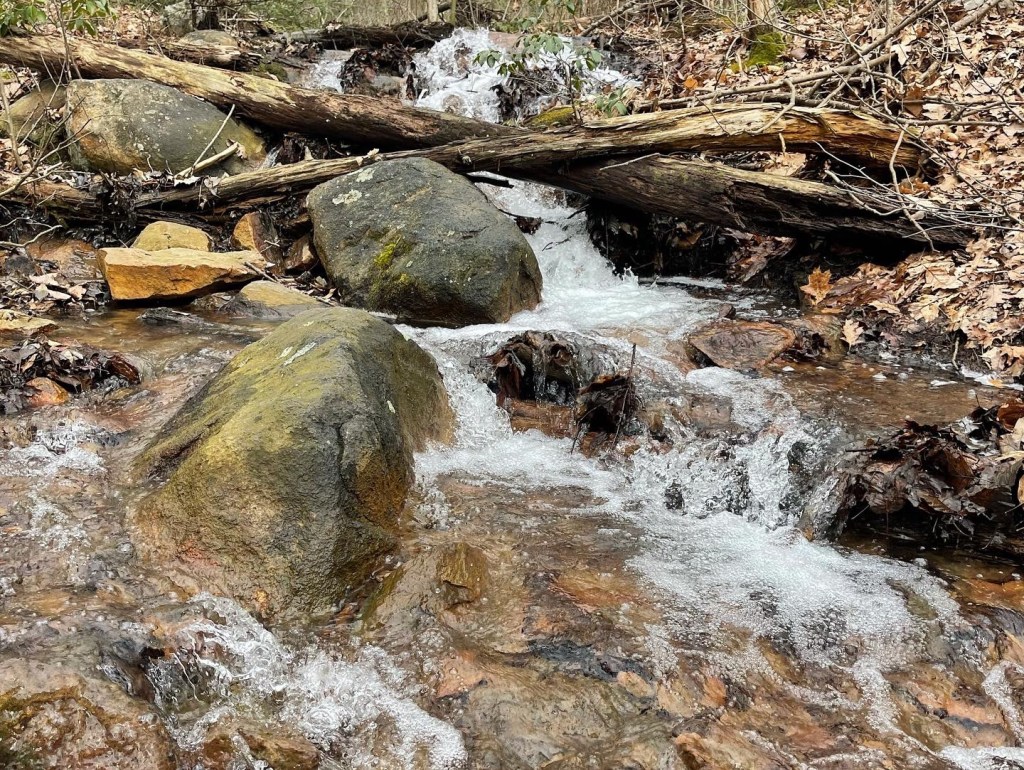
    Stony Brook lives up to it’s name
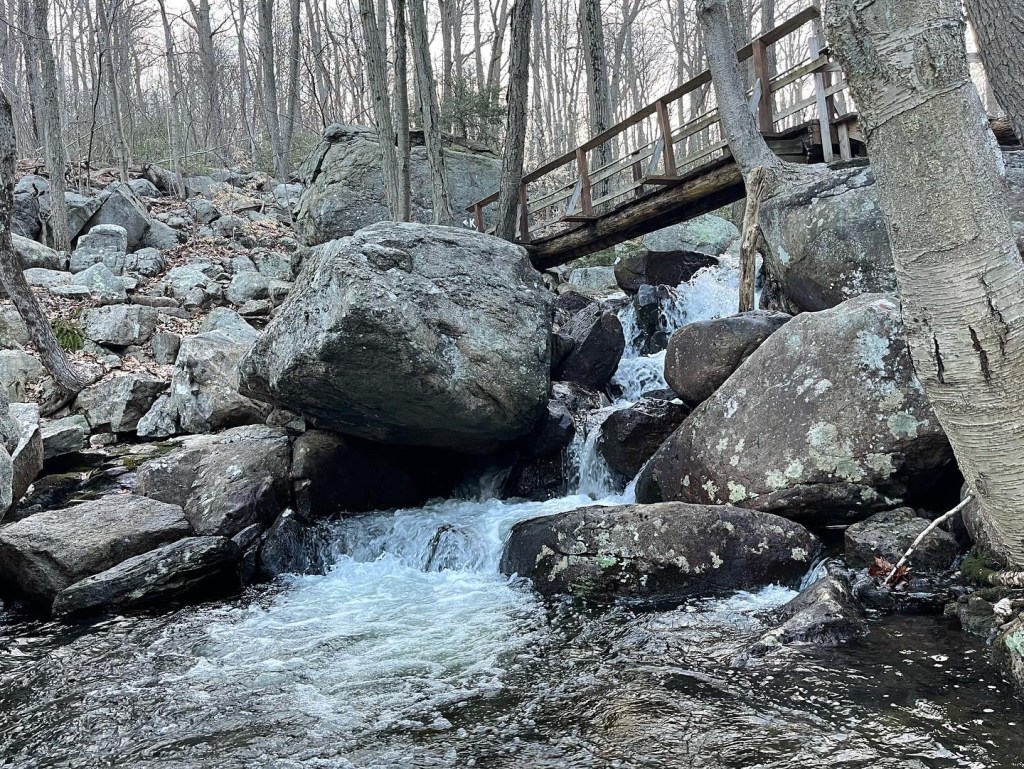
    An elusive waterfall, wrapped in boulders and capped with a bridge.
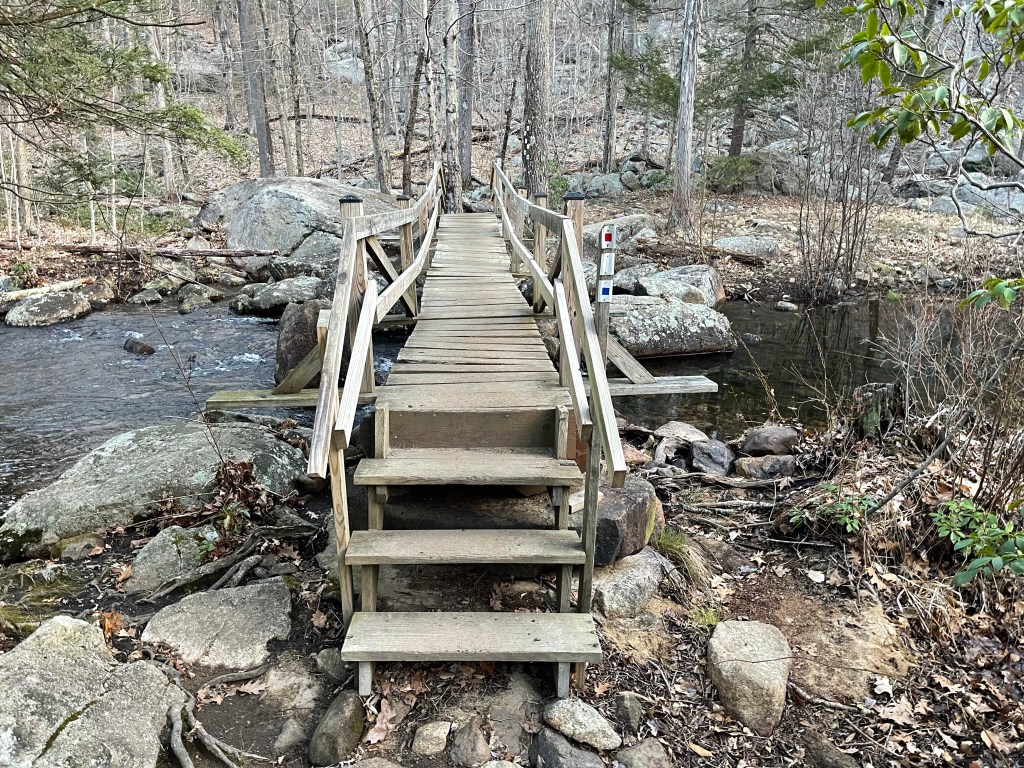
    Crossing this bridge convinced me that I’d best turn back and try again another day for the pond.
  • A Different Perspective on Liberty

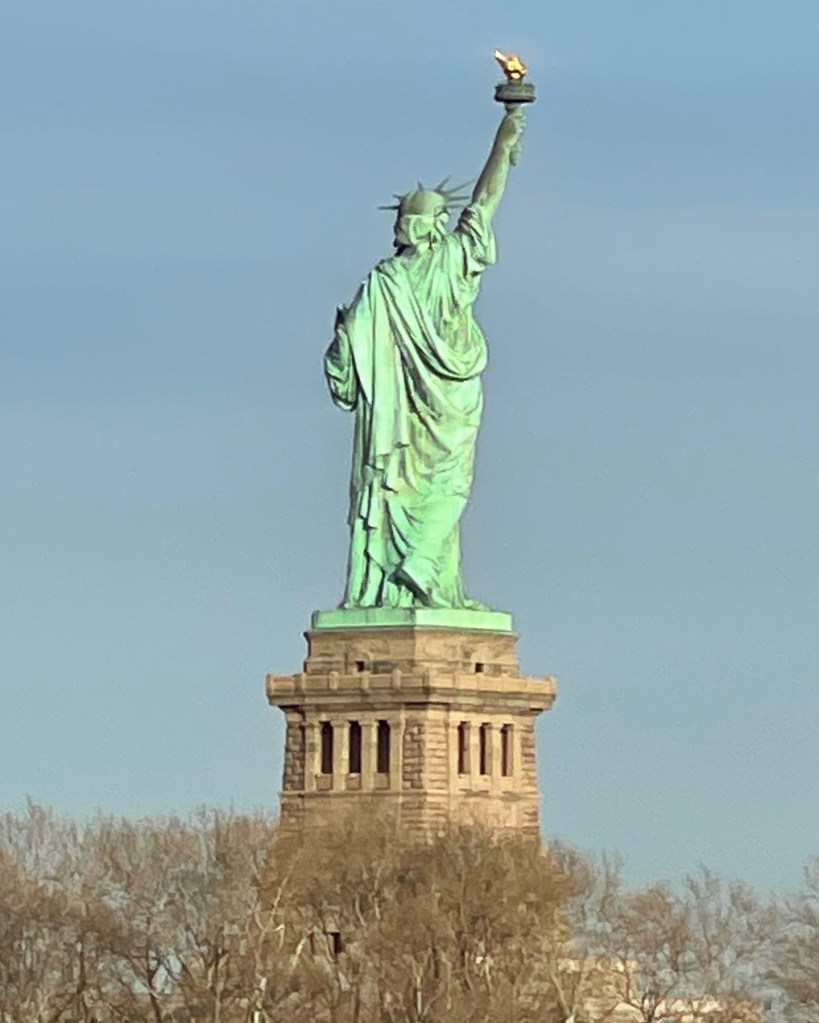
    When you see the Statue of Liberty from the New Jersey side, it feels a bit surreal. We’re all used to that image in our head of the face of Lady Liberty, but how often do we ever think of the back? Yet that’s what New Jersey sees. I recall a joke about Lady Liberty forever turning her back on New Jersey, but let’s flip that script around for what’s really been happening since 1886: New Jersey’s always had her back.

    Liberty Park offers a striking view of Manhattan and Frédéric Auguste Bartholdi’s bold vision of American liberty. He called his work “Liberty Enlightening the World”. Liberty represents the hopes and dreams of millions, standing exposed to the elements for 13+ decades. 1886 was within the lifetimes of Civil War veterans, think about what that statue meant to them. What it still means, when we look at the world with new perspective.

    Liberty connects generations, and she stoically stands, not just American’s, but for the world. The work was literally a gift from the Old World to the New. We ought to remember the message in the gift. Forget the people trying to co-opt her message for political gain, Liberty represents all of us. When you look at America’s Liberty from New Jersey, you aren’t just looking at it, you’re a part of it. And from that perspective, shouldn’t we all have her back?

  • A Quick Hike Up the Nose

    Let’s get the elephant in the room addressed right off the bat: Anthony’s Nose has an odd name. Here’s one story I came across in Kiddle that describes how it got it:

    “Pierre Van Cortlandt, who owned this mountain, said it was named for a pre-Revolutionary War sea captain, Anthony Hogan. This captain was reputed to have a Cyrano de Bergerac type nose. One of his mates, looking at this mount, as they sailed by it, compared it to that of the captain’s nose. He said that they looked similar in size. This good-natured joke soon spread, and the name Anthony’s Nose stuck to this peak. Washington Irving’s History of New York, a satire, attributes the name to one Antony Van Corlear, who was the trumpeter on Henry Hudson’s ship.”

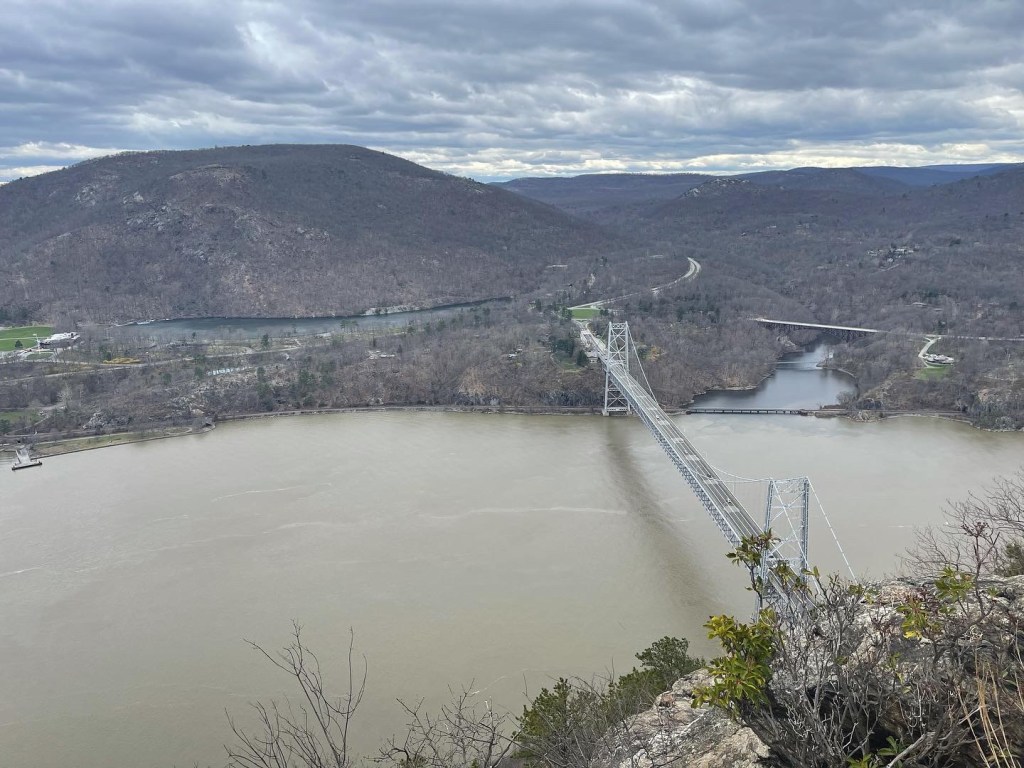
    Whatever the source, it requires that each hiker now forever able to say they went up Anthony’s Nose. How you feel about that is entirely up to you. For me, the motivation was to see a bridge I hadn’t seen in almost 30 years, get a quick hike in to break up a long drive and get a feel for a stretch of the Hudson River from a hill top.

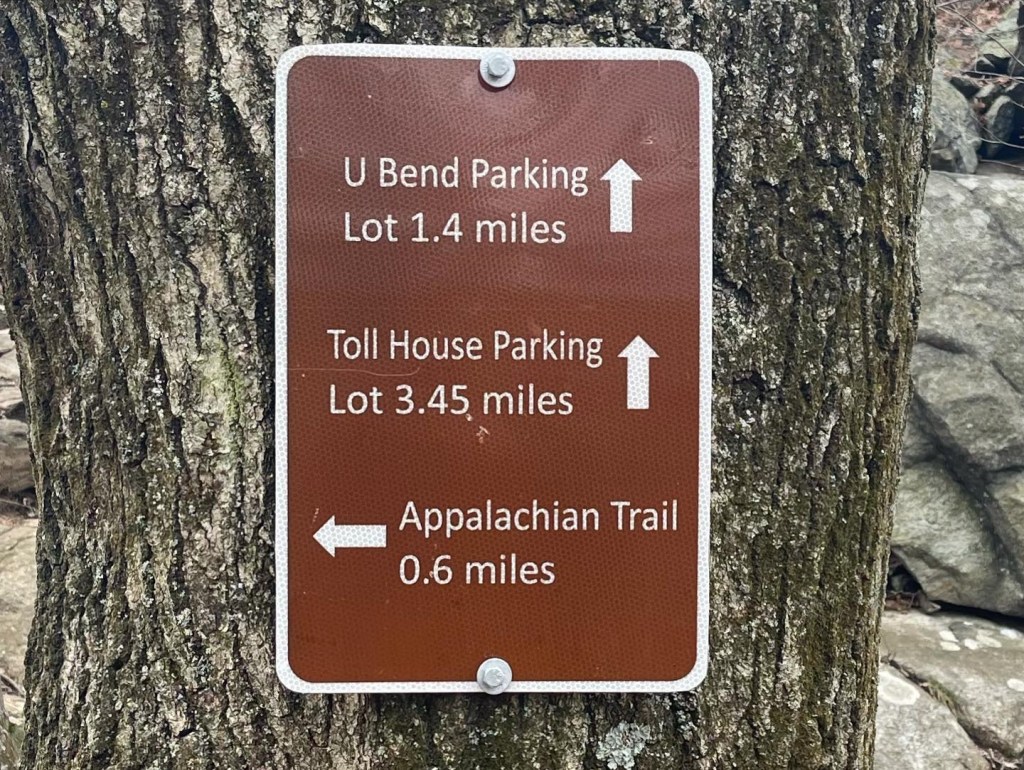
    There are a few routes up Anthony’s Nose (sorry). The most direct route is a steep granite “staircase” that brings you to your destination relatively quickly. This requires street parking on a busy stretch of road. Alternatively, there are a couple of longer routes to the lookout spot, the one I favored followed the white blazes of the Appalachian Trail. The AT crosses the Bear Mountain Bridge over the Hudson River and meanders up through a final stretch of New York before reaching Connecticut. You might expect a stretch of the AT to be lovely hiking. You’d be correct for this stretch.

    There seems to be a lot of confusion about where the trailhead is for Anthony’s Nose. If you’re going to hike straight up the staircase, you begin at a small deck on the side of the road not far from the bridge. If you’re more interested in a 90 minute round trip hike, take the AT route. The trailhead begins on South Mountain Pass Road, which is a rutted stone dust road for a long stretch. If you’ve got a small sedan you might consider driving in from the Blue Mountain Beacon Highway side, which offers a bit more pavement to work with. Driving a truck, I enjoyed the off-road feel of reaching the trailhead after a few hours of highway driving to get there.

    The key for the trail is to follow the white blazes, which leave an old roadbed a few hundred yards up and begin descending towards a small stream before climbing back along the ridge line. The trail head would benefit from a bit of signage and a map, as one hiker after another asked each other if they were in the right spot. Perhaps a Boy Scout Troop could take it on as a project.

    The hike took 90 minutes round trip. Parts of the trail felt like you were in the middle of the White Mountains, but with glimpses of the Hudson River along the way. There was a bit of traffic buzz in the background, but overall it was a perfect hike to break up a drive from New Hampshire to New Jersey for me, or a short destination hike away from New York City. I’d recommend bringing lunch and soaking up the view.

    Bear Mountain Bridge with it’s namesake rising up behind it