Tag: Newburyport

  • Spending Time With Profile Falls

    If time is the ultimate currency, why do we spend it frivolously? I wondered that as I drove north, breaking away from work on a rainy Monday to chase a waterfall. I knew the drive, and thought that maybe I should have combined it with a hike, or another waterfall, or a meeting with an industry acquaintance. Instead I made the falls their own destination and turned off thoughts of efficiencies.

    Profile Falls is an easy walk from the parking lot in Bristol, New Hampshire. You can’t call it a hike, really. You follow the path on the northern bank right to the edge of the water, and then decide how much you want to risk as you assess high, fast moving water, slippery rocks and poison ivy. My vote? Just enough to get a decent picture. Not enough to lose my phone and dignity to the mocking river gods.

    Profile Falls

    After following the path of least resistance, I returned to the parking lot and decided to try the view from the southern bank. The river turns just after the falls, making a view from this side trickier. I made my way past a picnic area to a wet path along the steep and rocky embankment. This quickly proved to be a dead end of sorts. The closer you got to the falls, the worse the vantage point became. I should think walking right up the river in low water might be the very best option. For me, this was enough.
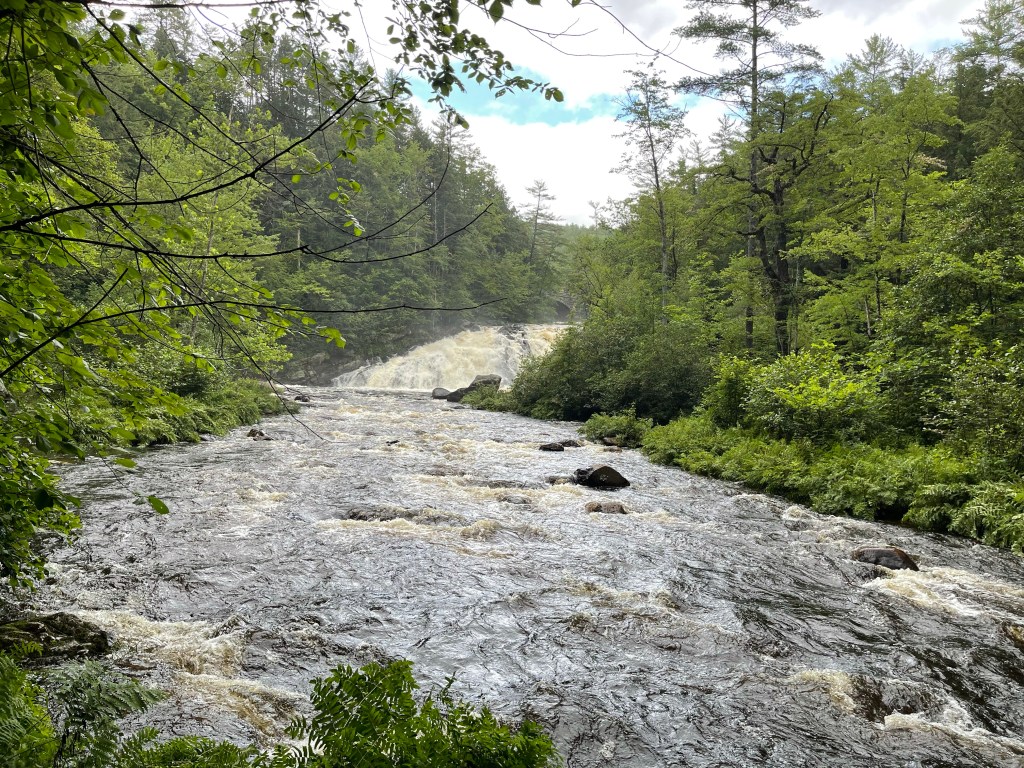
    The Smith River flows a few miles from just above Tewksbury Pond, gaining tributaries and power, before it gives itself to the Pemigewasset River, which flows into the Merrimack River at Franklin, New Hampshire and then 117 miles to the Atlantic Ocean at Newburyport, Massachusetts. It’s an epic journey, and one of the highlights is surely the 30 foot plunge over Profile Falls.

    For those keeping track, there are a lot of place names there that I have a deep connection to, which should have drawn me out here sooner in my life than this, but it seems I was spending time more frivolously then. I’m making up for lost time in some ways. Chasing waterfalls in the rain and using my currency in ways that work for me.
  • The Merrimack River

    The Merrimack River runs from the Lakes Region in New Hampshire to the Atlantic Ocean.   Source to Sea it’s roughly 117 miles long from the confluence of the Pemigewasset and Winnipesaukee rivers at Franklin, NH to the mouth at Newburyport, Massachusetts.  This stretch of river has served as a source of food, commerce and transportation for thousands of years.  Depending on who you believe, the name is derived from Native American words merruh and auke, which together mean “the place of strong current”.  The Merrimack lives up to that name.

    The powerful current of the Merrimack drew the attention of the Boston Associates, who expanded their manufacturing operations from Waltham to the Pawtucket Falls in what was East Chelmsford, and soon would be known as Lowell (named after the founder of Boston Associates, John Cabot Lowell).  The massive success of the textile mills in Lowell was quickly duplicated in other locations along the Merrimack, sprouting the cities of Lawrence and Haverhill in Massachusetts, and Manchester and Concord in New Hampshire.

    The explosive growth of colonial expansion and then the textile industry transformed the Merrimack River from sleepy Native American fishing villages to massive red brick cities connected by an increasing network of roads.  Dams and canals have changed the flow of the river and impacted the migration of salmon.  In many ways the river has changed forever from what it was in the early 17th century, but much of the river looks essentially the same as it did 400 years ago.

    If 60% of an adult man’s body is made of water, then much of mine is Merrimack.  I’ve lived most of my life in the Merrimack Valley, spent my college years rowing between Lowell and Nashua, visiting my father’s home along the river in Franklin, hiking the old Native American trail network from Lowell to Andover and now sailing out of Newburyport.  The brook in my backyard flows into the Spicket River, which in turn flows into the Merrimack River in Lawrence.  The Merrimack River continues to shape me, as it shapes the eastern border between New Hampshire and Massachusetts.

  • Red #2

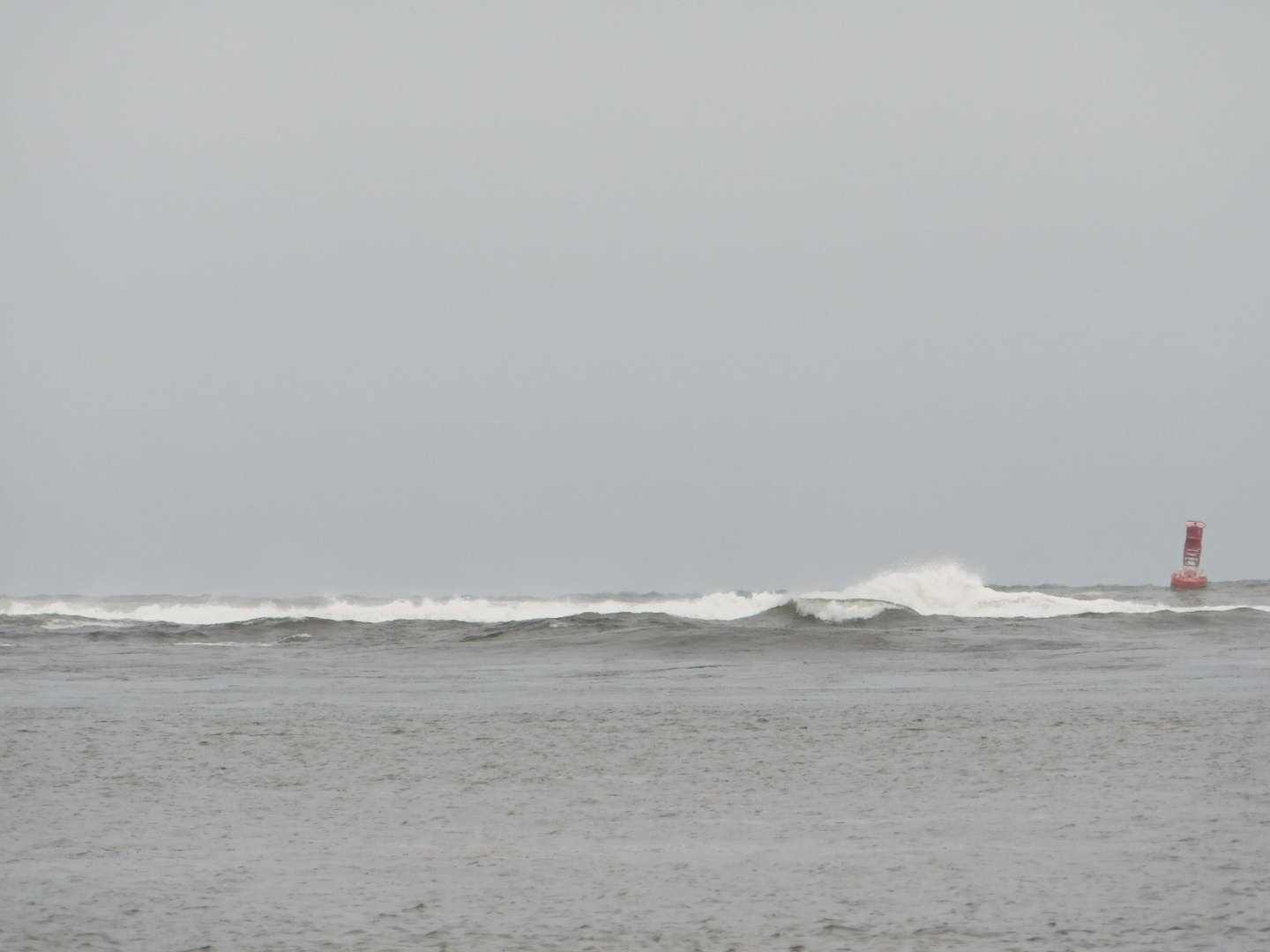
    Standing watch at the Mouth of the Merrimack River is Red # 2.  Red # 2 is a navigational buoy that rides out some of the most violent conditions on the East Coast.  Red # 2 is not as well known as MR, which is the first red navigational buoy on the approach to the Merrimack River and the one that most boats set their course to.  MR is the glamor buoy in this part of the Gulf of Maine.  Important, much discussed by boaters and the mark of choice on the GPS.  MR is not just a navigational buoy, it’s a destination.

    Such fame is not in the cards for Red # 2.  But I’d contend that Red # 2 is responsible for more safe passages through the Mouth of the Merrimack than any other.  Set beyond the Salisbury Jetty, Red # 2 marks the channel around the treacherous sand bars beyond the jetty.  Without Red # 2 boaters would be tempted to cut the corner around the jetty on their way north.  These pictures shows the waves breaking over the sandbar between the jetty and our friend Red # 2.  On a calm day a boater wouldn’t realize just how dangerous a tight course around the jetty would be.  So thank you Red # 2, you’re tops with me.