Tag: Pennacook

  • From Asquamchumauke to Baker: What’s in a Name?

    The Baker River flows from Mount Moosilauke to the Pemigewasset River in present day Plymouth, New Hampshire. On the map the name is cut and dried: Baker. But when you cross the river at the Gorge Brook Trailhead another name emerges from the past: Asquamchumauke. History once again whispering for all who might hear.
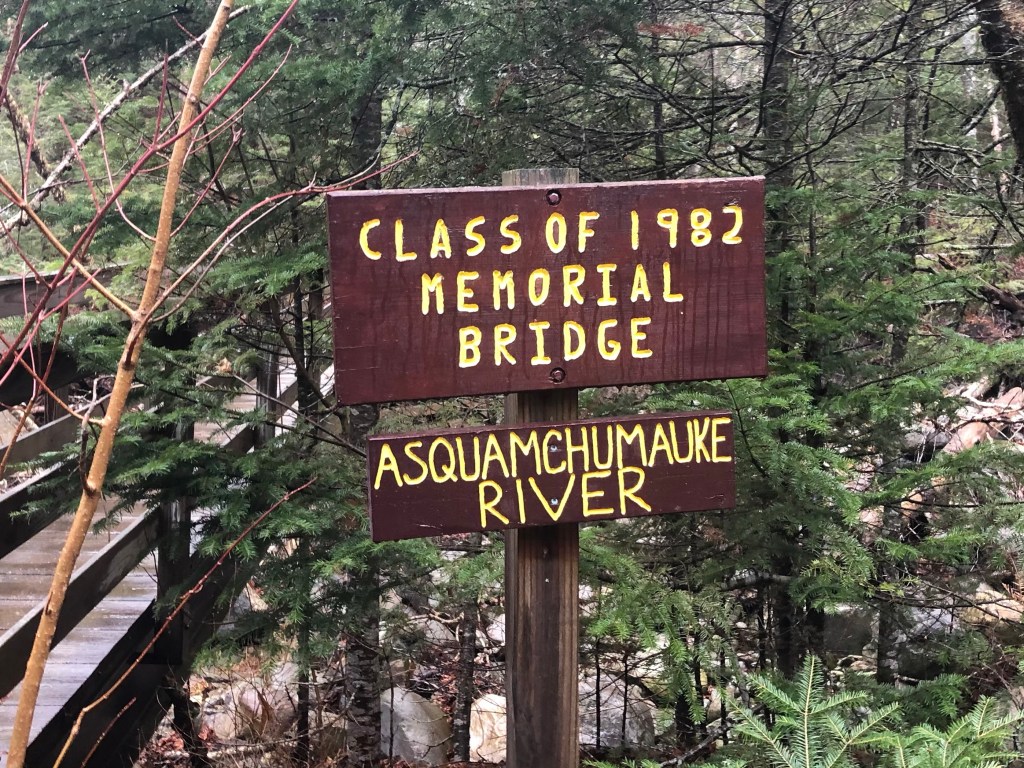
    Dartmouth College honoring the original name

    Asquamchumauke means “crooked water from high places” in the language of the Abenaki tribes that once thrived here. It’s a lovely, descriptive name that brings romantic notions of Native Americans living in this place for generations. Yet we’ve called it Baker since well before the American Revolution. The story behind the name change is another fascinating chapter in the violent history of New Hampshire.

    Thomas Baker was a soldier in Deerfield, Massachusetts on February 29, 1704 when the Deerfield Raid occurred. Deerfield was a seminal event in Queen Anne’s War and New England history. French and Native American warriors overran the fortified settlement, 47 settlers were killed and 112 captives, including Baker, were marched up to Montreal. The Native American warriors came from around the northeast, including several tribes of the Wabenaki Confederacy. One of them was a Pennacook sachem named Wattanumman.

    Whether Baker and Wattanumman met during the fighting or forced march to Montreal is unclear, but events would bring them together again eight years later. Thomas Baker led an expedition north with around 30 men and ambushed Wattanumman, a dozen of his men and their families at the site in present-day Plymouth where the Asquamchumauke River meets the Pemigewasset River. Wattanumman and several others were killed and scalped. The men collected furs and anything of value and brought it all down to Massachusetts where Baker was rewarded for his efforts with £40.

    And this is where present-day morality meets the violent frontier morality of New England in the earliest days of our history. Both men participated in violent raids against the other in a time of war. But for fate Baker might have been killed in Deerfield, which may have extended Wattanumman’s life a few more years. Who knows? All of us are subject to the whims of fate.

    There was one other reward for Thomas. To honor what Baker and his men did in this place the name of the river was changed from Asquamchumauke to Baker, a name it still has today. With one event the life of Wattanumman was erased, and the legacy of Baker was sealed. We Americans tend to honor people with place names, while the Native Americans honored the spirit of the place itself. Asquamchumauke: crooked water from high places.

    Has a nice ring to it.

  • What’s in a Name?

    I live in Southern New Hampshire in a town that used to be part of Massachusetts.  Borders changed a lot back in the day.  The area I’m likely saw many turf wars between the Pennacook and Abenaki over the centuries.  Both tribes were part of the Webanaki Confederacy.  Webanaki means “People of the Dawn Land” because, well you know, they lived along the Eastern coast.  I think we should adopt that name again, both to honor the native population we displaced and frankly because it’s way cooler than “Yankee”.

    The name “New Hampshire” didn’t come along until 1629, when Captain John Mason, previous Governor of Newfoundland, split Northern New England with another well-connected gent named Captain Gorges and named the region between the Merrimack River and the Piscatagua River – you guessed it – New Hampshire.  Back then explorers and settlers didn’t venture too far into the wilderness, so Mason wasn’t envisioning the shape of the Granite State back then.  In fact, he never set foot in New Hampshire.  He died before he could sail over to check out his new stomping grounds.  But plenty of other folks did.  And of course, this brought violent conflict and atrocities hard to imagine today.

    There are hints to the past if you look closely enough.  Massacre Marsh in Rye, NH marks the site of a raid that killed 13 settlers.  Worlds End Pond in Salem NH once marked the end of civilization and the edge of the vast northern wilderness.  The Dustin Garrison in Haverhill MA was built to defend the region from Indian Raids.  It was a harsh, unforgiving world.  The people who settled here had to be tough, resourceful and resilient, or they simply didn’t survive.

    The name New Hampshire wasn’t an accident.  Mason had lived in Hampshire, England and it probably seemed like a logical choice to tack on New.  And the New World was looking for settlers, and naming the region after places familiar to the population back in the Old World was a nice marketing trick designed to entice settlers to drop everything they knew, risk life and limb sailing across the North Atlantic and find a piece of land to clear and farm.  And hopefully grow some food, hunt some game and fend off raids, wars and the brutal cold of winter long enough to put down roots.  New Hampshire, Nova Scotia, New Brunswick, New France, New England…  and on.  Most people never think about the names of the places they live, or the life and death struggles of the people who came before us.  The bones of the past are all around us, if we only open our eyes to see.