Tag: Philosophy

  • The Slopes of Vesuvious

    “For believe me! — the secret for harvesting from existence the greatest fruitfulness and the greatest enjoyment is: to live dangerously! Build your cities on the slopes of Vesuvius! Send your ships into uncharted seas! Live at war with your peers and yourselves! Be robbers and conquerors as long as you cannot be rulers and possessors, you seekers of knowledge! Soon the age will be past when you could be content to live hidden in forests like shy deer! At long last the search for knowledge will reach out for its due: — it will want to rule and possess, and you with it!” — Friedrich Nietzsche, The Gay Science: With a Prelude in Rhymes and an Appendix of Songs

    Living dangerously isn’t so much about reckless acts of defiance against Darwinism. To live dangerously is to risk who we once were for who we might become. Once you’ve experienced the world you can’t put the genie back in the bottle, we expand into something more. Travel opens the mind to new possibilities, just as reading Nietzsche does.

    Visiting places for the first time that you’ve heard about all of your life is an education. The problem with those places is everyone else is joining you there to complete something in themselves too. I’d like to think that we all visit a place with the same objectives, but you know some just want to check a box while the enlightened few try to bring context and meaning to the visit. But let’s face it, we’re all a combination of both, it’s simply the ratio that separates the Instagram model from the student of history.

    The thing is, one person’s fruitfulness is another’s waste of time. We’re all on our own path through this lifetime. The trick is to get more comfortable with risk, for the fruit is often out on a limb awaiting the courageous.

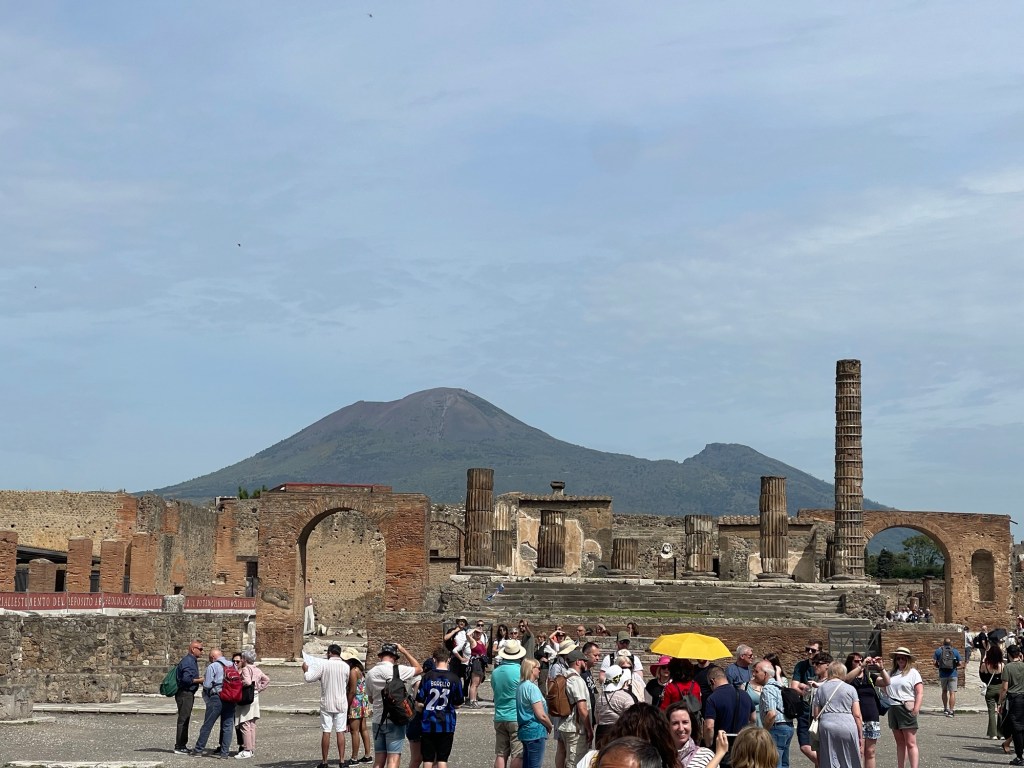
    Pompeii with Mount Vesuvius looming large
  • Mount Etna

    “Mount Etna is renowned for its exceptional level of volcanic activity, and the documentation of its activity over at least 2,700 years. Its notoriety, scientific importance, and cultural and educational value are of global significance.” — UNESCO

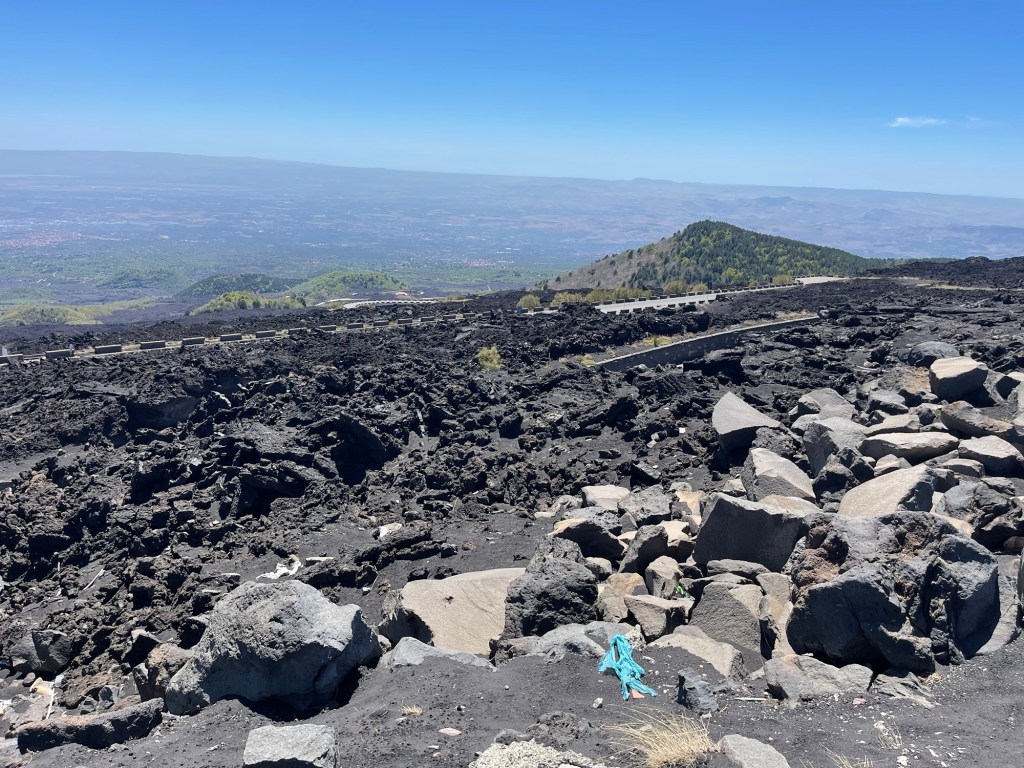
    Visiting Mount Etna is relatively easy. It simply involves driving serpentine narrow roads filled with cars, motorcycles and large tour buses nudging the limits of the suggested speed. Once you arrive at the lower crater, you’re greeted by hundreds of people, souvenir shops and restaurants. Some hike or gondola further up to the higher craters and summit, others linger where the views are good enough, thank you. Personally, I’d have hiked ip given the opportunity. But there’s only so much time.

    The thing about a volcano is it doesn’t particularly care about your feelings, or about time. Volcanoes, like the ocean and stars and timeless principles, are of the eternal universe. so visiting an active volcano informs, not just about the planet, but about our fragile hold on this moment we’re here to witness it. When you’re dancing with eternity, you can’t help but feel awed and agape. Which is exactly why we made the pilgrimage there ourselves. Tourist shops aside.

  • Greek Character

    “Character is a Greek word, but it did not mean to the Greeks what it means to us. To them it stood first for the mark stamped upon the coin, and then for the impress of this or that quality upon a man, as Euripides speaks of the stamp—character—of valor upon Hercules, man the coin, valor the mark imprinted on him. To us a man’s character is that which is peculiarly his own; it distinguishes each one from the rest. To the Greeks it was a man’s share in qualities all men partake of; it united each one to the rest. We are interested in people’s special characteristics, the things in this or that person which are different from the general. The Greeks, on the contrary, thought what was important in a man were precisely the qualities he shared with all mankind. The distinction is a vital one. Our way is to consider each separate thing alone by itself; the Greeks always saw things as parts of a whole, and this habit of mind is stamped upon everything they did.” — Edith Hamilton, The Greek Way

    Greece is a place of rugged beauty, to be sure, but also of rugged character shaped by a sense of timelessness that we simply don’t have in my own country. To walk around a structure built in 444 B.C. is to taste eternity. We are humans of course, and eternity isn’t ours to embrace just yet. But we may reach for the eternal in the form of development of our character.

    Poseidon was one of the Olympians for the Greeks, presiding over such volatile things as the weather. For a Greek sailing off to fish or fight, Poseidon was a big deal, and someone to cater favor with. He also influenced the temperament of horses, and was known as the “earth shaker” for his power to control earthquakes. So building a temple devoted to Poseidon made a lot of sense, and where better for it than on a prominent cliff overlooking the Aegean Sea on Cape Sounion?

    It’s one thing to read history, quite another to stand on the edge of a cliff between the Aegean Sea and a temple erected 2500 years ago as a tribute to the god who controlled both that sea and the ground we stood on. Best to embrace the spirit of the ancients in such moments, rather than incurring the wrath of Poseidon. And that’s the thing about Greece: you feel that you’re trying to measure up instead of trying to stand out. It’s a subtle difference, but it matters a great deal. It’s not that we aren’t special (our mother’s would insist that we are), it’s that we may be integral to something far beyond our time and place. That’s the Greek character.

    The Temple of Poseidon, 444 BC

  • Meeting Marcus Aurelius

    “Does the light of a lamp shine and keep its glow until its fuel is spent? Why shouldn’t your truth, justice, and self-control shine until you are extinguished?” — Marcus Aurelius, Meditations

    I met an old friend in Rome over the weekend. First in his (replica but still impressive) statue at the Palazzo dei Conservatoriin in Rome, then the next day on a walk through the Vatican. Marcus Aurelius was a big deal back in the day. Many of us feel he still is. To encounter statues of him isn’t surprising, but it was surprisingly thrilling. It was like seeing a celebrity out in public—you know they’re just people but you’re still just a wee bit starstruck. So it was for me with Marcus Aurelius.

    The thing is, I view Marcus Aurelius as a kindred spirit of sorts, and not just an ancient mentor. We share the same birthday, so I’m often receptive to what the Emperor has to say. so to go to Rome and not seek him out seemed inappropriate, if not ungrateful. The statue on the Palazzo dei Conservatoriin was an obvious choice, as was a visit to the museum to see the original (not in the cards this trip), but stumbling upon him at the Vatican was a bonus.

    Meditations was Marcus Aurelius’s diary, becoming public after his death. It’s foundational work in Stoicism, and the work that resonates most with me. So meeting a few days after our respective birthday seemed appropriate. Perhaps we’ll meet again one day, but as the Emperor would say, there are no guarantees in this lifetime. But we may shine bright today.

  • Historical Memory

    “History is written by the victors and framed according to the prejudices and bias existing on their side.” — George Graham Vest

    History writes itself as humans progress generation-to-generation, but that’s no guarantee of it being remembered. For, as Vest, a Confederate Senator who managed to retain power after the American Civil War pointed out, our written history is only remembered when subsequent generations choose to remember it. How many billions of souls are nothing more than a footprint? How many heroic figures would have been portrayed as villains had the other side won?

    The point was hammered home for me on a visit to the Colosseum in Rome. The Colosseum affirms history—for who doesn’t know of the Colosseum?—while also emphasizing that remembering or saving anything from one generation is at the mercy of those who follow in the next. Whole sections of the Colosseum were removed and recycled into other things, which themselves may have been removed and recycled again and again. Were it not deemed sacred the Colosseum likely would have disappeared like the statue Colossus, from which it got its name, did.

    Most Emperors, Presidents and Popes fall away into history, let alone you and me. The lesson is to enjoy the ride while we’re here, but also to be so valued by those we leave behind that we’re remembered for all the right reasons. Ultimately, our lives are fragile enough as it is without the burden of being remembered beyond a generation or two after we’re gone, so we ought to simply pursue excellence for its own sake. Our time is not some dusty monument, we write our memories now. The rest is up to those who follow.

    Rome’s Colosseum
  • Killing Gods

    “You must kill your god. If you are to advance, all fixed ideas must go.” — Joseph Campbell, A Joseph Campbell Companion: Reflections on the Art of Living

    “Do you want to change the world? How about beginning with yourself? How about being transformed yourself first? But how do you achieve that? Through observation. Through understanding. With no interference or judgment on your part. Because what you judge you cannot understand.” — Anthony de Mello, Awakening

    I was having a drink with an old friend this week when the conversation turned to transformative books. Anthony de Mello’s Awakening was the second book I recommended, but the one I said to read first. It’s foundational in that way, when we’re ready for it.

    Having recommended the book so strongly, I went back to it again myself while waiting out a flight delay. The quote above had been highlighted and most likely used in this blog a few years ago. Interestingly, the quote from Campbell was highlighted the same day. A sign that I’m on the right path? Perhaps. There’s no doubt that Campbell’s book stirs the soul similarly. When the student is ready, as they say.

    We must be open to everything to reach our potential in this lifetime. To move towards enlightenment (dare I say). And so it is that all fixed ideas must go. We must consume disparate thoughts and opinions and find the truth within ourselves. Make ourselves uncomfortable and birth new ideas. And maybe even write about it, that others may challenge us in our conclusions. To kill a god surely stirs others, as we ourselves have been stirred. In this way we may grow together.

  • Like All the Rest

    “If you say “no” to one little detail of your life, you’ve unraveled the whole thing. You have to say “yes” to the whole thing, including its extinction. That’s what’s known as “joyful participation in the sorrows of the world.” It’s my little theme song.” — Joseph Campbell, A Joseph Campbell Companion: Reflections on the Art of Living

    Memento mori, friend. This is the whole thing. We must dance with the light we receive today knowing the party must eventually come to an end. For when we are aware of the fragility of the moment and our place in it, we learn to savor it.

    It’s easy to say this, harder in practice when we feel the weight of the world on our shoulders.. Life can be hard, after all, so who are we to blissfully enjoy it all? We don’t need to enjoy the hard days, simply to accept the truth of the moment. Amor fati—love of fate. The most joyful people are the most present and aware.

    When we know our time is short in anything, or with someone, we may become fully aware of the importance of the experience. It’s here that memories are born. We are but accumulated memories molded into identity. So carpe diem—seize the day, whatever it brings. For it will soon be gone like all the rest.

  • Stay the Course

    “Waste no more time arguing about what a good man should be. Be one.” ― Marcus Aurelius, Meditations

    I’d been saving this quote for the day I finished writing the blog. It seemed as good as any way to close it out. Perhaps this will be the last—since I’m using it and all that. Perhaps.

    It seems I share a birthday with my old friend Marcus Aurelius. Not too far away now, really. He has a few years on me, of course, but reading Meditations was a catalyst for making some changes to my routine of the time, including writing this blog every day. Blogging sometimes feels like shaving for me: I don’t always want to do it, but I feel better after having done it so I keep on doing it. Then the next morning there I am staring at myself in the mirror once again.

    The answer, Marcus suggests, is to stop worrying about process and routine and obligations and just be what you aspire to be. Just do the things that make us good people. The things that make the world less good will be there either way, so we are the counterbalance to all that we wish were different. Our answer all along has been to stay the course, friend. And so it shall be.

  • To Give Light

    “What are we here for if not to enjoy life eternal, solve what problems we can, give light, peace and joy to our fellow-man, and leave this dear fucked-up planet a little healthier than when we were born.
    Who knows what other planets we will be visiting and what new wonders there will unfold? We certainly live more than once. Do we ever die—that is the question. In any case, thank God we are alive and of the stars—into all eternity. Amen!” — Henry Miller

    The thing about stars that may interest only me is that they give light to the eternal darkness of the universe for however long they exist. They aren’t relying on other stars for their energy—perhaps a little gravitation pull now and then, perhaps a bit of orbital spin, but their energy is all their own. Stars shine light into the vacuum of space with no expectation that anyone will receive it someday. That’s of no concern to the star—all their energy is put into giving light while they dance in their orbit to infinity and beyond.

    And here we are, stardust ourselves, receiving that light and mixing it with our own. We too are here to shine; we mustn’t ever worry where our own light goes, just that we give it freely to the universe in our time. The question is never whether to give light, but what our light should be. Perhaps, as Miller suggests, the answer is simply to enjoy this life eternal in our time and solve more problems than we create. Maybe it’s enough for us to put positive energy into the universe that illuminates others in their darkness, that they too might shine.

    Sometimes I wonder if I’m spinning in the right orbit or perhaps even burning out. There are days when I don’t want to do much of anything but find when I stop focusing on the void and begin the process something worthwhile eventually arrives to greet me. Something like the little note to himself Miller wrote in 1918 find their way to me and now to you, to serve as a reminder: Who are we to keep the light to ourselves?

  • The Gift of One More

    “The idea that the future is unpredictable is undermined every day by the ease with which the past is explained.” ― Daniel Kahneman, Thinking, Fast and Slow

    “The illusion that we understand the past fosters overconfidence in our ability to predict the future.” ― Daniel Kahneman, Thinking, Fast and Slow

    (Rest in Peace, Daniel Kahneman)

    Life is complicated and our best intentions don’t always lead to successful outcomes, but in general when we pick a direction for our lives and stick with the incremental steps necessary to stay on that path, we are more likely to become that which we aspire to be than we might have otherwise. We may accept the ambiguity of the future for what it is, even as we work to shape it into what we most want it to look like. For all my carrying on about habits and routines, I know I’m one bad day from having a series of streaks end. There are some days I want to just end a few streaks just to get it over with, until I remember why I established those habits at all.

    There’s a place for randomness in our lives. In fact, our very existence and progression to the present moment consist of one lucky break after another that led us here. It’s a miracle, or a series of miracles, that we rarely celebrate in our rush to get to what’s next. We ought to have enough awareness to celebrate our moment in the sun, even as we have the audacity to plot something greater for ourselves than we’ve already been given. We skate a fine line between proper acknowledgement of the gift at hand and the underlying expectation that there are more presents under the tree with our name on them simply because there’s always been that one more.

    So here we are: we have this one gift of today, with some measure of physical and mental fitness to do something with it. That’s an old theme on this blog, and forgive the repetition, for it’s a reminder to myself as much as anyone else. To build something consequential in this lifetime requires a measure of discipline and focus often missing in our days. If it were easy everyone would be doing it, right? Indeed. So it’s fair to ask ourselves if this is our contribution, or are we just spending the time forever preparing to leap?

    We may never produce that which we aspire to in our lifetime. We may produce it and have it ignored by the universe. That doesn’t make the journey less meaningful. Each day is one more gift delivered to us by who we grew to be yesterday. Knowing this, we ought to at least try to put a bow on the gift of tomorrow, that we might progress forever into the future until all the gifts have all been opened.