Tag: Revolutionary War

  • Where it all Happened

    When I was a child I thought of Boston, Lexington and Concord as the place where the bulk of the Revolutionary War was fought. Of course, that’s not accurate at all; it’s the place where it started. Or rather, where the underlying tensions felt across the thirteen colonies erupted into open rebellion and eventually violent conflict. Names like Yorktown, Valley Forge, Princeton, Trenton and Saratoga are just place names unless you’ve been there and felt the lay of the land. Having grown up there I’d done that in Boston but it wasn’t until I was an adult that I started visiting these other places.

    Monday I drove from an appointment in Castleton, Vermont to Clifton Park, where I would have meetings the next morning. Before the drive I did my usual survey to see what was on or near the route. I was already very close to Hubbardton, which I’d visited on my last trip up this way. But there was another significant side trip not far from my route…. Saratoga.

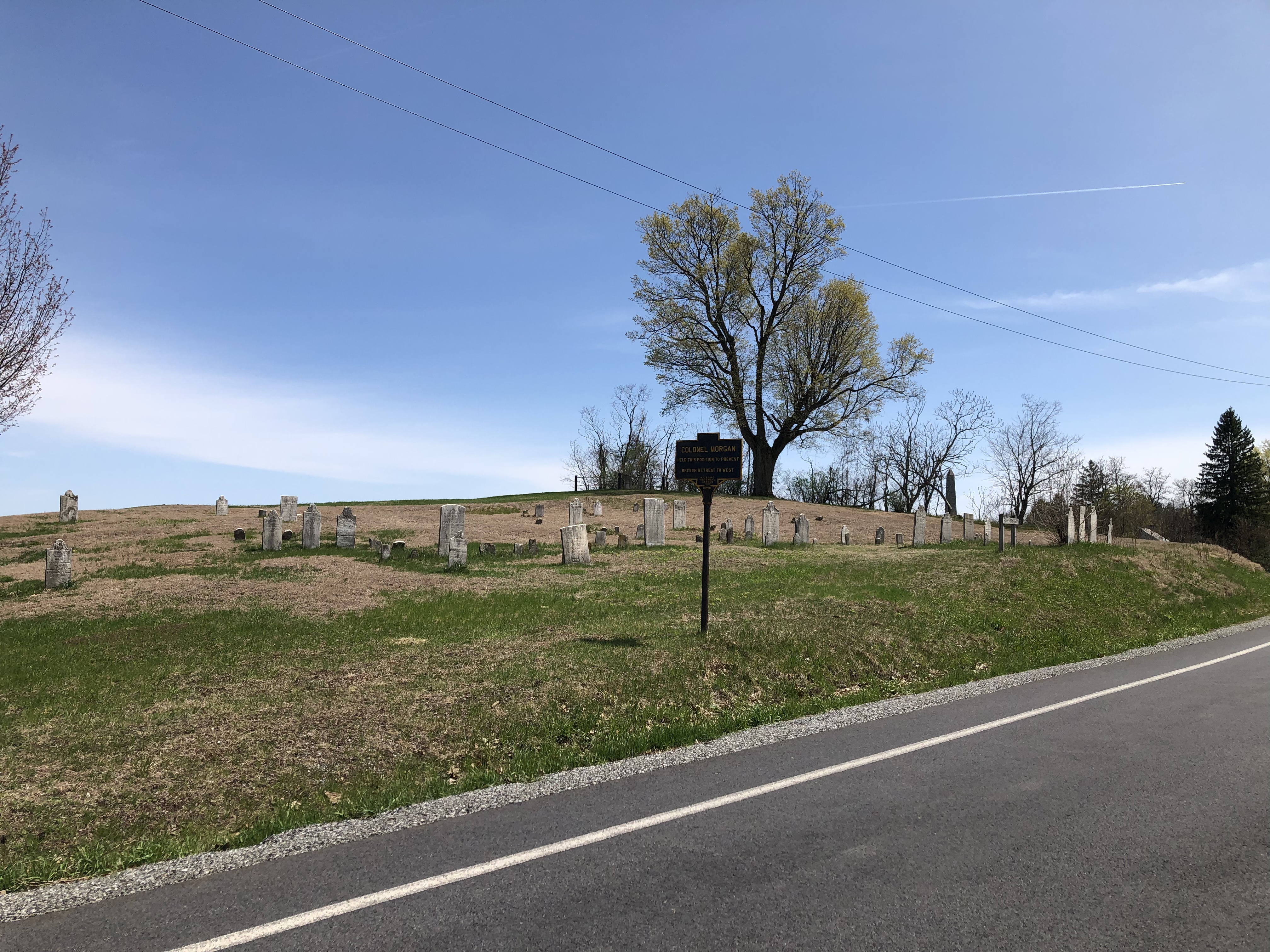
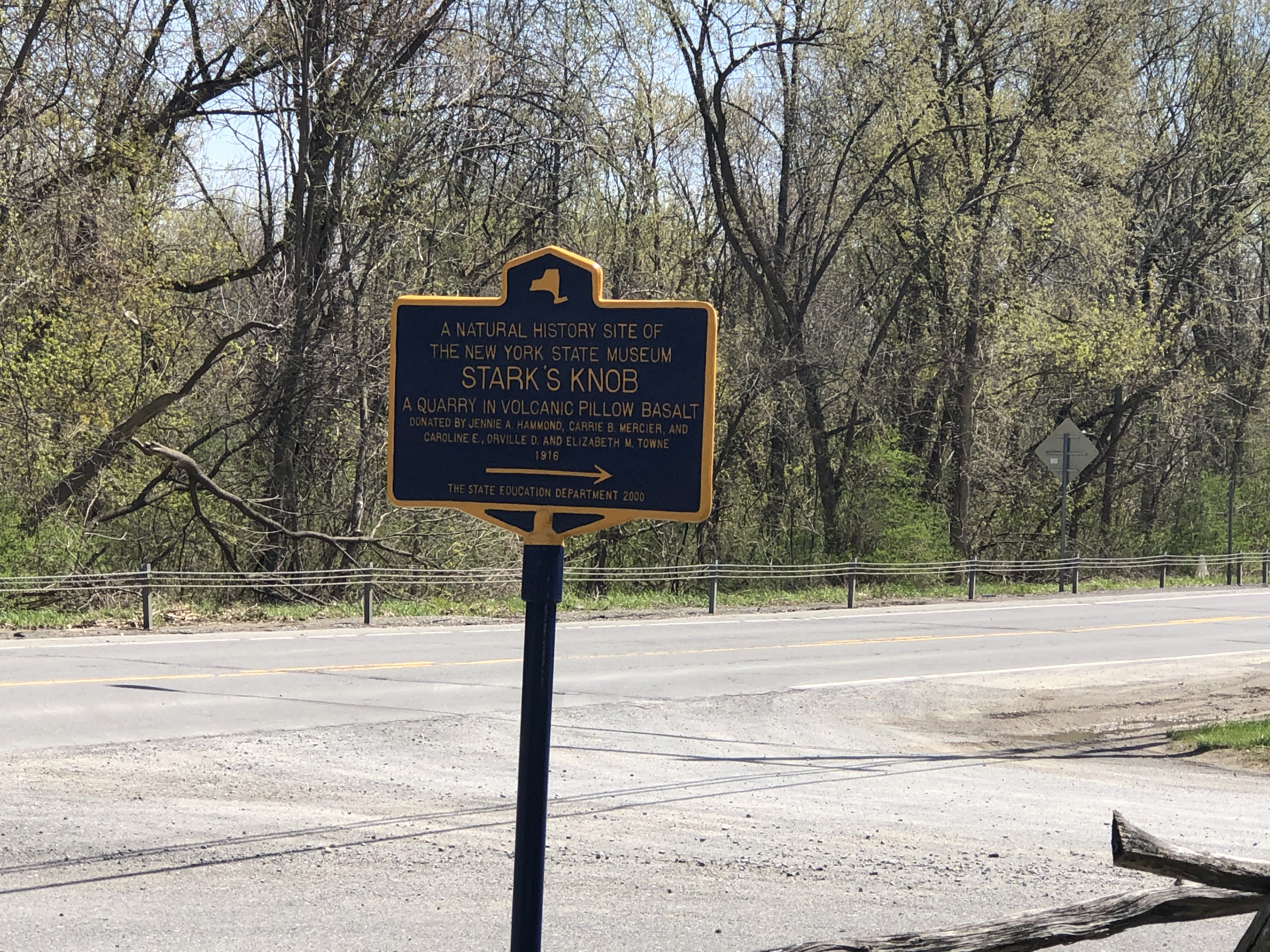
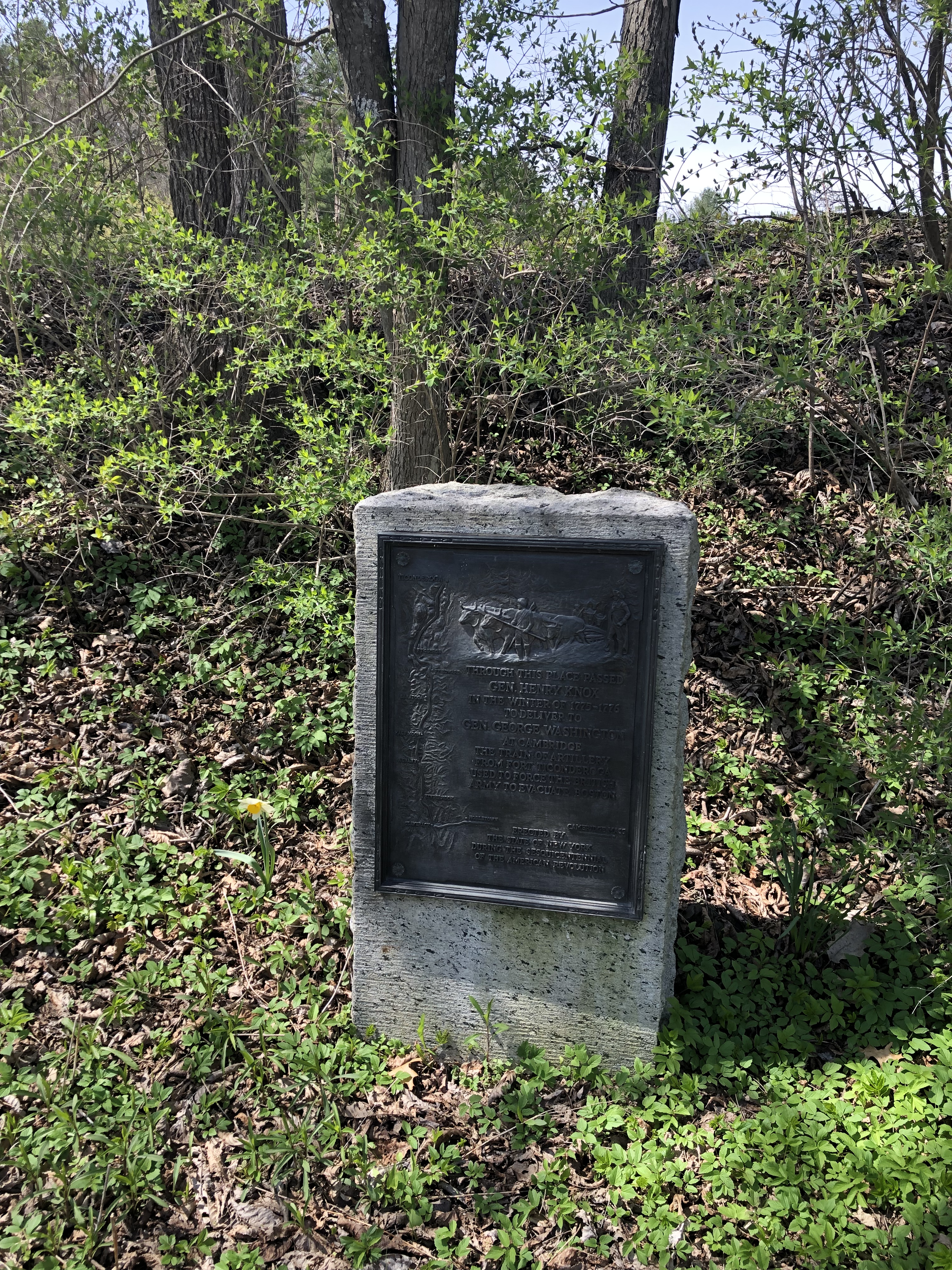
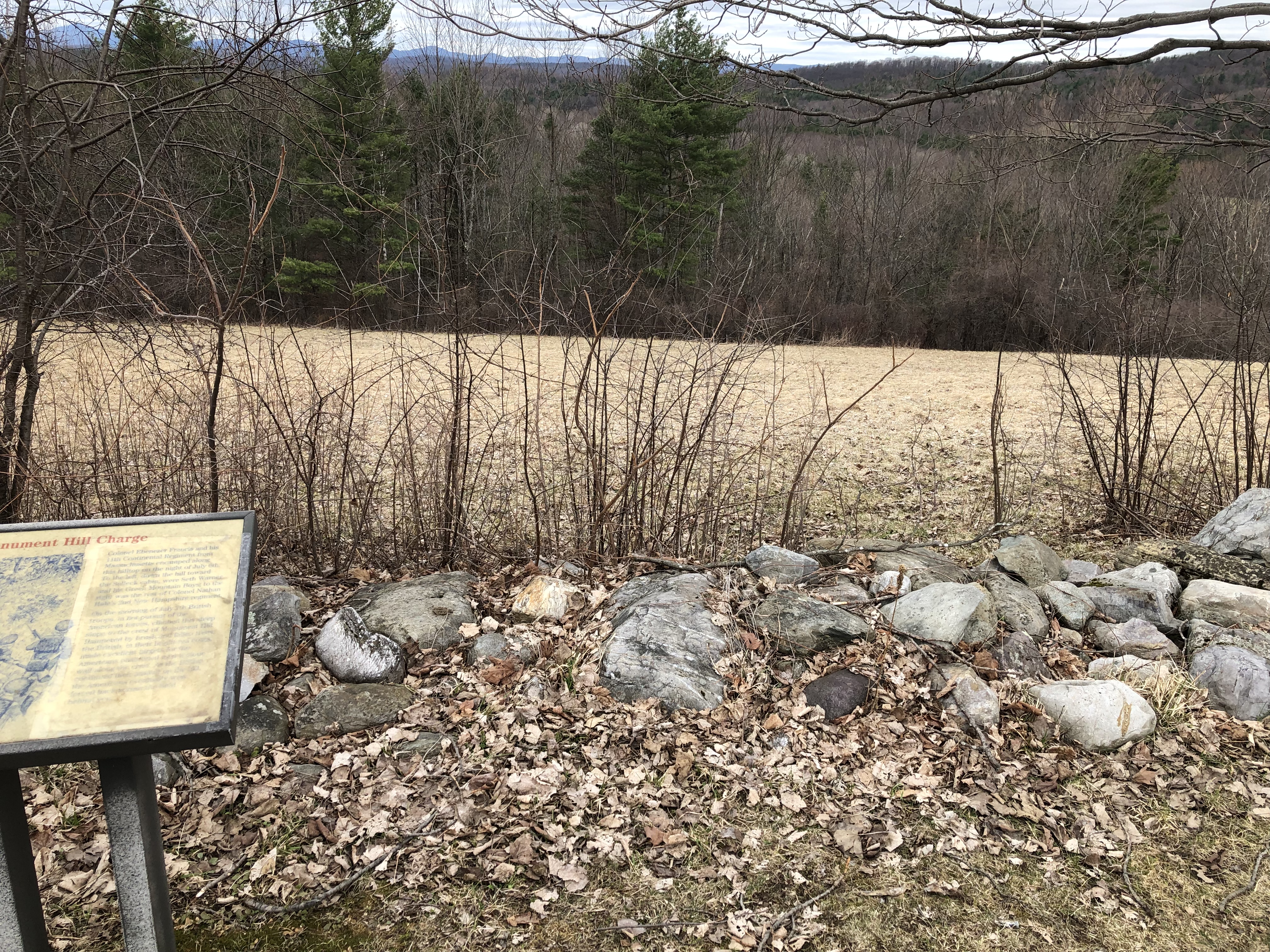
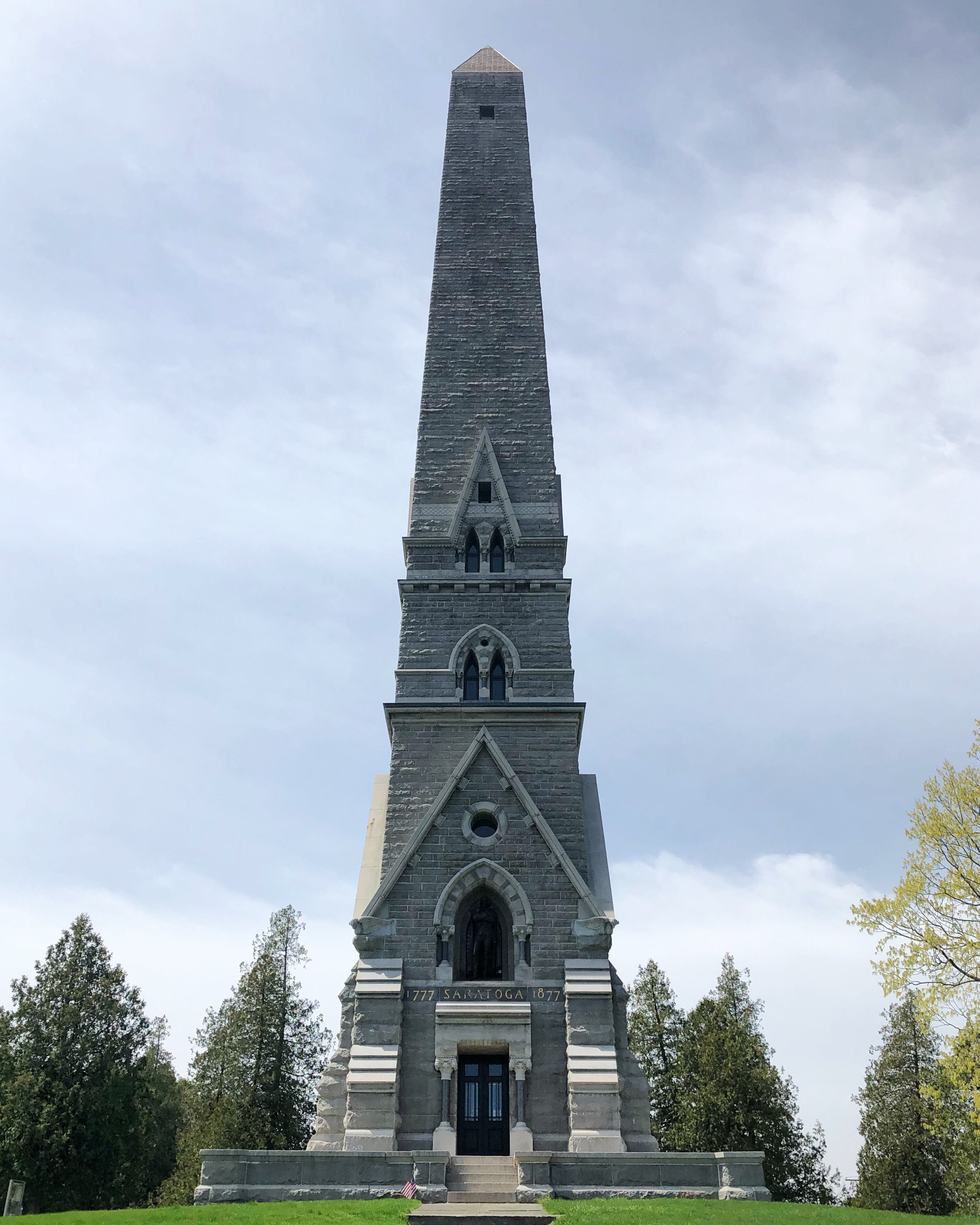
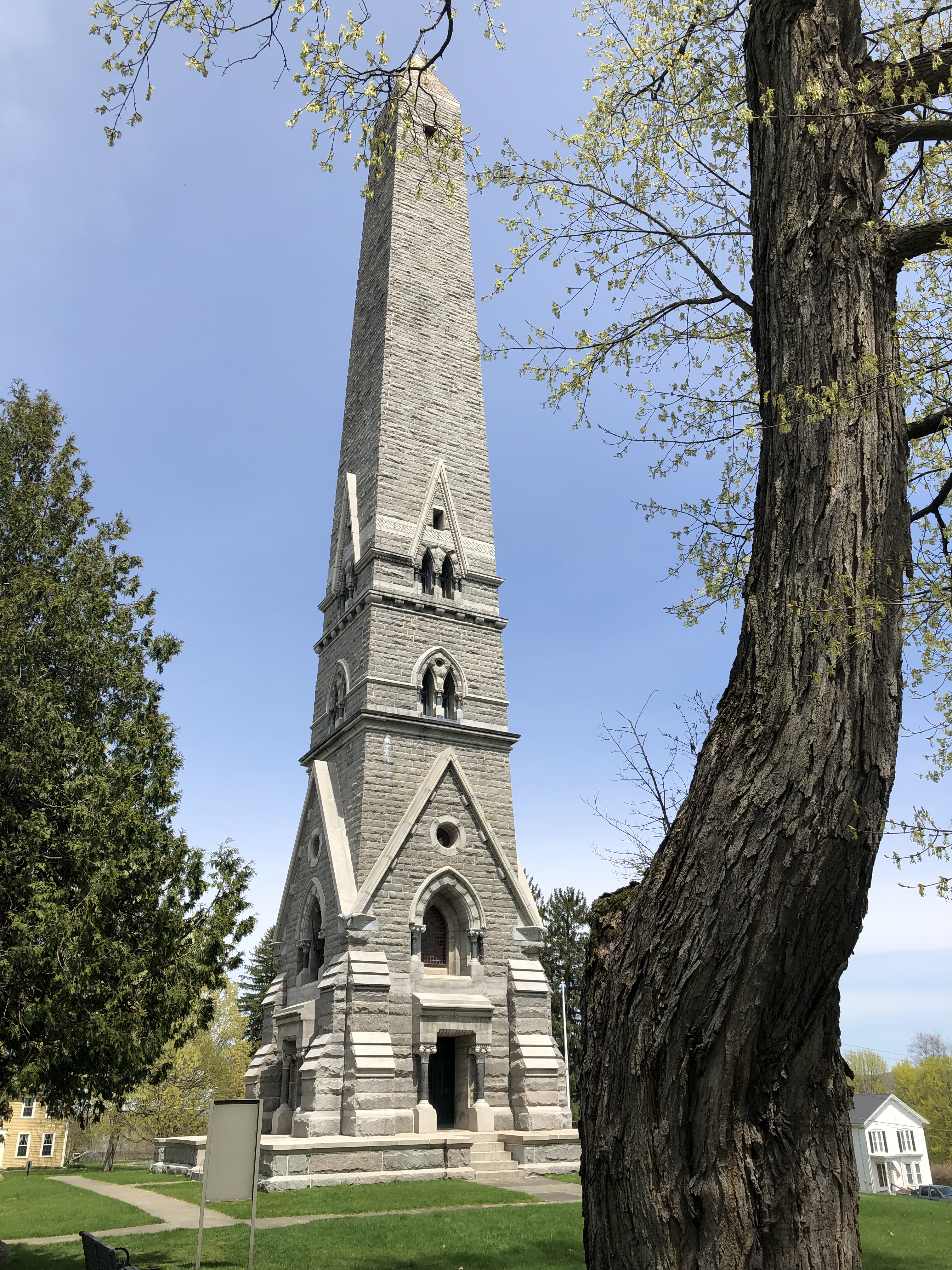
    As with any battlefield the action took place across a wide area over a period of time. The Saratoga Campaign took about a month, with other related skirmishes contributing to the overall result. I didn’t have time and wasn’t dressed for an extended tourist campaign myself, so I chose the visually stunning Saratoga Battle Monument as a priority, and let serendipity take over from there. It didn’t take long as I passed two historical markers of consequence next to each other. First was a sign marking the location of Starks Knob, named after John Stark, who held the high ground on this “basaltic pillow lava formation” which blocked the retreat to the north of General Burgoyne’s British and Hessian troops. Second was a monument to the Knox Trail, marking this ground as significant on a few occasions during the war.

    With Stark blocking retreat to the north, and Colonel Daniel Morgan‘s troops blocking retreat to the west, and the Hudson River blocked retreat to the east, options were running out for Burgoyne. He was cut off with nowhere to go. So on the morning of October 17, 1777 General Burgoyne and his 6000 soldiers surrendered. The Saratoga Battlefield Monument commemorates this event.

    Time or the necessary footwear to visit the battlefield itself weren’t available Monday… Another time perhaps. But seeing this magnificent monument, and seeing Starks Knob to know the lay of the land were worth the detour. History books only tell part of the story. Saratoga was a massively important global event that changed that history. Walking and driving around these places helps me understand what these names on the page were facing.

    I didn’t hear the whispers of ghosts when I visited the monument, but I did have my breath taken away as I drove around the bend from the site Morgan held and saw the monument rise up before me. And I had a shot of adrenaline when I saw the sign for Starks Knob. These places, where these things happened, matter to me, and I continue to seek them out in my travels.
  • Hubbardton

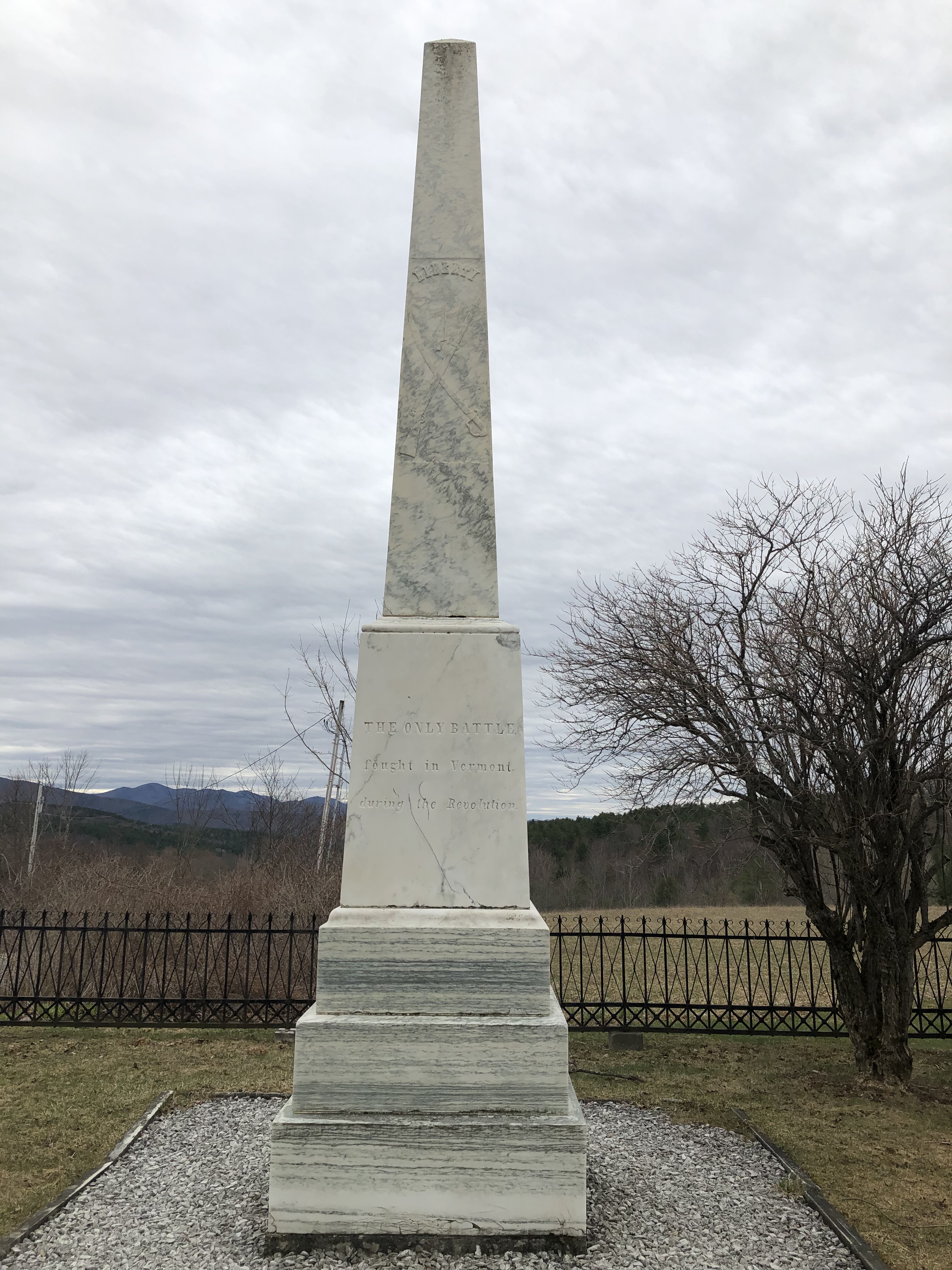
    There was only one battle inside the borders of Vermont during the Revolutionary War.  Many people would point to Bennington as the location, but that battle actually took place in New York.  The Battle of Hubbardton erupted on the morning of July 7, 1777 when the British forces (mostly Hessians) and their Native American allies pursuing Colonial Army forces retreating from Fort Ticonderoga caught up to them on this site.

    The 11th Massachusetts Regiment was the rear guard and were late to join the larger forces commanded by St. Clair, who were marching to Castleton.  Colonel Seth Warner commanded the Green Mountain Boys and Nathan Hale (not the spy) commanded the 2nd New Hampshire Regiment that waited for the 11th to catch up.  Warner decided to spend the night instead of marching on, and the British caught up with them at dawn.  The combined forces of the Massachusetts, New Hampshire Regiments and Green Mountain Boys stood their ground along the top of a ridge and laid fire on the pursuing British forces, retreated further and engaged again.

    Casualties were high on both sides. On the Colonial Army side a combined 370 men were killed, wounded or captured, and New Hampshire’s Nathan Hale was captured in the battle and eventually died in captivity.  On the British side, almost 200 were killed or wounded.  The battle was technically won by the British, but it was a costly battle that, along with battles in Fort Anne and Bennington, were critical delays that helped lead the way to the American victory at Saratoga.  General Burgoyne’s critical mistake was losing focus on the ultimate goal of controlling the British along the water routes from the St. Lawrence to the Hudson River, which would have cut off New England from the rest of the colonies.  Saratoga proved a critical win as it prompted the French to join the Americans against the British.

    I walked around the site of the Battle of Hubbardton on April 18th when I took a quick detour from my business meetings.  Driving out to the battle site is an exercise in faith, as the signage is limited, cellular service ended for both my AT & T and Verizon phones, and you’re driving for what feels like a long time from the highway to the site.  But I’m not easily intimidated by such things.

    The actual battle site looks a lot like it did that day.  If anything, it’s even less developed now than it was then, as the fields once planted with corn, beans or hay have been taken back by the forest.  The battle site remains fields, with mown paths that carry you to signs that tell you where you are and what happened at that location.  This was the moment when I recognized that my old dress shoes were no longer waterproof, as the soggy grass transported water to my dress socks with ease.  I normally keep boots in my car but this side trip wasn’t anticipated and, well, it’s only water.

    The Battle of Hubbardton site is an active museum, but it doesn’t open until May and there’s a sign that let me know it’s okay to walk around the grounds.  There’s a small building that likely offers much more information on the battle and the related action at Lake Champlain, Fort Ticonderoga, Fort Independence and Saratoga.  But that will have to wait for another day.  A white marble monument surrounded by an iron fence offers a stoic tribute to the events of that day, and I spent a few minutes walking around it reading the engravings on each side.  I was alone that day, and that solitude made the experience all the more moving as I reflected on the quiet ground that once roared with violent conflict.

  • From Bloody Pond to Winter Street

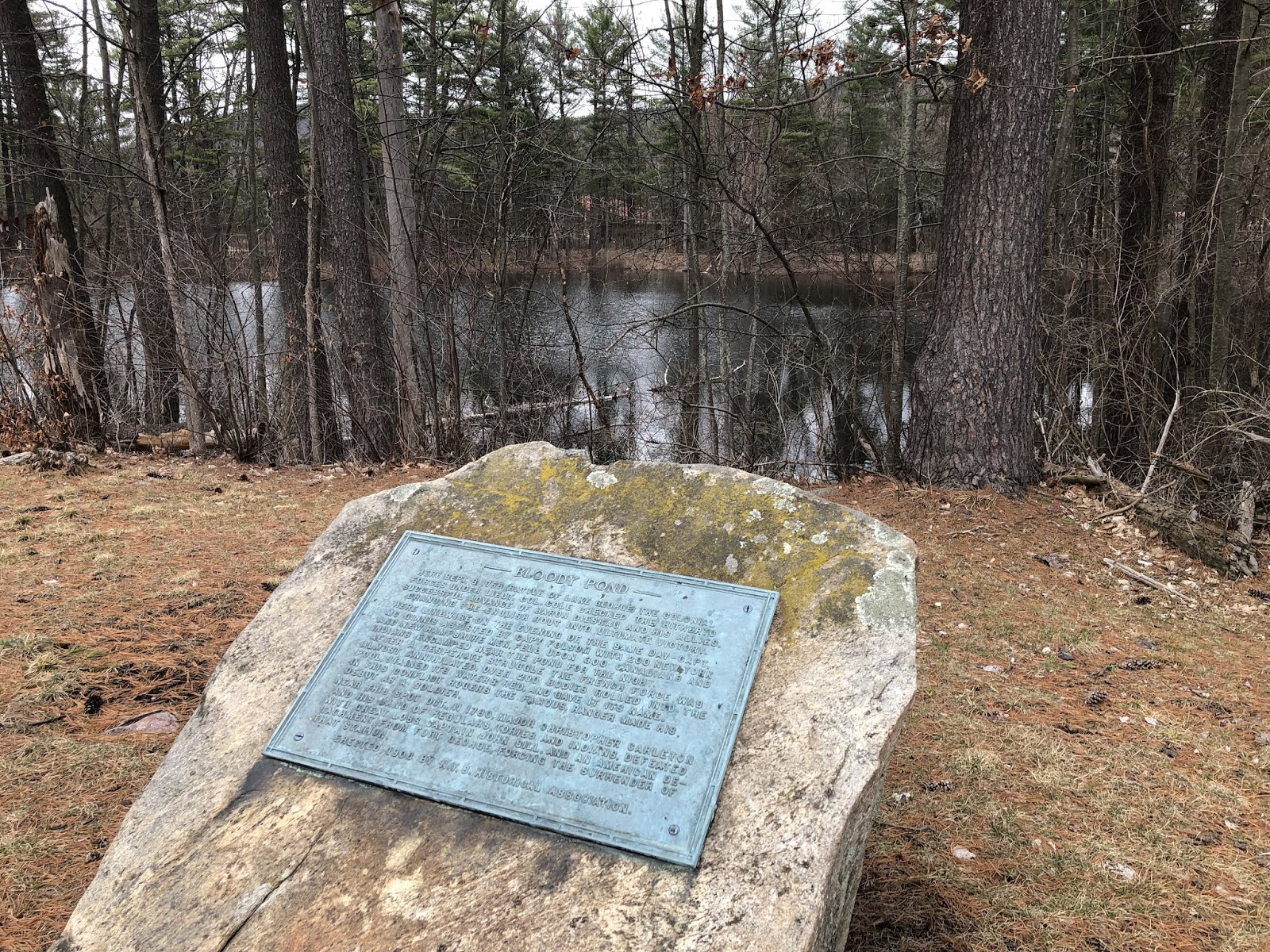
    During the French and Indian War the pristine Lake George saw some horrific battles for control of the lake.  The British and French continued attempts to push each other out of the region with force.  The Battle of Lake George in 1755, the siege on Fort William Henry in 1757, the Battle on Snowshoes in 1758 and countless skirmishes in between let to high body counts on both sides.  One relatively small battle in 1755 illustrates just how bloody the fighting was.

    The New Hampshire Provincial Regiment, consisting of a company of men led by Colonel Nathaniel Folsom (including Robert Rogers in his first battle) plus another 40 New York Provincials under Capt. McGennis came across the baggage and ammunition that the French had left protected with a guard.  They quickly overwhelmed the guard and waited for the larger force of French Canadians and their Indian allies to return.  Late in the afternoon a combined force of roughly 300 returned to the camp and walked into a field of fire from the New Hampshire and New York milita.  In this battle over two hundred men were killed, and subsequently rolled into the pond, which turned red as the blood of the French, Canadians, Native Americans, and colonial militia mixed together in the water.  Enemies returning to the earth together.

    McGennis didn’t survive the battle.  Folsom did, and would go on to participate in other battles of the French and Indian War, and then took up arms in the Revolutionary War.  Folsom and John Stark were both leaders in the New Hampshire Militia.  Folsom  was a delegate representing New Hampshire in the the Provincial Congress and ultimately the Continental Congress.  By all accounts I’ve read he led a life of service to New Hampshire and the country.

    I visited the Winter Street Cemetery to visit Major General Nathaniel Folsom.  I wasn’t sure where his gravestone was when I got there, but looking around I noticed that there weren’t that many that had American flags posted next to them so I used that as my starting point.  I walked around that cemetery for 40 minutes reading each gravestone.  Most of the Revolutionary War veterans had a similar shape and size, with the unique badge carved in the front.  And yet I couldn’t find Folsom’s gravestone.  Folsom was a hero of two wars for the American Colonies, he must have a flag, right?  No flag.  Perhaps it blew over in the wind, or someone took it, or someone forgot to place one next to his gravestone to honor him.  Who knows?

    My time was limited, and I still hadn’t found Nathaniel Folsom.  But I did find the graves of his fellow Revolutionary War veterans, and read the family names of the people who were his neighbors and friends.  And finally it was time to go, and as I stood near the gate I thought I’d just walk down the middle one last time and try an area I hadn’t recalled walking past in my search… and there he was.  His was quite literally one of the very last gravestones I came across.  It’s almost like he wanted me to pay my respects to the rest of the people in the cemetery before coming to see him.

    Like other roadside monuments, the small memorial on Route 9 in Lake George, New York, crowded by motels, auto parts stores and a sushi restaurant, called out to me as I drove by.  It led me to read more about Nathaniel Folsom and eventually to my visit to his home town and final resting place.  For all that he did for his state and his country, his grave is modest – no different than those of other soldiers from the Revolutionary War buried nearby.  If these two modest monuments bookend his life, they served their purpose by helping me get acquainted with this gentleman from Exeter.

  • New Hampshire Grant

    New Hampshire Grant

    The land that is today Vermont was once claimed by Massachusetts, New York and New Hampshire.  The Massachusetts claim originated from a fort established in the Connecticut River Valley in present-day Brattleboro.  New York based their claim on original Dutch territorial claims that all the lands west of the Connecticut River to Delaware River were theirs.  When the Dutch were ousted from North America New York followed the same general borders, which were validated by King George II.

    New Hampshire Governor Benning Wentworth chose to follow his own guidelines, choosing the western border of Massachusetts and going north to Canada and east to the Connecticut River as land he had jurisdiction over, which he then granted to middle class farmers who settled the land.  New York was granting the very same land to wealthy landowners and wasn’t particularly pleased by Wentworth’s interpretation of the borders.  These wealthy landowners then tried to tax the middle class farmers on “their” land, which led to even more tensions.

    The most famous of these middle class farmers was Ethan Allen, who was a natural self-promoter.  Allen and other farmers formed the Green Mountain Boys, who organized armed resistance to New York.  The escalating confrontations between the New Hampshire Grantees and the New York grantees continued until the beginning of the Revolutionary War forced all parties to focus on a larger problem.  Eventually New York gave up and Vermont would become a state.  There’s still an independent streak in Vermont and New Hampshire to this day.  Perhaps there’s still some lingering annoyance on the part of some wealthy New York family who’s ancestors gave up the fight for lands they were granted.