Tag: Rhode Island

  • Following the Rhode Island to Bermuda Thread

    We stayed on St. David’s Island this week while we were in Bermuda. It wasn’t a conscious choice to stay there, but I’m pleased we did, for otherwise I don’t believe we would have gotten there on this particular trip. When I speak of conscious choices, I want to acknowledge that unconsciously I knew the connection between New England and Bermuda. In particular, between Rhode Island and St. David’s Island. Not simply the famous sailing race, but the historic slave trade. Bermuda was the destination for many of those “problematic” Native Americans who were being crowded out by waves of settlers changing the landscape of North America.

    One generation after the Pilgrims were saved in their first brutal winter in Plymouth, their saviors’ offspring were fighting for survival in what became known as King Philip’s War (1675-1676). King Philip was the English name for Metacomet, Chief of the Pokanoket, who’s seat was in Mount Hope, Rhode Island. The direct descendants of the Pokanoket are the Pocasset Wampanoag Tribe. When Metacomet was eventually tracked down and killed, ending the war, his wife Wootonekanuske and their son were sold into slavery in Bermuda, meeting the fate of many other Native Americans. Mother and son were separated on the island and lived out their lives as slaves. The son was said to have been on St. David’s Island.

    What seems completely separate is often connected in ways we don’t always understand. Our histories all blend together at some point, sometimes generations later. The story of humanity is tumultuous, tragic and beautiful all intertwined as a tapestry. One thread leads to the next, and we are one. We are forever learning, forgetting and relearning those connections. In a place called St. David’s Island, or in Bristol, Rhode Island, we find those threads and are reminded that our stories will forever be one and the same, even as our outcomes diverge.

    Smith Island, as seen from St. David’s Island, looks a lot like Bermuda in its earliest days might have looked. An active archeological dig is uncovering English settlement in this part of the island.
    The rugged point of St. David’s Island near Fort Hill Bay, with Nonsuch Island seen to the left
  • Strokes of Virtue

    “Keep the faculty of effort alive in you by a little gratuitous exercise every day. That is, be systematically heroic in little unnecessary points, do every day or two something for no other reason than its difficulty, so that, when the hour of dire need draws nigh, it may find you not unnerved and untrained to stand the test. Asceticism of this sort is like the insurance which a man pays on his house and goods. The tax does him no good at the time, and possibly may never bring him a return. But, if the fire does come, his having paid it will be his salvation from ruin. So with the man who has daily inured himself to habits of concentrated attention, energetic volition, and self-denial in unnecessary things. He will stand like a tower when everything rocks around him, and his softer fellow-mortals are winnowed like chaff in the blast… We are spinning our own fates, good or evil, and never to be undone. Every smallest stroke of virtue or of vice leaves its never-so-little scar.” ― William James, The Principles of Psychology

    On Sunday my bride and I walked fifteen miles around Newport, Rhode Island seeing all that we could in the time we had. We might have driven from place-to-place, we might have chosen a ride service. Then again, we might have simply plunged into the many indulgences Newport offers in food and drink and leisure. But we walked instead, burning more calories than we ate, getting out in the crisp and cold air to navigate city streets and coastal boulders alike. We certainly didn’t leave Newport without enjoying some of its many restaurants and bars, but the central part of our experience was walking.

    The trick is to keep it going. Keep doing the things that bring us to a place of better fitness, greater resilience, deeper connection and richer experience. Most of us have work to do and commitments to keep that prevent brisk walks about town every day, but we can still carve out the time to do something meaningful each day. We can be actively engaged with the world simply by consistently stepping out into it—further and further with every step.

    We are a collection of habits and circumstance, spun around the sun once a year for however long fate gives us. We must rise to meet our better self. To be more resilient in the face of hardship, we must earn it with the things we do each day to be more fit, financially sound, emotionally intelligent, street smart, book smart and with the proper collection of trusted allies. What we do with our time matters deeply, if not to the universe, then surely in how we perceive our place in it.

    The quality of our life lies in our compounding habits. To be healthier than we might otherwise have been, we ought to exercise more and eat better. Even writing that I felt the cliché ripple across the keyboard with a shudder, but we know the universal truth in it, don’t we? When we inevitably get sick or have an accident, that resilient and healthy body of ours will make us more likely to rebound than we otherwise might have been. And we know it to be true that good fitness and nutrition habits allow us to be more resistant to things that a weaker body might succumb to.

    The power of teams comes into play in how we live, for that which we lack ought to be filled in by having the right team around us, just as we fill in a void that they may have. Without the right partner in my own life, I might have opted for an Uber ride back after the first ten miles, but we pressed on and saw nooks and crannies of the city we wouldn’t have seen otherwise, talking about life all the way, while burning calories and locking in memories we’ll reflect on in future days. The people we row with will either propel us to a better future or sink us. Choose carefully and see just how far you can go together.

    Writing this blog every day, I’ve come to see the changes in myself over the last five years. It’s a way to track activity, reflect on what I’ve read or experienced, and to cajole myself beyond complacency. There must be urgency in our days, and the blog is my way of reminding myself to take stock of where I am and get back to it already. I’m surely no ascetic, but I do strive for greater discipline and consistent improvement in all aspects of this brief dance with you. After all, we’re on the same team, aren’t we? Let’s see all that we can in the time we have.

  • The Newport Cliff Walk

    Newport, Rhode Island is known its notable music scene with world-renowned folk and jazz festivals, as an epicenter of sailing culture (longtime home of the America’s Cup) and the party town any sailor would want in a home port, for the Tennis Hall of Fame, but mostly, Newport is famous for its mansions. Those mansions, built as summer “cottages” by wealthy families like the Vanderbilts, are massive and interesting to tour if you want to get a sense for how the wealthy lived in the Gilded Age of 1870 to 1910. Industrial titans and savvy global traders moved here to be where other wealthy people lived—to be amongst their peers in net worth.

    The phrase “The Gilded Age” was coined by Mark Twain, and not as a complement. He was pointing to the thin veneer of wealth that hid a lot of problems underneath it. It has taken on a romanticized connotation since then, but we ought to remember that these were just people with the same issues we all face in families and relationships, with the blessing and curse that money layers into the mix. I’m not a fan of wealth politics or keeping up with the Jones as a lifestyle choice, but I can appreciate the craftsmanship of the mansions and the wealth required to build and maintain them.

    The strip of land between this collection of Gilded Age and modern-day mansions and the sea is public domain. It’s here that you’ll find the Cliff Walk. Sections of the Cliff Walk are meant for everyone to traverse. You could easily walk or roll a wheelchair on most of the paved sections between Memorial Drive and 40 Steps, the staircase that descends to the ocean. The section between Salve Regina University and The Breakers is equally well-suited for accessibility. Beyond that the path becomes best for the sure-footed. If you don’t love hopping between boulders there are sections of the Cliff Walk that aren’t for you. But there’s something for everyone.

    For me, the magic of the Cliff Walk isn’t just the glimpses of manicured lawns and mansions, it’s the diversity of the walk itself. At times paved walkway, other times rock scramble or beach sand. Even a couple of tunnels to move the public quietly through the historic and high end real estate above. It’s a fascinating place to traverse, taking you from one beach to another past billions of dollars of American wealth.

    The Cliff Walk is officially 3 1/2 miles long, but we extended it to almost 6 miles, from Old Town to the Eaton’s Beach starting point, and from the end at Baily’s Beach along Bellevue Avenue to Rosecliff Mansion. On a crisp and sunny November day it wasn’t crowded but it was surely beautiful. From Rosecliff it’s an easy walk to The Breakers, the largest of the mansions and the flagship of Newport’s Gilded Age “cottages”. The fact that they called them cottages tells you all you need to know about the vast wealth of the families who visited Newport each summer.

    Ultimately, a stay in Newport is never quite long enough. I didn’t have a summer to mingle with the locals, but a mere weekend. The Cliff Walk was a great lynchpin stringing together an epic walking day in the Celestial City. It justified some of the great dining experiences we had, and have us thinking about a return trip sometime soon.

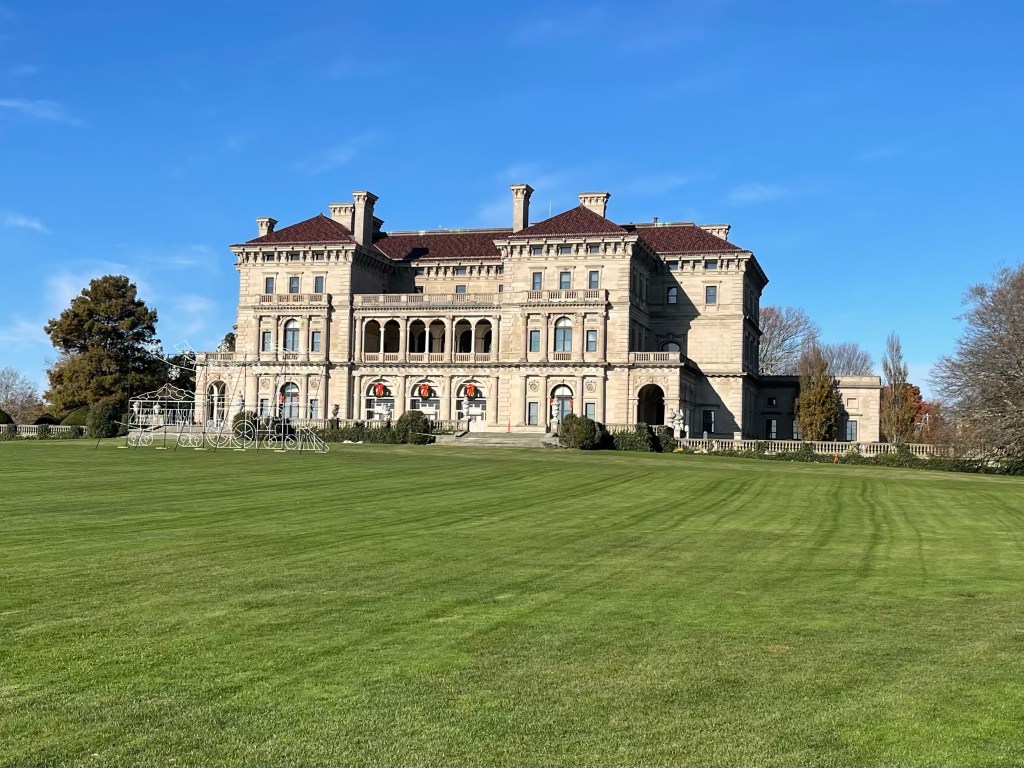
    The Breakers
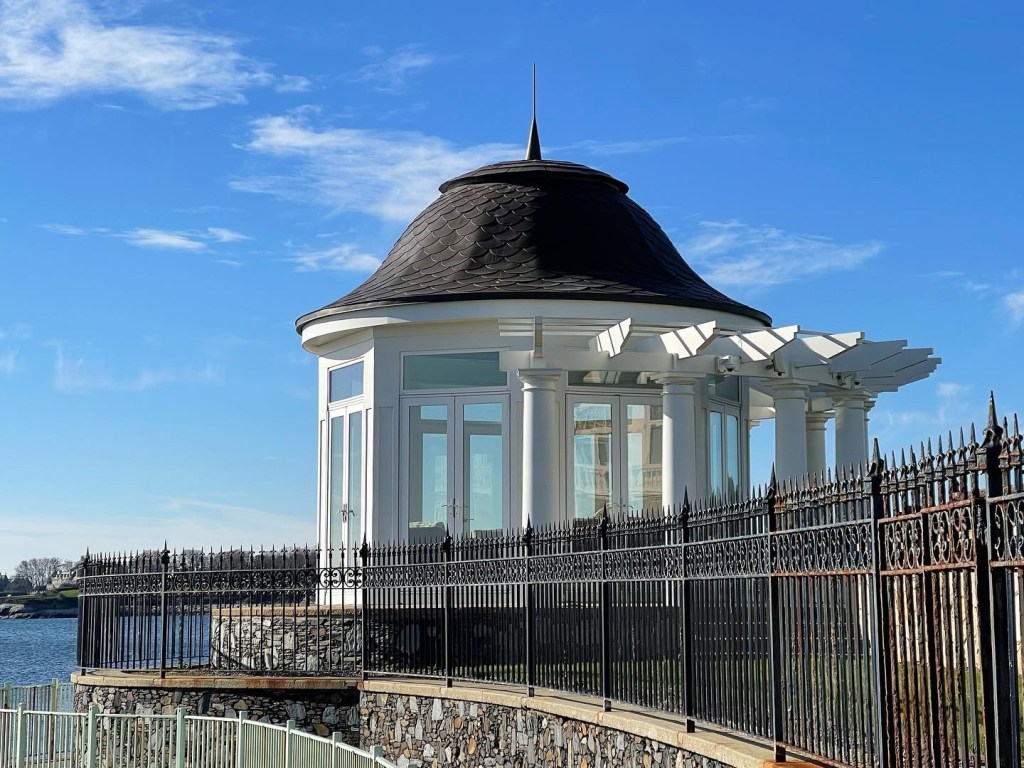
    Beautiful gazebo tucked up tightly against the Cliff Walk
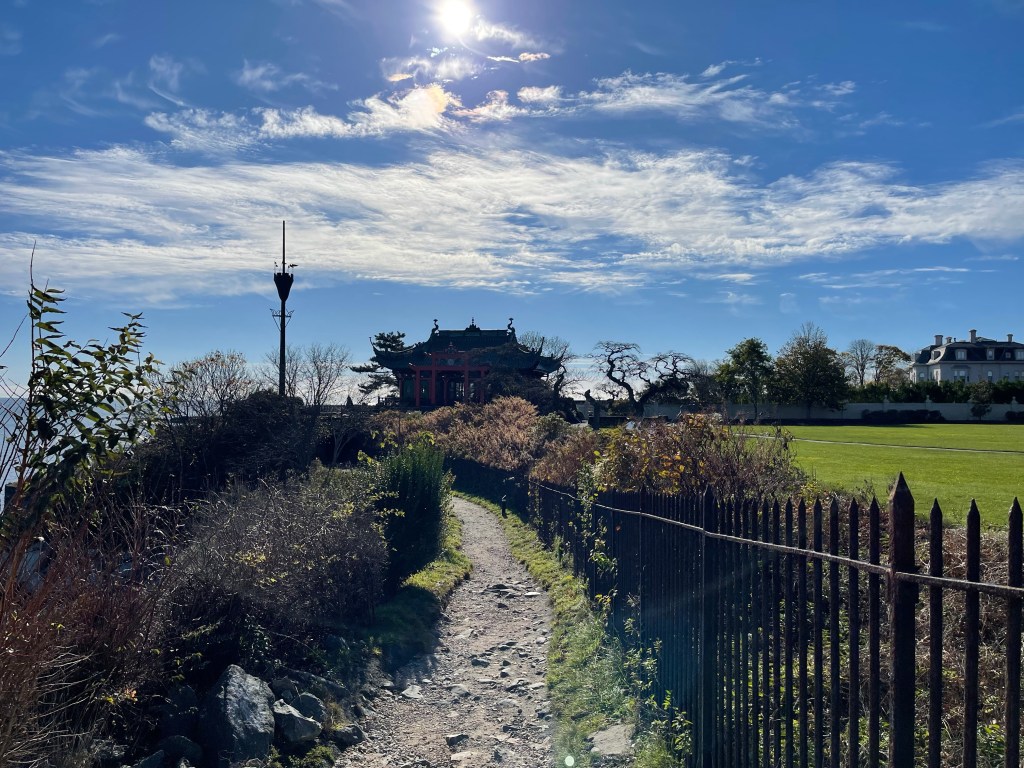
    The Tea House, shadowed by morning sun
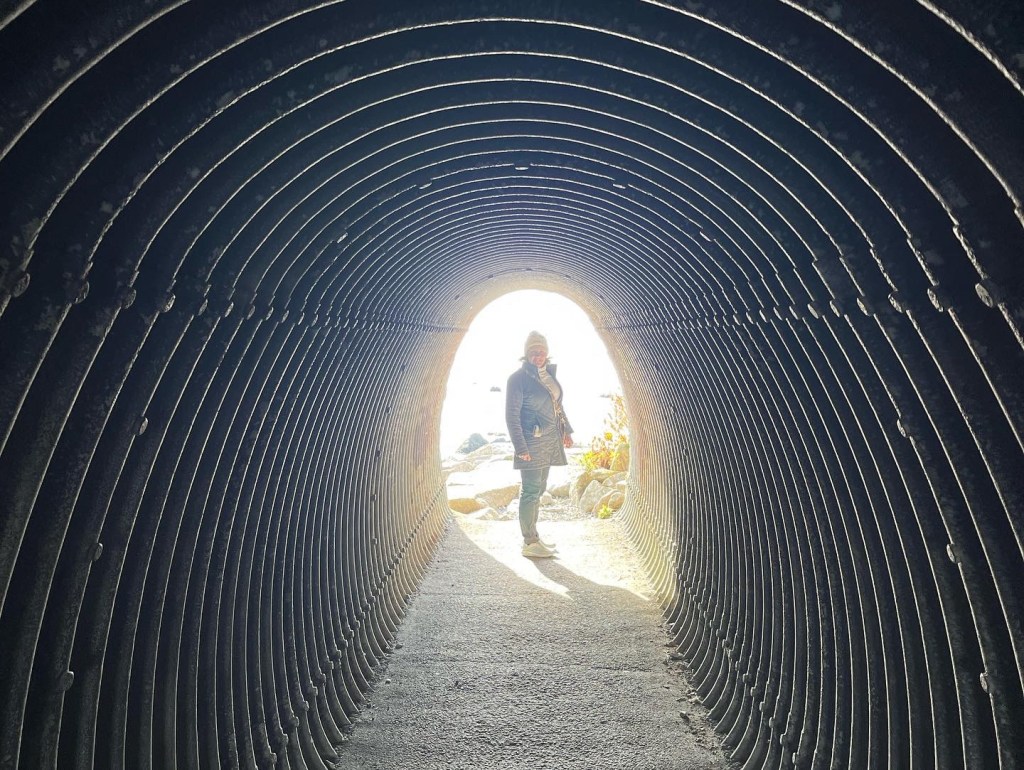
    Tunnel under the Tea House
    Not all sections of the Cliff Walk are easy to traverse
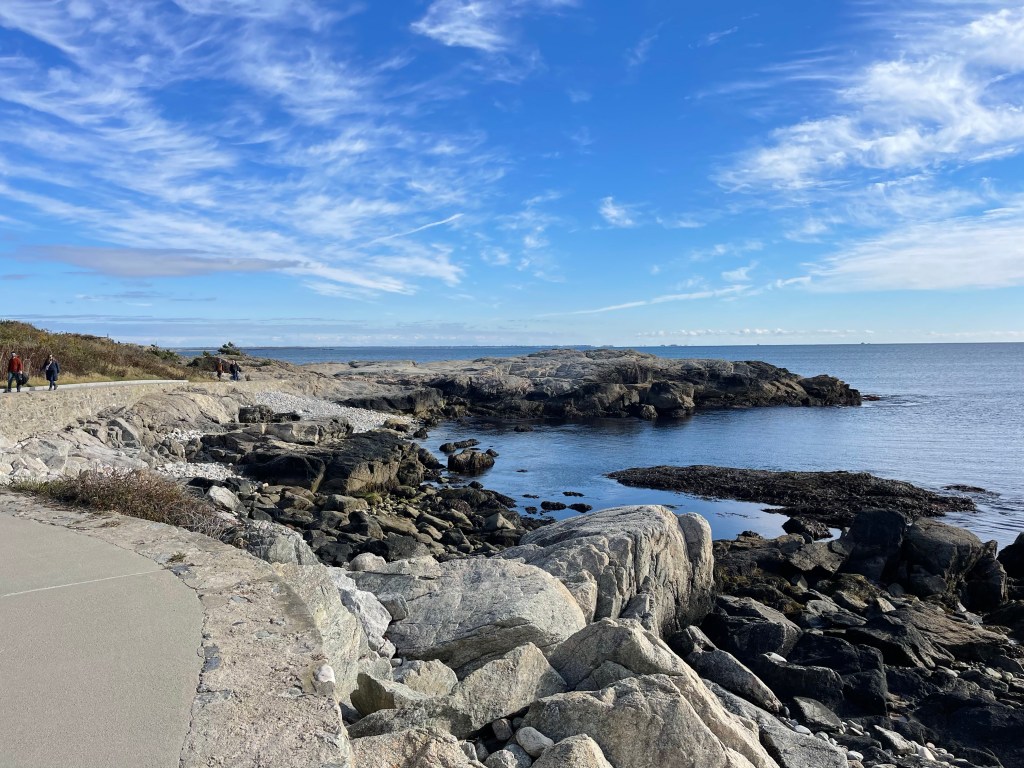
    Rugged coastal beauty is everywhere between the Cliff Walk and the sea
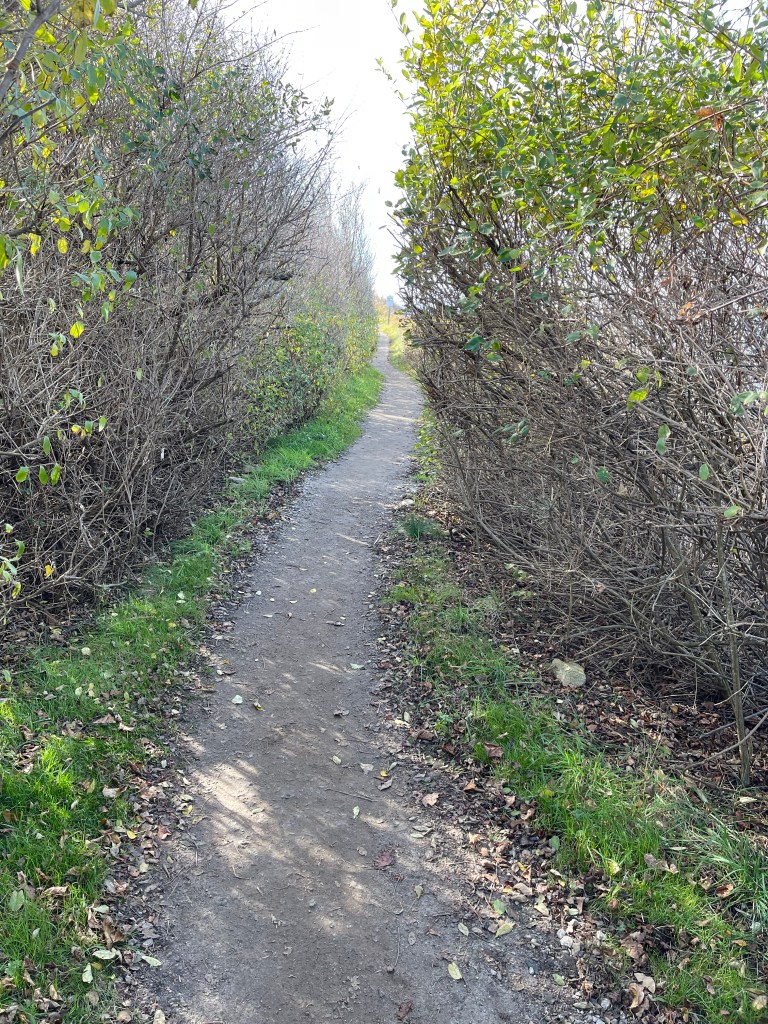
    All kinds of terrain will greet you on your walk
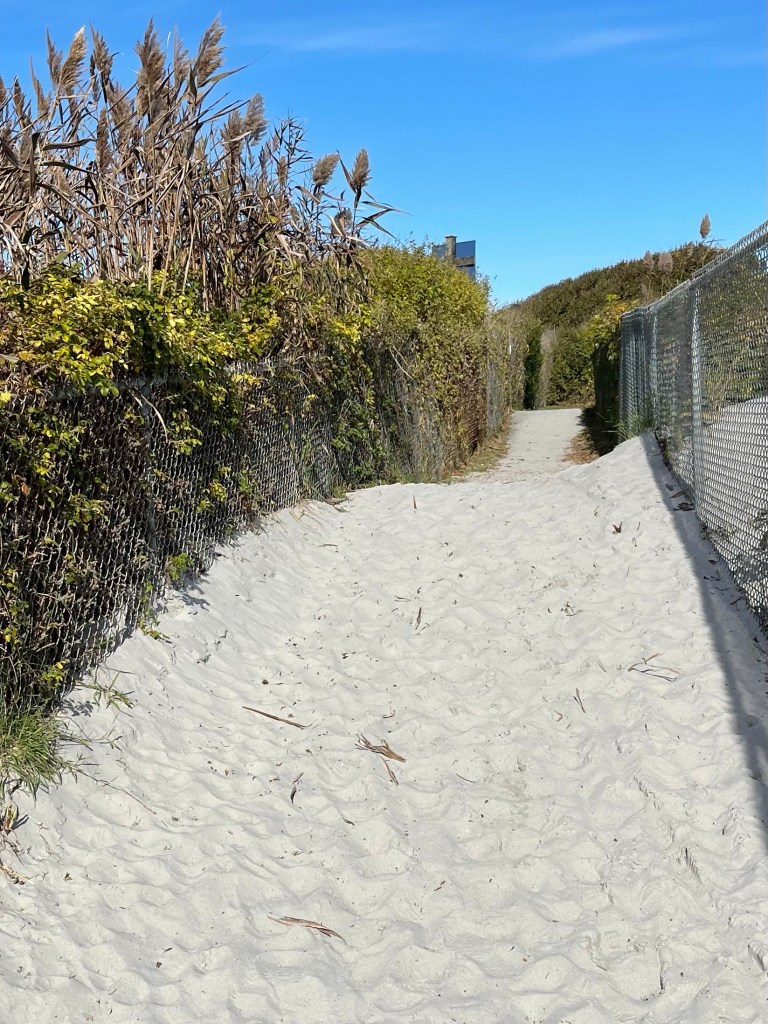
    The finale of the Cliff Walk is a walk through beach sand to the road
  • A Visit with Benjamin Church

    A seasonably warm Sunday lured me from a visit with friends in Mattapoiset, Massachusetts to Little Compton, Rhode Island to finally meet Benjamin Church. Church was appointed Captain of the first Ranger force in America in 1675 by the Governor Josiah Winslow of Plymouth Colony. He was famous for being the guy leading friendly Native Americans that finally killed Metacomet (King Philip). His greatest innovation was in imitation: adopting the Native American style of fighting to allow his forces to survive and find success in battles with the French and hostile native population.

    What made Church honorable was his respect for the native population and his desire to coexist with them. While many around him were inclined to encroach and eventually push aside native tribes, Church wanted to coexist and work with them. This led to recruiting friendly tribes to assist in King Philip’s War and in later battles with the Abenaki and French in Acadia. War is a dirty business, and there was plenty of atrocity committed on both sides, but Church seemed to live by a code of honor untarnished by historical perspective.

    Today Church lies in rest in a quiet triangle-shaped graveyard in the middle of Little Compton with his wife buried next to him. A monument honoring him stands at his feet, and someone glued an Army Ranger tab just above his engraved name. That engraving is fading away now, barely legible after 300 years of exposure to the elements. If you asked a thousand people in New England who Benjamin Church was, maybe one or two would know. Time fades memory faster than it does engraved stone.

    Here lyeth interred the [body]
    of the Honorable
    Col. Benjamin Church, Esq.,
    who departed this life, January 17, 1717-8 in
    the 78 yeare of his age.’

    On a beautiful Sunday afternoon I was the only visitor, but a group of teenagers were playing basketball nearby. I wondered if they knew the story of the soldier buried nearby? Does their local school teach children about the war that happened right across the river, or about the man quietly marking eternity in a faded grave in the middle of town? I hope so.

    Fading history
  • The Rhode Island Red Monument

    One of the joys of travel is stumbling upon roadside curiosities. On my pilgrimage to visit a favorite hero of King Philip’s War I came across a monument to the Rhode Island Red that drew my attention. The Rhode Island Red is a hen, of course, that famously and productively laid eggs particularly well, which led to breeding of this particular character to make eggs a common and reliable staple of our diet. It seems the Rhode Island Red was first bred on a farm in Little Compton, Rhode Island.

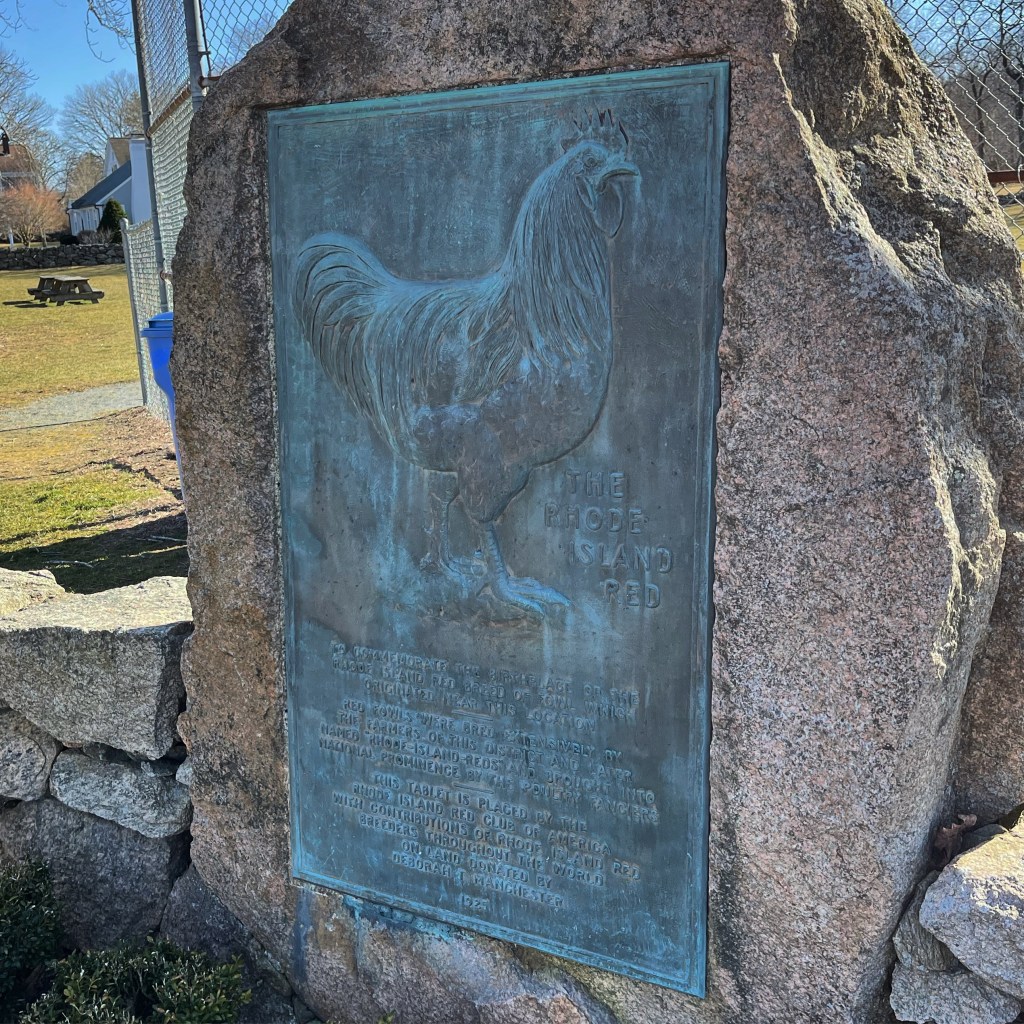
    In 1925 a group of Rhode Island Red enthusiasts erected this monument to the hen, commissioning an artist named Henry Norton to make it. But here’s where the story gets interesting. One group wanted the monument to be erected at the actual farm where the hens were first bred. Another group wanted it in a more prominent location in town (where I came across it, validating their choice I suppose). For a small town, this was pretty heated, with both sides trying to establish a pecking order. At the unveiling of the first monument the opposing group didn’t show up, apparently feeling the location was pretty… fowl. A year later they erected their own monument at their preferred site. The 1925 monument features a rooster, the 1926 monument features a hen. But a well-placed hen. They really showed ’em.

    The 1925 Rhode Island Red Monument

    The inscription on the 1925 monument reads:
    “To commemorate the birthplace of the
    Rhode Island Red breed of fowl which
    originated near this location
    ___
    red fowls bred extensively by
    the farmers of this district and later
    named “Rhode Island Reds” and brought into
    national prominence by the poultry fanciers
    ___
    this tablet placed by the
    Rhode Island Red Club of America
    with contributions of Rhode Island Red
    breeders throughout the world
    on land donated by
    Deborah Manchester
    1925″

    This entire incident is described in the monument’s Wikipedia page in delightful detail. Not having the back story when I came across the monument, I wasn’t aware of the other monument. Now I feel compelled to return to Little Compton again sometime to find it. In the meantime, Norton’s 1925 monument quietly marks time, closing in on its 100th birthday. Placed on the National Register of Historic Places in 2001, this monument to a chicken has secured its own place in history.

  • The Pilgrims and Pokanoket

    As you walk into the Mayflower Pub in London there’s a poster mounted high on the wall that shows the silhouettes of all the pilgrims and servants who sailed on the Mayflower to settle in America. The poster is divided in two, with the upper half showing the Pilgrims as they sailed from Europe. The lower half has the same image, but depicts those who perished before that first winter was over in gray. There’s a lot of gray… but by all rights it should have been all of them.

    The Pilgrims sailed for America too late in the season, without enough food, and sailed for the wrong place. Their charter had them settling at the mouth of the Hudson River, and instead they found themselves at the fist of Cape Cod. Turning south they almost wrecked on the treacherous shoals that have claimed thousands of ships since then. Turning back northward, the Captain of the Mayflower considered present-day Provincetown but eventually worked their way to the area that would become Plymouth., Massachusetts. Pilgrims were starting to die as freezing temperatures, tough living conditions aboard and malnutrition conspired against them. The Native American tribes were well aware of their presence and had already skirmished with them on Cape Cod at First Encounter Beach. A more sustained attack could easily have wiped them out.

    But the Pilgrims also had some lucky breaks that kept enough of them alive to establish a foothold in the region. They arrived at a place where just a few years earlier thousands of Native Americans lived. Contact with Europeans, most likely fishermen fishing the Gulf of Maine, triggered a plaque that killed thousands of people in the few years right before the Pilgrims arrived. So the native population was decimated and in no position to shove the Pilgrims back into the ocean they’d arrived on. They settled in an area with cleared fields and few adversaries. Truly fortunate to be there instead of landing in a place with a thriving and hostile Native American population.

    The other lucky break the Pilgrims caught was landing at a place where the local Sachem, Massasoit, saw strategic advantage in an alliance with the Pilgrims. The Pokanoket tribe Massasoit was Sachem of had been hit hard by the plaque that hit the tribes along the Gulf of Maine, and he was feeling pressure from the Narraganset tribe. An alliance with the Pilgrims gave him some strength in numbers that proved mutually beneficial for the short term. Ultimately this alliance would give the Pilgrims the momentum to survive and grow, but would destroy the Pokanoket in the next generation. An accident of geography brought the Pilgrims and Pokanoket together, time would drive them apart. But in the winter of 1620-1621, it would prove the difference in keeping more Pilgrims from turning into gray silhouettes on a poster 400 years later.

  • Walking the Line

    Walking this morning on Cape Cod I saw turkey tracks in the snow. The funny thing about turkey tracks is they look like arrows, pointing this way and that, as if to tell you to Go here! No, go there! Turkey walk in circles looking for food, and their tracks point you, if you tried to follow the “arrows”, towards the same madness. It’s a wonder of confusion and I smiled at the sight of it.

    I’m glad I walked early, because overnight snow didn’t stand a chance on the edge of Buzzards Bay, where the ocean moderates temperatures as easily as it moderates moods. Looking at the temperatures in New Hampshire, there was a 21 degree difference between the hills up north and Cape Cod. 100 miles and 200 feet of elevation make a big difference between order and chaos when you’re talking snow.

    If turkey tracks are scattered madness, the surf line offers a measure of predictability, for even on its own erratic path it still runs roughly parallel. The surf line finds its own path, curving and cutting this way and that based on the push of the swell, the contour of the sand and the strength of the breeze. The funny thing about the surf line is that it looks similar whether you’re up close on a quiet pre-dawn beach on Buzzards Bay or flying 1000 feet above the New Hampshire coast in a Piper Cub. Up close very different. Add the right distance and the mind tricks you.

    We’re incredibly lucky now, with these great leaps across time and space. Anything is possible, really, in our timelines in this time. Yesterday I woke up in Ithaca, New York, watched a college basketball game in Rhode Island, and went to sleep on Cape Cod. This morning I walked on the beach and this afternoon I was shoveling snow back in the hills of New Hampshire. I could easily be in London or California or some other place for breakfast tomorrow morning if time, money and responsibilities allowed. Quick leaps between here and there are possible, which makes the world a magical place.

    I run into a lot of people who march along a pretty straight line in their lives, not straying far from home, going to the same job every day, taking the same vacation to the same place for a week or two every year. I’ve tried that line, and it’s not me. Granted, you don’t want to be a turkey moving about in circles with no rhyme or reason to where you’re going. But what’s the fun in traveling a straight path from here to there? Don’t be a turkey, play along the surf line! Follow your own path as it meanders along, but with an eye towards the destination. You’ll still get from here to there, but the path will be a lot more interesting.

  • Friday the 13th and Ghost Stories

    Here we are again, at a point where the days and numbers on the calendar align and give us another Friday the 13th.  In general good things have come my way on a day many people associate with bad luck.  My son was born on a Friday the 13th, making it a very lucky day indeed.  More often than not you get what you expect in life, and if you’re primed to look for the negative it’ll find you.  I’ll stick with the opposite point of view, thank you.  Optimism with a healthy dose of stoicism seems to work for me.

    I’ve written before about dancing with ghosts.  For me ghosts aren’t the creepy spirits that get annoyed that you’re in their space, they’re the people who lived in the past who’s story is all around us.  Historical figures and anonymous lives alike, all lived before we were here.  The stone wall standing alone in the woods, the old foundation on Isle of Skye left from the Clearances, the soot on the ceiling of a cave from fires long ago, and the groove worn into a stair tread; These are my ghosts. I love uncovering the stories of some person from centuries ago and visiting the place they did something memorable, and maybe their grave to remind them they aren’t forgotten.  We all want to be remembered, don’t we?  At least for a few generations.  Make the ripple last as long as possible, hopefully in a positive way.

    I’ve been bumping into the other kind of ghost stories lately.  People who encounter poltergeists.  A poltergeist wants attention, making its presence known by messing with things in “our” world, crossing some border between death and life.  Frankly I never think about the poltergeist kind of ghost.  Maybe I’m closed-minded about it, or maybe they see me dancing with other ghosts and leave me alone.  But I’ve got this stack of stories people tell me about poltergeists they’ve encountered, and after a while you have to wonder what’s real and what’s imagined.  I see good things on Friday the 13th, others see bad things; who’s right?

    Yesterday I was speaking with a Town Clerk in Connecticut.  I’d stopped to pick up a death certificate for an ancestor as a favor for my mother.  We noticed on the death certificate that this relative had died from a fall down the stairs, breaking his neck.  I joked about that house being haunted and the clerk, not missing a beat, told me about Antonio, pointing to the vault and saying he died right in there and still haunts the place. I looked in the vault and asked if he preferred Antonio or Tony.  We finished our transaction and I was on my way, with one more ghost story added to the list. I don’t know if Antonio is a poltergeist haunting the vault at Town Hall, but I do know that he tragically died in the vault at some point in history.  And people are still talking about him to this day.

    I’ve heard similar stories from separate friends about encounters at hotels in Boston and Nashville, and some good friends that insist there’s a ghost in a family home on Cape Cod.  What do I know?  I’m not in the poltergeist business.  I have no desire to stay in Lizzy Borden’s house for a night trying to bait unseen ghosts to come out and play.  No, I’m trying to bring their stories alive without all the mischief.  But now and then I do hear a whisper in the wind, feel a spirit in the air, and I give a nod to acknowledge.  Walking alone in the woods at Holy Hill in Harvard, Massachusetts in Autumn once had me thinking of Shaker ghosts.  Visiting King Philip’s Seat in Bristol, Rhode Island and spooking a hawk into flight had me hearing whispers of Metacom and the lost Pokanoket tribe as I explored the woods.  And visiting the Winter Street graveyard in Exeter, New Hampshire looking for the grave of Major General Nathaniel Folsom felt like I was being directed around to look at every other Revolutionary War hero’s grave before finding his.  I felt it that day too.

    So here we are on another Friday the 13th.  We generally get what we look for in life, and I hope today brings you good fortune.  If you happen to run into any ghosts, I hope they aren’t poltergeists – those buggers are nothing but mischief.

  • I’ll Take the Train, Thank You

    There are many ways to get from Boston to New York City. Driving or taking a bus are viable options that offer advantages in flexibility and economy. Flying used to be the fastest way until security requirements stretched the time commitment to be roughly the same as driving. And then there’s the train, the oldest and still the best option when you’re going from downtown Boston to the heart of Manhattan. And that’s where I find myself this morning, rolling down the tracks looking at the changing landscape of Rhode Island and Connecticut, phone charging, wi-fi and Bluetooth on, coffee at the ready.

    I’ve recently taken the train from London to Liverpool and back, and a sleeper train from London to Edinburgh and back, so the comparison is still fresh in my mind. Amtrak is more expensive and slower than that Virgin train to Liverpool. The infrastructure and number of stops simply don’t allow for long runs at high speed. The difference between the Acela and the regional train is only 30 minutes. If you can tolerate the multiple stops it makes a lot of sense to just take the regional. And really, who cares? I’m sipping coffee, writing and listening to music while someone else does the work. And I didn’t have to wait in a TSA line or take my shoes off for the honor of sitting in this seat. Dog sniffing my bags? Any time you want.

    I’ve driven to New York countless times. It’s a miserable experience unless you manage to time the traffic. Humans aren’t at their best in stop and go traffic, and the 5 minute delay I hit at 5 AM this morning driving to the train station was a good reminder of the horror show that is I-95 through Connecticut. Why subject yourself to that when you don’t have to? And when you finally get to Manhattan mentally spent, you get to spend a fortune to park your car. Then do it all over again going back home. I’ll take the train, thank you.

  • A Walk With Ghosts: King Philip’s Seat

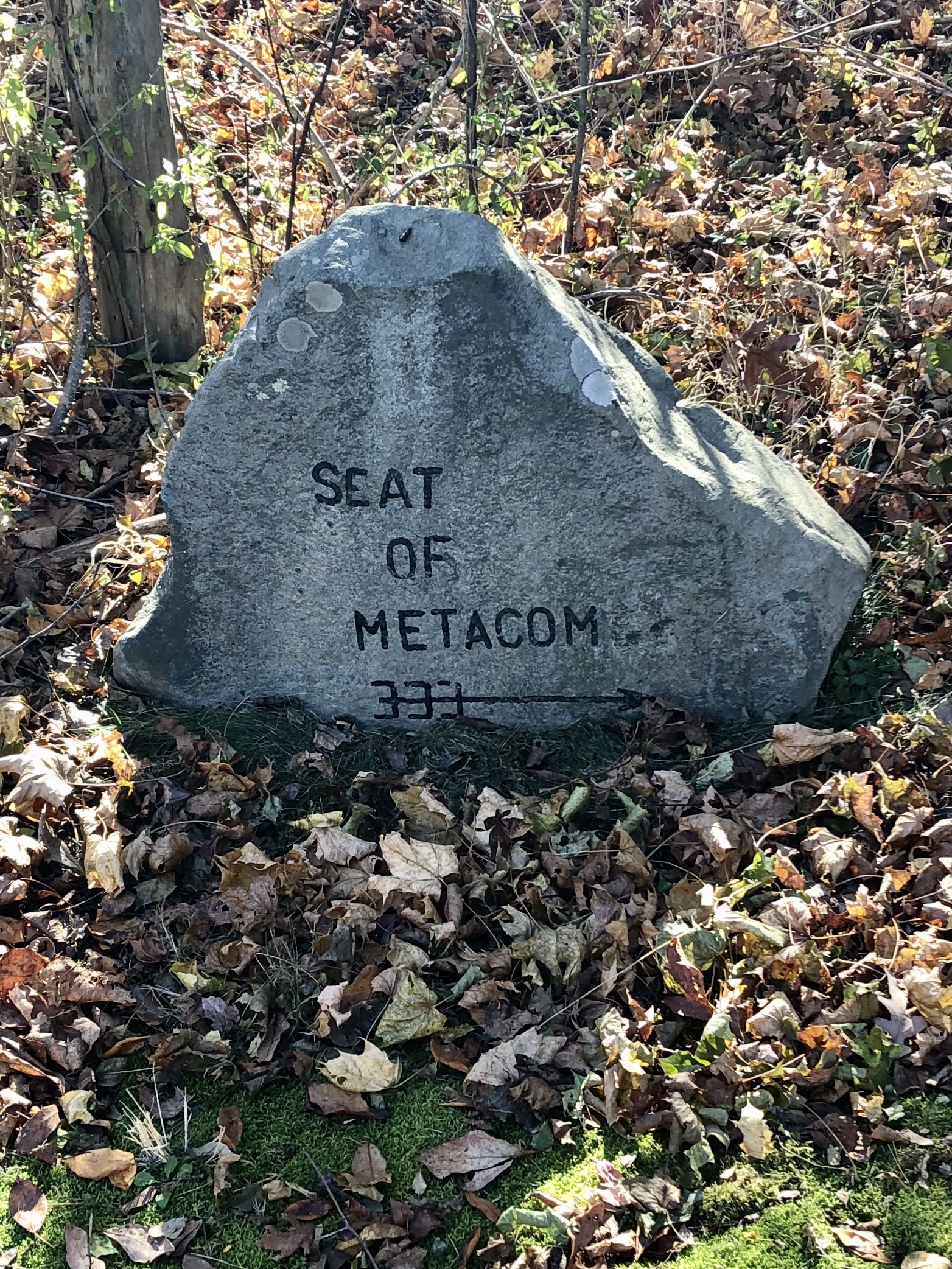
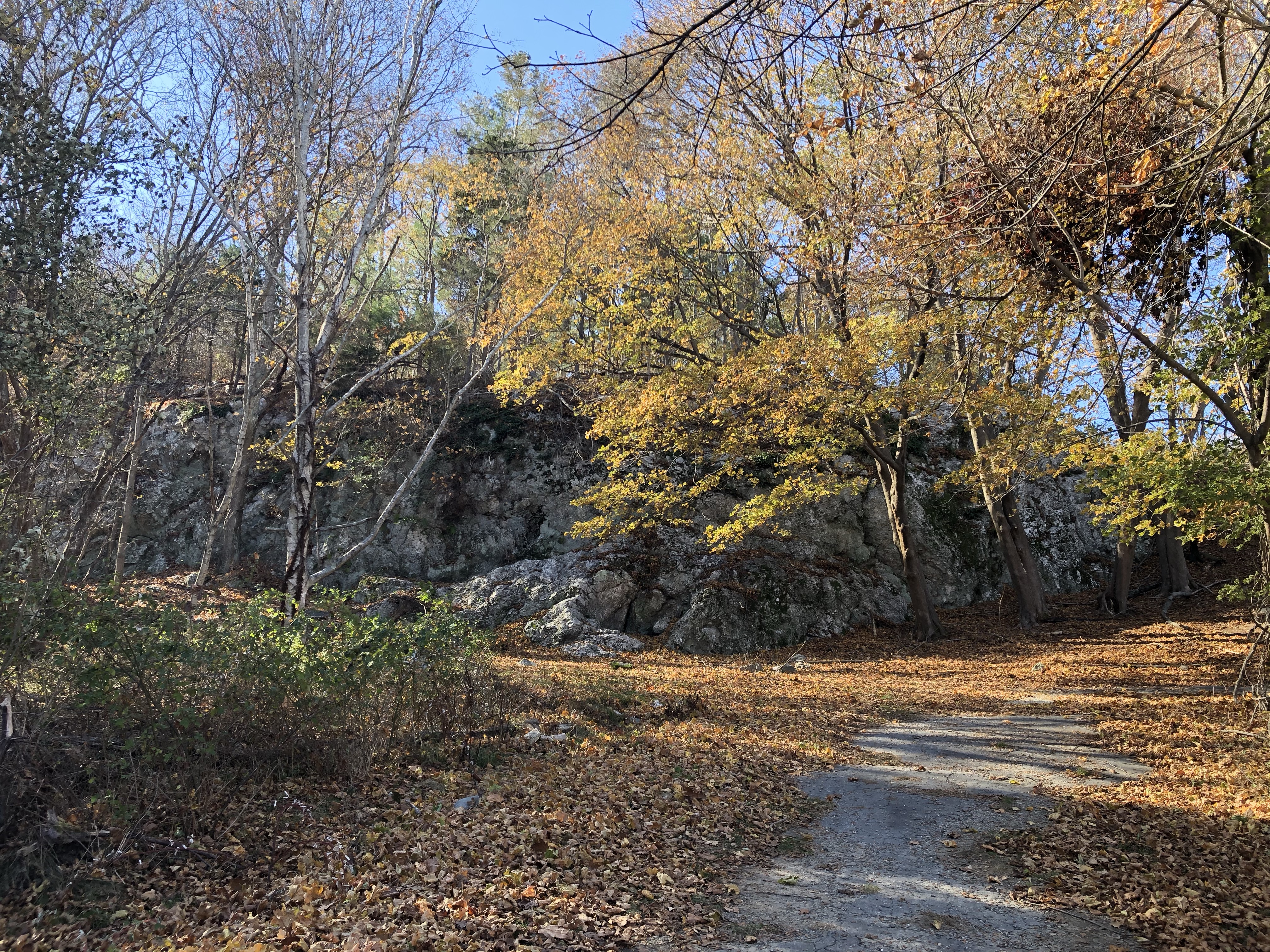
    If you want to walk amongst ghosts of the past, the walk from Brown University’s Haffenreffer Museum to the rocky outcropping forever known as King Philip’s Seat offers ample opportunity to feel you are. This is where the sachem Metacom (aka Metacomet), who had once taken the English name Philip as a gesture of goodwill, waged war on the English settlers in King Philip’s War from 1675 to 1678, when Metacom was killed. Metacom was the second son of Massasoit, who was born near this spot too, as countless generations of Pokanoket were. If Massasoit is remembered for trying to manage a peaceful coexistence with the English settlers, Metacom is remembered as the first to rise up against the relentless encroachment on their lands.

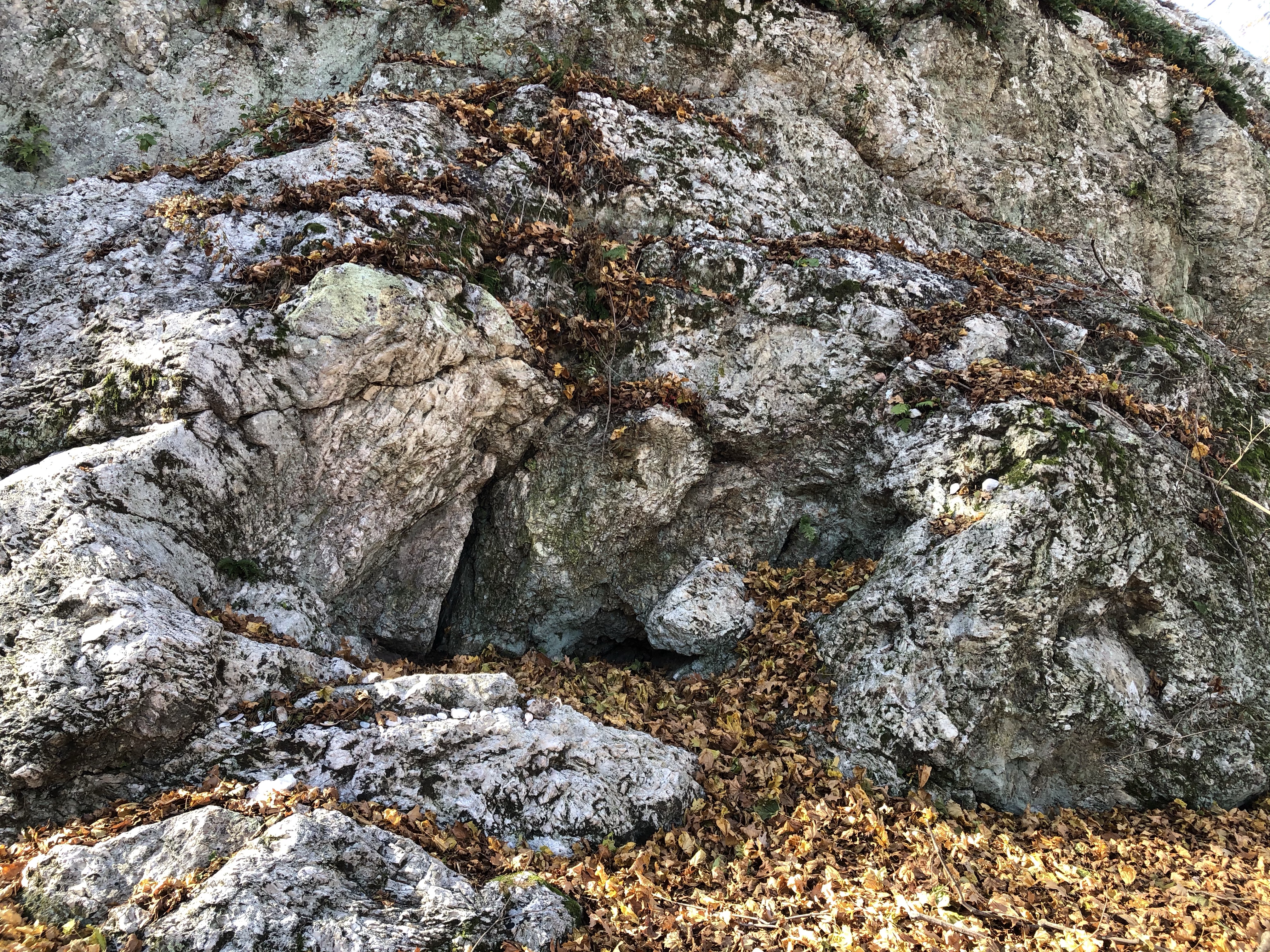
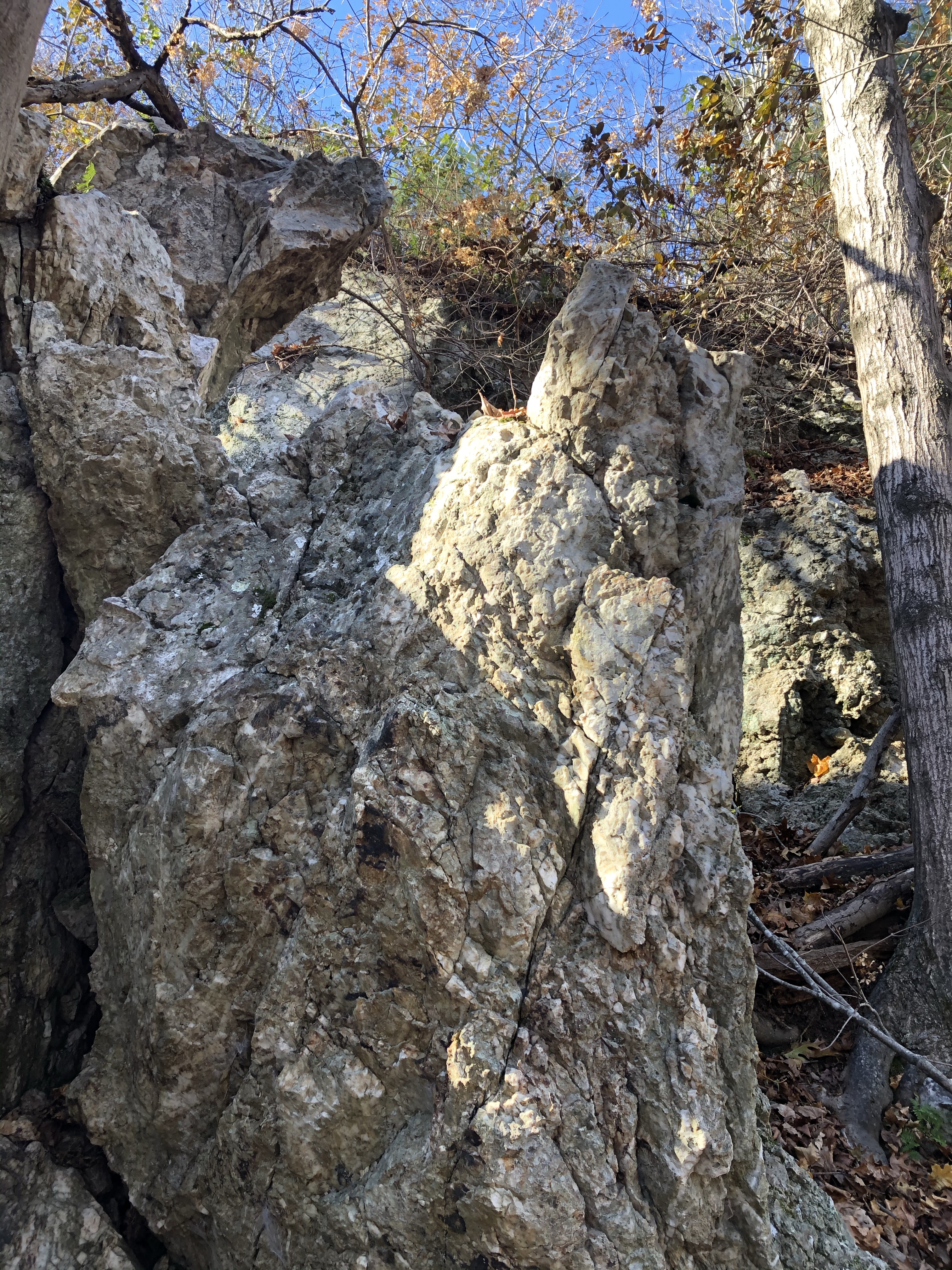
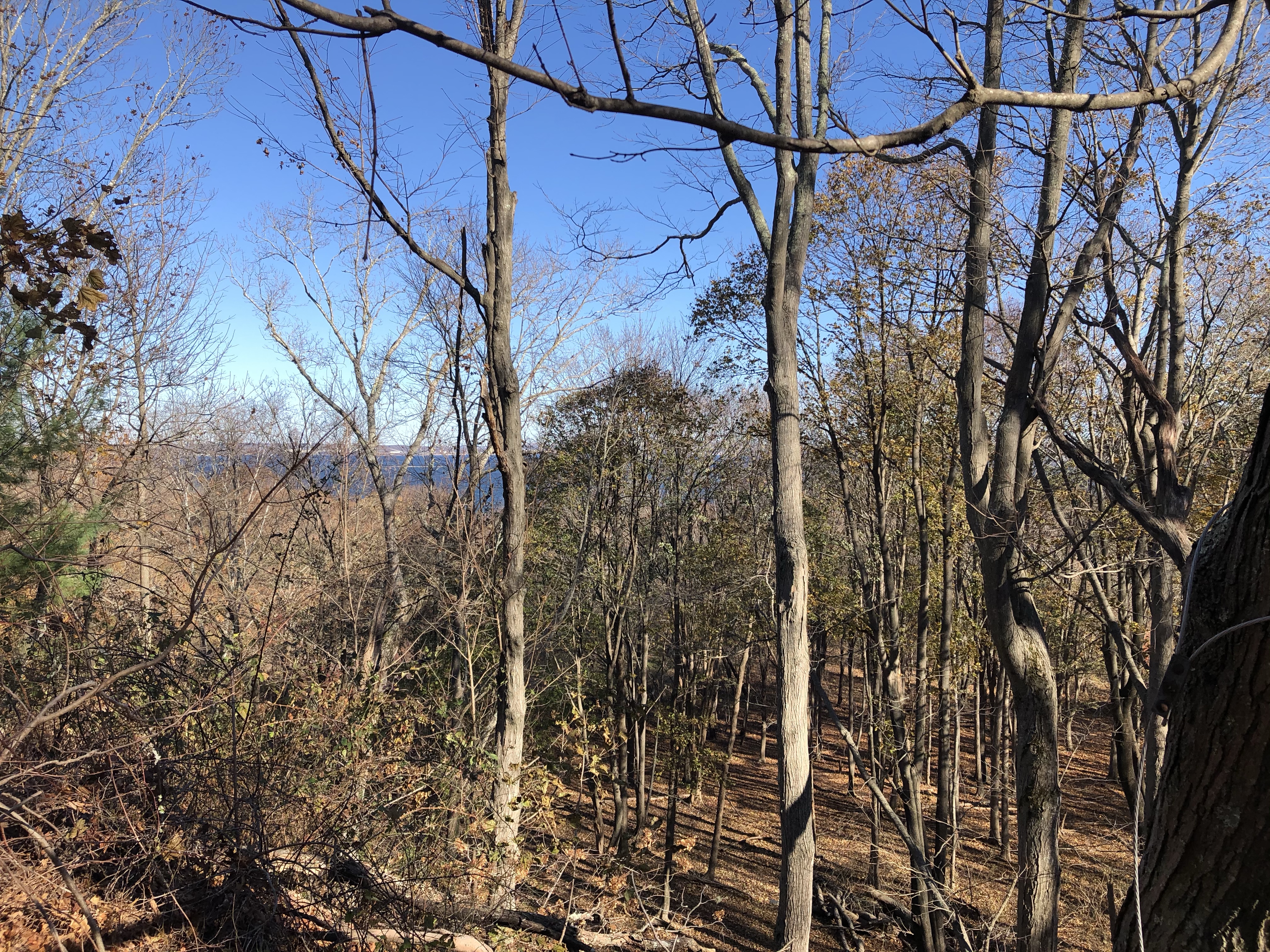
    Walking through the woods on an old paved road slowly being consumed by the forest, I spooked a hawk from the ground and watched it leap to the sky and arc above me, white feathers on blue sky. A sign? A welcome from Metacom or another ghost from the Pokanoket? I keep moving and soon after I saw the rock outcropping that was Metacom’s seat. And it just looked like a seat of power, silently commanding the forest and looking out to the bay, just like its sachems did before they passed, and the land passed to the settlers. Pokanoket survivors were sold into slavery in the West Indies, a final, brutal indignity.

    I’m told that the Pokanoket recently attempted a takeover attempt to win back the land from Brown University. 341 years after Metacom’s death this place still evokes passion. This is one reason I had to get a permit to enter private property, and I was only given an hour to walk around. It was enough time this time, though I’d like to go back again knowing I missed more than I saw. I was alone as I walked and relied on written directions and one sign on the property to inform me where I should go. Instinctively I climbed the outcropping to see what Metacom saw: blue water above the dancing treetops. But I relied on a feeling about the place not signage. It seems they’ve made it challenging enough to visit that most people don’t. But I never really felt alone. That hawk, and many more spirits in the wind, were with me the whole time.