Tag: Sandwich

  • Finding the Magic Behind the Ice

    There’s something uniquely foreign about the experience, akin to visiting an ice palace in a fantasy movie. Humans aren’t supposed to be in such places. At least that’s what we tell ourselves when we look at a waterfall from the front. And when it’s frozen in winter? Well, there’s something chillingly locked away in… there.

    Now, in case you’re wondering, this isn’t the first time I’ve been behind a waterfall. Like countless thousands, I’ve walked behind Niagara Falls and for the price of admission seen the roaring waters dropping away from the safety of a dim, well-engineered if soulless tunnel. Interesting, to be sure. But not magical.

    It’s clearly the ice. It forms a wall over the falls that announces, “sorry, closed for the season”. There’s beauty in the frozen stillness of a waterfall in winter, of course, but there’s a small part of you that feels betrayed by the ice. You hear the muted sound of water falling deep inside, and want for more.

    Enter Beede Falls in Sandwich, New Hampshire. In warmer months it’s a 35 foot horsetail of falling water with a popular swimming hole. In winter it’s an ice bulge, beautiful but seemingly as inaccessible as other frozen waterfalls. But this one offers a secret for those who dare. You can duck and crawl in behind the falls on the left or right side, and even crawl all the way through if you wanted to. For some less tall than me standing up is even possible.

    I wondered at the characters over the years who have crawled behind the falls in all seasons. I wasn’t the first on this day, and other hikers waited patiently for me to finish to have their own turn in the tight tunnel between granite, water and ice. How many humans have made this crawl over the thousands of years that this cave and waterfall have danced together? A lot, I suppose. But for a few minutes, there was only me and the ice and water.

    That’s where I finally saw the magic locked away behind that frozen blue skin. Deep behind the water is indeed falling, forming icicles and frozen bubbles successively grown upon each other to form otherworldly sculptures. And through it all that shower of water penetrates the center, surrounded by its icy shield and backlit by the daylight beyond. An incredible wonderland so foreign to me, so delightful, that I felt I’d gone to another world. And indeed I had.

    Beede Falls, behind her icy shield
  • Twice the Fun: Mount Israel & Beede Falls

    Not every amazing hike is over 4000 feet. In New Hampshire there are other lists besides the 4K list, lists like 52 with a view, which offers some beautiful views with a bit less effort than the 4000 footers. For a warm Sunday with snow melting into snowball-making consistency, a couple of friends invited me to join them on a hike of Mount Israel and for a bonus, a visit to Beede Falls, one of the waterfalls on my personal checklist to see in 2021.

    A bit of history is in order. Mount Israel is named for a settler named Israel Gilman, who lived near the trailhead for this mountain. There’s still an active farm near that trailhead, and it’s easy to imagine the land in the 1760’s when Gilman was walking around this place. Mount Israel is located in Sandwich, New Hampshire, which also has a bit of history in its name. The town of Sandwich is named for the 4th Earl of Sandwich, John Montagu, supposedly the inventor of the sandwich. Given that, I made a point of packing a sandwich for the hike, in honor of the Earl (or whomever it was, lost to history, who made sandwiches for him).

    The hike began at Mead Base in Sandwich, with a straightforward two mile hike up the Wentworth Trail. For those wondering about the name of the trail, a bit more history for you: Sandwich was founded in 1767 from a grant by Governor Benning Wentworth. Another name you’ll come to know is Daniel Beede, who was chosen to lead the settlement of Sandwich and granted 100 acres. Place names usually betray the history of that place, and if you look hard enough you’ll find Easter eggs like these on maps and street signs.

    I quickly fell in love with the Wentworth Trail. It winds through old growth oak and pine trees, with some tree trunks four feet in diameter – exceedingly rare around here. The snow cover acted as a spotlight on the biggest trees in the forest. I was smitten with one oak tree that had to be a witness to the transition from Native American land to English settlement. Further up, the trail wound around granite ledge and hemlocks, offering glimpses out to Squam Lake and the surrounding ridge line.

    The summit of Mount Israel is 2620 feet with 1900 feet of elevation. Despite its modest height relative to some of the other mountains in New Hampshire, it didn’t disappoint in views or the stunning beauty of the trail itself. Steep enough for a workout, short enough to give you time for other adventures. We made short work of the trail and before we knew it we were back at the trailhead at Mead Base and Act II.

    A half mile from the trailhead is another wonder worth visiting, Beede Falls, which is named after our friend Daniel Beede. The walk itself is wonderful, with granite ledge and scattered glacial erratics lining the edge of the trail. A large cave named Cow Cave offered a quick distraction. It was so named by some cows that decided to shelter inside the cave one day deep in the past. The cave was interesting, to be sure, but the real show was Beede Falls.

    In late February the falls were largely frozen, and we walked out on the ice that must be a lovely swimming hole on a hot summer day. The amazing part of Beede Falls in looking at them from behind. The falls froze solid in front, but you can access the back from the left and right side, and crawling behind them offered a magical trip into an icy palace. Water cascaded from the granite ledge, plunging between the icy wall you see on the outside and the cave formed behind. There’s just enough room to go all the way through it if you’re adventurous and don’t mind getting a little wet.

    In all our days on this earth, how often can you say that you got to see the world from the summit of a small mountain and from the crawlspace behind a waterfall in the space of a couple of hours? If you’re blessed with good health and mobility, then surely life is to be lived fully. Adventures like this one are within reach of most of us. All you’ve got to do is get out there.

    Frozen Beede Falls
    Ice wall in cave behind the falls
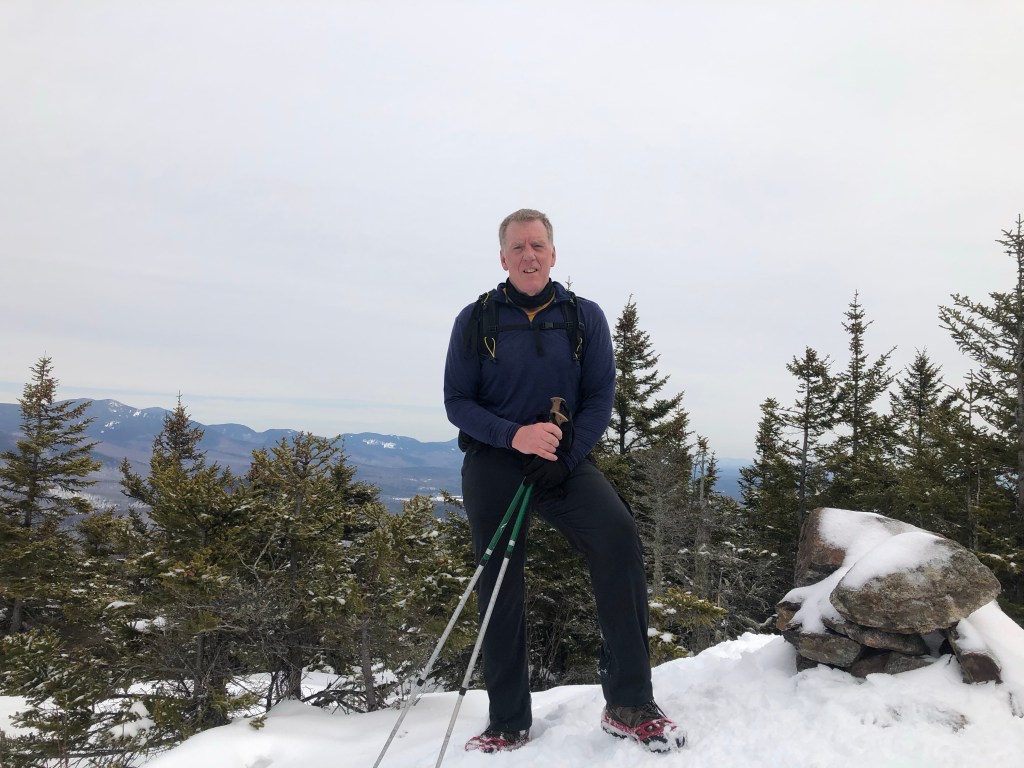
    Summit of Mount Israel
  • A Sand and Scrub Pine Kid Visits the Past

    It might say a lot about me that on a hot Monday morning on Cape Cod when I found myself with time alone I didn’t opt for the beaches, but instead made a pilgrimage to an old graveyard in the woods of Forestdale.  This was a trip back for me, for I would walk in this graveyard as a kid reading the names and the stories behind the people who once lived and died in this place.  The graveyard was a short walk from the shores of Peters Pond, a place that I’d spend many summers in my formative years.  For I was a sand and scrub pine kid.

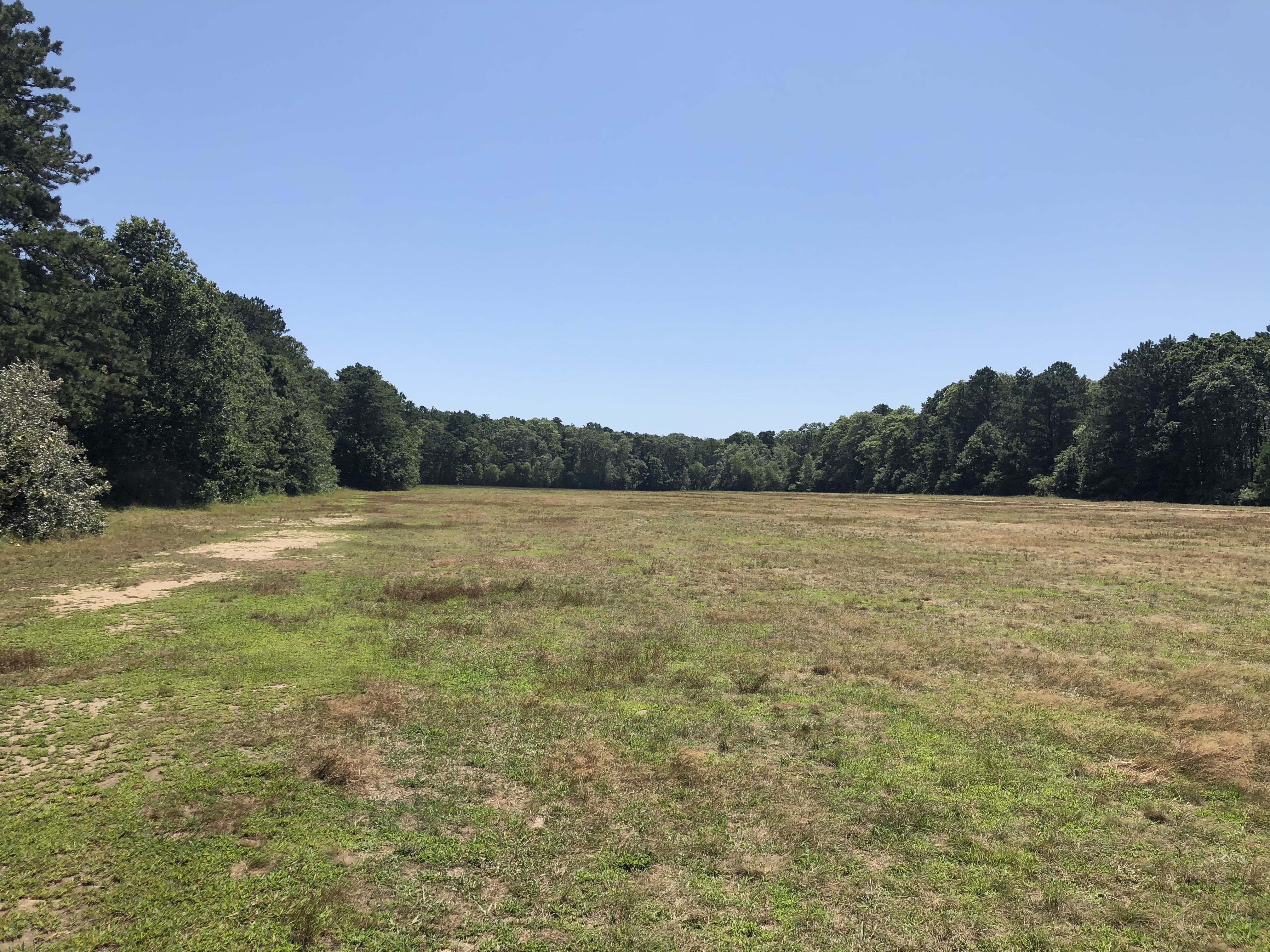
    30 years ago you could read the names clearly on most of the gravestones, and the cemetery was well-maintained by the caretaker for the Hewlett Packard Sandwich Resort (back when HP was a different kind of place).  That place on Peters Pond was a great perk for employees – a place to bring your kids for a week or two every summer at no charge.  When you went on the same week every year, you’d build friendships with other HP families, and that would build momentum year-after-year until it became a defining part of growing up for many of us.  The summer would end and they would have one last company party with employees grilling steaks and burgers and having games with prizes on a large field up the hill from the grounds of the resort.  That field is now home to The Sandwich Bazaar Flea Market, which effectively preserved the field in just as it was three decades ago.  I was grateful it hadn’t become a landing spot for condos.

    Sandwich Bazaar Field, once a part of HP’s Peters Pond Resort

    The entrance to the field is chained off to prohibit cars, but I parked across the street and walked over.  Warning signs about deer ticks and Lyme Disease greeted me.  We didn’t think about such things when I was a kid, we’d just pull ticks off of our skin before they became engorged.  Now I guess you need to remind people.  And so I walked down to where I remembered the small graveyard being, walking in a time warp back to the late 1970’s and early 1980’s when this was my escape and the rest of the family didn’t think anything of you disappearing for the entire day as long as you showed up for dinner (I never missed dinner).  I saw the fence for the graveyard well past where the tire tracks for the flea market stopped.  Just where I remembered it being.  But sadly the old graveyard isn’t maintained anymore.  Where once the grass was neatly mowed, now it was as tall as the gravestones.  More troubling was the poison ivy that spread all over the grounds.  Apparently the Town of Sandwich has decided to let this cemetery return to nature.  At least the gravestones that were still standing.  Many were crumbled piles of broken stone.  Perhaps vandalized?  But even the gravestones still standing showed they haven’t aged well.  Most were illegible as the sandstone faces curled and peeled downward.  The last three decades haven’t treated the old graveyard well.

    The Sandwich Historical Commission does a great job of posting old maps of the area.  I compared two maps from around the time that the people taking up permanent residence here would have been alive.  The first was a map from 1794 that offers a larger view of Sandwich, with delightful details on the map.  Peters Pond is clearly named, making it an easy point of reference.  The land is marked as “wast land” on one side of the pond and “good land” on the other.  But the graveyard isn’t noted.  It does show up on a map from 1857, which also notes family names on houses in the community.  Interestingly, none of the names correspond with the people who are buried in the graveyard.  Its as if all references to them disappeared.  And so now is the graveyard, quietly being swallowed up by forest and poison ivy.  I thought of that 1794 map, describing this land as “wast land”.  Its impossibly hard to make a living farming on sand, but the land isn’t a waste.  It raised countless generations.  And for a dozen or so summers, it raised me.

    Segment of 1857 map of Sandwich

    I walked the serpentine path through the graveyard where the tall grass had been trampled down.  The path followed a route to the gravestones that were still intact.  I’m not the only one to visit Tobey Cemetery this year.  Which made me wonder, was it other sand and scrub pine kids returning to their childhoods as I was?  Or curious flea market people wondering what this remote graveyard was all about?  I’d like to think the former.  There were so many of us once.


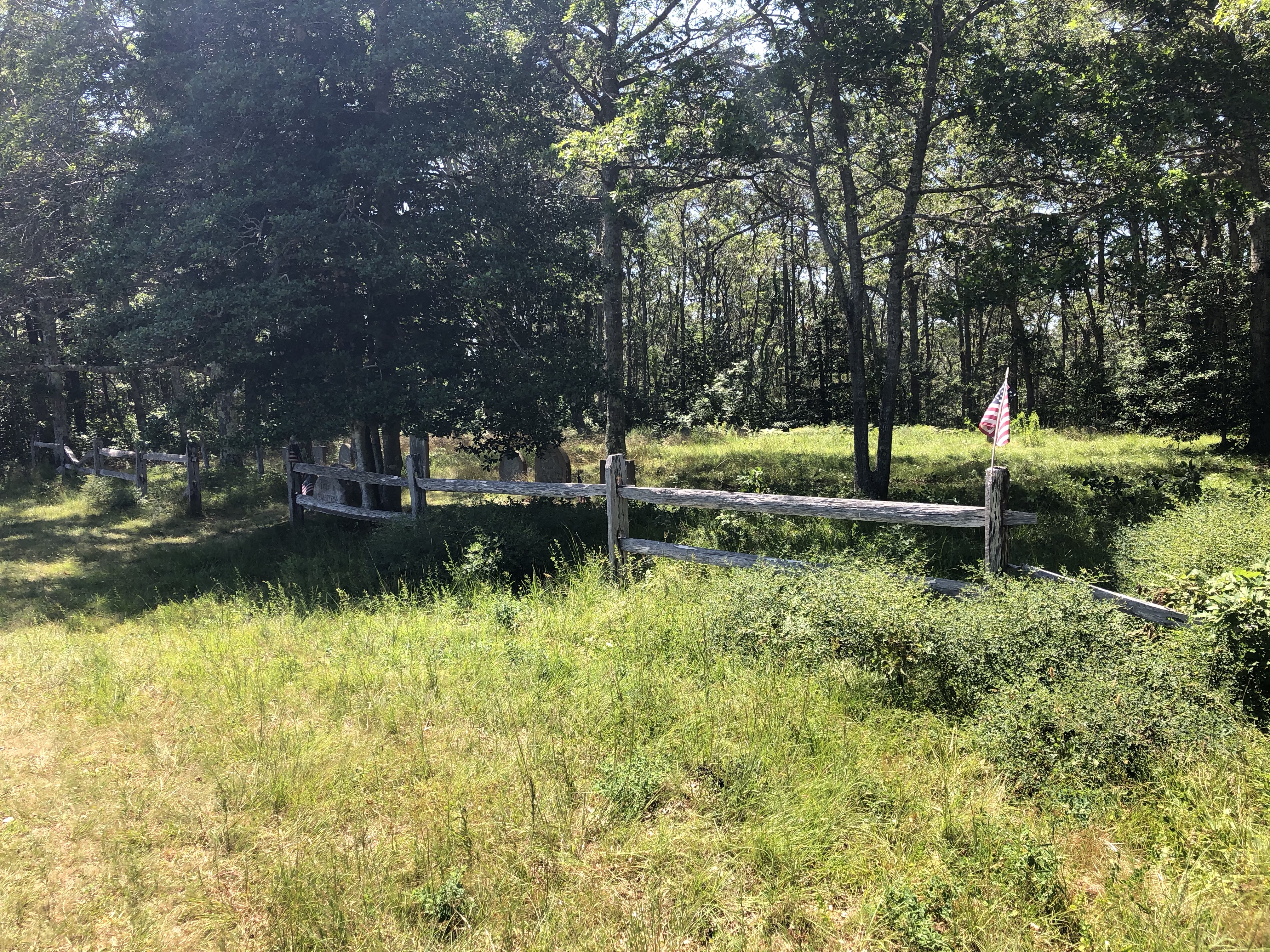
    Tobey Cemetery

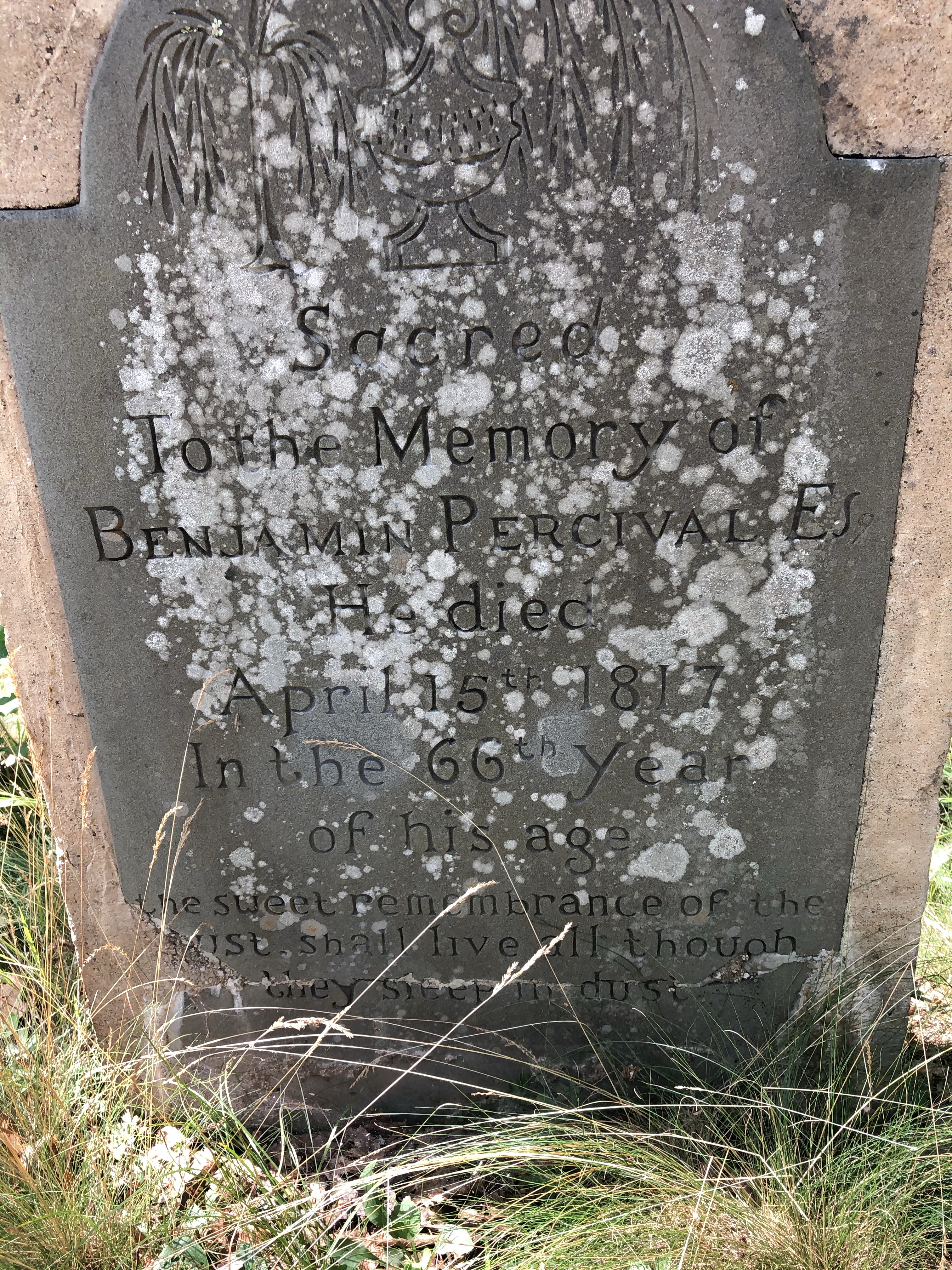
    One of the few intact and legible gravestones left