Tag: Scotland

  • Unfinished Business

    Lately I’ve been re-building lists. Lists of unfinished business I have to get to. Things to see and do, as soon as this other business is over. You might call it a bucket list, but for me I’ll stick with unfinished business.  Take a blank map, color in where you’ve been and you quickly see that there’s so much you’ll never see.  And that’s okay, I don’t want to see everything, but I do want to see some things.  Let’s begin with these.

    The Aurora Borealis has long been on this list, dancing just out of reach with the Southern Cross on the far ends of the earth sky. I suppose I’ll get to each eventually, beginning in the north, where I sit, just out of reach, thinking about such things. I blame Crosby, Stills & Nash for sticking the Southern Cross in my head, just as I blame Local Hero for my obsession with the Northern Lights. Remove “blame”, add “credit” if you will.

    And then there’s sailing across the Atlantic Ocean (and back again on a southern route).  Long list on both sides of the pond, and of course in between.  Iceberg spotting in Newfoundland, hoisting a pint at The Brazen Head in Dublin, a fish sandwich on raisin bread at Woody’s in Bermuda, and lately, Christmas in Salzburg and Hallstatt without the throngs of tourists.  I definitely have unfinished business in Scotland, beginning with The Quiraing and the sunset at Neist Point and heading south to an immersive distillery tour in Islay. Across the channel and Normandy calls, and then a host of other Sirens scattered about Europe, taunting me; There’s no time to waste, you fool.  Don’t worry, other Sirens, I haven’t forgotten you…

    Another west coast calls me; Napa and some time with those redwoods, a drive down the Pacific Coast Highway to Monteray and Big Sur and a trip inland to Yosemite.  There’s something about west coasts that draw me, I suppose. Maybe it’s that restless northeast kid longing to get out there?  I’m a sunrise guy (greet the day!), but I do love a good sunset too.  I’ll follow the sun and see where it leads me.  Perhaps it will lead me to unfinished business in faraway places like Cocos Island and Easter Island and Iguazu Falls in Argentina and Machu Picchu in Peru.  I’ve never given you enough attention South America.  That’s an omission I hope to remedy, given the chance.

    And what of the world beyond?  So much unfinished business from Hawaii to the South Pacific to Australia to New Zealand to Asia and India and Africa all stacked up waiting their turn.  So much to do, so little time…  unfinished business all of it.  So let’s get this pandemic behind us, there’s a world to see, and precious little runway to take off.  Join me?

  • Ulsce Beatha: Water of Life

    It’s a cold and rainy Friday morning in New England, and my thoughts turn to Scotland.  I spent a similarly wet day trying to be outdoors on Isle of Skye last November.  The goal all along in Scotland was for a generous mix of outdoor activities.  Plan B was to visit distilleries when Mother Nature turned her back on us.  And so it was that when the sky was full of cold water in Skye we went to Talisker.  We capped the trip with a very intentional visit to Speyside and the Glenfiddich and Balvenie Distilleries. We didn’t go to Scotland to drink our way around, but we made a point of visiting distilleries in each region we found ourselves in.  If castles and battle sites teach you the history of the place, distilleries teach you the entrepreneurial spirit and patience of the Scots.

    Two things you realize quickly when you’re on distillery tours is that you never have enough time to see all of them and it’s best to have a designated driver if you want to immerse yourselves in the process.  Alas, I was the designated driver and time wasn’t on our side to see everything.  But we managed three hours at Balvenie for a magical tour that I highly recommend.  Off-peak tours are especially enlightening as you have a little more elbow room and an opportunity to dwell in special places.

    The Gaelic Ulsce Beatha, pronounced “ish-ka ba-ha”, translates to “water of life”.  Similar to the Latin Aqua Vitae.  Whisky distilling began in Ireland, made its way to Scotland via Islay, where it was transformed into something else entirely.  There are plenty of differences between Irish Whisky and Scotch Whisky, but the primary difference is in the distillation process.  The Irish triple distill, the Scots double distill.  Mix in the raw ingredients and the essence of the land and you’ve got two very different spirits.  There’s magic in each of the spirits, should you choose to linger with them.  Lingering is the key, these aren’t meant to be slammed down like you’re on spring break in Cancun.  Honor the spirit or don’t dance with it.

    Tonight, on this rainy and raw day, I’ll dance a bit with the spirits.  Just enough to honor them without offending them.  A taste of the essence of Scotland, which draws my attention still.  Humanity is taking a bit of a hit at the moment and we’re all living with plan B, but there’s hope for brighter days should we get this right.  I’ll have a virtual toast this evening to your continued good health.  Slainte Mheh!

  • Favorites From a Year of Reading

    This might go down as my favorite year of reading.  I made it a goal to read more the last two years, and the momentum from 2018 definitely carried over into 2019.  Reading inspired my travel to new places and offered side trips of meaning in places I’ve been many times before.  It kicked me in the backside with work, writing, exercise and diet, and it inspired me to be a better version of myself than I previously had been.  I’m still a work in progress, but aren’t we all?  In all I read 23 books cover-to-cover in 2019, and dabbled in chapters of a few more.  Here are my ten favorite books this year:

    Atomic Habits by James Clear was by far the most impactful book on self-improvement that I’ve read in many years.  Strongly recommend this if you’re looking to make meaningful changes in your life.  I’m going to re-read it again in January to get a jump-start on 2020.  Habits that are now part of my identity include reading, writing, walking and drinking water.  Habits that went by the wayside include daily burpees and drinking less.  2020 (every day really) offers a chance to reset on habits, with new possibilities with learning language(s) and a few notable work goals.

    The Gift by Hafiz is a stunningly beautiful collection of poems.  Why it took me until 2019 to find Hafiz I don’t know…  but I’m glad I got here.

    Dream Work by Mary Oliver is another collection of brilliant poetry that it took me way too long in life to discover.  Maybe Oliver’s passing this year put a spotlight on her work, or maybe the student was finally ready.  Either way I’m glad I’ve immersed myself in the world of Mary Oliver.

    To Shake the Sleeping Self: A Journey from Oregon to Patagonia by Jedidiah Jenkins is a travel book on the one hand, and a journey of self-discovery one the other as Jenkins wrestles with his religious upbringing and his sexual identity during an epic biking trip across North and South America.  The book reinforces my belief that most people are good while acknowledging some good fortune along the way.  As a bonus, Jenkins pointed me towards one Hafiz poem, Tim Ferriss pointed me towards another, and soon I was reading The Gift (above).

    Awareness by Anthony De Mello is not the kind of book I ever would have picked up, as it feels self-helpy and overly religious at first glance.  And it does have a healthy dose of both things, but this books is an incredible call to action for the self, and backed up with tremendous insight into human nature.  Another book I wish I’d read years ago that I’m glad I got to in 2019.

    How the Scots Invented the Modern World by Arthur Herman is a book I’ve had on the shelf for years that I finally got to in 2019.  Perhaps inspired by my then upcoming trip to Scotland, I burned through the book quickly, learning a lot about the Scottish people who made a massive impact on the world we live in today.  It also prompted me to add a few places to my trip that I might not otherwise have gone to.

    The Map Thief by Michael Blanding poured gasoline on my burning fascination with old maps, and fired me up in another way; as someone who is passionate about historical artifacts like maps and old books, and also in a career based on securing people and assets from criminals like Forbes Smiley, this book was highly relevant for me.

    The French and Indian War: Deciding the Fate of North America by Walter R. Borneman offered me more insight into the place I live than any history book in a long time.  The Northeast corner of North America is where most of this fighting took place, and I took the opportunity to visit many historically important sites in my travels that were inspired by this book.

    Benedict Arnold’s Navy: The Ragtag Fleet That Lost the Battle of Lake Champlain But Won the American Revolution by James L. Nelson is a look at the complex individual that is Benedict Arnold.  And it goes well beyond the Battle of Lake Champlain, with a detailed account of Arnold’s epic raid of Quebec through the wilderness of Maine.  The retreat from Quebec opened up the St Lawrence River to the British, which put Lake Champlain and Lake George in their sites as the critical water route to the Hudson River. Arnold’s fleet delayed the British just long enough to set up the victory at Saratoga (where Arnold played a critical role as well).  I followed this book by reading Valiant Ambition by Nathanial Philbrick, another excellent book with even more detail on complicated life of Benedict Arnold.  Benedict Arnold’s Navy inspired that read, so it gets the nod here in the top ten.

    The Daily Stoic: 366 Meditations on Wisdom, Perseverance, and the Art of Living by Ryan Holiday is, as the title indicates, meant to be read daily, one quick dose of stoic medicine at a time.  After immersing myself in Marcus Aurelius’ Meditations in 2018, I felt that The Daily Stoic would be a great way to add a little daily stoicism to my life.  And it became part of my morning routine, where I’d read this before other books.  I’ll continue this habit by re-reading The Daily Stoic one day at a time in 2020 and on into the future.

    So there you go, my top ten favorite reads in 2019.  I’m a better person for having read them all, and look forward to revisiting several of them again and again in the years to come.  I’m a better writer for having read them all (still a work in progress).  And there’s a big stack of exciting books to tackle waiting patiently beside them.  So here’s to some great reading in the year ahead!

  • What’s Up? The View From The Top Of Two Monuments

    One of the fun things about travel is seeing new things. Or more specifically seeing old things that are new to you. Climbing tight spiral staircases to see the view from the top isn’t high on many people’s lists, but an adventurous few make the climb to see what’s up there.  I had this experience twice while I was in the United Kingdom this year, once in London and the other time in Scotland.  Both offer similar experiences and yet are completely different.  I recommend doing each climb if you’re fit and aren’t afraid of heights.

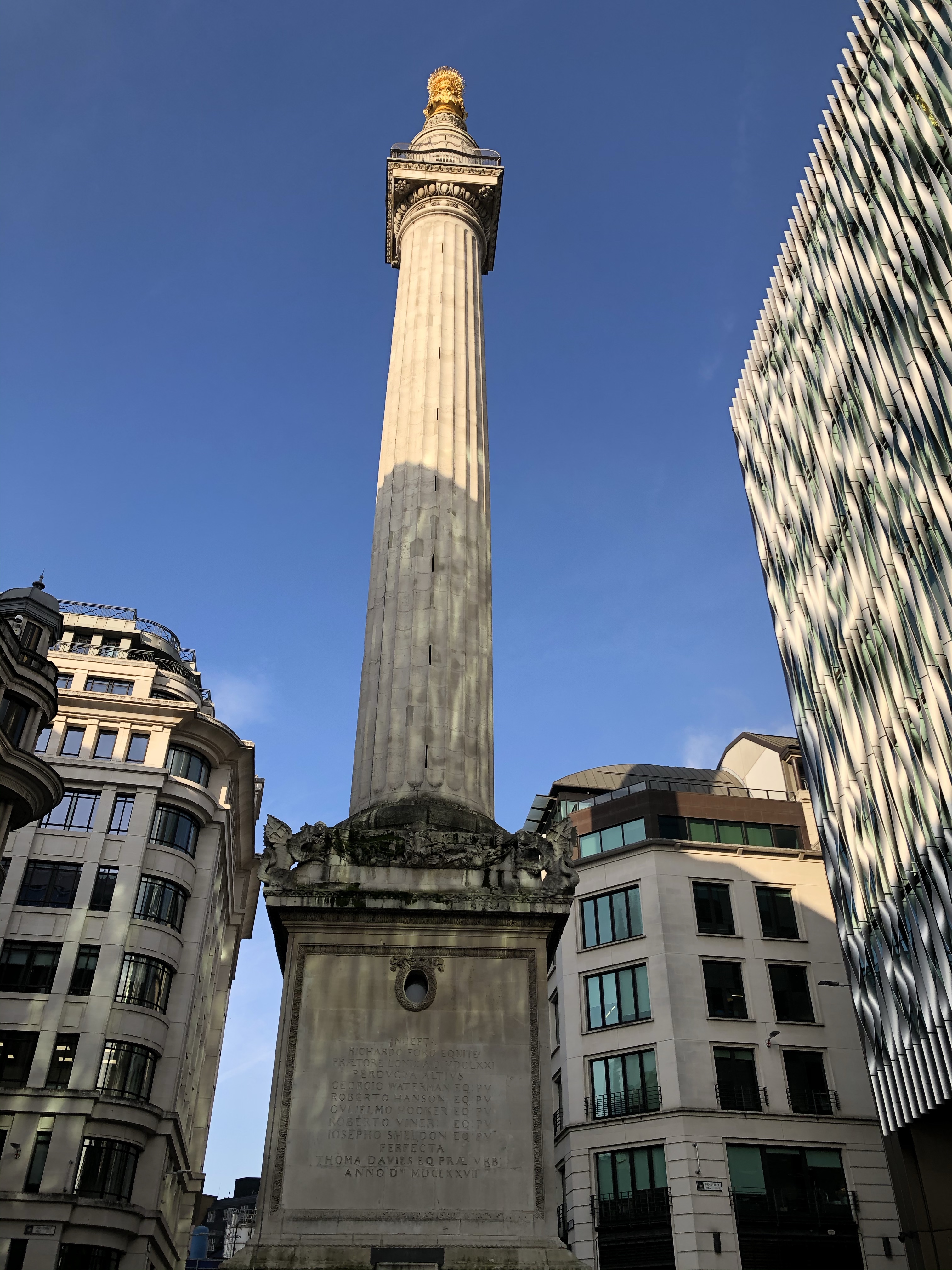
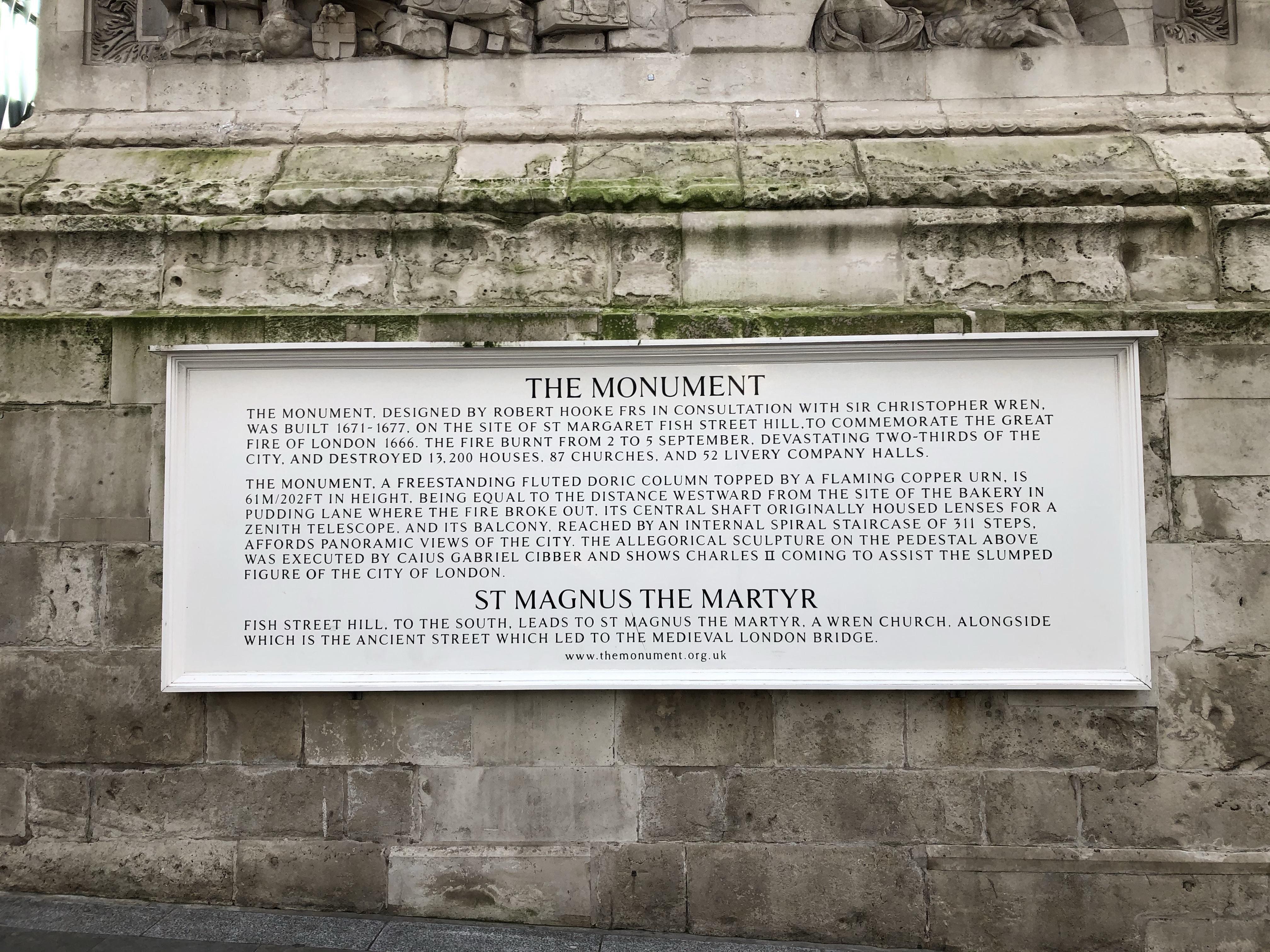
    The Great Fire destroyed over 13,000 homes and 87 churches in London in 1666, leaving upwards of 130,000 people homeless.  The re-build of the city was based on the design of Robert Hooke and Sir Christopher Wren.  These two men designed a monument commemorating the Great Fire, which was built of Portland Stone in the shape of a doric column with a spiral staircase inside running to an observation deck on top, and crowned with a gilded urn of fire.  I climbed up the 311 first thing in the morning on one of my last days in London, appreciating the stunning views of the city from up there.  The spiral staircase is easy to navigate, but you’ll feel it as you climb up.  I managed to get to the top without taking a break, but my heart rate was elevated when I finally reached the viewing platform.

    Perhaps the most impressive thing about The Monument is that it was completed in 1677, a century before America declared independence from Great Britain.  Think about the generations of people who have made the climb up those same stairs!  If you take a low number, maybe ten per day, multiplied by the number of days The Monument has been open for the public, you arrive at 1.2 million people who have made the climb to the top.  More realistic is a number topping 3-5 million.  All climbing a staircase ’round and ’round to the top; an adventure shared across generations.  Imagine the stories in that collection of people.  And now my daughter and I are on that list, with our own stories.

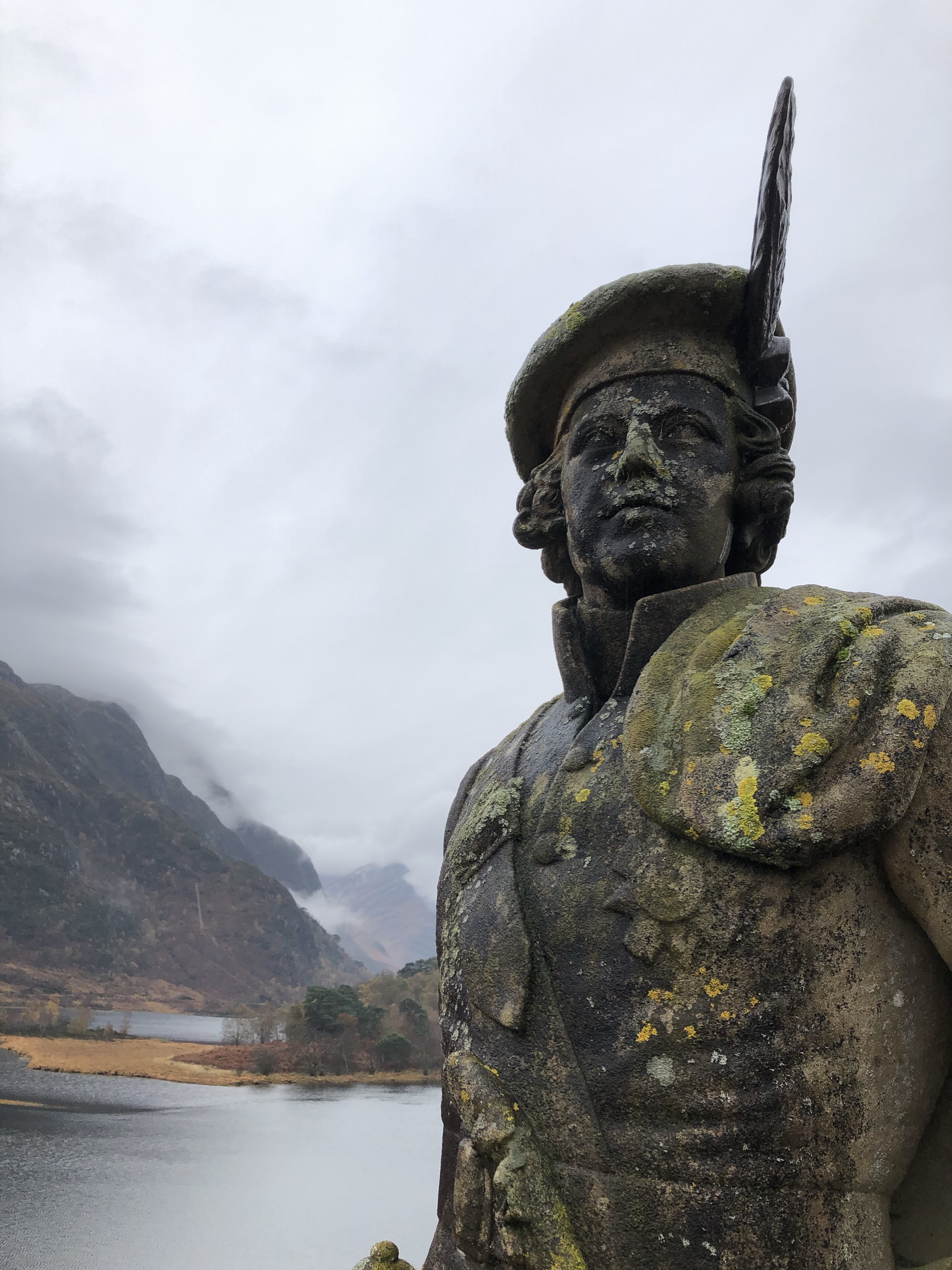
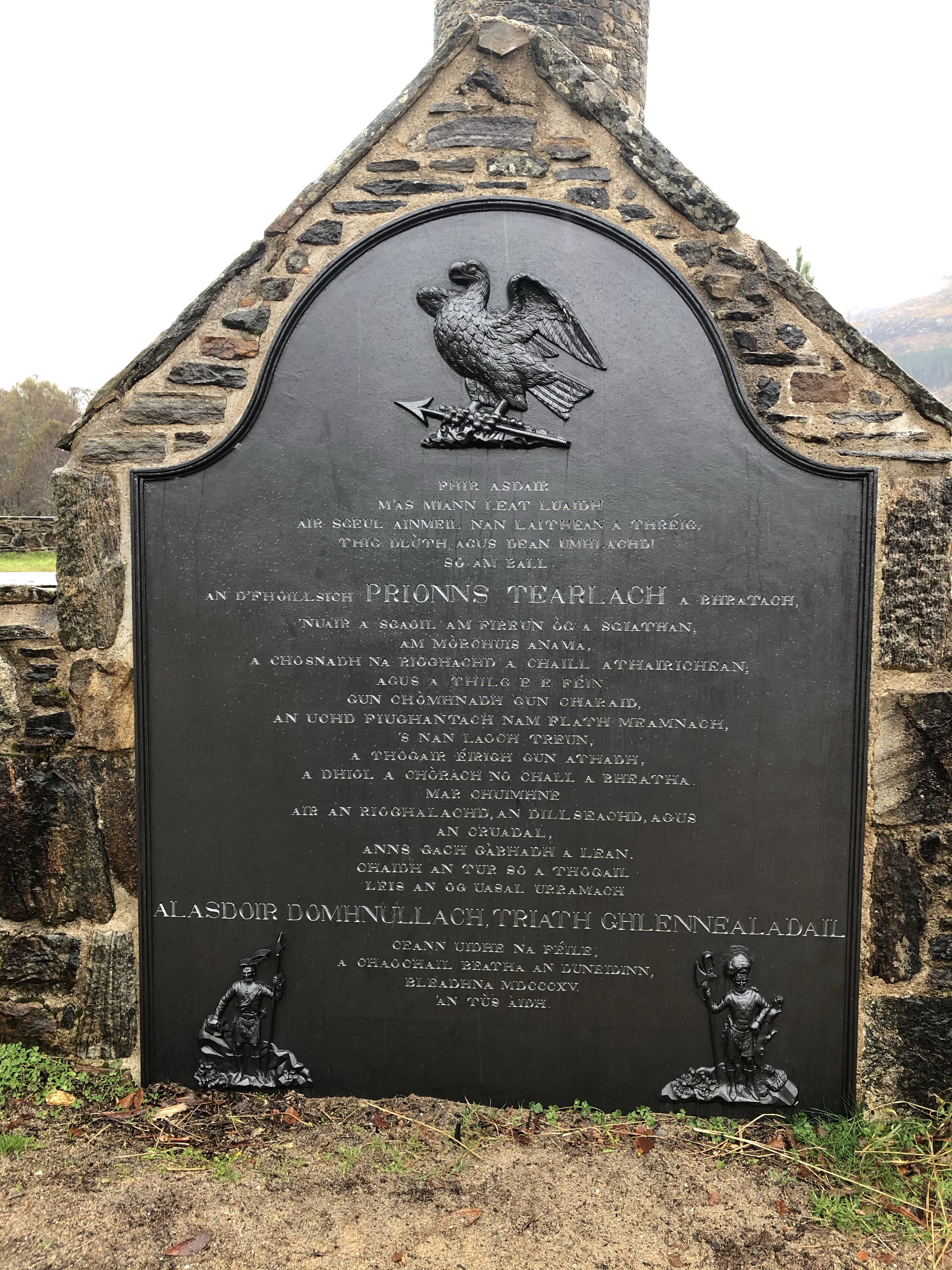
    Meanwhile, in Scotland at the head of Loch Shiel, there’s another monument that’s been standing stoically for generations.  The Glenfinnan Monument, built in 1815, commemorates the 1745 Jacobite Rising.  It’s topped with a statue of a lone Jacobite soldier looking north towards the Highlands.  This climb wasn’t as high as The Monument – it’s 18 meters, or about 60 feet tall, but it has it’s own challenges.  The spiral staircase is more like a tight and twisting ladder spinning you to the top step-by-step.  I’m 6′-4″ tall and felt like I was in a gun barrel spinning about to the top, where I emerged to see this moss and lichen covered Jacobite ignoring me as he’s ignored countless climbers before me.

    Where London has grown up above The Monument, squeezing it on all sides and shrinking the panoramic view, the Glenfinnan Monument offers the same view today as it did in 1815.  Stunning views of Loch Shiel, Sgùrr Ghiubhsachain and other surrounding mountains.  Turning your gaze towards where our friend the Jacobite is focused on, you see the Glenfinnan Viaduct, made famous by the Harry Potter movies, making its elegant sweeping curve.  This was a lovely view indeed, even with a bit of rain and fog playing games.  Aside from the paved road, the Glenfinnan Visitor Center, a few new buildings scattered about and the Viaduct, this view hasn’t changed since this monument was erected.  It offers its own whispers to the past, and was worth the climb.

  • I Must Get Back To The Sea

    “The sea 
       isn’t a place
         but a fact, and
           a mystery”
    – Mary Oliver, The Waves

    It’s been less than two weeks since I’ve visited the ocean, and it feels like forever.  We’re deep into the holidays now, and the end of the quarter, the end of the year and the end of the decade.  There’s no time for the ocean right now, but on the other hand there’s no better time for the ocean.  I’m planning at least two trips to the ocean in the next week, for exercise and sanity and a bit of winter beach solitude.  I’m close enough to salt water that it’s not going to break either the time or financial banks.

    I noticed a lot of fresh water experiences in 2019, Lake Michigan, Lake Ontario and exploring a double-digit number of waterfalls in New York, New Hampshire, Connecticut and Scotland. I’m hoping 2020 brings even more opportunities to ponder the mysteries of the ocean.  I know I have a good head start teed up for New Year’s Day.  For today, I’m using this Mary Oliver quote as inspiration for a four of my favorite moments with salt water in 2019.  

    Camusdarach Beach: My bucket list beach, and I’m grateful I had the chance to check this box in 2019. Sure, it was a rainy November day, but it was still as beautiful as I’d hoped it would be. I’m already plotting a return.

    Plum Island: My go-to winter beach, close to home and blissfully isolated on a cold weekday. My lunchtime walk was my favorite long walk on a beach this year.

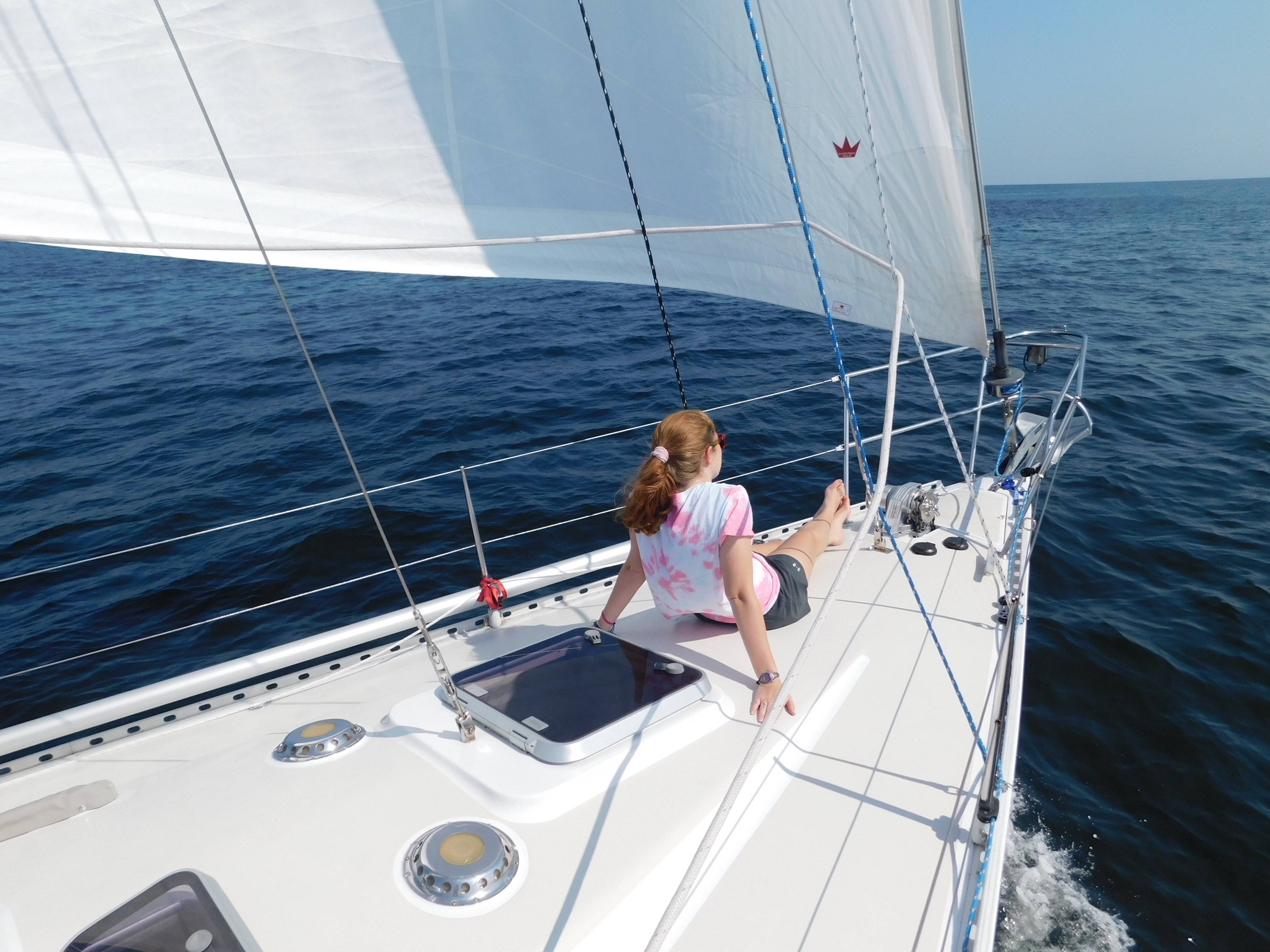
    Sailing on Fayaway: I shake my head thinking I only went sailing once this year, which was the fewest number of times on a sailboat I’ve had in years. I’m grateful for the crew of Fayaway for giving me the opportunity to sail with them. I’ll get out more in 2020, I promise myself.

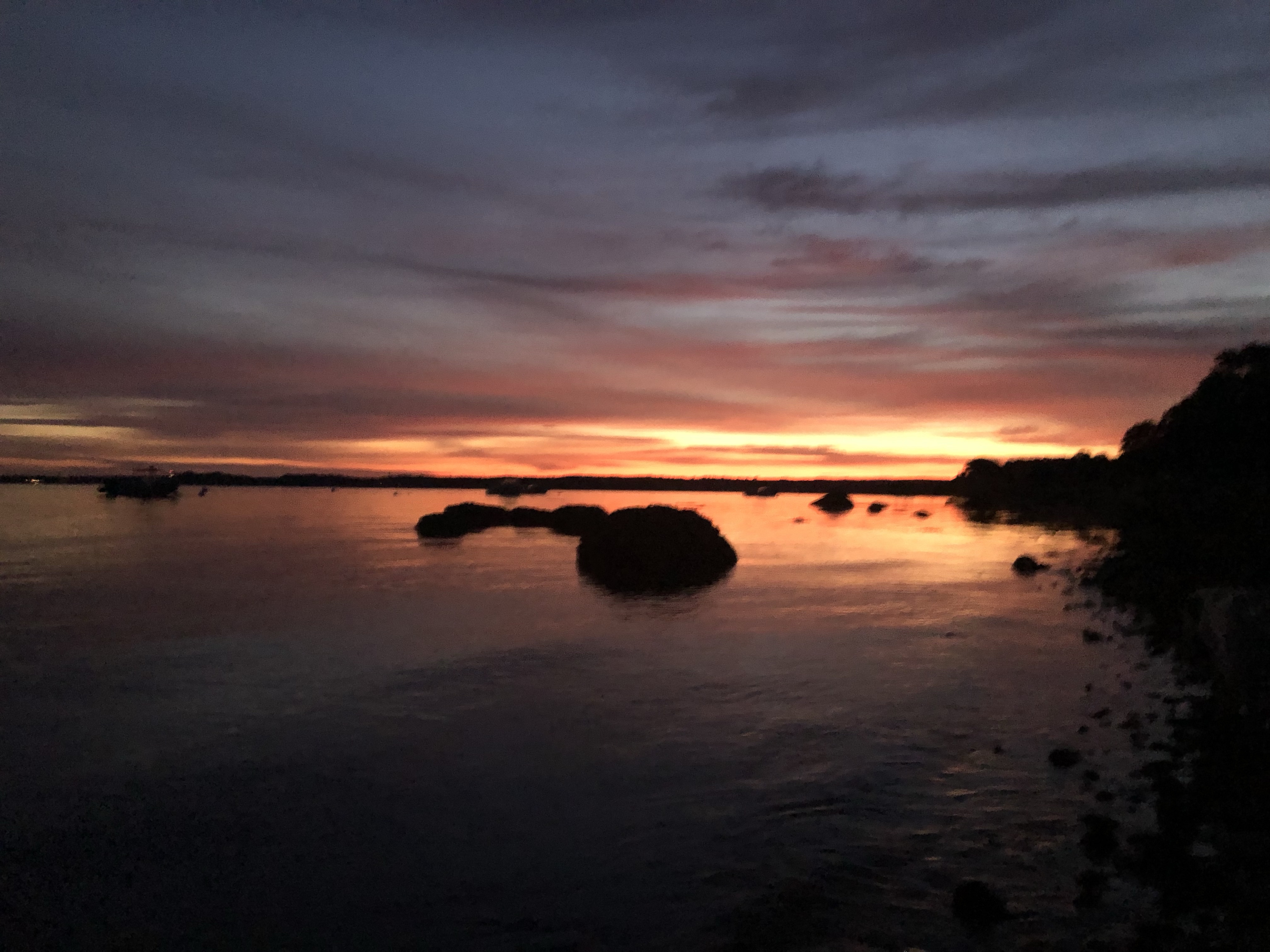
    Buzzards Bay: Home away from home. The sunsets are stunning, but I’m partial to the sunrises. Swimming in Buzzards Bay doesn’t offer surf action, but it makes up for it with warm, salty water you can float in forever. At least I wish sometimes it were forever. The last swim of the year is always bittersweet, and, like sailing, I always hope for more next year.

    We only have so many days, where do you prioritize the time you have? If I’ve learned anything in reviewing the year, it’s that I need to double down on my time with salt water. On the beach, on an oceanside trail, on a boat, or swimming in it, I must get back to the sea.

  • The Joyful Pursuit of Fish and Chips

    How did I get on this track? Surely I’d have been better off looking for the best kale salad? But I’m in search of the best fried food. I know where it started. I blame Halifax. I’ve had exceptional fish & chips, and I keep chasing it in restaurants around the northern Atlantic Ocean trying to find the best in an evasive, sometimes frustrating mission.

    The very best I’ve ever had was a lunch special at The Five Fishermen Restaurant in Halifax. It was super fresh with a crisp, light batter and chips seasoned just right, all presented beautifully on a modest plating. It was an epiphany, and I haven’t had a better one yet in Canada, New England, New York, London or Scotland. Are there equal or better fish & chips in those places? Probably, but I haven’t found it yet.

    Now to be fair, The Five Fisherman is a fine dining experience with a menu to be savored, and I was the right audience for that dish. Pubs and most restaurants that serve fish & chips aren’t focused on the delivery of a world class dish, they’re simply feeding the masses. So I don’t bash the places that don’t do it well, I just don’t mention them at all. I’ve had truly awful fish and chips only once, in the shadow of the London Eye, at a tourist trap. Soggy, greasy and full of bones. I had one bit and threw away the rest. Shameful waste of food, and a fish that died in vain. I had no business ordering anything in that place so the fault lies squarely with me.

    But as you might expect, that was the exception in London. The city has some excellent fish & chips places in every corner. Pub food bliss with large servings of fish overflowing the dish, mounted on a healthy pile of chips (“next to” is the preferred serving, thank you). The only thing stopping me from ordering it everywhere was a natural desire to eat a bit of everything, but I give a respectful nod to the UK for the consistently great fish & chips. Shame my last experience having it there before leaving was that tourist trap place. Circumstances being what they were it was what it was…

    As I’ve hinted, the best fish & chips offers fresh, flaky white fish (Cod, please) in a light, crispy batter, served with a reasonable pile of crisp fried potatoes sliced just right. A side of fresh coleslaw is welcome. Tartar sauce, lemon and ketchup should be strictly optional, not required to get through your meal. When I see a piece of fish presented with a slice of lemon already sitting on the fish I think “not fresh fish”, and when the fish is thrown on top of the chips I think, “soggy chips”. Yes, it’s a basic, working-class dish, but presentation still matters.

    I’ve written close to 500 words on the modest topic of fish & chips. Candidly, I could go on much longer on the topic. Ultimately, my search continues for a better fish & chips dish. Like any experience, once you’ve had something truly exceptional most things afterwards won’t measure up. But there’s joy in the pursuit.

  • Dufftown

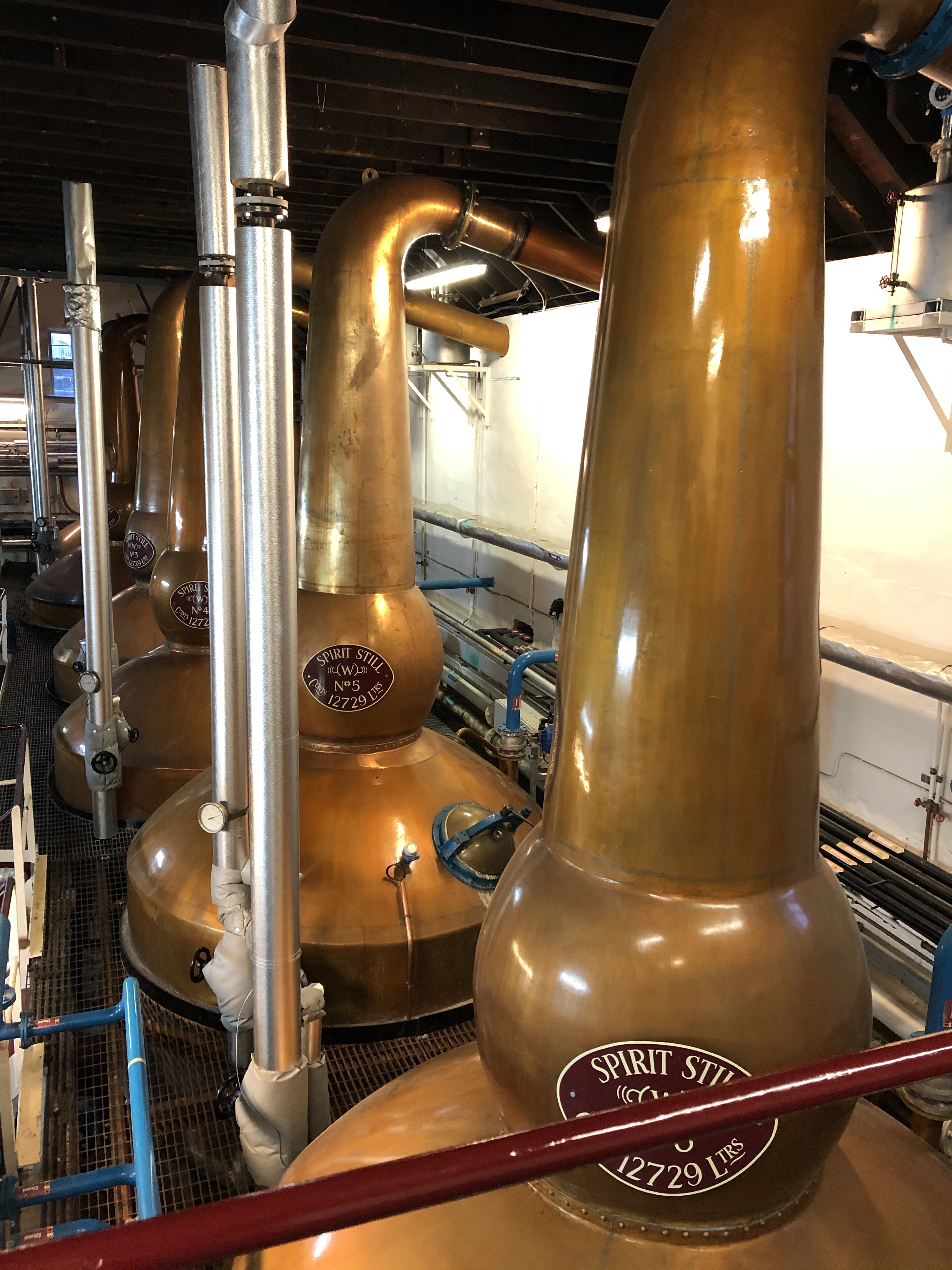
    You could spend a couple of weeks immersed in the distilleries of Scotland. I didn’t have a couple of weeks, but I did circle my last day in Scotland for a trip to the malt whiskey capital of the world (they say and I see no reason to dispute it), Dufftown. Two massive whiskey distilleries are right next to each other, and a third is just down the road. Glenfiddich sprawls at the foot of Balvenie Castle. Next door is the distillery that shares the castle’s name. For a tour, it had to be The Balvenie Distillery.

    I appreciate whiskies from all regions of Scotland, and love the whiskies from Islay in particular. But if I could only have one, it would be from Balvenie. So the tour was booked and locked in, and we arrived with time to spare. The parking for Balvenie is tucked into a stand of trees, making us second-guess the location, but sure enough we had arrived.

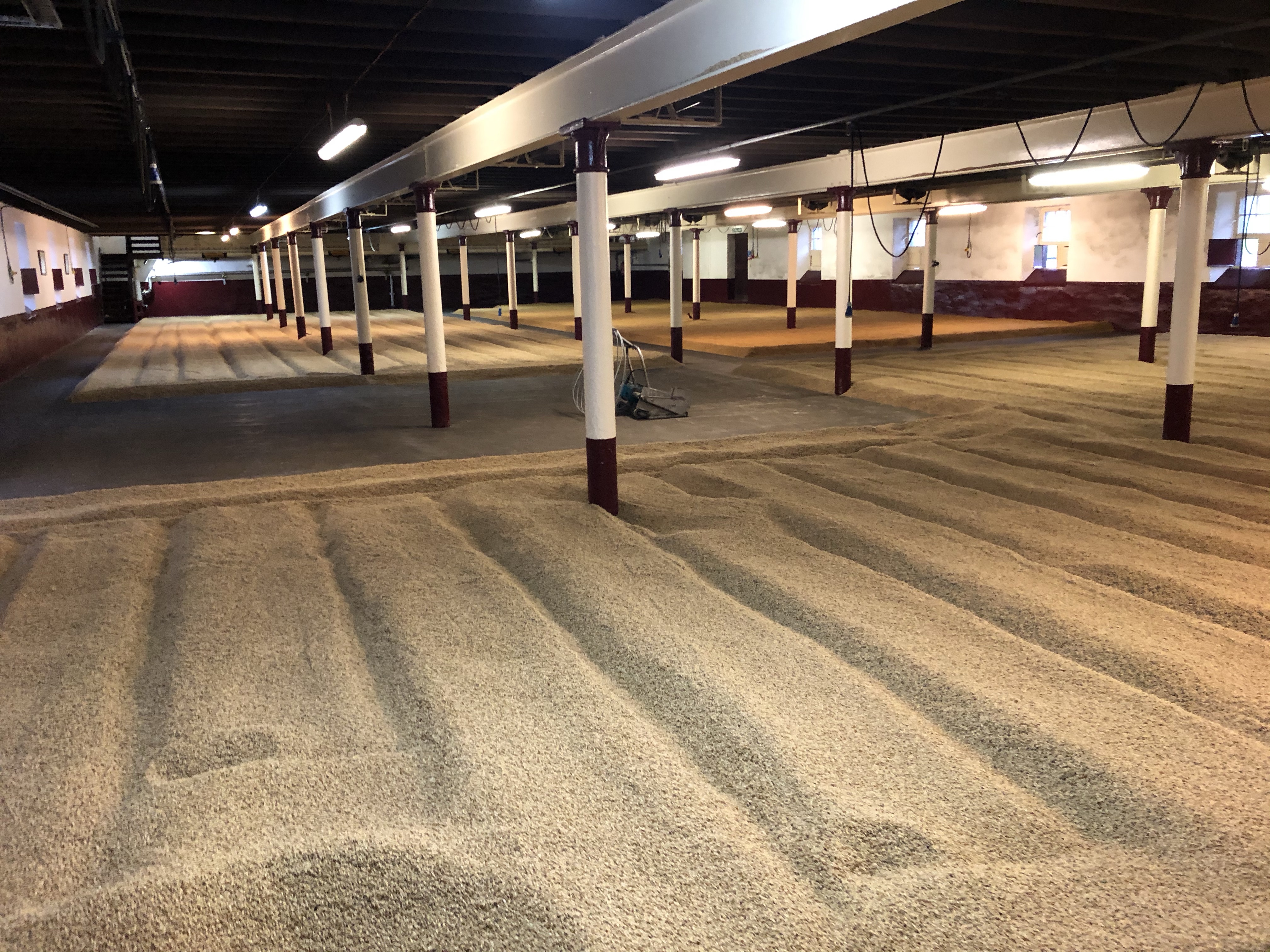
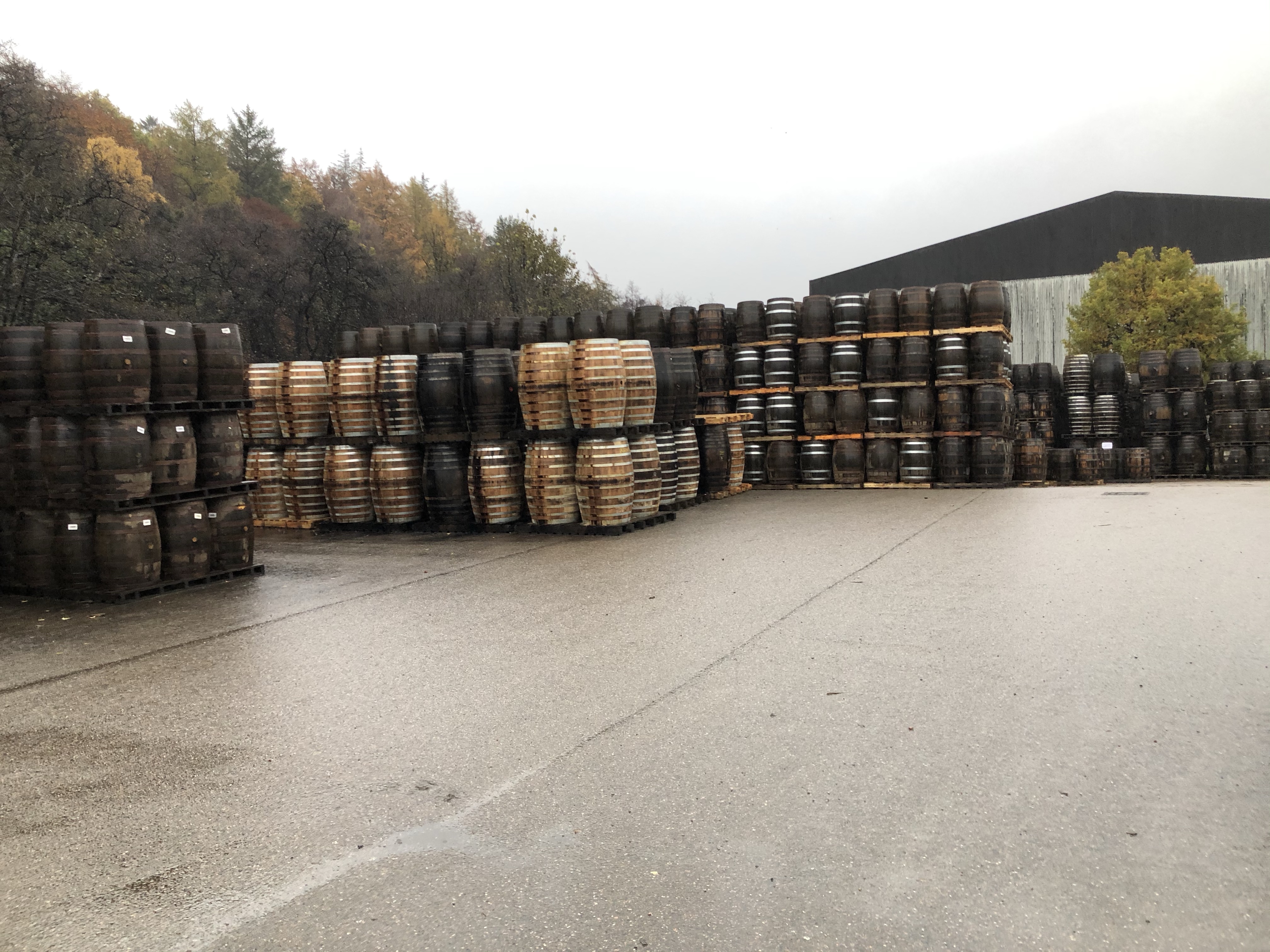
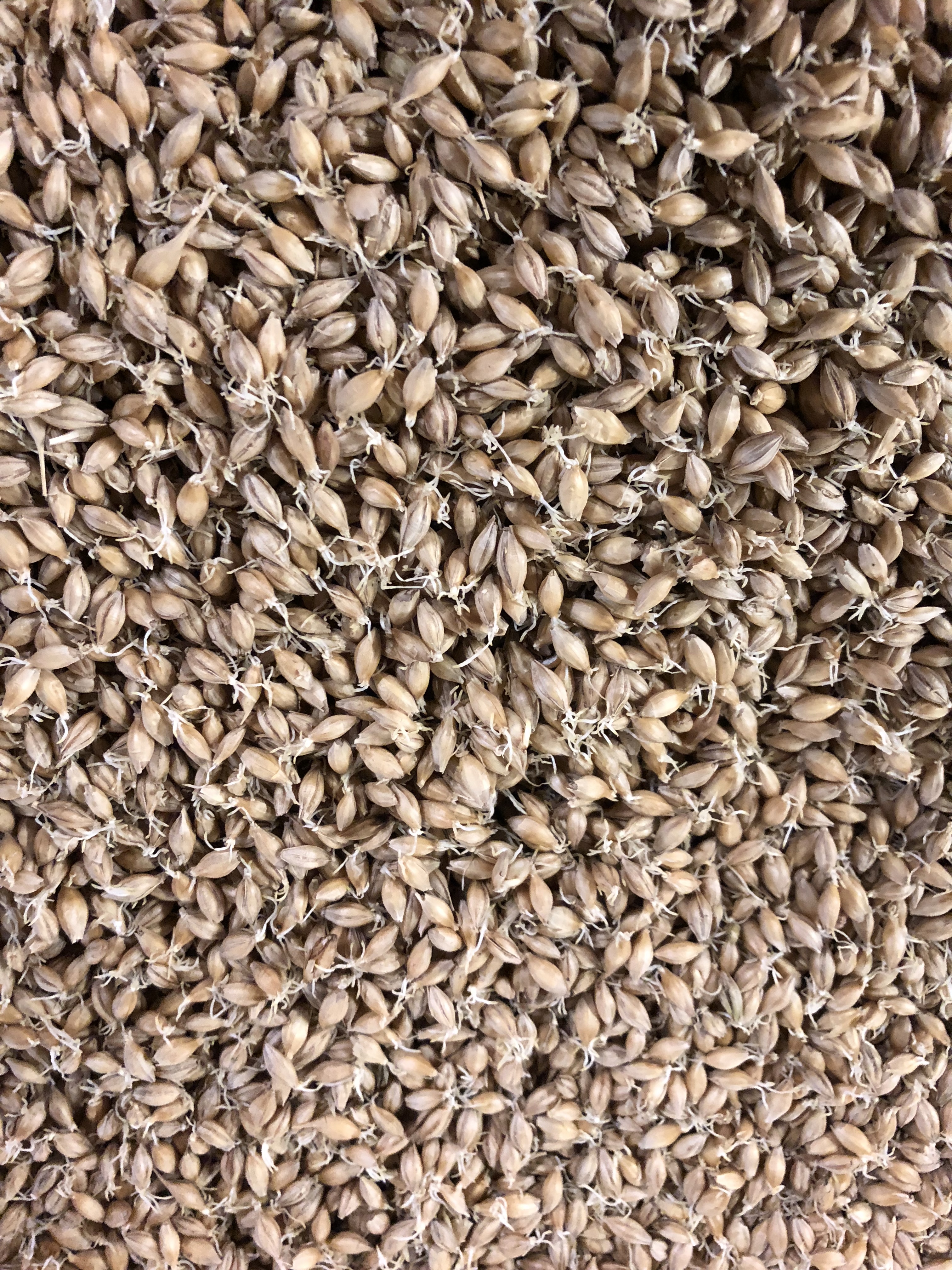
    Some distilleries truck in the malt or buy barrels from the Speyside Cooperidge up the road. Balvenie does every part of the process in-house, which means a tour at Balvenie is going to be more comprehensive from the get-go than other distilleries. But they really take the time to stop and explain every part of it. We’d done a tour at Talisker that we enjoyed that took one hour. Balvenie was three hours, and we could have stayed longer if we didn’t have a rental car to drop off. There were only four people in our tour, with four cancelling, and we looked at each other a few times in wonder at the attention we were receiving from our Ambassador James. Can’t recommend him enough.

    Driving to a distillery yourself means compromising. You either risk everything and partake (in a country that won’t tolerate it), or you politely pass drams to non-drivers in the tasting. Obviously there’s only one appropriate choice, and I watched a few choice drams go to my passenger and to the couple who had wisely hired a driver. Balvenie kindly gave me a bottle to pour samples into for a blended sample for consumption later, but I did mourn the ones that got away. Until I drove the dark, twisting roads of the tourist route back to Inverness in the rain anyway.

    The Balvenie tour was a wonderful was to cap a week of travel from Edinburgh to Fort William to Isle of Skye to Inverness. There simply isn’t enough time in a week to see everything, so you plan, adjust to the weather, passing fancy and reality. And book a return as soon as possible to tackle the things you missed along the way.

  • A Castle, Reborn

    Scottish castles had a tendency of being blown up. If my time in Edinburgh, Stirling, Doune, Interlochy, Eilean Donan and Urquhart Castles has done anything, its reinforced this point. Some remain ruins to this day, others were rebuilt to support next generation clan objectives. All are tourist attractions today, but the day they were destroyed marked a world that was forever changed for the previous inhabitants.

    Castles were symbols of the power and influence of the clan that lived there. Stick a castle on a chunk of lava rock and you can hold out against a siege for a long time. At least as long as you have water, food, ammunition and the will to ride it out. Stirling Castle could have held out indefinitely had their water supply not been compromised.

    If a clan is only as safe as the strength of the castle they reside in, the opposite may be more true. Castles only survive history when there’s no reason to attack it. Diplomacy, political connection (being on the “right” side) and tactical value all play a role in a castle surviving.

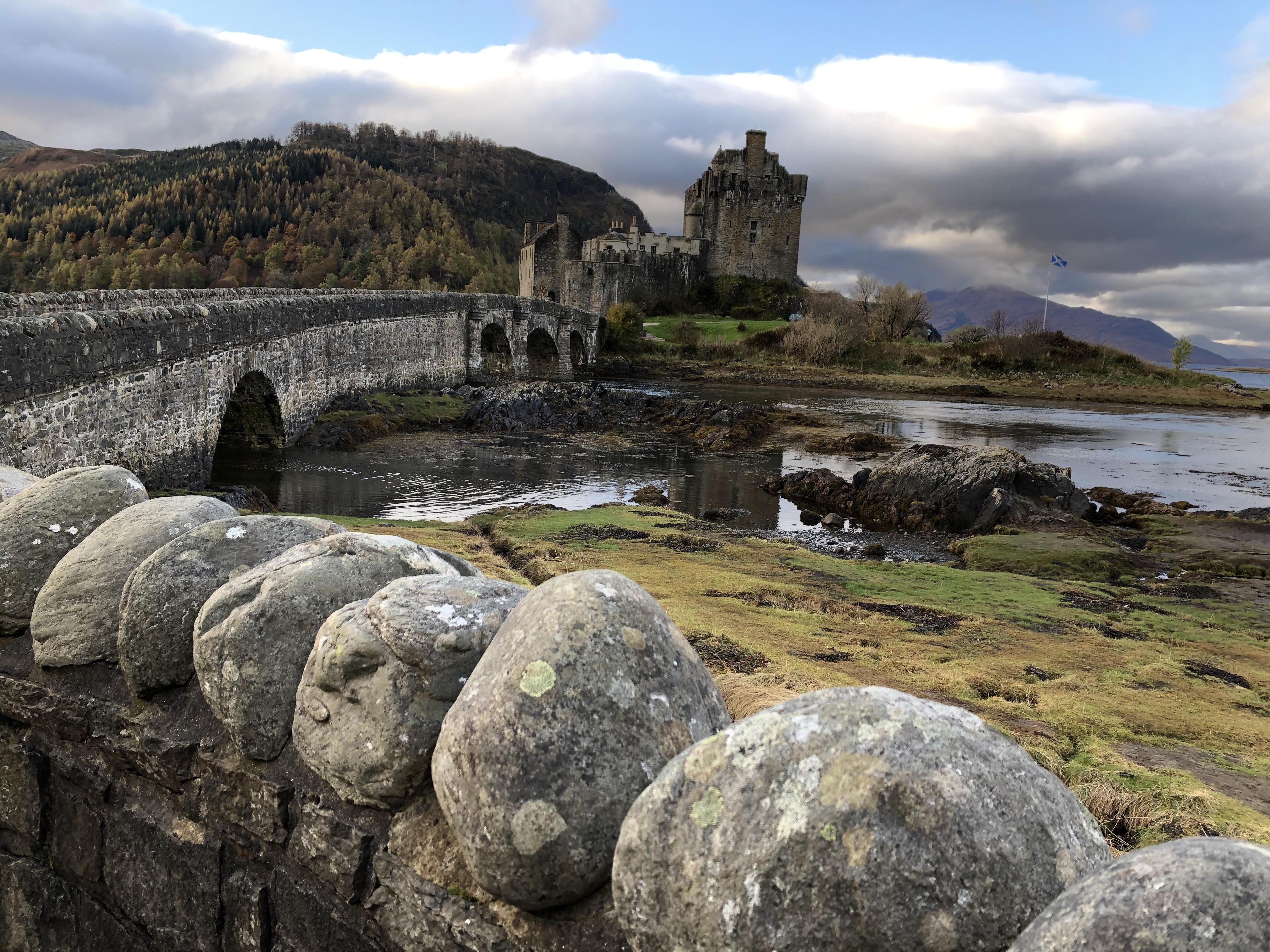
    The defeat of the Jacobites gave plenty of reason for the English and a united Scotland to persecute the clans that sided with Bonny Prince Charlie. The horrifying results to the clans on the losing side are well documented. The castles offer visual verification. Looking at Eilean Donan Castle now, it’s hard to imagine it being a pile of rubble like Inverlochy is, but it too was blown up to punish the Mackenzie Clan. It was eventually rebuilt by their ally the Macrae Clan and today is one of the most photographed castles in the world, playing host to hoards of tourists and many weddings. What might have been a violent end was just a dramatic pause in the life of this castle. This one is a must-see, and I’m grateful to the Macrae’s for opening it up for tours. If you go, be sure to drive up the hill on the opposite side of the road for an iconic shot of the castle.

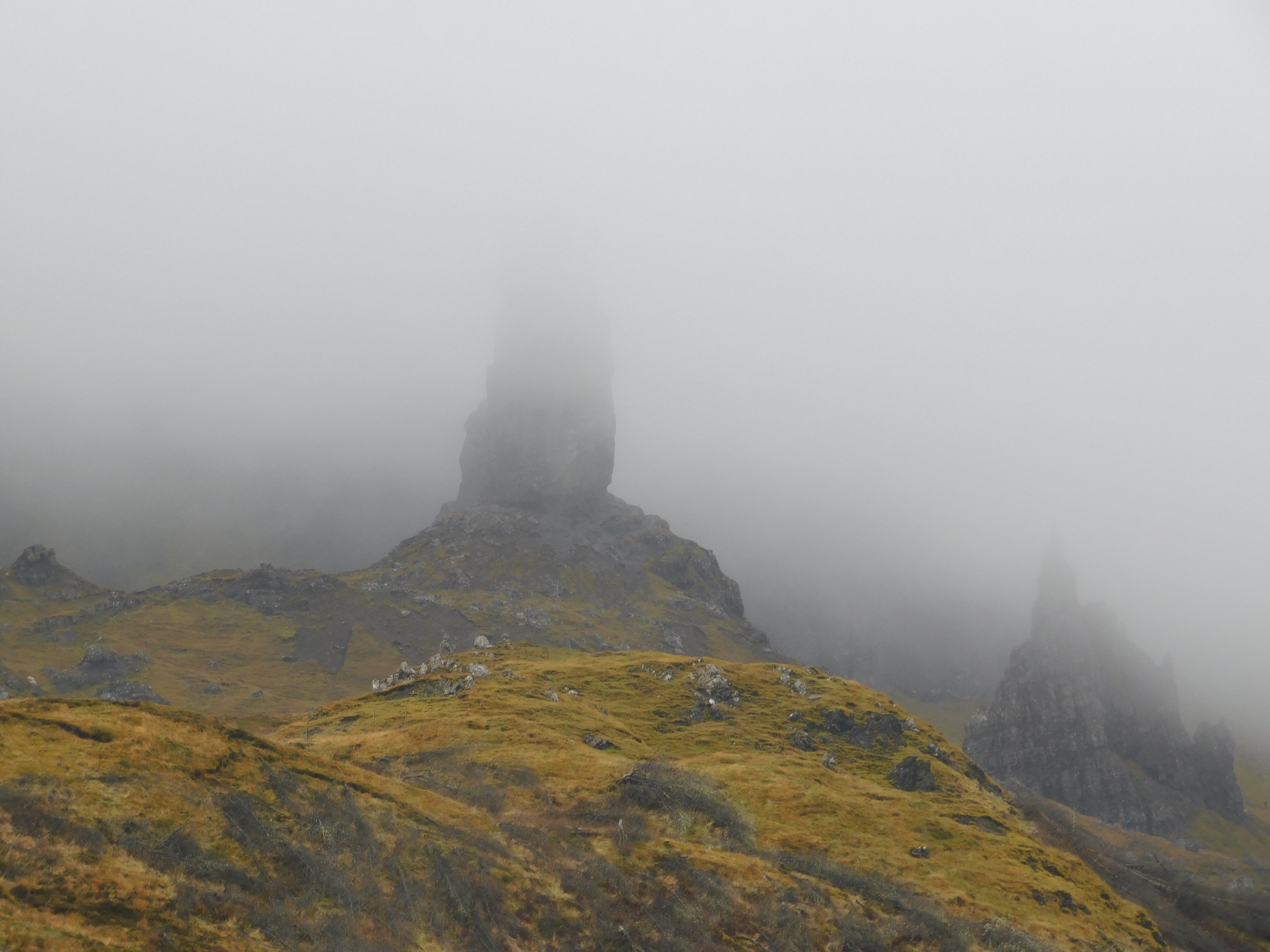
  • Meeting The Old Man of Storr

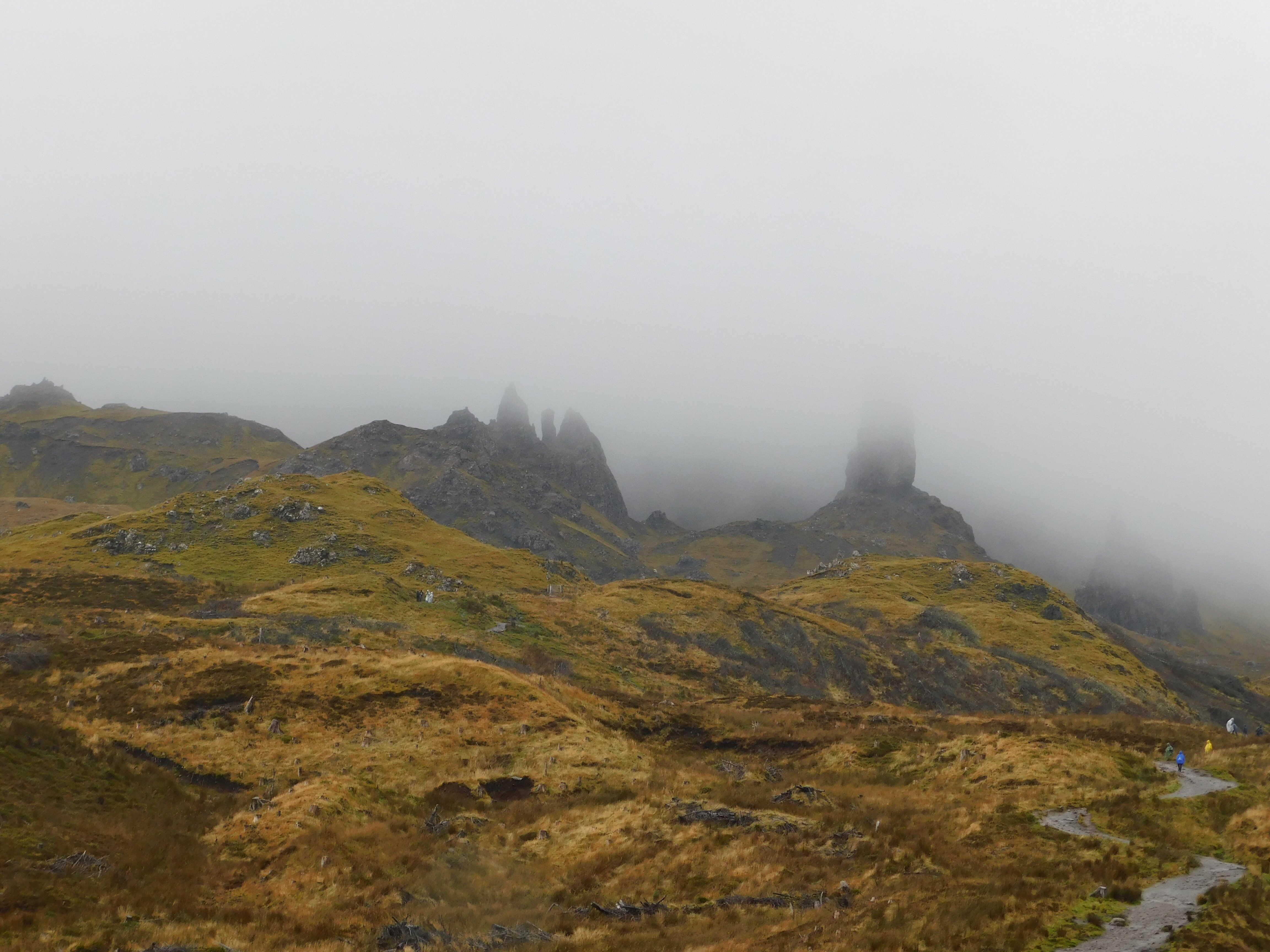
    Hard rain and fog don’t lend to an optimal hiking experience. But that’s what greeted us as we drove up A855. This was to be the one day where the weather mattered most on the entire trip, and the weather wasn’t good. Disappointed, I scratched Quirang off the list. But I held out hope for the Old Man.

    Looking up as we drove past the car park, it was clear this wasn’t going to be what I’d hoped for. The Old Man of Storr was completely obscured in fog. Perhaps wait it out a bit and hope it would lift? We drove onward to Kilt Rock and Mealt Falls, took the obligatory photos that everyone else takes and made our way back to try the Old Man once again.

    Heavy rain greeted us as we got out of the car, but the fog had lifted just a bit, giving a peek at our evasive friend. We hiked up to say hello, pelted by rain, optimism in our hearts. But this wouldn’t be the day, as the fog descended once again, completely obscuring the Old Man of Storr. This wouldn’t be our day to meet, and we turned for the descent. There’s always Talisker. And thoughts of when I might return again.

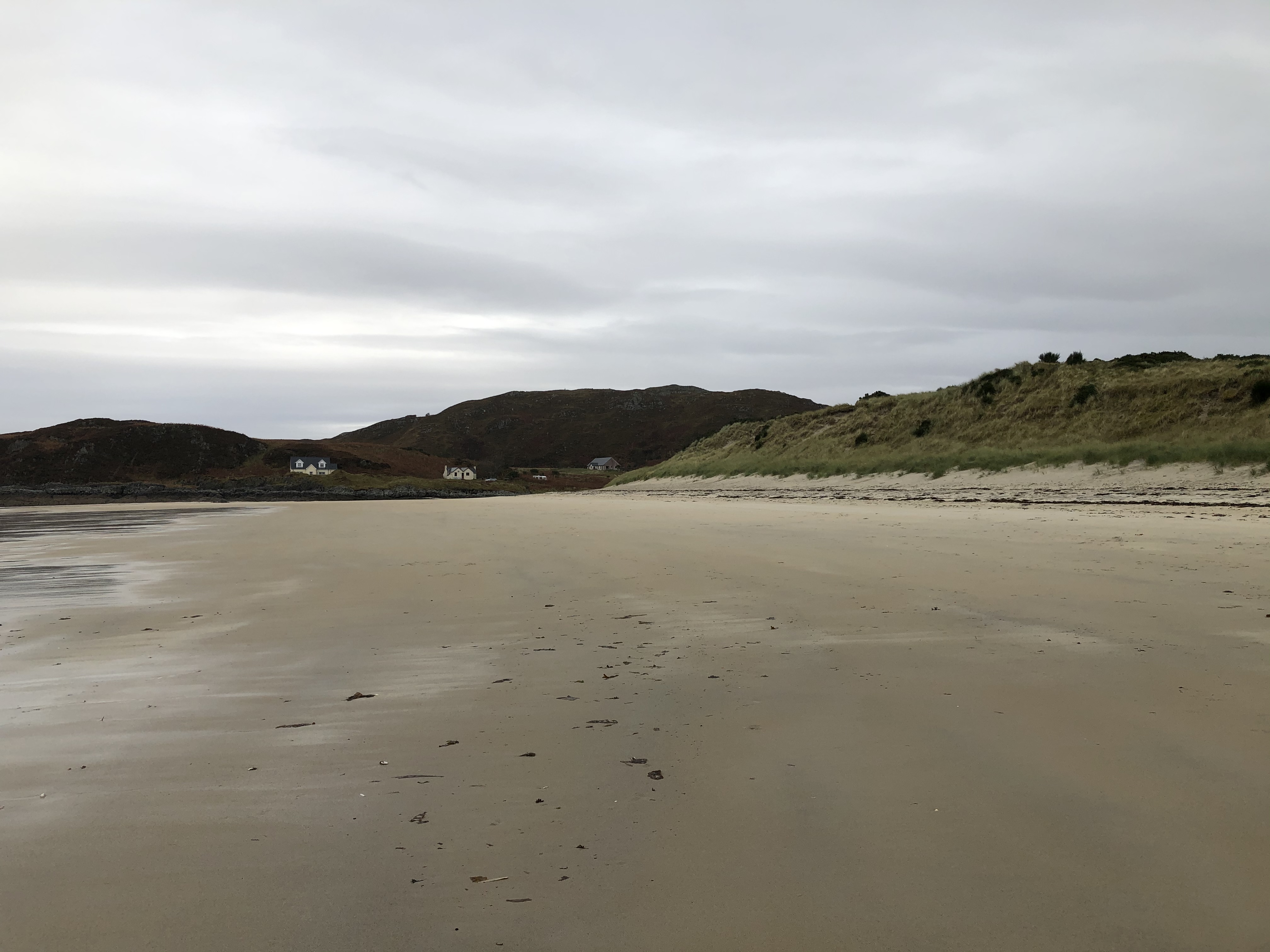
  • A Walk on Camusdarach Beach

    Few places in film have captured my imagination like the beach in the movie Local Hero. The red telephone box does too, but it was built as a prop for that spot in Pennan. The beach, conceding that beaches change constantly, looks the same. And I made the pilgrimage on a rainy, quiet day when very few people were thinking of a walk on the beach.

    Having seen the movie more than I should have, I recognized places immediately and thought of some iconic moments from the movie. But even if you aren’t into this particular movie, the beach is well worth a visit. Long and flat, with pristine sand running from the surf to the dunes. Surprisingly warm water (not Bahamas mind you, but warm for where you’re standing thanks to the Gulf Stream).

    I checked a box yesterday. A box I’ve wanted to check since the 1980’s when I first saw this beach. It’s not the Eiffel Tower I know, but we all have our dream destinations, don’t we? Waiting for someday is a fool’s bet. Go as soon as circumstances allow.