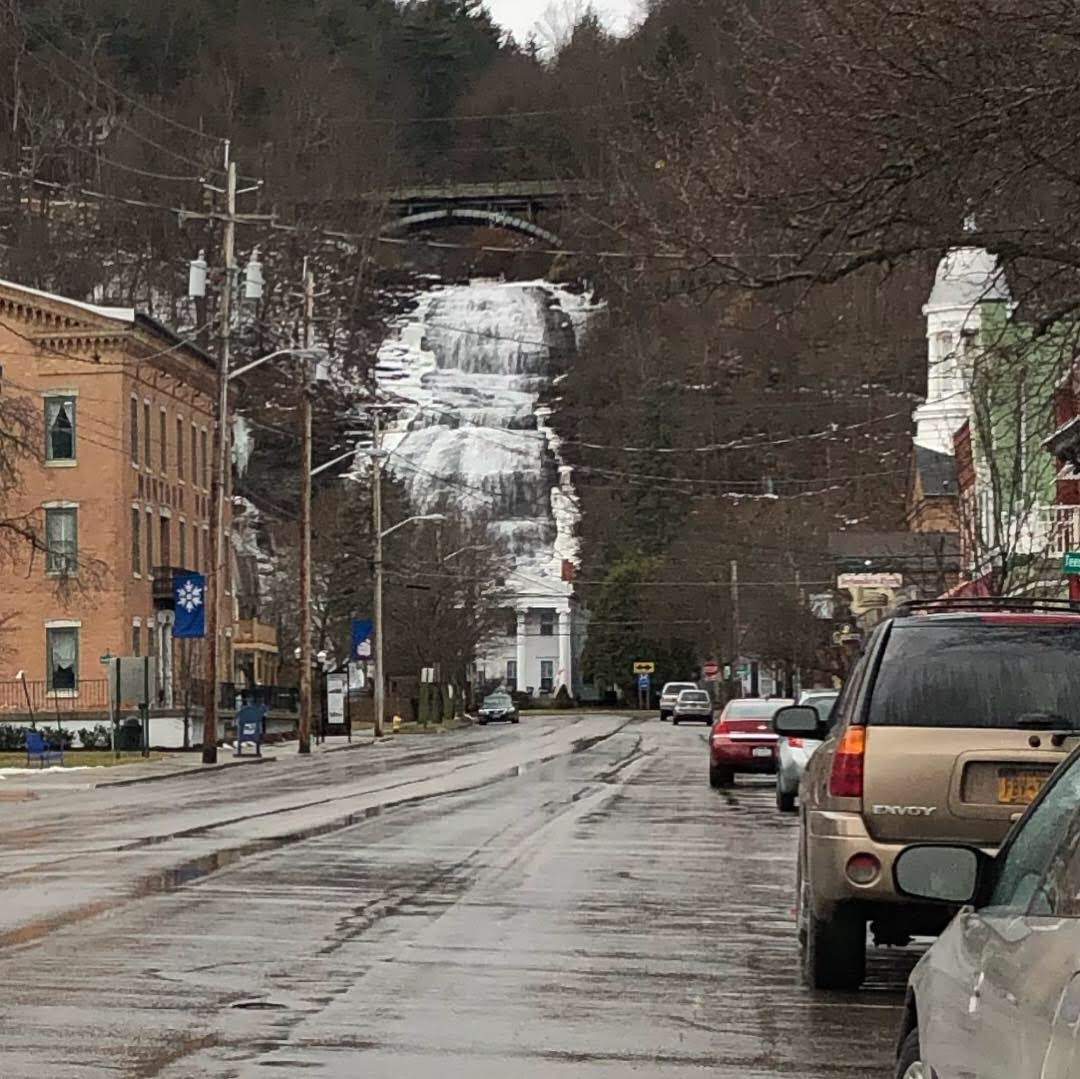
“‘There’s a Sanskrit word, darshan,’ Jon said as we gazed up at Konka. ‘It suggests a face-to-face encounter with the sacred on earth; with a physical manifestation of the holy.’ I hadn’t known the word, but I was glad to have learnt it. Darshan seemed a good alternative to the wow! that I usually emitted on seeing a striking mountain.” – Robert Macfarlane, The Old Ways
Waterfalls and sunrises and mountains and ancient trees are a physical manifestation of the holy. And so is the ripple across a calmly rolling ocean betraying a puff of wind. And the Milky Way on an especially dark and clear night. The catch in my throat when I see these things is spiritual, more than any church I’ve ever walked into, and I go out of my way to seek them out. Admittedly, I haven’t been to the Sistine Chapel yet, but I’m not convinced you can’t find the same thing walking deep into the woods.
I stumbled on the quote above from Macfarlane and immediately identified with darshan in this context. I read this book almost eight years ago and keep returning, skimming over magical phrases and bucket list places. But in the end the book is about standing up and walking out to find yourself in the world. To come face-to-face with the divine requires inspired effort. Sweat equity in your spiritual education. Getting out there and in it.
And yet… One of the most beautiful waterfalls I’ve ever seen is She-Qua-Ga Falls in Montour Falls, NY. It felt like cheating when I arrived, because you essentially drive right up to them. The falls are framed by houses and a concrete lined basin below and an arched bridge above. Like Niagara Falls humanity encroaches on the beautiful, threatening to edge it out in the process. But truthfully I don’t see those things at all; I look at the timeless waterfall captured there, like a rose under glass. And I see darshan.
There’s a tendency for people to see something beautiful and immediately try to put a stake in the ground there. The Eagles wrote about this in The Last Resort. Houses lined up on the edge of the beach grabbing a share of sunset and water views. Homes mounted atop mountains to maximize the view while killing it for those looking up at the mountain they’ve scarred with a box. I visit a house with a great sunset view as often as I can, and would be a hypocrite if I were to condemn those who build for the view. For all the beauty we see from that house by the bay, I know that the view from the water or from the other side of the street is a row of houses. So I take no issue with the people who built Montour Falls for edging up to the falls and wanting to linger there, but wish the land around the falls had been preserved in its original state. Then again, the falls are beautifully accessible for those who can’t hike deep into the woods. Darshan on display for everyone. And maybe that’s enough.
The network of trails and rhumb lines that weave across the Earth like a tartan reveal the whispers of those who came before us. There’s very little that hasn’t been seen by someone before us except in the most remote corners of the planet. But who said encounters with darshan must be exclusive anyway? Each human making their way in this world looks for something greater than themselves. Encounters with darshan are uniquely ours alone, even when shared with others we internalize it differently. But what is darshan if not seen through the lens of our mortal human perspective? We seek it out, discover something in ourselves, and try to capture the divine with a few inadequate words and pictures. And honor it as best we can before leaving it for others to discover in their own time.