“Ye live not for yourselves; ye cannot live for yourselves ; a thousand fibres connect you with your fellow-men, and along those fibres, as along sympathetic threads, run your actions as causes, and return to you as effects.” — Reverend Henry Melvill
On Author’s Ridge at Sleepy Hollow Cemetery in Concord, Massachusetts the legends are interred—Emerson, Hawthorne, Alcott, Thoreau and others. I’ve visited and written about Author’s Ridge many times in this blog, because it fascinates me that so many who reached such literary fame would then choose to spend eternity in such close proximity to one another. Emerson once said that “the only way to have a friend is to be one”. The legendary families of Concord lived this so deeply that they carried it over to death.
There are only a few people who we count as true friends, but we build connection with countless people. Our connections form a network that serves us even as we serve the network. Each individual connection may be tenuous, but woven together with many others, trust is built, reputations are formed, careers are made and communities grow into something special.
We learn that connections are dynamic. Some people that were simply connections grow into true friends, and some true friends slip back to connections. The fabric of our connections is dynamic and ever-changing, just as we ourselves change. We receive what we nurture. Connections form over time—but they also inform over time. We learn which connections will run deep and which are merely transactional in the moment.
Some would say that it’s a little harder to have such connections as the Concord authors had now. We don’t all live in such close proximity today. Technology may make it easier to be connected, but it’s also an active agent in pulling us apart. To be connected, we must do our part to maintain that connection. Some people are just natural connectors, but it’s nothing more than checking in on someone now and then to see how they’re doing. Do it enough and a few actually check in on us too. We don’t have to consider eternity when we reach out, simply finding connection today is enough.
Early last week, mentally tapped out and in need of consultation, I visited Author’s Hill at Sleepy Hollow Cemetery in Concord, Massachusetts. I’ve been there many times now, and the experience has grown from initial discovery and delight at finding the graves of Thoreau, Emerson, Alcott and Hawthorne in such close proximity to each other to visiting to simply say hello again. In a world full of useless noise, sometimes we find inspiration in the quietest places.
Thinking it clever at the time, I once brought a water bottle filled with some water from Walden Pond to give Henry another sip. There are no such moments of gimmickry nowadays. Now a quiet nod is enough. They and all of their neighbors do whisper: memento mori.
And isn’t that enough? They did their part in their time. We may choose to do ours now. One day soon enough we’ll join them in infinity. But now? Now is the time to live, friend.
“Oh, for the years I have not lived, but only dreamed of living.” ― Nathaniel Hawthorne
“If you have built castles in the air, your work need not be lost; that is where they should be. Now put the foundations under them.” ― Henry David Thoreau, Walden
“I’ve got the key to my castle in the air, but whether I can unlock the door remains to be seen.” ― Louisa May Alcott, Little Women
“The voyage of the best ship is a zigzag line of a hundred tacks. See the line from a sufficient distance, and it straightens itself to the average tendency. Your genuine action will explain itself, and will explain your other genuine actions. Your conformity explains nothing. Act singly, and what you have already done singly will justify you now.” ― Ralph Waldo Emerson, Self-Reliance
A visit to Walden Pond can be immersive, if you go at the right time. Many people go in summer to swim and enjoy the pristine water. Many fish for large mouth bass and other prizes. But the pilgrims go to visit Henry David Thoreau’s famous pond and the woods surrounding it. I’ve watched the place change over the years, but the pond and woods remain largely as Thoreau would recognize.
You must treat a brief visit to Walden as you would a visit to a nightclub with a cover charge. There’s a flat fee of $30 USD to park. That applies for an hour or the entire day. There’s a lower fee, apparently, for Massachusetts residents. I suppose you can also opt for other ways to get to Walden Pond, but this was the simplest way to spend time at a place. The area surrounding Walden Pond is a mix of highway, commuter railroad (as it was in Thoreau’s time), capped landfill and houses increasingly further out of reach for someone choosing the lifestyle of the person who made this place famous.
Early December is considered late autumn, but my visit felt more mid-autumn, with temperatures warmer than they should be this time of year. Henry David Thoreau would have shaken his head, I think, at some of the same behavior he observed in his day leading to the climate change we’re experiencing today but generally sitting on our hands about. But it made for a lovely day to walk around the pond.
There is a well-defined path around the pond. It’s maintained and easy for most walkers to navigate. They make you feel like you’re in a cattle chute for much of it, with wire strung on each side of the path to keep wanderers from straying off the path. Signage explains this as erosion control measures. As a hiker of the White Mountains in New Hampshire, I’m all too familiar with the impact of popularity on trails and the surrounding landscape. I stay to the path, liberated from the freedom to wander, I instead focused on the environment around me.
You can hear the world encroach on you at Walden. Distant highway sounds, construction, sirens, airplanes flying overhead and the commuter train all remind you that you’re in a suburb of Boston. It’s best to acknowledge this, but let it go as Thoreau let the train go as it went past in his time. The landscape is largely preserved, the water clear, awaiting those who would linger.
When I was younger, there was no visitor center, but there was a bath house. At some point well before I came into this world some well-meaning people decided that the best way to save Walden Pond was to make it a recreation center. So a bath house was built, beach sand extended and you had a destination for family recreation. Thoreau’s cabin is on the opposite shore from the bath house, but it’s the first thing you see when you walk down the visitor parking lot. You’re either at peace with it or not, but it’s relatively benign in the off-season.
Walden Woods extend well beyond the perimeter of the pond, and we can thank people like Don Henley for their commitment to preservation. Generations of developers find a way to squeeze as much money as they can from resources, and there are plenty of people who would turn the place inside out and up. There’s a place for development in this world, but there ought to be a place for preservation too.
I’d brought a water bottle with me on the walk, warm day that it was, and decided in a moment of inspiration to fill it with water from Walden Pond. Thoreau drank straight from the pond in his day, I’m not inclined to do that without a filter. Instead, I brought the water with me for another pilgrimage. Just across that highway is the center of Concord, where Thoreau and Ralph Waldo Emerson lived. Just beyond the center is the Sleepy Hollow Cemetery, site of Author’s Ridge, where Thoreau, Emerson, Alcott and others are buried. I stopped for a brief visit on Author’s Ridge, told of my visit to his old cabin site, and poured Henry a sip of Walden Pond. Cheers Henry.
Walden PondA view of the pond just down the hill from Thoreau’s cabin site. This is similar to the view he would have had.Pile of stones next to the cabin site. I’m not loving it, but cairns are how people seem to express themselves. The site to me feels like a construction site, cleared and ready to build.The cabin site is surrounded by granite pillars to denote the position and size of the cabin.Creative cairn art rising out of Walden Pond.
“We are travelers on a cosmic journey, stardust, swirling and dancing in the eddies and whirlpools of infinity. Life is eternal. We have stopped for a moment to encounter each other, to meet, to love, to share. This is a precious moment. It is a little parenthesis in eternity.” – Paulo Coelho, The Alchemist
We dance together in this moment of temporary, synchronized existence. This precious moment, brought to you by serendipity and chance. Who are we to squander it?
While walking about looking for that famous fellow at Sleepy Hollow Cemetery (NY) I chanced upon the grave of a man who died at the age of 57 in 1909. His gravestone was most unusual in that he’d had a clock, his father’s clock, placed on the face of the stone. And made a point of informing the world of this fact with the words “My father’s clock placed here at my request” just below it. And I thought, what a strange combination of time and eternity, all marching together in one plot.
I wonder at the story of our friend Cochrane, and why that particular clock was so profoundly important to him that it be placed on his gravestone in such a way. But mostly, for me, it serves to remind me of the contrast between time, all important in this world of humanity today, and eternity, the true standard bearer of the universe. What is a clock but a story we’ve all agreed to follow?
The older I get, and I’m not all that far from where Cochrane was when he ran out of steam, the more I think about swirling and dancing in that pool of eternity. But why wait? Why not use this precious time to dance right here? In this infinitesimal parenthesis in eternity we owe it to the universe to meet, to love and to share, while there’s still… time.
“The man who dies rich dies in disgrace.” – Andrew Carnegie
Andrew Carnegie was born into poverty, turned steel into gold and then gave away 90% of his fortune in the last 18 years of his life. Of all the places in the world he could spend eternity, he chose the Sleepy Hollow Cemetery. I wonder at such things – why here? Why not his beloved Scotland? Why not Lenox, Massachusetts, where he spent his last couple of years? The only way to know is to visit the place.
Walking around you realize that Sleepy Hollow is a beautiful spot, and likely was peaceful once, before cars and sirens and encroaching development squeezed the solitude right out of the place. But deep in the heart of the cemetery, way up on the hill, you find it grows relatively still, even now. And this is where you’ll find Carnegie.
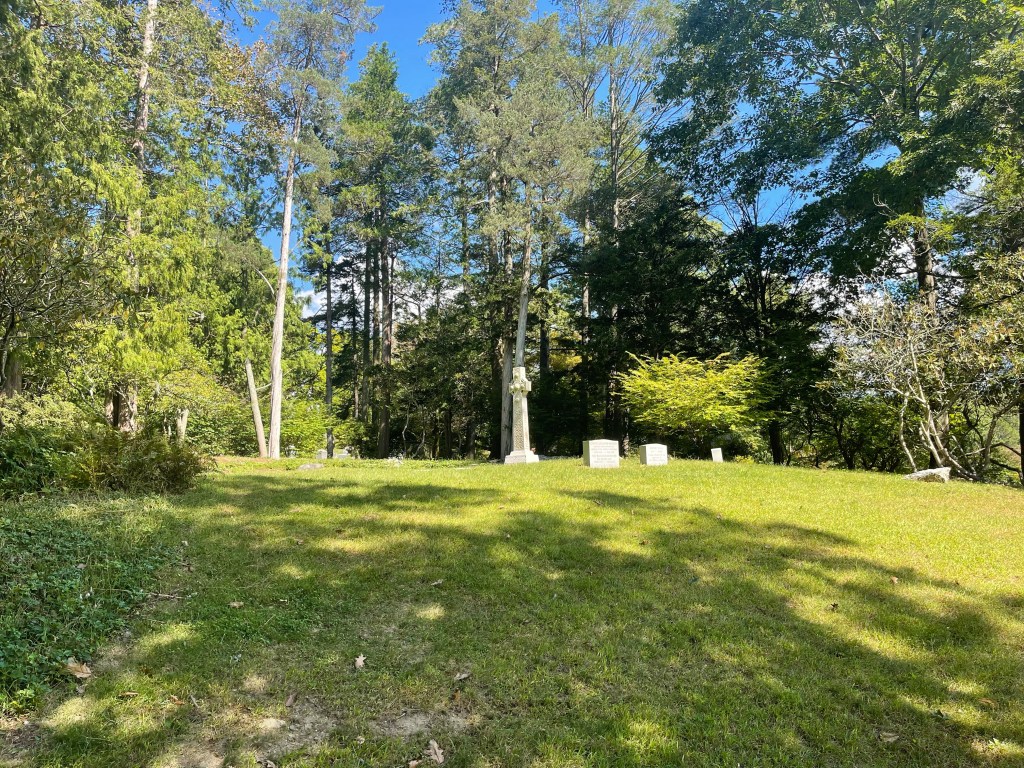
Looking around at the grand celebrations of wealth displayed in death at Sleepy Hollow (You see? I mattered!) I was struck by the simple and beautiful Celtic Cross gravestone rising amongst the trees at Andrew Carnegie’s burial plot. Granite ledge behind him and a gentle sloping hill in front. Peace.
Wealth bought him elbow room in death, and wisdom guided him to use it in the most simple, dignified way. I should think he made a point of being placed at arms length from the wealthy posers of the day. He was especially good at calling them out for what they were:
“There is no class as pitiably wretched as that which possesses money and nothing else.”
I’m not particularly interested in being buried in one spot. I think I’d rather have my ashes scattered to the winds and sea – to be an eternal traveller in this world. But I see the value of having a place where people can visit you, as I visited Carnegie this week.
Carnegie became larger than life when he gave away his fortune before death. That Celtic Cross serves as a compass in his absence, pointing the way for the generations who followed him. Quietly reminding us to do enough in our life that others might want to invest a bit of their own brief lives to visit you long after your gone.
Simplicity and elbow room at Andrew Carnegie’s final resting place.
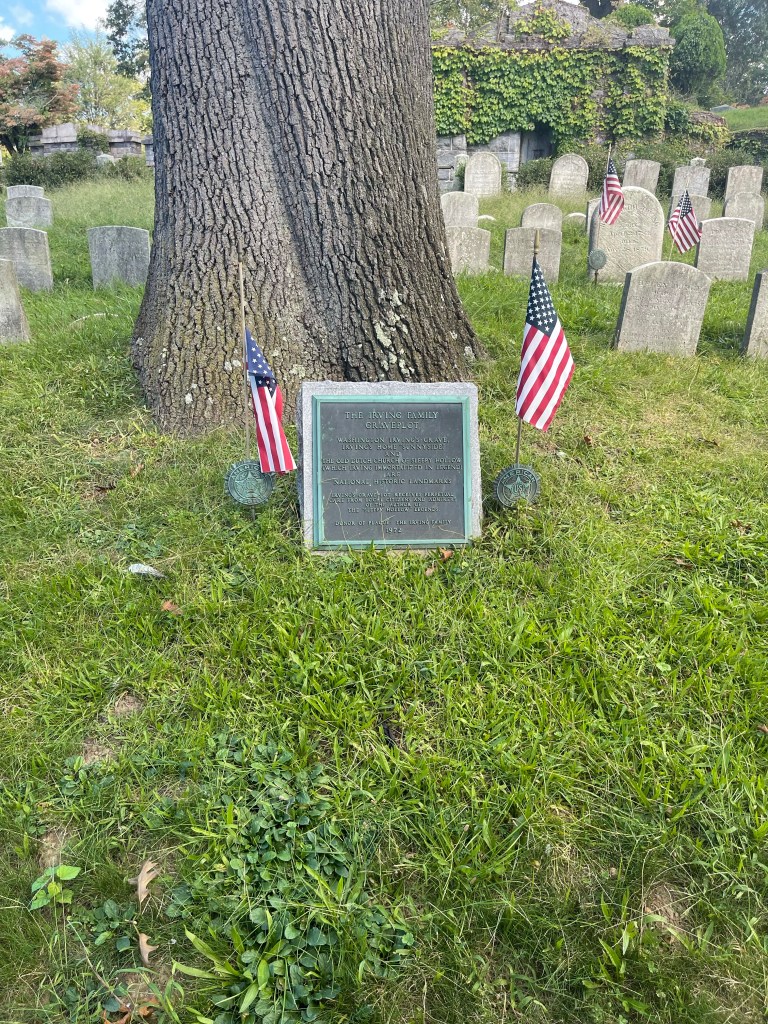
“To look upon its grass grown yard, where the sunbeams seem to sleep so quietly, one would think that there at least the dead might rest in peace.” – Washington Irving, The Legend of Sleepy Hollow
There are two Sleepy Hollow Cemeteries of note. There’s the one up in Concord, Massachusetts with it’s Author’s Ridge populated with the bones of Thoreau, Emerson, Alcott and others. And then there’s the one here on the shores of the Hudson River, where the wealthy vacated the city for one last time and tried to one-up each other in death with grand mausoleums as their final statement about how rich and powerful they were.
Those rich folks can wait in their eternity. For there’s really only one name that matters when you talk about Sleepy Hollow, the guy who put it on the map: Washington Irving. Irving wrote two of the most familiar short stories in our cultural memory: The Legend of Sleepy Hollow and Rip Van Winkle.
It’s that tale of the headless horseman that inspires people to visit his grave at the Sleepy Hollow Cemetery. Irving is buried in the oldest section of the graveyard, with unpaved roads crisscrossing un-mowed plots with headstones protruding up in neat columns. That walk up the hill to visit his grave seemed perfect. Like walking back in time to visit those who came before us.
I didn’t visit out of some ghoulish fascination with his short story, but for the whispers you hear at their resting place. Cemeteries generally hold the lay of the land as it was on the day they buried someone, and Irving’s resting place nestled amongst his family on a hill overlooking the Hudson River Valley seems a lovely place to spend eternity.
Of course, Irving doesn’t need to whisper, for he wrote plenty for us to draw on. His stories will likely outlast every gravestone in Sleepy Hollow. Does that make him a legend?
While a lot of the attention in Concord, Massachusetts rightfully goes to the extraordinary writers who lived amongst each other in town, there were other highly-accomplished artists who lived there too. One of the most celebrated is Daniel Chester French. French was an American Renaissance/Beaux-arts artist most famous for his sculptures of The Minute Man at the site of the Battle of Concord and for the Lincoln Memorial. These two works bookended his career and ensured his place amongst the giants of Concord. In between, French had many notable works, but perhaps his most powerful, and one of his favorites, stands close to French even to this day.
With the centennial anniversary of the battles of Lexington and Concord approaching, key people in Concord were organizing an event for April 19, 1875. The existing obelisk marking the site had been placed on the eastern bank of the Concord River, where the British had assembled. The western side of the bridge where the minute men had assembled to fight them was bare ground. So a statue honoring those who fought the British was commissioned and designs were solicited for consideration. French, who’s father was a prominent judge and the inventor of the French drain, was friendly with Concord royalty, including Ralph Waldo Emerson. Emerson asked Daniel Chester French to submit a design, which of course was chosen. French was 22 when he started designing the statue, and 25 when it was unveiled to the world.
The ceremony to unveil “The Minute Man” as part of the centennial celebration of the shot heard round the world was attended by President US Grant, Vice President Henry Wilson, Poets Henry Wadsworth Longfellow and James Russell Lowell, Oliver Wendell Holmes and of course Emerson. They were joined by an overflowing crowd of over 50,000. Concord must have been a mad house that week in April 1875. Ironically, the man of the hour, Daniel Chester French, was not at the centennial celebration, he was in Florence studying under another famous sculptor, Thomas Ball, who created the statue of George Washington on his horse that forever rides in the Boston Public Garden. Much more information about French’s work on “The Minute Man” can be found in an extraordinary blog post here.
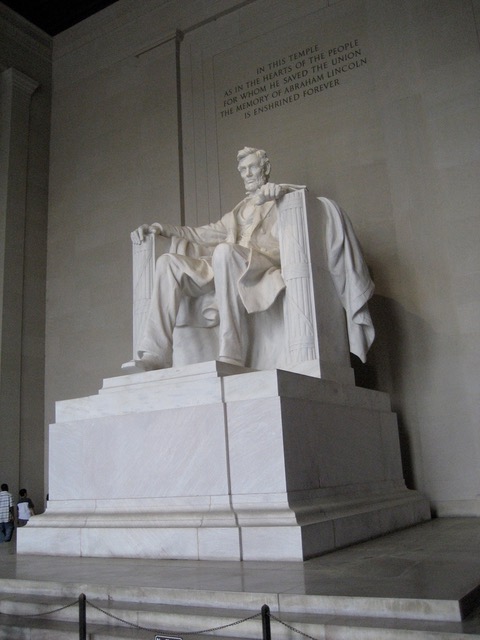
If “The Minute Man” marked the beginning of French’s career as a renowned sculptor, “Abraham Lincoln” in the Lincoln Memorial was French at his peak. When completed he was 70. “Abraham Lincoln” is 170 tons of white Georgia marble. French began the project in 1914 and did most of the work on this giant at Chesterwood, his summer home and studio in Western Massachusetts. French spent a lot of time on the hands of Abraham Lincoln. They’re very detailed and, it’s rumored, give a nod to Lincoln’s support for the deaf by subtly signing the initials “A” and “L”. I’ve visited the Lincoln Memorial three times and each time I pick up something new. I’ve never focused on Abraham Lincoln’s hands, but surely will should I have the opportunity to visit again.
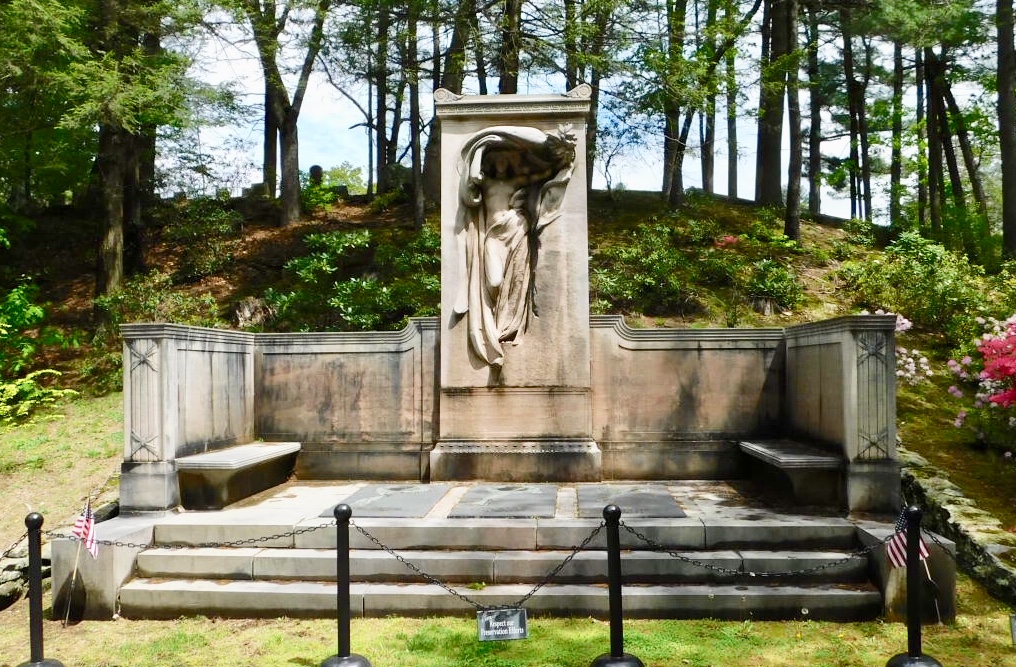
French died in 1931 and is buried at Sleepy Hollow Cemetery not far from Author’s Ridge. I’m sure he chose this spot carefully as his final resting place. With old family friend Emerson at the top of the ridge in front of his grave, and one of his favorite monuments right around the corner behind him; his creation “Mourning Victory”. The Melvin Memorial features French’s monument “Mourning Victory”. It was commissioned by James Melvin to honor the lives of his three brothers who died in the Civil War. “Mourning Victory” looks towards the South. “Mourning Victory” was unveiled on June 19, 1909, 45 years to the day after John was killed. Of the three brothers who died in the war he’s the only one buried at Sleepy Hollow Cemetery.
As we approach Memorial Day I think more about this monument and the devastation that came with victory it created for so many families like the Melvin’s.
“In memory of three brothers born in Concord who as private soldiers gave their lives in the war to save the country this memorial is placed here by their surviving brother, himself a private soldier in the same war. I with uncovered head Salute the sacred dead Who went and who return not.”
On the day that I visited Sleepy Hollow Cemetery, there was a ceremony happening nearby. A solitary bagpiper played, filling the cemetery with music. I viewed it as a welcome from the permanent residents, and I tried to honor them during my time with them. Daniel Chester French, once a young man starting his career with “The Minute Man” statue just down the street from this spot, chose this place to be his permanent home. His own grave is simple, not displaying any of the Beaux-art charisma that you see in his work. Perhaps he drew inspiration from the simple dignity of his neighbor’s graves. I would contend that that quiet dignity is present in all his great works, and inspires us to this day.