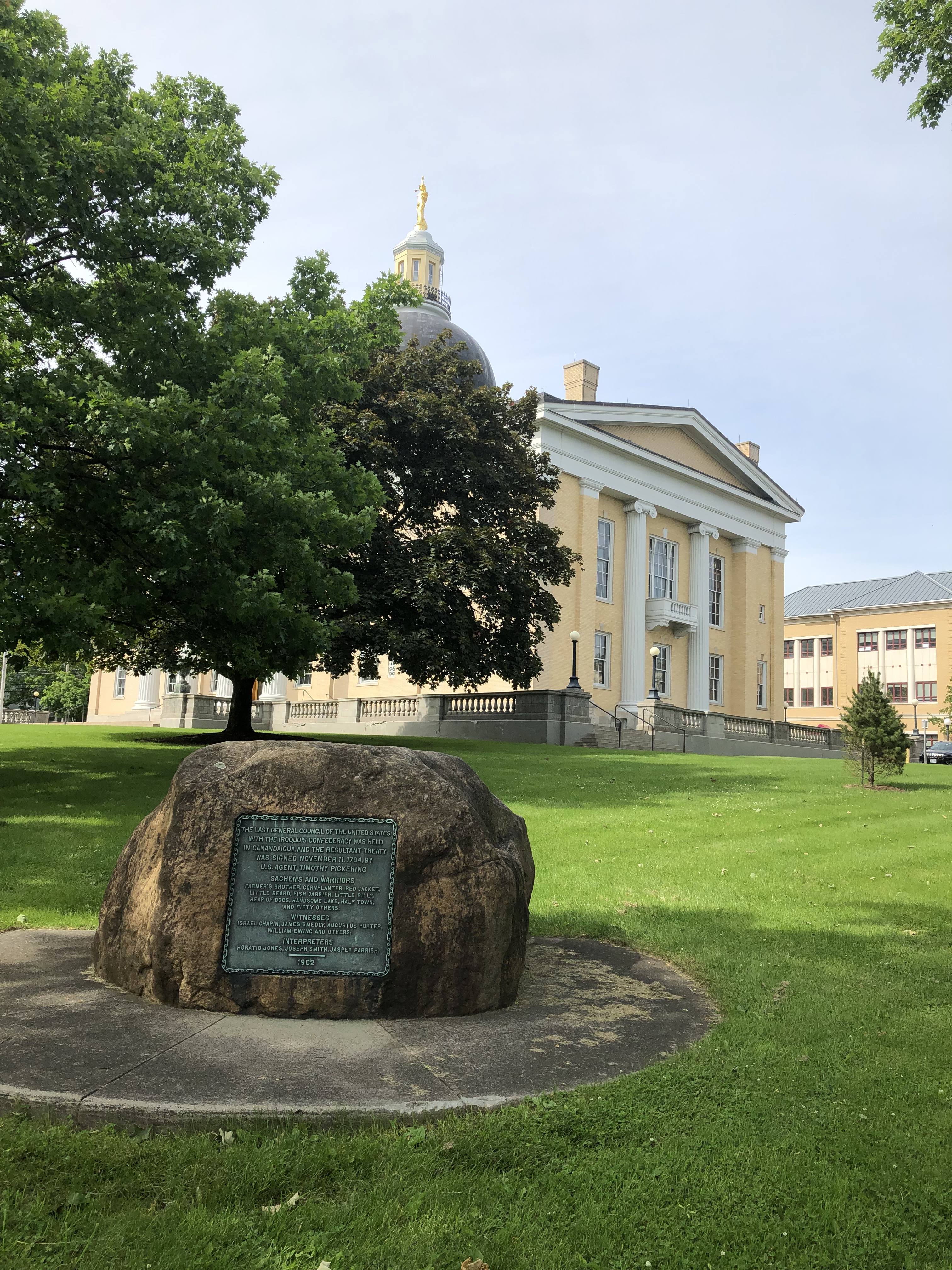
This week, on my drive from Buffalo to Seneca Falls, I made a quick detour to visit a rock. I live in the Granite State, so I know a thing or two about rocks, but the rock I was visiting is unique because of a tablet mounted to it commemorating the Treaty of Canandaigua on November 11, 1794. The location of the 1902 monument, on the lawn of the Ontario County Courthouse, is roughly where the treaty was negotiated between representatives of the United States, the Iroquois Confederacy and Quaker moderators trusted by the Iroquois.
After the Revolutionary War, American sentiment towards the Iroquois Confederacy was at a low point. The Iroquois were significantly weakened after the war, and the Americans were operating from a position of strength when they signed the Treaty of Fort Stanwix in 1784. The location is notable, as it was five miles from the site of the Orinasky ambush that wiped out many of the men from this county. Western Iroquois tribes with loyalists participated in that ambush, and seven years later a treaty was being negotiated at the fort those ambush victims were marching to relieve. The treaty ceded massive tracts of land from New York, Pennsylvania and Ohio to the Americans in an agreement known as “the Last Purchase”. The Six Nations refused to ratify the treaty but the damage was done.
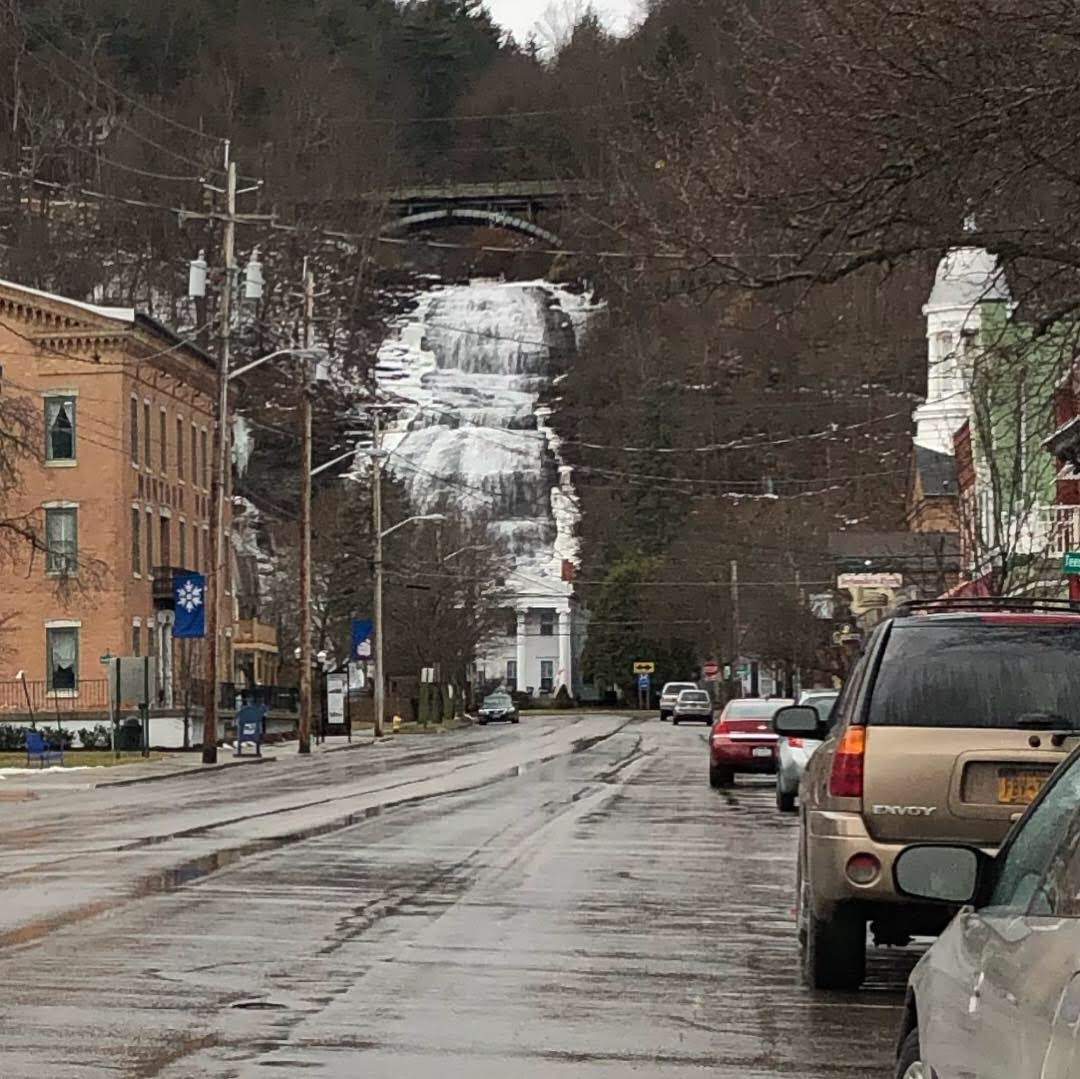
Fast forward ten years and growing tensions between the United States and Native American tribes on the western border threatened to blow up into war. Suddenly the Iroquois Confederacy seemed a significant threat should they side with western tribes and declare war on the United States. President George Washington sent Colonel Timothy Pickering, a Bunker Hill veteran from Salem, Massachusetts, to negotiate a new treaty with the Iroquois. The location for the meeting to negotiate the treaty was chosen by another Massachusetts man, Israel Chapin. When Chapin died a few years after the treaty was ratified, Red Jacket, once an enemy of Chapin’s during the war, gave a eulogy at his gravesite. I wrote briefly about Red Jacket practicing his speech for Canandaigua at the spectacular She-Qua-Ga Falls previously. There’s a deeper dive that needs to take place into the lives of these three men in particular, but also the incredible list of names on the tablet. I can’t wait to learn more about Heap of Dogs.
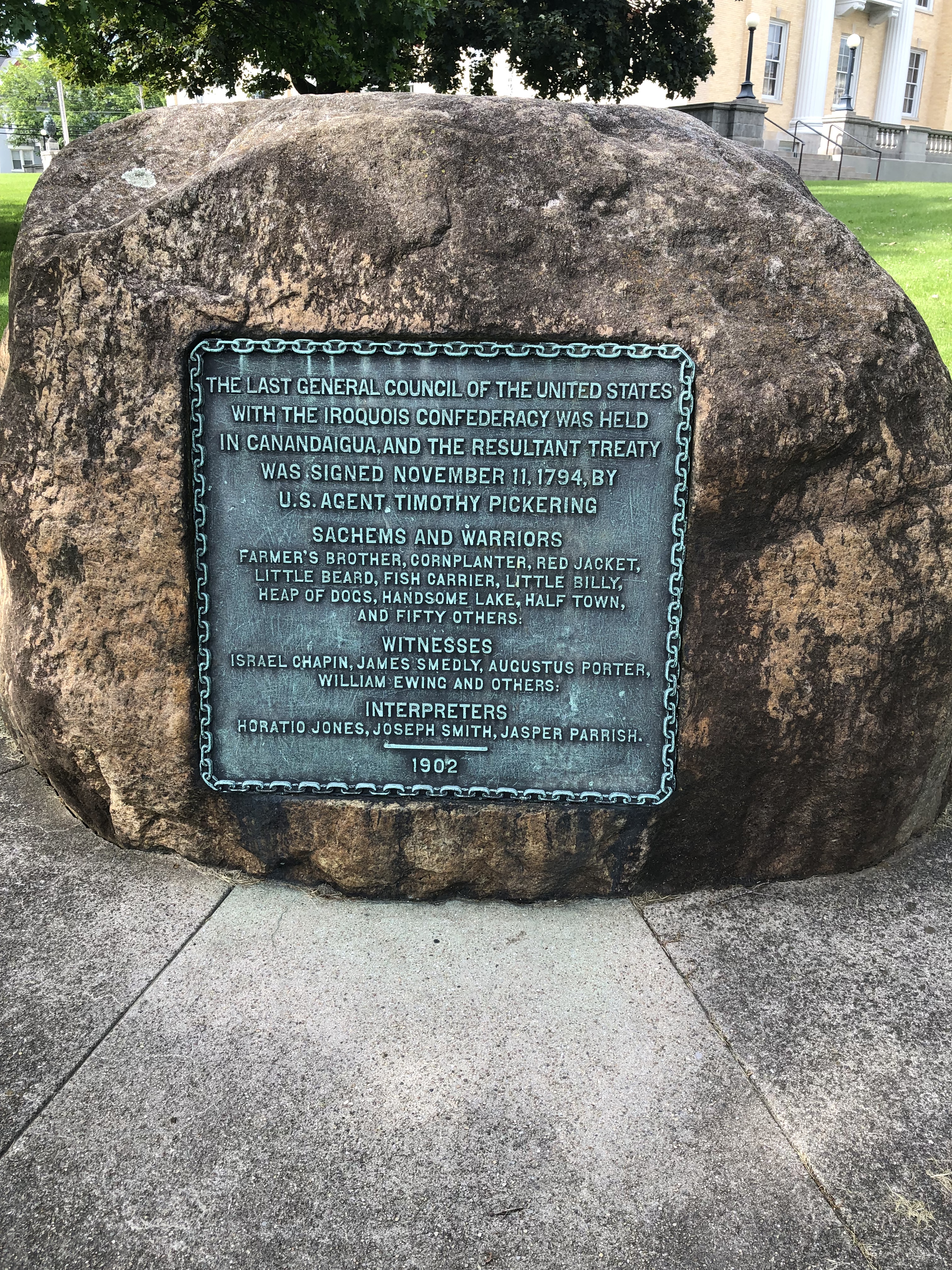
The treaty is called both the Pickering Treaty and the Treaty of Canandaigua and is still in use today. Every year on November 11th there is a ceremony and celebration at the monument to lasting legacy of the treaty. It undid some of the damage from the Treaty of Stanwix, and reserved land for the Iroquois that is still protected. The land rush that took place after the Revolutionary War was like a tidal wave sweeping over New York westward. That they were able to set aside significant tracts of land for those who called it home before Europeans settled here remains a notable achievement.