Tag: Virgil

  • Wealth in Health

    “The greatest wealth is health.” — Virgil

    On a beautiful Sunday afternoon, I knew I’d regret it if I didn’t get out for a ride on the bike. It’s been leaning against the wall mocking me for weeks, waiting for my excuses to run out. Busy should never be our excuse for not exercising, not when the true answer is that we chose to prioritize something else with our precious time. So I got out there, and quickly surprised myself with the gains I’d made.

    If we remember our three currencies in life—health, wealth and time—we ought to consider both our accumulation and spend rate of each. Will I be riding a bike up steep hills when I’m 85? Probably not, but I can do it today. And in doing it today I’m increasing the probability of doing it one day when I’m 85. So I ought to do the work today that makes me healthier tomorrow.

    But it’s hard for us to work hard to accumulate for some imagined version of ourselves in a few decades. Perhaps the better thing to do is focus on more immediate gains in health and vitality and let the compound interest of a lifetime of fitness do the rest. The trick is not just to be active, but to do the activities that are enjoyable so that we keep on doing them for the rest of our days.

    I’ve come to enjoy weight circuits because they’re relatively enjoyable to do (and I get to play my favorite music loudly). Those weight circuits have made me stronger and leaner, making those hill climbs on the bike easier, which in turn makes riding the bike even more fun than it already was. After not being on a bike for a month, I set four PR’s on four measured segments of the route, making for one exhilarating ride yesterday. It wasn’t like I set out to do a time trial, it just happened because I was more fit than the last time I rode.

    I know that each workout is going to help me as I grow older, but the payoff can’t be some far off tomorrow if I hope to be inspired enough to make it a lifetime habit. But thankfully, today’s reward is an immediate increase in energy, vitality, athletic performance and in the way we feel about ourselves as we see gains. It all builds on itself, allowing us to reap the rewards of an active life now while building a stronger foundation of fitness for our latter years. And that, friends, is a win-win.
  • A Lifetime of Closing Doors

    Death twitches my ear.
    “Live’” He says, “I am coming.“
    Virgil

    The twitch is there, reminding me to make the most of each day. You may have noticed a lean towards Stoicism early on in this blog. Stoicism celebrates every moment of life, because we remind ourselves that infinity is calling. So decide what to be and go be it. To be or not to be, that is the question that Hamlet forever ponders. And so must we.

    My favorite barista retired. I walked in to chat, er, to get a coffee made just so, and she hasn’t been there. Then again, I haven’t been there, traveling and such, but back again and eager for the banter of familiarity. After a couple of tries, I asked a new barista where Sue was, only to find out she’d simply…. retired. Moved on to try new things with her brief dance with light. And I was momentarily floored by the abruptness of it all. It’s not life and death, not yet for either party, but it was one more door closing in a lifetime of closing doors.

    I have a cat that meows incessantly if there’s a door closed that she wants to be on the other side of. Pick her up, give her a treat, try to ignore her at your peril: nothing resolves the meowing but an open door. We all have this curiosity, perhaps expressed less annoyingly (perhaps), to know what’s on the other side of the door. We aren’t in a rush to find out, but we’ll find out one day. And knowing that, we must accept that the door is closed for a reason. It’s not our time to dance with infinity, it’s our time to dance with light. So dance, friend.

  • The Force of Bitter Need

    First he chipped fire
    Out of the veins of flint where it was hidden;
    Then rivers felt his skiffs of the light alder;
    Then sailors counted up the stars and named them:
    Pleiades, Hyades, and the Pole Star;
    Then were discovered ways to take wild things.
    In snares, or hunt them with the circling pack;
    And how to whip a stream with casting nets,
    Or draw the deep-sea fisherman’s cordage up;
    And then the use of steel and the shrieking saw;
    Then various crafts. All things were overcome
    By labor and by force of bitter need.
    – Passages from Virgil’s First Georgic, translation by Robert Fitzgerald

    When you read something like this, what does it do to you? Most of us won’t ever experience the life or death struggles that our ancestors faced. Yet the force of bitter need echoes in how we live our lives today. As a student of history, it’s easy to treat the migration of humans across the globe as an academic exercise. To treat wars and conflict and the enslavement and genocide of large swaths of people as horrible footnotes in history. But the stories we tell ourselves that keep the world in order is all so very fragile.

    This translation of Virgil is breathtaking to me, because it reveals our shared history, our overcoming of things, to survive another day and maybe build off that to create a generation after us to keep things going. Our human story is one of deep struggle, pain and labor. Of surviving despite the deck stacked against us. May we never forget how all that we’ve overcome as humans has shaped us. And shapes us still.


  • As the Twig is Bent the Tree Inclines

    “Everything that is printed and bound in a book contains some echo at least of the best that is in literature.  Indeed, the best books have a use, like sticks and stones, which is above or beside their design, not anticipated in the preface, nor concluded in the appendix.  Even Virgil’s poetry serves a very different use to me today from what it did to his contemporaries.  It has often an acquired and accidental value merely, providing that man is still man in the world…  It would be worth the while to select our reading, for books are the society we keep; read only the serenely true; never statistics, nor fiction, nor news, nor reports, nor periodicals, but only great poems, and then they failed, read them again, or perchance write more.” – Henry David Thoreau, A Week on the Concord and Merrimack Rivers

    I keep returning to Thoreau this year.  And he rarely lets me down.  When he wrote these lines he was referencing the poetry of the long dead Virgil, contemplating the power of his words in his time, even as they meant something slightly different to him.  And now I read Thoreau’s words, in turn contemplating the power of his words in the same fashion.      We all are influenced by the collective wisdom of the ages, and if we’re bold write about our own perceptions of the world to in turn influence others.  I’m not so bold as to compare myself to Virgil or Thoreau mind you, but I’ll keep working towards it nonetheless.

    “Your descendants shall gather your fruits.” – Virgil

    I’ll follow Thoreau’s lead and contemplate some of Virgil’s writing for a moment.  Whether my writing amounts to anything more than the ramblings of a restless mind or the beginning of something greater remains to be seen at this point, but those descendants will know a bit more about that mind for having done the writing.  Neither could have envisioned the world as it is today, and who might be contemplating their words.  We all add to the chorus with our voice.

    “As the twig is bent the tree inclines.” – Virgil

    There’s no doubt that blogging has bent the twig a bit, so to speak.  The benefit of this daily writing habit is that the behavior inclines us more towards greater things.  Ultimately that’s the entire point of the exercise (and thank you for being part of the journey), chipping away at it.  Getting that 10,000 hours in.  Refining, building, becoming something better for the effort and consistency.  And maybe add a little great poetry to the world in the process.

  • I’ll Take Crickets

    PT Barnum was born in Bethel, Connecticut on July 5, 1810. He is buried in Bridgeport, Connecticut, where he once served as Mayor. So he’s as much a son of Connecticut as anyone, but is mostly known for being that circus thing. He demanded attention, and is known still as the greatest showman. I have very little interest in the man… but my grandfather was fascinated with the circus, and so PT Barnum is a curiosity.

    “Audentis Fortuna iuvat” (Fortune favors the bold) – Virgil

    This morning I was sitting in a completely unremarkable diner in Connecticut. Bland food, horrible coffee, no soul. The kind of place Hollywood would use to show the bland existence of some poor character before they woke up and sought more in their life. When they asked me whether I wanted white or wheat toast I knew I had to get out as soon as possible.

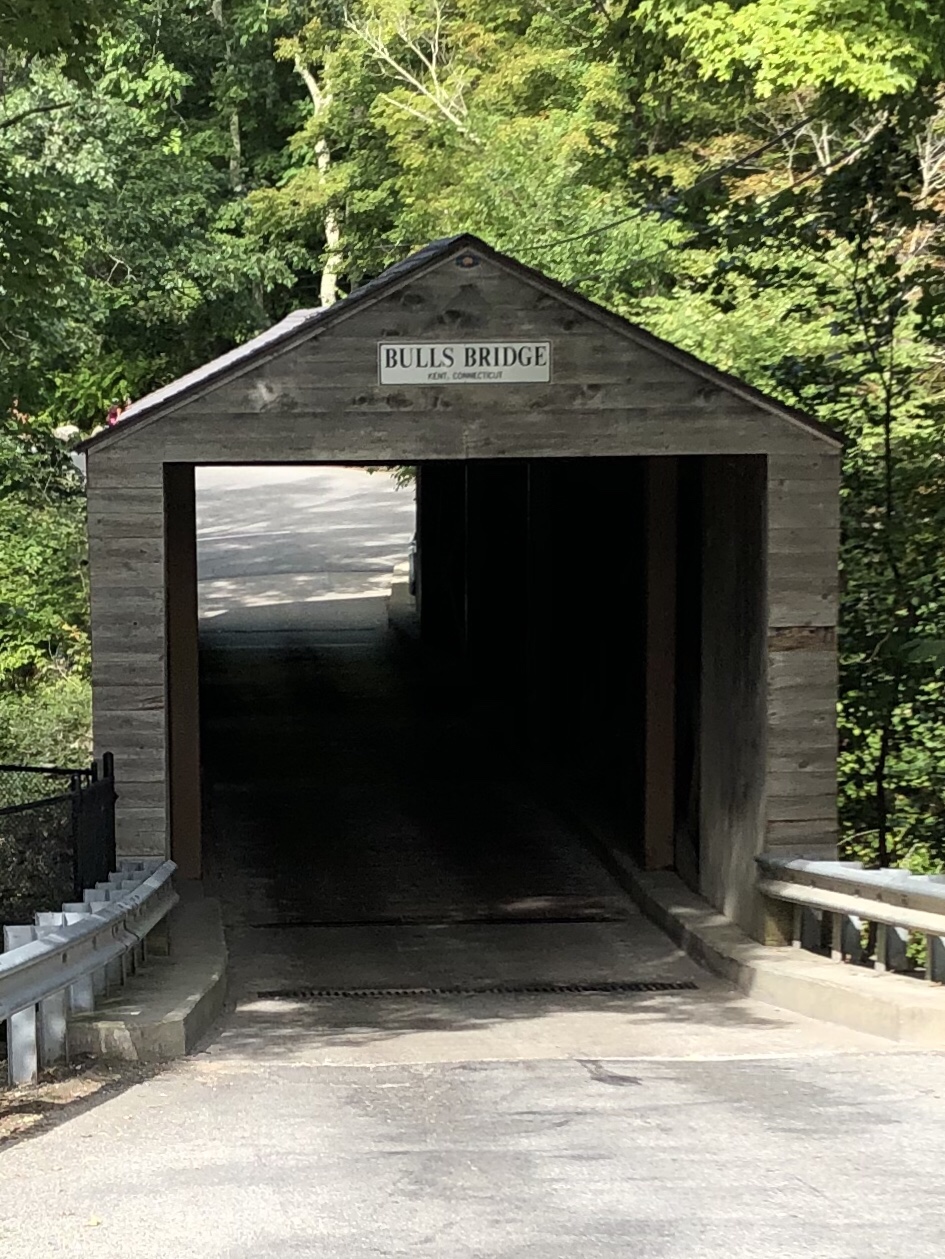
    There are parts of Connecticut that are lovely. I forever think of Kent fondly, not because of the private school, trendy stores, or a past relationship (gone horribly bad), but because of the stillness away from Route 7. There’s magic in those hills, and in the light buzz of crickets in the fields, and in the white water of the Housatonic River at Bulls Bridge. I made my way up there on my drive to Dover Plains. Some detours are more essential than others. The hills and crickets offer the same song, and there’s more Manhattan money than ever in this tiny town. We all seek solitude, some pay a premium for it. But the bridge looks about the same, and I drove through a 26 year time warp crossing it. On the other side of that time warp I appreciate where I am now.

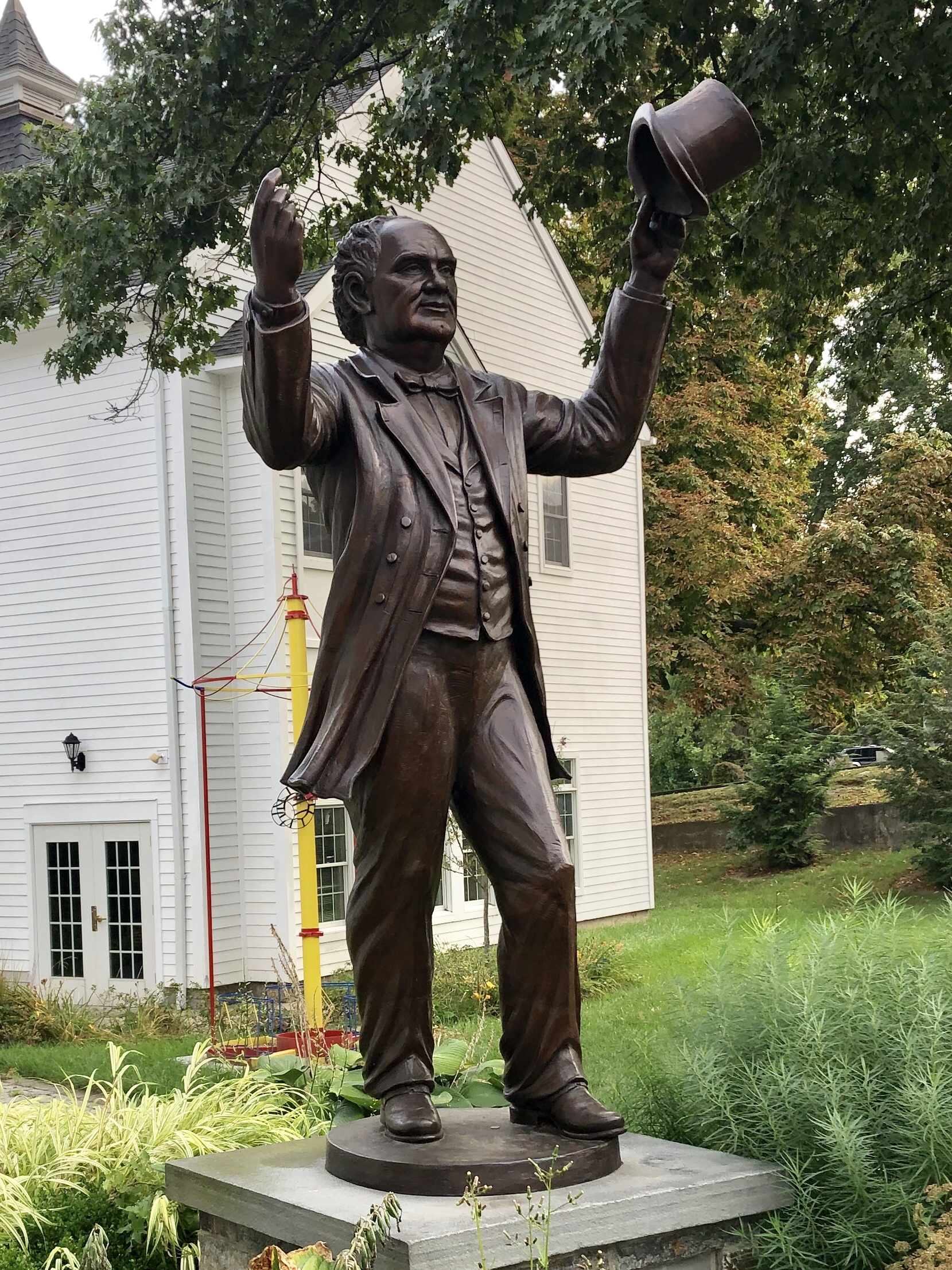
    The residents of Bethel put up a statue of old PT Barnum showing him in his most dynamic days. I drove by early this morning because I don’t like sitting in hotel rooms longer than I need to, or soul-suckingly bland diners. The statue was erected in 2010, not all that long ago, and its clear Bethel wants to celebrate their connection to Barnum. I stopped by, took a picture and got on with my day. A nod to my grandfather. He loved the vibrancy of the circus, and old PT offered an association with that vibrancy. Perhaps he was as grandiose as history suggests. But I’ll take crickets, thank you.