Month: January 2019

  • Perspective on the Weather

    Perspective on the Weather

    It’s bitterly cold outside.  Snow boots, winter parka, bomber hat flaps tight to the face when you’re letting the dog out cold.  In general I don’t complain about the weather.  Hell I live in New England and while some call it our birthright, I view it as whining about something you can control.  Don’t like it?  Move to Florida.

    When it gets like this I think about the people who were out in these elements fighting the Revolutionary War or the French & Indian War.  No creature comforts for Colonel Henry Knox and the soldiers in his command as they hauled artillery 300 miles through the wilderness from Fort Ticonderoga to Boston to help free the city from the British siege in the winter of 1775 – 1776.  Nor for Rogers Rangers and slowly starved to death as they evaded the French and Native Americans who were actively hunting for them on lands they knew better.  No reprieve for George Washington and the soldiers hunkered down at Valley Forge in the winter of 1777 – 1778.  I could write another hundred examples but I think you get the point.

    History offers great perspective on what real hardship is.  It isn’t living in the suburbs with a gas furnace and six supermarkets within ten minutes drive and pizza delivery a call away.  No, this isn’t hardship, and I tune out those who complain about it.
  • Stoicism and Daily Habits

    I’m pondering a pair of quotes from the stoics.  They go well together of course; each a call to action.  And these quotes also pair well with two books I’m reading right now.

    “Give yourself fully to your endeavors.  Decide to construct your character through excellent actions and determine to pay the price of a worthy goal.  The trials you encounter will introduce you to your strengths” – Epictetus

    “Not to assume it’s impossible because you find it hard.  But to recognize that if it’s humanly possible, you can do it too.” – Marcus Aurelius

    I’ve been reading a gem of a book, The Daily Stoic, by Ryan Holiday.  This book, as the name indicates, is a daily practice.  Get up in the morning, read the one page quote and thoughts on it from Holiday.  In these days of phone addiction, this is a ritual that I’m enjoying.  I usually switch immediately to reading a few pages of whatever book I’m onto at the moment.  At the moment that means Atomic Habits by James Clear.  Brilliantly crafted book with actionable steps for the reader to establish better daily habits.

    Action is the trick.  Today I had a good day because I took action on the objectives I’d laid out for myself.  Tomorrow I hope to build on today’s momentum with more action and perhaps some solid results.  Consistent daily effort, over time, leads to results.  Nothing new in this, and yet so hard to see the forest for the trees sometimes.  That’s one reason I read so many books like this.  They reinforce the message, dilute the impact of the crushing negativity on social media, the news and from the fellowship of the miserable.

    You are the average of the people you hang with the most.  So I choose to hang out with authors and thought leaders who lead me in the direction I want to go in.  Reading and podcasts offer much more than television and talk radio.  So we’ll see how far of a leap forward I take.  But staying where you are in a rapidly changing world is really going backwards.  And I’m not going to go backwards.

  • Poetry in Motion

    I’m writing this as windblown sleet bounces off the windows, announcing the change in the weather outside.  The overnight snow as turned to sleet, and I hear freezing rain is to our south and may swing up to us.  This would lead to power outages and turn the overnight snow into concrete.  Timing is everything on days like today.  Clean the driveway too soon and you’ll have to do it once or twice more.  Too late and you’ll have a tortuous fight against a wall of ice.  Such is the New England winter.

    “There is clarity (and joy) in seeing what others can’t see, in finding grace and harmony in places others overlook.  Isn’t that far better than seeing the world as some dark place?” – Ryan Holiday
    The entire point of this blog is to document my observations and practice my writing skills and build daily writing habits in the process.  If you’re reading this you’re in a distinct minority, but let me take a moment to thank you for taking the time.  I hope I make the journey interesting enough to stick around.
    Outside I can hear the snowblower roar and grunt as one of my neighbors gets to work on their driveway.  I need to do the same soon.  The sleet indicates the changeover.  We aren’t going back to snow.  So it’s time to leave the warm comfort of the house for an hour or so and get to work.  I make that statement knowing full well how easy I have it compared to the linemen who will be restoring power across the region, or the people plowing all night and day as I slept and sipped my coffee.  We live in a world where people don’t look up from their phones or Netflix long enough to notice the world dancing around us.  Snow turns to sleet and then to freezing rain.  We in turn react to this changing state.  It’s all a chess match this New England life.  I need to step out and make my next move.

  • Cranberry Bogs

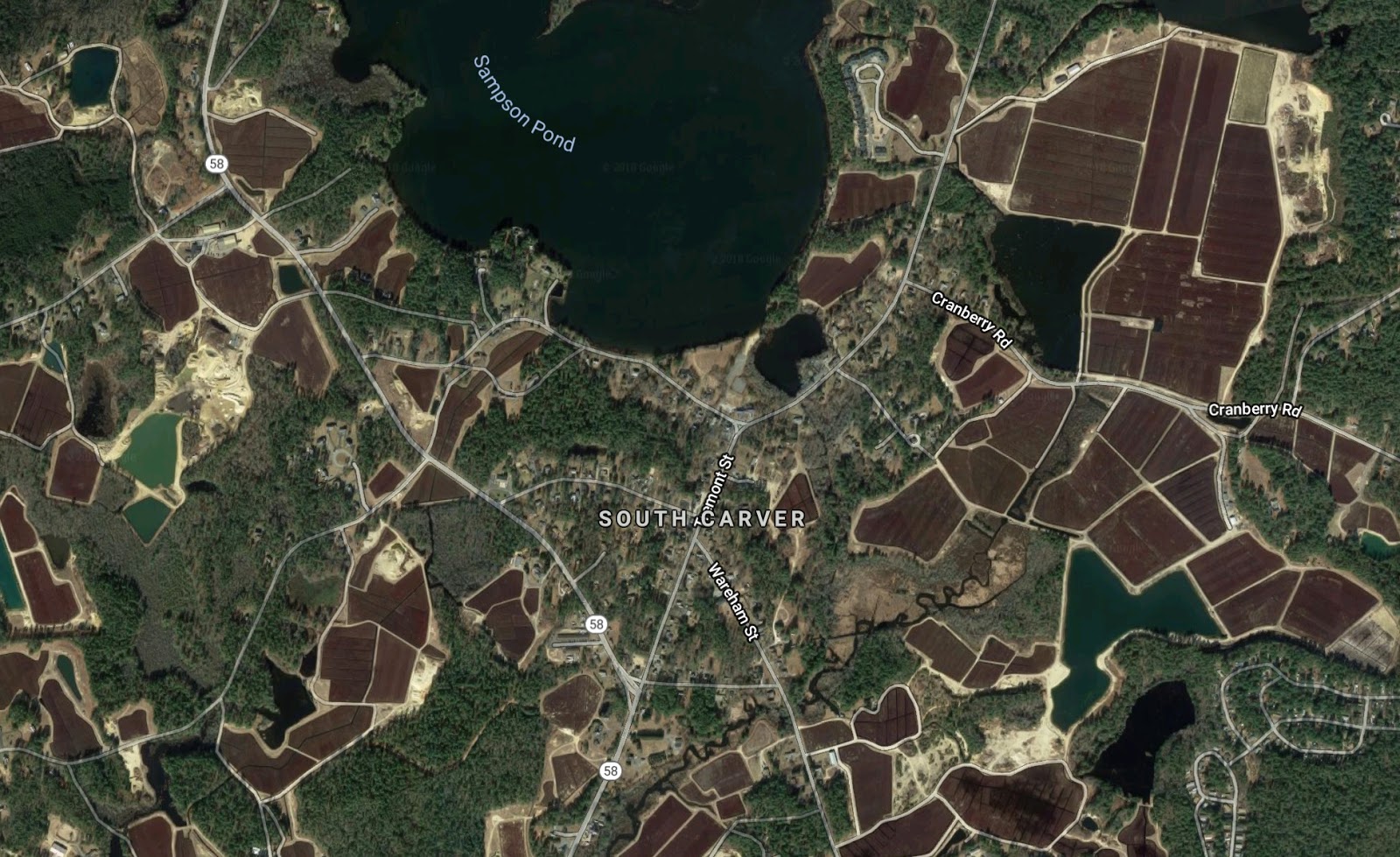
    Southeastern Massachusetts is dotted with cranberry bogs.  Looking at a Google satellite image of South Carver, Massachusetts shows just how extensive the cranberry farming is.  This area is known as the cranberry growing capital of the world.  And while the volume of cranberries grown in other places like Oregon may have surpassed this region, there’s still a strong association with this fruit and the place.

    Cranberries are grown on dry land that is flooded for harvest.  The berries float to the surface, making harvesting them much easier than picking them by hand.  Farmers use a rake to pull the cranberries off the plants.  Machines have largely taken over this process.

    In winter the cranberry bogs are transformed into acres of frozen ponds that quietly wait out the winter.  Flooding the bogs protects the plants from hard freezes.  To me the bogs are almost as interesting to watch as they march through the seasons as a stand of maple trees.  Each season brings a new face to the bog, and the transition from ice to brown to green to crimson is fascinating.

  • Ho-Ho-Kus

    In 1698, right about when Hannah Dustin was kidnapped in Haverhill, Massachusetts and eventually escaped back down the Merrimack River, settlers in New Jersey established a permanent home in a community that would eventually be called Ho-Ho-Kus.  As a New Englander, I’d never heard of this town, but I absolutely know some of the people who have come through this community.  Aaron Burr married into the community and lived at the Hermitage.  Other notable visitors included Alexander Hamilton, Benedict Arnold,

    I had a lovely dinner at the Ho-Ho-Kus Inn, which is an old farmhouse that’s been built up over the years to become a highly-regarded restaurant.  Being a visitor to the area, I didn’t know the history of the name, but it clearly originated from Native Americans who lived in this region.  The Borough of Ho-Ho-Kus has an excellent history of the community and provides theories around the name.

    According to the Borough’s site, the origin of the name comes from one of these possible origins:

    it is an Indian word for running water

    it means cleft in the rock or under the rock or hollow rock


    it comes from hohokes signifying the whistle of the wind against the bark of trees


    it is named from the Chihohokies Indians whose chief lived here


    it comes from the Dutch Hoog Akers for high acorns or Hoge Aukers, Dutch for high oaks


    its “Ho” part means joy or spirit and the rest of the name hohokes means a kind of bark of a tree


    it comes from Indian hoccus meaning fox, woakus, gray fox.

    Whatever the original meaning of the name, it’s certainly interesting.  Having worked for a company with a hyphen, and partnering with another company that has a hyphen, I appreciate the commitment of the borough to retain this unique spelling.  It’s one thing to add hyphens when you’re handwriting the name.  It’s quite another to type hyphens into the name. 

    I’ve been to a lot of places in my lifetime.  I’m happy to add Ho-Ho-Kus to that list.  I don’t know which of the origins is correct, but the one that resonates for me is that “Ho” means Joy or spirit, and the rest references bark.  So to me, it makes sense that it would refer to the whistle of the wind through the high oak trees.  I’ve heard that sound myself in other places and find it a joyful noise.  So perhaps the spirits of the ancients are whistling to us as they pass through the oak trees.

  • Tappan Zee

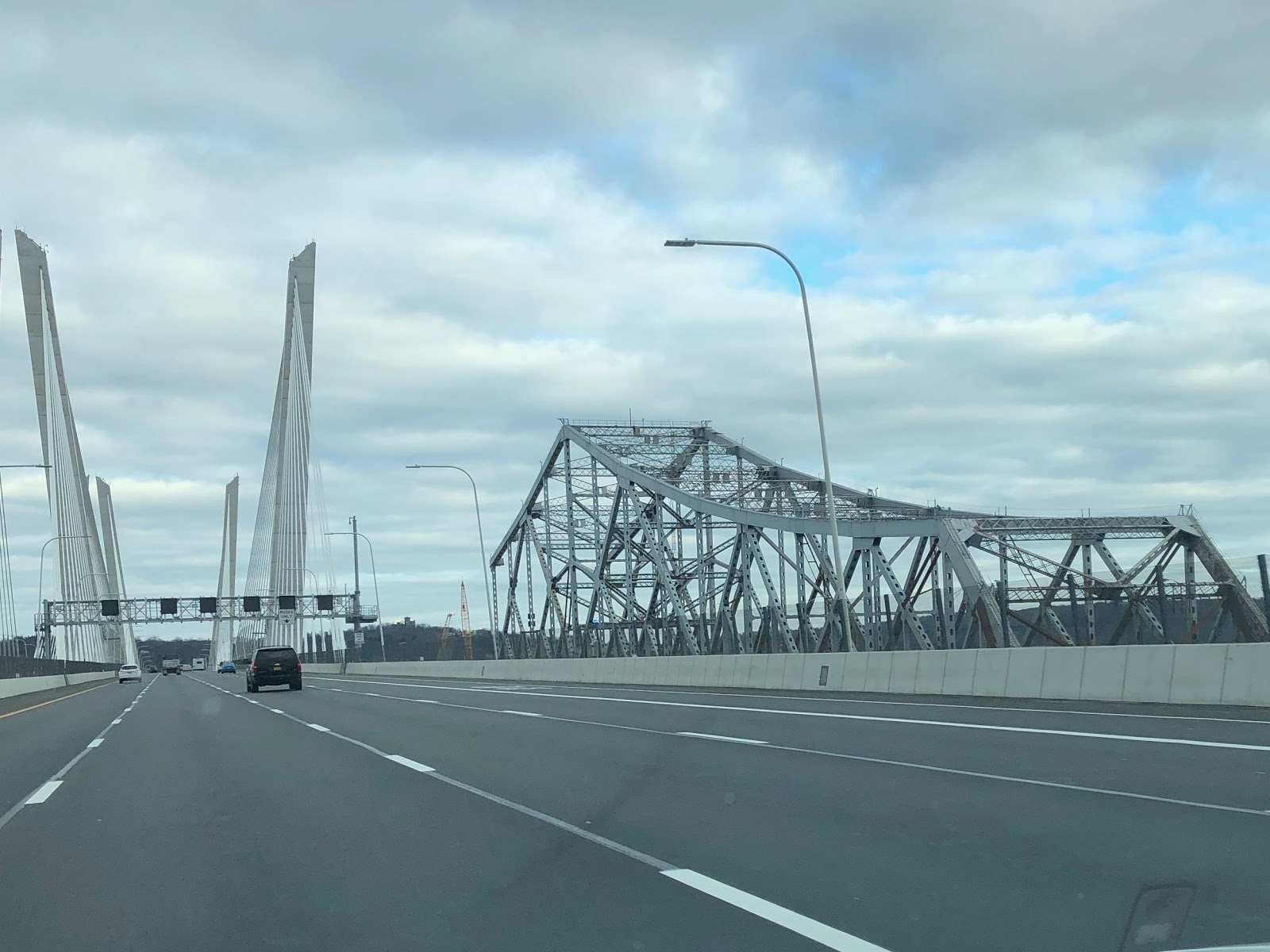
    The longest bridge in New York State from 1955 until it was replaced in 2017 was the Governor Malcolm Wilson Tappan Zee Bridge, or the abbreviated Tappan Zee.  I’ve crossed this bridge countless times, but don’t remember the occasion of the last time I crossed it.  I do know that it was sometime in 2017, when I was working for a company out of Pearl River, New York.  Yesterday they blew up a section of this bridge and let it splash down into the Hudson River.  I happened to be about ten miles away from there when it came down, as I’m working for another company based in nearby Mahwah, New Jersey.  The demolition didn’t take down the entire structure.  There’s still a span that will be dismantled instead of blown up.

    For me the Tappan Zee was the alternative to the George Washington Bridge further downstream for most of my travel from New England to points south.  Mostly that meant New Jersey or Philadelphia, but sometimes it meant trips to Washington, DC or Florida.  Crossing the Hudson is a key part of any travel West or South from New England, and the Tappan Zee was usually the less congested alternative to the GW.  None of this means much really, but for me the trips across the Tappan Zee on my way to the Dad Vail Regatta were particularly meaningful.  I was awestruck the first time I crossed this huge span of the Hudson River, seeing the red cliffs lining the opposite side.  The GW gives you Manhattan views.  The Tappan Zee gives you the mighty Hudson in all its glory.

    The new bridge crosses right next to the location of the older bridge.  It’s a fine thing, and I’m sure it was worth the $4 Billion they spent on it.  Candidly it doesn’t have the same hold on me that the old bridge did.  But I hope it lasts every bit as long as it’s predecessor. 

  • First Light

    First Light

    Dawn comes more slowly in the valley.  I’m in one now in Mahwah, New Jersey.  I’ve watched the sun brighten the sky around us, and the dark shapes of the surrounding hills.  As the sun rises the high points are hit with that first morning light.  I watch a distant house on a hill brighten into a laser reflecting sunlight to my hotel window.  Closer to where I am the hills grow pink as the suns rays cast what warmth it can muster on this frigid day.  The pink glow on the cliffs and trees slowly inch downward until finally, the sun light shines on me, huddled in my car as it warms up and eventually warms me too.  Dawn has come in Mahwah.

  • Time and Stoicism

    My dog Bodhi is reaching the end.  His back legs, so powerful in driving him in sprints around the yard or on those mad dashes out the open door and down to the beach for a swim, are betraying him now.  In the morning when it’s time for him to go out I need to lift up his back end so he can walk slowly to the back door to go out to relieve himself.  Time is catching up to him at the end of his thirteenth year.

    “Forget everything else.  Keep hold of this alone and remember it: Each of us lives only now, this brief instant.  The rest has been lived already, or impossible to see.” – Marcus Aurelius

    Time knocks us all down eventually.  We all sort of know it as we go through life, but most people push thoughts of death aside and distract themselves with television or politics or celebrity gossip or who knows what.  I’ve come to embrace stoicism as a philosophy precisely because it cuts through the bullshit and lays out what we should all remember.  Memento Mori.  Carpe Diem.
    Today I’m driving to New Jersey for a sales meeting.  I’m debating going early to watch the Patriots game there.  The alternative is to stay here and leave a bit later, spending time with family a bit longer.  Under the right lens, the decision is obvious.
  • Up the River

    Up the River

    Reading the history of Henry Hudson, James Cook and other explorers who were looking for the Northwest Passage across North America, I marvel at the logistics of sailing square-rigged ships up rivers like the Hudson River or the St. Lawrence Seaway.  Sailing in narrow corridors with strong currents, questionable winds with the trees and cliffs lining the shores, and no charts to help navigate with, it’s an incredible display of sailing acumen.  I’m in awe that they could do it.

    I’ve sailed up a couple of rivers, most notably the Merrimack River and the Essex River.  In each case I was in a sloop-rigged boat of about 36 feet.  We knew where the channel was, and we had a diesel engine to fall back on should we need it.  That’s a far cry from the Halve Maen (Half Moon in English), Henry Hudson’s ship, which was a square-rigged and 85 feet long.  Hudson sailed up the river that bears his name in September of 1609 with a crew of about 20 men.  They sailed as far as present day Albany before turning around.  Albany would become a hub of trade with the interior over the next 100 years and the river would become well known, but Hudson was essentially sailing with one hand tied behind his back.

    The Basque were exploring North America before Hudson made his voyage into the interior.  I’ve documented previously the adventures of one soul who made it all the way to Rochester, New York before he perished.  The French were also actively exploring the interior, and of course the Spanish were focused on areas farther south on the continent.  All of them exhibited exceptional courage and skill in navigating these waters.  As a casual and occasional weekend sailor I’m deeply impressed with what they were able to accomplish.  Lost to history of course are the many who failed to make it home from these voyages.

  • Tea and Taxes

    Tea and Taxes

    The Boston Tea Party occurred on December 16, 1773 as a way to protest the tax on tea imposed by Parliament.  The colonies were loyal British subjects until a series of intolerable acts drove them away.  Taxation without representation.  No place was more ornery than Boston.  The Boston Massacre took place almost three years earlier as Bostonians protested Parliamentary legislation that imposed hardship on the colonies.

    Much of the taxation was a result of the debts incurred during the French and Indian War.  The Author Walter Borneman floated an interesting what if scenario about the aftermath of the war, when Great Britain gave Guadeloupe, Martinique and Dominica back to the French.  The money from sugar and rum that Great Britain could have realized from those islands could easily have paid for the war and given Parliament less reason to look to the colonies for tax revenue.

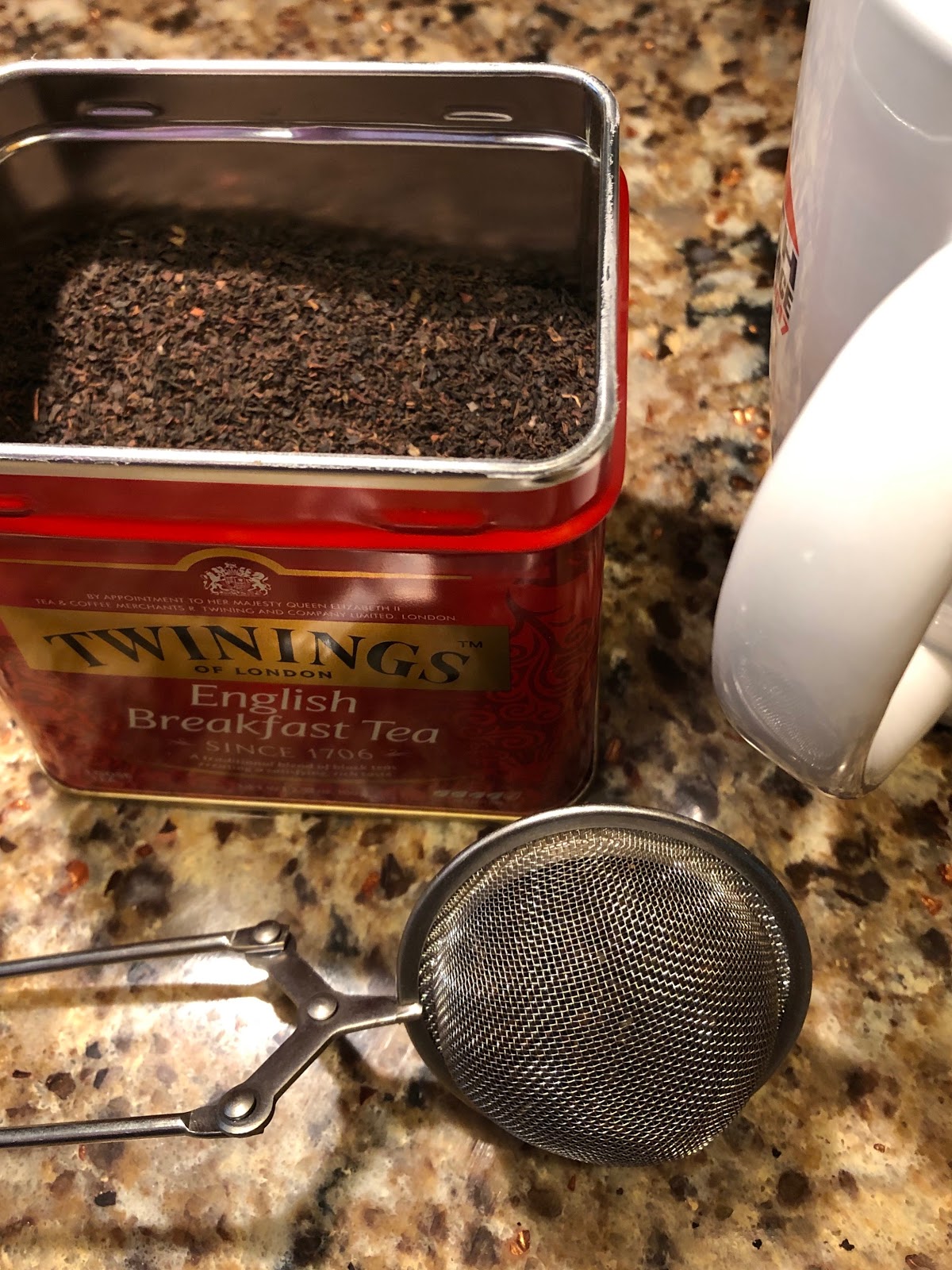
    The power of tea in colonial times was significant.  First, it offered a safe way to drink water at a time when cholera and other waterborne diseases were a possibility with every sip.  Boiling water for tea effectively killed the bad stuff before it went into your mouth.  Secondly, tea is made from a mix of leaves from plants that offered medicinal benefits as well.  Tea is full of antioxidants and catechins that help fight diseases and cancers.  And tea has caffeine, which I’m quite familiar with as a net benefit addition to my diet.  The alternative to drinking tea was to drink coffee, which was harder to get in colonial times, or rum, which also killed much of the bad stuff, but wasn’t exactly optimizing the workforce.

    So tea was the magical drink of the time, and it really pissed off the American colonies when some bureaucrat in London imposed taxes on it without giving them a voice in the political process.  Taxation without representation was the gasoline poured on the fire that turned loyalists into rebels.  Colonists were less frequently in mortal peril from the frontier at their backs.  The French had been defeated, the frontier was pushing further and further away from the coastal cities and the threat to day-to-day life evolved more and more to be the Mother Country.