Month: February 2019

  • Rum

    Life for the settlers of North America was hard.  Scraping together enough food to eat from the cold land was certainly challenging.  Having enough food to eat was a daily challenge for settlers.  Compounding this was a general distrust of water was prevalent throughout the colonies as water harbored cholera and other diseases.  Tea was one answer for replacing water.  Rum was a better answer.  Rum not only solved the problem of water-born disease, it also offered critical calories.

    “Rum was not just a diversion; it was nutritionally to colonists who labored to coax a meager sustenance out of a rocky, stump-filled landscape and cold seas.  Alcohol has fewer calories per ounce than straight far but about the same as butter.  It’s five times more caloric than lean meat, and has ten times the calories of whole milk.  A bottle of rum squirreled away in a Grand Banks fishing dory provided the energy to haul nets and aided in choking down hardtack and salt cod.” – Wayne Curtis, And a Bottle of Rum

    Rum, ale and cider were the three primary alcoholic drinks in the 1700’s, and rum was far and away the most popular.  Molasses was shipped up to Boston from the Caribbean, it was made into rum and shipped around the world.  Some of this rum was traded in Africa for slaves, which were shipped to the Caribbean to complete the cycle.  Rum had as large a part to play in the earliest days of the thirteen colonies as any drink.
  • The Great Carrying Place

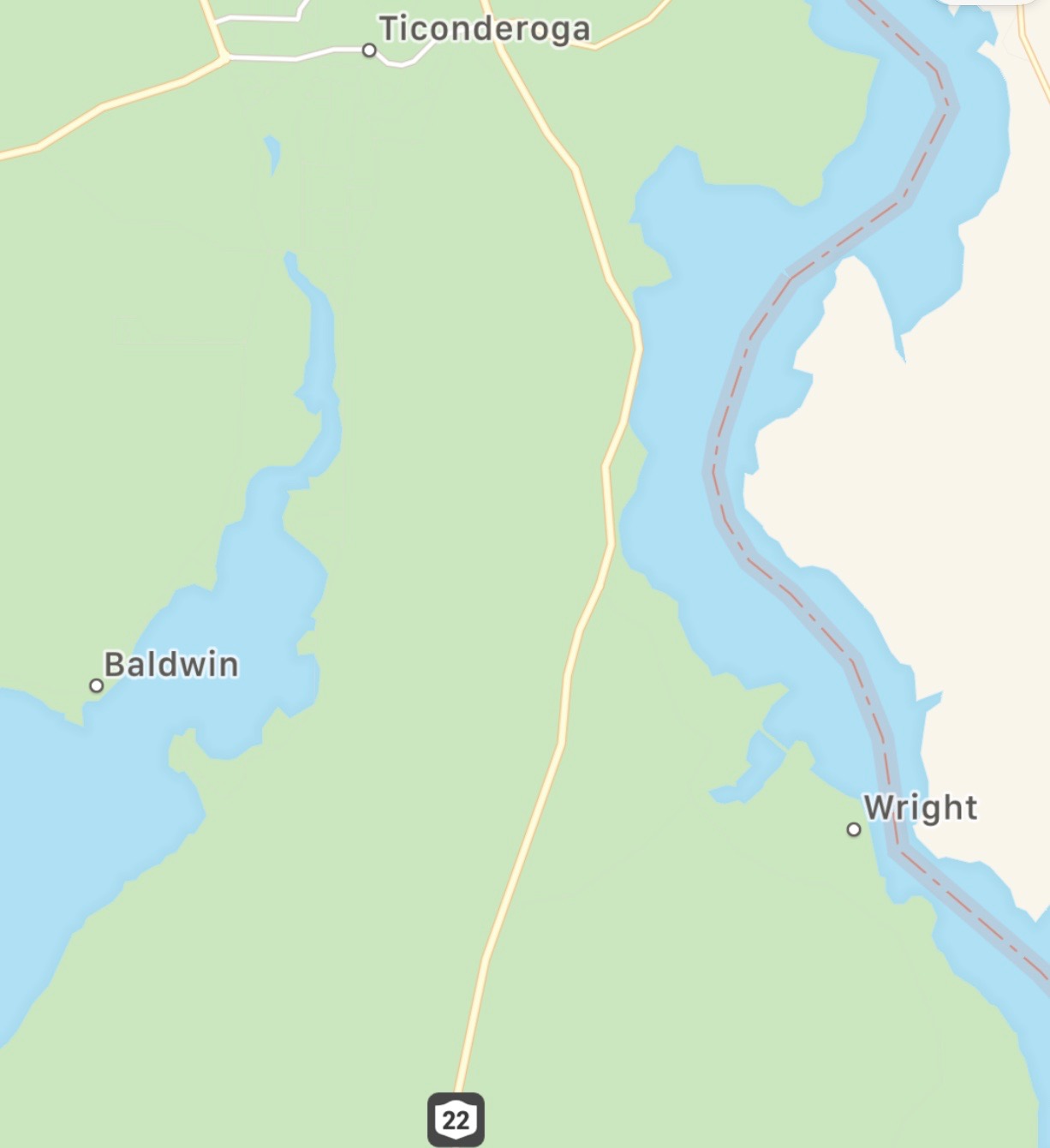
    There’s an almost unbroken stretch of navigable water from New York City up the Hudson to Lake George to Lake Champlain to the St. Lawrence Seaway, which in turn leads back to the Atlantic Ocean or deep into the interior of North America to the Great Lakes.  The “almost” part is a couple of stretches of land that must be portaged where the La Chute River is unnavigable.  This two mile stretch of land between Lake George and Lake Champlain is the place the Native Americans called “the great carrying place”.  There are other portages with the same name, notably a stretch of trail in Maine that Benedict Arnold used to invade Quebec, but this stretch in New York is arguably much more strategic.

    In the years before and during the French and Indian War this was one of the most strategically important and thus heavily contested patch of wilderness in North America.  Navigable water was the most efficient and fastest way to travel at the time, and aside from this stretch of land navigable water was close to unbroken.  During the Revolutionary War this place was the site of significant naval and land battles led by Benedict Arnold.

    I’ve been to Glens Falls and Saratoga many times.  I’ve been to Lake George once or twice.  And I’ve been on and most of the way around Lake Champlain.  But I’ve never viewed the region with the educated eyes of a historian.  It’s not that I didn’t know the rough history of the region, it’s that I was apathetic towards it.  I’m not longer apathetic.  The next time I make my way through the region I’m going to spend a little time immersing myself in the history of the region.  Fort Ticonderoga, Mt. Defiance, Saratoga and so much epic history happened right in this area.  I can’t very well ignore it now can I?