Author: nhcarmichael

  • Late Bloomers

    I was doing some yard work this week and stopped to consider the roses.  I have these tea roses that bloom constantly throughout the summer and well into the fall.  It’s got these masses of light pink, fragrant blooms at its peak in June.  With a relatively mild autumn, we had blooms much later into the season than usual.  But some of the rosebuds waited too long to bloom, and were frozen in place.

    We hear a lot in culture about late bloomers.  Colonel Sanders comes to mind.  And there’s a place for late bloomers in culture and in nature alike.  But there’s a lesson in the roses too.  Don’t wait too long to bloom, or you may die with unfinished potential.

  • Time Travel

    As we speak cruel time is fleeing.  Seize the day, believing as little as possible in the morrow.” 
                                                                                          – Horace

    “Time is what we want most, but what we use worst.” – William Penn

    January 4th.  Working this week is almost as challenging as working last week was.  Short weeks are always tough, but add in that most people are on vacation or working on their plan for the year and the productivity in a given week goes out the window.  Working the tools of the trade – Salesforce CRM, bullet journal, Getting Things Done methodology – helps but some weeks are more off the rails than others.  I’ve entered the Friday afternoon Bermuda Triangle of productivity.  I look up and it’s after 3 PM and I’ve checked one out of five boxes on my bullet journal to-do list.

    I’ve tried many methods, but to me the Bullet Journal combined with GTD methodology is working the best for me.  If I had all the money I spent on productivity tools over the years I’d be able to retire early.  Best to keep it simple.  Right it down immediately in a bullet form, cross it off when you finish it, move it forward if you don’t.  Keep it simple…

    For a short, unfocused week, I’ve managed to get a few things done.  Don’t get me wrong, there’s still plenty to do, but you need to celebrate the small successes when you achieve them.  After all, there’s always something else that needs to be done.  If you waited until it was all done you’d never celebrate anything.

  • Coating to an Inch

    There’s mental math that you do when you live in New England.  When the forecast calls for snow followed by temperatures above freezing, you need to decide the cutoff point where you ignore or clear the snow accumulated on the driveway.  Today is a classic case of just enough accumulation – more than a coating – to consider scraping it off the driveway and deck.  My default after years of experience is that you clean the driveway and enjoy the warming trend later.  Don’t count on a melt-off, because New England weather can dash your dreams quickly.

    I’ve had plenty of coating to an inch storms that I’ve decided to let Mother Nature “just melt” that have haunted me later.  That warming trend doesn’t materialize, the meteorologist shrugs and marvels at the way the front came through and I’m left with a skating rink for a driveway.  No, best to clear the driveway and deck and just call it a light workout.

    There have been some business trips where I’ve come home and the residents of the home have determined that the math worked in their favor.  That’s when ice melt becomes your ally.  When the equation turns to despair, you introduce ten to twenty pounds of salt to the driveway.  This is a safety net, but not the preferred way of doing things.  This paragraph is curmudgeon talk.  Best to just keep your mouth shut, clean the driveway as best you can and wait a day to three weeks until the next warming trend melts off the discretion.

  • Robert Rogers

    Robert Rogers

    Robert Rogers was born in Methuen, Massachusetts – twenty minutes from where I currently live.  His family moved to what was then the wilderness of Dunbarton, New Hampshire a few years later.  Rogers is famous for leading a group of colonists in the French and Indian War.  There are some who will point to his debts, drinking and war atrocities committed against women and children.  These are very much the darker part of his story.  But Rogers was very good at what he did, which is taking the fight to the French and Native America populations during war.  In war you need strong leaders, and Rogers was certainly that, leading Roger’s Rangers to fame that lasts to this day.

    I first learned about Roger’s Rangers when I was a kid watching the movie Northwest Passage.  I haven’t seen that movie in 40 years, but I’ve read up on Rogers, and everything I read makes me want to learn more about this guy.  Rogers and his Rangers wore green uniforms and did epic raids and scouting missions across vast and hostile wilderness.  Roger’s Rangers were the origin of what is now the United States Army Rangers.  Live off the land, shrug off hardship and discomfort and get the job done.

    Perhaps the most epic story I read about Rogers Rangers – and there are many – is a mission when they skated across Lake George, switched to snowshoes and trekked across snow covered forest for miles.  These were tough, athletic and versatile men who never saw a mission that they didn’t want to tackle.  On another snowshoeing mission they ambushed the enemy deep in hostile territory, only to be ambushed themselves.  Rogers and many of the Rangers managed to escape by holding off the French and Native Americans until dark, separating into smaller groups and melting into the wilderness.

    By all accounts, Rogers was a brilliant soldier who adopted Native American tactics to create his own form of fighting.  Today people talk about Navy Seals with awe.  Frankly I do as well.  Rogers Rangers would hold a place of honor at the table of military heroes in America’s history.  Many of the tactics used in the armed forces today originated with Robert Rogers.  In fact, Rogers “Rules of Ranging” are still followed by the U.S. Army Rangers of today.

    Rogers was a hero of the French and Indian War, but like many soldiers he struggled after the war.  Debt, scandal, alcoholism and war crimes muddied his reputation after the war and in the years since.   During the Revolutionary War he took the British side, and it’s said that he was the one who recognized Nathan Hale (“I only regret that I have but one life to lose for my country.”) when he was spying on the British in New York.  Hale was hanged soon afterwards.  New Hampshire, which Rogers did as much to protect as anyone during the French and Indian War, expelled him as a Tory.  He would die in poverty in London.

  • New Year’s Day

    2019 has begun in earnest and there’s no time to waste.  Things to do, places to see, books to read, people to meet, friends and family to reconnect with, work to accomplish.  The flipping of the calendar signifies many things but it does mark change, if only in a number.
    “I will begin again” – U2, New Year’s Day
    The morning after the celebration, for those who didn’t celebrate too much, is chock full of promise.  New habits or the banishment of old habits, goals to accomplish, changes to make in the way you live your life.  Really, every morning offers this opportunity.  Every day you wake up is a clean slate, and offers the promise of the coming day.
    “When you see the Southern Cross for the first time
    You understand now why you came this way
    ‘Cause the truth you might be runnin’ from is so small
    But it’s as big as the promise, the promise of a comin’ day”
                                        – Crosby, Stills & Nash, Southern Cross
    Those lyrics remain burned in me like cattle prod, and poke at me now and then to get out in the world.  Just as the movie Local Hero does.  They serve as a catalyst and travel and some form of adventure must follow soon after each taps me between the ears.  I need to pay penance first with work to do at home, in Pocasset and in my job, but sure as the calendar changes on January 1 I’ll be off somewhere again, finding adventure where I may.
  • Oil Delivery

    Oil Delivery

    In the early morning hours of December 31st, Buzzards Bay was very still.  There was a glow from the towns on the other side of the bay, but otherwise the night was dark yet brilliantly lit by thousands of stars.  House lights and red and green lighted channel marker buoys twinkled across the calm water.

    Off season is very quiet on Cape Cod, and that’s particularly true in this quiet corner of the Cape as well.  There are very few year-round residents, and the few that are around aren’t hanging out on the beach this time of year.  Walking down the beach to take a sunset picture last night I saw two couples doing the same, and saw one other family when I first arrived and a power walker this morning.  Solitude prevailed.

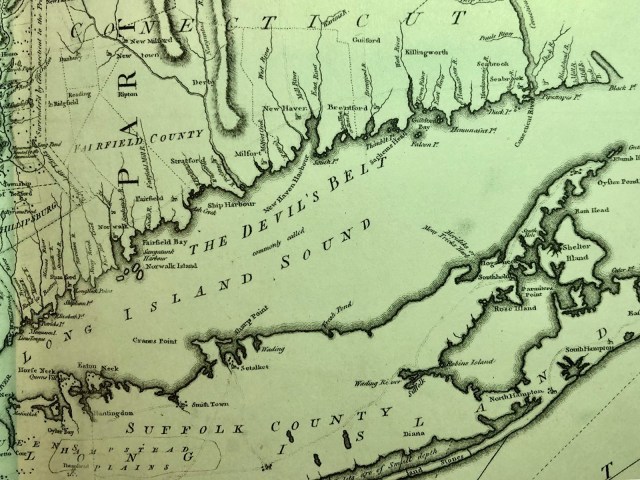
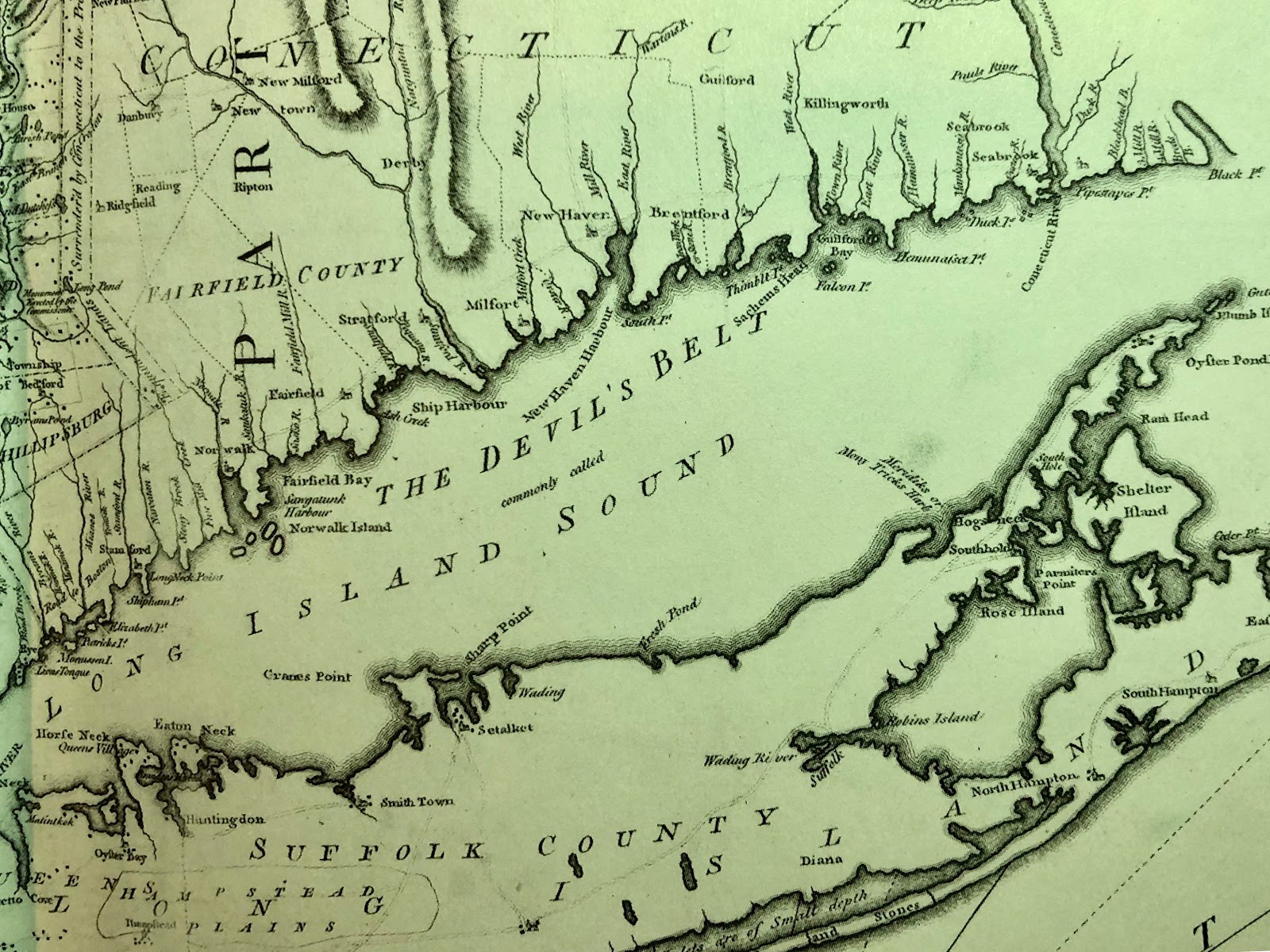
    The only company I had was announced by the distant thumping diesel engines of the tug boats pushing oil barges to and from the canal.  Tugs are a constant companion on the bay, and there was no let-up at 3 AM.  Heating oil is in high demand this time of year, and barges are running from Hicksville, New York on Long Island up through the canal to fuel thousands of customer’s heating systems.  There’s an estimated 2 billion gallons of oil being shipped through the canal annually.

    In 2007 a barge being towed hit a submerged ledge and leaked 928 gallons of oil into Buzzards Bay.  The ecosystem is very fragile in Buzzards Bay and from that point on barges are required to have two tugs to ensure that any trouble is mitigated immediately.  The 2007 leak was the fourth such incident in 32 years from 1975 to 2007, and thankfully there haven’t been any since then.  I’m told that they’ve started using double-hulled barges so that even if the primary hull is breached the second hull should contain the oil.  I hope so.

    But last night, that wasn’t on my mind so much as knowledge that the tugs and barges continue working this stretch of water from Long Island to New England and perhaps Canada.  This isn’t a 9 to 5 job, and I appreciate the people out there working the wee hours of this morning of 2018.  Hopefully they’ve reached port and are able to celebrate New Years Eve on shore.

  • HNY

    “Give yourself fully to your endeavors. Decide to construct your character through excellent actions and determine to pay the price of a worthy goal. The trials you encounter will introduce you to your strengths.” – Epictetus

    Perfectly stoic outlook for the 2019.  Here’s to a great New Year’s Eve tomorrow and a safe and Happy New Year for all.  Cheers!
  • New England’s Frontier Wars

    New England’s Frontier Wars

    Being a settler in New England wasn’t all that easy.  Events outside your control impacted settlers for generations.  Encroachment on the Native American population created resentment and occasional raids on settlements.  Global forces were at work against the settlers too, as France and England were constantly at war with each other in Europe, which naturally bled over to North America as each side fought for their turf.

    There were several wars between the English and the French that deeply impacted the settlers in New England.  So many wars that you need a scorecard to keep track of them all:

    1689-1697  King William’s War (War of the Grand Alliance/Nine Year’s War)
    1702-1713  Queen Anne’s War (War of Spanish Succession)
    1722–1725  Dummer’s War (Father Rale’s War/Wabanaki-New England War)
    1744-1748   King George’s War (War of Austrian Succession
    1754–1763  French & Indian War (Seven Year’s War)

    Over the next several posts I’m going to try to tackle each of these at an overview level, and dive deeper into individual stories from each over time.  With 75 years of fighting between the settlers, the French and the Native American population, there’s plenty of content to work with, and only time as a restriction.

  • Atomic Habits

    Atomic Habits

    I’ve got a long history of pursuing audacious goals that eventually crash and burn either immediately after accomplishing them or somewhere along the road to getting there.  I’ve rowed a million meters in support of a friend, and as soon as I’d accomplished it I walked away from the erg for months.  I’ve lost 30 pounds and was literally within five pounds of my perceived ideal weight of 225 when I just stopped pursuing it.  I’ve aimed at 10x my quota attainment for years, and inevitably scratch and claw to meet quota, let alone 10x it.  I set a goal of doing 20 burpees a day for the rest of my days, and injured myself after increasing the reps to 50 burpees per day and not listening to my body when it started breaking down.

    “Shoot for the moon. Even if you miss, you’ll land among the stars.” – Norman Vincent Peale

    Such is the life of the big dreamer.  I’ll still pursue bigger goals for work and fitness.  You need to have bigger goals to inspire you after all.  But in aiming for the moon, I’ve ignored the other advice that I’ve heard over and over.  Steady, incremental improvement ultimately wins the day.

    “Slow and steady wins the race.” – Aesop, The Tortoise and the Hare

    Your audacious life goals are fabulous. We’re proud of you for having them. But it’s possible that those goals are designed to distract you from the thing that’s really frightening you—the shift in daily habits that would mean a re–invention of how you see yourself. – Seth Godin

    With that in mind, as we run smack dab into another year of bullshit resolutions, I’m taking a different tack as we round the corner into 2019.  Small, “atomic habits”, inspired by a free ebook with the same name by James Clear.  Overall this has worked for me with a few things, like writing this blog.  I don’t do it every day, but I’ll aim to become more consistent.  So here goes:
    1. 10 burpees per day.  Not 11 or 20 or 50.  Just do 10 and re-establish the routine.
    2. Minimum 5K per day walking.  Aim for 10K.
    3. One call per workday to a high gain contact.
    4. Write something every day and post it in the blog.  Even an interesting quote someone else said is better than nothing.
    5. Do at least 3 of these before you check social media.
    Easy right?  That’s the point.  So easy you don’t have an excuse not to do it.  So here we go.  In fact, I’ve already knocked off two of these today.  So I guess I’m off to a good start.
  • Halifax & Boston

    Halifax & Boston

    The connection between Halifax and Boston is similar to a sibling relationship.  Boston receives their Christmas tree from Halifax every year as a thank you for Boston’s role in supporting Halifax after the December 6, 1917 explosion that killed almost 2000 people.  Boston’s medical ships arrived well before the Canadian government reacted, and Halifax has been forever grateful.

    Halifax and Boston were sister cities of the British expansion into North America, and there was strong sentiment to invade Halifax and bring it into the American colonies during the Revolutionary War.  That it remained British-controlled created some separation, but eventually the cities proximity and cross pollination of people moving from one to the other brought them closer.
    Halifax receives the Boston feeds of a couple of news channels and follow all of the major Boston sports teams, making them more familiar with Boston than Boston is with Halifax, but the bond is strong both ways.  Part of my family came through Halifax as well, so I’ve always thought of it as a home away from home.  It’s been over a year since I’ve been in Halifax, and I think I need to remedy that soon.  Nova Scotia keeps calling to me.  I need to return the call.