Blog

  • The Whisper of the Window Seat

    The more I travel, the more I believe there are two types of people in this world: those who would block out all the noise and retreat into themselves, and those who are actively engaged with everything and everyone around them. This might be best observed on a plane, where the window seat becomes a portal to the universe for those actively looking out the window, or alternatively, closed the entire flight that the traveller may forget that they’re propelling tens of thousands of feet above the earth in an aluminum tube. Take those two travelers and bring them into a room or a garden and I’d bet most would behave similarly.

    I’d like to believe that I’m actively engaged in the world, but still own noise cancelling headphones and resent the person in front of me for reclining their seat. I celebrate the input I seek from the world, yet resent encroachment from that which I don’t. Does that make me complex, or practically engaged? I’m a work in progress either way; with stoicism as a lens for which to see the world.

    Given the choice, would you choose an aisle seat over a window seat? Would you take one for the team and sit in the middle seat? These are choices that say a lot about us. The aisle offers flexibility—you can stand up any old time you want to so long as that fasten seatbelt sign isn’t illuminated. Yet you’re constantly encroached upon by (seemingly) every person bumping into you as they pass by. There’s joy but also despair in the aisle seat, presented to you in a jolt just as you doze off.

    That middle seat must be suffered. You know exactly what you’re in for, and usually, that vision is realized. There’s something very stoic about traveling in the middle seat. Amor fati—love of fate. We accept the universe as it comes to us. All we can do is cross our arms and take the air miles. If you’re lucky, the person in the window seat is a kindred spirit and has the shutter open for you to catch a partial view of what might have been.

    The more I travel, the more I want the window seat. Sure, you’ve got to manage your bladder trips wisely, but otherwise you’re in a place of least possible encroachment under the circumstances with the most opportunity for wonder just an open shutter away. We’ve all got such a short trip in the big scheme of things, why not be open to experience as much as possible? Everything but that reclining seat, anyway.

  • A Series of Outcomes

    “Perseverance is not a long race; it is many short races one after another.” — Walter Elliot

    “The future we have bet on unfolds as a series of outcomes.” — Annie Duke, Thinking in Bets

    The journey of becoming what’s next never stops, does it? We just move from one version of ourselves to the next, and then the next still, until we reach the end of our days. The trick is to build off each, creating something bigger than our current selves in the process. Life is reinvention and renewal, but it is also fragile and fraught with danger. We must be bold in our choices and tough in our resolve.

    “The thing about life is that you must survive. Life is going to be difficult, and dreadful things will happen. What you do is move along, get on with it, and be tough. Not in the sense of being mean to others, but being tough with yourself and making a deadly effort not to be defeated.”
    ― Katharine Hepburn

    Being hyper-aware of the race we’re currently in is essential to savoring a life well-lived. So too is being hyper-aware of the direction we’re going in, that we might stay on course for who we aspire to be in the next version of ourselves, and the one after that. We must play the long game even as we deal with the cards we’ve been dealt in this hand.

    There is no other way to progress through this life than one step at a time. Sometimes we leap, sometimes we take smaller steps than we’d like. Sometimes we go sideways around an obstacle. But we must feel the urgency of the moment and act. Life is urgent because life is so brief. We simply have no time to lose if we are to reach the places we’ve set our course for. And yet we must take the long view, even as we deal in today. Life is now, with an eye on whatever we can make of then. We must get on with it.

  • A Visit to Brimstone Hill Fortress, St. Kitts

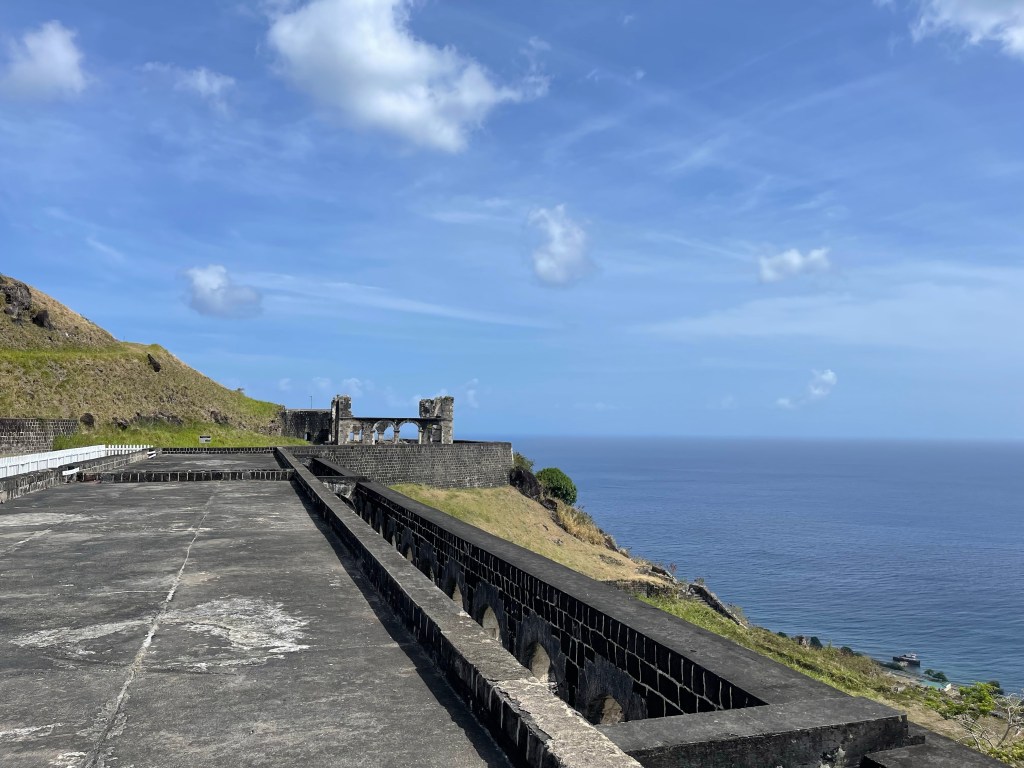
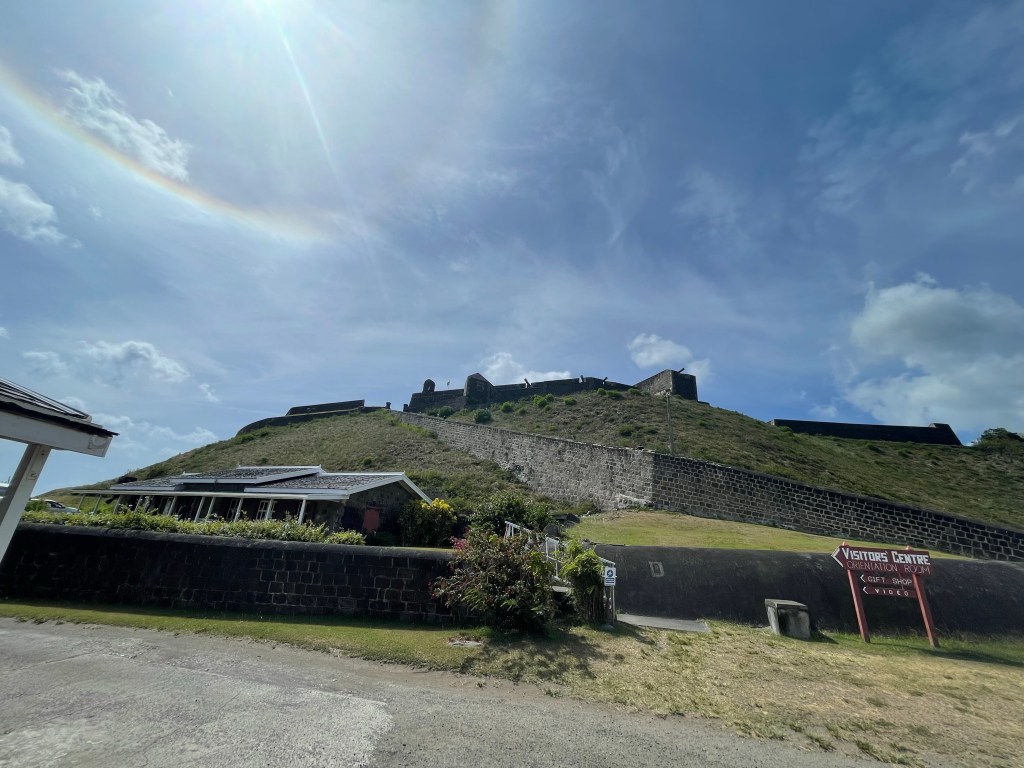
    On a steep and imposing chunk of rock with the mountains at her back, Brimstone Hill Fortress continues to watch over the Caribbean long after the strategic reasons for having a fort here at all have faded into history. Today St. Kitts and Nevis, and the other island nations nearby, are destinations for fun in the tropics, but three centuries ago these islands were strategically valuable producers of tobacco, cotton and especially sugar and its byproducts, molasses and rum. The conflicts between England and France were played out in the North American colonies and in small islands like St. Kitts. While most soldiers considered being stationed in the tropics a death sentence due to the high mortality rate (from disease, alcoholism, etc), it was nothing compared to that suffered by the original inhabitants and the slaves that built the fortress. Each were decimated as the history of this place evolved. Visiting the castle after playing tourist for a few days, the contrast between the joyful destination of today and its dark history was sobering.

    They say that history is written by the victors. This is largely true, but with enough time and clues, you find enough evidence to piece together a more complete story. The English and French united to massacre thousands of Caribs (kalinagos) in 1626 at a place aptly called bloody point, not far from Brimstone Hill. Once they’d eliminated the native population, the English and French divided St. Kitts between them, with the English taking the middle of the island and the French the rest. This tenuous peace between colonists would last until 1713 (the end of Queen Anne’s War).

    Brimstone Hill Fortress was built by slaves between 1690 and the 1790’s. The slaves were brought from Africa in a continuous loop that began the slave trade of tobacco, cotton and sugar for captured and enslaved people. This highly lucrative trade created generations of wealth and tragedy. The fortress is an early example of the polygonal system, which created fields of fire to ensure that all sides were covered from assault. The sheer height of the fort ensured it would be very difficult to attack from the ground, while offering the prominence of the high ground to fire canon balls up to a mile away. This was state-of-the-art technology for the time. The volcanic stone was mined and cut into a formidable fortress, using lime quarried from lower in the mountain.

    During the American Revolutionary War, the French (allied with the American colonists) invaded St. Kitts and laid siege on the fortress from January and February of 1782. A siege is the kryptonite of a fortress, as the inhabitants face a dwindling supply of water, food and ammunition while the attackers wait them out. Eventually even the strongest fortresses capitulate, and the English surrendered and marched out with full honors. A year later the English were back again when the Treaty of Paris restored the islands to them.

    Today the Brimstone Hill Fortress is a Unesco historic site and remarkably well preserved. Many of the original canon line the fort, awaiting an assault that will never come. Today’s assault is from tourists seeking out the spectacular views from the fortress, stirred with a sobering history lesson. It’s absolutely worth the trip up the narrow, winding road on a clear day. A walk out to the outer walls confirms exactly why they built the fortress here—you can see forever in all directions. Including the past.

  • Tropical Rewind

    Hey, stop talking, think I can hear the sea.
    And did I tell you the sound of the surf
    Makes strange things happen to me.
    — Del Amitri, Here and Now

    There’s nothing better than an off-season beach, save perhaps an off-season beach in the tropics. Celebrating a quiet beach is best accomplished in the early morning light, when magic happens in the universe, but only witnessed by those who make the pilgrimage. The advantage of a tropical beach is in the warm breezes and even warmer ocean water. An off-season beach in northern climates has all of the beauty, but is served with a frigid sting. Such things matter when you linger in a place by the sea.

    Walking the beach in St. Kitts well before the dancers of the night before ever thought to awaken, I had no souls to keep me company but the sea birds, a stray dog and an inquisitive cat. Warm tropical breezes offered a different experience than the norm for me. It’s an experience you can certainly get used to very quickly. This explains why so many move to the tropics. But we all know that everything loses its magic if you get too used to it. At least that’s what I told myself as I walked back from the beach to face reality once again.

    [Postscript: This post was written but never made it out of international waters. The streak of writing is alive, the streak of posting is subject to interpretation.]

  • To Be a Good Ancestor

    It’s understood that our ancestors lived in a time of darkness and brutality mixed with enlightenment and progress. History is a process of confronting and accepting the evidence we stumble across as we explore the path of humanity. We aren’t a perfect species, but we can make incremental progress towards a better world. We cannot judge ourselves today based on the actions of our ancestors, but we can learn and apply that knowledge towards a better future. This of course applies to the individual as much as the collective species. In either case, progress is active work.

    Our ancestors were the best and worst of us. We are the sum of that history: the survivors, antagonists and witnesses rolled into an underlying identity we either celebrate or work to change. We are the latest revision of our species, and the trick, as Kevin Kelly puts it, is to be good ancestors for futures generations. Just as a scale and the mirror inform us of our progress towards fitness, our work and what we invest our time and energy into determine tangible progress for our collective future.

    History suggests steady progress, even as the news suggests a spiral downward. The only thing certain is that we have our verse to be written. What we do with the opportunity is up to us.

  • Sea Foam Consultation

    I go down to the shore in the morning
    and depending on the hour the waves
    are rolling in or moving out,
    and I say, oh, I am miserable,
    what shall—
    what should I do? And the sea says
    in its lovely voice:
    Excuse me, I have work to do. — Mary Oliver

    The ocean is indifferent to our schemes and stumbles. We go to her for consultation or consolation, and she offers all the time in the world. But the answers are ours to find.

    Every morning, when the ocean is nearby, I walk down to the surf line and think about the day ahead. I wonder at my solitude as the sun rises to meet me. Why doesn’t everyone seek what I seek? The ocean whispers her reply: we each have our time. We only have agency to question our own.

  • A Visit to the Montpelier Plantation & Beach, Nevis

    “Montpelier history dates back to 1687 when Sir Hans Sloane, Secretary of the Royal Society of England and a doctor, visited Nevis and discovered this location. A hundred years later, history gave this small Caribbean island prominence far beyond its size. Although many epic battles were orchestrated from Montpelier, this estate became famous for love. Montpelier Plantation witnessed the marriage of Horatio Nelson, famous for his service in the Royal Navy, to Frances “Fanny” Nisbet, niece of the president of Nevis, John Herbert.” — Montpelier Plantation & Beach

    The Montpelier Plantation & Beach has seen a few things in its time. This is a place full of magic, full of stories dating back to the earliest days of British colonialism. A place of enormous wealth generation through subjugation and slavery. A place where countless souls passed through, some forever famous, most forever anonymous. This sugar plantation in the hills of Nevis doesn’t just whisper history, it reverberates history, and at times wrote it.

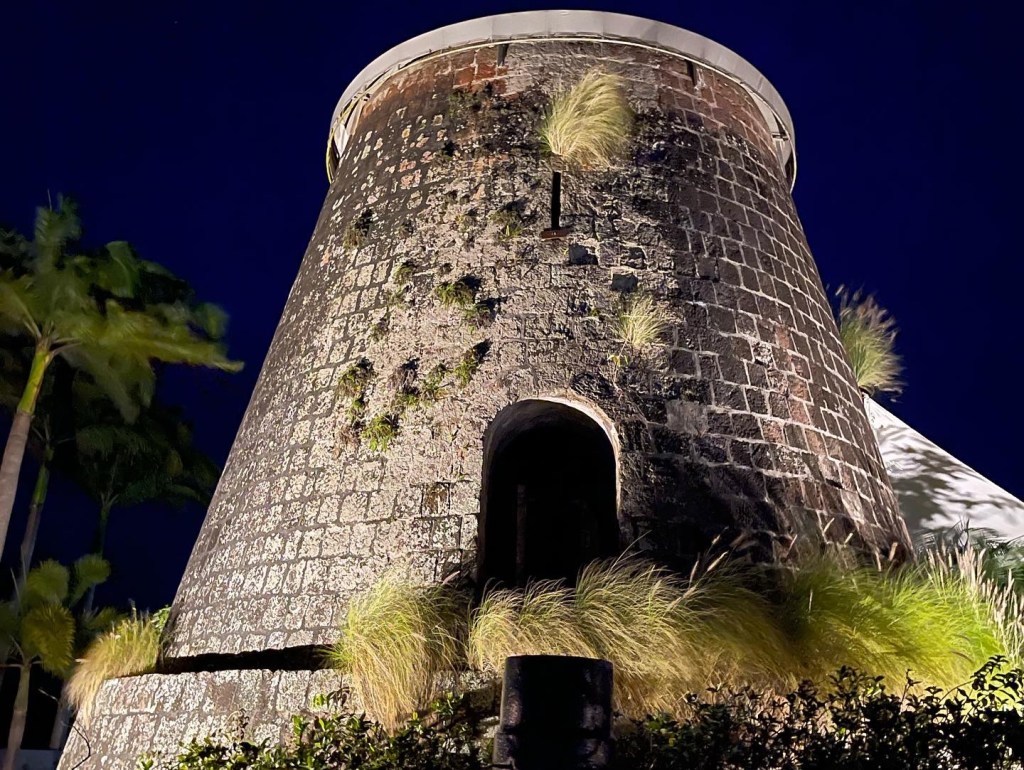
    There is a weeping fig tree greeting you as you enter the grounds that appears to be as old as the plantation. I’m told it was planted in 1966, apparently a very good year for vibrant growth. The tree has thrived, and is one of the most iconic things you’ll encounter here. But not the only thing. Just a few steps away are the ruins of the old sugar mill, prominently declaring the darker history of the plantation, even as it offers a beautiful backdrop for photographs and private meals within.

    Walking around the quiet, meticulously landscaped grounds, you quickly realize why so many famous people have flocked here, most famously Princess Diana after her divorce from Charles. This is a place to escape from the world and all its madness. When you’re here you separate yourself from timelines altogether, and immerse yourself in something beyond the immediacy of your own life. It’s a place to reset and revise your story.

    It should be mentioned that the food is extraordinary here, exceeding expectations for fine dining. It’s accompanied by excellent service from a friendly staff who know just how to make a moment special. You feel a sense of place here, and become a part of it with your visit. The Montpelier Plantation can be thought of as a time machine, or maybe it should be thought of as a timeless wonder.

  • Thoughts From An Early Morning Starbucks Line

    Standing in line at a grocery store or a restaurant, or waiting for the time to eat, we don’t need to waste our time. We don’t need to “wait” for one second. Instead, we can enjoy breathing in and out for our nourishment and healing. We can use that time to notice that we will soon be able to have food, and we can be happy and grateful during that time. Instead of waiting, we can generate joy.” — Thich Nhat Hanh

    We’re all working to process something in our lives—big and small things alike. This morning I was processing the benefits and drawbacks to skipping sleep for an early morning flight. It’s not my first rodeo when it comes to such things, and nothing that happens today will shake my belief that starting your day before the world wakes up offers a necessary head start.

    I contemplated this in the Starbucks line, chock full of groggy caffeine junkies looking for enlightenment, or maybe just a lifeline to the day. I didn’t need a lifeline, merely validation of a long-held habit of coffee equalling go. Standing in line, I recalled the gist of Thich Nhat Hanh’s quote, if not verbatim, and settled into a quiet celebration of life. The coffee surely stimulated the conversation between the ears later, but why wait? Life is now, caffeinated or not.

    Some minor travel-related inconveniences like a slow moving line are no reason to grumble. It wasn’t long ago when we missed the close proximity of a crowd. Traveling again is a reason for joy, and so too is reviewing an early start to the day while awaiting the miracle of coffee.

  • Living a Noble Life

    “Live a good life. If there are gods and they are just, then they will not care how devout you have been, but will welcome you based on the virtues you have lived by. If there are gods, but unjust, then you should not want to worship them. If there are no gods, then you will be gone, but will have lived a noble life that will live on in the memories of your loved ones.” ― Marcus Aurelius

    Despite a list of imperfections and shortcomings longer than it ought to be, most of us strive to live a noble life. Being a good person in this world is surely something to aspire to, but we might look at it as a foundation to build upon instead of our sole objective. Put another way, being good should be a verb: yes, we are each good people, so what do we do with that?

    This action-oriented application of living a noble life is an evolution born of awareness. We grow into proactive goodness at our own pace. Some people are there from the womb, some never quite release themselves from the reflection in the mirror, the rest of us fall somewhere in between. A noble life is reaching beyond ourselves in service of the greater good. Surely something to aspire to in our quest for a life of purpose and fulfillment.

  • The Joy of Throwing Axes

    When you think about the combined activities of drinking alcoholic beverages and throwing axes around in a room, one might fairly ask the question, “what’s the worst that could happen?” and come up with some cringe-worthy images. Yet humans have been throwing sharp objects while drinking for as long as there have been humans and sharp objects to throw. We’ve just moved the throwing of said objects into a controlled environment.

    The act of throwing an axe is surprisingly easy and intuitive. If you closed your eyes for a moment and imagined throwing an axe you’d likely have a proper go of it on your first attempt. And so it is in when you’ve lubed your brain with a beverage or two. Rest assured there’s always an adult hovering around to make sure the basics are covered. Basics like proper respect for a deadly object.

    Axe throwing is done in a cage. The host accepts your money, has you sign away any liability and sprays the cork wall with water to moisten it, so that the axes sink in more often than bounce off the target (I’m guessing it also extends the life of the cork). After a few minutes of basic instruction, you go about throwing axes.

    The axes themselves are light stainless steel in a couple of sizes, so you don’t have to be Conan to throw the axe. The target itself is projected onto the cork, giving you a clear idea of what you’re throwing at. As with darts, you can receive progressively more points the closer to the center you get, but as with Skee Ball there are a couple of enticing small targets where you can score higher if you hit them or much lower if you miss. The rules of the arcade and life apply: It’s all about risk and reward. If you’ve played either darts or Skee Ball you’ll know where to throw. And that’s a good thing, because after all, people are drinking.

    The act of throwing an axe and sticking it into the wall is profoundly satisfying and exhilerating. Our ancestors would be proud of us, sort of, for keeping the family trade alive. Or maybe they’d look around and wonder why they bothered to keep the gene pool going with all that fighting and impaling back in the day. Still, I bet they’d be a ringer in a game of axe throwing.

    This may seem a trivial pursuit, and perhaps a trivial blog post too. Then again, life is about plucking joyful moments out of thin air. With all the stress and darkness in the world, it’s fun to do something completely primordial and delightfully analog. Go throw an axe—I dare you not to smile from ear-to-ear.