Blog

  • Gridlock Perspective

    If you had any doubt that we’ve mentally come out the other side of the pandemic, drive around a few of the metropolitan areas. Los Angeles, San Francisco, New York, Miami, or any other major city or the connecting smaller cities that they’re connected to. The roadways are all back to gridlock traffic. How some react to that reality is distinctly different. Welcome back–who are we now?

    When traffic is moving, some people dial up the crazy. I see more mad dash drivers than ever trying to squeeze into every pocket, using the breakdown lane for passing, multi-tasking with texting… whatever. It can all seem mad, because it is maddening. So how do we counter the madness outside the windshield?

    When I get tired of the same old characters around me, I’ll pull into a rest area or take an exit to stop for five minutes, whether I need to or not. It’s like moving out of a neighborhood with too much drama—instant refresh! Get out of the car, walk around a bit, refuel the body and mind. And when you get back on the road, the new “neighborhood” seems interesting enough to carry you through.

    I know a lot of people crank up the music on commutes, and sometimes I’ll do that too. But frequently I’ll use the time to reconnect with people using [gasp!] phone calls. Conversations are like time machines, transporting you for miles seemingly in an instant. Likewise, podcast interviews do the same thing for me. The time isn’t wasted, for the mind is moving faster than the car you’re in.

    Nobody welcomes traffic, but when we can’t time our trip better we ought to accept it as a part of living in this particular time. A bit of perspective after what we’ve all been through, and a desire to be in a better place despite it all. After all, aren’t we all trying to get somewhere a bit better than where we just were?

  • A Pre-Dawn Waterfall Chase

    Harriman State Park in New York is the second largest state park in the state, and honestly it feels pretty big when you’re in it. Still, it doesn’t feel like there should be this kind of elbow room so close to the gridlock of Metro NY. And yet here it is.

    This story began two days ago, when I participated in a group hike with several co-workers. As these things go, our available time for hiking got compressed and we had a couple of people who were a bit slower than the average hiker speed. Combined this created a situation where we had a little more than an hour to hike one of Harriman’s most popular trails, the Reeves Brook Trail Loop. Instead of reaching a waterfall and pond we’d been hoping for, we had to cut the trip short and head back. Still, that waterfall stayed with me.

    There was only one thing to do: get up early and take a solo hike to find it. If there’s a problem with April hikes, it’s that it doesn’t really get light out until close to 6 AM. I didn’t have that kind of time and headed out at 5:30 in search of the waterfall. I had a headlamp with a weak battery and two iPhones as backup for light, but found I didn’t really need any of that once my eyes adjusted. It helped that I’d done a good part of the trail two days earlier and knew the landmarks that might otherwise have been a mystery in the dark.

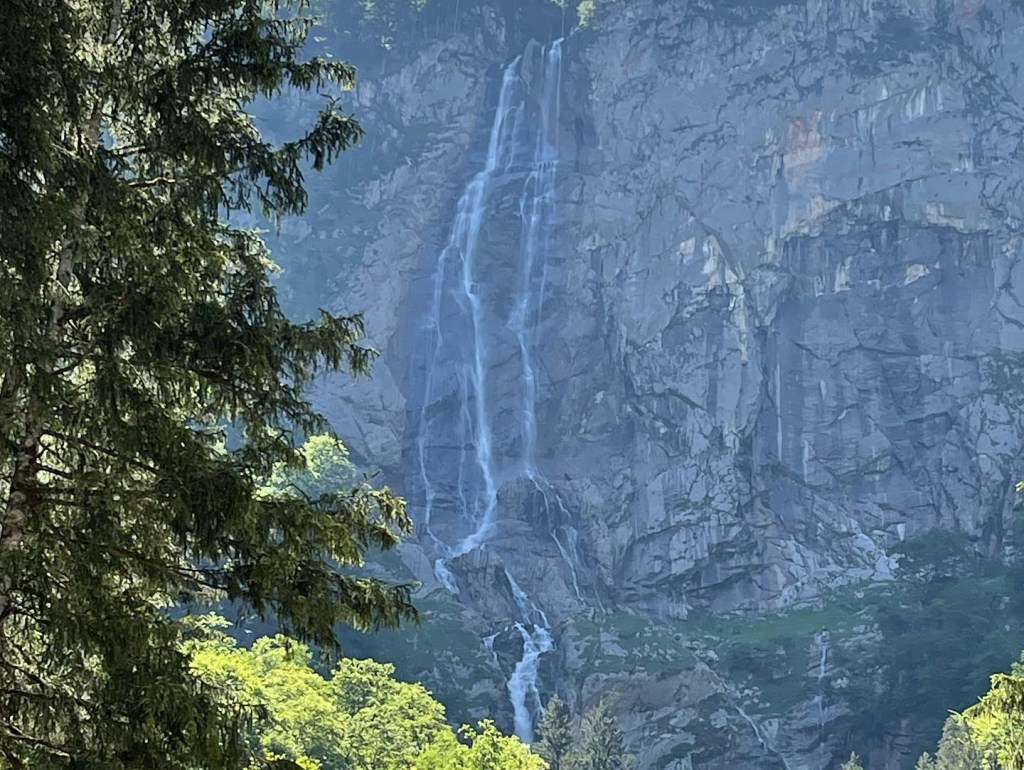
    I eventually found that waterfall, just ten minutes away from where we’d turned around on the previous hike. So close and yet so far. But the waterfall looked smaller than I’d anticipated, so to be sure I hiked another ten minutes up to a bridge where the trail split. Looking at my watch, I recognized that there was no way I’d have the time to hike the entire loop around the Reeves Brook Trail Loop…. damn. The pond and rock scrambles would have to wait for another day. I headed back down with a solid hike completed and a hot shower waiting for me. And like the waterfall before, the pond now calls my name. Knowing there’s so much more to see, I’ll carve out half a day for going much deeper into the network of trails next time. Definitely something to look forward to.

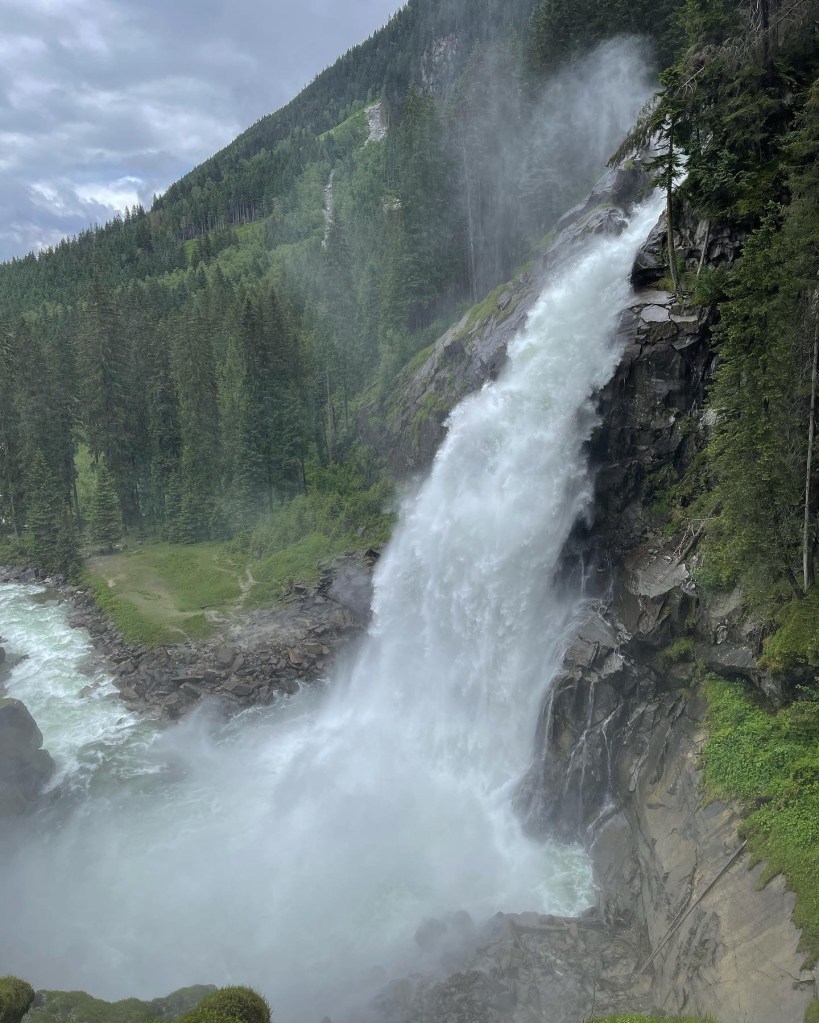
    Stony Brook lives up to it’s name
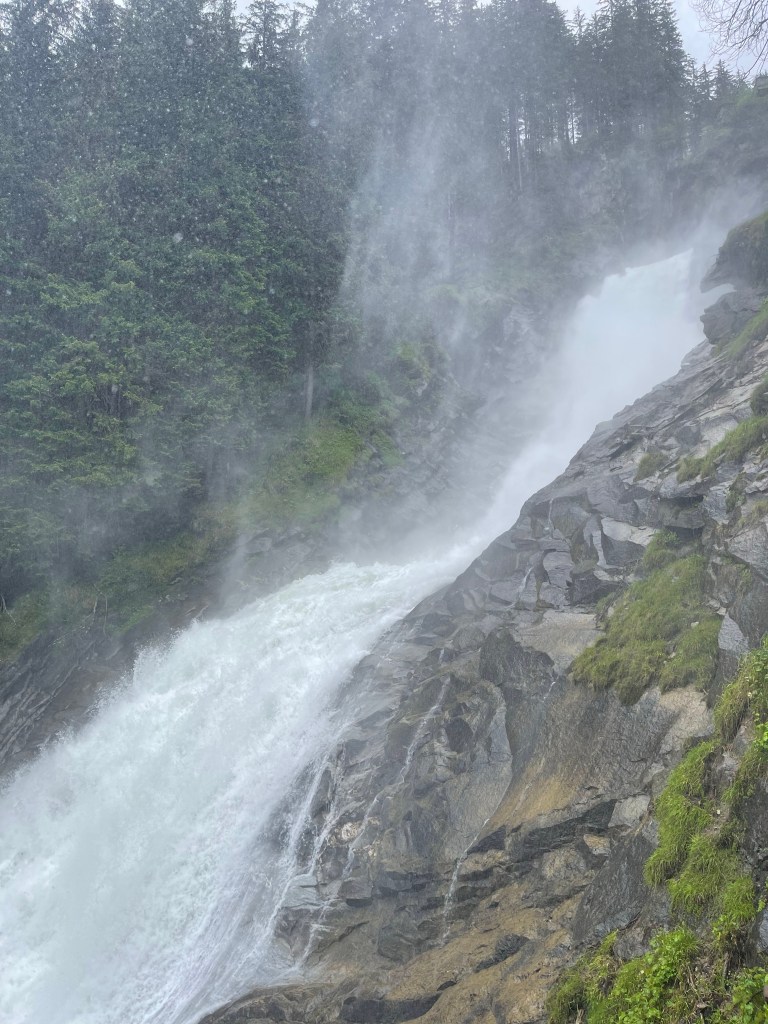
    An elusive waterfall, wrapped in boulders and capped with a bridge.
    Crossing this bridge convinced me that I’d best turn back and try again another day for the pond.
  • Create Evidence

    “Belief in yourself is overrated. Generate evidence.” — Ryan Holiday

    What does your personal scorecard look like as we crossed off the first 100 days of 2022 earlier this week? What were your highlights? What hasn’t met your expectations when we began the year?

    Doesn’t that inform us of what needs to change immediately?

  • A Different Perspective on Liberty

    When you see the Statue of Liberty from the New Jersey side, it feels a bit surreal. We’re all used to that image in our head of the face of Lady Liberty, but how often do we ever think of the back? Yet that’s what New Jersey sees. I recall a joke about Lady Liberty forever turning her back on New Jersey, but let’s flip that script around for what’s really been happening since 1886: New Jersey’s always had her back.

    Liberty Park offers a striking view of Manhattan and Frédéric Auguste Bartholdi’s bold vision of American liberty. He called his work “Liberty Enlightening the World”. Liberty represents the hopes and dreams of millions, standing exposed to the elements for 13+ decades. 1886 was within the lifetimes of Civil War veterans, think about what that statue meant to them. What it still means, when we look at the world with new perspective.

    Liberty connects generations, and she stoically stands, not just American’s, but for the world. The work was literally a gift from the Old World to the New. We ought to remember the message in the gift. Forget the people trying to co-opt her message for political gain, Liberty represents all of us. When you look at America’s Liberty from New Jersey, you aren’t just looking at it, you’re a part of it. And from that perspective, shouldn’t we all have her back?

  • A Quick Hike Up the Nose

    Let’s get the elephant in the room addressed right off the bat: Anthony’s Nose has an odd name. Here’s one story I came across in Kiddle that describes how it got it:

    “Pierre Van Cortlandt, who owned this mountain, said it was named for a pre-Revolutionary War sea captain, Anthony Hogan. This captain was reputed to have a Cyrano de Bergerac type nose. One of his mates, looking at this mount, as they sailed by it, compared it to that of the captain’s nose. He said that they looked similar in size. This good-natured joke soon spread, and the name Anthony’s Nose stuck to this peak. Washington Irving’s History of New York, a satire, attributes the name to one Antony Van Corlear, who was the trumpeter on Henry Hudson’s ship.”

    Whatever the source, it requires that each hiker now forever able to say they went up Anthony’s Nose. How you feel about that is entirely up to you. For me, the motivation was to see a bridge I hadn’t seen in almost 30 years, get a quick hike in to break up a long drive and get a feel for a stretch of the Hudson River from a hill top.

    There are a few routes up Anthony’s Nose (sorry). The most direct route is a steep granite “staircase” that brings you to your destination relatively quickly. This requires street parking on a busy stretch of road. Alternatively, there are a couple of longer routes to the lookout spot, the one I favored followed the white blazes of the Appalachian Trail. The AT crosses the Bear Mountain Bridge over the Hudson River and meanders up through a final stretch of New York before reaching Connecticut. You might expect a stretch of the AT to be lovely hiking. You’d be correct for this stretch.

    There seems to be a lot of confusion about where the trailhead is for Anthony’s Nose. If you’re going to hike straight up the staircase, you begin at a small deck on the side of the road not far from the bridge. If you’re more interested in a 90 minute round trip hike, take the AT route. The trailhead begins on South Mountain Pass Road, which is a rutted stone dust road for a long stretch. If you’ve got a small sedan you might consider driving in from the Blue Mountain Beacon Highway side, which offers a bit more pavement to work with. Driving a truck, I enjoyed the off-road feel of reaching the trailhead after a few hours of highway driving to get there.

    The key for the trail is to follow the white blazes, which leave an old roadbed a few hundred yards up and begin descending towards a small stream before climbing back along the ridge line. The trail head would benefit from a bit of signage and a map, as one hiker after another asked each other if they were in the right spot. Perhaps a Boy Scout Troop could take it on as a project.

    The hike took 90 minutes round trip. Parts of the trail felt like you were in the middle of the White Mountains, but with glimpses of the Hudson River along the way. There was a bit of traffic buzz in the background, but overall it was a perfect hike to break up a drive from New Hampshire to New Jersey for me, or a short destination hike away from New York City. I’d recommend bringing lunch and soaking up the view.

    Bear Mountain Bridge with it’s namesake rising up behind it
  • Developing Identity

    At what point on the line of consistent routine does a habit accelerate from a regular part of your life to a major part of your identity? Put another way, if we are what we repeatedly do, at what moment does what we do become us? It may be that moment when you can’t imagine doing anything else but this habit now and forever. But I think it’s a notch beyond that: when others see you as that character you’ve developed into and that habit is reinforced and self-perpetuates.

    Consider a friend who has only been consistently hiking for maybe ten years. Her identity developed around hiking and she’s gained hundreds of followers on her InstaGram account because people associate an activity they want to do more of with her. Or consider my bride, who has run consistently since she was a teenager. Half the town knows her as that lady that’s always out running. Heck, I sometimes think of her as that lady too. Consistent routine develops identity. Identity becomes the essence of who we are.

    But both of these women began with a first awkward step out into the unknown. Both learned what worked for them and what definitely was not going to work. The essence of who we are is derived from what is essential for us. The rest is marketing. You either inform the world of who you’ve become or wait for them to see it for themselves.

    Like a river carving its deepest channel on its truest route, what we say yes and no to as we favor our chosen path becomes the deepest part of our channel. In a river oxbows gather silt and are eventually cut off altogether in favor of the channel. Likewise, some things that were so very much a part of our identity peter out and die from lack of attention. I once fancied myself a sailor, yet I don’t currently have a boat. A friend also fancied himself a sailor and purposefully accelerated and reinforced that identity by trading up to bigger and bigger boats and forgoing career advancement for a log book full of hopes and dreams realized. Who’s the sailor?

    I’m about to click publish on this blog, as I’ve done every day for a few years running now. Does that make me a writer? The answer is what you want it to be. Decide what to be and go be it. And then inform the world (and yourself) with your consistency.

  • One Drop

    Does a drop stay still in the ocean?
    Move with the entirety
    and with the tiniest particular.
    Be the moisture in an oyster
    that helps to form one pearl.
    — Rumi

    We are all drops in the infinite ocean, part of the whole yet trying to make a splash. Why do we focus so much on the splash and so little on being part of the whole? How do we reconcile our smallness in the vast infinity?

    One drop at a time. Life is a series of connections that unite and pull us apart across time. This collection of jumbled words, dropped into infinity, won’t change the ocean. But in an instant of molecular attraction, it drew Rumi, you and me together.

    Isn’t that something?

  • Avoiding the Bankruptcy of Life

    “To be truly challenging, a voyage, like a life, must rest on a firm foundation of financial unrest. Otherwise, you are doomed to a routine traverse, the kind known to yachtsmen who play with their boats at sea… “cruising” it is called. Voyaging belongs to seamen, and to the wanderers of the world who cannot, or will not, fit in. If you are contemplating a voyage and you have the means, abandon the venture until your fortunes change. Only then will you know what the sea is all about.
    “I’ve always wanted to sail to the south seas, but I can’t afford it.” What these men can’t afford is not to go. They are enmeshed in the cancerous discipline of “security.” And in the worship of security we fling our lives beneath the wheels of routine – and before we know it our lives are gone.
    What does a man need – really need? A few pounds of food each day, heat and shelter, six feet to lie down in – and some form of working activity that will yield a sense of accomplishment. That’s all – in the material sense, and we know it. But we are brainwashed by our economic system until we end up in a tomb beneath a pyramid of time payments, mortgages, preposterous gadgetry, playthings that divert our attention for the sheer idiocy of the charade.
    The years thunder by, The dreams of youth grow dim where they lie caked in dust on the shelves of patience. Before we know it, the tomb is sealed.
    Where, then, lies the answer? In choice. Which shall it be: bankruptcy of purse or bankruptcy of life? ”
    ― Sterling Hayden, Wanderer

    Hayden chose the opposite of a comfortable routine, breaking from a lucrative Hollywood career and a failed marriage, he took his four kids and sailed to the South Pacific. Some might demonize this act of defiance as irresponsible. For why would someone give up “everything” and let it all ride on one spin of the roulette wheel? The question, really, is about what you’re risking. Status and reputation? Or a steady paycheck to cover the mortgage?

    I know this debate. I have it often with others. Life is full of compromise and the occasional break from the routine. Isn’t it? But should it be all or nothing? Is there a place for measured discipline to live side-by-side with an adventurous spirit? Is there a place for the routine traverse sprinkled with small delights, or must we choose?

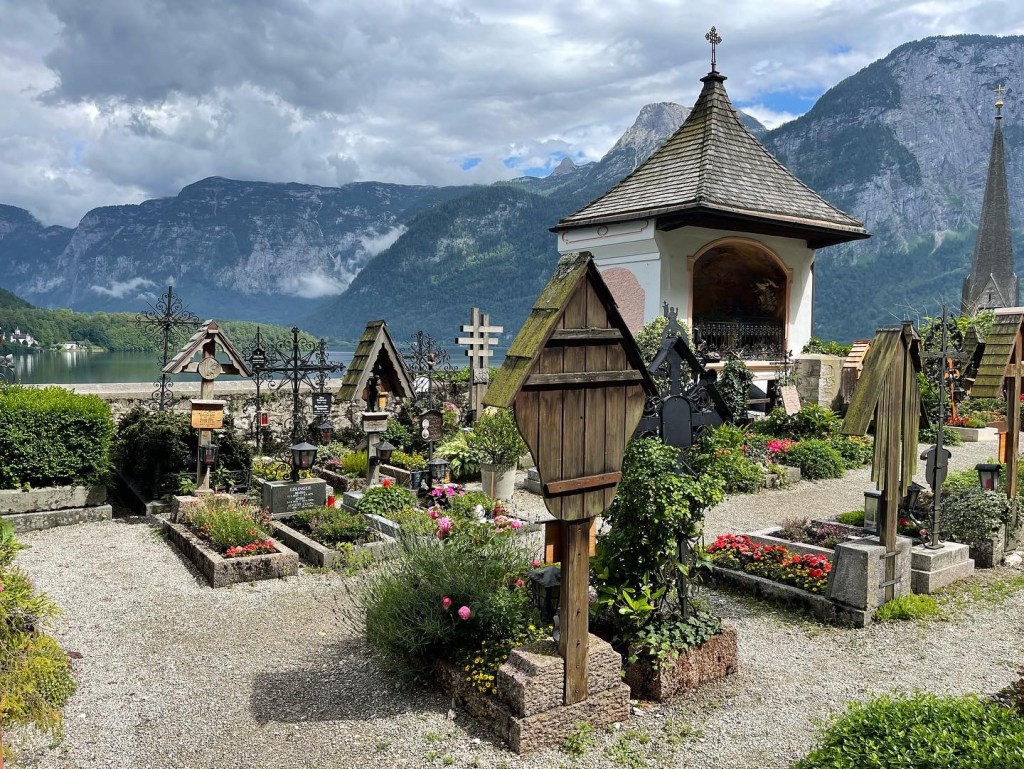
    I wander about in graveyards now and then. This isn’t a morbid fascination with death, but a visit with those who once lived. Two of my favorite graveyards are both named Sleepy Hollow. The one in Concord, Massachusetts has some of the great transcendentalist writers in history interred there—Thoreau and Emerson. The one in Sleepy Holly, New York has Washington Irving and a bunch of formerly rich people interred there. Most of the rich people build huge monuments for themselves, most of the creative types have modest headstones. It’s like a shout from the grave: “See? I once mattered!” The thing is, they’re all part of the infinity now. How they lived is gone, but for their legacy. And so it will be for you and me.

    Somewhere between the routine traverse of life and the bold adventure of throwing it all away in favor of a life of challenges lies a happy medium. To be present but to be bold. To make choices that stretch your limits of comfort and bend your routine. To feel the urgency of now, and live while there’s still time, but to do it in a way that keeps you present for those who need you the most. And that’s the trick—isn’t it?

  • Culling the Information Feed

    Information and entertainment sources like Twitter, Instagram, Facebook have their place. I’ve found each highly enjoyable at points in my life, and each infuriatingly addictive for all the wrong reasons at other times. I look back on time wasted, time I could have spent immersed in something better, and feel disappointed in myself. And like many people I grow to hate the very thing that had me so fixated for chunks of my life. At these times I cull the information feed.

    I hear the voices of those who tell me they simply scroll past posts that are annoying or designed to get a reaction. That’s sweet. I mute, unfollow, unfriend. This is early-stage app culling, but it does wonders for your sanity in the moment.

    If you use Twitter for a news feed and start following an endless stream of personalities, you soon find yourself overwhelmed with information from them, or worse, information from people they’re informed by. This is designed to draw you in, prompt you to follow that person too, and pretty soon you’re full-on addicted to an app. Next stage culling involves clicking on every one of those unsolicited posts and teaching the algorithm that you’re not interested in this Tweet, or to mute or block the source so you’ll never see it again (you won’t, but you’ll still be subjected to the reaction to the source in your feed).

    The next stage is to delete the app itself. Say goodbye to it for awhile, post about leaving the party (It’s not you, it’s me) or simply disappear from other people’s feed for a time. I used to believe the world cared whether or not my updates and clever posts would continue in their lives. The world is completely shell-shocked by information and doesn’t particularly care whether we posted that day or not. If anything, our absence gives them a microsecond of breathing room during their scroll. Addition by subtraction, if you will.

    The thing is, it’s okay to cull your information feed. Delete the app, it’ll still be there if you want to get reacquainted someday. But what you find is that you’ve both changed in the time you’ve been absent from each other’s lives. And in the process of reconciling that, you’ll find that you just not into each other anymore.

  • The Wind Always Speaks

    “If there seems to be no communication between you and the people around you, try to draw close to those things that will not ever leave you. The nights are still there and the winds that roam through the trees and over many lands.”Rainer Maria Rilke, Letters to a Young Poet

    We’re often alone in this world, but alone doesn’t require loneliness. These days gifted to us are full of routine and ritual, from how we wake up in the morning to where we sit and what we eat. Who we interact with is often our choice, but alas, not always. How we react to everything and everyone we interact with—or don’t interact with—is always our choice.

    Stepping outside on a spring day in New Hampshire, the world is alive in chatter. Birds and squirrels debate nest design or which yard has the best feeders today. A light wind might stir the tree tops like a hand brushing over tall grass, while a heavier wind might offer a gusty, heartfelt shake. No, there is no loneliness outside—the world is always present.

    The garden begins to awaken. Rabbits have nibbled the tops off of some early bulbs, inspiring a silent curse and a fence resurrected to stake a claim for beauty. Days are longer now and there’s more to see, but for the stars as they concede more and more to the sun. Every day brings a new voice to the yard as the migration continues northward. Flashes of blue are a regular part of the days now as the Bluebirds, present all winter at the feeder, decided to make the birdhouse their own once again.

    Every day is a poem. Every day offers an embrace when you step out to greet it. Even on the quietest of days, the wind always speaks.