The other night I lay in bed, mind racing. My streak of burpees every day was in jeopardy. A busy day, missed opportunities along the way, and to be more honest, procrastination had delayed me until now, 11 PM, a couple of adult beverages into the evening and ready for sleep. Except there was no sleeping with the thought of breaking the streak here. Look, I know it’ll happen eventually, but not this way. Not because of a lazy mind. So I got up, did a dozen burpees to meet the minimum and got back in bed, heart still racing, and slept like a baby. Another link in the chain.
Blog
-
Falmouth Road Race
The race started at one bar and ran to another bar seven miles away. It’s started in 1972 with less than 100 runners and has grown massively popular, with a lottery to get in. The bars have changed, but they’re still there. I used to visit the Captain Kidd before it changed, but never got to the Brothers Four before it became British Beer Works; a place I’ve been known to frequent when down here.
For the fifth year in a row I drove runners to the Lawrence School in Falmouth to catch the bus to Woods Hole for the start. I’ve experimented with staying in Falmouth and going to a local diner, but three hours is a lot of time to kill and this time I end up coming back instead. Today I came back to Pocasset for breakfast with my son before returning to watch the race. Each year I stand near the Falmouth Heights Motor Lodge, which offers both an excellent view of the runners and a quick walk to the finish line where you can see your favorites again as they cross the finish line.

This year was hazy, hot and humid. The crowd supporting the runners ebbed and flowed in enthusiasm (try clapping for an hour straight), spiking for larger clusters of runners, wheelchair competitors, children, and cheerleader runners (the runners who raise their arms and prompt the crowd, igniting roars). I tracked my favorite runners on the app, and helped others to my left and right find their favorites on the course. What did we do before apps? We waited and wondered, that’s what we did.

Runners train all year for a race like Falmouth. Spectators don’t, but maybe we should. Spectaculars shuttle those runners to the buses, fight the crowds for a glimpse of their favorites, then try to find them in the sea of humanity at the finish to shuttle them home. There’s no glamour in being a spectator, but it has its rewards. For me it was the swim after we returned. Hours of madness to earn a ten minute swim in Buzzards Bay. But it works for me.
So another Falmouth is in the books. It’s become quite a family tradition, as it is for so many others. I’m not a runner, but if I were going to be this would be the race. Seven scenic miles, throngs of cheering spectators, elite runners mixed with the couple next door. Yeah, this is the race I’d run, if I ran. Maybe next year.
-
Dog Days
This is the big weekend on the Cape, with the Falmouth Road Race pulling in thousands of runners. It’s big in Pocasset too this weekend, bursting at the seams. The house was full of dogs this morning. And people. But the dogs steal the show as usual.
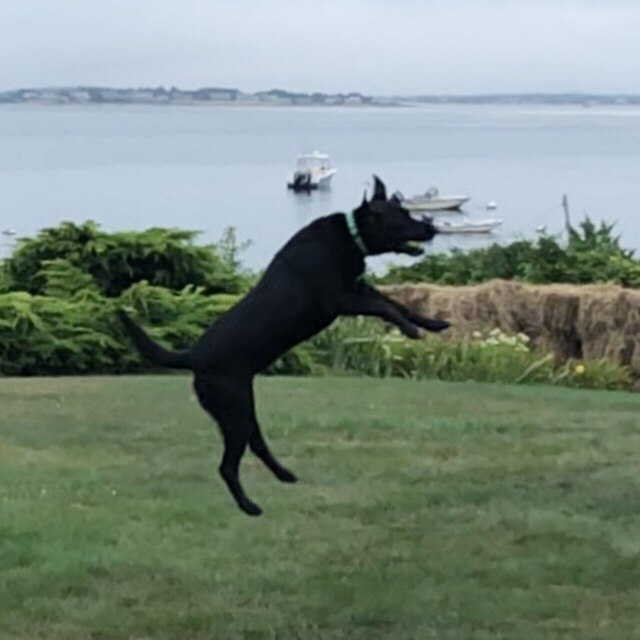
Beach work and gardening to earn a swim. Tread water for 20 minutes, bobbing like a buoy on the rollers. Summer days of salt, sun and sand. Sailboats quietly cruise by. Power boats buzz by too, with too-loud conversations over the engine noise. Yes, sound carries over water.
A moment of quiet now, waves lapping on the beach, deck umbrella creaks as it twists to and fro, runners gone to check in and pick up numbers. Half the dog population and their people have gone home. A few of us remain, holding down the fort. Witnesses to the parade of boats floating back and forth. Sun warming all. These are the dog days of summer. They never last, and changes are coming too soon. Today is all we have, and with that in mind, it’s a lovely place to spend it.
-
Pizza Box Magic
Pizza is a wonder food for the delight it brings in such a simple formula. A little dough, a little sauce. Top it with a few favorites and you’re on your way to blissful eating. But the most extraordinary, magical thing about pizza is the preservative effect it has on the whole. Think about it, if you left a dish full of cooked meat on the countertop all night you wouldn’t eat it cold the next morning. More often than not you’d throw it away! But not so that same meat on a pizza. You’d eat it without blinking an eye, sometimes cold, and sometimes a second day later. Try that with a piece of bread left on the counter.
Maybe it’s pizza’s version of the Holy Trinity. Instead of onions, peppers and celery it’s dough, sauce and cheese preserves a pizza indefinitely. But then again maybe it’s something else, hiding right under our noses. I think maybe the box holds the secret. There’s magic in that box; fending of bacteria, staleness and hungry cats alike. A cardboard force field keeping evil at bay. Want to live forever? Move into a pizza box. But please, hold the anchovies.
-
A Successful Repetition
I was chewing on a page in an old book last weekend that’s stayed with me. The words don’t flow, but the concept is profound. Consider:
“What is a repetition? A repetition is the re-enactment of past experience toward the end of isolating the time segment which has lapsed in order that it, the lapsed time, can be savored of itself and without the usual adulteration of events that clog time like peanuts in brittle…. Nothing of consequence would have happened because [something] was exactly as it was before. There remained only time itself, like a yard of smooth peanut brittle.” – Walker Percy, The Moviegoer
This concept of what Percy calls a repetition interests me. In a generally accept it as fact because I’ve experienced it myself sort of way. Something of a time warp, it places you and an object of focus together at two moments in time, sometimes decades between. It’s visiting the neighborhood you grew up in twenty years later and seeing things are largely the same, but knowing there’s been millions of changes in the world in between previous and present time. The reaction of walking into a room and saying “wow, this place hasn’t changed at all.” Cleaning out the attic and coming across some object of affection from thirty years ago that immediately reconnects you to that moment as if the previous you reached through the object and pulled you in.
This isn’t a same time next year phenomenon, that’s too short a time span. No, better to have a couple of decades elapse and then boom! It hits you. Serendipity plays a part – there are many places I envision as they were, and going back to them now only highlights the changes. No, this is the realization that smacks you in the forehead as you look at something and fly back in time to that previous you that experienced it then. A bridge between times if you will.
I’m working through this theory as a couple of catbirds mock me with their cries. Nothing is the same of course!, they cry. We change both physically and mentally, and even an object of focus has changed at some molecular level. More brittle perhaps. But, I counter, on the whole the same. The same in relation to the rate of transformation in the world.
The catbirds grow louder. Bear with me I want to tell them (I’ve learned they pretend not to care what I say). Think about a moment when you’ve seen an old friend you haven’t seen in decades, at a funeral or wedding. You’ve both changed in countless ways, but in that moment of reconnection nothing has changed. It’s as if you were resuming the conversation you ended on way back when. And that moment of reconnection becomes a successful repetition. Time evaporates, things are as they were, and will be forever… or at least until the next successful repetition.
-
Groundhog Day
The signs were there. Half-eaten tomatoes still hanging from the vines. I knew you were back. Still, I was optimistic there might be a few left for me. Alas, after being away for a week almost all of my tomatoes were wiped out. All that remains are the cherry tomatoes, which apparently you aren’t interested in, and a few small beefsteak tomatoes too high for you to reach. And this morning you didn’t even try to hide your face, but looked right at me as if to say “What are you gonna do about it?” Yeah, I know that look buddy. At least your chipmunk friend looked a little afraid as he skittered off with a cherry tomato, dropped it in horror when he saw me, then timidly ran back and picked it up before running away. Not you. You just stand there, as if waiting for me to plant more tomatoes for you.
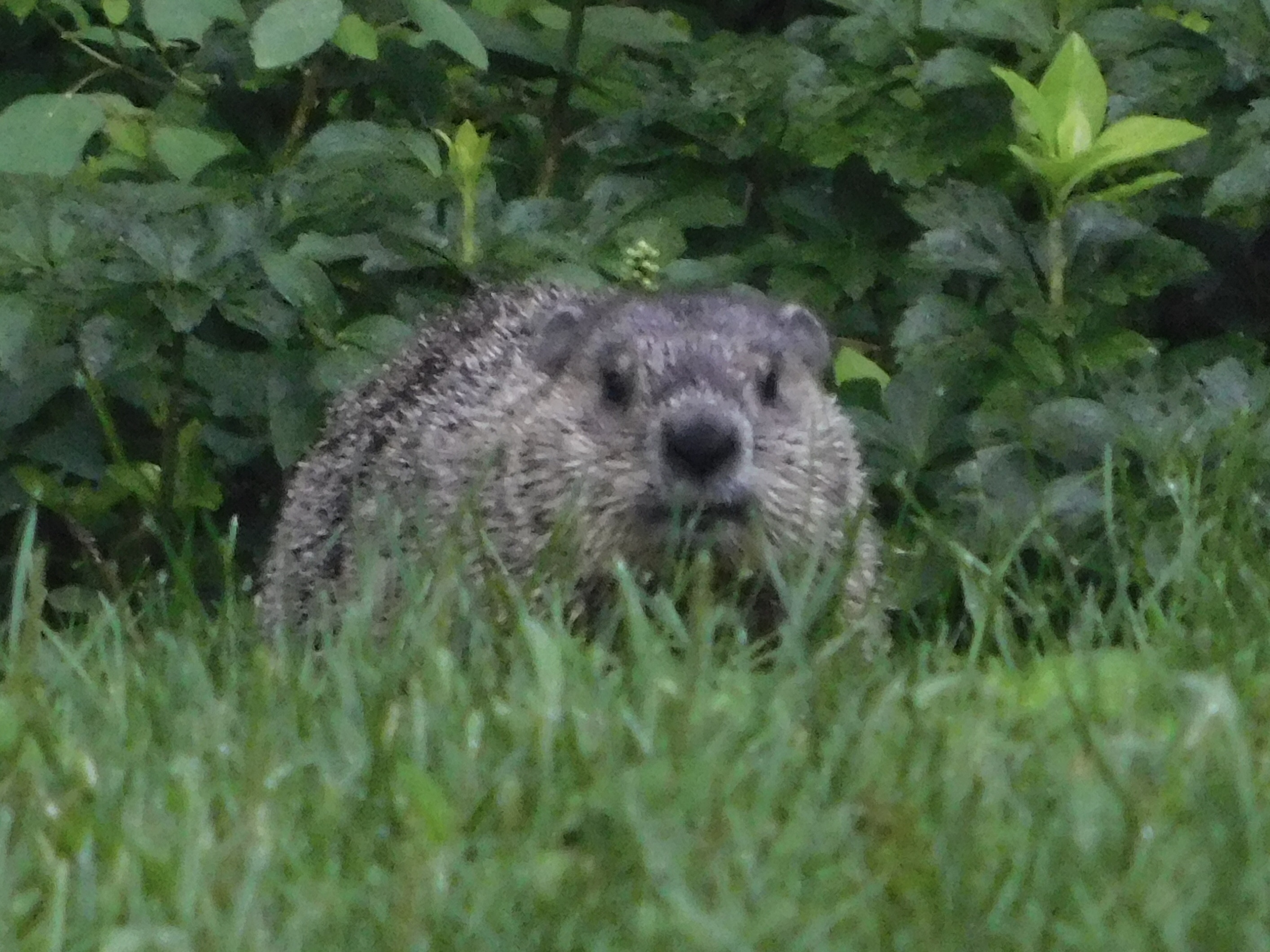
This is my version of Groundhog Day. Plant tomatoes, leave them unfenced for aesthetic reasons. Lose most of the crop to mocking mammals. Repeat. It’s what I get for sticking vegetables in a flower garden and leaving them to fate. I swear I’ll learn from this next spring. Next year will be different.
-
Felling the Tree
“Every action you take is a vote for the type of person you wish to be.” – James Clear
This morning the snooze alarm went off well before I was prepared to get up. I don’t use the snooze button mind you; don’t believe in it. You’re either sleeping or you’re getting up. But my wife uses the snooze button often as part of her wake-up routine. Thankfully most days I’m up well before her alarm would go off. Today was an exception. Feeling a bit worn out I was going to sleep in, until the second snooze convinced me it wasn’t possible.
This morning I operated in slow motion. Foggy and some aches and pains. I slowly dressed to work out, walked downstairs and drank a pint of water. The internal dialogue trending towards bagging the morning workout and doing it later in the day. I’ve heard this song before and point my feet towards the basement door, down thirteen steps and onto the erg for a row. I row 500 meters to warm up and assess my overall condition. My assessment isn’t good, but I stand after 500 meters and warm up the shoulders. More aches… but I ignore them and drop down for the burpees, slower than usual but complete, row another piece and call it a workout. I’ve done the bare minimum, cast my vote and I’m back upstairs. I hear the snooze going off upstairs and look at the clock. 60 minutes of snooze buttoning. Yikes.
On to reading stoicism, a bit of an article on Ben Franklin in London, and a bit of writing this before my wife is downstairs and off for her commute. Habits carried the morning for me even as the mind rebelled. The James Clear quote above stays with me more than anything else in his excellent book. Simple, memorable wisdom in a bite-sized chunk. I wish I’d written that. Instead I write other words, casting votes for the type of person I wish to be. I’m closing in on 100,000 words written in this blog, and a few thousand burpees. I need to move beyond the bare minimum workout, which means changing other habits later in the day. Win the morning, lose the evening and it’s a wash. Life is too short for a wash. With only 142 days left in 2019 there’s so much to do still. Why settle for the bare minimum?
I joined a group challenge with co-workers. We all travel, and we all struggle with the balance of exercise versus caloric intake that the job seems to demand. We’ve all agreed to lose ten pounds by the time we reach a trade show in Chicago next month or pay $20 bucks and hear about it from those who were successful. Nothing focuses the mind like peer pressure, so I’m all in on this challenge. But I noticed I gave myself a pass last week (after all I had five weeks to complete the challenge). I recognized this trend – it reminded me of pulling all nighters to complete papers in college. Wait until the last minute, then put yourself through hell to reach a goal. You won’t fell the tree with one swing of the axe… I like the more intelligent approach of consistent, daily action and the compound effect, and so an incremental increase in daily workload to reach the goal is in order. Keeping it going for the rest of the 142 days offers a head start on 2020, a nice round number with some big moments scheduled.
I’ve always been intrigued with the concept of accelerating through the curve. In racing that means slowing down in the first half of the apex and accelerating in the second half. Using momentum to your advantage. In life momentum starts with casting consistent, daily votes. That applies in your career, with exercise and weight loss, and writing. The lack of momentum also applies in each of these areas, so why build anchors when you can build kites? Or to return to that zen philosophy, you need to chop for a long time to fell the tree, you can’t do it with one swing.
-
An Infinite Sea
When I was 17 I was sure I’d found my vocation. I’d become a draftsman, and the drafting table was a place where time flew by in a blur. But even then the ripples of change were in the air, and CAD (Computer-Aided Design) was taking over. Pencils couldn’t keep up with programming, and I opted for college to find a wider channel.
Each man has his own vocation. The talent is the call. There is one direction in which all space is open to him. He has faculties silently inviting him thither to endless exertion. He is like a ship in a river: he runs against obstructions on every side but one, on that side all obstruction is taken away and he sweeps serenely over a deepening channel into an infinite sea. This talent and this call depend on his organization, or the mode in which the general soul incarcerates itself to him. He inclines to do something which is easy to him and good when it is done, but which no other man can do.” – Ralph Waldo Emerson
Emerson witnessed the American Industrial Revolution happening all around him in Waltham, Lowell, Lawrence, Fitchburg and other mill towns. The pace of change was extraordinary for the time, and still inspires awe. Cities bursting upwards from ancient land, transformed forever from ancient forests to quiet farmland to bustling brick and steel blocks as far as the eye could see. Timeless rivers dammed and diverted into canals that fed in turn the turbines and the looms and the mill workers and most of all the mill owners and investors. Railways and highways built and expanded to move goods efficiently from place-to-place. Neighborhoods creeping ever outwards to house the workers. The transformation is ongoing in an ebb and flow of maddening hunger for more and more.
Mixed into this crush of transformation was the pressure to keep up, leading to consumer debt and then student debt. Shackled to interest payments, how does a young person navigate the obstructions on all sides and find the channel that brings them to the endless sea? The system is set up to feed the beast, not the soul of the worker. The futility of this leads to anxiety, blame and rage. Look around in America today and you see it everywhere. The dream lives on, but obstacles clog the channel. That channel is there, if only we break free of the obstacles. Too many never do.
“Just as a well-filled day brings blessed sleep, so a well-employed life brings a blessed death.” – Leonardo da Vinci
I’m further down the river, but haven’t reached that infinite sea. The writing feels like a better channel, though it’s currently a hobby not a vocation. I’ve sprinkled long form writing into many career stops down the river, but one man’s channel is another’s obstacle. In business long form writing gets swept aside for quick sound bites of absolutely necessary information and then on to the next thing.
Better to find a better audience, and technology allows for that to a degree, even as it eliminates other opportunities. The proverbial river has changed since Emerson’s America, narrower channel in some places, wider in spots, but dammed up in others. Opportunities to find your way to that infinite sea have never been more available, just stop bouncing from shore to shore trying to find the channel and the journey will be a lot easier. There’s no serenity out of the channel (where too many find themselves), and the sea awaits.
-
State Change
Everything has changed. Well almost everything. New sounds; I’ve never heard that dog bark before. The rumble and back-up beeping of construction equipment is new too. Seems to be road work happening at the top of the hill. A young squirrel is working the oak tree in the neighbors’ yard and there’s a constant drip of acorns plummeting through the leaves and thumping onto the ground. Seems early for the dropping acorns but the squirrel seems to know more than I do about the matter.
Some birds remain, like the brown thrasher I spent all summer trying to figure out. But the bluebirds are gone, and with them the feeling of early summer. Some new birds sing but I can’t place them. Migrating from someplace to another destination, with a quick stop in my neighborhood. I don’t know birds like I know some other things. But the more I know about anything the less I seem to know about that very thing. Such is the way of the world. I’ve learned to respect the journey of self-education, and hate myself for falling into the trap of thinking I know everything about anything. Worse still is acting so. Better to be open to the world around you; a sponge not a bullhorn. There are far too many bullhorns already.
Autumn is in the air. I felt it on Buzzards Bay as the winds shifted. This is first day of school bus stop air, and we aren’t yet halfway through August. And here in New Hampshire with the cool, humid air and white noise background buzz of crickets singing their late summer song. Getting outside away from media opens the senses and the mind alike. But other changes are in the air. A quarter of the family flying to London soon state change kind of air. Another quarter entering senior year in college kind of air. And what are we doing in this big house with all this stuff kind of air.
Gone for a week and everything is different. It would have been different if I’d been here too, but the daily gradual change isn’t noticed the way it is when you step away for a bit. Everything changes constantly. And so do I. A little for the better in some ways, a little for the worse in others, but generally more growth than decline. We all know what the ultimate end game is, but that doesn’t mean you have to live like you’re dead already. I know too many people who live in virtual bubble wrap, watching the world pass them by. I want to shake them loose, and whatever cobwebs I’ve grown myself, and shout “Embrace the changes; there’s magic in the air if you’ll only feel it!”
I have a drive to Connecticut to get to. That drive brings me from New Hampshire through Massachusetts to Connecticut, then the reverse this evening for the drive back. Four hour round trip drive time, and more like seven hours with meetings thrown in the mix. I could probably stay overnight in Connecticut, but there are compelling reasons to get back home this week, and so I’ll do the round trip instead. My state change is both literal and figurative today. But I do enjoy the journey.
-
On Writing and Ritual
This morning the blues were running into shore again, hundreds of thousands of silvery fry swam in unison to escape the feeding frenzy, growing swirls of terns cried out in ecstatic approval as the desperate columns of fry rose to the surface. Individual fry break for the sky, betraying their unspoken vow of safety in numbers only to prove the point as they’re plucked from the air by the terns hovering for just such a moment. Removed from this frenetic dance of life and death by my place on shore and the couple of notches up the food chain humans are offered, I contemplate the cooler, autumn-like air and the changes to come in the next few weeks.
“When we take our time and focus in depth, when we trust that going through a process of months or years will bring us mastery, we work with the grain of this marvelous instrument that developed over millions of years. We move infallibly to higher and higher levels of intelligence. We practice and make things with skill. We learn to think for ourselves. We become capable of handling complex situations without being overwhelmed. In following this path we become Homo magister, man or woman the Master. – Robert Greene, Mastery
I’m a long way from mastery in writing, but I enjoy the pursuit. The daily ritual of observation, contemplation and expression offers me the opportunity to improve my skill set, and perhaps live up to the declaration made by Mr. Harding in that high school English class when he handed back our papers, looked at me and announced to all that would hear, “You will be a writer someday”. 35 years of active avoidance later, I’m finally getting around to it. Or more accurately, putting it out there. Robert Greene writes of focus in depth, and I sense that in the ritual. It bears fruit in productivity, and is its own reward in transformation. Shame that I waited, but I’m writing now and will do so every day that I’m given.
“If you wait for inspiration to write you’re not a writer, you’re a waiter.” – Dan Poynter
“I like myself better when I’m writing regularly.” – Willie Nelson
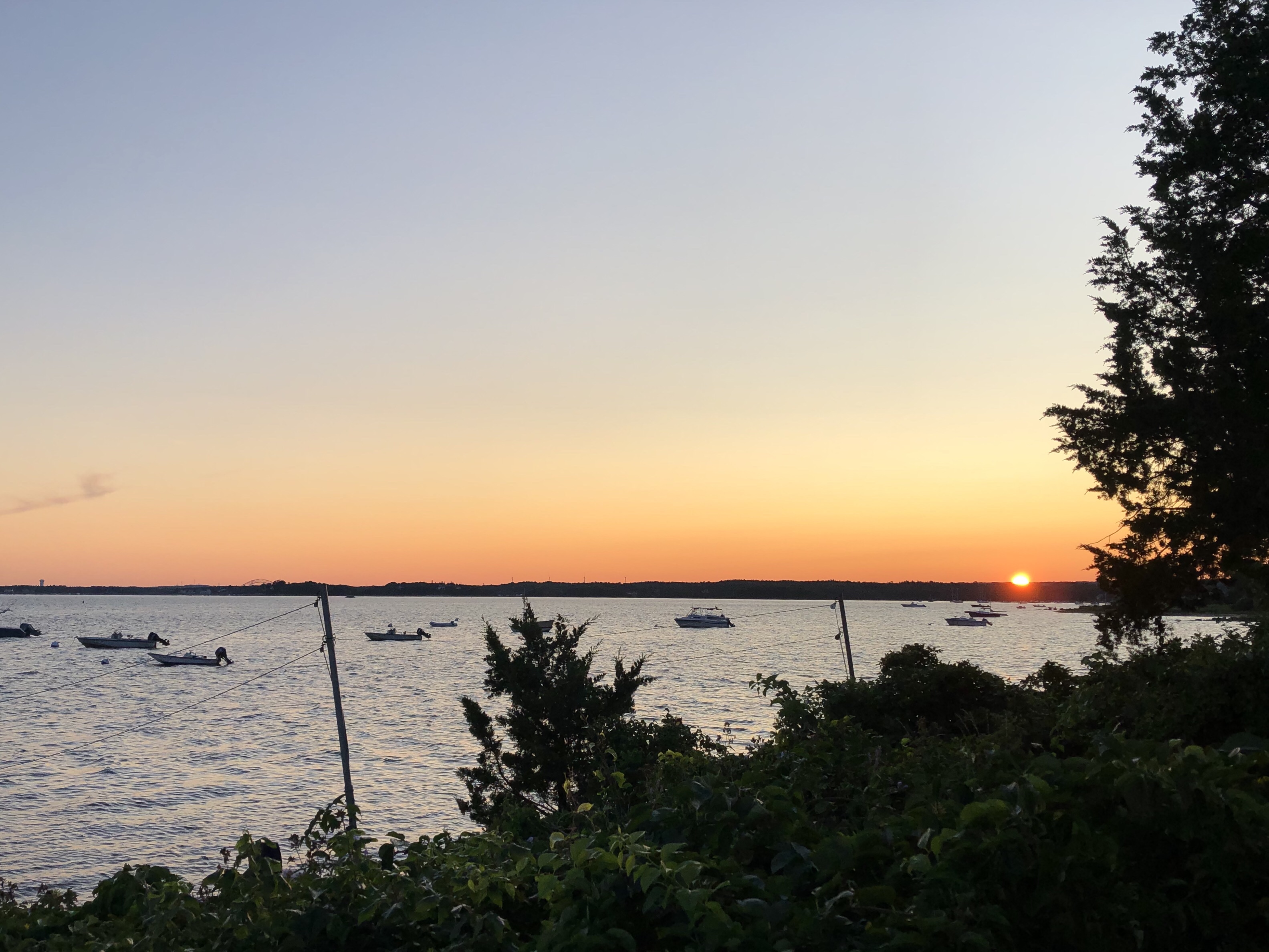
The sunrise was lovely this morning, but not spectacular. No clouds in the sky, just a brightening orange sky and an eruption of flame as the sun rose up once again. Cape Cod offers a different perspective than New Hampshire, there’s nothing shocking in that statement but the obviousness of it. The last week was a change of scenery as I save vacation time for big travel to come. So the mornings offered me the state change that the rest of the day couldn’t. Even in this there’s nothing new, save for the ritual that documents it. Daily writing offers the opportunity to discover the spectacular. Like the sunrise often it doesn’t reach that level but it can still be pretty good, and I’m better for having done it.