Blog

  • Oriskany

    I wasn’t planning on another detour on this trip, but saw the sign, calculated the total time the detour would take and made the decision to stop by the battlefield.  I was deeply impressed with the quiet dignity of the site, and reflected on the violence that took place in the ravine I walked down into.  The battlefield is nothing but tranquil today, save for the landscaper mowing the fields.  But at 10 AM on August 6, 1777 this valley erupted in thunderous clouds of gunfire and screams the hidden Loyalists and Iroquois aligned with the British ambushed a column of American patriots and Oneida Indians allied with them.  That this battle pitted neighbor against neighbor, Iroquois tribe against Iroquois tribe makes the results all the more devastating.

    We met the enemy at the place near a small creek. They had 3 cannons and we none. We had tomahawks and a few guns, but agreed to fight with tomahawks and scalping knives. During the fight, we waited for them to fire their guns and then we attacked them. It felt like no more than killing a Beast. We killed most of the men in the American’s army. Only a few escaped from us. We fought so close against one another that we could kill or another with a musket bayonet…. It was here that I saw the most dead bodies than I have ever seen. The blood shed made a stream running down on the sloping ground.” – Blacksnake, Seneca War Chief

    When I decided to divert from I-90 to check out the battlefield, I had no idea what to expect.  I’d seen pictures of the monument, but there’s an emotional weight in walking in the footsteps of those who perished here down into that ravine, across the creek and up the other side.  The land looks remarkably similar to what it looked like then.  Perhaps more fields have replaced the deep forest of the day, but this area remains largely undeveloped, and will remain so as the Oriskany Battlefield State Historic Site.

    So I pulled into the driveway leading to the monument and drove down to the parking area.  The 85 foot tall oblisk built in 1883 dominates the landscape in front of you.  But I’d noticed another monument and some signs marking historically relevant locations on the battlefield off to the right as I drove in, and decided to walk over to check those out first.  This is the best approximation of where the ambush took place, and looking around it seemed as appropriate a spot as any.  I walked up to the monument honoring General Nicholas Herkimer, wounded in the initial ambush, who famously directed patriot forces into defensive positions from behind an ash tree at or near this location. The Iroquois warriors would wait for a soldier to fire their one shot then rush at them with tomahawks and knives. This was up close, brutal fighting that decimated the American forces. Herkimer directed his men to pair up, with one firing while the other reloaded, to counter this rush.  Herkimer was shot in the leg, and died when the amputation to save him didn’t go as planned.  I wonder sometimes if Benedict Arnold, shot in the leg later in the same year, refused to have his leg amputated after seeing what happened to Herkimer?

    Of the almost 800 American and Oneida ambushes, almost half were killed, and overall casualties were over 500. For the patriotic farmers who rallied to save their brothers-in-arms under siege at Fort Stanwix, the ambush quickly ended their dreams and destroyed the lives of their families back home.  By all accounts these were tough losses for any army, but for Tryon County, it was a devastating loss of fathers, brothers and sons that brought the county to its knees.

    Ultimately the relief column suffered far more casualties than the defenders at Fort Stanwix, who were saved when Benedict Arnold orchestrated a con to make the British and Iroquois think he was much closer to engaging with them, and with many more troops than he actually had.  But that’s a story for another day.  The Loyalists who survived would eventually flee to Canada or other British territories as reprisals reached their homes as momentum swung away from the British.  While the battle at Oriskany was a huge setback in momentum, it was another domino in the string of events that led to the defeat of General Burgoyne’s army at Saratoga.

    On this rainy June afternoon, I had the place largely to myself.  There were about a dozen New York State Troopers visiting, a couple huddled under an umbrella, a man walking two Labrador retrievers, and… me.  The experience reminded me of my trip to Hubbardton a couple of months ago, the quiet solitude and signs describing the lay of the land on the day of the battle were similar.  But Oriskany felt different, because what happened here was different. Hubbardton was a retreating rear guard being caught by a faster moving British force. Oriskany was neighbors ambushing neighbors. Iroquois tribe against Iroquois tribe. A mass casualty event that shook a region. The Revolutionary War was far more complicated than Americans overthrowing a tyrannical oppressor. It was a messy divorce that forced each individual to decide which parent they were going to remain with, and which one they would betray in the most violent ways.

    Visiting the Oriskany battle site is easy. Roughly ten minutes off I-90, it offers a quick respite from travel, and perspective on the sacrifices others made to give us the freedom to do so. On the day I visited, as with other battlefields related to the Saratoga campaign, a quiet stillness prevailed. There’s a small building set down behind the monument where you can learn more about the site and events that day, and (please) leave a donation to help support the maintenance of this sacred ground.  The obelisk is showing signs of wear and needs renovation, but remains a striking tribute to those who fell here.

  • The French Castle on Lake Ontario

    I paid a quick visit to Fort Niagara when I arrived in Buffalo earlier than anticipated.  The site is an active museum, but it closes at 5 PM.  I arrived at 4:15 and set about to quickly absorb as much information as I could in the museum before walking through the incredibly well-preserved/restored fort.  I could make a dozen posts just on Fort Niagara’s history, and I think I may just do that over time, but today I’ll focus on the crown jewel of the site; Gaspard-Joseph Chaussegros de Lery’s “machicolated house”, known forever since as the French Castle.

    Wikipedia describes a machicolation as “a floor opening between the supporting corbels of a battlement, through which stones or other material, such as boiling water or boiling cooking oil, could be dropped on attackers at the base of a defensive wall.”  The French Castle doesn’t have the traditional boxlike structures you might see in a castle in Europe, but the third floor dormers clearly serve this purpose.  For the French, the primary concern in 1725 was defending against attacking Iroquois, who resented their permanent presence at the strategic point on at the mouth of the Niagara River as it flowed into Lake Ontario.  The French had built two forts here previously, Fort Conti in the winter of 1678-1679, and Fort Denonville, the ill-fated staging ground the French used for aggressive campaigns against the Iroquois in 1687.  The French met with a delagation of the Iroquois Nation and requested a “house of peace” be built on the site.  They were granted permission and construction began in earnest, and completed in 1726.

    As a history buff, and particularly as someone fascinated with the period when this fort was active, walking into the French Castle is extraordinary.  It’s a time warp into the past, and looking out onto Lake Ontario on a beautiful June afternoon, it looked very much like it would have for the French soldiers stationed there…  save for Toronto rising up on the horizon.  On this day, the buses of tourists were leaving for the day, the roving pack of Boy Scouts were busy taking pictures elsewhere, and I was almost alone wandering around in the French Castle.  I made a point of walking through each of the rooms open to the public – and almost every room was open – and soaking up the history of the place.

    p

    Contrast Fort Niagara with a fort the English built at roughly the same time (1726 vs. 1754), Fort Western in what is now Augusta, Maine.  Fort Western was for the British pushing the limits of exploration at that time, and the fort was built with a wooden stockade and wooden buildings designed to defend against Abenaki raids.  Fort Niagara is huge by comparison, built of stone, and with a much larger military presence.  Wooden stockade fencing, as with Fort Western, was initially utilized, and eventually when the threat moved from attacks from Native Americans to British military campaigns with cannon, earthworks and walls were built to reinforce the perimeter.

    The French Fort would eventually be occupied by, in succession, the French, the British, the United States, the British (War of 1812) and finally back to the United States.  It’s witnessed some incredible history in the last 293 years.  I was delighted to see it so well-preserved, and can’t wait to get back to this little corner of the northeast.

  • A Long Walk on the Erie Canal

    Leaving on a Sunday night for a business trip is never fun, but this week I tried to keep it in perspective.  Time away from home sucks, but time seeing new things usually tempers that a bit.  I got to the hotel in time to watch game 6 of the Stanley Cup finals, celebrated a Bruins win and prepped for the week ahead.  Monday would be a long day of customer-facing meetings, and by the end of the day I was ready to get outside and move.  My hotel was in Bushnell’s Basin, an especially lovely part of Perinton, New York.  A large part of the charm is the Erie Canal running through.  The tow paths have been reclaimed as walking paths, akin to a rail trail but with the benefit of a waterway on one side of you for the entire journey.

    A quick five minute walk from the hotel is Richardson’s Tavern, built in 1818 and now the oldest original canal house left on the Erie Canal.  I’ve written about it previously.  Just across the single lane Marsh Road Bridge is the Erie Canal Heritage Trail.  The bridge was built in 1912 but was just completely renovated.  It was the first time I was able to cross it to walk the trail so I made the most of it.

    The great thing about the Erie Canal is that it’s still a functioning transportation corridor.  Where once it was barges full of commerce coming from the Great Lakes to the Hudson River, today it’s largely pleasure boats making their way from point-to-point.  I thought it would have been a great place to row, with long straightaways and a convenient bike path for coaches barking instructions.  Funny how I always come back to rowing when I see the right body of water…  but today I was walking, and my goal was a quick five miles before dinner.  From the bridge I walked 2 1/2 miles towards Pittsford, turned around and walked back.

    Walking the trail, I passed walkers, joggers and bicyclers.  A highlight was watching two boats cruising the canal.  People wave to boats, and boaters wave back.  The world would be a better place if everyone else would follow their example.  This stretch of the Erie Canal is best known for a particularly challenging engineering project that had to happen to support the canal traveling through.  The Irondodequoit Creek ran perpendicularly 70 feet below the path of the proposed canal.  So James Geddes, the assistant engineer for the Erie Canal, designed the Great Embankment, a mile long, 7-story pile of rock and fill from the canal, with a 245 foot culvert to channel the creek they were building over.  This was the early 1800’s mind you, so digging and dumping required a significant labor force.  The embankment was completed in 1822.

    Back in Bushnell’s Basin after my walk, I took a right turn and headed for a new brewery that opened last year.  Named Seven Stories after the height of the Great Embankment and for the seven forms of storytelling, this brewery had great beer and better names for it.  They’re right along the canal, and I replaced my burned calories with a pint and a couple of 5 ounce tasters.  Seven Stories will be on my regular rotation on trips to the Rochester area.

    A lovely evening walking along the Erie Canal certainly beat eating at the hotel bar and watching television.  Getting out and seeing the world in earnest is my goal.  The Erie Canal Heritage Trail, paved in stone dust and lined in stretches with bollards for tying down barges once upon a time, was a lovely place to spend the final hours of Monday sunlight.

  • Revisiting Pabos

    My breakfast meeting was running late, so I decided to go see my Basque buddy Pabos again. After all, he died right down the street. We’re kindred spirits, Pabos and I, 400 years apart. I first spotted him a little over a year ago when I was driving to an appointment. His pyramid-shaped monument immediately caught my eye and I went back after the meeting to investigate. You can read about that encounter here. Pabos remains one of my favorite posts, partly for the randomness of finding him in the first place, but partly because I admire the explorer he was.

    So this morning I check out of the hotel, get in the car and I get the text message that my meeting is delayed. I’d been thinking about a drive-by at the monument yesterday so I decided to do it with my newfound time. I swung by to say hello – it’s only a few minutes from every customer in the Victor area – and gave Pabos a nod. Back at Denny’s waiting for my breakfast meeting to show up I re-read my original post, saw the date Pabos died and did a double-take. June 10, 1618. No wonder I was thinking about him yesterday.

  • Fruit Set vs. the Microclimate

    The garden is accelerating nicely now, aided by warm sunny days after a rainy start to spring. Even the grapes are producing masses of fruit set, which is the stage after fertilization just as grapes are formed when it kind of looks like a bunch of grapes but in miniature and without the grapes. It’s a time for optimism – maybe this will be the year the grapes finally thrive. But I’ve been here before, and without shading the vines the fruit will wither in August heat.

    I planted the grapes early on, with a vision of trellised vines with lovely red grapes dangling down ready for the plucking. But I made a critical mistake back when I planted them; they’re pressed too close to the house, living in a microclimate that is way too hot and dry for them to survive. I tell myself I’ll shade them every year but never get around to it, and so the annual cycle reaches its inevitable conclusion with dried out fruit. But this early burst of fruit set has inspired me anew. This year I’ll put up some shade cloth and harvest some grapes. After this business trip. Or maybe in July… Well, I’ll get to it eventually.

  • Sunset

    Friday evening I had the opportunity to take a cruise on Big Island Pond, a pristine and beautiful lake in Atkinson, Hampstead and Derry, New Hampshire.  There’s a ritual that is both familiar to me and yet still new.  Those who live there with boats tend to cluster out in a certain spot at a certain time of day to watch the sun drop below the horizon.  Sunsets and water do go well together, and this one was perfect.  And so I participated in yet another sunset ritual.  I recalled another time last summer when I was in a spot very close to where I was, watching the sunset on the same boat with a couple of friends, Dan and Dave, when Dan got a call from his mother saying his father had fallen down.  We abandoned the sunset for service, and the three of us drove over to his mother’s house to help.  His father passed away a couple of weeks later, leaving a remarkable legacy behind him.

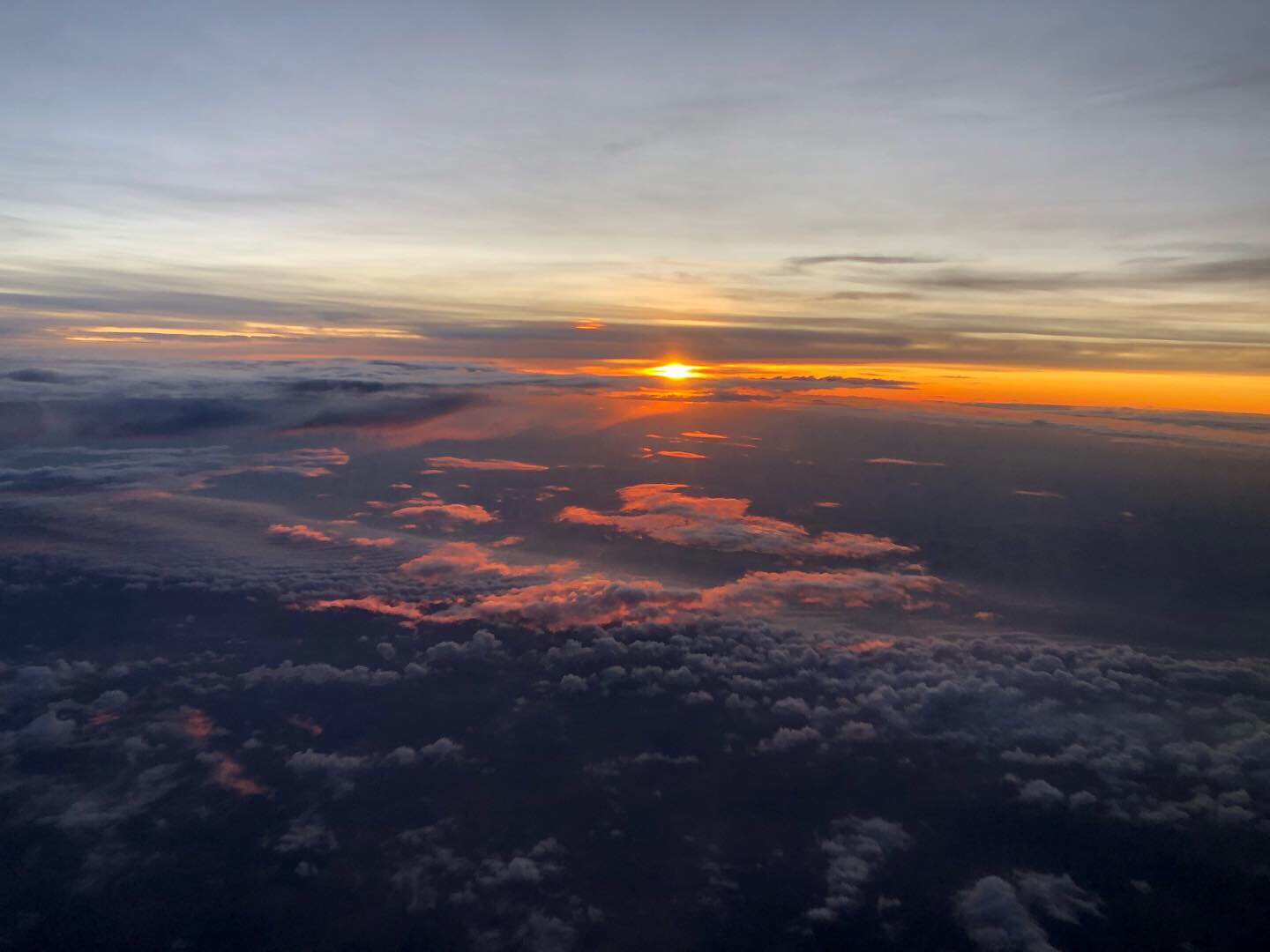
    Over the last 18 months I’ve sought out sunsets in faraway places and right back here at home.  Joining the party on Mallory Square in Key West, and making our own party on a pontoon boat in New Hampshire; wrapping up the day in assorted faraway places from Sagres on the edge of continental Europe to Buffalo, on the edge of Western New York.  From 25,000 feet above New Brunswick back to sea level on Buzzards Bay.  I’m a shameless seeker of sunsets, and celebrate the moment for all that it represents.

    Last night I was wrapping up a day of yard work and watched the bright, last rays of the sun shining horizontally through the woods, illuminating the western trunks with a remarkable glow.  I saw deep in the woods a bright red pole rising out of the forest that I’d never seen before in twenty years looking back into these woods.  It was the bark of a white pine tree glowing in the setting sun with a red brilliance I’d never realized before.  I was struck by the uniqueness of the moment and almost walked out into the woods to visit the tree before reason took over and I remained where I was.

    This morning I finished reading Walking, by Henry David Thoreau.  It was a quick but lovely read, based on a lecture that he’d done several times before publishing it.  I was jolted in the final paragraphs when Thoreau described a scene very similar to what I had experienced last night:

    “We had a remarkable sunset one day last November.  I was walking in a meadow, the source of a small brook, when the sun at last, just before setting, after a cold, gray day, reached a clear stratum in the horizon, and the softest, brightest morning sunlight fell on the dry grass and on the stems of the trees in the opposite horizon….  while our shadows stretched long over the meadow east-ward, as if we were the only motes in its beams.  It was such a light as we could not have imagined a moment before, and the air also was so warm and serene that nothing was wanting to make a paradise of that meadow.  When we reflected that this was not a solitary phenomenon, never to happen again, but that it would happen forever and ever, an infinite number of evenings, and cheer and reassure the latest child that walked there, it was more glorious still.” 

    “…We walked in so pure and bright a light, gliding the withered grass and leaves, so softly and serenely bright, I thought I had never bathed in such a golden flood, without a ripple or a murmur to it.  The west side of every wood and rising ground gleamed like the boundary of Elysium, and the sun on our backs seemed like a gentle herdsman driving us home at evening.

    So we saunter toward the Holy Land, till one day the sun shall shine more brightly than he has done, shall perchance shine into our minds and hearts, and light up our whole lives with a great awakening light, as warm and serene and golden as on a bankside in autumn.” – Henry David Thoreau, Walking

    It isn’t lost on me that I’ve been drawn to Thoreau at this stage of my life.  It may be that I’m just now refocusing on the world around me, but I don’t believe that’s the case.  I think he’s just been waiting for another person to dance with, and I’ve indicated a readiness to tango.  His analogy of stepping into heaven to the brightest beams of a sunset isn’t uniquely his, but his phrasing is lovely.  Some day we’ll all catch our final sunset, and reflect on the life we’re leaving for whatever lies beyond the horizon.  But please, not today.

  • Chive Talkin’

    I planted chives twenty years ago and promptly ignored them ever since, save for the occasional raid with a pair of kitchen shears to supplement whatever meal called for them. Chives are both effortless and generous, multiplying and at the ready when you need them. Unlike the more celebrated basil, chives don’t need to be replanted every year. They require nothing but good soil, sun and an occasional drink. And this time of year they also show a little personality with showy purple crowns.

    Today is a glorious June Saturday in New England. The kind of day you envision when you suffer through the bleakest days of January. The kind of Saturday you yearn for on a Tuesday. There’s a reason people schedule weddings for June and it’s days like this. Many options present themselves on beautiful Saturdays. I chose to be in the garden. We talk about downsizing and moving someplace with less maintenance, but I know I’d miss the gardening. And so I muck about in soil and sweat trying to make the most of my time with it. Life is short, and there are only so many perfect June Saturdays.

  • Deep Greens and Blues

    “And as the moon rises he sits by his fire, thinking about women and glasses of beer.” – James Taylor, Sweet Baby James

    The weekend begins soon, but I know its abbreviated.  I’ll be driving west Sunday to Rochester, New York for an early start Monday morning.  And so it goes.  The trip on I-90 is a familiar one, and each season brings its own delights and challenges.  June brings tourists, exploding bugs on the windshield and orange cones.  But also a lovely green carpet on the Berkshires.

    The Berkshires make me think of Sweet Baby James.  If Boston has Dirty Water and Shipping Up to Boston, the Mass Turnpike has Sweet Baby James.  Its a song that I’ve listened to countless times, but it brings back memories of being a college kid driving I-90 to Ontario, Syracuse and Indianapolis for regattas.  Driving back is when the song resonates, as the song is about longing for what you’ve left behind to do what you need to do.  Both a song for the restless spirits in the world and a lovely lullaby I used to sing to my kids to get them to fall asleep many moons ago.

    “Deep greens and blues are the colors I choose, won’t you let me go down in my dreams?  And rock-a-bye sweet baby James.”

    In winter I’ve put this song right after I cross the border from New York into Massachusetts and see the mountains rise up ahead of me.  The lyrics offer an appropriate soundtrack and after many days away from home I’m usually very ready to get back.  And so the song carries me there…

    “Now the first of December was covered with snow
    and so was the turnpike from Stockbridge to Boston
    Though the Berkshires seemed dreamlike on account of that frosting
    with ten miles behind me and ten thousand more to go”

    My daughter posted something online stating her favorite colors are blue and forest green.  The apple doesn’t fall far from the tree, and somewhere along the way those lullaby’s resonated for her as well.  James, with an assist from me, has left his mark on another generation.  And so it continues.

    “There’s a song that they sing when they take to the highway
    a song that they sing when they take to the sea
    a song that they sing of their home in the sky, maybe you can believe it if it helps you to sleep
    but singing works just fine for me”

  • Two Henry’s

    “Arrived at the Atlantic, he pauses on the shore of this unknown ocean, the bounds of which he knows not, and turns upon his footprints for an instant….  Then recommences his adventurous career westward as in the earliest ages.” – Henry David Thoreau quoting Arnold Henry Guyot, Walking

    Infante D. Henrique, better known as Henry the Navigator, was born in 1394 and died in 1460. Henry, with political clout from his relationship with his brother the King of Portugal and monetary clout from The Order of Christ, inspired the Age of Discovery 500 years ago.  The Portuguese would go on to discover Madeira 600 years ago this year, then the Azores, and further down the coast of Africa during his lifetime, and inspire like voyages by Christopher Columbus and others well after his death.  I came across a statue of Henry the Navigator in Sagres, Portugal last year when I was exploring the area.  The statue faces towards Madeira and the coast of Africa; Henry’s focus half a millennium ago.

    No place in continental Europe makes you feel like you’re on the shore of an unknown ocean more than the western coast of Portugal.  Of course, I’d flown over that ocean to get to Portugal, but this was a time when pirates were a common threat for coastal communities and the thought of sailing beyond the horizon was likely terrifying for most.  It wasn’t until larger sailing vessels were built that the Portuguese and later other European explorers would take the leap into the unknown.

    There was a dark side to exploration, as local populations were exploited, enslaved, murdered or exposed to lethal diseases for the first time.  Progress for some is regression or annihilation for others.  The spirit of exploration and discovery is on the face admirable, and I like to think I carry some of that spirit within me, just as Thoreau did.  Standing on the edge of a hundred foot cliff with breaking waves reaching up halfway to welcome me, one catches the spirit of those words; Arrived at the Atlantic, he pauses on the shore of this unknown ocean.  This would give any sane person pause.  But the courage to move on anyway opened up an entire world for these Portuguese explorers.

    I have Scottish and English blood in my veins, but I also have Portuguese blood.  I like to think that exploration and adventure are a part of my DNA.  And while my relative low risk exploration of the coast of Portugal pales in comparison to the sailors of centuries past, the serve to expand my perspective on the original European explorers who first set sight on America.  As visiting Portugal opened up my perspective on where these souls came from, visiting the Santa Maria replica gave me a greater appreciation for just how small those Nau’s were.  On a vast, unknown ocean, with no previous knowledge of currents and at the whim of the weather, courage was only part of what these explorers needed.  They also needed luck.

    Henry David Thoreau quoted Guyot even as he disagreed with many of his theories.  Thoreau was an explorer whose vehicle of choice were his feet.  I think he would have been fascinated with the fisherman’s trails, the stunning Rota Vicentina, that wind along the coast from Sagres north. Hiking this trail was a highlight for me, and I wish I’d had more time to fully explore the region.

    Thoreau writes of the magic of exploration, and his tendency to head southwest in his journeys away from home.  There is no point further Southwest in Portugal than Cape of St. Vincent and it’s distinctive lighthouse. Had Thoreau stood on the cliffs, as I imagine Henry the Navigator once did and I had the opportunity to do in my own humble way, I think he might have looked westward and recalled his own words, appropriate for this extraordinary place:  “We go eastward to realize history and study the works of art and literature, retracing the steps of the race; we go westward as into the future, with a spirit of enterprise and adventure.  The Atlantic is a Lethean stream, in our passage over which we have had an opportunity to forget the Old World and its institutions.”  That spirit seems as true today as it was in 1860 or in 1460.

  • Choosing the Great Over the New

    New is overvalued relative to great.  … for example, when choosing which movie to watch or what book to read, are you drawn to proven classics or the newest big thing?  In my opinion, it is smarter to choose the great over the new.” – Ray Dalio

    I’m reading a Henry David Thoreau book called Walking.  It’s a quick read – not very long at all – but full of wisdom nuggets as I posted yesterday.  I’ve recently re-read Walden, and read some Hemingway’s The Sun Also Rises last fall.  It’s no secret that I’ve been reading a lot of stoicism over the last couple of years, and re-read Marcus Aurelius’s Meditations again last year.  And I have a pile of classics teed up for future reading.  So this Tweet I read from Ray Dalio today was especially meaningful for me as I try to mix in classics and opt out of things just because they’re popular at the moment.  They’re classics for a reason, and you can glean a lot of out of them if you dive in.

    Choosing the great over the new goes for things beyond books and movies of course.  You get what you pay for in life, and that applies to time as much as it does money.  I dropped a Derek Sivers quote a couple of blogs ago; “Hell Yes or No” that concisely articulates great over new in career opportunities, relationships, what you spend your weekend doing and which food, books and media you consume.  So it was with great interest that I read another Twitter thread from George Mack early this morning:

    The most VALUABLE piece of investing advice I ever received came from Warren Buffett.  

    Buffett gave a talk at University of Georgia.

     He told the students to look around at their friends and answer the following question:

    “If you could get 10% of their earnings for the rest of their lives, what friends would you INVEST in?”

    Once you have the 2-3 friends that you’d invest in, explore the WHY you’d invest in them.

    What values do these individuals hold?

    What habits do they engage in?

    Here’s teh values of friends that made me want to invest:

    1. High Agency/Resourcefulness
    2. Consistency
    3. Give more than they take
    4. Learning machines
    5. Live on the edge of their comfort zones of creating a new project
    6. Pay attention to small details

    After doing this, Buffett sugggest you look around at your friends again.

    “If you could SHORT 10% of their earnings for the rest of their lives, what friends would you choose?”

    Again, once you have these friends in mind – ask the WHY you’d short them.

    What values do they have that you’ll think will harm them?

    What negative habits do they engage in?

    Here [are the] the values of friends that I’d SHORT:

    1. Narcismism
    2. Inconsistency
    3. Arrogance
    4. Dishonesty
    5. External locus of control
    6. Map knowledge/know it alls

    Once you [have] these lists, you have finally answered one of life’s wooliest questions:

    “What are my values?”

    You have the guiding principles you can look to embody.

    You can extrapolate this further than just financial ROI.

    You can look at your friends balance sheets for happiness, relationships, fitness, etc.

    Who would you invest 10% in?  Why?

    Who would you short 10%?  Why?

    You can download the values you need for these areas too.

    This exercise is so powerful because our identity isn’t involved.

    “It’s easier to recognize other people’s mistakes than our own.” – Daniel Kahneman

    Emotion & Ego distort our reality.

    It’s so easy to see when a friend should break up with their partner, quit their job or shut down their company.

    Yes despite having more information on the subject than you, they still can’t see it.

    Why?

    Emotion & Ego (Identity)

    The Buffett exercise is so powerful because it gives you the ability to view your human operating system in the same way everyone else will:

    1. Objectivity
    2. Don’t care about you
    3. Want to know what value you can provide

    Self aware ness has the Dunning-Kluger effect built into its software.

    The most self aware people I know are convinced they lack self awareness.

    The least self aware people I know are convinced they are self aware.

    Buffett’s investment advice passes Peter Thiel’s test.

    You know your friends better than ANYONE.

    This means that you have a SECRET that the rest of the world doesn’t have about their values and habits,

    This information gained is truly unique to everyone who applies it.

    SUMMARY:

    1. Treat your objective analysis of other people as the best form of self knowledge
    2. Understand what values you’d invest in and what you would short in every area of life.
    3. The tactile knowledge of your friends is a secret as unique as your finger print.

    I copied this down here as much to retain it for myself as to blog about it.  Coming back around to the Dalio quote, choosing the great over the new, I’m applying this in my work as well as my reading and other pursuits.  I’ve weaned myself off of low value business relationships, and avoid toxic business relationships whenever possible.  I’ve fired customers who are such A-holes that they aren’t worth the commission check that comes with dealing with them.  And I’ve developed other business relationships that are absolutely worth the long term investment even though the return isn’t there quite yet.

    So the quoted material is longer than the original content from me this time around, but I thought I’d stick with the great instead of adding the new.  Hopefully some of my new will prove great in the long run.