Blog

  • Arnold Trail to Quebec

    In September 1775, early in the Revolutionary War, Benedict Arnold and Ethan Allen hatched a plan to attack British held Quebec.  Benedict Arnold met with George Washington in Boston and assembled an army of 1100 soldiers who marched from Cambridge to Newburyport, Massachusetts.  From Newburyport they sailed to Maine and then up the Kennebec River to Fort Western in what is now Augusta, Maine.  Some of this fort survives to this day and is labeled “America’s oldest surviving wooden fort”.

    From Fort Western, the Arnold army moved upstream 20 miles in flatboats to Fort Halifax in what is now Winslow, Maine.  Not to be outdone by Fort Western, Fort Halifax boasts the “oldest blockhouse in the United States”.  The forts and blockhouses were built with an eye towards the French and particularly towards the Abenaki.  The leaking boats compromised the gunpowder and spoiled food.  This was before the army had to hike through the wilderness of Maine to Quebec.  Today, using paved roads, the walk from Winslow, Maine to Quebec City is roughly 70 hours.  It was a little more challenging then.  The plan was for the army to paddle the flat boats up the Kennebec and Dead Rivers, but white water meant that they had to portage for many miles of the route.  In 1775, hiking through thick wilderness, mosquito infested swamps and through mountainous terrain, it took the army over a month to get to Quebec, and they lost almost half their men to desertion along the way.

    Benedict Arnold in 1775 was still a highly respected hero of Fort Ticonderoga.  His betrayal would come five years later when he commanded West Point and plotted to surrender to the British.  So Benedict Arnold is forever linked with treason, and as a result you don’t hear much about his exploits early in the war.  To my knowledge there’s no “Benedict Arnold slept here” signs, and no commemorative plaque in Newburyport noting the assembly of the Benedict Arnold army that boarded ships to sail across the Gulf of Maine to the mouth of the Kennebec River.  Perhaps if this mission had been successful Benedict Arnold would have been made Governor of Quebec, or perhaps the British would have diverted forces to take back Quebec that instead were used in battles in the colonies.

    240 years after the Arnold army’s ill-fated march on Quebec, a couple of local adventures, Jack and Astrid Santos, traced the route using kayaks, portaging and hiking the rest.  That’s one of those “wish I’d thought of it first” stories.  For all the times I’ve been to Newburyport, Maine and Quebec, I’ve never heard this story.  I stumbled on it while looking up some information on Augusta, Maine.  History is a funny thing.  It’s all around us, but until someone pays attention its just like that unread book on the shelf in the library.  I’ll be sure to hoist a pint to Benedict Arnold’s army next time I’m in Newburyport.  Regardless of what he did later in the war, in 1775 he was bold and trying to win the war for the Colonial Army.

  • Medford Rum

    Medford Rum

    For over two hundred years Medford, Massachusetts distilled molasses into rum.  For decades several distilleries operated near the Mystic River.  The rum was put into casks there and sent around the world on sailing ships, and gaining a reputation as a rum of distinction in a time when there were a lot of bad spirits in the world.  Over time the other distilleries closed until there was only one.  Medford rum was made for three generations by Daniel Lawrence & Sons, and when the sons decided in 1905 to stop making rum Medford Rum abruptly stopped distilling.

    There was an evil side to rum, and certainly Medford Rum.  It was the third leg of the slave trade, where slaves from Africa were brought to the Caribbean in exchange for sugar cane and its byproduct molasses, which was used to distill rum.  The rum was shipped around the world and became currency to fuel the slave trade.  That association with the slave trade is the tragic side to what is otherwise a classic American success story.

    Daniel Lawrence & Sons announced that they were going to stop making Medford Rum in 1905, and basically just stopped making it.  This is akin to Mount Gay Rum announcing to the world that they were done distilling rum, and what was on the shelves was all that would ever be available.  Sailors around the world would be breaking down the doors at the liquor stores to horde as many bottles as they could.  Mount Gay caused enough of a stir just getting rid of the jug handle bottles.  The uproar if they dropped Eclipse would be epic.  I’m sure it was for Medford Rum too.  The name Medford Rum was sold off to another distillery in Boston, which makes rum with the name  but not the recipe.  So we’ll never really know what real Medford Rum was like.

    While the slave trade thankfully ended, the trade of molasses for the production of alcohol in many forms continued.  In 1919 a tank containing 2 1/2 million gallons of molasses at the United States Industrial Alcohol Company burst and sent an 8 foot wave of molasses through the streets of the North End in Boston and killing 21 people.  What a way to go.

    There are a few reminders to Medford’s past as a major distiller of rum.  The Post Office has a mural on the wall that depicts Medford’s role in history, with slave carrying sugar cane in the middle panel.  Some people have chosen to be offended by that now and have demanded its removal.  I don’t view it as glorifying slavery, but acknowledging Medford’s place in the history of the slave trade.  But in this hyper-sensitive climate perhaps that’s too much for people.  As despicable as slavery was, Medford’s history of producing rum gainfully employed generations of people, just as the shipbuilding and brick making industries in Medford did.  Slavery, the treatment of the Native American population and other evils of the time should never be forgotten, but neither should the generations of industrious Americans who built things that reached across the world.

    Medford Rum for rum lovers has a mystical lore to it, fitting since it was distilled along the banks of the Mystic River.  While the name lives on through GrandTen Distillery, I view this as a nod to the past and not a continuation of the recipe the way that Mount Gay is.  I know that somewhere out there there’s an aging bottle of Medford Rum from the turn of the last century just waiting for someone to uncork it.  That elusive bottle will cause quite a bidding war.  I’m not in a position to re-morgage my house for the winning bid, but I’ll keep an eye out for it just the same.  One of my time machine carry-ons would surely be a cask of Medford Rum.

  • The Middlesex Canal

    The Middlesex Canal

    New England Yankees in the late 1700’s and early 1800’s had a transportation problem.  Water routes were the most efficient but rivers were often challenging to navigate.  Footpaths gave way to coach paths and turnpikes as the need for more efficient transportation between Boston and points north and west developed.  Three modes of transportation developed in the 1800’s that still exist in some sections: the Middlesex Turnpike, the Middlesex Canal, and eventually the railroad.

    The Middlesex Turnpike was chartered in 1805 and opened in about 1810.  It ran from Cambridge, Massachusetts to the New Hampshire border in Tyngsboro.  As a turnpike, coaches would pay to ride this route.  But other options made it unprofitable as a business and it became a free road in a little more than 30 years.  You can still drive sections of the Middlesex Turnpike today.

    One of the big competitors to the Turnpike was the Middlesex Canal, which had opened eight years before and ran roughly parallel to the Turnpike and had the advantage of tying directly into Boston Harbor on one end and the Merrimack River at Lowell on the other end, so barges could be loaded once and towed by horses to their destination at the mills.  Other goods from New Hampshire could be floated down the river and right into the canal.

    The Middlesex Canal killed off much of the trade flowing down the Merrimack River to Newburyport.  This route was problematic as boats needed to divert around the falls at Lowell and Lawrence.  Lowell’s Pawtucket Canal was built in 1796 for this purpose.  But a canal that ran directly from Lowell to Boston was attractive and surveys were done even as the Pawtucket Canal was being constructed.  As traffic on the Middlesex Canal increased, Newburyport struggled and the Pawtucket Canal was converted as a source of power for the growing textile mills in Lowell.

    Just as the Middlesex Canal expedited the demise of the Middlesex Turnpike, Pawtucket Canal and Newburyport, it suffered a similar fate with the construction of the Boston and Lowell Railroad.  The irony of this demise is that the construction materials for the railroad were transported on the canal.  Just as the canal was far more efficient at transporting goods between Boston and Lowell than the Merrimack River or the turnpike had been, so the efficiency of the railroad brought a quick end to the Middlesex Canal.

    Today you can see reminders of the canal, particularly in Billerica, Wilmington and Woburn.  The water hazard between the second and third holes at the Mount Pleasant Golf Course in Lowell was once the canal.  The Baldwin House in Woburn sits next to an overgrown section of the canal.  In North Billerica running from the Concord River towards Wilmington you can clearly see the canal path on satellite images.  And arguably the most interesting surviving structural component of the canal is the stone foundation of the Shawsheen River Aqueduct in Wilmington.

    While the Middlesex Canal is nothing more than a ditch that most people ignore today, the railroad that replaced it is still heavily used.  Sections of the Middlesex Turnpike are heavily used to this day.  The Pawtucket Canal still looks much the same as it did when it was constructed, though only used now for tours.  And Newburyport, once economically decimated by the Middlesex Canal, as rebounded nicely.

    The glory years of the Middlesex Canal lasted for one or two generations between the Revolutionary War and the Civil War.  This was a time of massive expansion, innovation and population growth in New England.  The canal featured many firsts, including the first use of hydraulic cement in America, and it inspired growth of other canals, like the Erie Canal in New York.

    There were many factors that went into the canal’s demise, but ultimately it was done in by the technology race.  It became a footnote in history, but also a stepping stone.  The lessons of the canal carried over to generations of engineers who helped build the exploding network of roads, bridges, canals and railroads that fueled the industrial revolution and America’s population growth.

  • Expiration Dates

    Expiration Dates

    I’ve gotten in the habit of checking the expiration dates on food items in the pantry and in the refrigerator at home and especially at my parent’s house on the Cape.  Expiration dates are a guideline and plenty of items last longer than the printed expiration date.  But plenty of items – I’m looking at you bagged salad – go bad before the expiration date too.

    Memento mori: “Remember we all die”.  I’m in no hurry, but I’ve seen too many reminders that it’s all just a brief stay on this earth before we’re faded snapshots in someone’s photo album.  Even those had an expiration date.  Today your photos are on a hard drive or parked in a data center somewhere.

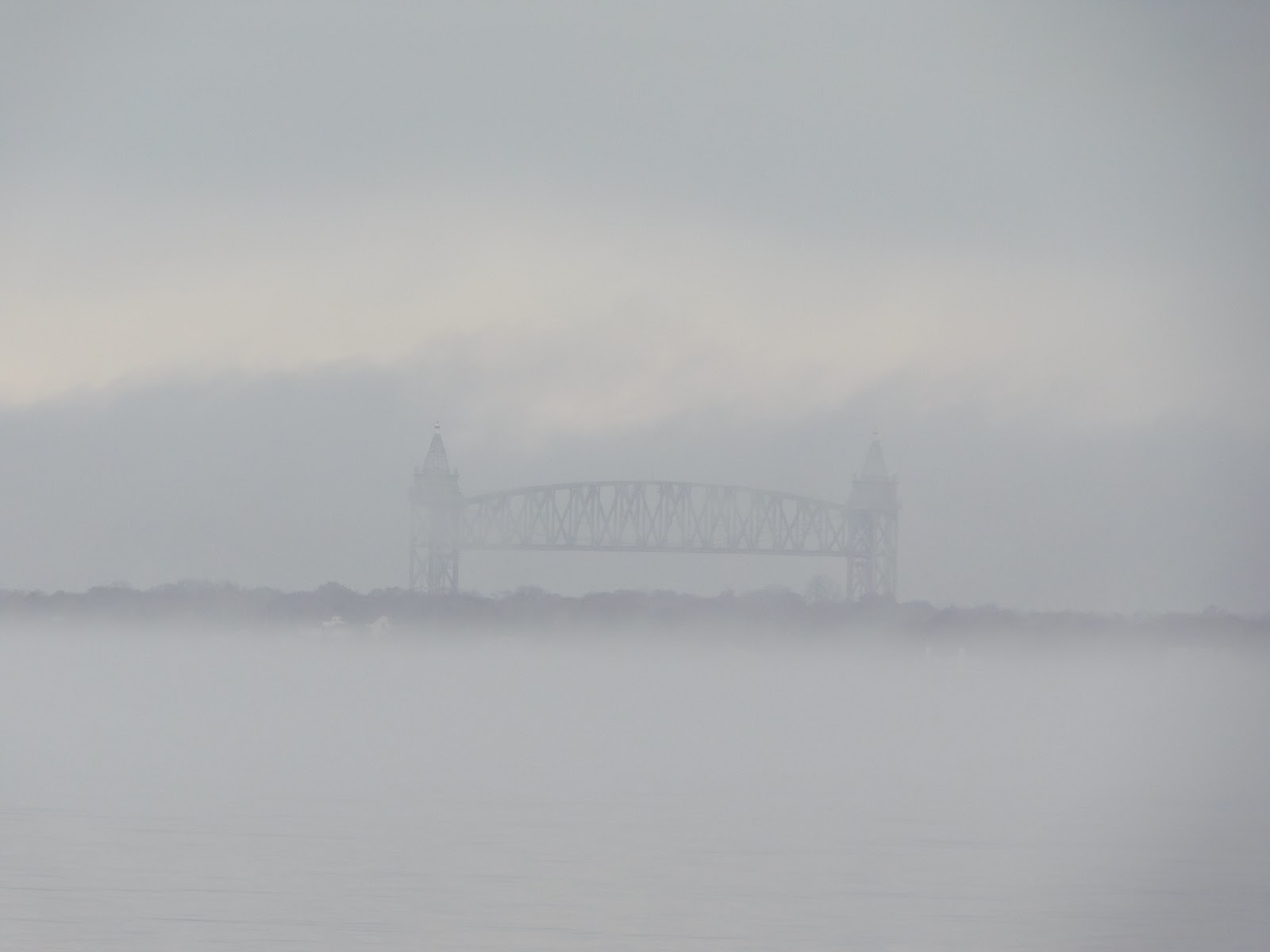
    Memento mori.  This Stoic reminder pairs well with Carpe Diem.  Know you have an expiration date and strive to live a larger life now.  Take the leap while you can.  Don’t be an irresponsible idiot, but damn it make the day memorable for yourself.  I wrote that line and the sun just burst through the thick fog over Buzzards Bay.  Talk about validation.

    That bagged salad may still be edible when you have a few soggy, decomposing spinach leaves in the mix, but it’s not nearly as enjoyable.  Living a bold life is far easier when you’re healthy and fit than when your sick or frail.  I don’t have to look far to see what time does to all of us.  So make the most of today.  You never know what tomorrow might bring.

  • Boston LIght

    Boston Light

    Guiding ships into Boston Harbor since 1783, when it replaced the original 1716 lighthouse blown up during the Revolutionary War, Boston Light sits atop Little Brewster Island marking the way for 234 years.  Much of the lighthouse is exactly as it was then; a time machine to the first years of America.  I was able to visit the lighthouse in 2016 during the 300th anniversary of the original lighthouse.

    The bands seen in this picture replaced iron bands installed in 1809 when the structural integrity of the lighthouse was in question when cracks appeared.  The new aluminum bands won’t rust out the way the iron bands did.  They’re placed where the original iron bands were, making this image from the water very similar to how it would have looked during the War of 1812 when American and British forces fought each other within sight of the lighthouse.

    A fog signal cannon was added in 1719 and after time at the Coast Guard Academy is back on display on the island.  This cannon was the first fog signal in America.  It must have been quite a show for one to see the lighthouse keeper standing outside firing the cannon into the white swirling bands of fog.

    Walking the circular route up the stairs to the top on that hot summer day in 2016 left me sweating and a little out of breath, but blessedly far away from the ravenous flies that seem to thrive on tourists.  There’s a boat that leaves from the campus of UMASS Boston.  I happened to be on that boat for a harbor cruise put together by people in the industry.  Some work days are better than others.

    A lot has changed in America since its construction, but Boston Light is roughly what it’s always been; a beacon of hope for sailors trying to find their way to port.  I’m glad to have spent time on the island, immersing myself in the history of the lighthouse, looking back on the city skyline and making the most of a sunny day on Boston Harbor.

    The original lighthouse keeper and five others drowned while canoeing back to the island on November 3, 1718, immortalized in a poem by a young Benjamin Franklin aptly named “The Lighthouse Tragedy”.  On the day that I was out there the swells were large enough for some extra care docking.  It isn’t hard to imagine an overloaded canoe overturning in swells like that.  As we approach the 300th anniversary of that incident, I’ll give a nod to their memory towards the bay.

  • On 51

    On 51

    It’s been an interesting year.  As I look back on it in the last couple of hours of my 51st year, I’m generally pleased with where I’ve been, what I’ve seen and who I’ve spent my time with.  My 51st trip around the sun brought me to new places near and far, allowed me to meet new people, catch up with old friends and spend quality time with family.

    I greatly appreciate my previous company funding my travel lust, even if they fell short in just about every other way.  Trips to Portugal, Phoenix, Arizona, Vail, Colorado, Halifax, Nova Scotia, St. John’s, Newfoundland each offered checks off that bucket list.  Looking East from the Easternmost point in North America and a month later looking West from the Westernmost point in continental Europe were each memorable moments.  Hiking up Camelback Mountain was an interesting contrast to hiking the White Mountains.  Visiting Halifax four times during 51 gave me an opportunity to immerse myself in the city.

    White water rafting down the Colorado River in Colorado was a lot different from white water rafting on the same river through the Grand Canyon.  Jumping off a raft into the Colorado 19 years after the last time I’d done it certainly crossed my mind as I bobbed down the river in 2017.  But that’s how I think anyway.  Life is about milestones, smelling the roses, making the most of your opportunities.  Make the toast, give big hugs, take the long way home, play music too loud, make an ass of yourself, dance with life.  I tried to do that during 51.  I think I’ve mastered at least one or two of those.

    I followed in the footsteps of Mark Twain – literally walking up the stairs to his study in Hartford, and figuratively in a visit to his relocated octagonal study in Elmira, New York.  Twain wasn’t the only literary giant I checked in with.  I also had a chance to spend time in the Robert Frost Farm in Derry, New Hampshire.  I like to listen for the whispers of history in my travels and a visit to an old stone wall in the woods speaks as loudly as seeing the island that Hannah Dustin escaped from or the desk that Mark Twain wrote at.

    I hunted down waterfalls in Ithaca, New York, sunrises in St. John’s and sunsets in Sagres.  I saw a few, but never enough of each in Pocasset.  I visited lighthouses in Portland, York, Falmouth, Sagres, St. John’s and Peggy’s Cove.  I chased down beer in Greensboro, Vermont and Port in Lisbon.  Hiked Tecumseh, Hale, Camelback, Mahoosuc Notch, and the Roto Vicentina on the coast of Portugal.  Spent time on beaches in Maine, New Hampshire, Massachusetts, Portugal,  Shorter but no less memorable walks on Signal Hill, at Dogtown and in an old monastery turned resort near Lisbon.

    Time spent with family is more important than ever as the nest emptied in my 51st year.  Graduation parties, reunions and holidays brought the extended family together.  Trips to New York, Pennsylvania and Rhode Island offered a few more images to the Instagram account and a few more minutes of family time to the coffer.  But the shared suffering of hiking Mahoosuc was the largest deposit to the bank of family lore.

    51 was a heck of a ride.  Here’s to tomorrow being another step forward.  Life offers no guarantees, but I know this; I’m not finished sucking the marrow out of life.  Let’s keep this party going 52.

  • John Paul Jones

    John Paul Jones

    Portsmouth, New Hampshire is an old town by North American standards.  Settled in 1630, it played a notable role in the American Revolution.  Paul Revere rode here from Boston to warn the town that the British were coming – by sea – to bombard them.  With a great harbor and a ready source of lumber right upstream, Portsmouth was a natural place for a shipyard and an attractive target for the British.  The forts that protected Portsmouth Harbor were one reason it didn’t burn to the ground.

    One notable resident of Portsmouth was John Paul Jones.  Jones was a Scottish-born sailor who had risen up the ranks in the British Navy before controversy over two deaths associated with Jones prompted him to get out of dodge and head for America.  Jones lived in the Philadelphia area and was soon earmarked for command of a ship in the Continental Navy.  Many raids on Ireland and the capture of a British warship at a time when victories were few and far between garnered him fame in America as a hero and in Britain as a pirate.  Beauty is in the eye of the beholder.  By all accounts Jones was a brilliant tactician and sailor.  But killing one sailor by flogging and another with a sword make it clear he wasn’t a “hugger”.

    Jones’ most famous battle was in 1779, while under command of the Bonhomme Richard.  While attempting to raid merchant ships, British warships engaged with the Bonhomme Richard and four other ships.  The 50-gun frigate Serapis was much bigger, so Jones locked onto the ship for close fighting and sniper action from marines in the rigging.  Sustaining heavy damage but refusing to surrender, this is where Jones supposedly said “I have not yet begun to fight!”  Whether true or not it made for a great war slogan and a larger than life character in Jones.

    Jones arrived in Portsmouth on August 31, 1781 and lived there for about a year, boarding at a house that still stands at 43 Middle Street.  He had been appointed command of a new ship, appropriated named America, being built at Badger’s Island just across the Piscataqua River from Portsmouth.  So boarding at the Purcell house was a convenient place for Jones.

    Jones was likely bitterly disappointed when Congress decided to give America to France as a gift for its role in winning the American Revolution, but he stayed on to oversee completion of the ship.  America was launched on November 5th, 1782 and sailed to France where it served for a brief three years before being scrapped.  It seems the Americans used green wood in construction.

    John Paul Jones ended up joining the Russian Navy and served for some time against the Turks in the Black Sea.  He died at the young age of 45 in 1892.  Buried originally in Paris, his body was exhumed and he was re-buried at the Naval Academy in Annapolis, Maryland.  Jones was considered a father of the US Navy.  His battles on the Ranger are the stuff of movies.  Whether a pirate, privateer or Continental Navy hero, he certainly lived an interesting life.  For a year of that brief life he walked the same streets I just walked today.

  • On Pileated Woodpeckers

    On Pileated Woodpeckers

    As birds go, there’s no better song than that of the pileated woodpecker calling out to its mate.  For the northeast, this is as exotic a bird call as we’re going to get.  These birds are huge, approaching 20 inches in height.  They feed on ants and beetle larvae in deciduous trees.  Often you hear them well before you see them, either from their call or from the reverberating rap of their beaks pulverizing a tree in search of a meal.

    Pileated woodpeckers don’t migrate and make the most of the territory they stake out for themselves.  I’ve seen them year round, but spring right before the trees leaf out seems to be when they’re most active.  They’re shy birds, and it’s hard to get a good picture it you’re not sneaky about it.  I made a point of being sneaky for this picture.

    I’m not sure what the population of pileated woodpeckers is in North America, but I’m glad to live in a town that sustains these magnificent birds.  As much as I hate the encroaching development that’s seemingly closing in on us, there are still large enough tracts of woodland for wildlife to thrive here.  Looking at the town next door, with strip malls and 55+ housing developments quickly replacing stands of trees that have been there for decades, I wonder how long it will be before vinyl siding crowds out the tree bark.  So here’s a vote for conservation, and for woodpeckers.

  • Jupiter Rising

    Jupiter Rising

    April 22nd and change is in the air.  Spring is finally here.  With it come the return of the peepers, buds on the trees and pollen.  The puffiness in my eyes betray the rise in pollen counts.  But I’ll accept the discomfort to push aside a stubborn winter.

    The night sky is changing with the season.  With the tilt of the earth come longer days as the northern hemisphere embraces the sun.  With that tilt comes a different look to the sky.  The sun rises and sets in different places than before as we march towards the 23.5 degree rotation on June 21st.  So we say goodbye for now to Orion, still low in the western sky.

    Jupiter is rising in the East.  I don’t buy into the hype that I’m suddenly going to be lucky financially or that it brings some other astrological windfall my way.  But seeing Jupiter rising is a welcome site for me.  And sure, I’d be happy to accept a financial windfall or good luck or positive mojo emanating from the planetary power of Jupiter.  But I’d be happy just to see spring win out for awhile before conceding to summer.

  • Fish & Chips

    Fish & Chips

    In my travels I have a few standbys that I order; salads, fish tacos and fish & chips.  Sure, deep fried food isn’t the best option for my waistline, but sometimes you just need to spoil yourself.  Salads get boring, fish tacos get messy, and I just don’t want to eat that many burgers.

    Since I’ve eaten fish & chips in so many places, I’ve started to rank them.  To me a good fish & chips plate should a great, fresh piece of fish that’s lightly breaded and fried to a crisp crust that surrounds and continues to steam the fish as its placed in front of you.  To get the right consistency the oil needs to be the right temperature, the breading has to be just thick enough to give you a great coating but not so thick that it becomes a grease sponge, and of course the cooking time has to be long enough to give you that perfect crunch.

    The other component to a great fish & chips plate is the chips, or fries.  They need to be thin, with a light flavor, and salted just right.  The chips make the meal.  I like mine skinny with a nice crunch to them.  Soggy is a sin.  Finally, coleslaw and some tarter sauce round out the plate.  Some places give you a slice of lemon.  Whatever.  The coleslaw needs to be fresh or it shouldn’t even be on the plate.

    So in my travels the best fish & chips I’ve had in North America was in Halifax at The Five Fishermen.  It doesn’t even appear on their menu, so it must have been a special lunch menu item at the time.  Two crispy pieces of fish wrapped in paper the English way, with a pile of fries.  Fantastic.

    There are clearly more important things than fish & chips, but this basic dish is one of the staples of the fried seafood menu.  As a fast, relatively inexpensive meal it provides a quick fix for protein and carbs, while skimping greatly on nutritional value.  So be it.  Fish & chips belongs on every menu on the coast, and should be shunned with suspicion at most landlocked establishments.  On my quest for the best fish & chips in North America I’ve run into the good, the bad and the fugly.  I’ll take that risk for the greater good of identifying the best in the region.