Blog

  • Wentworth-Coolidge Mansion

    The first Governor of New Hampshire was a real character.  Benning Wentworth Colonial Governor from 1741 to 1766, granted the governorship by Great Britain to settle a business deal with Spain that went south when the two countries got into one of their many disputes.

    As Governor, Wentworth had a damn the torpedoes approach that fits well with the Live Free or Die state motto that was adopted later.  One of the most controversial things Wentworth did was grant land in what is now Vermont to settlers, even though New York claimed the land as theirs.  Naturally this eventually led to hostilities between the two, most famously with Ethan Allen.  That’s a story for another day.

    Wentworth requested that a capital building be built in Portsmouth, but the New Hampshire General Council denied his request.  So Wentworth built a council chamber at his 100 acre farm instead.  It was here that he did most of the governing of the state.  It’s also where he sprung another controversy on his guest one night when, as a widowed 64 year-old, he married his 23 year-old servant.  It seems Wentworth was a player.

    The farmhouse is actually four or five buildings tacked together.  According to the Wentworth-Coolidge mansion web site, “The property became the center of political and social life in the colony. The Mansion is historically significant as the only original surviving residence of a Royal Governor in the United States”.  Interestingly, the first lilacs planted in the United States were planted here and the oldest in the country.  So New Hampshire has potatoes in Londonderry and lilacs in Portsmouth as two firsts.

    The house was eventually sold off a couple of times, remaining a farm for some time but gradually falling into disrepair until it became the summer house of John Templeman Coolidge III in 1886.  The Coolidge family, wealthy Bostonians, restored the property and likely saved it from oblivion.  The family hosted wealthy friends and artists from Boston each summer, and the area thrived.  His widow donated the mansion to the state in 1954.

    Today the property is a state park, surrounded by some pricy real estate.  I did a first day hike here to mark the New Year, 2018.  It’s a property I’d love to explore sometime, and dig into the history a bit more.
  • Trolley Parks

    Canobie Lake Park is dormant now, this first day of March.  But spring is in the air, and we’re close to turning the corner on another winter.  Soon the gates will open for another season for this salty veteran.  Canobie Lake Park is a survivor, one of a baker’s dozen trolley parks still in existence today.

    Trolley parks were built in the late 1800’s and early 1900’s as a destination at the end of the trolley line to give people a reason to use the trolleys on the weekend.  After a long week of commuting to the mills, you needed a good reason to jump back on the trolley on a Sunday afternoon after church.  Trolley parks were a destination.  Set out in the countryside, next to a lake or along the river, it gave families a fun place to picnic and play together.  Adding rides, a midway and a dance hall expanded the appeal.  With more people came more money.  And these people were coming in cars.

    The 1920’s saw the rapid decline of the trolley.  And over the next few centuries the decline of the original trolley parks followed.  I remember going to Whalom Park in Lunenburg, which closed in 2000 after a 107 year run.  It was once celebrated as one of the oldest trolley parks in the world.  The site is now condominiums and most of the rides were scrapped or sold off.  I’m sure the condos are lovely but I don’t ever want to see them.

    Back at Canobie Lake Park, you enter a time warp when you walk in and stroll past the original Looff-Dentzel Carousel from 1903, past the Yankee Cannonball, bought from another dying trolley park and installed here since 1936.  According to Wikipedia the roller coast was named to commemorate the Civil War, and was painted in blue and gray, united on the red, white and blue superstructure.  That color scheme is long gone, but the Yankee Cannonball survives.  And walking through the park you can see the old charm in the picnic grounds, midway, Dancehall Theater and the old pine trees that have seen a lot of thrill seekers over the years.

    There were another 15 or so trolley parks that have faded into history over the years, just as the trolleys that spurred their construction faded.  Time marches on, and with cars and relatively cheap flights going to Six Flags or the parks in Orlando are within reach of most families.  I’m glad that Canobie survives and thrives.  Right down the road from Canobie are the grounds of Rockingham Park, opened just a few years after Canobie, but closed permanently and bulldozed into history for condos, retail and restaurants.  Time passed Rockingham by while the old trolley park up the road marches on.

  • March

    March

    The full moon tonight brings with it a different kind of sky watching.  The wind and dropping temperatures signal a front moving through.  The clouds at 10 PM are wispy, but there’s a haze developing in the sky and it won’t be long before it’s overcast.  We have weather moving in.

    Going out for a walk when you’ve settled in after dinner is a mental hurdle akin to getting up and doing a workout.  You’re always happier for having done it, but every day is a test of willpower.  Bodhi is a creature of habit though, and that’s usually enough to push me out the door.  Thank you for that Bodhi.

    The breeze sounds different in winter than it does in the summer.  The oaks, maples and poplars are still bare and largely silent save for the clickity-clack of high branches fighting for space.  In winter the white pines sing alone with the breeze.  Pine needles shush like a parent coaxing a baby to sleep.  Ponderosa Pine needles in the southwest are bigger and make an assertive shushing sound in the wind.  Eastern White Pines, with their smaller needles and taller reach for the sky, offer a hushed shush.  Some of the trees in my neighborhood are mature, likely in the 120-130 foot range.  And at these heights the needles tango in the breeze, producing the nights music.

    The full moon backlights the clouds as they sprint across the sky east to west, offering a muted kaleidescope of white, grays and navy blues.  As the haze develops so too does a halo around the moon.  There’s an old expression; “ring around the moon means rain soon”.  Rain is certainly in the forecast.  It seems our ancesters know what they were talking about with those expressions.  In this developing haze, most stars concede the night to the moon, but Sirius, Procyon and Capella hold their own.  Such is the sky on this March 1st evening in New Hampshire.

  • Dunes

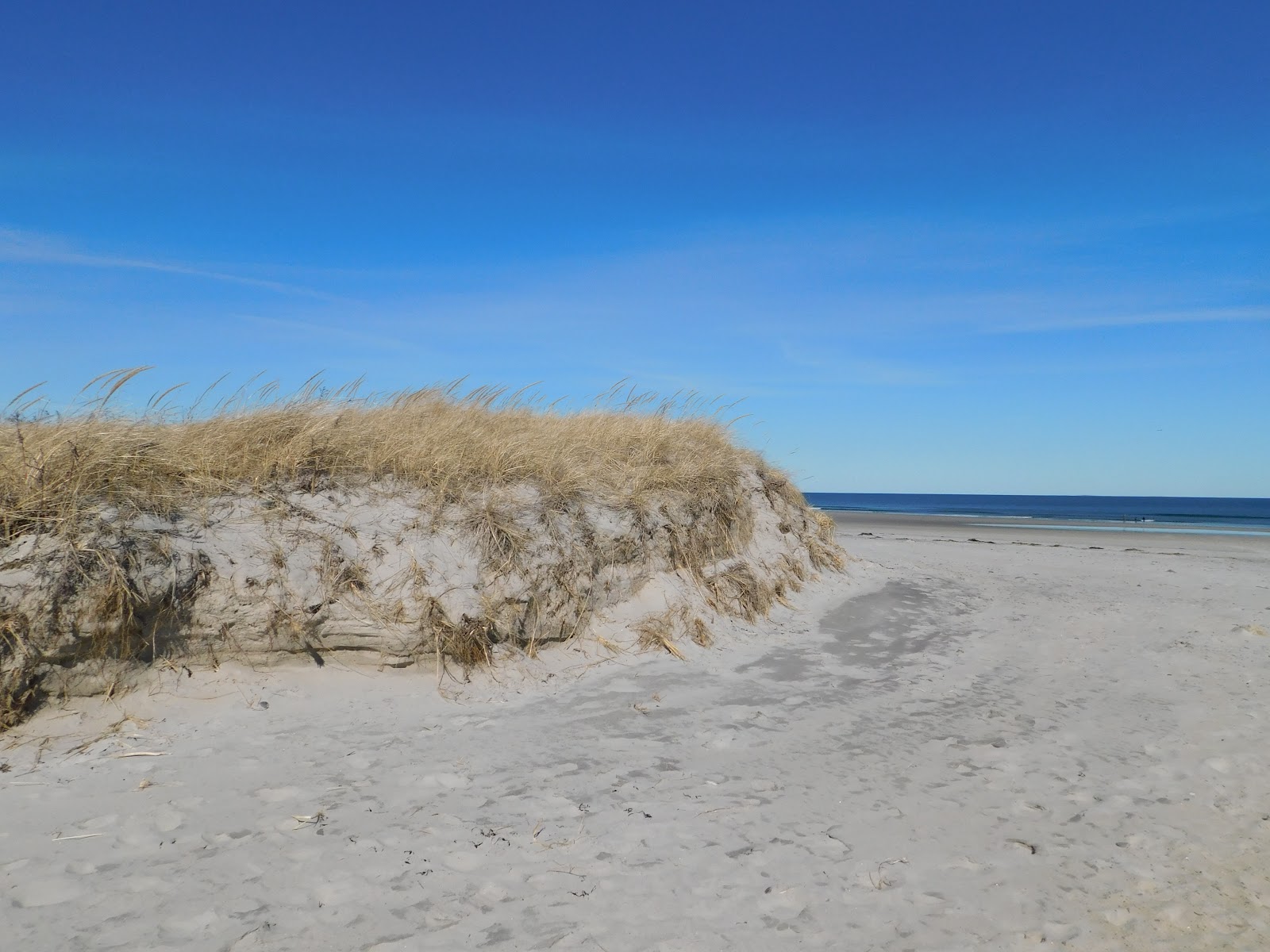
    Separating the surf from the mainland, dunes are a critical protective barrier.  When storm surge threatens inland areas, it’s often the only thing standing in the way.  Dunes aren’t just piles of sand, they’re an ecosystem of dune grass, small shrubs and other plants adapted to survive this hostile environment.  Birds and other animals live in this buffer zone, protected from the waves and wind.

    The MVP tenant in the dune is dune grass.  Its deep roots literally hold the dune together, creating a more resilient barrier when the winds and waves kick up.  Wind blows the sand against the dune, where it is trapped by the grass and helps to build the dune up, grain by grain.  Wave action erodes the sand, and the cycle continues.

    Complicating this endless dance are humans.  People walking in the dunes trample the grass, creating paths that erode in the wind.  The other contributor to erosion of the dunes in some areas is the jetty.  Jetties are constructed by the U.S. Army Corps of Engineers and serve to stop erosion of the beach while also trapping sand between each.  Jetties are essentially piles of boulders stacked in a pyramid and running perpendicular to the beach.  Trapping sand, they serve their desired purpose when engineered properly.
    When jetties are constructed without regard for the downward drift the can destroy the protective dunes and dramatically change the beach.  In Quogue, New York, a part of the Hamptons on Long Island, jetties built in 1992 stopped the natural drift of sand from Shinnecock Inlet and wiped out the dunes.  This exposed the homes that line the coast in this area to storm surge.  Visiting the beach in Quoque ten years after the construction of the jetties, I was shocked at how much the beach had changed.  The double dune was gone, and so was the pristine sloping sandy beach.  It was a great lesson in responsible civil engineering.
    The dunes on Plum Island have faced similar threats over the years.  The jetties built on either side of the Merrimack River serve to stabilize the drift of sand, hopefully keeping the channel wider and deeper than it might otherwise be.  Sand that would otherwise clog the channel is better served as a barrier beach.  Were it only so simple.  Jetties, while built with good intentions, can be a blessing or a curse, depending on where you are on the beach.  While the wind and waves are far more powerful over time than the jetties, the impact they’ve had is transformative here and now.  Dunes, while appearing timeless, are fragile ecosystems that need protection from people.


  • Finding a New Routine

    Finding a New Routine

    When Bodhi was younger we would easily cover three or four miles in an hour walking every night.  We were both power walkers, and we had a rythym and pace that we both understood and enjoyed.  Bodhi was clearly burning more calories than I was because in addition to keeping pace with his walking his tail was wagging like crazy the entire time.

    Fast-forward to today, and Bodhi’s pace has changed dramatically.  He’s more inclined to stop and sniff, mark his territory, or really anything that stopped the walk so he could catch his breath.  He’s getting older and walking becomes much more of a process than before.  I’ve learned to accept this, and appreciate our time together more than I did when we were younger and I didn’t fully understand what we had.

    Since Bodhi isn’t walking as much, I’ve found that I’m not walking as much either.  Worse, since I’m not outside pounding the pavement at 9 or 10 PM, I’m replacing that exercise time with television or reading with a drink and snack.  Or sometimes just a drink.  Or two.  Not a good routine for a weeknight, so I’m finding a new routine.  I’m getting back outside to walk, even if alone.  I’m getting up earlier to row when I’m home, and walk when I’m traveling.

    Of course, routines don’t just happen.  They start with the first step on the first day and go from there. The trick is overcoming inertia.  When I rowed and we started the spring sprint races from a dead stop we’d do three rapid, short half strokes to get the boat moving, then progress to a full length and a high stroke rate for twenty or thirty strokes.  This has the desired effect of getting the boat to full speed.  Once you get moving you then settle into more manageable stroke rate for the body of the race.

    Routines are like that too.  Quick, relatively easy burst of activity to get yourself going followed by an increase in intensity and then settle into a sustainable level of activity.  That’s the kind of routine I need to be engaged in now.  Now would be a great time to start.

  • Common Periwinkle

    Common Periwinkle

    Consider the common periwinkle.  It lives a life relatively invisible to humans, unless you happen to be on the coast in New England anyway.  Even then most people wouldn’t think anything of these creatures.  And why not?  The Common Periwinkle lives a modest life fixed to rocks or marsh grass, scarping and eating algae and hoping not to be eaten by predators.

    The Periwinkle (let’s drop the common, shall we?) is a survivor.  Its foot clings to rocks as waves crash and swirl around and on top of it.  At low tide they’re exposed to extreme temperatures.  At high tide they’re underwater for hours at a time, all while whelks, fish and even humans hunt you down to eat you.  At low tide I’ve accidentally stepped on periwinkles, and honestly a feel a little sad about it.  Life is a strange thing, and it’s easy to feel small in this world that we live in, looking out at the universe.  And yet the periwinkle offers a little perspective.  We’re small, but there are many creatures smaller than us.  Life can be challenging at times, but hey, I’m not clinging to a rock getting battered by waves while I scrape off my algae meal.

  • The Buzzard in the Bay

    Buzzards Bay is a 28 mile long body of water lined on one side by the mainland of Massachusetts and Rhode Island, and on the other by Cape Cod, the Elizabeth Islands and Martha’s Vineyard.  Buzzards Bay is named after the osprey’s that thrived along the bay.  Osprey are very different from buzzards, but the name stuck anyway.  Names have a way of doing that.

    The saltiness and warmth of Buzzards Bay make it an attractive place to bob around in during the late summer and early fall.  The bay is considered “an estuary of national importance” in the late 1980’s.  There’s no doubt that the bay teams with thousands or millions of fish, shellfish and the birds and wildlife that feed on them.  The king of all feeders is the osprey.  Watching them float and dive for fish is one of the highlights of being down here.  Thankfully they’ve rebounded from the catastrophic introduction of DDT and other insecticides into the environment.

    That  some explorer 400 years ago can mistake an osprey for a buzzard and name the place after that mistake is interesting.  What even more interesting is it didn’t evolve over time to something more accurate.  I guess once you start associating a location with a name it would be confusing to suddenly call it something else.  So the genie has left the bottle and there’s no changing the name now.  Which is a shame because Osprey Bay is a pretty damned good name if you ask me.

  • The NJ to NH Run

    As a road warrier, I’m used to long drives.  Honestly, I don’t even blink when I drive 6-7 hours anymore.  The one exception to that is the drive back from New Jersey to New Hampshire.  The timing of the drive is critical, and so is the weather.  This afternoon neither worked in my favor.

    From New Jersey, there are basically two viable options over the Hudson River; the Tappan Zee Bridge or George Washington Bridge.  When you drive over the GW you assume the worst, no matter what time of day it is.  Heavy traffic and a rough and bumpy road surface are a given 90% of the time.  Usually crossing the GW means placing all your chips on I-95 all the way to New Haven.  That’s a scary bet.

    The Tappan Zee is less predictable, but generally lighter than the GW.  I’ve always found it to be an interesting and enjoyable bridge to cross, largely because of the width of the Hudson at this point, and the beautiful cliffs that line the shores, particularly at Hook Mountain State Park.  The challenges come after you cross the Hudson.  You either roll the dice on the Sawmill Parkway or on the Merritt Parkway.  Parkways sound lovely, but they’re narrow, unforgiving roads built at a time when cars were driving 35-40 MPH.  Quaint.  Of the two parkways the Merritt is more appealing, with rest areas, a tunnel and importantly, no traffic lights.  The Sawmill has multiple traffic lights along the parkway, which puts the park in parkway.

    From the parkways you’ve eventually got to get through or around Hartford before you finally catch a cruise control breather on I-84 from Manchester, Connecticut to the Mass Pike.  This moment of bliss is usually interrupted by the realities of the Pike.  Channeling thousands of drivers from from parts west with thousands of drivers from parts south can lead to epic traffic on the turnpike.  Summer and holiday traffic is especially delightful along this stretch of Americana.

    Life at highway speed isn’t all its cracked up to be, but its still better than bumper-to-bumper speed.  The math has never worked taking the train or a plane to New Jersey.  So we all enter the grinder and hope for the best.

  • Mount Hope Bridge

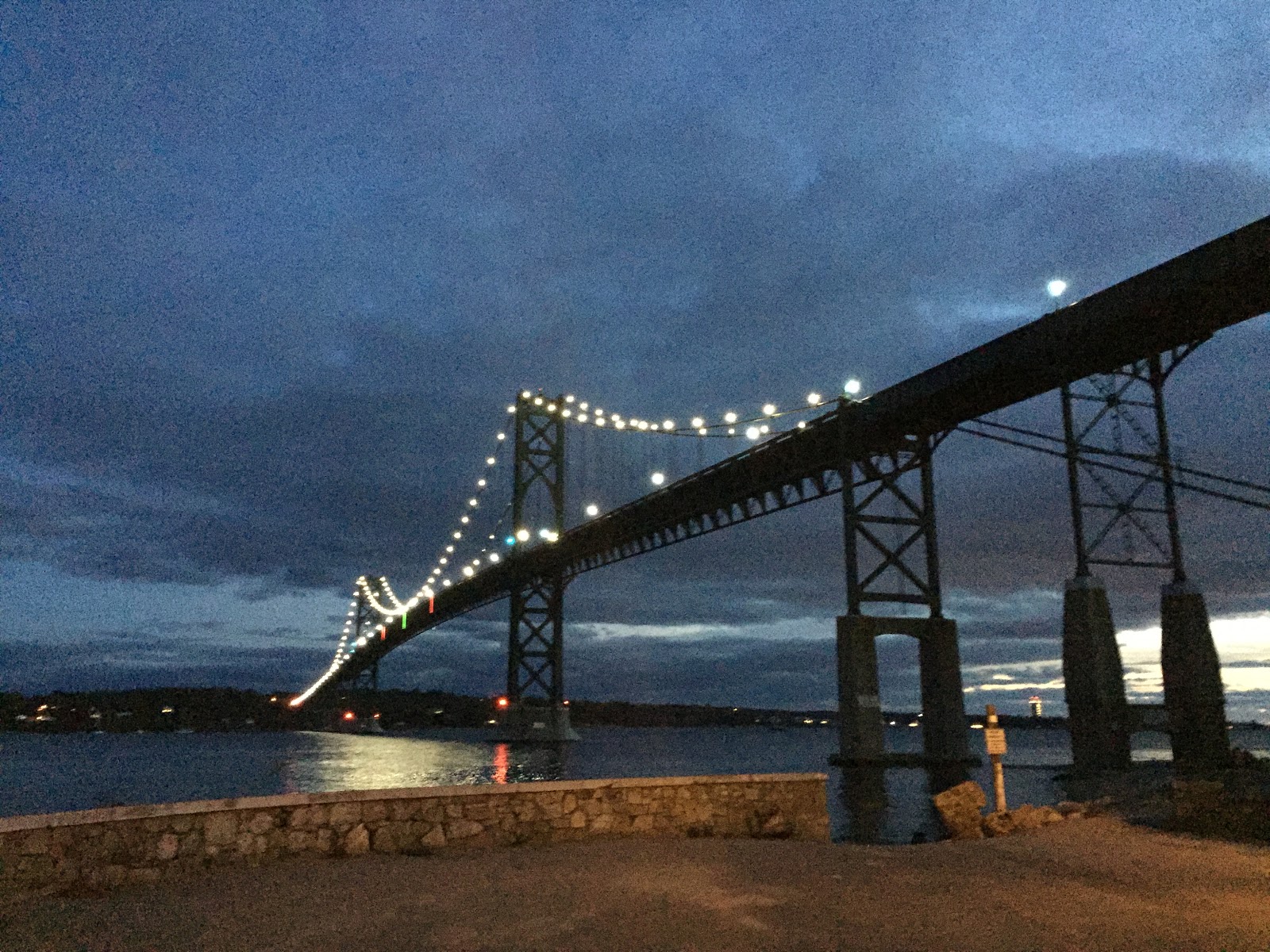
    Bristol, Rhode Island is home to the first and thus oldest 4th of July parade in America.  The stripe down the middle of the road is red, white and blue.  This town is patriotic and quaint.  It’s home to Roger Williams University and the America’s Cup Museum, but my favorite thing in this town is the bridge between Bristol and Portsmouth.  The Mount Hope Bridge is a two lane suspension bridge over Narragansett Bay.  It’s a tall, narrow bridge that runs 135 feet above the high tide mark.  There are no sidewalks on this bridge – one lane each way at no wider.  It’s on the National Register of Historic Places because there’s quite a history to it.

    The Mount Hope Bridge was proposed in 1920, supported by the wealthy and influential William Henry Vanderbilt III and finally completed four days before the 1929 Stock Market crash that started the Great Depression.  It’s named for the bay that it spans, which in turn is named for the 209 foot hill Mount Hood.  There’s incredible history in this area.  The Wampanoags held meetings at a rock formation called King Phillips Seat near Mount Hood.  Thankfully this is preserved by Brown University, which owns the land in that area.  That history is a blog (or a few blogs) for another day.  Today is about the bridge.

    Timing the ride over the bridge well, you may be lucky enough to see a spectacular sunset over Narragansett Bay and Jamestown.  It’s one of the rare times when I wish there was traffic so I could just watch the sunset.  Sadly there are no pedestrian walkways on the bridge, though in theory I could ride a bike across the bridge.  In practice that’s a scary thought.  The lanes are narrow and there isn’t much forgiveness between moving vehicles and the bay.  I’m not risk-averse but that doesn’t seem like a recipe for success.

    I’ve had an affinity for bridges for a long time.  It may have been all those trips across the Sagamore Bridge going to the Cape as a kid.  It may have been those long rows from Lowell to the Tyngsboro Bridge in college.  Or memorable trips across the Brooklyn Bridge, Golden Gate Bridge and recently the Vasco De Gama Bridge in Lisbon.  Beyond their utility and architectural beauty, bridges represent connection.  The Mount Hope Bridge may be named after a hill, but I prefer to think of the name as nod to optimism.  Connection and Hope.  We could use more of each in this strange world we live in.

  • Maple Season

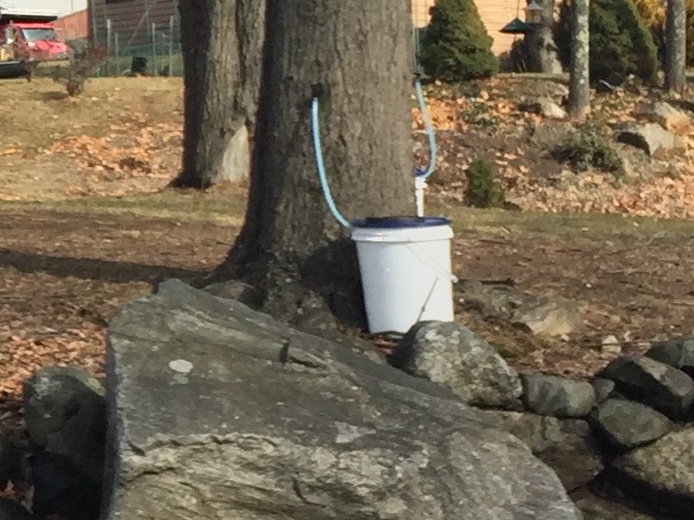
    As the days get longer and the sun sits higher in the sky, a site unique to the region starts to appear.  Buckets or plastic barrels start to appear around the maple trees.  Plastic tubing running from the trunks of tree to to these containers wind through the woods.  Maple syrup season is upon us.

    The process of collecting sap and boiling it down in barns and sheds to the sticky sweet topping for pancakes and waffles begins now.  The key, I’m told, is to have cold nights and warm days, which triggers the sap to run.  I’m not sure who in history started licking the sap coming out of the maple tree to discover it was sweet, but I do know they’d be shocked at the industry that’s grown around it.

    Maple syrup comes in two varieties, the real stuff and the dark brown, mass-produced junk spotted in the supermarket and made by subsidiaries of Fortune 500 companies.  Look, I’m sure they’re nice people too, but if I’m going to invest in the carbs and calories for syrup, I’m opting for the real stuff.  Real maple syrup, like local honey, just tastes better.  It also has a lower carbon footprint, isn’t full of additives and preservatives, and supports people in my region.  The buckets are a true sign that spring is right around the corner, and I smile when I see them as I drive through New England.