Category: Culture

  • Seeing the World for the First (?) Time

    Our awareness has been stretched wider than ever in history, but often at the cost of taking away a lifetime of experiences.” – Seth Godin

    “We were the first humans who would never see something for the first time.” – Gillian Flynn

    Both of these appeared in my feed within minutes of each other this morning, in turn each pointing out the world we live in being smaller than ever before, and casting a neon glow on a topic I should explore before the muse carries it on to the next writer. Candidly I’m itching to return to writing more local history, but it’ll have to wait a bit longer. I’d be a fool to turn a cold shoulder on the muse, wouldn’t I?

    Godin laments the cost of awareness in our world of YouTube, Instagram, streaming media and, yes, travel blogging. We tend to know about things just by casually dipping our ladle into the stream of information flying past us in all directions. But sipping from the ladle isn’t immersive exploration of new places and ideas. It’s the Cliff Notes, not War and Peace. As Godin writes, there’s no excuse for being uninformed, but there’s also no good reason for being inexperienced.

    Flynn laments that media often offers a better picture of the world than going there and seeing it does. I’d say she’s partially right in that we cheat ourselves of the wonder of the new having seen it before we get there. But I disagree that the experience is better through media or that we don’t experience something substantively better being there versus seeing it on a screen. I can look out the window and see snow, or I can walk outside and understand snow.

    The crew of Fayaway are in Saba at the moment. It was nothing for me to pull up a video of people hiking up the mountain they hiked up, see the massive leaves they saw and the same view out to St. Kitts that they sent me in a text message. But a YouTube video is a very small sample of the experience they had of talking to locals, feeling the heat, getting out of breath climbing to the summit, and the exhilaration of reaching the summit and catching a first glimpse of the panoramic vista. That is their experience of a lifetime, while I’m simply aware of what it generally looked like for them after watching a YouTube video.

    The world is smaller than ever, and we’re blessed to experience the wonders of it without the cost of earning it in money, risk, sweat equity and sacrifice. But experience on a screen isn’t experiencing life, it just eliminates the surprise of knowing what’s around the corner when you can Google street view so much of this world. Surprise can be good, and surprise can be very bad. Maybe the answer is to use all this technology to mitigate the impact of the bad while minimizing the reduction of the other.

    Maybe VR will bring us closer than we’d ever imagine in the next few years. There’s enormous value in practicing on the flight simulator to get it right before you fly the Boeing 777 overseas, but you still need to get experience on the real thing after that before they load passengers on with you. Likewise, seeing what the Google street view was prior to pulling out of Edinburgh in a rental car made me more comfortable when I did it. It didn’t simulate the tactile oddness of the left hand shift instead of the right or the adrenaline rush of the first roundabout going the opposite way, but it eliminated sensory overload having seen a bit of it already.

    Humans are meant to move, and to interact and react to the world around them. Media is getting exponentially better at recreating this experience, but that doesn’t make it experience. The answer is to get out and be a part of the world, not just watch it through someone else’s lens.

  • Something More

    “…I don’t believe

    only to the edge
    of what my eyes actually see
    in the kindness of the morning,
    do you?

    And my life,
    which is my body surely,
    is also something more—
    isn’t yours?”
    – Mary Oliver, from The Pinewoods

    Reading this, I thought of the familiar analogy of a stone dropped in a still pond and the ripples it creates. We aren’t our bodies but a sum of the actions and interactions we have with it over our time in it. The more we learn, the more we offer to the world, the bigger our ripple.  I think of people in my own life who offer a pretty large ripple, and I hope I’m doing the same. Mary Oliver offered an example of a tsunami with her work, and this excerpt from The Pinewoods demonstrates her keen awareness of her own something more.

    I think of living a larger life as well.  Something more involves more, and more meaningful, contribution over time. Acquired skills and knowledge enable a greater contribution.  Something more also means showing up and doing work that matters.  It’s the unseen, uncredited things you do for your family, friends or complete strangers that make a small or sometimes significant difference.  And it’s sacrificing the immediate gratification for the long term vision in daily actions.  What is your contribution?  What are you offering the world in this moment?  And how can you improve today?  I ask myself these questions every day, and sometimes I have the answer readily at hand.  Other days it’s more evasive.  But I do believe being present is a large part of the answer.

    My life, which is my body surely, is also something more – isn’t yours?  I’m watching people I care about age in different ways.  The body aging is a natural, if not always welcome, condition of being alive longer.  Something more when your older seems to be either left in your legacy of previous contributions or in your ongoing contribution.  As long as the mind is sharp, there’s no reason for contribution to stop.  If Stephen Hawking can leave such an incredible wave across the pond for centuries after learning he had a slow moving form of Lou Gehrig’s disease, then why shouldn’t someone who has full speech and much better, if slower than it once was, mobility not contribute as well?  I’m not elderly yet, but I’ll be damned if I just sit in the corner watching Wheel of Fortune when I get there.  I’ll be moving at a modified version of full speed as long as the mind and body allow, and if the body doesn’t allow, then my writing might accelerate even more.

    Don’t believe only to the edge of what your eyes actually see.

  • Walking the Line

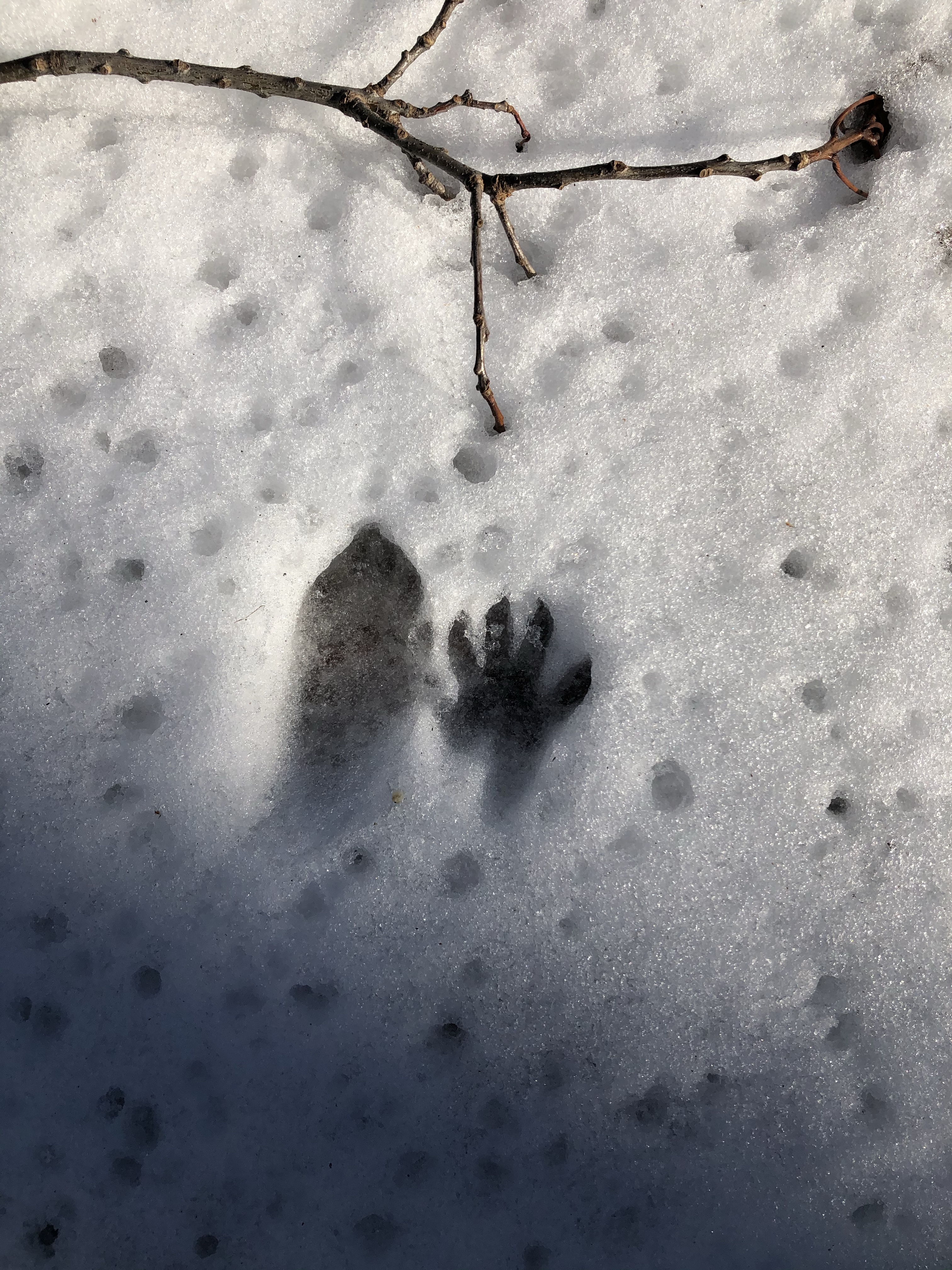
    Walking this morning on Cape Cod I saw turkey tracks in the snow. The funny thing about turkey tracks is they look like arrows, pointing this way and that, as if to tell you to Go here! No, go there! Turkey walk in circles looking for food, and their tracks point you, if you tried to follow the “arrows”, towards the same madness. It’s a wonder of confusion and I smiled at the sight of it.

    I’m glad I walked early, because overnight snow didn’t stand a chance on the edge of Buzzards Bay, where the ocean moderates temperatures as easily as it moderates moods. Looking at the temperatures in New Hampshire, there was a 21 degree difference between the hills up north and Cape Cod. 100 miles and 200 feet of elevation make a big difference between order and chaos when you’re talking snow.

    If turkey tracks are scattered madness, the surf line offers a measure of predictability, for even on its own erratic path it still runs roughly parallel. The surf line finds its own path, curving and cutting this way and that based on the push of the swell, the contour of the sand and the strength of the breeze. The funny thing about the surf line is that it looks similar whether you’re up close on a quiet pre-dawn beach on Buzzards Bay or flying 1000 feet above the New Hampshire coast in a Piper Cub. Up close very different. Add the right distance and the mind tricks you.

    We’re incredibly lucky now, with these great leaps across time and space. Anything is possible, really, in our timelines in this time. Yesterday I woke up in Ithaca, New York, watched a college basketball game in Rhode Island, and went to sleep on Cape Cod. This morning I walked on the beach and this afternoon I was shoveling snow back in the hills of New Hampshire. I could easily be in London or California or some other place for breakfast tomorrow morning if time, money and responsibilities allowed. Quick leaps between here and there are possible, which makes the world a magical place.

    I run into a lot of people who march along a pretty straight line in their lives, not straying far from home, going to the same job every day, taking the same vacation to the same place for a week or two every year. I’ve tried that line, and it’s not me. Granted, you don’t want to be a turkey moving about in circles with no rhyme or reason to where you’re going. But what’s the fun in traveling a straight path from here to there? Don’t be a turkey, play along the surf line! Follow your own path as it meanders along, but with an eye towards the destination. You’ll still get from here to there, but the path will be a lot more interesting.

  • Fences on Bridges

    When you live in the north, you don’t even see them most of the time. And why would you? When you’re driving you’ve got other things to worry about, like other cars and large mammals leaping in front of your vehicle. There’s plenty of evidence of how that ends for the mammal dotted along the roadways. So inanimate objects understandably don’t get a lot of attention, especially when the inanimate object is a chain link fence atop a bridge you’re driving under. But I think about those fences, and was reminded why last week.

    There’s only one purpose to fencing edging the sides of bridges; to keep what’s on the bridge from plummeting off the bridge to the ground or road below. This is critical for keeping, say, an avalanche of snow coming off a snowplow from suddenly blinding the vision of an unsuspecting driver when it lands on their windshield. I’ve experienced this, and don’t recommend seeking it out in your winter travels.

    The fencing also serves to keep people from accidentally or deliberately exiting the bridge using the side exits. And I was reminded of this purpose last week as I drove down I-90 last week, looked up and saw the flowers. And the flowers reminded me of the darkest day in a college friend’s life, when he looked over that bridge and saw his daughter lying on the side of the road, feet from where I was driving last week, almost two years since he held her lifeless body in that place. She’d climbed over that fence in the middle of the night, and forever shattered many lives as she ended hers. I’m shattered for them, still.

    And now I look at bridge fences differently, especially that one. I’m grateful for the people the fences keep in to live another day, and mournful for the families of those who didn’t find the necessary impediment to their darkest inclination of the moment. May the fences be taller than the depths of someone else’s darkest moment.

  • Doing Things That Matter

    A little more than a year into my focus on daily habits, the overall the results are encouraging.  James Clear’s Atomic Habits poured gasoline on my focus on doing things that matter every day,  beginning with small things like reading more, writing every day and exercise.  It started with changing the routine when I got up in the morning, where once I’d consume sports media, check email, scroll through social media or play Words With Friends first thing in the morning, I started focusing on the very small habits that might move me forward.  Exercise to get the blood flowing, reading to get the brain matter firing on all cylinders, and writing, to finally do what I’ve been putting off for most of my life.  These aren’t everything that matter in my life, but they were the things I was pushing aside to focus on the other things.

    Priorities remain: family and work obligations come first, but following close behind are the daily habits. In fact, each habit improves the quality of my life, which improves the whole. Pretty simple, really, if you just incorporate the right habits and build them into your routine.  I’ve seen tangible momentum in all three, with the writing on this blog a measure of proof to consistency.  You’ll have to take my word for it on the exercise, and just like the writing daily habits add up over time.  I’ve seen the scale slowly – painfully slowly – showing consistent improvement.  I’ll take that.  I write a lot about writing, and walking.  And then there’s the reading….

    Once again the books are piling up, with four in the cue already I just purchased a Kindle version of Siddhartha by Herman Hesse and revisited Working Days: The Journals of The Grapes of Wrath 1938-1941.  It would be far better to finish one of the original pile before adding more, but so be it.  Books tap you on the shoulder and tell you “It’s my turn” when they feel you’re ready.  This morning Hesse and Steinbeck were both bullying their way into my reading time, and I welcomed them with open arms.  My reading is accelerating, not by speed-reading (which I’ve tried but don’t enjoy), but through focus and occasional multi-tasking (reading on the Kindle app on the iPhone while in line at the store, and more frequently, reading with maximum font on the treadmill while churning out steps).  Consistent, daily reading has been one of the best things I could’ve done for myself.

    So what else matters?  Plenty.  The world is getting exponentially better in many ways, and sliding into the abyss in a few ways.  If you want to improve the world around you it starts with contribution.  The more you do, the more capacity you have to contribute more; more effort, more money, more intellectual horsepower, more empathy, more credibility, and more time.  Ironic, isn’t it?  The more you do the more time you’ll find for the things that matter.  And there’s plenty that matters, if you take the time to think about it.  And that’s where I find myself today, thinking about it and taking a small measure of action, one step at a time.

  • 1917

    I saw the movie 1917 last night, and it’s stayed with me well into the morning. No spoilers here, just appreciation for an exceptional cinema experience. It’s the kind of movie I go to the movies to see; visually stunning, technical filmmaking with powerful acting that weaves between poignant scenes and heart-racing violence. Not the gratuitous, glamorized violence I’ve grown to hate in Hollywood nowadays (see the trailer for The Gentlemen for formula: turn your gun hand to 45 degrees and make a face), but the violent reality of a drawn-out war and the simplicity of two men on a mission in impossible conditions.  It’s the kind of movie you feel privileged to see in a theater, with the seats vibrating with every bang and boom and the full immersion the big screen offers, but without the testosterone-enhanced machismo of the Xbox/CGI movies.

    If this is the new golden age of television with HBO, Netflix and Amazon cranking out brilliant series, then where does that leave the classic craft of intelligent movies?  Blockbusters rule the movies because they make money.  I’ve had this debate with my aspiring screenwriter daughter and yes, I know, superhero films are an art form of their own.  That’s fine if you’re into them (and I know millions are into them).  Star Wars sequels and car chase movies pull in the dollars, but where do those of us that prefer to consume a different kind of entertainment experience go?  I appreciate the occasional visit to a cinema to see a truly great movie, but feel reluctant to part with my money to see CGI with a soundtrack.  So having a film like 1917 is a real treat – it satisfies both audiences.  I hope it’s the highest grossing movie of the year, because more films like it would get produced.

    I write all of this knowing the irony:  I choose to keep the television off most of the time and wouldn’t be heartbroken to cut the cord altogether.  I don’t play video games (computer chess is decidedly not a video game).  I’d rather take a walk in the woods or on the beach than go see an Avengers movie.  No, I’m most certainly not the target audience.  Which should make it all the more impactful when a movie draws me in this way.  If you can get me to go and rave about a movie, you should have a real winner on your hands.  Hero’s journey without the overtly formula plot twists. Dignity, courage and determination in a two hour journey through the horror of WWI: The Great War, the war to end all wars…. yet didn’t. Go see 1917 in a great movie theater, you won’t regret it.

  • Coffeehouse Self

    The commute started early this morning, with an early meeting conspiring with noise in my head about getting on the other side of the rush hour traffic that would surely build with every minute. Nothing stresses my commuter self more than being late for an appointment with miles of traffic ahead of me. I don’t like commuter self all that much, and avoid his company when I can.

    Traffic going into Boston is a wonder, but not wonderful; starting much earlier than you’d think possible, lingers past when you’d expect it to end, then reverses direction almost immediately to wreak havoc on your soul when you head home. You either skate your lane, distract yourself with music and podcasts or you let it get to you. I’ve gotten better at letting it go, but it’s a weakness in my character and I feel commuter self creep back into the car more than I’d like. So I play the active avoidance game when I can, and podcast the heck out of the worst of it. I once turned down a great job with a big promotion and raise because I didn’t want to crush my soul with the two hour 40 mile commute. I don’t regret the decision.

    This morning I time-travelled to Boston, found a café and sit writing this blog while others are stop-and-going on the highways I just left. Coffeehouse music is playing, counteracting the effect of the caffeine and the adrenaline of hundreds of cars and trucks I spent the last hour with. My coffee sits steaming on a distressed wood table and The Lumineers and Jason Mraz are playing just loud enough that I can barely hear the diesel engines and honking horns out there. The regulars talk amongst themselves but the place is still full of empty. There was no logical reason to leave as early as I did, with 90 minutes of time to spare. But I like the company of coffeehouse self more than commuter self, and that was enough for me.

  • Snow Globe Perceptions

    Driving in heavy snow yesterday with the headlights illuminating every snowflake, it looked like the scene in Star Wars when they shift to warp speed with the stars streaking by. My daughter pointed this out, and then made the observation that all those snowflakes weren’t streaking towards us, we were streaking towards them. And I thought to myself first, you’ve raised a very intelligent and perceptive daughter. And then I thought about perceptions, and what else are we streaking towards that we think is coming at us?

    The news comes to mind. We tend to validate our beliefs by seeking out news that is consistent with our worldview. Watch CNN or Fox and it either feeds your beliefs or enrages you, depending on your regular diet of spun information. Who you follow on Twitter is another example, with tweets of varying substance flying at you like those snowflakes seemed to. Think you’re falling behind others? That’s a perception too, validated by Facebook and Instagram posts, or counting WordPress likes.

    So how do you change your perception? Easy; slow down. When you stop driving highway speeds those snowflakes just drift slowly to the ground. When you unfollow people on Twitter the world seems more sane. When you stop tracking who’s vacationing where or how many followers someone has and change your perspective to what you’re grateful for and what you’re contributing to the world you suddenly exit the storm in your mind and things become clear. Stop shaking the snow globe and use that energy to create desired outcomes. Simple…. right?

  • Restlessness Met Sadness And They Both Smiled In Recognition

    Life is like the 55 meter indoor hurdles run by klutzes for its briefness and the lack of elegance with which we all get through it.  Family gatherings during the holidays offer the opportunity to take stock.  How have you been and what are you dancing with now?  Jamming multiple family events into one day means not spending enough time with any one person, but instead getting quick downloads between eating too much and taking pictures for posterity and InstaGram.  The latter offers immediate notification of what you’ve been up to for your followers (some of whom are in the picture), the former is the path highlighted for you years later when everything has changed.

    In the last family event of the night, after all the caloric intake and the unwrapping of gifts and the catching up on what you’ve been up to, I realized I was way too warm and needed a walk outside in the cool air.  Looking at my watch I calculated how realistic it was to hit 10,000 steps and weighed it against the limited time I have with these people in my life.  I settled on a quick walk around the block and resigned myself to getting the rest done in the shrinking time left in the evening.  I’d get over the mark eventually, with an hour to spare in the day.  Should’ve knocked it off first thing in the morning but such are the holidays.

    When I have a goal in mind I get restless, and sitting in a chair for hours isn’t going to cut it for me, so it wasn’t long before I needed to walk around the house a bit.  So I left the crowded room to walk around the kitchen and into the formal living room, built for showing furniture that people don’t sit on.  There standing by the door was the oldest aunt of my wife, waiting for a ride home that wouldn’t come for awhile as my father-in-law chatted in the other room with my kids.  In that moment she looked like a teenager, though she is dancing with 90, waiting by the door to go.  We talked about sports she used to play, for she was a very active in tennis and skiing for much of her life, and her eyes welled up as she talked about not doing those things anymore.  We smiled and talked and eventually it was time to go and we opted to bring her back to her apartment and chatted more with her as we drove.

    My restlessness met her sadness and they recognized each other.  The sadness was rooted in her own frustrated restlessness, doomed to an older body and an aging mind battling dementia.  She missed Thanksgiving on a bad day, but on Christmas she was lucid and sharp, seeking out conversation and connection.  And we connected and smiled at stories of past glories, recent small victories and setbacks overcome.  And I thought about my own restlessness and wondered when it would meet sadness again.  We all look in the mirror and see our story.  If I’m lucky enough to get there I want the sadness in my old age to be for the things I can no longer do, not the things I never did.

  • Season’s Greetings

    “And so this is Christmas
    And what have we done
    Another year over
    A new one just begun”
    – John Lennon, Happy Xmas (War Is Over)

    Lennon always breaks through the crush of Christmas songs this time of year, challenging and reminding me that yes, another year is indeed over and what have you done?  And in 2019 it turns out I’ve done a lot, but we humans are never really satisfied are we?  So much left to do, and 2020 is just around the corner.  But today I’ll pause and reflect and be grateful.  Peace be with you.