Category: Environmentalism

  • The Other Side

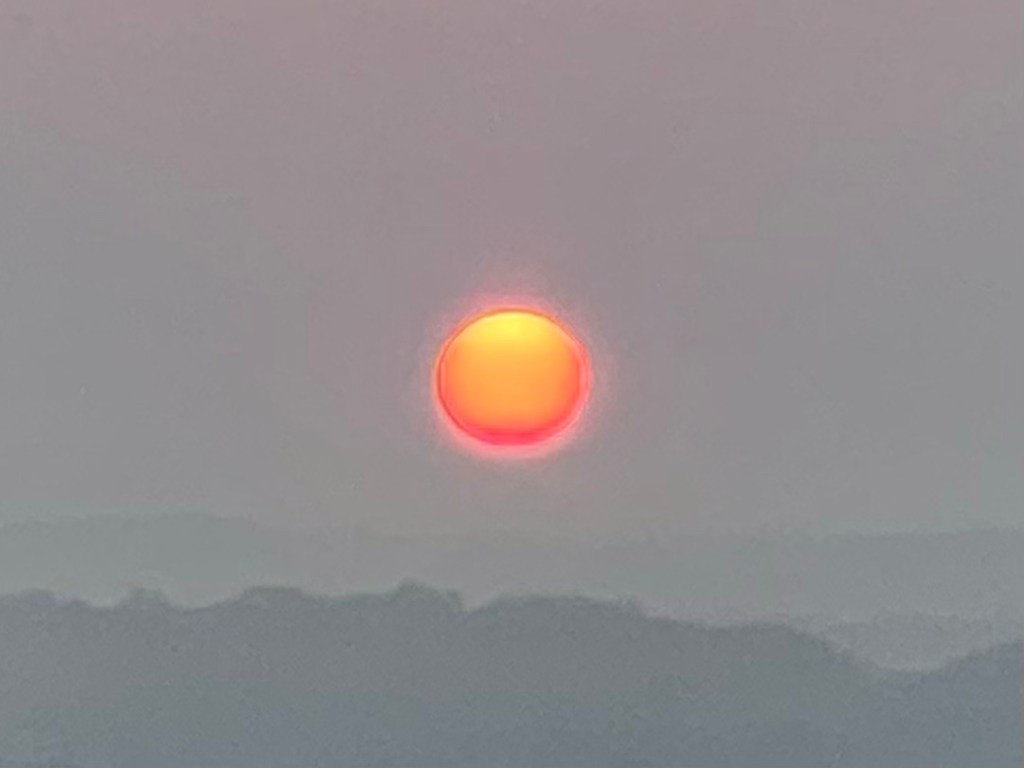
    What happens when you reach the other side of climate change? When is that step too far? Is it the blood orange sunrises from all the smoke in the atmosphere, or the closed trails and roads flooded to ruin? Is it the oppressive heat in the Middle East well above anything a living creature could survive in? I look at the trees for guidance and find they’re equally perplexed. More fallen leaves and branches than ever recollected, some fungus turning tree tops autumn colors in July. Do we wonder what’s happening to us?

    We generally agree we ought to do more, but rely on too many incompetent charlatans to bring transformation just when we need leadership the most. It’s now or never, and we must each rise to meet it. Will we? Have we thus far? When will we reach the other side of apathy?

    A not-so-normal but all-to-common 2023 sunrise. This is a real picture.
  • Bottle Cap Time Machine

    I casually cracked open a bottle of water and placed the cap on the table. Sitting there, it seemed insignificant and commonplace. But hidden inside that cap is a time machine, bringing my brief encounter with it to the future, likely long after I’m gone myself. That bottle cap may survive the entire bloodline of my family, and by its very make-up an artifact representing an instant in my own brief moment in this world.

    Walk into any museum or visit an archeological dig and you’ll find artifacts to past lives. These were the bottle caps of their time, pottery, utensils, arrowheads and other trivial bits from which we derive the larger life of the person who left that artifact behind. That bottle cap represented but a moment of hydration in an otherwise ordinary day of business travel. I wonder what might be derived from it in the future, when millions of such plastic caps live on as time machines for countless other lives?

    The only thing certain is that they will point back at a time when the trivial bottle cap immediately became an afterthought, cast aside to begin its life cycle beyond our own. A life of hundreds of years, all to serve a few weeks of containing whatever fluid we happened to consume. The entire transaction is so commonplace in the average life of one soul on this planet, and yet has such a lasting impact on the environment.

    I wonder, what will it say about us?

  • Raising a Voice in a Storm

    We’ve somehow arrived at a place where a lot of people seem to take issue with other people. Where people in power want to grab a lot more for themselves to stroke their egos. Where grabbing as much as possible now is more important than saving things for later. And I wonder at the strangeness of it all. For I view the world in just the opposite way. And I think that most people do as well.

    And yet the angry voices prevail. What do we make of it? And how do we turn things back towards collaboration and generosity? Back to where it felt we were not all that long ago.

    I believe the key is to raise our voice more often. I never was much for raising my voice and questioning the logic of some unusually vocal outlier. Too confrontational. But the problem is we have too many people just keeping their mouths shut and letting things be. And that’s when the people on the angry edges get their voice heard. That’s when the development edges out the forest. That’s when extremists storm the capital and pretend it wasn’t what you saw when it fails.

    Can’t be singing louder than the guns, while I’m gone
    So I guess I’ll have to do it while I’m here
    – Phil Ochs, When I’m Gone

    Maybe it was hearing this song again, thinking about the battles for peace and equality 50 years ago that have never been fully resolved, that has me thinking this way. Maybe it’s being sick and tired of all the violence and twisted logic parroted back to me from people sipping the poison a little too much. But I’ve about had it with passively listening to people justify what I believe to be wrong.

    We’re all taught to be polite, to not make a fuss about things. But others break this unspoken rule all the time to advance their interests. At some point you’ve got to rise up and speak for what is right. We have to speak up to save what is left of the planet and humanity. While it’s here.

  • One Soggy, Smoky & Small Planet

    “Your eyes had a mist from the smoke of a distant fire” – Sanford-Townsend Band

    This 70’s lyric was in my head when I woke up this morning. It’s a song I rarely think of, shoved to the back corner of my brain with Disco Duck and some other pop music that is best left in the decade it was found in. And of course the smoke of a distant fire is to blame.

    We may think we live on a limitless, massive and resilient planet, but any illusions disappear when you smell the smoke in New Hampshire from fires in Washington and Oregon. When you have days of burnt orange sunlight turning the days into some science fiction movie. And it repeats itself day-after-day and year-to-year.

    And of course, while they’re burning out west the northeast and Germany are soaked through in rainwater. Our feet are wet while our lungs are filled with smoke from the other side of the country. Earth is off-kilter. And maybe there’s time to fix it, maybe there isn’t. But most people are so indifferent that it seems inevitable that we’ll slide into a crisis of our own making.

    If I’ve learned anything from trying to kick bad habits, it’s that changing your routine and worldview is difficult. We all know people who still smoke while being treated for cancer, or still eat poorly while managing Type 2 Diabetes. Getting people to wear a mask or get a vaccine during a pandemic became a political statement. So what are the odds that people will change as the climate changes?

    My optimism is currently tinted in smoky orange.

  • Falling Buildings and a Changing World

    We don’t know all the details about that building collapse in Florida as I write this, but what is trickling out in the news indicates that they’ve known there was a problem and they’ve been battling internally to correct it for at least a few years. I imagine a few thought the problem was urgent, a few thought it was overblown, and the vast majority were somewhere in the middle, just trying to figure out what it’ll cost them to fix the problem and make it go away. And then the building answered the question of “how urgent is this?” for them.

    Habits and momentum tend to dominate the conversation we have in our heads about what we do next. If things seem fine, then we keep doing the same thing again tomorrow. But what if that thing is slowly killing us? People quit smoking or drinking all the time because they recognize that these habits, whether in excess or moderation, are part of an identity they no longer want to embrace as theirs.

    The evidence indicates that the world is spiraling down into ecological turmoil , yet humanity doesn’t appear to be doing nearly enough to change it. So when does it shift from an intellectual question to an existential crisis? When it’s your tap that runs dry? When it’s your own home burning? Or when the rebar and concrete holding it all together is crumbling underneath you? If we can’t get people to reach consensus on climate change or the power of a vaccine or the obvious corrosion of your building’s foundation, what chance do we have?

    That old expression be the change you want to see in the world is exemplified in people recycling or maybe driving an electric car or putting solar panels on the roof. You do things like getting vaccinated when it’s your turn and vote for positive change when elections come along. You even buy local produce and pasture-raised meat from a farmer near you. And maybe you even join the condo association board to tackle once and for all the problem with the building you live in.

    But then you feel the resistance to change. The perceived cost of change. You might look around and feel your efforts are cancelled out by the ignorance or bad behavior of others. And maybe you start to wonder whether any of it makes a difference at all. Why fight the fight at all when so many don’t choose to listen?

    If that building collapse tells us anything, it’s that it all makes a difference. That building didn’t care which side of the debate you were on about fixing the foundation, it swallowed them all up just the same. Maybe we can’t fix everything, but collectively we can try. And maybe, if we’re lucky, we aren’t too late. The urgency of now has never been more apparent.

  • The Naming of Cape Cod

    “On the 26th of March, 1602, old style. Captain Bartholomew Gosnold set sail from Falmouth, England, for the North part of Virginia, in a small bark called the Concord… The 15th day,’ writes Gabriel Archer, ‘we had again sight of the land, which made ahead, being as we thought an island, by reason of a large sound that appeared westward between it and the main, for coming to the west end thereof, we did perceive a large opening, we called it Shoal Hope. Near this cape we came to anchor in fifteen fathoms, where we took great store of cod-fish, for which we altered the name and called it Cape Cod.’” – Henry David Thoreau, Cape Cod

    A bit of trivia lost in history is where Cape Cod originally got its name. A lot of people, including Thoreau, point to Gabriel Archer. Archer wrote the entry Thoreau quotes above in 1602. He’d then go on to supposedly name Martha’s Vineyard after his daughter when an abundance of grapes were found there.

    Of course, without the Cod, it might have been named something else. Four hundred years of fishing decimated the Cod population, leading to sharp restrictions on fishing. Pressure from commercial fishing lobbies to raise limits on Cod run counter to the goal of full restoration of the biomass. And then you’ve got those seal population increases. The slow restoration of the Cod population is ongoing, but like so many endangered species it hangs by a thread.

    Archer traded with the local Wampanoag Tribe at what is now Cuttyhunk. He returned to England that same year but would return again in 1607. Archer would butt heads with John Smith in Jamestown and would ultimately die there within a few years. His journal was published after his death and the names Cape Cod and Martha’s Vineyard were sticky enough to live on well after him. More than his own name, it seems. Life is funny that way.

  • Encountering Darshan

    “‘There’s a Sanskrit word, darshan,’ Jon said as we gazed up at Konka. ‘It suggests a face-to-face encounter with the sacred on earth; with a physical manifestation of the holy.’ I hadn’t known the word, but I was glad to have learnt it. Darshan seemed a good alternative to the wow! that I usually emitted on seeing a striking mountain.”Robert Macfarlane, The Old Ways

    Waterfalls and sunrises and mountains and ancient trees are a physical manifestation of the holy. And so is the ripple across a calmly rolling ocean betraying a puff of wind. And the Milky Way on an especially dark and clear night. The catch in my throat when I see these things is spiritual, more than any church I’ve ever walked into, and I go out of my way to seek them out. Admittedly, I haven’t been to the Sistine Chapel yet, but I’m not convinced you can’t find the same thing walking deep into the woods.

    I stumbled on the quote above from Macfarlane and immediately identified with darshan in this context. I read this book almost eight years ago and keep returning, skimming over magical phrases and bucket list places. But in the end the book is about standing up and walking out to find yourself in the world. To come face-to-face with the divine requires inspired effort. Sweat equity in your spiritual education. Getting out there and in it.

    And yet… One of the most beautiful waterfalls I’ve ever seen is She-Qua-Ga Falls in Montour Falls, NY. It felt like cheating when I arrived, because you essentially drive right up to them. The falls are framed by houses and a concrete lined basin below and an arched bridge above. Like Niagara Falls humanity encroaches on the beautiful, threatening to edge it out in the process. But truthfully I don’t see those things at all; I look at the timeless waterfall captured there, like a rose under glass. And I see darshan.

    There’s a tendency for people to see something beautiful and immediately try to put a stake in the ground there. The Eagles wrote about this in The Last Resort. Houses lined up on the edge of the beach grabbing a share of sunset and water views. Homes mounted atop mountains to maximize the view while killing it for those looking up at the mountain they’ve scarred with a box. I visit a house with a great sunset view as often as I can, and would be a hypocrite if I were to condemn those who build for the view. For all the beauty we see from that house by the bay, I know that the view from the water or from the other side of the street is a row of houses. So I take no issue with the people who built Montour Falls for edging up to the falls and wanting to linger there, but wish the land around the falls had been preserved in its original state. Then again, the falls are beautifully accessible for those who can’t hike deep into the woods. Darshan on display for everyone. And maybe that’s enough.

    The network of trails and rhumb lines that weave across the Earth like a tartan reveal the whispers of those who came before us. There’s very little that hasn’t been seen by someone before us except in the most remote corners of the planet. But who said encounters with darshan must be exclusive anyway? Each human making their way in this world looks for something greater than themselves. Encounters with darshan are uniquely ours alone, even when shared with others we internalize it differently. But what is darshan if not seen through the lens of our mortal human perspective? We seek it out, discover something in ourselves, and try to capture the divine with a few inadequate words and pictures. And honor it as best we can before leaving it for others to discover in their own time.
  • Seeing Stars

    “The stars, that nature hung in heaven, and filled their lamps with everlasting oil, give due light to the misled and lonely traveller.” – John Milton

    One side effect of the wildfires in the West are the clouds of wispy smoke high up in the atmosphere turning the days an overcast grey. At night the stars are obscured by this wispy smoke, the remnants of trees and homes and life disrupted 3000 miles away masking the stars above us. I’m reminded of how much I measure the night by the stars above. Companions lost in the haze. I believe that if this doesn’t convince people of climate change what will? But the stars aren’t the only ones lost in the haze. I’m often surprised at what people will believe, but the larger tragedy is what people will make people believe to raise their own status. Even at the cost of the quality of life for all current and future inhabitants of this planet.

    “Little by little,
    You will turn into stars.”
    – Hafiz, Skinning Your Knees on God

    We’re all connected beings on this planet, and we’re all connected matter in the universe. The universe is part of us, and someday we’ll once again be a part of it. We’re all swimming about in this dance of energy and light and Faith. This interconnectedness is lost on too many people concerned more about us versus them. What impacts the west coast impacts the east coast in another way. Borders are manmade creations that betray the interconnectedness of all of us. These are the rules we’ve established in this game, but the universe knows that it’s all just a game.

    That hazy smoke above is matter that was once energy in the form of trees and grass and wildlife. Eventually the fires will burn out and the skies will clear again. The stars will come out and shine brightly. The universe is constantly in motion and will reset once more. The smoky remains of forests and lives forever altered will eventually be absorbed and convert to fuel and substance and energy once more. Will we remember the fires and the hazy days? Will we make meaningful change while there’s still time? The universe doesn’t care, but we should.

  • Not Often a Beautiful Relation

    “While almost all men feel an attraction drawing them to society, few are attracted strongly to Nature. In their reaction to Nature men appear to me for the most part, notwithstanding their arts, lower than the animals. It is not often a beautiful relation, as in the case of the animals. How little appreciation of the beauty of the landscape there is among us! We have to be told that the Greeks called the world Beauty, or Order, but we do not see clearly why they did so, and we esteem it at best only a curious philological fact. For my part, I feel that with regard to Nature I live a sort of border life, on the confines of a world into which I make occasional and transient forays only, and my patriotism and allegiance to the state into whose territories I seem to retreat are those of a moss-trooper.” – Henry David Thoreau, Walking

    The New Hampshire sky at dusk last night was filled with the wispy smoke of fires from California. Instead of moss-troopers crossing the border and plundering the land, nature is taking over and reminding us that the world is on edge. Burning, warming, and recoiling from mankind’s continued affront. I see the fires out west and look at the drought in the White Mountains and understand it could easily happen here too. Were it not for the steady march of tropical storms coming up and soaking us we could well be there already. But that endless string of tropical storms is yet another symptom of climate change. The earth has a fever, and ignoring it will not make it better.

    There’s a certain draw to the life of the 17th century moss-trooper, those Scottish brigands who would plunder the British across the border and then melt back into the landscape. The inclination to melt into the landscape seems more natural than mankind’s push to conquer nature. I’m like Thoreau in this respect. Too much of mankind has the opposite view: plunder nature to fuel profit. No appreciation for what we have, only how much money we can squeeze out of the land and sea.

    I’ve found that the same people who believe that news they don’t want to hear is fake are the first to question science around climate change (or COVID-19 for that matter). In America anyway, the rhetoric around the rights of the individual fueled by the limitless opportunity for self-expression the Internet provides has created a world where the adults in the room are constantly being shouted down by the maddened crowd. Something has to give. We’ll either plunge into chaos or rally towards a unified focus on sustainability and order. I fear for the former but hope for the latter. I wonder, what will it be?

  • Over and Over

    “To do the same thing over and over again is not only boredom: it is to be controlled by rather than to control what you do.” – Heraclitus

    Heraclitus seems to be trending on the blog, coming up a couple of times in the last 24 hours of writing. Purely coincidence, but then again maybe there’s something in the September air. The days grow shorter, the air cooler, and the last of the harvest has begun. And yet we’re still in a pandemic, just as we were in the heat of summer and the early spring days when it all seemed uncertain. And many of us are still working from home day-by-day, chipping away at our jobs in the new normal, never quite feeling that way. My daughter began her senior year of college in the basement where she used to play with legos and costumes. I know she’d rather be amongst her peers on campus, and want it for her.

    Reading about the Battle of Britain in Erik Larson’s book helps me appreciate the relative ease with which we live through a global crisis compared to our grandparents and great-grandparents. We’re asked to work from home and wear a mask to avoid getting sick? Perhaps a moment of inconvenience in “living your best life”? Think about the souls being bombed from above night-after-night, wondering if this was the bombing that launched the expected German invasion. Looking at the full moon not in wonder but with dread for the illumination it offered to the enemy. No, wearing a mask doesn’t seem all that controversial in the big scheme of things.

    “History never repeats itself, but it rhymes.” – Mark Twain

    The funny thing about reading about fascists is seeing traits inherent in some world leaders of today. Critical errors made because of a character flaw changed the course of history then, and do so today as well. We just haven’t lived that history yet. But you can see the ripples that are building into waves in extremism and with climate change. Will we check the progress of the ripples or let them build into waves that wash over all of us? Appeasement didn’t work out well for Europe in the 1930’s. What are we tolerating now that will come back to bite us if unchecked?

    I suppose I should stick with the original themes of this blog, but seeing the same things over and over again gets frustrating. Sometimes you need to raise your voice and lend a hand to advance what is right. There will be moments of enlightened observation to come, but it ought to be balanced with a willingness to stand up and be counted. We can’t let the chorus of the ignorant drown out the voices of the informed. If that sounds like arrogance and elitism, well, let’s talk through our differences. There isn’t as large a gap as some might lead you to believe.