Category: Learning

  • All the Miracles

    “To be alive, to be able to see, to walk, to have houses, music, paintings—it’s all a miracle. I have adopted the technique of living life from miracle to miracle.” — Artur Rubinstein

    We get tired sometimes, and forget about miracles like being born at all, in this time, relatively healthy and of sound mind. We’re blessed, but still find things to complain about, to compare ourselves against, to make us feel less of a miracle than we are. Isn’t that a shame? We ought to dabble in magic and dance in the miracle of where we are, and instead we dwell on the incremental differences between us.

    I went out in the rain for a walk with the puppy. She’s not so much a puppy now, but still curious and a little fearful of the unknown things around her. But she loves the rain tickling her skin and the feeling of cold, wet grass on her belly. We can learn a few things seeing the world through the eyes of the youngest among us. Puppies and toddlers experience the miracle differently than adults do. We know it’s not practical to dwell on every little thing—we’d never get anything done! But what are we really doing anyway?

    Now and then I get tired of things as they are. Routines are made to keep us in line, but are inherently routine. That we take all the miracles around us and dull them down to average is very adult of us. But is it any way to live?

  • Meeting the Changes

    “A talent for following the ways of yesterday is not sufficient to improve the world of today. — King Wuling of Zhao

    When you habitually surf waves of change as part of your identity, few things really surprise you in the world. But now and then the world throws even the most antifragile person for a loop. Even Superman had kryptonite to knock him down to human now and then.

    The thing is we all need to be willing to change, and meet it head-on, in order to fully optimize our lives. But we all get comfortable with being comfortable too. These two opposite states lend themselves to discomfort in the best of situations and emotional distress when we spiral into deep internal conflict over the changes.

    Part of being a functional adult is developing adaptability and a willingness to pivot when necessary. Think about all the changes we’ve seen in our lifetimes. Think about how much change we’re going to be faced with for the balance of our lives. Change happens. Our role is to change with change.

    When I was a teenager I learned the trade of drafting. To be a draftsman combined a love of architecture and mechanical detail with a love of art and creating something from scratch. The thing is, the trade was dying quickly even as I learned it, moving to CAD and beyond. To have learned such a trade seemed frivolous in hindsight, but I learned much more than how to draw lines on a piece of paper. I find myself still using some of the skills I developed then, like reading a set of blueprints to understand the scope of work needed for a project. Talking with architects and engineers, I find I know their nomenclature and what they need to complete a project. But on the whole, that drafting skillset is dead and gone.

    I could mourn the passing of a career path I once coveted, or embrace change and leap from one to the next until I arrive at a place I can add the most value in. Sure enough, that eventually happened, and I continue to build on new skills until one day they too become less relevant and I’m faced with the need to pivot once again. This is the way of the world. The ways of yesterday are not sufficient for us to become what we will be tomorrow. We can never rest on our strengths, but we can use them as a foundation for who we may become next.

  • Significance Transcends

    “History is, above all else, the creation and recording of that heritage; progress is its increasing abundance, preservation, transmission, and use. To those of us who study history not merely as a warning reminder of man’s follies and crimes, but also as an encouraging remembrance of generative souls, the past ceases to be a depressing chamber of horrors, it becomes a celestial city, a spacious country of the mind, wherein a thousand saints, statesmen, inventors, scientists, poets, artists, musicians, loves, and philosophers still live and speak, teach and carve and sing. The historian will not mourn because he can see no meaning in human existence except that which man puts into it; let it be our pride that we ourselves may put meaning into our lives, and sometimes a significance that transcends death. If a man is fortunate he will, before he dies, gather up as much as he can of his civilized heritage and transmit it to his children. And to his final breath he will be grateful for this inexhaustible legacy, knowing that it is our nourishing mother and lasting life.” — Will and Ariel Durant, The Lessons of History

    We are the sum of all that has come before us, with a mission to process and pass along this wealth of knowledge and contribution to future generations. When we talk about the Great Conversation, we rightly wonder what our own legacy might be. We must feel the urgency to contribute. We must lean into Walt Whitman’s response to this very question: That the powerful play goes on, and you may contribute a verse. Walt wasn’t just writing prose, he was struggling with the same things we struggle with, with fewer notifications and cat videos. We’re simply links in the chain, anchored to the work of those who came before us.

    Lately I’ve seen the momentum that comes from steadily pushing the flywheel for years. The writing is easier, conversations seem more productive and meaningful, and a deeper and richer connection to the world has led to growth and understanding. We simply begin to realize that we’ll never have it all figured out, we cannot live forever and so we’ll run out of time before we grasp everything we hoped we might, and with the startling realization that our significance in the universe isn’t all that big. Yet we may still transcend this lifetime anyway, simply by being actively engaged in our time.

    When we feel the connection to the countless generative souls who made us who we are, we may feel compelled to rise to the occasion of our lifetime as well. There is magic in showing up every day and doing the work. Our verse is ours alone. Just as we thrill at discovering a magical verse from a distant voice, our own verse may one day delight a future treasure hunter. Doesn’t it deserve its moment in the sun?
  • The Best of Our Energies

    “We shall send to the moon 240,000 miles away, a giant rocket, more than 300 feet tall on an untried mission to an unknown celestial body, and then return it safely to Earth. But why some say the moon? Why choose this as our goal? And they may well ask, why climb the highest mountain? Why 35 years ago fly the Atlantic? We choose to go to the moon. We chose to go to the moon. We choose to go to the moon in this decade and do the other things not because they are easy, but because they are hard. Because that goal will serve to organize and measure the best of our energies and skills, because that challenge is one that we’re willing to accept. One we are unwilling to postpone. And therefore, as we set sail, we ask God’s blessing on the most hazardous and dangerous and greatest adventure that man has ever gone.” — John F. Kennedy, Jr.

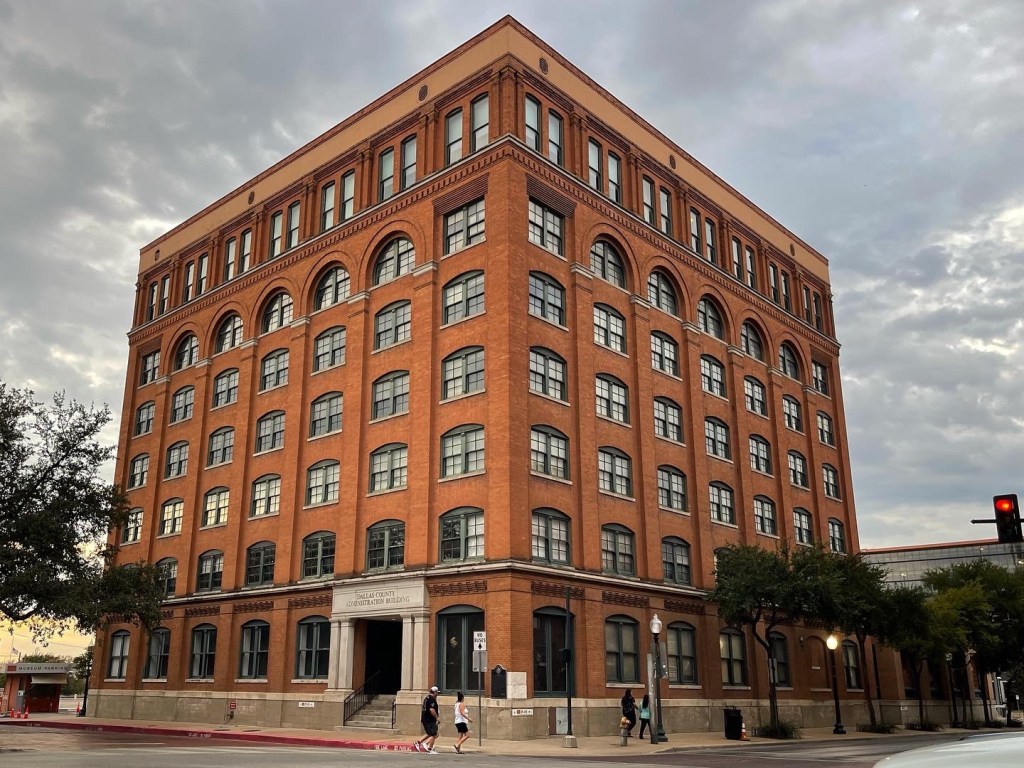
    Walking around Dallas, Texas to stretch the legs a bit, I had one destination in mind the entire time. It had to be Dealey Plaza and the Texas School Book Depository building. This may seem morbid in a way, but it’s similar to me to visiting the 9/11 Memorial in New York City. It’s a place we all know about (though I wasn’t alive at the time of Kennedy’s assassination) and feel compelled to experience to get a feel for what the place is really like.

    The thing about Kennedy that everyone remembers is the sense of hope and youthful energy that he brought to the White House. That it would be taken away so abruptly ripped the heart of the nation, no matter which side of the aisle you sat on politically. There are very few things that seem to unite us today, and we remember the moments when we stand together as one. That I visited on 9/11 wasn’t lost on me. Along with Pearl Harbor, 9/11, the Challenger explosion, Kennedy’s assassination was one of the seminal moments in American history.

    The thing is, Kennedy died but the ripple he made continued to reverberate. It says a lot that I should seek out the final moments of a man who died before I was born. It says a lot that we did go to the moon, and America did grow as a nation after JFK’s death. We show the way in our lifetime, that others may find their way in their lifetime. That we may grow as a society after we’re gone. Kennedy called for a nation to channel the best of their energies towards an audacious mission. That we accomplished it was one of the brightest moments for the nation in some dark days to follow Kennedy’s assassination.

    That phrase, choosing a goal that “will serve to organize and measure the best of our energies and skills” should still provoke us. Are we measuring up to the best we can be? Do we have the right goals in mind for ourselves? That’s what echoes in my mind when I think of Kennedy. We all know where his life ended, but it’s who he challenged us to be that stays with us.

    Texas School Book Depository building
  • Open to the Unpredictable

    “The secret of adventure, then, is not to carefully seek it out but to travel in such a way that it finds you. To do this, you first need to overcome the protective habits of home and open yourself up to unpredictability. As you begin to practice this openness, you’ll quickly discover adventure in the simple reality of a world that defies your expectations. More often than not, you’ll discover that “adventure” is a decision after the fact—a way of deciphering an event or an experience that you can’t quite explain.” — Rolf Potts, Vagabonding

    Inevitably I awaken well before my alarm goes off, and I believe it to be because I rarely set an alarm anymore. It’s saved for early flights and precious little else. As such, my mind is wrapped around the process of travel instead of deep, restful sleep. Did I pack everything? How does traffic look today? What’s the weather at my destination and have I properly prepared for it? Such is the restlessness of a traveler’s mind.

    This idea of being properly prepared is a form of control. We don’t control all that much when we travel, other than our own actions. A series of random events can turn an itinerary upside down in the blink of an eye. And so we create contingencies and build extra time in to ensure we don’t miss the trains, planes and automobiles that bring us from here to there and back again.

    As we open ourselves up to encounters with the unexpected, we face the very things we can’t always be prepared for. Adapting to the challenges we face builds resilience and a higher level of worldliness than we had before. As we become more worldly we condition ourselves for the unexpected.

    Louis Pasteur said that “fortune favors the prepared mind”. When we feel ready for the unexpected we become more open to receiving it when it arrives. Openness is a developed skill as much as it is a mindset. So as I rose to meet the day, I took comfort in the preparation that would carry me through the host of unexpected that will surely greet me.

  • Wants and Needs

    “Your satisfaction is what you have, divided by what you want.”
    ― Arthur C. Brooks, From Strength to Strength

    “Satisfaction comes not from chasing bigger and bigger things, but paying attention to smaller and smaller things.”
    ― Arthur C. Brooks, From Strength to Strength

    “Don’t forget it: he has most who needs least. Don’t create needs for yourself.” — Josemaría Escrivá

    This business of creating needs is familiar. Just now I’m distracted by the perceived need to buy a book I’ve heard about, knowing I have a stack of unread books on the shelf. We want what we want in this lifetime, and either push the thought away to focus on what we have or we let it gnaw at us like a teething puppy gnaws at furniture. Which reminds me, I wanted a puppy recently, and reconcile myself to the lifestyle changes she’s imposed upon me ever since (she filled a tangible void in an empty nest, but she also fills poop bags with surprising efficiency).

    The thing is, to find peace in this marketing-induced manic world, we must find satisfaction in the little things in our lifetime. Life is more satisfying when you stop craving every shiny new thing that splashes across your preferred media feed. We can never keep up with the Joneses, and why would we want to anyway?

    During the pandemic I began watching YouTube sailing videos, and soon began craving the lifestyle myself. Wouldn’t it be nice to own a boat and just slide into some beautiful cove for sunset before allowing the gentle rocking of the waves lull you to blissful sleep? Wouldn’t it be nice to pull up anchor and sail anywhere in the free world? It sure seems like a dream. But I soon realized that it’s not my dream, not at this point in my life. Put another way, a boat is a really nice place to visit but I wouldn’t want to live there. Give me a quiet garden and some body of water to plunge into now and then and I’m generally happy.

    Yet the wanderlust remains. The call of places unseen stirs something deep inside. Is this want a need? The question we always must ask is, what will I say no to in order to say yes to this? Another question to ask is whether this is the time for this yes in my life or is it best deferred to another time bucket in this life? Combined these questions resolve a lot of impulsive decisions and bring peace to a restless soul.

    That puppy who was gnawing on furniture not too long ago has become a sweet, energetic companion. My bride and I know the tradeoffs of having such responsibilities in our life once again, but we also know that it’s what we needed, not just what we wanted in some moment of impulsiveness. Let others chase those shiny new toys, those biggers and betters, we’re doing just fine with what we have.

  • Faster Things

    Last Sunday morning, the sunshine felt like rain
    The week before, they all seemed the same
    With the help of God and true friends, I’ve come to realize
    I still have two strong legs, and even wings to fly

    So I, ain’t a-wastin time no more
    ‘Cause time goes by like hurricanes, and faster things
    — Gregg L. Allman, Ain’t Wastin’ Time No More

    The years fly by, and we begin to notice this at our own pace. Sometimes it takes a tragedy to shake us out of the fog of distraction, as it did for Gregg Allman when his brother Duane died in a motorcycle accident, prompting lyrics like those above. When someone is taken from us in the prime of life it shakes the survivors around that person to the core. At some point, if we’re lucky, we awaken to the reality of memento mori without being turned upside down by tragedy, and simply begin at last to live in earnest.

    The whole point of remembering that we all must die is to live now, while there’s still time. It’s easier said than done, as life piles on the busy. Life will never be perfectly aligned to do everything we possibly could do in our lifetime, but if we focus on essential things we might feel we’ve done enough. A lifetime is always a faster thing than we care to believe, so a bit of structure and purpose go a long way towards feeling we did what we could in the time we have.

    The trick is to structure is to put everything in it’s season. Bill Perkins called this time buckets in his book Die With Zero. Using time buckets, we may prioritize what is most essential now, and what can (and cannot) be deferred to later. For example, I may never hike the Appalachian Trail as I thought I might at 20, but I can still chip away at other things that require the fitness and time I have available now for other worthy life goals. But how do you determine what is essential when if you don’t make the time to make the list and assign it to its proper time? We are what we prioritize. Use this time bucket to map out all the rest.

    Since I began writing this post we’ve seen a few famous people pass away, and we’ve all collectively gained another week of experience in our lifetime. Those sands keep pouring out of the hourglass, whether we’re ready for it or not. Our best chance at a full lifetime is to wrestle with our days one at a time, but with the structure of an overriding purpose and plan for how to use each season. Because time goes by like hurricanes, and faster things.

  • Unhurried and Wise

    “Shams and delusions are esteemed for soundest truths, while reality is fabulous. If men would steadily observe realities only, and not allow themselves to be deluded, life, to compare it with such things as we know, would be like a fairy tale and the Arabian Nights’ Entertainments. If we respected only what is inevitable and has a right to be, music and poetry would resound along the streets. When we are unhurried and wise, we perceive that only great and worthy things have any permanent and absolute existence, that petty fears and petty pleasures are but the shadow of the reality. This is always exhilarating and sublime. By closing the eyes and slumbering, and consenting to be deceived by shows, men establish and confirm their daily life of routine and habit everywhere, which still is built on purely illusory foundations.” — Henry David Thoreau, Walden

    I logged on to a Software-as-a-Service account I use for work thinking I’d quickly check a box that was nagging me. Upon login I was prompted for a mandatory password change, adding another box to check instead of eliminating one. So it is that even the quickest tasks lead to more tasks, and the whirl spins our heads just when we think we have it all figured out.

    Some of us aspire to be unhurried and wise. Certainly, during the pandemic we all examined our priorities. Many pivoted to more meaning, while others leaped back into the familiar trap of distraction. I was somewhere in between, with an inclination to seek waterfalls and summits balanced by a series of compelling shows streaming on too many services to count that I simply had to catch up on so I could keep up with the conversation. I never quite met my objective on either count, but don’t feel compelled to finish any of them at the moment. Checking boxes is a game, and there are times in our life when we grow tired of games.

    When we make time for nature and poetry in our lives, we aren’t being frivolous, we’re seeking the essential. To do this properly is to eliminate distraction and focus on where we are now. Some of us become masterful in adding one more thing to the list, thinking it will be the one thing that will fulfill us or at least make the day complete. This is a form of frenzy, which is never an attractive state. Better to shorten the list than shorten our state of awareness and calm. The goal of life should never be to rush through it.

    If I aspire to anything in this stage of life, it’s to move closer to unhurried and wise. By all accounts I’ve got a long way to go in both respects, but there’s no rushing to unhurried, and there’s no shortcut to wise. It begins with shorter lists and lingering longer on the quietly beautiful magic around us. Some tasks are inevitable, but they should never be at the expense of what has a right to be in this moment.

  • Changing Filters

    “From every pore or living cell of our bodies and from all our senses we are getting feedback from reality. But we are filtering things out constantly. Who’s doing the filtering? Our conditioning? Our culture? Our programming? The way we were taught to see things and to experience them? Even our language can be a filter. There is so much filtering going on that sometimes you won’t see things that are there.” —

    Having dinner with some bright people, Anthony De Mello came up. And I perked up. Not enough people reference De Mello, and I appreciate when someone does. To have read his book Awareness is to shake the tree of what we believe. To read it again and again to absorb what he is telling us is to change our filters. We see the world and our place in it differently.

    “You only change through awareness and understanding. When you see a stone as a stone and a scrap of paper as a scrap of paper, you don’t think that the stone is a precious diamond anymore and you don’t think that that scrap of paper is a check for a billion dollars. When you see that, you change.” — Anthony De Mello, Awareness

    The irony of De Mello coming up at all was the group I was with were highly-driven people in my career. They are all fueled by purpose and passion beyond making money, and sometimes you don’t see the truth right in front of you. It prompted me to re-read passages from Awareness again, to clear my filters.

    It helps to do regular maintenance on ourselves. What we believe is often just acquired filters. Changing these filters opens up a whole new perspective.

  • Existing Determinedly

    “The content of our truth depends upon our appropriating the historical foundation. Our own power of generation lies in the rebirth of what has been handed down to us. If we do not wish to slip back, nothing must be forgotten; but if philosophizing is to be genuine our thoughts must arise from our own source. Hence all appropriation of tradition proceeds from the intentness of our own life. The more determinedly I exist, as myself, within the conditions of the time, the more clearly I shall hear the language of the past, the nearer I shall feel the glow of its life.” — Karl Jaspers, Philosophy of Existence (Existenzphilosophie)

    This idea of reading and weaving the philosophical work of past greats into our own lives today is nothing new, yet so many only read new books. If these new books are inspired and drawn from the great thinkers of the past, then doesn’t it make sense to dive deeply into the source material? Put another way, if we are to be a part of the Great Conversation, we must first be conversationally competent. Seek first to understand, then to be understood, as Stephen Covey put it.

    Sitting at the dinner table with some highly intelligent people this evening, the conversation moved from business talk to philosophy, history and religion. Being able to keep pace with these folks doesn’t elevate me to a place of prominence, but it surely makes the evening more interesting than it otherwise might have been. It also makes me more inclined to speak up, and to be listened to by others. Of course, we don’t seek knowledge to be more interesting, but to dive deeper into our own development as human beings. What is the glow of life but feeling fully engaged in the moment? Of rising to meet it?