Category: Learning

  • Add a Question Mark

    Don’t accept the false stories people tell.
    Things are neither good nor bad — they’re as neutral as a rock.
    When people give opinions, add a question mark.
    If they say, “Immigration is bad,” change it to, “Immigration is bad?”
    Let the questions drift away, unanswered.
    – Derek Sivers, How To Live

    There’s a hidden message in this Sivers book that comes to you as you read it. Don’t take it all at face value. Question everything. Especially the very things you’re reading in his book. The advice feels both right on point and at other times the completely opposite of what you believe in your core. And that’s the point of it all. There’s no set way to live your life, question all advice and find what works for you.

    I wish more people would add a question mark instead of just blindly believing what they hear from people with accumulated connections, titles and degrees. They may be absolutely correct about a position they take, but it’s just a story until we validate it ourselves. The old expression, “Trust, but verify” comes to mind. Add the question mark to those statements and watch them transform:

    Vaccinations are meant to control people?

    Government serves people?

    There is only one true god?

    You must stick with one company to grow your career?

    You aren’t “qualified”?

    Tom Brady is the greatest quarterback of all time?

    See? Most people throw their beliefs at us to try to make it stick in our own mind. Adding the question mark is like spraying teflon on our skull, making us immune to questionable stories, and making us assess the validity of the feasible. Every statement above could be true, or complete bullshit, but we don’t really know which at face value. We must add the question mark, and in doing so, pause and assess the original statement. Or, for the truly outlandish, let it drift away.

    But Brady is definitely the GOAT. Right?

  • Sympathy With Intelligence

    “A man’s ignorance sometimes is not only useful, but beautiful—while his knowledge, so called, is oftentimes worse than useless, besides being ugly. Which is the best man to deal with—he who knows nothing about a subject, and, what is extremely rare, knows that he knows nothing, or he who really knows something about it, but thinks that he knows all? My desire for knowledge is intermittent, but my desire to bathe my head in atmospheres unknown to my feet is perennial and constant. The highest that we can attain to is not Knowledge, but Sympathy with Intelligence.” – Henry David Thoreau, Walking

    We arrive at a deeper understanding and empathy with the world by getting out into it. If there’s been a curse to the pandemic, it’s the distinct lack of getting out there to encounter a different perspective on things than you might have sheltered in place with your favorite sound bites and tweets.

    If the last 6-7 years were defined by anything, it’s this growing assurance that your side is right and any other is wrong. The world seemingly spiraled down into an antagonistic cesspool of us versus them. What’s missing is empathy: the putting ourselves in their shoes part. Seek first to understand and then to be understood, as Stephen Covey would have put it. He’d be shaking his head at the world we find ourselves in today.

    Getting out to meet the world is the solution to this problem. Seeing things the way they look from the other side offers perspective unavailable to those who don’t venture past the mailbox. The idea of getting out to see the world seems to be the most logical thing in the world to many of us, but fills others with dread. Would you live your life forever in a shell or break out of your limited view of the universe and see what’s really out there?

    This week I’m getting back out in the world, not for work, but for pleasure. To see things from a different vantage point, to seek the truth about how things are in a place other than here. To bathe my head in atmospheres unknown to my feet and return with a new perspective on this world. And then, boldly, to do it again.

  • Moments and Answers

    Aren’t there moments that are better than knowing something, and sweeter?

    At 4:30 in the morning, I realized I was unable to sleep any longer as I became increasingly aware of the fan tap-tap-tapping me to alertness. This wake-up hour is becoming a disturbing trend, and I fought it as long as I felt reasonable until I surrendered to the noise and got up well before the sun and read Mary Oliver’s poem Snowy Night, thinking it might draw me back to sleep.

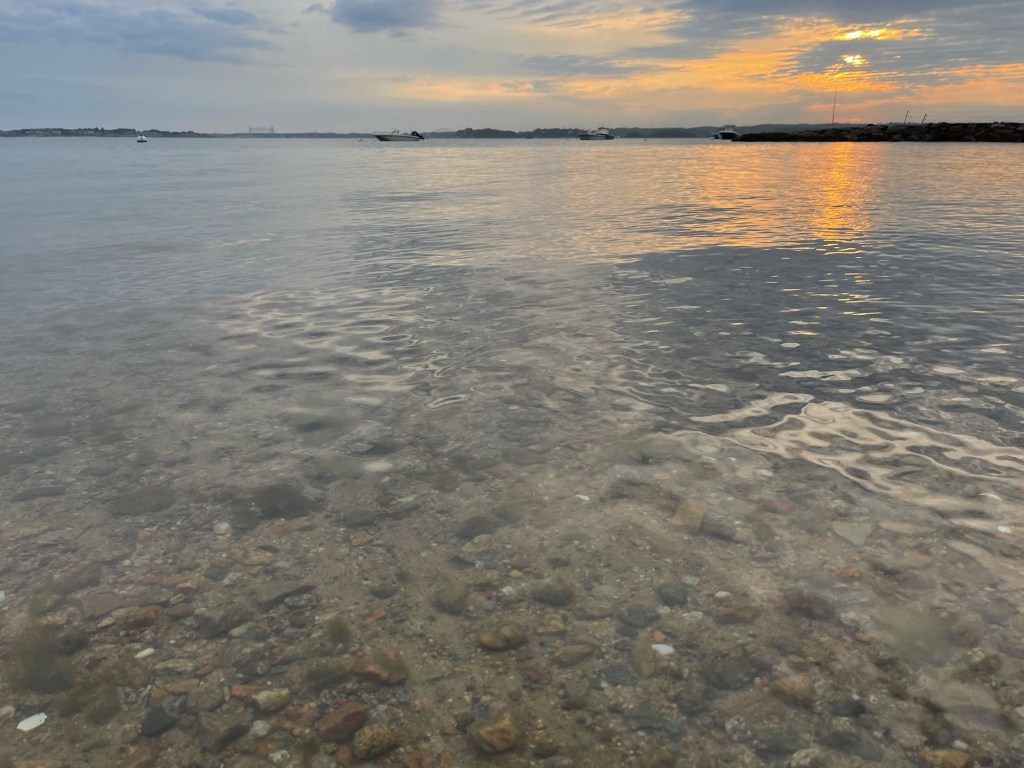
    Just the opposite, it turned out. So I decided to make the most of the unexpected time awake and drove to the sea to catch the rising sun meet the falling tide. The hope was to let the waves sweep away this bout of restlessness.

    I love this world, but not for its answers.

    I don’t understand the draw of inland places. Sure, they’re nice to visit for awhile, but I couldn’t live there. I’ve come to rely on salt water too much to be that far away from it. It draws something out of you. If not always answers, well, maybe moments.

    This post may not have all the answers (does any?), but I’ve hung on to it all day. I’ll take this moment to click publish. Cheers.

  • Beauty as a Gateway

    “I will not of a certainty believe that there is nothing in the sunset, where our forefathers imagined the dead following their shepherd the sun, or nothing but some vague presence as little moving as nothing. If beauty is not a gateway out of the net we were taken in at our birth, it will not long be beauty, and we will find it better to sit at home by the fire and fatten a lazy body or to run hither and thither in some foolish sport than to look at the finest show that light and shadow ever made among green leaves.” – W.B. Yeats, The Celtic Twilight

    We, born as we are with a shelf life, chase the divine. In big ways and small, putting yourself in the way of beauty is a gateway to the divine within our mortal existence. It’s why we stumble through muddy paths to find hidden waterfalls, wake in the deepest part of the night to make our way to sunrise vistas, and brave the sounds of the forest to dwarf our egos amongst the giants. In nature we encounter the divine, and in doing so coruscate an otherwise dim life with grace and wonder.

    Admittedly, some of us are schemers, carving out time in our lives for glimpses of the otherworldly. On a recent flight north I glimpsed a spectacular sunset above the clouds and cursed myself for not getting a window seat on the western side of the plane for that particular trip. We must be deliberate even with the mundane if we are to enter the gateway to the divine. That particular world of magic and light was meant for others to witness.

    It’s no surprise that Yeats was a fellow seeker. You can’t be a poet without first being a collector of moments of dazzling infinity. If there’s an afterlife, the westernmost reaches must get crowded with poets and philosophers lined up to see the green flash of another epic sunset. And if there isn’t an afterlife, shouldn’t we catch as many while we’re here as our time allows? Who’s to know until we get to whatever come next? But why risk missing out on the divine in our daily lives? Seek it now.

    It’s all around us, waiting for you to notice.

  • Hearing Our Music

    “Those who were seen dancing were thought to be insane by those who could not hear the music.”
    – Friedrich Nietzsche

    When is it easiest to hear your own music? When it’s quiet, of course. When you pull yourself away from the madness of the world, find the stillness and listen.

    When it is easiest to hear the music that others are dancing to? When you break bread together, gather around and listen. And after the last couple of years you’ll hear all sorts of things.

    Being out amongst the masses again, seeing many old familiar faces that have weathered differently in the storms of the last few years, prompts reflection on how I’m weathering the storm myself. You see quickly who has struggled, who has pivoted to find a different side of themselves, who has stuck to old beliefs or abruptly changed to new ones, and who has opted out entirely. And you see yourself in each of them.

    This is a particularly noisy week, at an industry event full of people with diverse opinions, stemming from equally diverse backgrounds, information sources and social reinforcement. In this environment you hear some of the music that others are dancing to, even if you don’t always find it dance-worthy yourself. I think the important thing is to hear their music anyway.

    And then reflect on what you’re currently dancing to. You might like it more. Or maybe less. But either way you’ll hear it differently.

  • From Scratch, Daily

    Every morning I glance at a blank page and begin to write from scratch. I’m sure your own writing process is different in many ways, but for me the act of beginning to type is a signal to the brain to get to it already. Often I’ll delete entire paragraphs that ultimately don’t make the cut, but Stephen King told us to kill our babies, didn’t he?

    That last paragraph may ultimately disappear into bits and bytes of what might have been. This one too, may pay the ultimate price for being in the early stages of a thought. Or maybe not, should I be so bold as to believe an idea is worth putting out there as it is when it dances off the fingertips. Time will tell.

    The easiest blog posts to write are about places I’ve been to or things I’ve experienced. The hardest are about things I process in my brain in the early morning hours as I contemplate whatever ideas I’m toying with at the moment. But isn’t that the way conversation works too? We enthusiastically jump into conversation about things we’ve experienced, but are more reluctant to dip a toe into deep philosophical or abstract waters. Want to ice the waters even more? Make it deeply personal.

    This blog about places I visit in the northeast corner of North America evolved into a deeper dive into waters I didn’t expect to swim in. But a blog is meant to evolve as its writer does, and this writer is ever-so-slowly evolving into something better than the person who started writing it. One book or one experience leads to another, which opens the mind to new ideas, which end up in the blog when they’ve properly steeped in the brain for a time. That’s life, isn’t it? A bunch of people figuring things out lumped together and occasionally bumping into each other.

    The easiest path to a blog post is to drop in a quote or poem that inspires deeper exploration. I use this frequently, and have a stack of drafts awaiting further exploration. Likewise, I revisit highlighted passages on the Kindle or pull old favorite books off the shelf now and then to flesh out a thought that sits in limbo a beat too long. Like that conversation you have in a coffee shop or on a quiet walk, contribution from others opens up new ideas in your own mind.

    A blog ends up being a mostly one-sided conversation, as one person figures things out in this strange and complicated world we live in. But nothing is more complicated than the human brain, reacting and adapting to the changes, both within and without. We’re all a work in progress, and a blog offers you the chance to place it out there for all to see. I wish a few more people I know would start writing their own.

    Until tomorrow….

  • Nature’s Pilot

    “THE DEVIL. What is the use of knowing?
    DON JUAN. Why, to be able to choose the line of greatest advantage instead of yielding in the direction of the least resistance. Does a ship sail to its destination no better than a log drifts nowhither? The philosopher is Nature’s pilot. And there you have our difference: to be in hell is to drift: to be in heaven is to steer.”
    – George Bernard Shaw, Man and Superman

    On the long road to knowing, admittedly some of us are late bloomers. But the path is long, even as life is frustratingly short. We humans, pre-built with an expiration date, aren’t designed to ever know it all. But in learning we might find the right path instead of wasting this precious time wandering about in trial and error.

    What is philosophy but refined knowledge about how to best live? It is knowledge acquired and contemplated on, which offers channel markers as we navigate uncertain waters in our time. This is what we draw on from humanity’s philosophers, and increasingly from ourselves as we grow.

    Growth is a choice. And choosing this line of greatest advantage offers the opportunity to steer instead of drift. In Shaw’s work, Hell is populated with the posers and drifters. To transcend this fate, we must strive for improvement:

    “I tell you that as long as I can conceive something better than myself I cannot be easy unless I am striving to bring it into existence or clearing the way for it. That is the law of my life. That is the working within me of Life’s incessant aspiration to higher organization, wider, deeper, intenser self-consciousness, and clearer self-understanding. It was the supremacy of this purpose that reduced love for me to the mere pleasure of a moment, art for me to the mere schooling of my faculties, religion for me to a mere excuse for laziness, since it had set up a God who looked at the world and saw that it was good, against the instinct in me that looked through my eyes at the world and saw that it could be improved.”

    The truth about philosophy is that it isn’t a thought experiment, it demands active participation. To go through the motions in life is the greatest of sins, for it’s a betrayal of the self. We owe it to eternity to use our time as best we can. Our moment to steer is now.

  • Taking Our Measure

    “The only man who behaved sensibly was my tailor: he took my measure anew every time he saw me, whilst all the rest went on with their old measurements and expected them to fit me.”

    “When you go to heaven, Ann, you will be frightfully conscious of your wings for the first year or so. When you meet your relatives there, and they persist in treating you as if you were still a mortal, you will not be able to bear them. You will try to get into a circle which has never known you except as an angel.” – Jack Tanner in George Bernard Shaw’s Man and Superman

    These two quotes from Shaw’s fascinating play Man and Superman resonate with anyone who has tried to shed the preconceptions that those who knew us “then” have about what we’re capable of “now”. We all grow, yet there’s a lag time for those who might measure our fit based on the person we used to be. This is one reason people job hop or move far from home. If you leave your old identity behind, you free yourself to be whatever you want to be in the place where you land.

    Of course, one person we never leave behind is ourselves. If we aren’t aligned with a belief in our future potential we’ll never reach it. What is left of us then but incremental improvement? That’s not a leap forward at all, but a slow shuffle across our brief time.

    When we grow we no longer fit into that old character we used to be. We must adjust our own expectations of what is possible, take a deep breath and leap towards our greater potential. And if necessary find a circle that believes in our present potential instead of clinging to our limited past.

  • Becoming Equal to the Whole

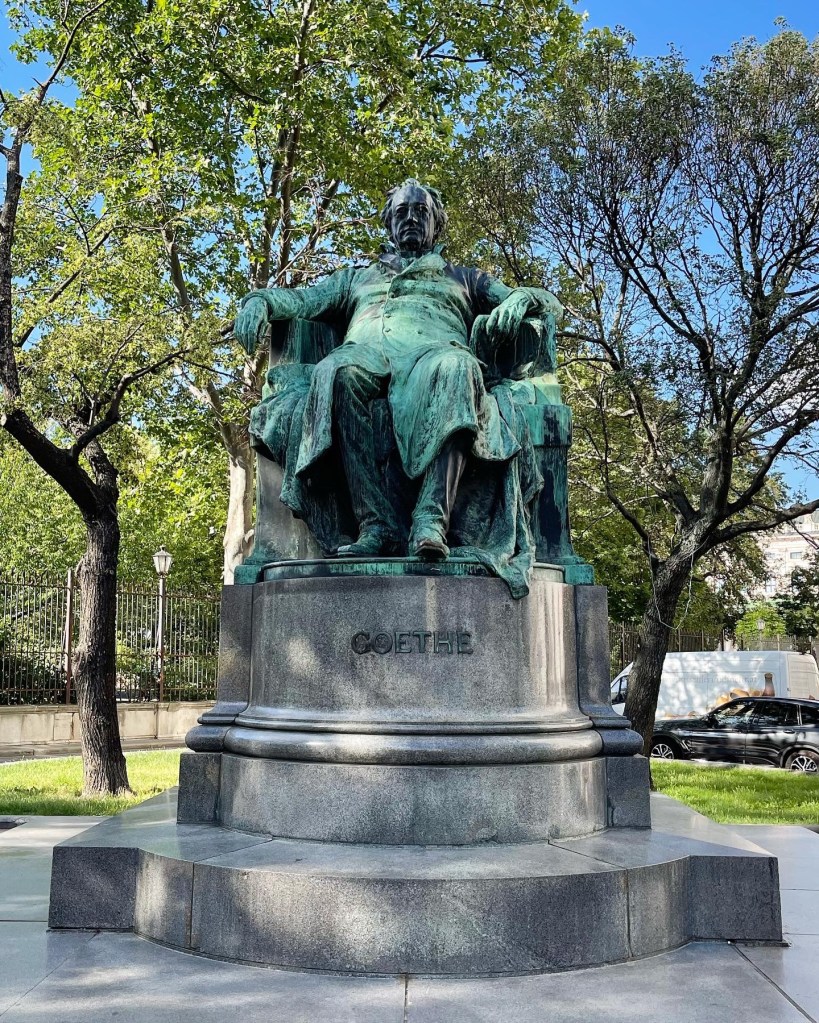
    “The problem with most people, he felt, is that they build artificial walls around subjects and ideas. The real thinker sees the connections, grasps the essence of the life force operating in every individual instance. Why should any individual stop at poetry, or find art unrelated to science, or narrow his or her intellectual interests? The mind was designed to connect things, like a loom that knits together all of the threads of a fabric. If life exists as an organic whole and cannot be separated into parts without losing a sense of the whole, then thinking should make itself equal to the whole.” – Robert Greene, describing Goethe, Mastery

    This idea of making yourself equal to the whole through exploring all available interests, normally gets you tagged as unfocused or a Jack-of-all-trades (master of none). Such expansive thinking is regarded as inefficient by many. But let’s face it, the people with a wide range of interests are able to transcend the ordinary and create things that others might not see. They become visionaries.

    We’re all just connecting the dots, trying to make sense of the world and our place in it. We are a part of that sum, and it’s okay to question what that part might be. What’s certain is that it’s our part, nobody else’s, and we ought to find a path that makes the most sense for ourselves. Everything we do, every pursuit, every relationship, every stumble along the way is a part of becoming whatever it is we’ll title the sum of our lifetime. That process of becoming is what life is all about.

    Surely, we can never really equal the whole, but we can get pretty far down the path. And that’s about all you can hope for in one lifetime, isn’t it? To pursue our diverse interests as far as we can take them, and to contribute something back to those following their own paths towards that elusive whole. That’s what Goethe did, and Robert Greene is doing. Shouldn’t we too?

  • Aspired Greatness

    “I believe that the first test of a great man is his humility. I don’t mean by humility, doubt of his power. But really great men have a curious feeling that the greatness is not of them, but through them. And they see something divine in every other man and are endlessly, foolishly, incredibly merciful.” – John Ruskin

    If we agree, and I hope we do, that there’s a divine spark in each person, then each of us has something to offer. I know there some particularly hideous exceptions to that rule, but in general most people in this world are trying to do the right thing. The outrage we feel when some dark soul erupts in the world demonstrates our shared faith in humanity. Outrage originates out of a feeling of betrayal of shared beliefs.

    To reach greatness in the world doesn’t require the most followers or likes on YouTube or a particular net worth. Really great people have an aura of positive energy exuding from them. Really great people lift those around them up. Really great people strap themselves to the helm to steer the ship through the worst of storms. There are plenty of really great people in the world, and you’re probably thinking of a few examples right now.

    “I believe God made me for a purpose, but he also made me fast. And when I run I feel His pleasure.” – Eric Liddell in Chariots of Fire

    Divinity isn’t within us, it runs through us in our chosen pursuits, our relationships, our empathy and our sacrifice. It’s a calling, a purpose, that demands us to give of ourselves so that others may feel the Divine Spirit as well. That spirit may mean something religious to you (capital D, capital S), or simply something far greater than ourselves.

    I humbly write in pursuit of the divine – not to capture it, but to channel it through my writing. I’m a long way from greatness, but I see the path grow incrementally shorter with every hour devoted to the craft. Writing hasn’t been my life’s work to this point, but it’s woven in everything I’ve ever done. A modest, often futile attempt to share the divine that I’ve encountered in this world with you. Does that make it a purpose or a pursuit? I think the latter, but I hear the call of the former.

    And shouldn’t we aspire for greatness and a way to share it?