Category: Learning

  • Find The Gap

    When you bob around on the Tube in London you’re constantly reminded to “mind the gap”. It’s so frequently stated (at every stop) that it’s become a meme. The gap of course is the space between the train and the platform, which can be hazardous if you aren’t watching where you’re walking, ie: minding the gap. Reading an article in Harvard Business Review earlier this week, I read this twist on that phrase, which struck me as profound:

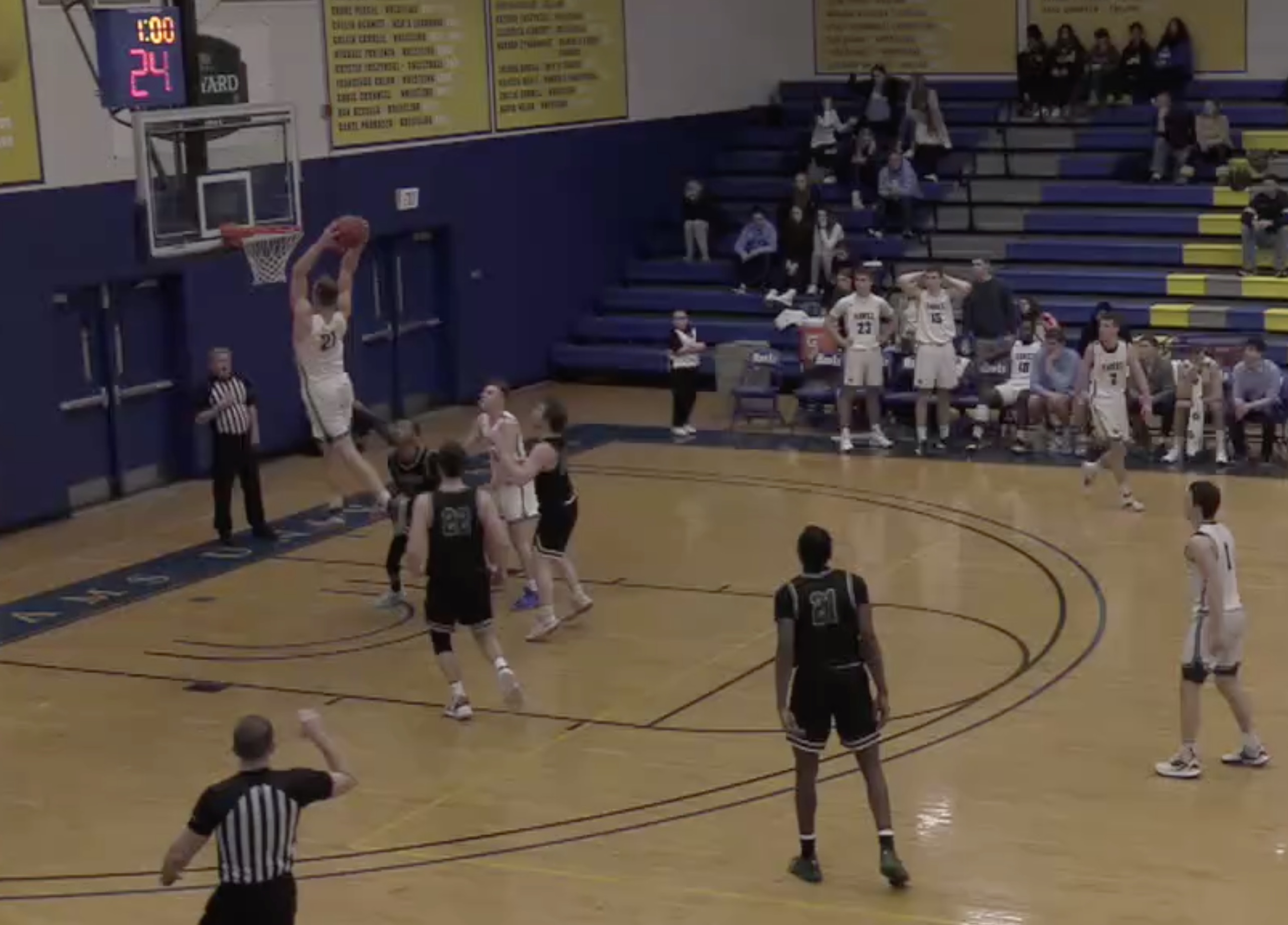
    Jon Buchan, the director of London-based Charm Offensive, a creator of innovative cold emailing campaigns, applies [Stef] Curry’s disruptive basketball strategy to business: “Find a gap,” Buchan writes. “A chink in the armor. What is nobody else doing? Why is nobody else doing it? Would it be beneficial to get good at it? If so, try it.” … Figuring out what no one else is doing, and then doing it well, offers the greatest possibility of success, rapid acceleration, and hyper-growth.” – Whitney Johnson, “Reinvigorate Your Career by Taking the Right Kind of Risk”, Harvard Business Review

    Finding the gap, what nobody else is doing, certainly applies in business, and every progressive, forward-looking company continually pokes and prods their market looking for the gaps. Find a need, fill it and differentiate from the crowd. This is blue ocean versus red ocean territory, where a little elbow room offers room to grow something special. It lets you leverage your company’s strengths without getting nipped at by the sharks.

    Finding the gap, I believe, is about being aware, focused, open-minded, decisive, courageous and determined. Developing better writing skills (combined with the consistency of effort in doing it every day), reading with purpose, seeing more customers, listening and observing with focus and earnestly working for a higher purpose, I believe, give you the necessary gap radar skills. Combined it seems to adds up to a formula for both figuring out what no one else is doing, and then doing it well. Because doing it well… that’s the real trick, isn’t it? Don’t just find the gap, fill it with value.

  • Dancing on the Line

    I travel a lot, and stay in many hotel rooms along the way.  My primary request when staying anywhere is to get a quiet room.  That means rooms that aren’t next to the elevators, the ice machine or in high traffic areas.  Ideally I won’t have a door that connects to another room.  So it’s disappointing when I get a neighbor who shouts profanities and talks to himself insanely in the room next to mine.  Last night was one of those nights, which meant I was considering wearing earplugs to sleep.  If I’ve learned anything from years of travel, it’s to be prepared for just about anything.  Insane people who talk to themselves are one of those life experiences I try to avoid, but sometimes you find yourself with just two thin doors between you and the crazy train. Luckily he quieted down and I slept peacefully (after confirming the door was bolted anyway).

    This morning I’m walking the loop around the hotel with three days of information and thousands of calories to digest. Morning walks help with both, and information transforms into checklists of things to do, areas to improve upon, people to meet with, things to learn more about and timelines to do it all. I normally follow the GTD process of writing things down to get them out of your head, but not having a notepad on the walk the jumble of thoughts become keywords to trigger memories instead. I’ll write it down later… knowing I need to do it before those words become a puzzle of my own mind. It reminded me of the wild rambling profanity of the guy next door. Maybe he just needed to get things out of his own head too. He does it his way, I do it mine. Just a thin door separating two approaches to sorting life’s complexities.

    One of the themes of my week has been walking the thin line between order and chaos. Exemplified by the yin and yang symbol, it’s the curving line between the black and white symbols that make up the whole. We all dip into both sides, but aim to dance along that line if possible. My hotel neighbor seemed to be a bit too far into chaos last night, while I was dancing the line pretty well this morning after my walk. We all trip now and then. Just get up, brush yourself off, get back on the line and keep dancing.


  • Scenario Planning and Backcasting

    Consider a broad range of possibilities for how the future might unfold to help guide long-term planning and preparation…. The reason why we do reconnaissance is because we are uncertain. We don’t (and likely can’t) know how often things will turn out a certain way with exact precision…. By at least trying to assign probabilities, we will naturally move away from the default of 0% or 100%, away from being sure it will turn out one way and not another.” – Annie Duke, Thinking In Bets

    I was giving this book a few days to digest before coming back to this concept of scenario planning Duke writes about. To me this is the heart of her book (the title does give it away). I’m not a poker player, but I do think in future probabilities in my career, and found this concept helpful in how I’m looking at 2020 and beyond. This goes beyond the usual weighing the probability percentage on an opportunity you’re forecasting to close, and looking at the bigger picture. Will this tactic work on this project? Maybe. Will it hold up as sustainable for the next five years? Harder to determine. How will changes in the economy impact the probability of this outlook? Does living in the same house for the next ten years increase or decrease the likelihood of retiring with a big enough nest egg?

    These are the predictive exercises that clarify a vision for your future. When you combine it with another tool in your belt you can begin to identify actionable steps to get you there. Duke doubles down in covering the concept of backcasting, or working backwards from a positive future:

    Identify the reasons they got there, what events occurred, what decisions were made, what went their way to get the enterprise to capture that market share. This enables the company to better identify strategies, tactics, and actions that need to be implemented to get to the goal.” – Annie Duke, Thinking In Bets

    The timing of this book was good for me as I map out the year ahead. I’m familiar with both techniques, but I’m not proficient at either. That’s something to work on as I refine my business plan for the year, and equally important for the other objectives in my life. A call to action, if you will, to clarify the vision and the steps needed to reach that outcome.

  • Early Riser Humility

    I brag about myself as an early riser, until I get out into the world and see how many get out there well before me. No, bragging is a fools game, there are plenty who get up earlier than you John. It would be better to state that I try to get an early start to my day. Leave the brag behind.

    I could say the same thing about everything I profess some measure of expertise or superiority about. Plenty do and know much more. I strive to be better at writing, exercise, career, observation, and being a better father, husband, son, brother, mentor and friend. We’re all just figuring it out as we go, picking up life skills along with technical expertise as we march along on our spin around the block of life. Pick up some knowledge, pass it along, help each other along the way, just as they’d help you. Life is humbling, but offers the same lessons for all of us should we wish to learn it.

    I write this between glances at the halo around the moon and the dark purple sky turning to blue and pink, as I walk and type on my phone trying to squeeze two important habits in before the day gets busy amongst the buzz of a world that woke up before me. I’ve managed to avoid tripping over myself thus far; surely a testament to luck versus skill. I wasn’t up first, but hey, I’m out here trying to get a little better. That’s something to build on, isn’t it?

  • Doing Things That Matter

    A little more than a year into my focus on daily habits, the overall the results are encouraging.  James Clear’s Atomic Habits poured gasoline on my focus on doing things that matter every day,  beginning with small things like reading more, writing every day and exercise.  It started with changing the routine when I got up in the morning, where once I’d consume sports media, check email, scroll through social media or play Words With Friends first thing in the morning, I started focusing on the very small habits that might move me forward.  Exercise to get the blood flowing, reading to get the brain matter firing on all cylinders, and writing, to finally do what I’ve been putting off for most of my life.  These aren’t everything that matter in my life, but they were the things I was pushing aside to focus on the other things.

    Priorities remain: family and work obligations come first, but following close behind are the daily habits. In fact, each habit improves the quality of my life, which improves the whole. Pretty simple, really, if you just incorporate the right habits and build them into your routine.  I’ve seen tangible momentum in all three, with the writing on this blog a measure of proof to consistency.  You’ll have to take my word for it on the exercise, and just like the writing daily habits add up over time.  I’ve seen the scale slowly – painfully slowly – showing consistent improvement.  I’ll take that.  I write a lot about writing, and walking.  And then there’s the reading….

    Once again the books are piling up, with four in the cue already I just purchased a Kindle version of Siddhartha by Herman Hesse and revisited Working Days: The Journals of The Grapes of Wrath 1938-1941.  It would be far better to finish one of the original pile before adding more, but so be it.  Books tap you on the shoulder and tell you “It’s my turn” when they feel you’re ready.  This morning Hesse and Steinbeck were both bullying their way into my reading time, and I welcomed them with open arms.  My reading is accelerating, not by speed-reading (which I’ve tried but don’t enjoy), but through focus and occasional multi-tasking (reading on the Kindle app on the iPhone while in line at the store, and more frequently, reading with maximum font on the treadmill while churning out steps).  Consistent, daily reading has been one of the best things I could’ve done for myself.

    So what else matters?  Plenty.  The world is getting exponentially better in many ways, and sliding into the abyss in a few ways.  If you want to improve the world around you it starts with contribution.  The more you do, the more capacity you have to contribute more; more effort, more money, more intellectual horsepower, more empathy, more credibility, and more time.  Ironic, isn’t it?  The more you do the more time you’ll find for the things that matter.  And there’s plenty that matters, if you take the time to think about it.  And that’s where I find myself today, thinking about it and taking a small measure of action, one step at a time.

  • Snow Globe Perceptions

    Driving in heavy snow yesterday with the headlights illuminating every snowflake, it looked like the scene in Star Wars when they shift to warp speed with the stars streaking by. My daughter pointed this out, and then made the observation that all those snowflakes weren’t streaking towards us, we were streaking towards them. And I thought to myself first, you’ve raised a very intelligent and perceptive daughter. And then I thought about perceptions, and what else are we streaking towards that we think is coming at us?

    The news comes to mind. We tend to validate our beliefs by seeking out news that is consistent with our worldview. Watch CNN or Fox and it either feeds your beliefs or enrages you, depending on your regular diet of spun information. Who you follow on Twitter is another example, with tweets of varying substance flying at you like those snowflakes seemed to. Think you’re falling behind others? That’s a perception too, validated by Facebook and Instagram posts, or counting WordPress likes.

    So how do you change your perception? Easy; slow down. When you stop driving highway speeds those snowflakes just drift slowly to the ground. When you unfollow people on Twitter the world seems more sane. When you stop tracking who’s vacationing where or how many followers someone has and change your perspective to what you’re grateful for and what you’re contributing to the world you suddenly exit the storm in your mind and things become clear. Stop shaking the snow globe and use that energy to create desired outcomes. Simple…. right?

  • Better Decisions

    In most of our decisions, we are not betting against another person. Rather, we are betting against all the future versions of ourselves that we are not choosing.” – Annie Duke, Thinking In Bets

    As we enter the first full work week of the New Year, I’m focused on this concept of Second Order Thinking and working to apply it better in my life.  In short, asking what will be the consequences of doing this versus that in the first order, the second order and the third order?  If I eat this donut because it looks delicious (first order), then I’ll add more empty calories and gain weight (second order), which will make me more stressed out in the future when my pants are getting too snug (third order).  Second and third order thinking is a way of fast-forwarding into the future as you decide on whether or not to do something in the present.  It gets you out of the self-centered immediate gratification of now and looking at the ultimate satisfaction of then.  Ray Dalio describes it as the lower-level you winning out over the higher-level you.  I haven’t been consistent with this in my lifetime, particularly when it comes to snacking.  I’d say it’s time to look up from the proverbial candy dish and think beyond the moment.

    “Decide what to be and go be it.” – The Avett Brothers, Head Full of Doubt/Road Full of Promise

    I didn’t believe I’d like the book Thinking In Bets.  I’m not a poker player and have no desire to immerse myself in the world of poker. They wear sunglasses indoors and pull their hats down low to cover expressions on their faces.  I mean, who wants to hang out with people doing that?  But this isn’t a book about poker, it’s a book about decision-making.  And making better decisions is something I’ve been working on in myself for some time.  It started with this idea of Second Order Thinking, where you weigh the consequences of your decision now and into the future.  I’ve made plenty of decisions in my lifetime that made sense in the immediacy of the moment that turned out to be bad decisions down the road.  And a few that I thought weren’t great early on that turned out to be brilliant (and lucky) decisions with hindsight.

    We’re the average of the five people we hang around with the most, as Jim Rohn would put it.  Applied to what I’m reading, I’m currently hanging around with stoics, poets and experts in creating and sustaining better habits.  And now I’ve invited decision-making experts to the party.  I’m okay with that mix, and will enhance it over time.  But reading about something isn’t doing something.  That’s a trap that you realize as you read book after book without applying the knowledge you pick up from all that reading.  No, the rubber meets the road when you take action.  Applied knowledge, repeated daily, leads to exponential improvement over time.  I’ve seen that working in all things over the course of my life.  The focus now is to improve the decision-making process so I spend that time on better, more productive activity.  Dance a bit more in the higher-level self.  Now is as good a time as any to get to it.

  • Rising to the Occasion

    “It might be possible to do something that’s not ordinary.” – Tom Petty

    I’ve heard this Tom Petty quote in my head since I heard him say it in an interview, released well after his death.  Do something that’s not ordinary.  Don’t just read about the accomplishments of others, take some action yourself.  And this blog is a step towards that.  You’re witnessing a bit of the doing something part, and eventually maybe it will be well beyond ordinary.  But not ordinary takes time.  10,000 hours kind of time, and likely much more than that.  Action repeated over and over until it becomes… something.  I keep reminding myself of that during these moments of grinding it out.  A blog is by nature a public-facing announcement to the world (hello, by the way – thanks for stopping by) that you’re doing something.  It’s a daily cadence of record, sometimes better than other times, but documented publicly that you’re putting in the time so that maybe you’ll get a little better over time.

    “Desire is the difference between where you are now and where you want to be in the future.” – James Clear

    More writing behind the blog offers an opportunity to accelerate, to pour gas on the fire and go beyond the ordinary.  I ask myself often, blogging is great and you’re showing progress, now what more have you got in you?  How will you rise to the occasion and do something…. more?

    “Writers should realize that the novels that are remembered, that become monuments, would in fact be those which err on the side of audacious prose.” – Chigozie Obioma

    Now that’s a challenge, isn’t it?  I’ll concede there isn’t much audacious prose in this blog, but then again the intent of alexandersmap was never audaciousness, only consistency of effort and a challenge to myself to make it consistently more interesting with fewer typos.  To use writing to master the habit of showing up, to borrow James Clear’s phrase.  In 2018, when I started this blog, I was inconsistent and unsure of the direction I wanted to take my writing.  In 2019 I became very consistent (writing every day, posting sometimes twice a day).  In 2020 the goal is to keep that consistency and take the writing to another level, something not ordinary, if you will.  I’m well aware that I’ve strayed from the original focus of the blog (local history and regional travel), but it’s a journey and the thing about journeys is you change course now and then.  I still love the original focus of this blog and will return to it often, hopefully in new and compelling ways.  But I know I’m on the journey too and the writing takes me wherever the muse wants to go.  Where will it take us next?  Time will tell.  The trick is to rise to meet it.

  • Attention to Detail

    The funny thing about the first few days of a New Year is that I catch myself looking forward quite often.  There’s nothing wrong with looking forward, just as there’s nothing wrong with looking back towards where you’ve been, as long as you’re grounded in the present.  One of the things I love about Mary Oliver poems is her focus on the things in daily life that you might miss if you’re not paying attention.  Shell fragments on the beach become a story in a poem that makes me think of a walk on the beach in a different way.  The poet, teaching us how to see:

    “I go down to the edge of the sea.
    How everything shines in the morning light!
    The cusp of the whelk,
    the broken cupboard of the clam,
    the opened, blue mussels,
    moon snails, pale pink and barnacle scarred—
    and nothing at all whole or shut, but tattered, split,
    dropped by the gulls onto the gray rocks and all the
     moisture gone.
    It’s like a schoolhouse
    of little words,
    thousands of words.
    First you figure out what each one means by itself,
    the jingle, the periwinkle, the scallop
    full of moonlight.

    Then you begin, slowly, to read the whole story.”
    – Mary Oliver, Breakage

    The other day while leaving Cape Cod I was so caught up in getting things packed up to get to work that I missed an opportunity to go to the dump.  Now don’t get me wrong, going to the dump in and of itself is not my favorite activity.  But going to the dump with my favorite Navy pilot, well, that’s a different story.  But I was so focused on checking boxes and getting tasks done that I let him go off to bring the trash to the transfer station on his own, missing the chance to spend 30 minutes talking about nothing and everything.  Moments like that are available if you pay attention, and slip away when you don’t.  I’ll regret the lost opportunity, and have already forgotten what was so important for me to get done that I passed it up.

    We’re all a work in progress, sometimes things just fall into place and we’re focused on the things that matter most, and sometimes we’re looking the wrong way when the magic moment happens.  All we can do is keep chipping away at it, one small bit at a time.  I know I’m a much better human than I was ten years ago, and better still than I was twenty years ago.  Incremental progress isn’t as stunning as immediate transformation, but the Ebenezer Scrooge kind of overnight transformation isn’t the way most change happens.

    “Every action you take is a vote for the type of person you wish to become.” – James Clear

    So I keep taking action, one step forward and sometimes two steps back.  But in general I see incremental improvement.  Learn from the mistakes, change our action next time if lucky enough to be offered a similar opportunity in the future.  Do those things now that matter most.  That starts with getting out of your own head and paying attention.  Begin, slowly, to read the whole story.

  • Playing Parts

    “All the world’s a stage,
    And all the men and women merely players;
    They have their exits and their entrances;
    And one man in his time plays many parts”
    – William Shakespeare, from As You Like It

    If New Year’s Day is the day of hope and dreams and resolutions for the future, then January 2nd is the day when the rubber hits the road.  It’s the day after that first day at the gym, that first day of not eating carbs or that first day of writing in earnest.  On the journey of becoming more, it’s when you feel the pull of gravity from the pile of distractions.  And sure enough here I am on the day after the New Day, working through my morning routine, slightly modified for location, with a look at the clock and the tasks ahead.  The sky is dark and the glow from the laptop shines a spotlight on the actor, still unsure of his lines but chipping away at it nonetheless.

    This morning I am still on Cape Cod, with the sky brightening and the jetty calling.  The writing incomplete, the day job tapping me on the shoulder saying “get going” but that jetty calling, so I bundled up and went out anyway, task list be damned.  It was one of those mornings where the cold breeze cuts deep through your layers, mocking your attempts to control Mother Nature.  I walked all the way out and watched the clouds turn from gray to blue to pink.  The pink is viral, starting in the east and spreading across the sky, deepening to a rose as it moves, and then almost as quickly it begins to fade as the light grows.  Such are the sunrises.  You have to embrace the moment at hand before it all fades away to the waking world.

    There’s always something to distract you here.  But I’m grateful that this visit has shaken me loose from the cobwebs of routine.  Really, that’s why I come here.  Today is a back-to-work day, and I confess I’ve already checked the numbers, scanned the email and taken note of people to call.  The day job waits impatiently for the actor to return to the stage to read his lines.  As with all of us, I’m one man in his time playing many parts, and it’s time to turn into that other character for the next act.  Now what was that first line again?