Category: Learning

  • Excellence Is The Next Five Minutes

    “Excellence is the next five minutes or nothing at all. It’s the quality of your next five-minute conversation. It’s the quality of, yes, your next email. Forget the long term. Make the next five minutes rock!” – Tom Peters

    “It is a simple two-step process: Decide the type of person you want to be. Prove it to yourself with small wins.” – James Clear

    “The work is quite feasible, and is the only thing in our power. . . . Let go of the past. We must only begin. Believe me and you will see.” – Epictetus

    It’s easy to get bogged down in strategy and planning. It’s a form of busywork that makes you feel productive even when you aren’t really moving forward. I’ve struggled with this over the years, and it’s fair to say I still haven’t mastered time. Then again, who ever does? But focusing on the action needed right now, with an eye towards maintaining our overall course, makes a lot of sense.

    Excellence is the next five minutes or nothing at all. The point isn’t to master time, just to win the next five minutes. What we do now matters more than what we do tomorrow. Setting a course is important; we all need to know where the we’re going or what’s the point? But right behind that is meaningful action. The Tom Peters quote is a favorite call to action because it reminds us of the urgency of now. Peters’ quote pairs well with James Clear’s work, and both quotes would be very familiar to stoics like Epictetus. Ultimately we all build off the legacy of those who came before, and hope to leave something meaningful for those who come after.

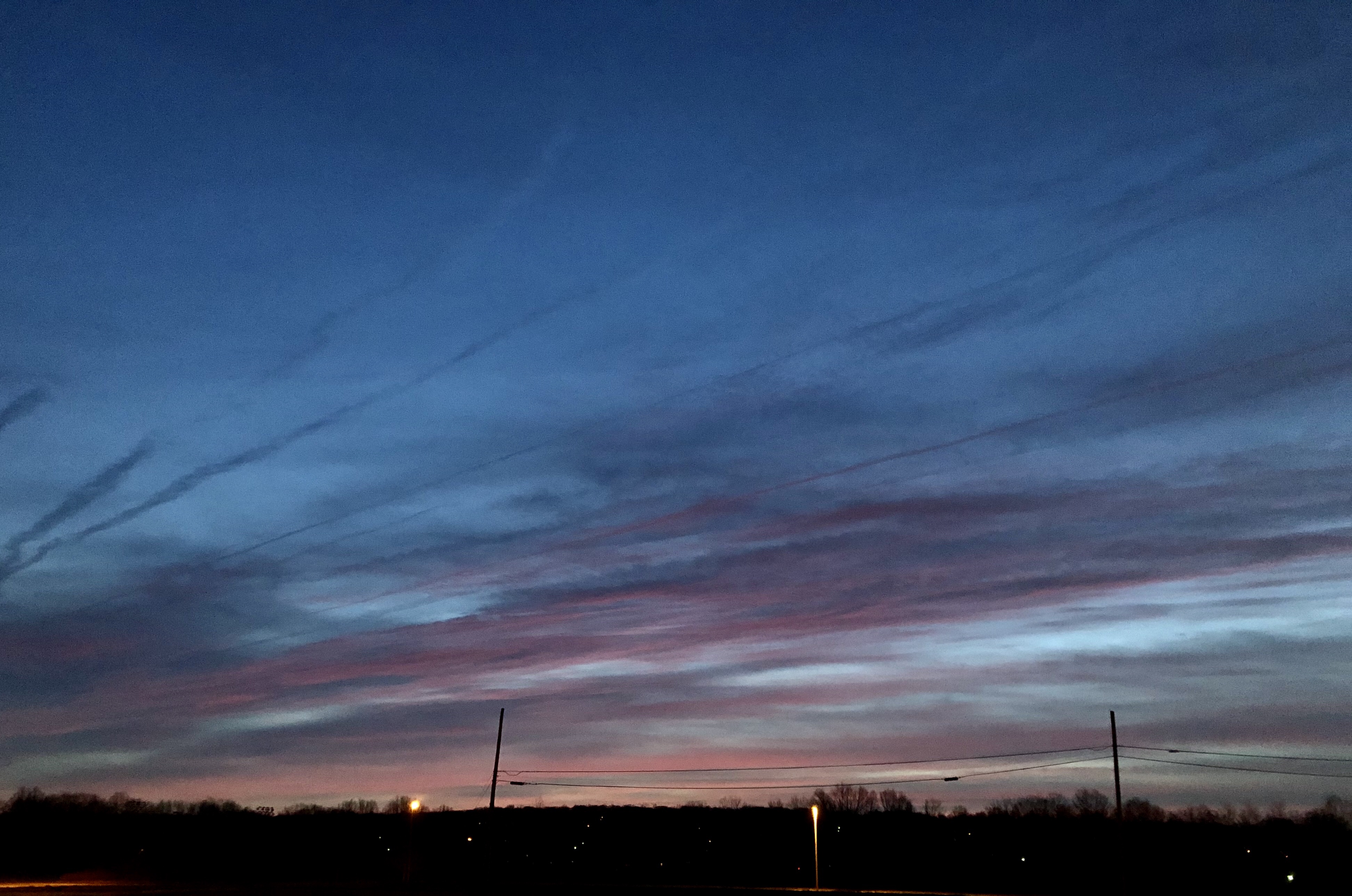
    I’m posting late today, watching the sun dropping in the west while I write instead of feeling it rise behind me as the morning progresses. I wanted to sit on this post awhile, feeling there’s more to say. There’s always more you can say, and always more to improve upon, isn’t there? But you also need to ship when it’s time to ship, a necessary call to action that keeps us from sitting on our work. And so it is that I’ve checked a few boxes today knowing I could’ve done more but generally happy with what I’ve done with the time I’ve been given today. Let’s call that a small win (and, always, work to go a step further if I’m blessed with the gift of tomorrow).
  • Seeing the World for the First (?) Time

    Our awareness has been stretched wider than ever in history, but often at the cost of taking away a lifetime of experiences.” – Seth Godin

    “We were the first humans who would never see something for the first time.” – Gillian Flynn

    Both of these appeared in my feed within minutes of each other this morning, in turn each pointing out the world we live in being smaller than ever before, and casting a neon glow on a topic I should explore before the muse carries it on to the next writer. Candidly I’m itching to return to writing more local history, but it’ll have to wait a bit longer. I’d be a fool to turn a cold shoulder on the muse, wouldn’t I?

    Godin laments the cost of awareness in our world of YouTube, Instagram, streaming media and, yes, travel blogging. We tend to know about things just by casually dipping our ladle into the stream of information flying past us in all directions. But sipping from the ladle isn’t immersive exploration of new places and ideas. It’s the Cliff Notes, not War and Peace. As Godin writes, there’s no excuse for being uninformed, but there’s also no good reason for being inexperienced.

    Flynn laments that media often offers a better picture of the world than going there and seeing it does. I’d say she’s partially right in that we cheat ourselves of the wonder of the new having seen it before we get there. But I disagree that the experience is better through media or that we don’t experience something substantively better being there versus seeing it on a screen. I can look out the window and see snow, or I can walk outside and understand snow.

    The crew of Fayaway are in Saba at the moment. It was nothing for me to pull up a video of people hiking up the mountain they hiked up, see the massive leaves they saw and the same view out to St. Kitts that they sent me in a text message. But a YouTube video is a very small sample of the experience they had of talking to locals, feeling the heat, getting out of breath climbing to the summit, and the exhilaration of reaching the summit and catching a first glimpse of the panoramic vista. That is their experience of a lifetime, while I’m simply aware of what it generally looked like for them after watching a YouTube video.

    The world is smaller than ever, and we’re blessed to experience the wonders of it without the cost of earning it in money, risk, sweat equity and sacrifice. But experience on a screen isn’t experiencing life, it just eliminates the surprise of knowing what’s around the corner when you can Google street view so much of this world. Surprise can be good, and surprise can be very bad. Maybe the answer is to use all this technology to mitigate the impact of the bad while minimizing the reduction of the other.

    Maybe VR will bring us closer than we’d ever imagine in the next few years. There’s enormous value in practicing on the flight simulator to get it right before you fly the Boeing 777 overseas, but you still need to get experience on the real thing after that before they load passengers on with you. Likewise, seeing what the Google street view was prior to pulling out of Edinburgh in a rental car made me more comfortable when I did it. It didn’t simulate the tactile oddness of the left hand shift instead of the right or the adrenaline rush of the first roundabout going the opposite way, but it eliminated sensory overload having seen a bit of it already.

    Humans are meant to move, and to interact and react to the world around them. Media is getting exponentially better at recreating this experience, but that doesn’t make it experience. The answer is to get out and be a part of the world, not just watch it through someone else’s lens.

  • Something More

    “…I don’t believe

    only to the edge
    of what my eyes actually see
    in the kindness of the morning,
    do you?

    And my life,
    which is my body surely,
    is also something more—
    isn’t yours?”
    – Mary Oliver, from The Pinewoods

    Reading this, I thought of the familiar analogy of a stone dropped in a still pond and the ripples it creates. We aren’t our bodies but a sum of the actions and interactions we have with it over our time in it. The more we learn, the more we offer to the world, the bigger our ripple.  I think of people in my own life who offer a pretty large ripple, and I hope I’m doing the same. Mary Oliver offered an example of a tsunami with her work, and this excerpt from The Pinewoods demonstrates her keen awareness of her own something more.

    I think of living a larger life as well.  Something more involves more, and more meaningful, contribution over time. Acquired skills and knowledge enable a greater contribution.  Something more also means showing up and doing work that matters.  It’s the unseen, uncredited things you do for your family, friends or complete strangers that make a small or sometimes significant difference.  And it’s sacrificing the immediate gratification for the long term vision in daily actions.  What is your contribution?  What are you offering the world in this moment?  And how can you improve today?  I ask myself these questions every day, and sometimes I have the answer readily at hand.  Other days it’s more evasive.  But I do believe being present is a large part of the answer.

    My life, which is my body surely, is also something more – isn’t yours?  I’m watching people I care about age in different ways.  The body aging is a natural, if not always welcome, condition of being alive longer.  Something more when your older seems to be either left in your legacy of previous contributions or in your ongoing contribution.  As long as the mind is sharp, there’s no reason for contribution to stop.  If Stephen Hawking can leave such an incredible wave across the pond for centuries after learning he had a slow moving form of Lou Gehrig’s disease, then why shouldn’t someone who has full speech and much better, if slower than it once was, mobility not contribute as well?  I’m not elderly yet, but I’ll be damned if I just sit in the corner watching Wheel of Fortune when I get there.  I’ll be moving at a modified version of full speed as long as the mind and body allow, and if the body doesn’t allow, then my writing might accelerate even more.

    Don’t believe only to the edge of what your eyes actually see.

  • Find The Gap

    When you bob around on the Tube in London you’re constantly reminded to “mind the gap”. It’s so frequently stated (at every stop) that it’s become a meme. The gap of course is the space between the train and the platform, which can be hazardous if you aren’t watching where you’re walking, ie: minding the gap. Reading an article in Harvard Business Review earlier this week, I read this twist on that phrase, which struck me as profound:

    Jon Buchan, the director of London-based Charm Offensive, a creator of innovative cold emailing campaigns, applies [Stef] Curry’s disruptive basketball strategy to business: “Find a gap,” Buchan writes. “A chink in the armor. What is nobody else doing? Why is nobody else doing it? Would it be beneficial to get good at it? If so, try it.” … Figuring out what no one else is doing, and then doing it well, offers the greatest possibility of success, rapid acceleration, and hyper-growth.” – Whitney Johnson, “Reinvigorate Your Career by Taking the Right Kind of Risk”, Harvard Business Review

    Finding the gap, what nobody else is doing, certainly applies in business, and every progressive, forward-looking company continually pokes and prods their market looking for the gaps. Find a need, fill it and differentiate from the crowd. This is blue ocean versus red ocean territory, where a little elbow room offers room to grow something special. It lets you leverage your company’s strengths without getting nipped at by the sharks.

    Finding the gap, I believe, is about being aware, focused, open-minded, decisive, courageous and determined. Developing better writing skills (combined with the consistency of effort in doing it every day), reading with purpose, seeing more customers, listening and observing with focus and earnestly working for a higher purpose, I believe, give you the necessary gap radar skills. Combined it seems to adds up to a formula for both figuring out what no one else is doing, and then doing it well. Because doing it well… that’s the real trick, isn’t it? Don’t just find the gap, fill it with value.

  • Dancing on the Line

    I travel a lot, and stay in many hotel rooms along the way.  My primary request when staying anywhere is to get a quiet room.  That means rooms that aren’t next to the elevators, the ice machine or in high traffic areas.  Ideally I won’t have a door that connects to another room.  So it’s disappointing when I get a neighbor who shouts profanities and talks to himself insanely in the room next to mine.  Last night was one of those nights, which meant I was considering wearing earplugs to sleep.  If I’ve learned anything from years of travel, it’s to be prepared for just about anything.  Insane people who talk to themselves are one of those life experiences I try to avoid, but sometimes you find yourself with just two thin doors between you and the crazy train. Luckily he quieted down and I slept peacefully (after confirming the door was bolted anyway).

    This morning I’m walking the loop around the hotel with three days of information and thousands of calories to digest. Morning walks help with both, and information transforms into checklists of things to do, areas to improve upon, people to meet with, things to learn more about and timelines to do it all. I normally follow the GTD process of writing things down to get them out of your head, but not having a notepad on the walk the jumble of thoughts become keywords to trigger memories instead. I’ll write it down later… knowing I need to do it before those words become a puzzle of my own mind. It reminded me of the wild rambling profanity of the guy next door. Maybe he just needed to get things out of his own head too. He does it his way, I do it mine. Just a thin door separating two approaches to sorting life’s complexities.

    One of the themes of my week has been walking the thin line between order and chaos. Exemplified by the yin and yang symbol, it’s the curving line between the black and white symbols that make up the whole. We all dip into both sides, but aim to dance along that line if possible. My hotel neighbor seemed to be a bit too far into chaos last night, while I was dancing the line pretty well this morning after my walk. We all trip now and then. Just get up, brush yourself off, get back on the line and keep dancing.


  • Scenario Planning and Backcasting

    Consider a broad range of possibilities for how the future might unfold to help guide long-term planning and preparation…. The reason why we do reconnaissance is because we are uncertain. We don’t (and likely can’t) know how often things will turn out a certain way with exact precision…. By at least trying to assign probabilities, we will naturally move away from the default of 0% or 100%, away from being sure it will turn out one way and not another.” – Annie Duke, Thinking In Bets

    I was giving this book a few days to digest before coming back to this concept of scenario planning Duke writes about. To me this is the heart of her book (the title does give it away). I’m not a poker player, but I do think in future probabilities in my career, and found this concept helpful in how I’m looking at 2020 and beyond. This goes beyond the usual weighing the probability percentage on an opportunity you’re forecasting to close, and looking at the bigger picture. Will this tactic work on this project? Maybe. Will it hold up as sustainable for the next five years? Harder to determine. How will changes in the economy impact the probability of this outlook? Does living in the same house for the next ten years increase or decrease the likelihood of retiring with a big enough nest egg?

    These are the predictive exercises that clarify a vision for your future. When you combine it with another tool in your belt you can begin to identify actionable steps to get you there. Duke doubles down in covering the concept of backcasting, or working backwards from a positive future:

    Identify the reasons they got there, what events occurred, what decisions were made, what went their way to get the enterprise to capture that market share. This enables the company to better identify strategies, tactics, and actions that need to be implemented to get to the goal.” – Annie Duke, Thinking In Bets

    The timing of this book was good for me as I map out the year ahead. I’m familiar with both techniques, but I’m not proficient at either. That’s something to work on as I refine my business plan for the year, and equally important for the other objectives in my life. A call to action, if you will, to clarify the vision and the steps needed to reach that outcome.

  • Early Riser Humility

    I brag about myself as an early riser, until I get out into the world and see how many get out there well before me. No, bragging is a fools game, there are plenty who get up earlier than you John. It would be better to state that I try to get an early start to my day. Leave the brag behind.

    I could say the same thing about everything I profess some measure of expertise or superiority about. Plenty do and know much more. I strive to be better at writing, exercise, career, observation, and being a better father, husband, son, brother, mentor and friend. We’re all just figuring it out as we go, picking up life skills along with technical expertise as we march along on our spin around the block of life. Pick up some knowledge, pass it along, help each other along the way, just as they’d help you. Life is humbling, but offers the same lessons for all of us should we wish to learn it.

    I write this between glances at the halo around the moon and the dark purple sky turning to blue and pink, as I walk and type on my phone trying to squeeze two important habits in before the day gets busy amongst the buzz of a world that woke up before me. I’ve managed to avoid tripping over myself thus far; surely a testament to luck versus skill. I wasn’t up first, but hey, I’m out here trying to get a little better. That’s something to build on, isn’t it?

  • Doing Things That Matter

    A little more than a year into my focus on daily habits, the overall the results are encouraging.  James Clear’s Atomic Habits poured gasoline on my focus on doing things that matter every day,  beginning with small things like reading more, writing every day and exercise.  It started with changing the routine when I got up in the morning, where once I’d consume sports media, check email, scroll through social media or play Words With Friends first thing in the morning, I started focusing on the very small habits that might move me forward.  Exercise to get the blood flowing, reading to get the brain matter firing on all cylinders, and writing, to finally do what I’ve been putting off for most of my life.  These aren’t everything that matter in my life, but they were the things I was pushing aside to focus on the other things.

    Priorities remain: family and work obligations come first, but following close behind are the daily habits. In fact, each habit improves the quality of my life, which improves the whole. Pretty simple, really, if you just incorporate the right habits and build them into your routine.  I’ve seen tangible momentum in all three, with the writing on this blog a measure of proof to consistency.  You’ll have to take my word for it on the exercise, and just like the writing daily habits add up over time.  I’ve seen the scale slowly – painfully slowly – showing consistent improvement.  I’ll take that.  I write a lot about writing, and walking.  And then there’s the reading….

    Once again the books are piling up, with four in the cue already I just purchased a Kindle version of Siddhartha by Herman Hesse and revisited Working Days: The Journals of The Grapes of Wrath 1938-1941.  It would be far better to finish one of the original pile before adding more, but so be it.  Books tap you on the shoulder and tell you “It’s my turn” when they feel you’re ready.  This morning Hesse and Steinbeck were both bullying their way into my reading time, and I welcomed them with open arms.  My reading is accelerating, not by speed-reading (which I’ve tried but don’t enjoy), but through focus and occasional multi-tasking (reading on the Kindle app on the iPhone while in line at the store, and more frequently, reading with maximum font on the treadmill while churning out steps).  Consistent, daily reading has been one of the best things I could’ve done for myself.

    So what else matters?  Plenty.  The world is getting exponentially better in many ways, and sliding into the abyss in a few ways.  If you want to improve the world around you it starts with contribution.  The more you do, the more capacity you have to contribute more; more effort, more money, more intellectual horsepower, more empathy, more credibility, and more time.  Ironic, isn’t it?  The more you do the more time you’ll find for the things that matter.  And there’s plenty that matters, if you take the time to think about it.  And that’s where I find myself today, thinking about it and taking a small measure of action, one step at a time.

  • Snow Globe Perceptions

    Driving in heavy snow yesterday with the headlights illuminating every snowflake, it looked like the scene in Star Wars when they shift to warp speed with the stars streaking by. My daughter pointed this out, and then made the observation that all those snowflakes weren’t streaking towards us, we were streaking towards them. And I thought to myself first, you’ve raised a very intelligent and perceptive daughter. And then I thought about perceptions, and what else are we streaking towards that we think is coming at us?

    The news comes to mind. We tend to validate our beliefs by seeking out news that is consistent with our worldview. Watch CNN or Fox and it either feeds your beliefs or enrages you, depending on your regular diet of spun information. Who you follow on Twitter is another example, with tweets of varying substance flying at you like those snowflakes seemed to. Think you’re falling behind others? That’s a perception too, validated by Facebook and Instagram posts, or counting WordPress likes.

    So how do you change your perception? Easy; slow down. When you stop driving highway speeds those snowflakes just drift slowly to the ground. When you unfollow people on Twitter the world seems more sane. When you stop tracking who’s vacationing where or how many followers someone has and change your perspective to what you’re grateful for and what you’re contributing to the world you suddenly exit the storm in your mind and things become clear. Stop shaking the snow globe and use that energy to create desired outcomes. Simple…. right?

  • Better Decisions

    In most of our decisions, we are not betting against another person. Rather, we are betting against all the future versions of ourselves that we are not choosing.” – Annie Duke, Thinking In Bets

    As we enter the first full work week of the New Year, I’m focused on this concept of Second Order Thinking and working to apply it better in my life.  In short, asking what will be the consequences of doing this versus that in the first order, the second order and the third order?  If I eat this donut because it looks delicious (first order), then I’ll add more empty calories and gain weight (second order), which will make me more stressed out in the future when my pants are getting too snug (third order).  Second and third order thinking is a way of fast-forwarding into the future as you decide on whether or not to do something in the present.  It gets you out of the self-centered immediate gratification of now and looking at the ultimate satisfaction of then.  Ray Dalio describes it as the lower-level you winning out over the higher-level you.  I haven’t been consistent with this in my lifetime, particularly when it comes to snacking.  I’d say it’s time to look up from the proverbial candy dish and think beyond the moment.

    “Decide what to be and go be it.” – The Avett Brothers, Head Full of Doubt/Road Full of Promise

    I didn’t believe I’d like the book Thinking In Bets.  I’m not a poker player and have no desire to immerse myself in the world of poker. They wear sunglasses indoors and pull their hats down low to cover expressions on their faces.  I mean, who wants to hang out with people doing that?  But this isn’t a book about poker, it’s a book about decision-making.  And making better decisions is something I’ve been working on in myself for some time.  It started with this idea of Second Order Thinking, where you weigh the consequences of your decision now and into the future.  I’ve made plenty of decisions in my lifetime that made sense in the immediacy of the moment that turned out to be bad decisions down the road.  And a few that I thought weren’t great early on that turned out to be brilliant (and lucky) decisions with hindsight.

    We’re the average of the five people we hang around with the most, as Jim Rohn would put it.  Applied to what I’m reading, I’m currently hanging around with stoics, poets and experts in creating and sustaining better habits.  And now I’ve invited decision-making experts to the party.  I’m okay with that mix, and will enhance it over time.  But reading about something isn’t doing something.  That’s a trap that you realize as you read book after book without applying the knowledge you pick up from all that reading.  No, the rubber meets the road when you take action.  Applied knowledge, repeated daily, leads to exponential improvement over time.  I’ve seen that working in all things over the course of my life.  The focus now is to improve the decision-making process so I spend that time on better, more productive activity.  Dance a bit more in the higher-level self.  Now is as good a time as any to get to it.