Category: Travel

  • Reach

    To understand many things you must reach
    out of your own condition.
    — Mary Oliver, Leaves and Blossoms Along the Way

    There’s a place for nuance. There’s a place for understanding. And above all, there’s a place for meeting in the middle. This inclination to receptiveness runs counter to the toxic stagnation of self-centered.

    There is another virus spreading through the world—it’s a virus of the closed mind. We’ve become closed to new perspectives that might challenge our own. Too many sip the same flavor of Kool-Aid (blue, red, orange seem to be the only flavors at the moment in the U. S.). But a full life doesn’t fit neatly into such rigid choices, does it?

    Like a root-bound plant left too long in its pot, we must reach out of our own condition to grow to our potential.

  • Turning Inward for Answers

    He went to Paris
    Looking for answers
    To questions that bothered him so
    — Jimmy Buffett, He Went to Paris

    “As we grow old, the beauty steals inward.” — Ralph Waldo Emerson

    And now I will tell you the truth.
    Everything in the world
    comes.

    At least, closer.
    And, cordially.
    — Mary Oliver, Where Does the Temple Begin, Where Does It End?

    It struck me reading a book on Existentialism that it’s almost impossible to arrive at enlightenment and sagacity when life becomes relentlessly hectic. Try absorbing deep thoughts from another era when you’re exhausted and grabbing a few pages in between commitments and sleep. We’re all so damned busy that we don’t take the time to understand the universe, let alone ourselves. The maze might have a beginning and an end, but we get so caught up finding the cheese that we forget to figure out where we are.

    Busy never answers, busy avoids answers.

    As we stack experiences one atop the other, do we take the time to sort them into insight? We spend so much time focused on becoming and belonging that we short the time required to being. The quest for answers never really ends, but we can edge closer to that which resonates for us. It seems the benefit of aging is capturing the time that eluded us when we were younger to sit with deep thoughts, reflect on the universe and find ourself.

    The real question is, why do we wait so long to sift through the answers?

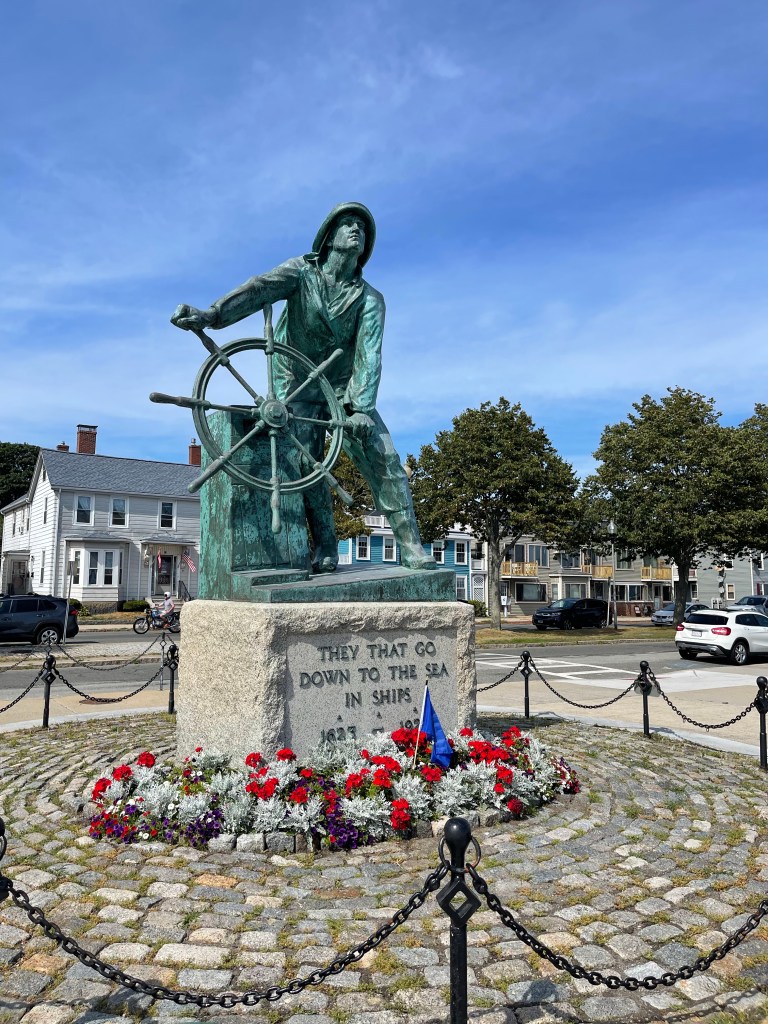
  • The Gloucester Fisherman’s Memorial

    “These courageous men have been known by names other than fishermen. They were father, husband, brother, son. They were known as the finest kind. Their lives and their loss have touched our community in profound ways. We remain strengthened by their character, inspired by their courage and proud to call them Gloucestermen.” — from the memorial plaque at the Gloucester Fisherman’s Memorial

    Gloucester is a small city that sits near the tip of Cape Ann, in Massachusetts. The city is growing increasingly gentrified, but there’s no doubt it maintains its roots in the fishing industry. And when you think of fishing, how can you not think of the Gloucester fisherman? Generations of men and recently women from the community have made their living from fishing. Many went to sea never to return. The Gloucester Fisherman’s Memorial was built in 1925 to forever memorialize them. A few years short of the 400th anniversary of the founding of Gloucester, and the 100th birthday of the memorial itself, I felt compelled to revisit.

    More than 5300 men who left Gloucester Harbor full of hope are known to have been lost at sea. Swept up in Nor’easters, collisions at sea and all sorts of tragedies, whole ships full of fishermen were lost in the unforgiving North Atlantic. Technology makes it safer to go to sea today than its ever been before, but there are still dangers lurking in the unknown. Names are still added to the memorial plaques, but instead of hundreds of names in a given year like 1879, there might be a couple. The most familiar names in recent years were those lost during the “perfect storm” of 1991.

    You don’t get into commercial fishing to be famous, you go to make a living, hoping to return to those you love when your work is done. The memorial itself is modeled after a man named Captain Clayton Morrissey, who died of an apparent heart attack while at sea, years after the memorial had been erected. There’s tragedy in this too, but doesn’t it feel appropriate, that he should pass away at sea? In a way, it makes his image on the statue ring more true.

  • Acquiring Different Frames

    “I think well-read, well-travelled is nothing but acquiring more lenses in life to see things. The word ‘unusual’ starts dying as you travel more, as you read more. You are less shocked. You are less surprised. Because nothing seems unusual. You’ve seen it all, and therefore you have acquired different frames. And therefore, most intolerant people who have neither read nor travelled… don’t know alternate realities… We have to be able to tap into multiple biases that coexist in us by creating all these multiple biases in our head.” — Kunal Shah, on The Knowledge Project

    We’re all frame collectors, collecting frames of reference that we use to determine how we act and react in and to the world around us. When our frame of reference bumps into someone with a contrary frame of reference it may create friction, but it ought to create a measure of curiosity as well. Why do they see things differently that we do on this topic? Are they viewing the world through limited frames, or are we missing that particular frame in our collection?

    I won’t defend the worst tendencies of humanity, but I can better understand why some people blindly fall into categorizing other people based on politics, religion, race, sex, and on and on. They have limited their frame of reference to something so narrow that they’re compelled to lash out at anything that contradicts that view. This is what makes burning books or dictating what is taught in schools so dangerous—it constricts frames of reference to only what the book burner or policy maker want it to be. Which perpetuates biases and extends the chain of willful ignorance.

    And here we all thought we’d transcended our biases.

    It’s never been easier to acquire information, and never easier to acquire misinformation. We all must sift through the garbage to find a measure of truth that resonates for us. Shah, in this same podcast, points out that our minds are so fatigued with the information overload that we’re actually more susceptible to following people who state things with conviction. This explains the feverish followers of politicians, Bible-bangers and toxic faux news personalities. If you sip enough of any one flavor of poison, you develop a taste for it and tend to order it again next time you belly up to the information bar. We may be stuck in a world where we have to wade through the bullshit, but we don’t have to consume it.

    Our world is full of alternate realities, so why do we keep ordering vanilla? We must deliberately expand our pallet. We must challenge ourselves to read diversely, travel broadly, and listen more intently when others are speaking for a grain of truth we might have missed otherwise. We’re all figuring this sh*t out as we skate through life. We don’t have to listen to those who would have us skate in circles.

  • Riding the Storm Out

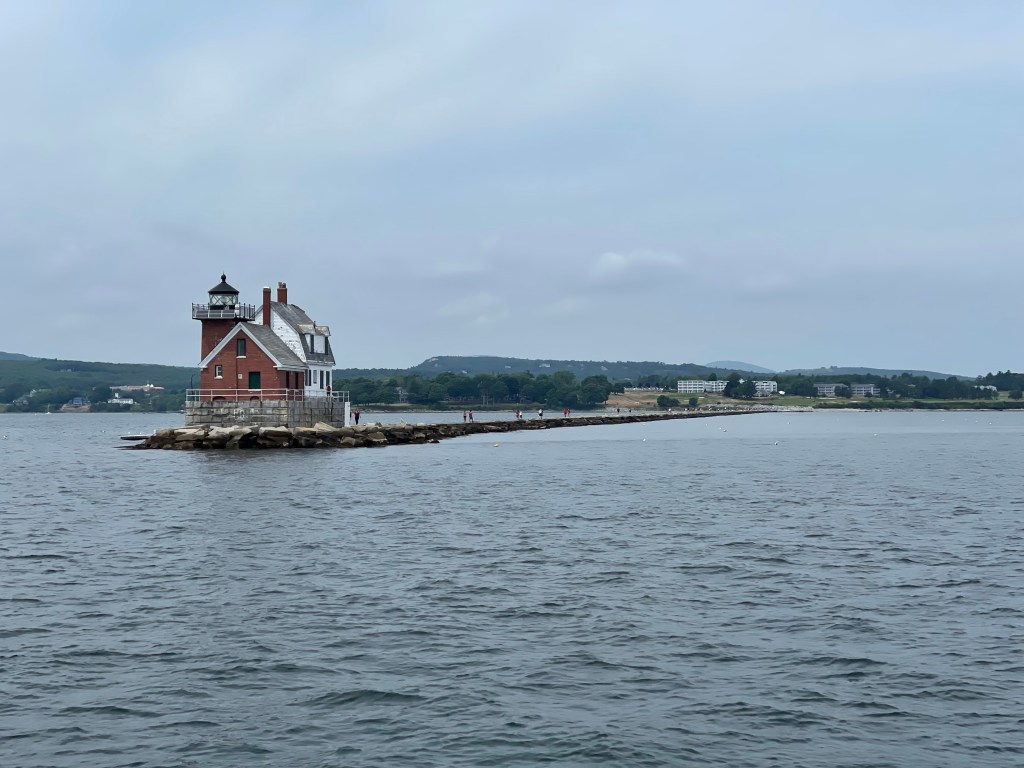
    The town of Rockland, Maine is a popular summer destination for cruisers, wealthy yacht types, and vacationers from around the world. Many of these land-based guests stay at The Samoset Resort, a classic 1902 hotel resort on the waterfront. Near the Samoset is the historic Rockland Harbor Breakwater. The 1200 meter long, granite breakwater was built to help shelter ships in the harbor during the rougher weather that inevitably rolls in from Penobscot Bay. As you might imagine, putting a long granite breakwater 1200 meters out into the middle of the bay makes the breakwater itself a hazard, and a lighthouse was constructed at the end of it to help ships navigate into the harbor. Walking to the end of the breakwater is a rite of passage for visitors to the region and offers spectacular views.

    A couple of us joined Fayaway for a weekend of cruising around the Penobscot Bay islands. Rockland was our expected destination all along, but the weather forecast brought us there earlier than originally planned. A thick fog greeted us as we rounded Vinalhaven and retraced our route from a few days earlier. The fog lifted and temperature grew noticeably warmer as we motored past the Rockland Harbor Breakwater Light into the mooring field. Well over a hundred people were walking the breakwater, proving that the weather was better on land than it had been on our journey there.

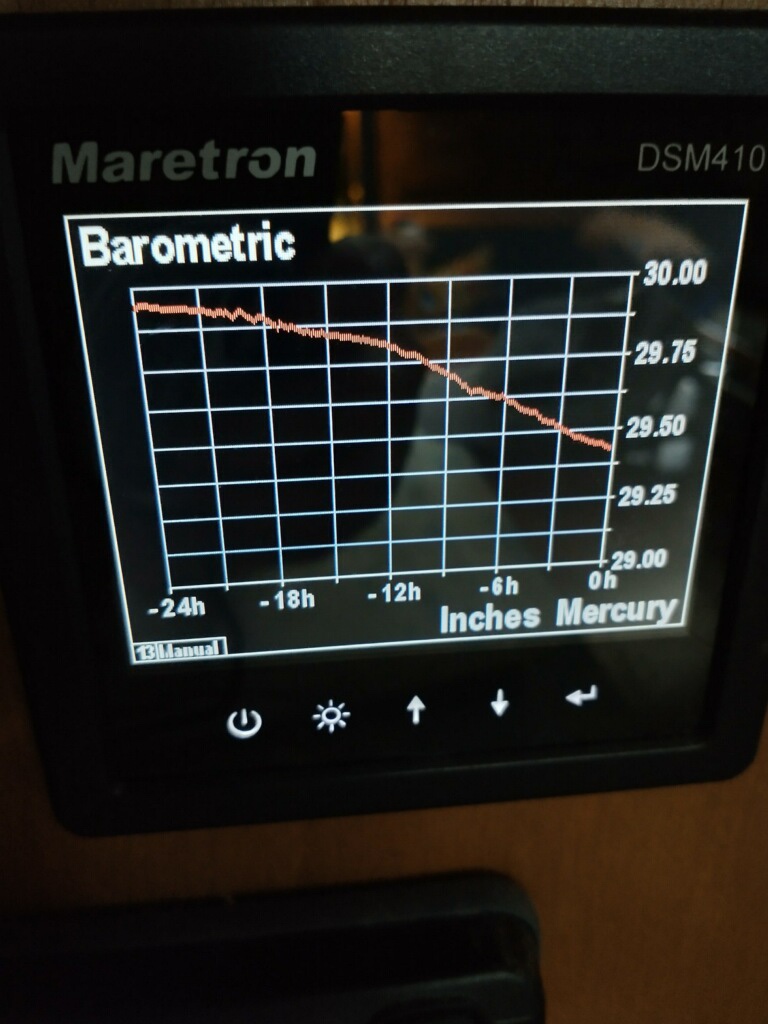
    But we all knew what was coming. Severe storm warnings made it clear for anyone paying attention, and when you’re on a boat you pay attention. We weren’t the only ones seeking safe harbor. Mega yachts began anchoring in a billion dollar conga line. Smaller boats filled the mooring field and local anchorages. The desire to shelter from a storm is universal. Nobody reviews your bank account when the wind starts blowing.

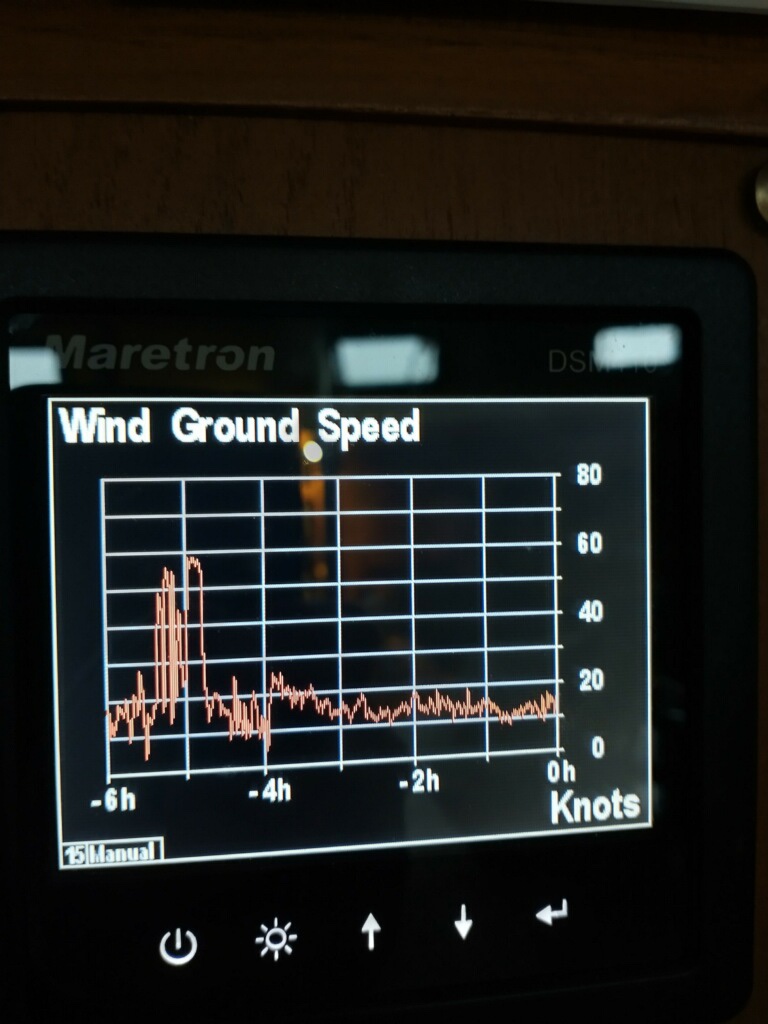
    A late lunch in town got us back to the mooring just as the first raindrops fell. Soon the light patter became a roar as the heavy rains came, and later sustained wind and the heavy gusts. Those gusts capped out close to 60 knots overnight, which might have made it adventurous on an anchorage but on a solid mooring more a curiosity.

    A solid boat like Fayaway and knowledgeable Captain like Chris goes a long way to eliminate potential stress, but you still tend to wonder about the state of other nearby boats on their moorings and anchorages. Each lift and slap of waves on the hull made an impression, making you run through your action plan should something happen like a boat dragging its anchor ramming into you. But as the night wore on and Fayaway shrugged off the wing gusts and wave action, I put aside things I can’t control and appreciated where I was. And with a stormy soundtrack playing in the background I dozed off content and confident. Life is a collection of experiences, and this was surely one to remember.

    Rockland Harbor Breakwater & Light
  • Sunrise and Mosquitoes

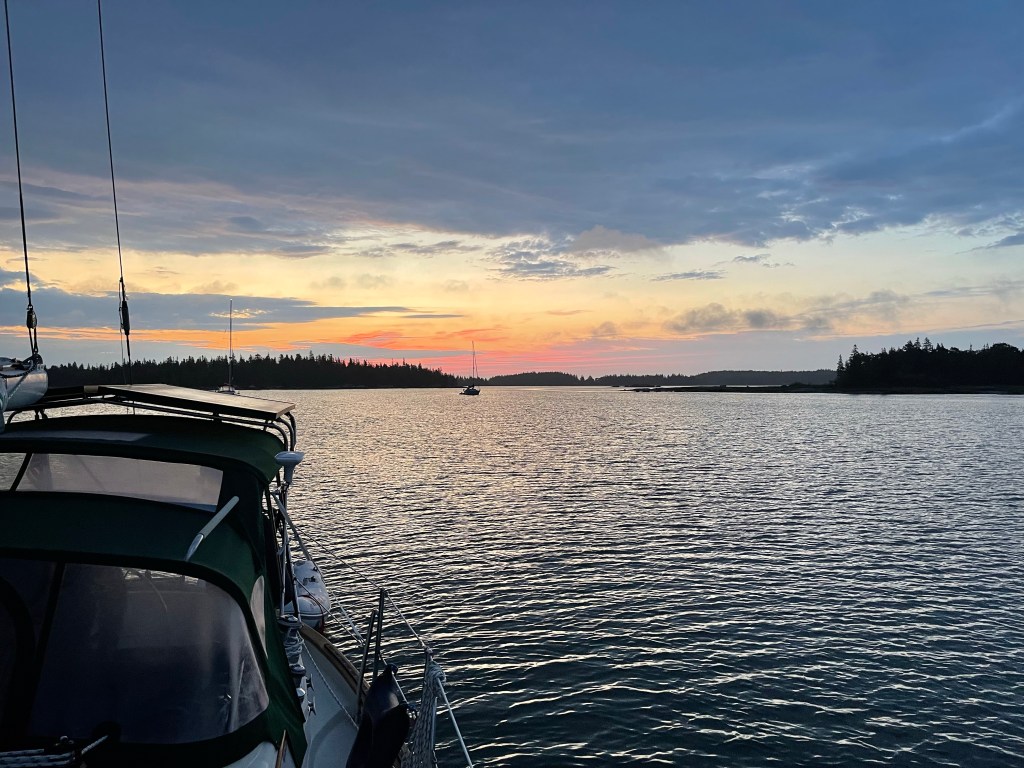
    Seal Bay, Maine. 04:30 and a brightening sky. There’s a strong probability of magic in the air. To get up or to linger awhile in the finally-comfortable position I’d found? The answer is obvious by now—up and at ‘em.

    Moving slowly as not to awaken the crew (who inevitably were awakening anyway), I slid open the hatch with an unwelcome bang that turned my intentions upside down. “Sorry,” I mumbled quietly. There’s just no sneaking around on a sailboat.

    Outside, the sky began to glow, as a light breeze carried wispy clouds of fog across the cove. Sitting a few beats, I heard the familiar song of a mosquito buzzing nearby. Damn. Soon another. We take the good with the bad in this world, and reconcile it as best we can. I celebrated a pristine, quiet cove distracted by a hungry swarm of fast flyers. “Such is the way,” whispered an understated sunrise rising above it all. And so it was.

  • Finding Soulfulness in Inefficient Places

    “Everything that feels soulful in life is inefficient. All the vacations that we find very soulful are inefficient places. The food that we really, really like and find soulful are inefficient to cook… maybe soulfulness is a function of chaos and inefficiency... It is impossible to imagine scaling in life without standardizing. And standardizing is the enemy of soulfulness.” — Kunal Shah, Interviewed on The Knowledge Project

    Don’t you feel the weight of truth in Shah’s words? Don’t we feel the lack of soulfulness in a “corporate” vacation destination versus the times we march to our own beat? Who seeks out a national restaurant chain for soulfulness and individual expression by the chef? No, we go to places like Disney World and Applebees for the predictability—good product delivered as expected. No need for translation or a Google search, it’s. just. as. expected. <yawn>.

    We all seek predictable when we can. Heck, I stayed at a Hilton in Vienna instead of a boutique hotel because I could use points and I knew there would be an iron and ironing board in the closet—because there is always an iron and ironing board in the closet of every Hilton property I’ve ever stayed in anywhere in the world. Sometimes you don’t need soulfulness, you just need to iron a damned shirt yourself.

    Contrast this my hotel in Castelrotto, Italy, where our room didn’t have a window but a skylight, no air conditioning or fan, uneven floors and a reception desk in another building down the street. The bell in the tower right above our heads through that open skylight would begin ringing at 06:00 sharp. And you know what? I loved it. The building was older than the United States, that bell was ringing long before I entered this world and the breakfast was a lovely spread of soulful local expression I’d never have found in a hotel chain. There’s something to be said for inefficiency too.

    So how do we create soulfulness in our own work? We don’t do it by parroting whatever business book we just read in our next meeting with coworkers or customers. And we don’t do it by following the corporate handbook to the letter (but don’t you dare stray a step too far). No, we create soulfulness when we find our unique voice in the process of turning chaos into order and eliminating inefficiencies. Ironic, isn’t it? But meaningful work isn’t chaotic, it’s expressive yet contributive. We don’t add to the Great Conversation by shouting over the crowd, nor do we help a company meet its quarterly objectives without following an informed policy or two.

    Here’s the twist: we find soulfulness in our work through routine. This isn’t standardization, this is disciplined dues-paying to reach a place where we might transcend the average. We write a million average phrases to turn one clever, soulful phrase that resonates. We refine widgets over and over again until something perfect emerges. Soulfulness is developed through routine but released through individual, and thus inefficient, expression.

  • Stepping Into a Larger Life

    “Only in those moments when we take life on, when we move through the archaic field of anxiety, when we drive through the blockage, do we get a larger life and get unstuck. Ironically, we will then have to face a new anxiety, the anxiety of stepping into a life larger than has been comfortable for us in the past.” — James Hollis, Living an Examined Life

    Many of us chase vibrant experience through state change. Early this morning I plunged into a pool to completely change my state from groggy to vibrantly aware of the world around me. As you might expect it did the trick immediately. But we don’t need a pool to change our state, any plunge into the unknown should get us there eventually.

    Many of us avoid change at all costs. There’s a reason that early morning plunges into a pool seems so unreasonable to so many—the majority would rather hit the snooze button and slowly reconcile themselves to another day of whatever it is that dictates their lives. People who deliberately and regularly challenge their comfort zone seem a bit… unusual. When you’ve got a good thing going why rock the boat? But isn’t it fair to ask: Why the heck not? When we consider the worst possible outcome to any given action, most of the time we’d come out okay in the end. We ought to take more examined leaps in this lifetime.

    What makes us unique out of the billions of people who have ever lived is our individual experiences and the perspective that is derived from them. That thought process cranking away behind those eyes that see (or don’t see) the world around them is the core to our identity. Call me crazy if you will, but I’d rather have the jambalaya version of life than the tomato soup. Throw as much as you can in the bowl and heat it up. We’ve only got this one meal together.

    The thing is, we’re all prone to both tendencies. For all my chasing of experience in this world, I live a relatively stable, some might say boring, life. But chasing state change doesn’t mean we have to throw ourselves into chaos daily. It simply means opening ourselves up to new experiences. Try to learn a new language, walk around the block the opposite way, have tea instead of coffee, write about something [eclectically] different every day, do something completely out of the norm this weekend… whatever makes the back of your neck tingle when you even dare to think about it.

    To step into a larger life, we’ve got to get used to treading into the unknown. When we dance with a bit of mystery we release magic into our lives. That measure of magic might just make us bold enough to go bigger next time, and the time after that. So it is that we grow into our lives one incrementally bolder step at a time.

  • A Swim in the Broth

    “Consider the ordinary barnacle, the rock barnacle. Inside every one of those millions of hard white cones on the rocks—the kind that bruises your heel as you bruise its head—is of course a creature as alive as you or I. Its business in life is this: when a wave washes over it, it sticks out twelve feathery feeding appendages and filters the plankton for food. As it grows, it sheds its skin like a lobster, enlarges its shell, and reproduces itself without end. The larvae “hatch into the sea in milky clouds.” The barnacles encrusting a single half mile of shore can leak into the water a million million larvae. How many is that to a human mouthful? In sea water they grow, molt, change shape wildly, and eventually, after several months, settle on the rocks, turn into adults, and build shells. Inside the shells they have to shed their skins… My point about rock barnacles is those million million larvae “in milky clouds” and those shed flecks of skin. Sea water seems suddenly to be but a broth of barnacle bits.”Annie Dillard, Pilgrim at Tinker Creek

    I confess to briefly recalling this tidbit from Dillard while reacquainting myself with Buzzards Bay, but mostly I considered the front paws of my canine swimming partner enthusiastically paddling in my direction, and equally pressing, the rumble of morning thunder close enough to keep the swim brief. We don’t think about barnacle bits when we swim in salt water any more than we think about the vapor particles we breathe in in a crowded room (at least until the pandemic). These are simply part of the deal. We embrace the universe as it snuggles in close or we curl up in terror under the covers.

    The point is, we’re meant to be out there living in the world. So dip a toe in the broth, or better yet, plunge right in. For we are very much a part of the stew of life and ought to celebrate our brief moment together. But appreciate that outdoor shower afterwards just a little more.

  • A Snapshot of Modern Domestic Air Travel

    Those not residing in or actively flying domestically in the United States may be unaware of just how challenging air travel can be at the moment. There are simply not enough active pilots or flight crews to meet demand. This is partially because of the pandemic, when everything dried up and many active pilots and crew retired or moved on to other careers, and partly because the airline industry didn’t keep up with training new pilots to replace those who were retiring. In any case, there is a severe shortage of crews, making delays and cancellations more and more common. Throw in a general public eager to travel and you’ve got a formula for fun.

    Consider my most recent flight, from Nashville to Boston:
    — Flight delayed by 50 minutes before I even arrived at the airport.
    — After finally boarding the plane, they determined they needed to reboot the plane’s Operating System, which involves shutting down the plane for 5-10 minutes (did I mention it was 100 degrees Fahrenheit in Nashville at the time?)
    — Upon departing the gate and taxiing towards the the runway, the plane was pulled out of line by air traffic control minutes before takeoff because of air traffic roulette in the northeast.
    — Waited on tarmac for two hours, which meant a mandatory return to a gate so passengers could get off for relief or food. While an option, they encouraged everyone to stay on board so they could leave sooner.
    — Finally took off 3 1/2 hours late and arrived in Boston after midnight. Flight attendant mentioned she’d just had a 16 hour day. Who am I to complain after hearing that?

    Does flying the friendly skies sound glamorous yet? Let me add another tidbit:
    Since I’d transferred from another flight, I was in a middle seat at the very back of the plane, seated next to a toxic lump of evaporating booze and churning empty calories throwing up in his mouth and exhaling for the rest of us to enjoy. He kept nodding off and bouncing his head into the seat in front of him like he was head-butting a villain in a Diehard movie. I write this fondly, and find myself missing him already. Almost as much as I miss that middle seat when the plane was being rebooted on a hot day in Music City.

    Travel has never been easier, and yet never so challenging. Life is funny that way. If I was impressed with anything during that experience, it’s that everyone on that plane accepted the reality of a moment we couldn’t control. We all suffered that shared experience together in stride, without a single headline-making incident. Maybe there’s hope for society after all.