Category: Travel

  • A Coastal Walk in San Francisco

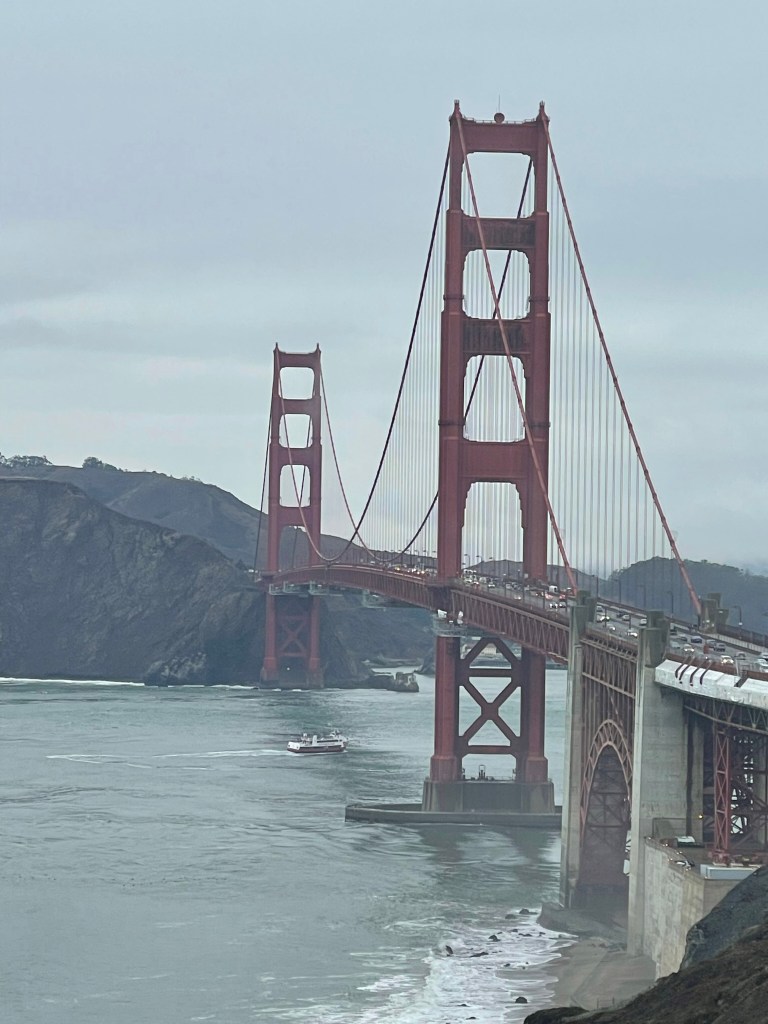
    San Francisco is known for many things, but the Golden Gate Bridge has to be near the top of that list we make in our heads. Without being a tourist checking boxes, shouldn’t you try to see the sites that make a place unique? But seeing doesn’t have to mean doing what everybody else does.

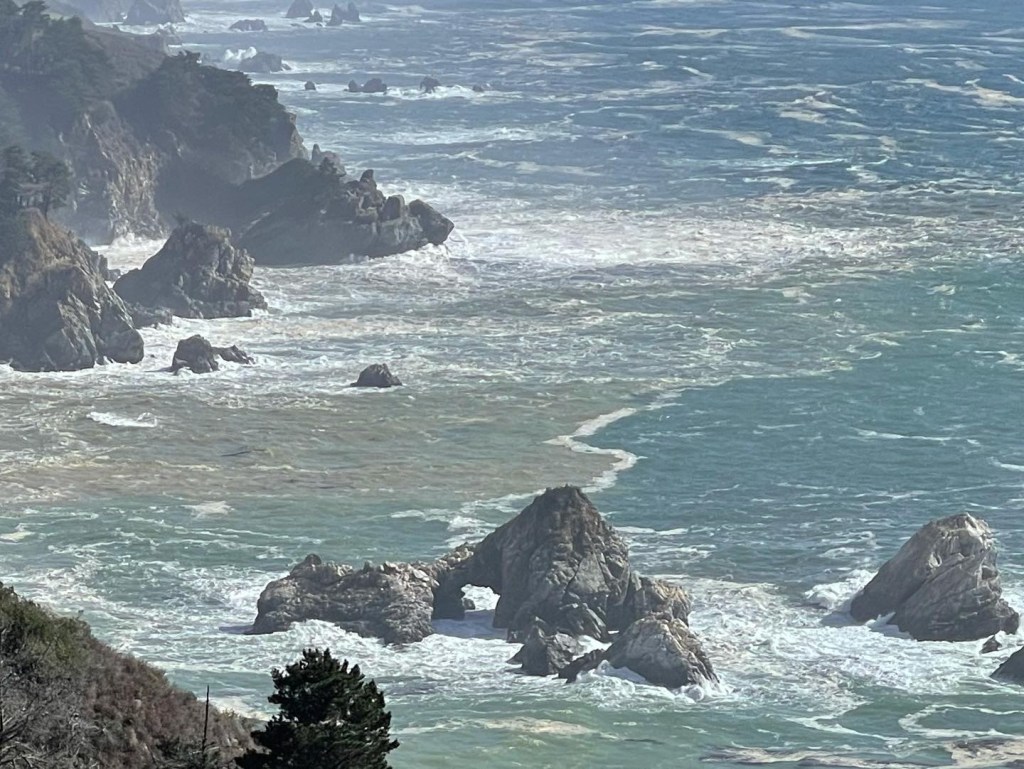
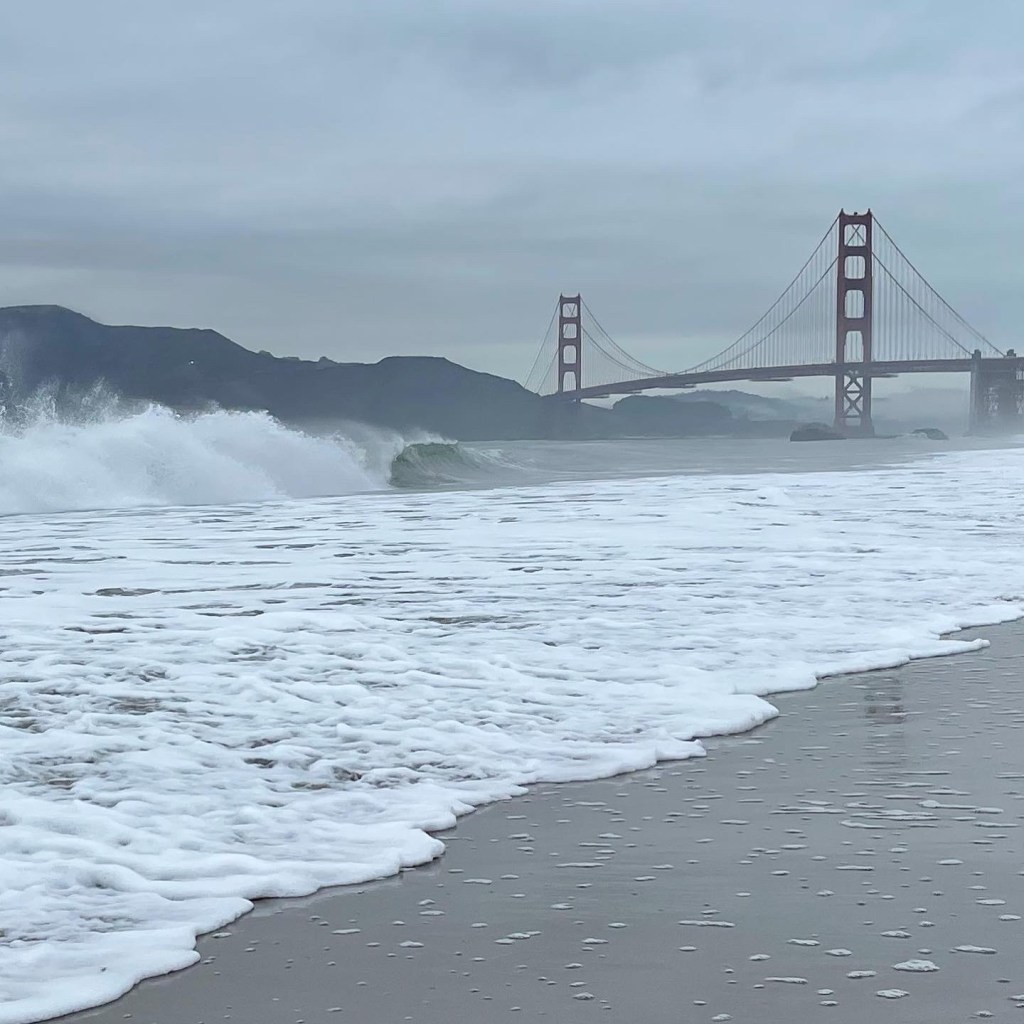
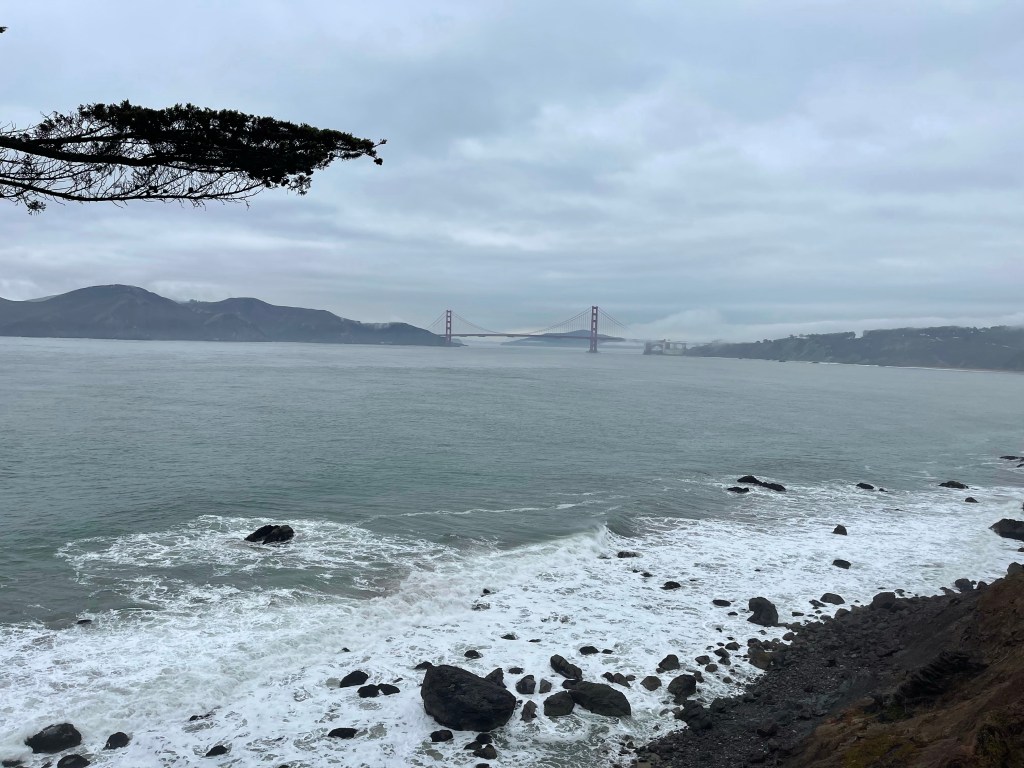
    So how do you see something as famous as the Golden Gate Bridge in a different way? You let it come to you gradually. The perfect way to do that is with a walk from Lands End to the bridge. This walk takes you along a diverse landscape of rocky cliffs, spectacular beaches with crashing surf, high end neighborhoods, past defensive fortifications dating from the world wars and finally to the bridge itself.

    You can Google the route and map it out neatly, but maps only offer a one-dimensional view. Even Street View, for all its delights, can’t convey everything. You don’t experience the clumpy clay in the sand after a light rain, or the shear cliffs that claim the lives of the careless adventurers looking for that perfect vantage point, or the spa-like aromas emanating from the wet flora, or the cheap plastic Halloween decorations adorning multi-million dollar homes. No, you’ve got to walk it to experience these things.

    The walk itself is a good workout, with a lot of climbing and long stretches on soft sand, but it’s not the Appalachian Trail, you can get by with a moderate fitness level and good walking shoes. The bridge and the roar of crashing waves will be your constant companion. Were it not for the bridge you might think you were in another place.

    The bridge comes at you from different vantage points. One of those vantage points is mental. We can all visualize the Golden Gate Bridge in our minds. So it can be invigorating when you see the real thing. It was thought impossible to build by many, but 84 years after opening she looks as good as you imagine she would.

  • The Nature of Modern Travel

    I watched the guy in front of me as the attendant informed him that he’d missed his flight because they hadn’t arrived at least 40 minutes before the door closed. The truth hit him squarely and sadness washed over his eyes. His wife pressed close to him to hear, as three young children pulled her in three directions. And I wished nothing more in this world than for a do-over to his day. It was apparent why he was late, but rules are rules and I wondered what happened to that family and who was waiting for them on the other side of that missed flight as I rushed off to my own flight.

    And this is the new travel in coach. Not at all like business travel, this is a hundred things on your mind and a nagging fear of what you forgot travel. And it’s brutally unforgiving. Those who say the journey is half the experience wipe the worst moments from the memory bank. But hey, maybe we’ll all laugh about it someday? I hope so for those parents.

    When you finally sit down in your seat, and (if you’re lucky) with your baggage stowed safely in overhead, relief washes over you like that sadness in the father’s eyes. You’ve cleared yet another hurdle in a race above the clouds. There will be more, there are always more, but one less than before. Travel is one step at a time across a minefield, but we do live it, even if it doesn’t always love us back.

    But hey, at least we have Wi-Fi?

  • Sympathy With Intelligence

    “A man’s ignorance sometimes is not only useful, but beautiful—while his knowledge, so called, is oftentimes worse than useless, besides being ugly. Which is the best man to deal with—he who knows nothing about a subject, and, what is extremely rare, knows that he knows nothing, or he who really knows something about it, but thinks that he knows all? My desire for knowledge is intermittent, but my desire to bathe my head in atmospheres unknown to my feet is perennial and constant. The highest that we can attain to is not Knowledge, but Sympathy with Intelligence.” – Henry David Thoreau, Walking

    We arrive at a deeper understanding and empathy with the world by getting out into it. If there’s been a curse to the pandemic, it’s the distinct lack of getting out there to encounter a different perspective on things than you might have sheltered in place with your favorite sound bites and tweets.

    If the last 6-7 years were defined by anything, it’s this growing assurance that your side is right and any other is wrong. The world seemingly spiraled down into an antagonistic cesspool of us versus them. What’s missing is empathy: the putting ourselves in their shoes part. Seek first to understand and then to be understood, as Stephen Covey would have put it. He’d be shaking his head at the world we find ourselves in today.

    Getting out to meet the world is the solution to this problem. Seeing things the way they look from the other side offers perspective unavailable to those who don’t venture past the mailbox. The idea of getting out to see the world seems to be the most logical thing in the world to many of us, but fills others with dread. Would you live your life forever in a shell or break out of your limited view of the universe and see what’s really out there?

    This week I’m getting back out in the world, not for work, but for pleasure. To see things from a different vantage point, to seek the truth about how things are in a place other than here. To bathe my head in atmospheres unknown to my feet and return with a new perspective on this world. And then, boldly, to do it again.

  • I Will Show Another Me

    When illusion spin her net
    I’m never where I want to be
    And liberty she pirouette
    When I think that I am free
    Watched by empty silhouettes
    Who close their eyes but still can see
    No one taught them etiquette
    I will show another me
    Today I don’t need a replacement
    I’ll tell them what the smile on my face meant
    My heart going boom boom boom
    “Hey” I said “You can keep my things,
    They’ve come to take me home.”
    – Peter Gabriel, Solisbury Hill

    Where were you when you really heard this song for the first time? Not tapping your fingers on the steering wheel while you drive hearing it, but listening to the lyrics and absorbing the weight of what Peter Gabriel was saying to the world? We all confront tough choices, and the toughest choice of all is when everything is going well and we follow the call to change anyway.

    This decision, I will show another me, is the root of change. It’s what Henry David Thoreau was saying in Walden:

    Public opinion is a weak tyrant compared with our own private opinion. What a man thinks of himself, that it is which determines, or rather indicates, his fate… The mass of men lead lives of quiet desperation. What is called resignation is confirmed desperation.

    I think a person ought to read Walden every year, to gauge the changes happening within themselves. You might say the same about Solisbury Hill; you hear it differently depending on where you are in your life. Closing in on two years since the beginning of the pandemic, I hear it differently than I did a few years ago. Maybe you do too.

    The theme mirrors Bob Seger’s Roll Me Away, right down to the bird of prey weighing in on the decision the protagonist is about to make. But Solisbury Hill sneaks up on you differently. Maybe it’s the English versus the American take on life-changing moments. Roll Me Away was always a driving song, pulling you relentlessly to the freedom of the road. Solisbury Hill is about a very distinct moment in Peter Gabriel’s career, when he decided to leave Genesis and begin a solo career. And in writing it he blazed a trail for everyone following him in making their own choices in life.

    Should you listen to that voice, trust imagination, and take the leap.

  • In the Dew of the Morn

    Out-worn heart, in a time out-worn,
    Come clear of the nets of wrong and right;
    Laugh, heart, again in the gray twilight;
    Sigh, heart, again in the dew of the morn.
    Thy mother Eire is always young,
    Dew ever shining and twilight gray,
    Though hope fall from thee or love decay
    Burning in fires of a slanderous tongue.
    Come, heart, where hill is heaped upon hill,
    For there the mystical brotherhood
    Of hollow wood and the hilly wood
    And the changing moon work out their will.
    And God stands winding his lonely horn;
    And Time and World are ever in flight,
    And love is less kind than the gray twilight,
    And hope is less dear than the dew of the morn.
    — WB Yeats, Into the Twilight

    The dew of the morn must be reckoned with. It dampens everything, especially your bottom if you should sit down without wiping the surface dry before you land. But I love it for all that it reminds me of; early morning rows, waking up in a tent in some remote place, the first, wet cleats soccer games of the day for the kids when they were cherubs. That damp start is a new beginning, a hope you can cling to until it dries with the rising sun.

    My heart belongs to the morning. For all the grief I get about going to bed early, I wouldn’t have it any other way. I listen to the sounds of the woods as the world wakes up around me and honor Sirius as the last holdout stubbornly fading in a brightening sky. I know we all must fade in our time but why not try for brilliance until the end?

    My heart also seeks faraway places, if only to see what’s there when I arrive. Yeats has recurring themes of time and mysticism in his work. Mother Eire is alive with faeries and magic, and he stirs a dormant but not distant longing to visit Ireland soon. Come heart, where hill is heaped upon hill… don’t worry, I’m already there!

    Wanderlust is nothing new for me, and I often celebrate it here, but you’ll never be happy in this world chasing your dreams elsewhere. Life is right here, where you are. In the dew of the morn, with the world stirring and a cuppa too soon gone. So dry yourself off and get after it. For there’s magic in the air.

  • Beauty as a Gateway

    “I will not of a certainty believe that there is nothing in the sunset, where our forefathers imagined the dead following their shepherd the sun, or nothing but some vague presence as little moving as nothing. If beauty is not a gateway out of the net we were taken in at our birth, it will not long be beauty, and we will find it better to sit at home by the fire and fatten a lazy body or to run hither and thither in some foolish sport than to look at the finest show that light and shadow ever made among green leaves.” – W.B. Yeats, The Celtic Twilight

    We, born as we are with a shelf life, chase the divine. In big ways and small, putting yourself in the way of beauty is a gateway to the divine within our mortal existence. It’s why we stumble through muddy paths to find hidden waterfalls, wake in the deepest part of the night to make our way to sunrise vistas, and brave the sounds of the forest to dwarf our egos amongst the giants. In nature we encounter the divine, and in doing so coruscate an otherwise dim life with grace and wonder.

    Admittedly, some of us are schemers, carving out time in our lives for glimpses of the otherworldly. On a recent flight north I glimpsed a spectacular sunset above the clouds and cursed myself for not getting a window seat on the western side of the plane for that particular trip. We must be deliberate even with the mundane if we are to enter the gateway to the divine. That particular world of magic and light was meant for others to witness.

    It’s no surprise that Yeats was a fellow seeker. You can’t be a poet without first being a collector of moments of dazzling infinity. If there’s an afterlife, the westernmost reaches must get crowded with poets and philosophers lined up to see the green flash of another epic sunset. And if there isn’t an afterlife, shouldn’t we catch as many while we’re here as our time allows? Who’s to know until we get to whatever come next? But why risk missing out on the divine in our daily lives? Seek it now.

    It’s all around us, waiting for you to notice.

  • The Dew of the Morn

    Come, heart, where hill is heaped upon hill
    For there the mystical brotherhood
    Of sun and moon and hollow and wood
    And river and stream work out their will;


    And God stands winding His lonely horn,
    And time and the world are ever in flight;
    And love is less kind than the gray twilight
    And hope is less dear than the dew of the morn.
    – W.B. Yeats, Into The Twilight

    When you read Yeats you feel the old Druid blood stir within. We know this world, where the sun and moon whisper, and the wood and river and stream work their will upon us. We’re never quite right when we’re too far away.

    We all run calculations in our heads, figuring out our time and where we want to place ourselves next. We run the numbers, and they tell us to get back to what’s important as quickly as possible. The world piles atop you, scorning your hopes and dreams, reminding you of responsibilities and your time earned. Save such folly for another day, the voices say.

    The blood of the ancients beats in our hearts, you and me, and it has a different rhythm than this world at large. It grows restless and impatient with our stories of later and soon enough. What is hope but a deferred dream?

    Time and the world are ever in flight. There’s no catching either, is there? Our hope is in the dawn, when we walk out into the freshness of a new day and seek what’s been calling us all along. But the dew of the morn is drying with the rising sun, and soon our footprints will fade. Seize the moment.

  • The Duck With the Broken Beak

    If there’s a perk to travel, it’s the opportunity to encounter things you would never see in your daily existence. When you pause from your frenzied attempt at getting things done long enough to observe what’s hiding in plain sight around you. On this particular trip, it began with a glimpse of a duck swimming in the pool at the Rosen Plaza Hotel in Orlando.

    It seems this duck that was hit by a car at some point, resulting in a broken beak and an inclination to live a more comfortable life. The story goes that she had a family with some scoundrel mallard and returned with her ducklings in tow. When she became an empty nester she dropped the old mallard for another mate and now spends her days swimming in the hotel pool and walking amongst the guests looking for handouts.

    At some point in her evening she flies away to spend the night elsewhere, but returns in the warmth of the day to take up her role as ducky ambassador for another day. The hotel employees are familiar with her routine and don’t blink an eye when she walks around looking for stray bits to eat. The novelty is still with the guests, as we encounter this unusual pool duck in our own time. She seems to relish every encounter, and poses for pictures as she’s no doubt done a thousand times before.

    The broken beak is her unique feature, and no doubt caused her great discomfort when she had her accident. But she wears her scars proudly, showing the world that this duck is a survivor. Humans could learn a thing or two from her. Wear your scars proudly, treat everyone with respect and don’t put up with characters who don’t measure up to your standards.

    These encounters are where the joy of travel resides. We move through our time and this world, chancing on these moments with a life force here and there that makes us stop in wonder. I’ll continue my journey, likely never back in this place again. But I’ll remember this scarred, friendly ambassador, poolside with her court.

  • Hearing Our Music

    “Those who were seen dancing were thought to be insane by those who could not hear the music.”
    – Friedrich Nietzsche

    When is it easiest to hear your own music? When it’s quiet, of course. When you pull yourself away from the madness of the world, find the stillness and listen.

    When it is easiest to hear the music that others are dancing to? When you break bread together, gather around and listen. And after the last couple of years you’ll hear all sorts of things.

    Being out amongst the masses again, seeing many old familiar faces that have weathered differently in the storms of the last few years, prompts reflection on how I’m weathering the storm myself. You see quickly who has struggled, who has pivoted to find a different side of themselves, who has stuck to old beliefs or abruptly changed to new ones, and who has opted out entirely. And you see yourself in each of them.

    This is a particularly noisy week, at an industry event full of people with diverse opinions, stemming from equally diverse backgrounds, information sources and social reinforcement. In this environment you hear some of the music that others are dancing to, even if you don’t always find it dance-worthy yourself. I think the important thing is to hear their music anyway.

    And then reflect on what you’re currently dancing to. You might like it more. Or maybe less. But either way you’ll hear it differently.

  • Modern Travel

    “Modern traveling is not traveling at all; it is merely being sent to a place, and very little different from becoming a parcel.” – John Ruskin

    I smiled to myself when I thought of this quote, by a man who died in 1900, as I folded myself into a coach seat in a plane full of business travelers and tourists alike. The more things change the more they stay the same. John Ruskin was likely shipping himself by train or steamer in his latter years, by stagecoach or tall ship in his younger years. And we delight in the same observation: travel can be uncomfortable and tedious. But it can also be adventurous.

    When you travel for work on a weekend you tend to let your guard down a bit and dress a little more casually, while keeping in mind the logistics of packing light. It wasn’t lost on me (or Ruskin well before me) that packing a bag and yourself is very much the same as packing a box for shipment. Weight and size matter a lot in both situations, and you must be creative and make sacrifices.

    This business of traveling can be more comfortable, more luxurious, and a lot less stressful if you just throw enough money at it. We all prioritize what we spend money on a bit differently, and some would use theirs to upgrade to first class or take a private flight. I wish them well, even as I dismiss the very idea of ever spending that kind of money for something as basic as travel. If money is a story we all agree to tell ourselves, my story doesn’t include frivolous spending on shipping myself to places.

    Still, I heard from a friend who recently took his company’s private jet from Boston to Toronto for a brief meeting and then back again. In the time most of us would take to get to the airport and suffer through the indignities the airlines and your fellow passengers put you through he was there and back with casual, strategic conversation the entire way. Maybe there’s a place for this kind of modern travel after all.

    I think the answer, for the rest of us, is to stop treating ourselves like parcels and slow down the process of getting from point A to point B. Take a sleeper train across the country, meander across the most interesting terrain in an RV or van, sail from here to there in the company of fascinating people. Any of these is less efficient but far more enjoyable than most modern travel. For it’s fair to ask; we aren’t FedEx packages, are we?