Category: Travel

  • All That’s Beautiful…

    “I heard the old, old men say, ‘Everything alters, And one by one we drop away.’
    … I heard the old, old men say, ‘All that’s beautiful drifts away Like the waters.’ – WB Yeats

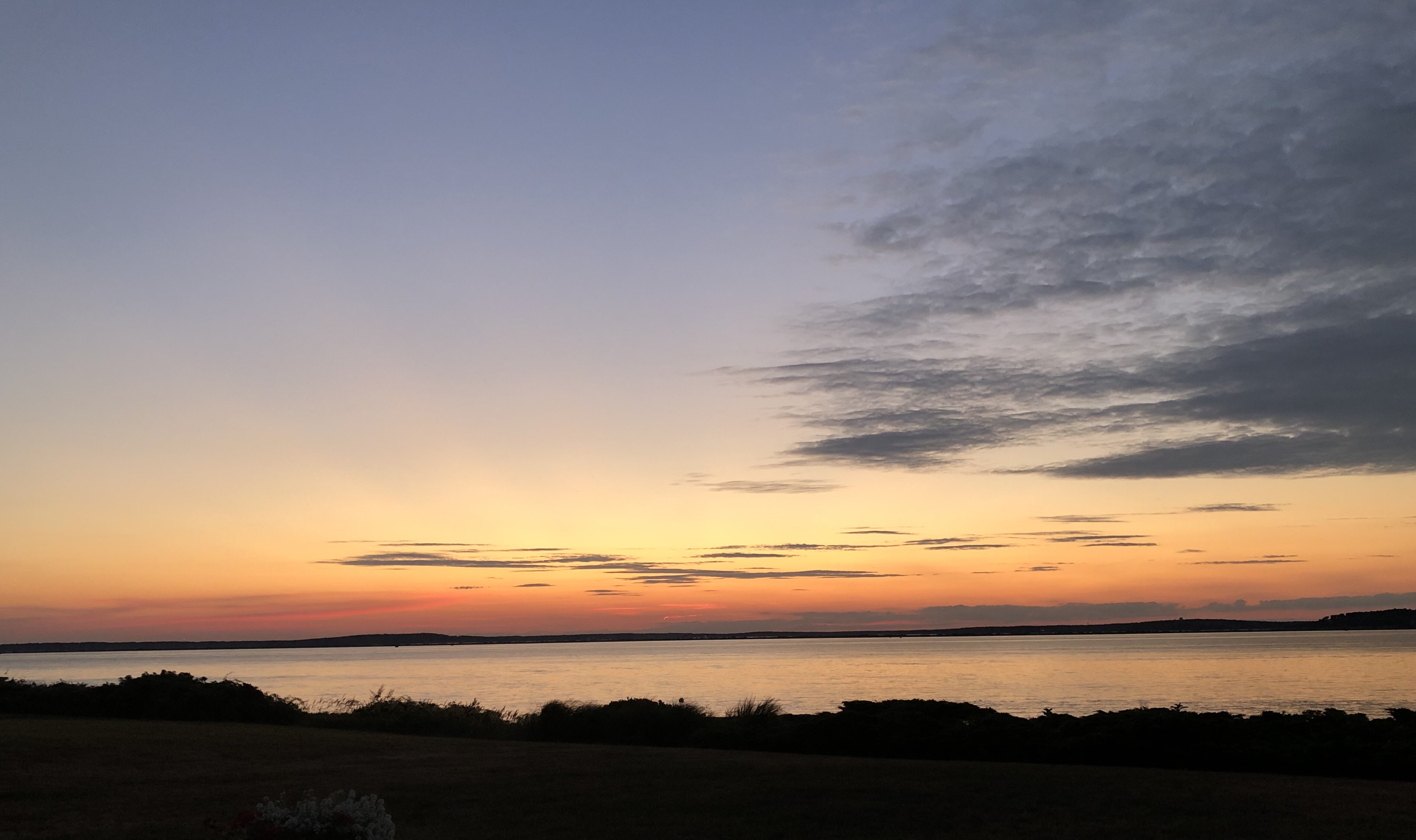
    Most people don’t like change.  They want to stay in the same comfortable place indefinitely, go to a time share vacation at Disney World every year or to the same beach to have the same experience they had last summer.  Familiar and enjoyable, so why not do it again next year?  And that’s why people buy time shares and beach cottages and permanent camp sites for their Airstream.  There’s a lot to be said for the tried and true.  Immersion for one: Really getting to know a place by going there often.  I’ve really gotten to know a small corner of Buzzards Bay in this way, and find that I still don’t know it as well as I thought I did last time I visited.  Yes, there’s clearly benefit in returning again and again.

    But as Yeats points out, everything alters.  I look at the neighborhood I live in that once had a roving pack of 50 kids riding bicycles and playing games in each other’s yards (a rare phenomenon in the last 20 years).  All those kids are grown up and moved on.  Some new families have moved in, I don’t really know their names, and have started raising the next generation of kids.  Maybe someday the neighborhood will have those packs of kids playing again.  I hope so – otherwise all that Halloween candy goes in my mouth.

    In general I’m a big fan of change.  I’ve changed jobs when it didn’t feel right staying at a place and longer.  I moved primary residences ten times before settling on the place I currently live in, where I’ve been living for 21 years.  But I’ve painted every room in this house a different color at least twice, and some four times.  Change is part of the deal, whether we move or not.  Embrace the changes that happen around us and adapt in ways that make it work for you.  Nobody misses rotary phones, which made your finger numb when you had to dial a long number.  Nobody misses the days when you had to go into a bank to make a deposit or withdrawal instead of using an app on your phone or Venmo to complete a transaction.  Some change is good.  Its progress – the progression of humanity from one stage to another in our technological development.

    “I see my folks, they’re getting old
    And I watch their bodies change
    I know they see the same in me
    And it makes us both feel strange
    No matter how you tell yourself
    It’s what we all go through
    Those eyes are pretty hard to take
    When they’re staring’ back at you”
    – Bonnie Raitt, Nick of Time

    Then there’s the changes that happen with aging.  The progression of decline in our bodies as we grow older.  Aches and pains we didn’t have when we were kids.  Seeing those around us again as well and recognizing the path we’re all on.  I’ve got a heightened sense of awareness of this now more than ever.  We’ve considered moving to a faraway place just to change things up a bit.  Scotland, Iceland, the Azores, the Faroe Islands, Dominica and New Zealand all remain tantalizing places to relocate to for me.  Sailing around the world sounds attractive when the world is open for business, but what do we leave behind when we slip away from the dock?  I think a younger me might have made the leap had the younger me known the stakes.  The me before kids, before aging parents, and such things.  Now I’m not as sure.  But aging doesn’t mean you have to break down quickly.  Fitness is a way to stem the tide and live well in the time we have left.

    All that’s beautiful drifts away, whether we like it or not.  But its replaced by new beauty, if we only open our eyes to it.  We’re all breathing in the dust of eternity, and exhale a part of ourselves back into the universe, which makes us all connected, really.  All part of the timeless wave of humanity, surely, but also all matter.  We all have our minds wrapped around our own mind and body, but we’re just matter and energy with a soul.  The matter and energy move on in time.  Beauty doesn’t disappear, it just moves on down the chain.  We’re just links trying to jealously hold onto to it as long as possible.  But the soul is ours alone, here today, but where will it be tomorrow?  Time will tell.  Anyone who tells you they have the answer is conning you.

    My wife got a call from her mother yesterday, telling her the bad news about one of their neighbor’s kids who has cancer all over their body and isn’t expected to live more than another 18 months.  I suppose that got me thinking about old Mr. Yeats and his poem.  We’re all drifting away eventually, and sometimes much sooner than we’d prefer.  A good reminder to get on with living already, changes and all.  Life is more than a weekly paycheck and a house with a pool in the backyard and a familiar spot on the beach every summer.  Life is about making the most of ourselves in the time we have left.  Live beautifully alive, changes and all.

  • To Visit All the Celebrated Places

    “Now is the time to visit all the celebrated places in the country, and fill our heads with what we have seen, so that when we become old and bald we will have something to talk about over the teacups.” – Jippensha Ikku

    Credit to Smithsonian Magazine for the Ikku quote, for it made me smile when I read it.  Ikku lived in Japan during a fairly important period in American history (1766-1831) so its easy to overlook what might have been happening in other places in the world.  The quote reminds me that our feelings about travel and aging are timeless.  We all hope to see the world while we’re young and full of vigor, that we might have epic stories to tell over a favorite beverage when we’re older and less mobile.

    The travel list of celebrated places is ready, and all earnest travelers wait for the starting gun to set us free to explore once again.  We’re all rooting for a vaccine and some level of herd immunity, some measure of personal responsibility from society at large and perhaps stronger political leadership to set policy that makes sense.  May we see it sooner than later.  But in the meantime, I’m traveling as Thoreau traveled: exploring the place where I am in ways that I hadn’t before.  Walking fully aware in the woods, or the mountains and shores of New Hampshire, stopping at local landmarks previously unknown to me, and exploring space  while looking up at the stars to pick out planets and constellations.  For the adventurous spirit, there’s no shortage of opportunities to explore, even in a pandemic.

    “Travel spins us round in two ways at once: It shows us the sights and values and issues that we might ordinarily ignore; but it also, and more deeply, shows us all the parts of ourselves that might otherwise grow rusty. For in traveling to a truly foreign place, we inevitably travel to moods and states of mind and hidden inward passages that we’d otherwise seldom have cause to visit.

    All [great travel writers]… believed in “being moved” as one of the points of taking trips, and “being transported” by private as well as public means; all saw that “ecstasy” (“ex-stasis”) tells us that our highest moments come when we’re not stationary, and that epiphany can follow movement as much as it precipitates it.

    Travel, then, is a voyage into that famously subjective zone, the imagination, and what the traveler brings back is — and has to be — an ineffable compound of himself and the place, what’s really there and what’s only in him.” – Pico Iyer, Why We Travel

    While nice on the surface, I chafe when spending too much time at resorts because I’m not looking for pampering or losing myself in a cartoon world.  Travel at its best isn’t distraction, but exploration.  It isn’t running away from ourselves, but finding ourselves.  And that can happen anywhere if we let it.  Our highest moments come when we’re not stationary…  and so we hear the call to explore.  I’m conspiring to travel locally over the next couple of weeks to places near, while foregoing far.  At least for now.  For there’s so much to see right in our own backyards that we rarely celebrate.  Over the next few weeks I’ll explore some of those places in New Hampshire and Massachusetts.  And as you might expect having read any of this blog, explore hidden inward passages too.

  • Sailing the Gulf of Maine

    The Gulf of Maine is a corner of the Atlantic Ocean embraced by Cape Cod to the South and Nova Scotia to the Northeast.  The longest stretch of land in between is part of Maine, which gives the gulf her name.  If you look at Alexander’s map, which this blog is named for, the body of water is just below the land described as “New Englande” and “New Scot Lande”.  A land mass that I’ve grown to love, that I declared I’d explore more, and that I need to return to in earnest once this pandemic is behind us.

    cropped-54b94-alexander2527s2bmap.jpg

    Yesterday we had the opportunity to sail on Fayaway with friends.  It was an out-and-back sail with one tack.  We left the Merrimack River where they moor Fayaway when they aren’t exploring the world and sailed generally on a compass heading of 90 degrees, which took us roughly along the coast of Maine just out of sight of land.  Sail for 18 miles out one way, tack and return 18 miles the other way.  Not a lot of tactical sailing required, which was perfect for a day of conversation and contemplation on the water.  We had a secondary objective of seeing whales and maybe that evasive Comet Neowise, but each proved elusive on this trip.  A sunfish made an appearance, which was akin to an understudy playing the role when you came to see the star: Wasn’t what you came for, but turned out to be entertaining just the same.

    When we got out of the lee shore of Cape Ann the wave action picked up, with 3 to 6 foot swells that lifted Fayaway and reminded us we were well out at sea.  But Fayaway handles wave action well, and with her sails reefed in the 28 – 30 knots of sustained wind were comfortable for the duration.  Which invited conversation about travel and plans for the future and the kind of catching up you do when it’s just you and others and the wind and splash of waves for hours.

    I’ve learned that I’m a bit rusty with ancillary sailing terminology that goes deeper than the basic rigging, and assisted where appropriate while staying out of the way the rest of the time.  When you see a couple who have sailed together for a year covering thousands of miles you’re witnessing a well-choreographed dance.  I’m not the sharpest knife in the drawer but I know enough not to be the clumsy fop who thumps onto stage mid-act.  Instead be the quiet stagehand who puts away the props when the performers are done.  I was grateful for a patient crew who recognized the rustiness in this sailor.

    There are a few highlights when you sail up the coast from the Merrimack.  You begin with the chaos of the Merrimack River with powerboats and jet-skis racing to win perceived races to get “there”.  It reminded me of aggressive drivers on the highway shifting two lanes and back to get one car ahead.  Its the antithesis of the sailing we were doing, and I greatly prefer being out of that race.  Once you clear the Mouth of the Merrimack, sails are up and you set course for nowhere in particular.  The lines of umbrella stands on Salisbury Beach and elbow-to-elbow fishermen and women on charter boats indicate that social distancing is a guideline many choose to ignore.  I’m sure plenty were doing their best to be socially responsible, while others proved more reckless.  I considered the similarities between drivers on the highway, power-boaters racing each other in a narrow channel to get to the fish first and close-talking beach umbrella bunnies in a pandemic for a moment, and released the thought onto the breeze.  We all live our lives in our own way in America, if not always responsibly.  I was observing from the vantage point of a sailboat in close proximity with another couple, but with the mutual assurance that each couple was taking appropriate measures to avoid COVID-19 exposure.  Maybe those beach throngs were doing the same thing.  I hope so.

    Soon Fayaway moves beyond umbrellas, beyond the sight of land, beyond the hum of motorboats, and we’re in our own world.  For much of the duration of our trip out and back we were completely alone other than a couple of commercial fishing vessels busily working the waters of the gulf.  Time on the water gives you time to ponder and think, and, if you let it, to look through the swirling waves deep into yourself.  And Sunday became another micro adventure for the books.  Leaving terra firma for the sea and exploring a relatively small segment of the Gulf of Maine.  It served as a reminder that I have far to go, but where I am isn’t all that bad either.

  • The Wild Amongst Us

    “Like winds and sunsets, wild things were taken for granted until progress began to do away with them. Now we face the question whether a still higher ‘standard of living’ is worth its cost in things natural, wild and free.” – Aldo Leopold, A Sand County Almanac

    Last week I drove up the street I live on and saw a bobcat cross the road with its freshly-killed dinner dangling from its mouth. Looked like an unlucky chipmunk to me, but might have been a small rabbit. Honestly I was focused on the bobcat. For I’d never seen one before, and even though I knew right away what it was I still called my friend Tom to validate what I believed I’d just seen.

    The next day my daughter and I were looking out the window and saw a red-tailed hawk land on the umbrella next to the pool, look around for a moment and then fly off to another vantage point. Its search for lunch momentarily overlapped in our world. I sit under that umbrella writing now, as I often do.

    Yesterday, while mowing the lawn, I glanced up the street and saw a doe carefully crossing the street at roughly the spot my car was when I saw that bobcat. She was escorting three fawns across the road. Two were more spry, the third a bit awkward on the legs, as if just born. They disappeared into the brush on the other side of the road, just as the bobcat had a few days before.

    All of these interactions with the wild amongst us would be familiar to countless generations of humans who lived on this land. They’d be far more taken aback by the swimming pools, lawn mowers and cars parked in driveways than the wildlife I find so fascinating. The question is whether they’ve been here all along or if they’re just returning in greater numbers as they adapt to the world we’ve dropped down in their neighborhood. Surely the deer and hawks have grown in numbers in my lifetime. But what of the predators like bobcat, fisher cats, mountain lions, coyotes and wolves? Evidence shows they’re returning to the land too. My encounter with the bobcat isn’t uncommon anymore, what was uncommon was the years when it would have been.

    All this points to a relatively healthy ecosystem surrounding the development I live in. Granted, it might have been even healthier were this development not dropped into the woods 22 years ago, but it was, and over time the land adjusts and the wild creatures return. The difference here was a requirement for open, undeveloped space allocated around house lots. Less profitable for the developer, but more attuned to the land. And that land serves as a highway for all sorts of wildlife, and in turn keeps me here, rooted to the land in ways I hadn’t expected when we sunk a foundation onto this plot. And so it is that I serve my tenure as watchman for the land, and wild amongst us. May I serve it well.

  • Collecting Daily Microadventures

    I heard a Rolf Potts podcast interview with Alastair Humphreys during a long walk around town.  I listen to podcasts when walking on loud roads because I can never fully immerse myself in nature when heavy objects traveling at terminal velocity are close enough to know the deodorant of choice of the driver.  Of course, I always keep an eye on the driver and the relative distance between their passenger mirror and my rib cage.  But a podcast gives me something else to think about during this regular dance on the narrow shoulders of New Hampshire roads.

    Potts and Humphreys captured my imagination during my dance with the drivers with a discussion of microadventures.  Microadventures is Humphreys’ term, but the pursuit of adventures isn’t a new concept.  I’ve been doing many of the things he lists on his site already, and think of them as exclamation points on a day of living on this planet.  But impressively he does take it to another level.  This well-made video explains the concept, or do a deeper dive on his web site (I felt a bit of web site envy visiting his site, and it once again prompted me to up my alexandersmap.com game.  You can see my ongoing progress on the site).  There are many microadventures available for the able and willing, I could get in my car and drive to the White Mountains for a hike, or drive to a waterfall for a shower under bracingly cold water, or camp out on a sleepy beach for sunrise.  But I wanted something close to home and on a somewhat smaller scale as a nod to the spirit of microadventuring.

    And so it was that I found myself getting in my car with a camera and tripod and driving a couple of miles away from home to an entirely different world: the soccer fields my kids once competed on, which last night transformed into a dark and mysterious upside down world with vaguely familiar fences and sheds providing anchors of bearing.  I was challenged by three separate people to go out and see the Comet Neowise, dancing just below the Big Dipper just after sunset.  It seems people have noticed my affinity for the stars over the years.  I’ve silently been plotting a viewing all along, but the weather proved frustratingly unreliable for comet gazing.  Last night was a micro adventure of comet hunting, confirming that my Nikon Coolpix B500 camera wasn’t up to the task (or more likely its owner), and learning from the experience.  Perhaps I’ll get that evasive picture tonight or in the next few days before Neowise travels on for another thousand generations, or maybe I’ll just bring the binoculars out and just view it.  Plenty of better photographers are taking stunning photos of Neowise already.   My micro adventure wasn’t for a picture anyway, but for the experience of trying something new right in my own town.  It was me alone in a dark field, strange noises in the forest beyond, constellations and planets spinning above and satellites zipping past.  Memorable even without a digital image to post on social media.

    Here’s the thing: we get caught up in the big bucket list stuff.  Hiking the Appalachian Trail, sailing across the ocean, hiking to Machu Picchu, visits to Amsterdam, Paris, London and a hundred other great cities.  Heck, even hiking the 48 NH 4000 footers in my home state requires time investment and planning on a larger scale than a simple microadventure.  Life should be full of the great exclamation points that a bucket list offers, but lifetimes are made up of a collection of days.  Why not downsize the scale of the adventure and do something interesting today?  So when someone asks you tomorrow what you did last night, you aren’t replaying the same old soundtrack of streaming Netflix series or watching YouTube videos of other people’s adventures.  Yesterday, in between the traditional fare of a random Wednesday, I began my day with a plunge in the pool at 6 AM and ended it with a hunt for Comet Neowise until past my bedtime.  So a memorable yesterday, if only for the endcaps.  So what shall today bring?


  • Hiking Mount Garfield

    As U.S. Presidents go, James Garfield is barely remembered, but he seemed like a decent guy.  He fought for the Union primarily to eradicate slavery, and is the only President to be elected from a seat on the House of Representatives.  So he should be viewed favorably and as an American success story.  Unfortunately, his tenure as President lasted a mere six months, as he fell victim to an assassination attempt, dying a few months after being shot from complications.  That you and I don’t remember much about Garfield has as much to do with his short and tragic life more than any flaw in his character  His mother Eliza was born in New Hampshire, so it seems fitting that there’s a mountain named after him.  This morning I climbed that mountain.

    Mount Garfield is known for the view from the summit.  There would be no view this morning, as rain and low cloud cover announced from the start that this wouldn’t be one of those days when you could see for miles.  I decided to hike it anyway, and to do it solo. The Garfield Trail is a relatively easy hike, and I was able to get to the summit in 2 1/2 hours.  As a wet hike, the Garfield Trail leaves a lot to be desired.  You feel like you’re hiking in a stream in stretches, and on the verge of getting bogged down in mud in some others.  But it’s a classic New Hampshire hike, with a cathedral of mature trees lining the ridge in the first third of the hike, and rocks for much of the rest of the way.  This is the type of hiking I’ve grown up with, and I quickly settled into my rhythm for the climb up.  For all its wetness, there were no bugs for the duration.

    Beginning at 7:30, I found little company on the trails.  I passed one father and daughter pair early on, and was in turn passed by a woman who flew past me after the first hour of hiking.  I’ve long checked my ego at the door when it comes to my pacing on hikes, and when I go solo I’m very deliberate with footing.  I’d see her again as she flew down the mountain at almost the same pace.  And that was it for company on the ascent.  It seemed most people were saving Garfield for a sunny day.  But the descent proved me wrong, with a steady parade of hikers streaming past me, most wondering about the view at the summit.  Not much of one, I’d tell them, but even as I spoke those words the day was beginning to change, with sunlight burning through the cloud cover and warming up the forest.  I was grateful for having done the ascent in the cool rain, even if the view didn’t cooperate.

    Mount Garfield is considered one of the easier climbs of the 48 4000 footers, but with that big payoff of a magnificent view waiting for you on a clear day.  If I wasn’t pursuing the 48, I might have saved this hike for better day, but I don’t view it as a waste at all.  20,000 steps later, I’d finished another 4000 footer and began my drive back home.  Garfield is a mountain I’ll do again a few times, certainly in autumn but also in winter when it becomes a longer hike as they close the gate on the access road.  Maybe my timing wasn’t good for a view, but it was an excellent 4 1/2 hour round trip anyway.  I’ve got my second notch on the 48 (I started over again from the beginning this year, since I rarely logged hikes previous to pursuing this goal) 4000 footers, and I got a decent workout in before lunchtime.  I’d call that a great success.

    A side benefit of hiking the 48 is learning more about the people the mountains are named for.  Other than knowing he was President and that he’d been assassinated, I didn’t know much about James Garfield until I chose this hike.  I’m glad I took the time to look back on his life a bit.  He only lived to aged 49, but managed to accomplish quite a bit in that time.  He was a classic rags to riches story with a life cut short too soon.  The White Mountains are dotted with more famous Presidents, but that doesn’t make Garfield a bit player.  Just a guy who ran out of time before he could do more.  I think he’s had a lot of company in that club.  A good reminder to get busy already, time waits for no one. And with that in mind I’m considering a peak bag for my next hike, which involves summiting multiple peaks in one day’s hike. I have another couple of former Presidents in mind for that one.


  • What’s a More Soulful Way to Live?

    “What’s a more soulful way to live?  What’s a way that I can benefit from the dynamism and prosperity of American society without having to play by these rules that keep us in a holding pattern?” – Rolf Potts, from his Deviate podcast

    Leave it to Rolf Potts to ask the question.  The question that drives much of what I write about, and seek in travel and reading and gardening and hiking and in lingering solitude in the early light of dawn and the spaces in between notes and in the eyes of kindred spirits.  What’s a more soulful way to live?  And this is the path I live my life on.  Travel might not be as readily available in this moment, but it will return in time.  In the meantime there’s this living thing to do, and why not make it a dance instead of a holding pattern?

     The world is alive around us. I see it in the trees as the wind swirls the leaves and branches bounce in delightful prances. In the leaves and flower buds earnestly unfolding and reaching for the light. I hear it in the birdsong and buzz of pollinators and I feel it in the dampness of the earth after a night of rain. And we are alive as well, at least for now. Shouldn’t we dance while the music’s still playing?

    I’m very good at creating to-do lists. Projects to complete, places to go, bucket lists of experiences and other such compilations. The question, what’s a more soulful way to live? is a useful lens for planning the future, but I find it as valuable as an earnest sounding board for the moment. How do I highlight this moment in time soulfully? How do I fill my remaining days with a more soulful life? Both questions have value. Life is best lived in the moment, but with a realistic eye on where you’ll be tomorrow, should it arrive.

    Collectively it feels like we’re all in a holding pattern, but that doesn’t mean we can’t live more deeply. Thoreau showed you don’t have to travel far to explore soulfully. And so it is that the trees dance, the dappled light sparkles on lingering droplets and the world wakes up around me. I find myself a witness in the moment but also a willing participant, alive and grateful for the opportunity at hand.

  • Life In Four Native American Quotes

    “When it comes time to die, be not like those whose hearts are filled with the fear of death, so when their time comes they weep and pray for a little more time to live their lives over again in a different way. Sing your death song, and die like a hero going home.” – Chief Aupumut in 1725, Mohican.

    The Chief Aupumut I’ve read about was born in Stockbridge, Massachusetts and fought in the Revolutionary War as an important ally against the British.  He wrote an extraordinary letter to Thomas Jefferson asking for lands for a reservation in Wisconsin, so that his people wouldn’t have to keep moving further and further until they ran out of land.  He was also known as Hendrick Aupaumut, the Chief of the Muhheconneck Nation.  Given the date, the quote above may have derived from his father.  I’m not really sure, I’m relying on a web site dedicated to quotes from Native Americans.  But it took my breath away whomever the source was.  There’s a fair amount of stoicism in Aupumut’s words, not unexpected, and he challenges all of us to live more boldly in pursuit of our own dreams.  That’s a lot to live up to, living that we might die like a hero going home, but what else is this wild and precious life for if not to reach our potential?

    “What is life? It is the flash of a firefly in the night. It is the breath of a buffalo in the wintertime. It is the little shadow which runs across the grass and loses itself in the sunset.” – Crowfoot, Chief of the Siksika First Nation, Blackfoot warrior, peacemaker

    Crowfoot died relatively young at 60 from tuberculosis, so there’s wisdom in this quote reminding us of the briefness of life.  We’re all here for a short time, whether 60 years or 100, it’s all just the flash of a firefly in the night.  So why do we waste time on the trivial when time is so precious?  Because we don’t believe the truth before us.  There’s always another tomorrow, always next year, always an I’ll get to it…  until there isn’t.  Do it now.  If ever there was a consistent call from those who came before us its to make the most of this moment, not some future moment.

    “All who have died are equal.” – Comanche or Navajo quote (source uncertain)

    Google this quote and you’ll find multiple sources for it.  But generally it comes down to either the Comanche or the Navajo.  I wouldn’t be shocked if they both had a version of the same quote.  All who have died are equal.  And all who live are equal as well, even if treated differently.  I was raised to treat everyone the same, no matter what their skin color or nationality or sexual identity or preference.  But I’ve taken my own identity for granted, not seeing the struggles of those who fight unseen battles with those who weren’t raised the same way.  The world is full of struggles for equality and the respect and dignity of all.  But collectively we can make significant improvements in our lifetimes.

    “When a man moves away from nature his heart becomes hard.” – Navajo Expression

    There are a lot of hardened hearts in the world, removed from nature and seeing the world as asphalt and concrete and electricity.  It’s easy to dismiss climate change and consumer waste as hoaxes when you’re not immersed in nature.  How can you possibly see what you aren’t looking at?  I have seen the plastic washed up on remote beaches, and the oil slicks from spills far away.  I have noticed the shift in seasons and the haze over cities on busy commuter days.  As with equality, we can make significant improvements in our lifetimes, but we can’t wait much longer.  Perhaps a new President and Congress will prove to be the catalyst for change long overdue in the United States.  Perhaps the pandemic has given the world enough of a breather to give us the time to make meaningful change in our collective behavior.  But it always starts with us.

    I linger on the edge of nature often.  Gardening and observing the birds and bees and mammals attracted to the garden.  Hiking and getting out on the water whenever possible.  But I need to plunge deeper into the heart of it, to soften the hardness in my own heart.  We’re all that firefly in the night, with so little time.  How will we use our light?  What are you waiting for?


  • The Compass and the Torch

    “Not like the brazen giant of Greek fame,
    With conquering limbs astride from land to land;
    Here at our sea-washed, sunset gates shall stand
    A mighty woman with a torch, whose flame
    Is the imprisoned lightning, and her name
    Mother of Exiles. From her beacon-hand
    Glows world-wide welcome; her mild eyes command
    The air-bridged harbor that twin cities frame.

    “Keep, ancient lands, your storied pomp!” cries she
    With silent lips. “Give me your tired, your poor,
    Your huddled masses yearning to breathe free,
    The wretched refuse of your teeming shore.
    Send these, the homeless, tempest-tost to me,
    I lift my lamp beside the golden door!”
    – Emma Lazarus, The New Colossus 

    There’s an interesting connection between Emma Lazarus and Henry David Thoreau.  It seems that Emma visited Ralph Waldo Emerson at his home in Concord, Massachusetts in 1876, and met the poet William Ellery Channing while visiting.  Channing was a close friend of Thoreau, and apparently never really got over the death of Thoreau 14 years prior to Lazarus’ visit to Concord.  He proved to be a tough nut to crack, but succumbed to Lazarus as he learned she was an admirer of Thoreau’s.  Channing gave her a personal tour of Thoreau’s Concord, from Walden Pond to the place he was born, and when she was leaving Concord he gave her an incredible gift; Thoreau’s compass.  I admit, that’s a breathtaking gift to me, the compass of Henry David Thoreau, the surveyor of lands and spiritual guide to generations.

    Lazarus, like Thoreau, would live a short life, succumbing to what is believed to be lymphoma at the age of 38.  But like Thoreau she lives on in words of significance created during her short tenure on earth.  Her most famous poem is The New Colossus, which was written to raise funds for the base of the Statue of Liberty, and is forever associated with Lady Liberty.  I’ve read it many times, but find new meaning in it with each reading.

    A mighty woman with a torch, whose flame
    Is the imprisoned lightning, and her name
    Mother of Exiles.

    When you absorb The New Colossus, you recognize the folly of Trump, the Tea Party and the undercurrent of white privilege that’s always been there but is recoiling under an uncomfortable spotlight.  The Founding Fathers might have been complicated in how they lived their own lives, but the ideas behind the Declaration of Independence and the Constitution were bigger than their lives.  The century after would see a nation boiling inside, putting the words to the ultimate test again and again culminating in the Civil War and Reconstruction, the settlement of the continent and the sweeping aside of Native Americans, much of the wildlife and the very land itself.  Set against this was the rise of Transcendentalism, conservation and preservation.  And all the while the immigrants kept flooding in, fleeing desperation and seeking a new hope in America.  Lazarus represents the open arms of Lady Liberty and America, with no restriction in who might be welcomed when they arrive:

    Give me your tired, your poor,
    Your huddled masses yearning to breathe free

    I know people who despair at Trump and the rise of hatred in America.  I take no pleasure in the vile and ugly amongst us.  But I also take the long view, and recognize that American is shifting once again, and the undercurrent of hatred, racism and greed is unwelcome by the vast majority in this country.  I have faith in the process and believe we’ll come out of this year like no other better for having endured.  America is a land of hope, transcendentalism is founded on the belief in the inherent goodness of people.  Emma Lazarus corresponding with Ralph Waldo Emerson and eventually visiting him shows her own interest in his thoughts and opinions.  When I read The New Colossus I think of Thoreau’s compass that was handed to Lazarus by Channing and the direct link that created between them.  I wonder if she glanced at the compass while writing The New Colossus and found the right words to say.  Words that still show us the way forward, towards our true north as a country.

  • Movies Under the Stars

    When I was a kid we’d go to the drive-in movie places that dotted the landscape to catch whatever summer movie was playing that week. You’d roll up to a parking spot, and we’d roll out of the back of the station wagon and establish our turf with blankets and folding chairs. Half the fun of drive-in’s was the social aspect of seeing a movie with friends, cars parked nearby and bouncing around to see who else was there and to visit the snack shack for popcorn and candy. If you wanted to preview a different movie you’d go to a multi-screen drive-in and simply turn around and see what was happening behind you.
    Drive-in’s don’t make a lot of sense as a business. You need cheap land to pull it off, but enough people to fill it to make any money. And then you factor in the weather and the sharp reduction in opportunities to pack the place for maximum profit and you see why the drive-in’s failed over time. I still see a few in out-of-the-way places in the northeast, but mostly they’re a thing of the past. Sometimes you’ll see a lonely screen standing in a neglected lot or on the side of the highway and recall what used to be. But mostly the land is swallowed up for more profitable tenants, with box stores and condos taking the place of the drive-in’s. The last movie I saw at a drive-in was Top Gun at a place that’s now a Home Depot. I tried to listen for the echoes of movies past one time while buying fasteners, but all I heard was the hum and beep of forklifts.
    Last night we tried something different during a party. We erected a pop-up screen and placed a projector on a table connected to a laptop and had a movie night in the back yard. We streamed Hamilton and sat around the table with a fire and the stars and rising moon lighting up the ceiling. And just as with those old drive-in’s we had to wait out the mosquitos before settling into the movie. Hamilton competed with the sound of exploding fireworks as the rest of New Hampshire celebrated the 4th of July in a different way. But it died down as the evening progressed, and it became easier to lose yourself in a broadway musical as other stars danced above us. It brought back those memories of drive-in movies and simpler times when maximizing the profit of the land wasn’t always the primary consideration. I went to sleep with Hamilton tunes stuck in my head and a smile on my face.

    Originally posted 5 July 2020