Category: Travel

  • Snowy Lane Changes and Time Changes

    This morning we had a typical March snowstorm.  Heavy, wet snow that eventually turned to rain.  It was well-predicted that it would do exactly what it did.  Well, almost exactly.  The snow started a few hours earlier than originally expected, and that seemed to catch the world by surprise.  Throw in the “spring forward” aspect of Daylight Savings and the morning seemed upside down from the start.

    I spent the night on the Cape as I was worked late into the evening while trying to complete a project Saturday.  There was a lovely pink overcast sky but no precipitation, so I delayed my departure a bit longer to clean up the house a bit.  Leaving the house by 8 AM and believing the storm was tracking from the south, I had no idea that I’d be driving into a mess.  Even when sleet and snow started tapping on my windshield, I thought I’d eventually drive out of it.  Nope – it only got worse the closer I got to New Hampshire.

    With heavy snow well ahead of the plows, the roads quickly turned to crap.  The left lane was a fools paradise.  The middle and right lanes were each a pair of tire tracks, and the average speed dropped to about 45-50 MPH.  Passing very slow drivers involved slowing down, gradually crossing the chasm  of snow built up between the pairs of tire tracks, and then speeding up enough to move past the slower car.  Returning to your original lane involved the same procedure in reverse.  With that kind of drama it was no surprise that many drivers just opted to stay put in whatever lane they were in.

    Traffic was much heavier than you’d expect in a snowstorm like that, making me believe that I wasn’t the only one thrown off by the timing of the heaviest snow.  But despite the hazardous driving conditions, there were only two accidents on the route that I took through Boston – one on the Southeast Expressway and the other north of Boston in the Somerville area.  In both cases the cars were SUV’s whose driver’s clearly thought all wheel drive made them invincible.

    For all the driving I do, I only find myself in these kinds of conditions a few times per year now.  Weather forecasts tend to be more accurate, and experience has taught me to time my drives better.  Today was an exception, and thus a memorable morning.  Worst part of the drive was looking at the clock on the car’s dash and realizing I had to move it forward an hour.  But my car won’t let me do it while the car is moving so the lost hour mocked me the entire drive.

  • The Corner of Broadway and Hudson

    One of the more significant street corners in American History is the intersection in Albany where Broadway meets Hudson Avenue.  This is the site of the old Stadt Huys where in 1754 representatives from several colonies met to discuss the Albany Plan of Union.  This group, known as the Albany Congress, consisted of a few famous men from the time, but the most famous of all was Benjamin Franklin.

    Coincidently this site, 23 years later, was also the location where the Declaration of Independence was first read in public.  Albany was a critical hub during both events.  In 1754 Albany was the edge of the wilderness.  In 1776 Albany was the center of the Northern Army’s efforts to repel the British Army, which was attempting to cut New England off from the rest of the colonies by seizing control of the Hudson River.

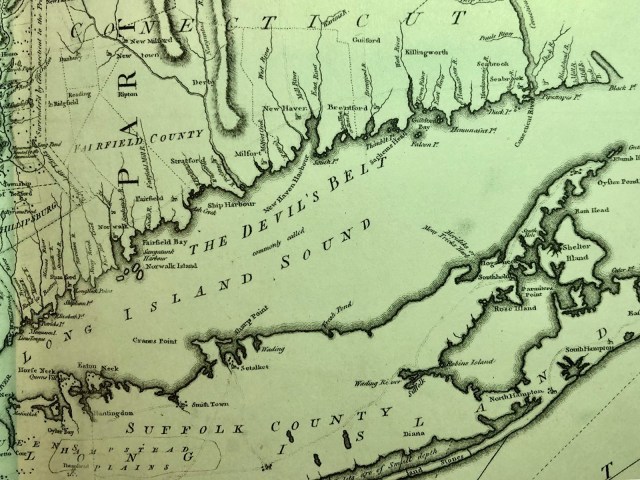
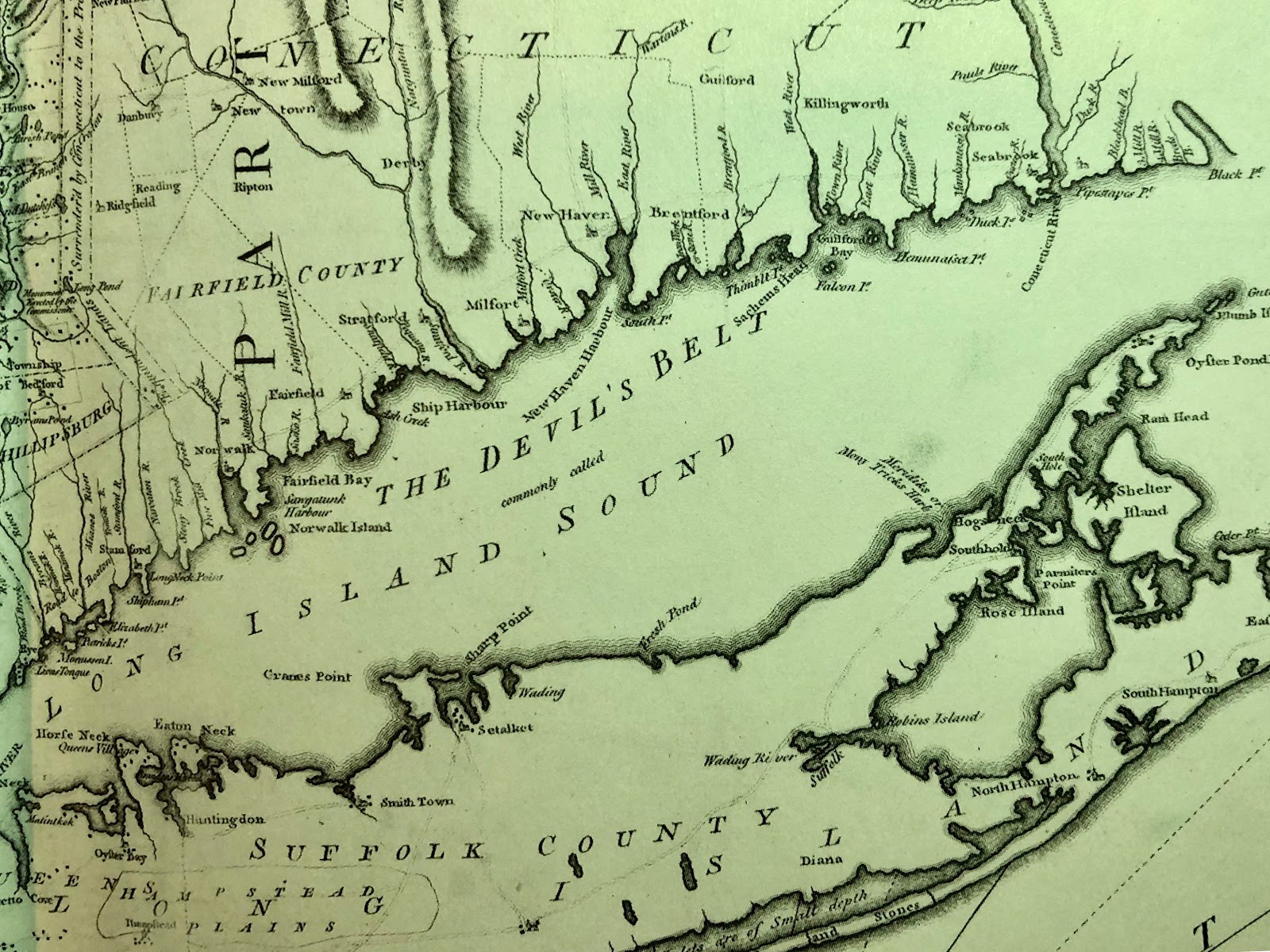
    Reading the Declaration of Independence in Albany had a galvanizing effect on the people who heard it.  Remember, Albany was under siege from all sides in the summer of 1776.  The British had swept over Long Island and Manhattan, and occupied New Jersey downstream.  They had just taken control of Lake Champlain to the north – a critical highway for troop movement from Canada.  And the Iroquois were allied with the British just to the west.  Albany was in a precarious position on July 19th when the Declaration was read.

    In 1876, according to The Friends of Albany History, a ceremony commemorating the centennial of the reading happened in this spot:
     “Before a gathering of “two or three thousand” Albany residents, the tablet, which was covered by an American flag, was unveiled by Visscher Ten Eyck (Matthew Visscher’s grandson.) The tablet’s reveal was greeted by hearty cheers from the crowd, patriotic songs, chimes from the steeples of nearby churches, and a 100-gun salute.”
     
    Tonight, almost 141 years since that ceremony, 241 years since the Declaration was read in this spot, and 263 years since Ben Franklin led the Albany Congress to draft the Plan of Union, I had a couple of pints across the street from the commemorative plaque and stone that marks the site.  There are many people in history whom I’d like to have met, but Ben Franklin is high on that list.  Since I can’t have a drink with him having two pints with a nod to history will have to be close enough.
  • Mystery Hill

    I live roughly a mile and a half from a place called America’s Stonehenge.  It’s also known as Mystery Hill, and I like that name a bit more because it infers that there’s much about the site that is unknown.

    Here’s a great description of the site from the mysteryhillnh.info web site:

    The Mystery Hill archaeological site, better known today as America’s Stonehenge, is situated on the exposed bedrock summit of Mystery Hill in North Salem, New Hampshire. The site consists of a core complex of 13 stone chambers, several enclosures, niches, stone walls, stoned lined drains, small grooves & basins, and other features which covers about one acre on the summit. Extending outward from and surrounding the core complex, are more stone walls, niches, standing stones, and two procession ways. Along the perimeter of the summit are four confirmed astronomical alignments. Below the summit on the slopes of the hill are a 14th chamber, two utilized natural caves, springs, stone walls, stone cairns, niches, standing stones, and other features. In total, the site covers about 105 acres.

    I’ve lived in close proximity to this site for twenty years.  And yet I’ve only visited it twice – once alone and once with my daughter.  If you’re an archaeological buff, an astronomy buff, or a mystery buff its a great place to visit.  I’m a history buff and like to understand the place I live in.  A large part of that is who lived here before me.  Mystery Hill has carbon dated evidence of people living in this area 7000 years ago.  Native Americans were most likely those people, and they most likely lived in the area well before that.  What we know for sure is that the Native American presence in the region was largely gone for a number of reasons by the time of the French and Indian War.  Colonial settlements continued to nudge further and further north and west and eventually the area because fully colonized, first as Methuen, Massachusetts and eventually as Salem, New Hampshire.

    About ten years ago a Boston television station did a live broadcast at America’s Stonehenge, and the weather person at the time, Dylan Dryer, laid down on the stone table that many people think was a sacrificial alter because of the drainage channels carved into it.  Maybe it was, maybe it was just the place where they cleaned up whatever they brought back from the hunt that day.  Either way, I thought it was interesting that she laid down on that spot.  Apparently there was no bad mojo as she’s now on national television and seems to be doing just fine.

    Look at Mystery Hill from a Google satellite map and the first thing that jumps out at you are the spokes of clear cut trees coming out from the center of the hill.  This was done by the people who manage America’s Stonehenge to provide clear lines of sight on the celestial points that are marked.  Whether this was done thousands of years ago by Native Americans or Celtic visitors or by a farmer in the 1800’s building off what was up on the hill I don’t know.  But I do know it’s impressive to see when you’re standing on the viewing platform.

    The other thing you notice when you look at that Google Satellite map is the encroaching development on all sides.  That’s accelerating with a development eating into the woods to the southeast of Mystery Hill.  I find this disappointing, but not surprising for Salem, New Hampshire.  The town seems to value real estate development and commercial space over conservation space.  But then again, Mystery Hill has been here before with waves of settlers clearcutting and farming the land around it.  And until some developer plugs condos on top of the hill it (wouldn’t put it past Salem) the site will continue to mark time one celestial year after the next.

  • Two Epic Marches in 1775

    During the early days of the Revolutionary War, there were two epic marches of heroic proportion.  Henry Knox’s Noble train of artillery in November and December 1775 was one.  Benedict Arnold’s march through the wilderness of Maine for the invasion of Quebec in September to November 1775 was the other, and the one that seems to have been lost to history because of Arnold’s turncoat future in the war and the immediate result from each effort.

    Benedict Arnold was the person credited with the idea of hauling the artillery from Fort Ticonderoga to Boston, which was occupied by British troops but under siege from the colonists.  The Generals recognized that a long, drawn-out siege was going to help the British more than the colonists, as reinforcements from England would be arriving at some point in the spring to try to eradicate the uprising.  Ships in Boston harbor weren’t going to leave just because militiamen were surrounding Boston.  Artillery was needed to encourage them to move on.

    Since Arnold was a little busy marching through the wilderness of Maine, it fell on Henry Knox to bring the cannon from Ticonderoga to Boston.  As with any travel in those days, using existing waterways was much easier than horse paths through the woods.  So bringing almost 120,000 pounds of cannon down the Hudson River to Albany made a lot of sense, but from there they needed to haul the cannon on sleds across ice and rough terrain all the way to the Dorchester Heights.  The hardest part of this overland trip must surely have been bringing them over the Berkshires roughly where Blandford, Massachusetts is today (where the Massachusetts Turnpike cuts through the Berkshires).

    Arnold by contrast sailed to the Kennebec River and up to Augusta, Maine, where he began his march through the wilderness to Quebec.  He started with 1100 men, and reached the St. Lawrence with about 600 starving men.  Some starved to death on the trip, and the rest abandoned the march and retreated towards home.  Arnold’s expedition was even more bold than Knox’s.  Yet the immediate results were very different.  Knox’s artillery chased the British out of Boston on what is forever celebrated as Evacuation Day in the city.  Arnold’s army reached Quebec and were met there by Montgomery’s troops who had come from Lake Champlain.  Ultimately they didn’t have the numbers or the artillery to lay a proper siege on Quebec, and they were eventually chased away as the ice broke on the St Lawrence and British reinforcements arrived to chase them down.

    Two men remembered differently in history.  Benedict Arnold’s name is forever associated with treason, but in the early years of the war he was a hero many times over.  Henry Knox would continue to grow his career in the Continental Army, becoming the Secretary of War for the United States.  His name lives on at Fort Knox.  Benedict Arnold doesn’t have any forts named after him, but the United States may not have won the war without him.

  • Ice Sculptures

    Winter in New England brings an endless cycle of freezing and thawing.  This morning we got heavy wet snow.  Today it has warmed up and much of the snow is melting.  Tonight brings bitter cold and water will re-freeze.  This constant cycle brings frustration to those who are ready for spring, but it also brings ice sculptures to the landscape.

    This is most apparent wherever water flows over a surface and down.  The blasted ledge along the side of the highways is a great spot to see ice sculptures as you drive by.  Quarries, rail trails and nature rock outcroppings are other options for seeing ice sculptures.  And of course waterfalls offer a daily transformation as water flows and freezes.  Icicles hanging off rooftops are another source of ice sculpture inspiration.

    Sunday we walked the Windham Rail Trail again.  It was transformed by ice and snow from the previous time we’d walked it a couple of months ago.  Part of that transformation is the ice flows coming off the blasted ledge on the north side of the trail, which formed spectacular ice sculptures.  It’s one of the joys of winter, if you only look for it.

  • Hiawatha, Ben Franklin and the United States Constitution

    The Iroquois Confederacy, or the Five Nations as the British called them, were five united tribes that as a confederacy were stronger than the sum of their parts.  The Onondaga, Oneida, Mohawk, Cayuga and Seneca were united through the efforts of Hiawatha.  Hiawatha, an Onondaga adopted by the Mohawk, was born around 1525 and became a great orator.  He was Chief of the Onondaga and a follower of Deganawida, a tribal elder who recognized that the Iroquois were weakening themselves by constantly fighting amongst themselves.  Deganawida apparently wasn’t much of a speaker, while Hiawatha was considered a dynamic speaker.  They developed “the Great Law of Peace” and sold the other tribal nations on it, creating the Iroquois Confederacy.

    Ben Franklin and other powerful men in the British colonies saw the power of this confederacy and sought to model it.  Benjamin Franklin’s Albany Plan of Union was the first attempt to bring the colonies together.  It served as the foundation for the United States Constitution, whose preamble reads:

    We the People of the United States, in Order to form a more perfect Union, establish Justice, insure domestic Tranquility, provide for the common defence, promote the general Welfare, and secure the Blessings of Liberty to ourselves and our Posterity, do ordain and establish this Constitution for the United States of America.

    At its core, the concepts of a common defense and promotion of the general welfare were modeled after the powerful example in Upstate New York in the Iroquois Confederacy.  So in some ways Hiawatha influenced the very core of who we are as a nation.  And yet most people don’t think of Hiawatha of the Iroquois when they think of Hiawatha.  They think of the Hiawatha from Henry Wadsworth Longfellow’s poem ‘The Song of Hiawatha’, which was a fictional character from a different tribe (The Dakota).  Longfellow knew of the legend of Hiawatha and decided that this name would be better than the original name he was working with.  And ironically, the fictional character Hiawatha is more famous than the actual Hiawatha is today.

  • Onondaga

    Long before present-day Syracuse dominated the lake that bears their name, the Onondaga lived in this area.  Onondaga means “hill people”, and there are certainly plenty of those in the region.  If you look at a map of the area, you see that there’s another dominant feature in this region: water.  Lake Ontario is just to the north and west of Lake Onondaga.  The finger lakes are southwest.  And the Mohawk River cuts an East-West corridor from Albany to roughly Lake Oneida, which connects to Lake Onondaga via the Oneida and Seneca Rivers.  This network of waterways was a superhighway for native populations, and later for Basque and French traders, and eventually British colonists and the waves of settlers who followed them.  Salt production was a major industry for early settlers to the Syracuse area as they tapped into the massive natural deposits around the southern part of Lake Onondaga.

    In my fourth year of crew, I rowed on Lake Onondaga in the summer of 1988 in the Intercollegiate Rowing Association Regatta.  This regatta was memorable for me for a few reasons.  That year Northeastern University had an accident on the way to the regatta and their rigger was killed.  The Heavyweight Men went on to win the IRA’s that year, and I witnessed the race.  To say Northeastern was a sentimental favorite after that event is an understatement.

    When you drive down I-90 you cross the lake outlet between the Seneca River and Lake Onondaga where Syracuse has their boathouse.  This is where we launched during the IRA’s and I still have vivid memories of my time there that bubble to the surface whenever I cross this outlet in the daylight.

    The Onondaga were one of the five original tribes in the Iroquois Nation.  The Oneida and Mohawk were to their East, and the Seneca and Cayuga were to their West.  So the Onondaga as the middle tribe were the logical “keepers of the fire” for the five nations.

    During the Revolutionary War, the Onondaga fought on the British side and paid for this in 1779 Sullivan Campaign led by Major General John Sullivan.  George Washington brought the fight to them in a series of coordinated raids in when the United States won.  Thousands of Iroquois fled to Canada and many starved in the winter of 1779-1780.  Their homeland was settled by New York veterans of the Revolutionary War as part of the Military Tract of Central New York.  Today there are roughly 500 people living in the Onondaga Nation Reservation just south of Syracuse.

    Lake Onondaga has suffered its own affront, as a company called Allied-Signal, which later became Honeywell, and other companies used the lake as a dumping ground for Mercury and other toxic chemicals.  Years of dredging and capping the bottom of the lake were completed in 2017.  The Onondaga consider the lake sacred.  Corporations considered it a convenient dumping ground.  It seems to me that the way the Onondaga lived on the land and the waterways that cut across it is preferable to the way that those who came after them have treated each.  I know that in 1988 I wasn’t thinking about how much mercury I was rowing over as we competed in the IRA’s.

  • Tums Sandwiches

    I’m staying at a Homewood Suites in Upstate New York.  Generally I like these hotels more than some others because the rooms are larger, they serve free breakfast and free dinner with beer and wine, all at a reasonable price.  But nothing is really free, is it?  While I’ve stayed in a few Homewood Suites that served up excellent food and exceptional service – Augusta, Maine I’m looking at you – this one leaves a lot to be desired.

    Look, I know they build the food into the price of the room.  So charge me an extra $5 and make me something delicious and nutritious.  Crispy eggs in the morning and soggy pizza at night are not going to earn rave reviews online.  Dinner with a side of Tums ain’t my idea of a good night on the town.

  • Lake Effect

    When you’ve been away from your home since Friday morning last week, Wednesday night seems like a long-ass week.  And I’ve got two more days to go.  My self-imposed ban on Facebook was shelved for the weekend, but I’ve seen what people are posting and I’ve reinstated the ban.  I almost slipped into miserable post mode myself with an observation of the couple next to me at the bar, but chose to delete it.  My small part to make the world a bit of a brighter place I guess.

    It’s snowing heavily in Rochester.  It was snowing heavily in Buffalo earlier.  I’m about done with snow.  But I’m a sales guy with an entire territory that consists of snow belt.  Best to suck it up and deal with a little snow.  But this is lake effect snow, and that’s a different animal.

    Lake effect snow occurs when cold air blows across a body of water and the precipitation rising from said body of water fuels the formation of snow that falls downwind of the body of water.  And with the Great Lakes due west of me, that means Buffalo and Rochester get the benefit of lake effect snow, and I get the benefit of raising my windshield wipers and bringing in my snow boots in anticipation of having to clear the snow off the car in the morning.


  • On Hemlocks and Time Travel

    There are few places I’d rather be than deep in a quiet coniferous forest.  Hemlocks are my personal favorites, but balsams bring their own pleasures.  While you can find both in any old neighborhood, there’s nothing like a stand of native trees out in the forest.

    I found myself kneeling down under a stand of hemlocks this weekend during a hike to see the Lick Brook Falls.  The combination of waterfall, mature hemlock trees and solitude was like a jazz trio playing your favorite tune.  Instantly familiar, but in a whole new way.
    Nature is a source of energy.  Like many I’m revitalized in the woods, and especially in the presence of conifers.  I was once hiking with a group of friends and found myself well ahead of them in one stretch of trail where I was surrounded by balsam firs.  I stopped to wait for them and as my heart rate came down the quiet of the forest drew me in.  I became a part of the forest myself for those few minutes until my friends arrived.
    I had a similar feeling when I was looking out at the waterfall Sunday.  It was a deep contentment with where I was at that moment in time.  I’ve gotten that feeling from the swing in a rowing shell when all of us were blessedly in sync and the boat was balanced and moving well.  I’ve had that feeling floating underwater in Buzzards Bay when I felt like I was a part of the bay.  And I’ve had that feeling of flow and time travel when I’m writing or having a magical conversation with someone special.  This is flow and synchronicity, stillness and movement, urgency and timelessness blended together into an energy drink we can swim in.
    But back to the hemlocks.  I’ve wanted to plant a stand of hemlocks in the woods behind my house, and another stand of them between my house and the neighbors.  I’ve lived in this house for twenty years and haven’t done it.  Part of that was concern for the invasive species woolly adelgid, which feeds on hemlocks and eventually kills them.  I don’t have a great excuse really, and so I’m going to plant a bunch of hemlocks this spring.  I may live in this house for another twenty years, or a may move on in a year.  Who really knows?  But the hemlocks would live on – hopefully a legacy to some quirky dude who shared this place next to the woods once upon a time.